Chem 1B Module 3 & 4
 Call Kai
 Learn
Learn Practice Test
 Spaced Repetition
 Match
Match Flashcards
 Knowt Play
1/121

Earn XP
Description and Tags
Name | Mastery | Learn | Test | Matching | Spaced | Call with Kai |
|---|
No analytics yet
Send a link to your students to track their progress
122 Terms
Diastereomers
Not mirror images; different compounds
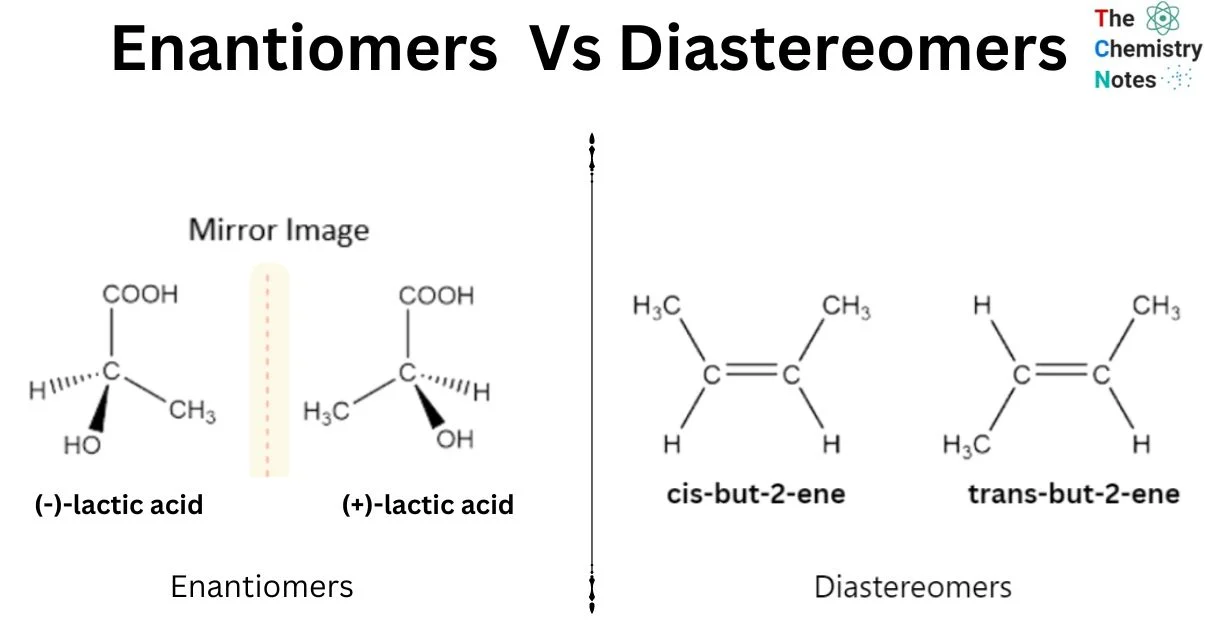
Enantiomer
mirror images
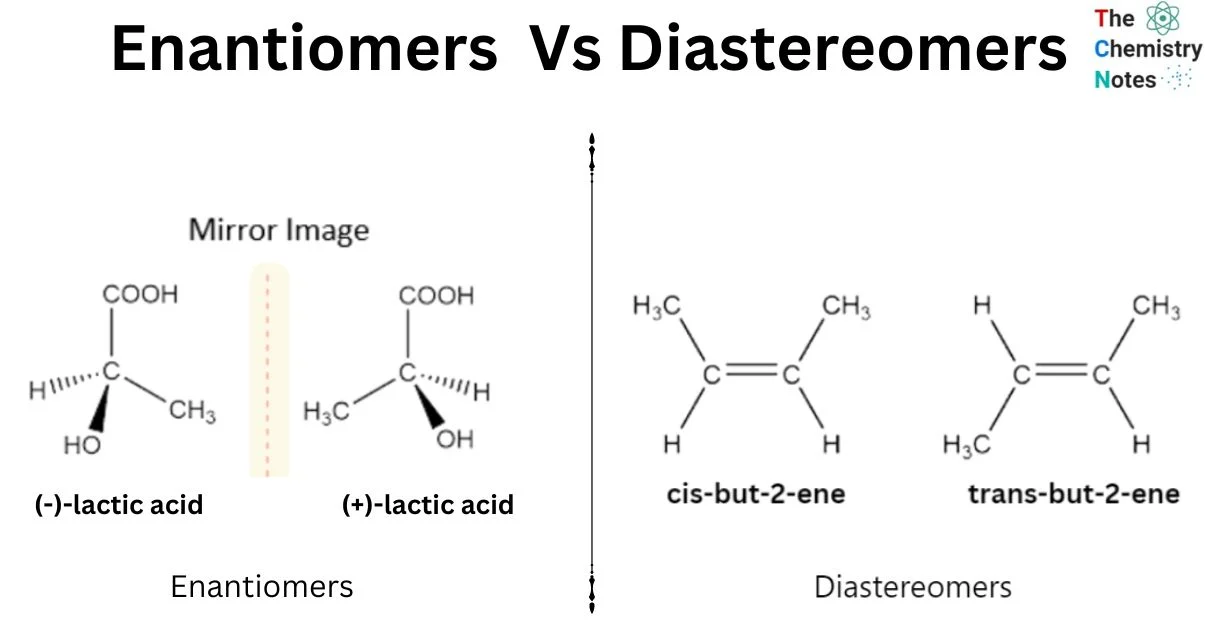
constitutional isomer
has the same atoms but in a different arrangement
Stereoisomer
Has the same order of attachment for atoms but different 3D shape
Chiral
No symmetry
Achiral
Has symmetry
Stereocentre
A carbon connected to to 4 different atoms/groups (therefore is chiral)
TRUE or FALSE: Enantiomers have the same physical and chemical properties.
TRUE
What 2 things do enantiomers differ in?
Rotate plane polarised light the opposite direction
Different interactions with other chiral molecules
What is a) a mixture of both enantiomers called and b) what property does it have?
a) racemate
b) does not rotate plane polarised light
Cahn-Ingold sequence rules
Assign numbers 1 (highest atomic number) - 4 (lowest atomic number) to the molecules attached to stereocentre
If the first atom is the same go to next in the chain, remembering double bonded atoms are equal to two of the same atom
Rotate the molecule so group 4 is pointed away
Assign R or S configuration based on rotation of groups 1-3
S configuration
groups 1-2-3 are rotated anticlockwise
R configuration
groups 1-2-3 are rotated clockwise
Formula for number of potential stereoisomers
2(no. stereocentres + double bonds that can show E/Z isomerism)
Meso compound
Contains stereocentres, is achiral
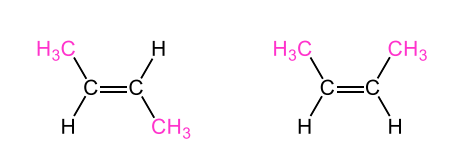
What type of stereoisomerism will a) the pictured molecule have and b) what are the requirements for it?
a) geometric
b) have two different substituents each on both ends of the double bond
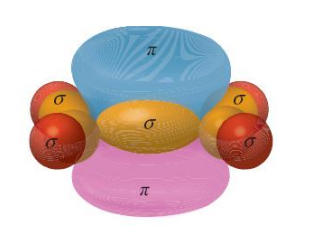
Why do sp2 (trigonal planar) carbons not experience optical isomerism?
The π bonds involved in the double bond require a lot of energy to break and therefore allow rotation
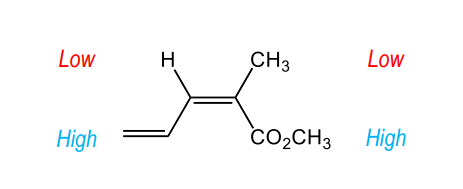
E configuration
Of the highest priority groups on either end of a double bond, one is ‘above‘ and the other is ‘below‘ the double bond (ie. are on opposite sides)
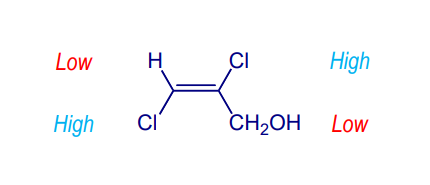
Z configuration
Higher priority groups on either end of a double bond are both ‘above’/’below’ the double bond (Hint: think of it like connecting the same priority groups by tracing the shape of the letter Z)
Alkene
Hydrocarbon with a carbon to carbon double bond
How can one test for the presence of alkenes?
Add to Br2 solution. If the brown solution turns clear there are alkenes present
Hydrogenation
Add H2 on either end of an alkene double bond
Halogenation
Add X2 (eg. Br2 , Cl2) on either end of an alkene double bond
Hydration
Add H2O on either end of an alkene double bond; H & OH groups result
Hydrohalogenation
Add H-X (eg. Br, Cl) on either end of an alkene double bond
Which addition reactions can a) give more than one product under b) what conditions?
a) hydration, hydrohalogenation
b) if H-OH / H-X are added across the double bond of a non-symmetrical alkene
What do the arrows in a reaction mechanism represent?
The movement of electrons (from bonds being broken/made)
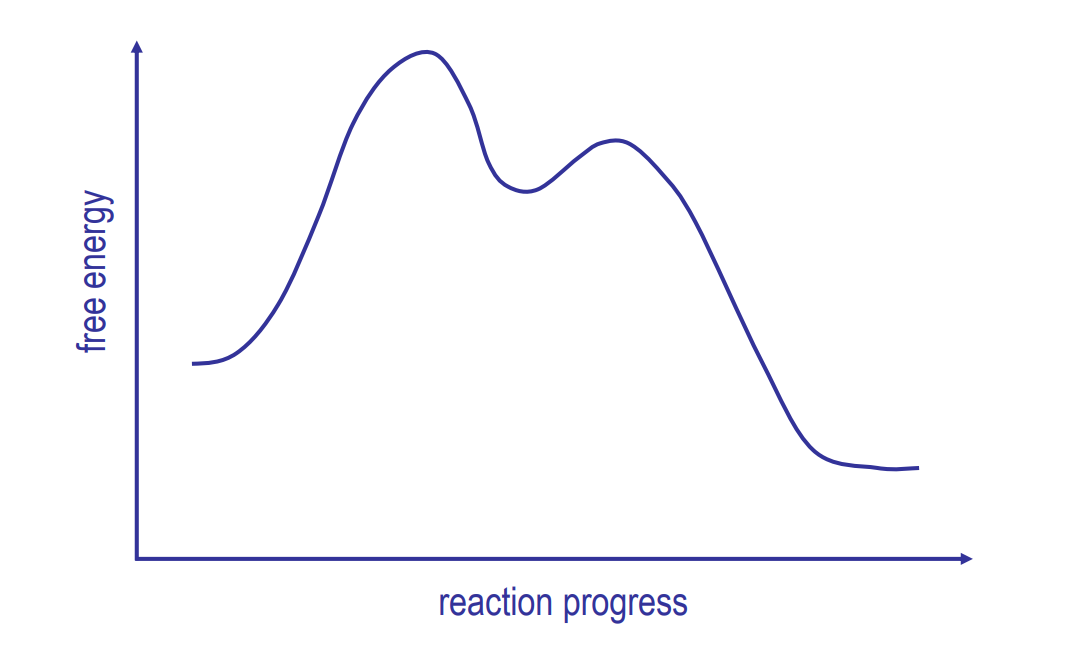
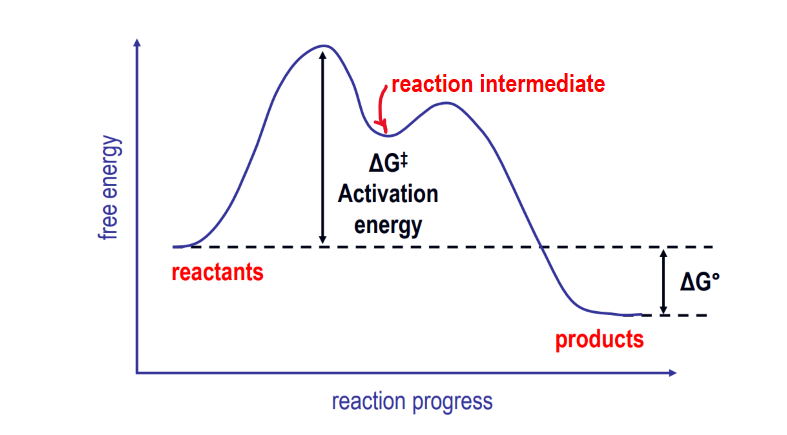
Fill in the chart
Regioselective mechanism
Selectively generate only certain product
What is the direction of movement of electrons in a reaction?
From nucleophile to electrophile
Nucleophile
electron rich/dontaes electrons; —
Electrophile
electron poor/receives electrons; +
Where does the negative charge end up at the end of a reaction?
The more electronegative atom (eg. Br vs C)
Carbocation
An intermediate product of an alkene addition reaction, formed at the most substituted (more attached C) end of the double bond. This means the first addition will take place at the other end.
What are the features (3) of an intermediate carbocation that increase with substitution, making it a more favourable intermediate?
more stable (due to more even distribution of charge)
faster reaction
lower activation energy/ more energetically favourable to form
Why does BH2 add with the opposite regiochemistry to that of 70% H2SO4?
The electronegativity of H is greater than that of Br therefore Br will react first and H reacts with the carbocation
Why does cyclopentene give trans isomer only?
The second electrophile can only attach from the other side due to steric hindrance
What happens if both chloride and bromide ions are available?
Both compounds with two Br and compounds with one Br and one Cl will be made
What intermediate compound does the addition of bromine result in?
Bromonium ion
TRUE or FALSE: Z alkanes are mores stable than E alkanes
FALSE
Describe 3 features of ALIPHATICS
Fat like
burn with blue flame
low C:H ratio
Describe 3 features of AROMATICS
sweet smell
sooty flame
high C:H ratio
In terms of its reaction mechanism what differentiates benzene from alkenes?
Has substitution rather than addition reactions
In the presence of what do hydrogenation reactions need to occur?
Metal catalyst
What is the difference between addition and substitution reactions?
Addition reactions add a group whereas substitution reactions directly replace an already existing group
Wheland intermediate
carbocation formed on a benzene in the first step of a substitution reaction
What are the b) two options for the second step of a reaction with a benzene and b) which is favoured and why?
a) addition of the nucleophile or loss of a proton/H+
b) loss of a proton as it maintains resonance therefore is more stable
How does resonance impact stability?
Increases stability by spreading out electron density/delocalizing electrons
What is the purpose of a solvent?
Provide a medium for the reactants to dissolve and the reaction to take place
What differentiates polar protic solvents from polar aprotic solvents?
Polar protic solvents have acidic OH group(s)
List 3 common a) polar protic solvents and b) polar aprotic solvents.
a) water, methanol, ethanol
b) DMSO, DMF, acetone
What do the mechanisms of nucleophilic substitutions depend on (3)?
alkyl halide (aka. substrate)
nucleophile
reaction conditions
What formula describes the rate of a SN1 reaction?
rate=k[substrate]
where K is the rate constant
Are SN1 reactions favoured by polar protic or aprotic solvents?
polar protic
List, in order of reactivity, the connectivity of carbons that can undergo SN1 reactions.
Tertiary > secondary (not preferred)
What happens if an SN1 reaction is carried out on a substrate of defined configuration?
A mixture of enantiomers
What does substitution depend on?
The amount of carbons linked to the carbon of interest
What happens if the SN1 reaction takes place at a stereocentre?
racemisation
How many steps in SN1?
2
Describe the process of an SN1 reaction
The C-X bond breaks, forming a carbocation intermediate
The nucleophile (n-) attacks the C+
What determines if the C-X bond is easy to break in an SN1 reaction?
Ease of breaking increases with atomic size (eg. I>Br)
What step is a) the rate determining step of an SN1 reaction and b) what is its relative speed?
a) the first step
b) slow
Why does racemisation occur in an SN1 reaction?
the nucleophile can attack either side of the p orbital
What is the equation that describes the rate of an SN2 reaction?
rate=k[substrate][nucleophile-]
where k is the rate constant
How many steps is an SN2 reaction?
1
What describes the number of steps associated with an SN2 reaction?
simultaneous bond breaking and making
What happens to the stereochemistry of a molecule that has undergone an SN2 reaction?
gets inverted; R/S, E/Z
List, in order of reactivity, the connectivity of carbons that can undergo SN2 reactions.
primary > secondary
Why do tertiary substrates not react under SN2 reaction conditions?
Too much steric crowding around the molecule the nucleophile needs to attack
What does a good leaving group do?
Carries negative charge from substitution;
What are 2 examples of good leaving groups?
atoms/molecules that stabilize a negative charge
conjugate base (X -) of a strong acid
What does the pKa of an acid mean for substitution reactions?
The lower the pKa, the better the leaving group (increasing size)
What makes an acid a strong acid?
The H being bound to a larger molecule
TRUE or FALSE: Br is a better leaving group than Cl
TRUE
Tosylate
converts an alcohol leaving group OH- from a bad to a good leaving group
Why is OH- a bad leaving group?
It is the conjugate base of H2O which is a weak acid
What makes a tosylate a good leaving group (2) ?
it is the conjugate base of a strong acid
The anion is resonance stabilised through the benzene ring
Do aromatic halides a) undergo SN1 or SN2 reactions and b) why
a) Neither; do not at all undergo substitution reactions
b) SN1: carbocation difficult to form, SN2: too much steric interference from the ring for an attack from the rear
Aldehyde
R’COH
Ketone
RC=OR
Carbonyl group
C=O
What is the polarity of a carbonyl group?
+C=O-
O is more electronegative
Do aldehydes/ketones have high or low boiling points?
low
What happens if an aldehyde is made by oxidizing a primary alcohol?
The reaction will proceed to oxidize further to create a carboxylic acid
What colour is Cr2O72-?
orange
What colour is Cr3+?
green
What conditions must be met so primary alcohols are selectively oxidised to aldehydes?
non-aqueous
What type of alcohol cannot be oxidized?
tertiary
Why can tertiary alcohols not be oxidized?
Oxidation removes the H from the O (of the alcohol) and the adjacent carbon. Tertiary alcohols do not have a H attached to the adjacent carbon.
Grignard reagent
Prepared by redox reaction between an organic halide and magnesium metal (R-MgX). They are a source of nucleophilic carbon.
Imine
The product of the addition of a primary amine (RNH2) to an aldehyde or ketone gives, after the elimination of water
Carboxylic acid
COOH
Ester
RCOOR’
Amide
RCONR’R”
pK= [?]
-log10Ka
Henderson-Hasselbach equation
pKa= pH - log10 [conjugate base]/[Acid]
TRUE or FALSE: amines are acidic
FALSE: amines are basic, amides are non-basic
Why aren’t amides basic?
The lone pair on nitrogen is extensively delocalised and so less available for donation
When the amide is protonated on nitrogen, there is no possibility for resonance stabilization
How can the formation of esters via an equilibrium reaction with water and an alcohol be be maximised?
using an excess of alcohol
removing the water as it forms
How can esters be made?
direct synthesis
using acid chloride