Forms of Government and Economic Systems
 Call Kai
 Learn
Learn Practice Test
 Spaced Repetition
 Match
Match Flashcards
 Knowt Play
1/26

There's no tags or description
Looks like no tags are added yet.
Name | Mastery | Learn | Test | Matching | Spaced | Call with Kai | Chat |
|---|
No analytics yet
Send a link to your students to track their progress
27 Terms
Constitutional Monarchy
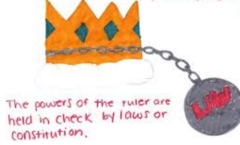
Power of the monarch is limited by a constitution.
Dictatorship
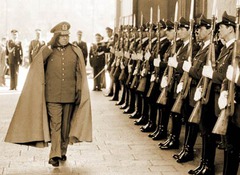
Total government control - the leader has complete control and harsh punishments can be issued; has total control over the media (no free speech) Ex. DPRK- North Korea
Monarchy
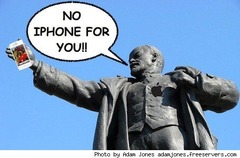
The leader/ruler inherits his or her power (passed through families)
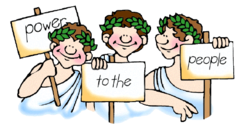
Democracy
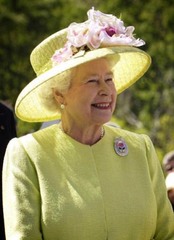
Government where citizens hold political power either DIRECTLY or through ELECTED representatives.
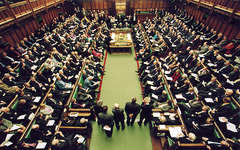
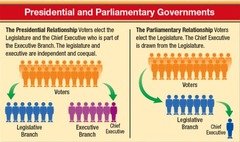
Parliamentary System
Type of representative democracy where the head of government is a member of the legislature (Prime Minister). Executive branch is elected by the parliament or legislature.
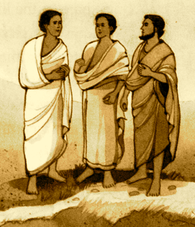
Oligarchy
"Rule by a few" form of government
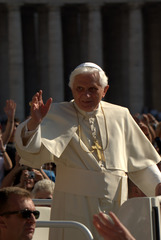
Theocracy
System of government run by religious leaders, religious rules are the laws of the country.
Parliamentary and Presidential
Types of Democratic governments
Citizens can vote for representatives to a national legislature.
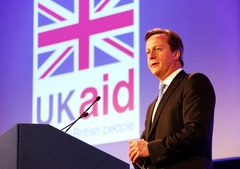
Prime Minister
The person who heads the executive branch in a Parliamentary democracy.
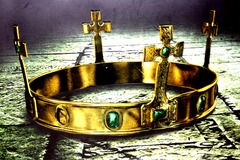
Autocracy
Type of government run/controlled by a single person. Examples: monarchy, dictatorship
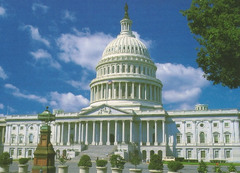
Government
The group of people who control and make decisions for a country, state, etc.
Republic
Form of government in which citizens vote for representatives who then make decisions based on the citizens' wishes.
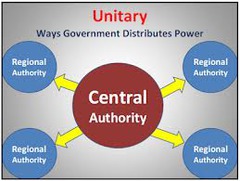
Unitary
Power of the government comes from the central government then executed through lower branches of government.
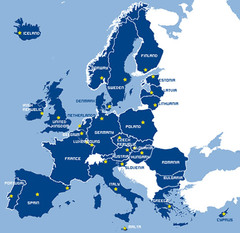
Confederation
Voluntary alliance between countries to help solve a problem like trading agreements or currency.
A joining of several groups (countries or states) for a common purpose. (Example: European Union)
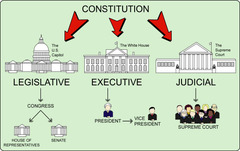
Federal
Power is divided and shared among central, state, and local governments. Many times a constitution specifies these powers.
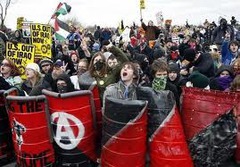
Anarchy
Absence of government. Condition of a society, entity, group of people, or a single person that rejects traditional forms of government.
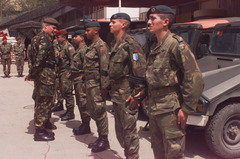
Junta
A military or political group that rules a country after taking power by force.
Direct democracy
A form of government in which citizens rule directly and not through representatives.

Communism
A state-controlled economic system directing economic activity in the nation. The state rejects the free-enterprise system and capitalism; private ownership is discouraged and often prohibited. Communist believes that the country should not have social classes or money.
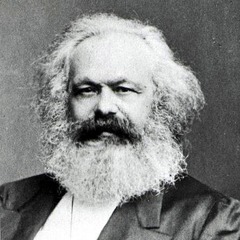
Socialism
The central government controls the (economics of the nation) production and distribution of goods, services, and labor in the nation. The goal is to promote an equitable distribution of resources among the people.

Capitalism
An economic system based on private ownership and having the means of production with the goal of making a profit. The government takes a laissez-faire "hands-off" or "let be" approach to the economy.
presidential system
a system of government in which the legislative and executive branches operate and are elected independently of each other.
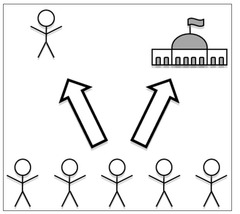
Athenian Democracy
a pure form of democracy, in which all adult male citizens could vote directly on matters affecting the community.
Roman Republic
Government ruled by a senate, or elected body of representatives. Most representatives came from the patrician class (wealthy aristocratic) and were elected by the plebeian class (middle class or commoners).
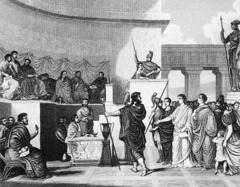
Limited Government
A principle of constitutional government; a government whose powers are defined and limited by a constitution.
Unlimited Government
government structure in which there are no effective limits on government actions.
Totalitarianism
A political system in which the government has total control over the lives of individual citizens.