Creating a Culture of Growth, Change, and Belonging: Leading and Managing Functional Teams
 Call Kai
 Learn
Learn Practice Test
 Spaced Repetition
 Match
Match Flashcards
 Knowt Play
1/28

There's no tags or description
Looks like no tags are added yet.
Name | Mastery | Learn | Test | Matching | Spaced | Call with Kai | Chat |
|---|
No analytics yet
Send a link to your students to track their progress
29 Terms
what are the ingredients for team work success?
- Gallons of trust
- Quarts of commitment
- Pints of effective communication
- Cups of collaboration
- Tbsp. of conflict resolution
- Tsp of innovation and creativity
what does it mean to show trust?
- All have to embrace vulnerability
- Not worried about exposing or being exposed for weaknesses, lack of skills or knowledge or interpersonal shortcomings and comfortable with asking for help
- So as to be able to focus on the decision, job, goal etc at hand
how do show trust?
- Through shared experience (takes some time)
- Understanding the unique contributions of each (Personality assessments and generational attributes)
- Assessing and addressing our implicit biases
what is the leader's job when it comes to trust?
- Be vulnerable. Risk losing face and others will feel comfortable to do so.
- No retribution for sharing vulnerabilities
- Help and develop others to overcome their vulnerabilities (Imposter syndrome)
- Create a "Just Culture" where can own mistakes without fear of punishment
- Know yourself and your people (Biases, personality assessments and generational attributes)
when does commitment come?
only with "buy in" which only comes when everyone feels heard
- to the vision, mission, core values, goals
what is the leader's job when it comes to commitment?
- Be sure that all are heard
- Facilitate closure on issues on the table
____ , _____ , _____ are paramount when it comes to effective communication
clarity, consistency, congruence
for effective communication, ____ is also key
efficiency
- best mode to deliver a message
- best use of time in meetings
what is the leader's job when it comes to effective communication?
- Be congruent with words and actions to avoid mixed messages
- Be intentional with how you deliver messages both in content and in selecting the mode
- Spend time on planning meetings to create the maximum benefit for all
- Share and seek feedback
priority is success of the group, so help each other when?
when needed and sometimes when not even needed
- everyone doing 100% effort as do not want to let their team members down
____ ____ is a good thing and brings about the best decisions
productive conflict
what is the leader's job when it comes to conflict resolution?
- Don't try offer the solution, let it happen and the resolution will emerge organically
- Keep it in the open .... "take it offline" comes back to bite the team
as you develop as a leader, STOP - what does that stand for?
- Stop: Pause when noticing yourself slipping into old habits or find yourself in a challenging situation
- Think: Reflect on the situation and
- Options: Consider different options and choose the one that aligns with your values and goals
- Proceed: Act on your chosen option mindfully, adjusting as consider the potential impact of your actions needed.
use of "personality" assessments gives you insight to what 5 things?
- Communication style
- Learning preferences
- Strengths and areas for improvement
- How problem solve
- Risk tolerance
examples of "personality" assessments =
- Predictive Index
- Myers Briggs Type Indicator (MBTI)
- CliftonStrengths (previously known as StrengthFinders)
- Colors
- DISC
- Kolbe A
what is implicit bias?
Deep-seated attitudes, beliefs and stereotypes impact our understanding, decisions and actions without us being aware it is happening so can actually contradict the values to which we aspire and declare
16 types of implicit bias
- Affinity or Similarity
- Anchoring
- Attribution
- Authority
- Beauty (lookism)
- Confirmation
- Conformity
- Nonverbal
- Recency
- Halo effect
- Horns effect
- Contrast effect
- Ageism
- Gender
- Name
- Language
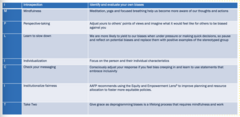
what does the american academy of family physician's IMPLICIT stand for?
- introspection
- mindfulness
- perspective-talking
- learn to slow down
- individualization
- check your messaging
- institutionalize fairness
- take two
why is managing a multi-generational team critical?
to appreciate the differences in behaviors and preferences for communication, work schedules, and independence and the VALUE members from each generation brings to the team
how to manage a multi-generational team?
- Know the realities they have faced but understand that not all affected the same way
- Facilitate sharing of team members' preferences
- Prioritize psychological safety by respecting boundries
- Create an inclusive decision-making process that encourages open dialogue.
- Coach those demonstrating stereotypical behavior
generational differences in the workplace (photos)
- traditionalists: dependable, straightforward, tactful, loyal
- baby boomers: optimistic, competitive, workaholic, team-oriented
- generation X: flexible, informal, skeptical, independent
- millennials: competitive, civic and open-minded, achievement-oriented
- generation Z: global, entrepreneurial, less focused

what is imposter syndrome?
a psychological pattern where individuals doubt their abilities and accomplishments and fear being exposed as a "fraud."
what 5 things do leaders need to do when it comes to recognizing imposter syndrome?
- recognize the signs
- attune to those at high risk (women, HMCs, high achievers)
- understand contributing organizational factors and avoid them (competition and comparison, poor communication)
- help themselves and others minimize IP
- implement organizational strategies to minimize IP (incorporating policies, sponsorship)
what does sponsorship mean?
- Advocate for another, acting with intention to enhance others' impressions of another and opening doors that might otherwise remain closed
- Help others accelerate their career growth and professional development
- Use influence, network, brand and reputation to champion others
- Highlight others' accomplishments and achievements when they are not in the room
- Provide "aircover" for sponsees to explore "out-of-the-box" ideas and work on stretch assignments
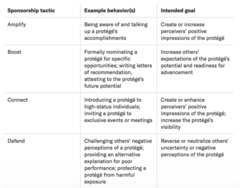
what are the ABCDs of sponsorship?
- amplify
- boost
- connect
- defend
5 benefits of sponsorship to the organization
- Retention
- Nurtures the next generation of leaders
- Increases diversity in leadership
- Upward flow of information
- Leaders become better leaders and more productive
6 modes of communication to and between team members =
- personal note
- phone
- text
- mettings
- in person
order that a meeting should be in (how to get everyone together) =
The HOOK
- Start with "the why" of the meeting ... what do we need to solve?
The BOOK
- Drive passionate and engaging discussions and full attention. Keep people on the problem to solve.
- "The person in the meeting that challenges the status quo is often the most valuable person in the room." ~Shane Parrish
The TOOK
- Review key decisions made, deadlines, and communication plan to those who will be affected
6 types of group meetings =
- Huddles (also known as "stand ups"): These should be hardwired
- Staff meetings
- Leadership meetings
- Showcase meetings
- Development meetings (inservices, M & M, Schwartz rounds, retreats)
- Clinical meetings (care conferences, patient/family, rounds, Medicare in SNF)