PT 750 - Superficial Back, Scapular, and Deltoid Regions
 Call Kai
 Learn
Learn Practice Test
 Spaced Repetition
 Match
Match Flashcards
 Knowt Play
1/65

There's no tags or description
Looks like no tags are added yet.
Name | Mastery | Learn | Test | Matching | Spaced | Call with Kai | Chat |
|---|
No analytics yet
Send a link to your students to track their progress
66 Terms
Anterior Scapula with Labels

Label the features of the anterior scapula

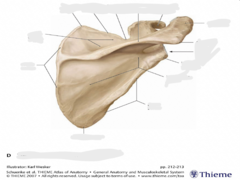
Posterior scapula with labels

Label the features of the posterior scapula
What do the both the ventral and dorsal rami innervate?
Ventral Rami innervate the superficial muscles of the back such as the Trapezius
Dorsal Rami innervate the skin of the back and the deep muscles
What are the movements of the scapula?
elevation, depression, protraction, retraction, upward rotation, downward rotation
What runs through the scapular notch?
The supra scapular nerve runs through the notch while the superior transverse scapular ligament converts it into a foramen
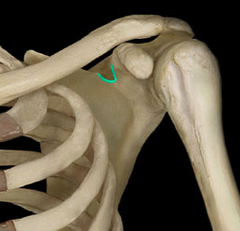
Anterior humerus with labels

Label the features of the anterior humerus
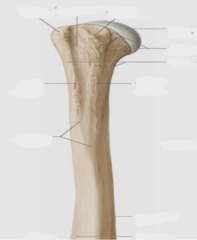
Posterior humerus with labels
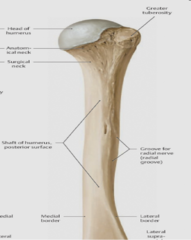
Label the features of the posterior humerus
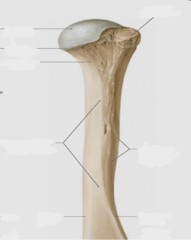
What directions does the humeral head face?
Posterior, medial, and superior (PMS)
What directions does the glenoid face?
Superior, anterior, and lateral (UFO, upward-superior, forward-anterior, outward-lateral)
Would a fx at the anatomical neck of the humerus require surgery?
Yes since a fx there is intra-articular meaning it is in the joint, no surgery could lead to improper healing and post traumatic arthritis
Would a fx at the surgical neck of the humerus require surgery?
No since it is outside of the joint, meaning it is extra-articular. Patient would be a placed in a sling to immobilize is all.
What are the extrinsic muscles of the back?
trapezius, rhomboid minor, rhomboid major, levator scapulae, latissimus dorsi
What do extrinsic muscles of the back connect?
These muscles connect the upper limb to the trunk
Do extrinsic muscles originate on the back?
No they do not
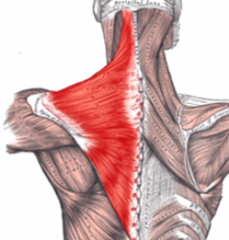
Trapezius Origin
external occipital protuberance, superior nuchal line, ligamentum nuchae, spinous process C7-T12

Trapezius Insertion
spine of scapula, distal clavicle, and acromion

Trapezius Innervation
spinal accessory nerve
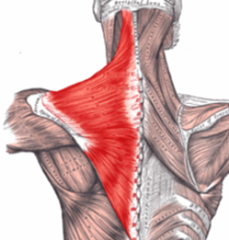
Trapezius Action
upper fibers - elevate the scapula
lower fibers - depress the scapula
middle fibers - retract the scapula, upward rotation of the scapula
Latissimus Dorsi Origin
iliac crest, thoracolumbar fascia, lower thoracic and lumbar spinous processes, lower 3-4 ribs, inferior angle of the scapula
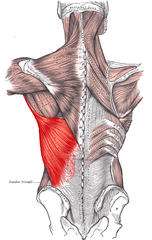
Latissimus Dorsi Insertion
intertubercular groove of the humerus
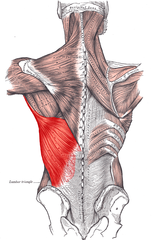
Latissimus Dorsi Innervation
thoracodorsal nerve, C6-C8
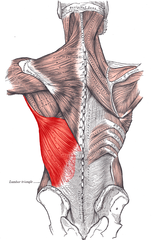
Latissimus Dorsi Action
shoulder extensor, adductor, and IR

Rhomboids Origin
spinous processes C7-T5

Rhomboids Insertion
medial border of the scapula

Rhomboids Innervation
dorsal scapular nerve, C5

Rhomboids Action
scapular retraction, scapular downward rotation

Levator Scapulae Origin
posterior tubercles transverse processes C1-C4
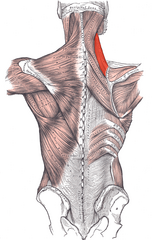
Levator Scapulae Insertion
superior angle of the scapula

Levator Scapulae Innervation
dorsal scapular nerve, C5

Levator Scapulae Action
scapular elevation, scapular downward rotation

What are the four muscles of the rotator cuff?
Supraspinatus (posterior)
Infraspinatus (posterior)
Teres Minor (posterior)
Subscapularis (anterior)

What is the function of the rotator cuff muscles?
To increase the dynamic stability of the glenohumeral joint

Which rotator cuff muscle passes under the coracoacromial hood?
The supraspinatus passes underneath
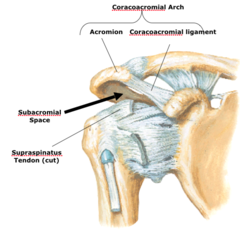
Supraspinatus Origin
supraspinous fossa

Supraspinatus Insertion
superior facet greater tubercle of the humerus

Supraspinatus Innervation
suprascapular nerve, C5-C6

Supraspinatus Action
shoulder abduction
(If there was an action in the transverse plane it would be ER)
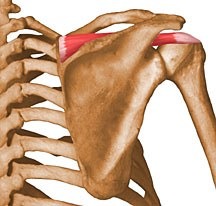
Infraspinatus Origin
infraspinous fossa

Infraspinatus Insertion
middle facet greater tubercle of the humerus
(greater tubercle is a posterior structure)

Infraspinatus Innervation
suprascapular nerve, C5-C6

Infraspinatus Action
shoulder ER

Teres minor Origin
lateral border of the scapula
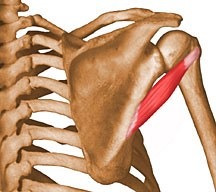
Teres minor Insertion
inferior facet greater tubercle of the humerus

Teres minor Innervation
axillary nerve, C5-C6

Teres minor action
shoulder ER
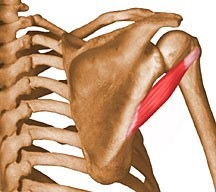
Subscapularis origin
subscapular fossa

Subscapularis Insertion
lesser tubercle of the humerus

Subscapularis Innervation
upper and lower subscapular nerves C5-C7

Subscapularis Action
shoulder IR
(also functions during overhead elevation)
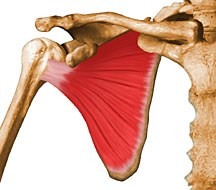
Deltoid Origin
spine of the scapula, acromion, clavicle

Deltoid Insertion
deltoid tuberosity of the humerus

Deltoid Innervation
axillary nerve C5-C6

Deltoid Action
anterior fibers - flex/IR of the shoulder
middle fibers - ABD
posterior fibers - ext/ER, horizontal ABD

Teres Major Origin
inferior angle of the scapular

Teres Major Insertion
intertubercular groove of the humerus

Teres Major Innervation
lower subscapular nerve (C6-C8)

Teres Major Action
shoulder extension, adduction, and internal rotation

What exits the quadrangle space?
The axillary nerve and posterior circumflex humeral artery

What are the borders of the quadrangle space?
Superior: subscapularis (ant); teres minor (post)
Inferior: teres major
Medial: long head of the triceps
Lateral: surgical neck of the humerus
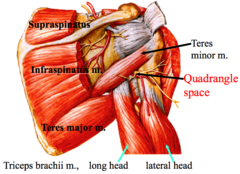
Which muscles does the axillary nerve innervate?
The deltoid and teres minor
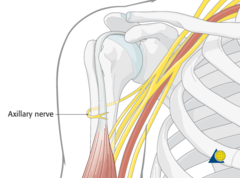
What does the axillary nerve end as?
The superior lateral brachial cutaneous nerve
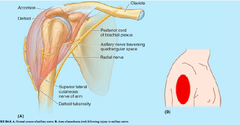
Discuss how you could test for axillary nerve damage with a fracture at the humerus.
Knowing that the axillary nerve ends in sensation, if it were to be damaged the patient would lose sensation around the superior lateral aspect of the arm. If you think it is damaged, you can test for this by touching the skin to examine whether sensation is present or not.