1. Ecology and Evolution Introduction
 Call Kai
 Learn
Learn Practice Test
 Spaced Repetition
 Match
Match Flashcards
 Knowt Play
1/14

There's no tags or description
Looks like no tags are added yet.
Name | Mastery | Learn | Test | Matching | Spaced | Call with Kai | Chat |
|---|
No analytics yet
Send a link to your students to track their progress
15 Terms
Evolution
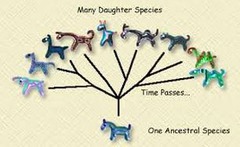
Changes in traits and genes over time
- Microevolution: short-term changes in allele frequency (population level)
- Macroevolution: long-term changes above the species or population level (genera, families)
- Smallest unit = Population
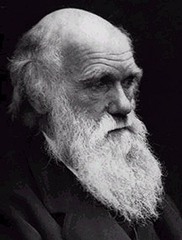
Charles Darwin (1809-1882)
Father of Evolution
- Naturalist on the HMS Beagle
- "Descent with modification"
- Observed differences in finch beak sizes
Ecology
The study of how organisms interact with each other and their environment
- Smallest unit = individual

Alexander von Humboldt (1769-1859)
Father of Ecology
- Naturalist
- Journaled about plants and animals seen on voyages

Organismal Ecology
Focus - An organism's structure, physiology, evolution, behavior, and interactions with the environment
Unit - individual , Species
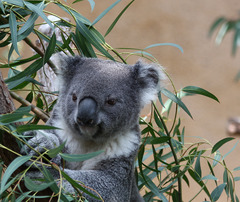
Ex: Mechanisms that allow koalas to eat eucalyptus leaves
Population Ecology
Focus - Factors affecting population size
Unit - Group of the same species in an area
Ex: Births vs. Deaths of Mallard ducks in a lake

Community Ecology
Focus - Effect of population interactions on community organization
Unit - Groups of different species in an area
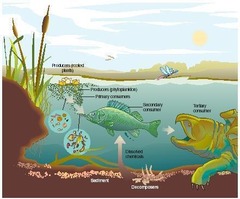
Ex: Interactions between fish, turtles, and dragonflies in a pond
Ecosystem Ecology
Focus - Energy flow and chemical cycling between organisms and the environment
Unit - Communities and physical factors they interact with
Ex: The role of bacteria in the carbon cycle
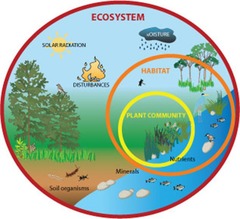
Landscape Ecology
Focus - Exchange of energy, materials, and organisms across multiple ecosystems
Unit - Many connected ecosystems
Ex: A bird drinks water in a lake, eats a bug found on a road, and hides in some tall grass in a forested area
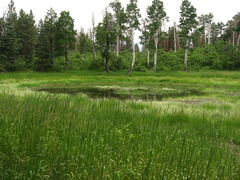
Global Ecology
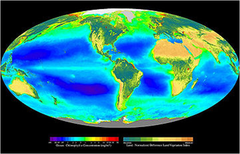
Focus - Influence of energy and materials on organisms across the world
Unit - Biosphere (All the planet's ecosystems and landscapes)
Ex: The effects of a volcanic eruption in Hawaii on other regions
Who is considered one of the fathers of ecology?
a. Robert Paine
b. Charles Darwin
c. George Hutchinson
d. Alexander von Humboldt
d. Alexander von Humboldt
During the Spring, forest at the base of the Swiss alps undergo flooding when the snow caps melt. This is an example of:
a. Ecosystem ecology
b. Community ecology
c. Population ecology
d. Landscape ecology
d. Landscape ecology
Landscape ecology concerns itself with the exchange of energy and materials, such as water, across multiple ecosystems. In this case, there is a forest ecosystem at the bottom of the alps, and the snowy mountain ecosystem at higher elevations.
The foundational unit of evolution is the:
a. Individual
b. Population
c. Species
d. Community
b. Population
Evolution cannot happen in the individual as evolution is a change in allele frequencies, which requires propagation.
Ecosystem-level ecology is focuses on:
a. Energy flow and chemical cycling between organisms and the
environment
b. The effect of energy and materials across the globe
c. The exchange of materials between organisms and the environment
d. The interactions between populations
a. Energy flow and chemical cycling between organisms and the environment
Many insect repellents do not work on cockroaches in apartments in Washington DC. This could be caused by:
a. Macroevolution
b. Bottleneck effect
c. Microevolution
d. Genetic drift
c. Microevolution
The cockroach population in these apartments slowly build resistance to the repellents as a group since those who are most vulnerable are killed, leaving behind the genes of those who were able to resist the repellents.