AP World History Unit 7: Global Conflict
 Call Kai
 Learn
Learn Practice Test
 Spaced Repetition
 Match
Match Flashcards
1/143

There's no tags or description
Looks like no tags are added yet.
Name | Mastery | Learn | Test | Matching | Spaced | Call with Kai | Chat |
|---|
No analytics yet
Send a link to your students to track their progress
144 Terms
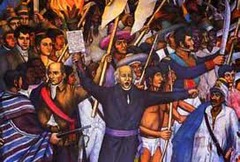
Mexican Revolution of 1910
(1910-1920 CE) Armed rebellion in which the Mexican people fought for political and social reform, especially against neocolonialism; resulted in ouster of Porfirio Diaz from power; opposition forces led by Pancho Villa and Emiliano Zapata. Resulted with Francisco Madero has president of Mexico until his assassination in 1913.
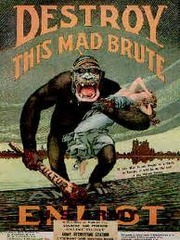
Total War
A conflict in which the participating countries devote all their resources to the war effort; most notably WWI
Propaganda
information, especially of a biased or misleading nature, used to promote or publicize a particular political cause or point of view.
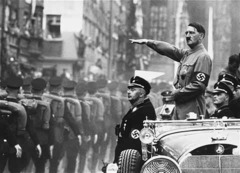
Great Depression
the economic crisis beginning with the US stock market crash in 1929 and continuing through the 1930s; had far-reaching global economic effects including further hindering countries recovering from WWI
New Deal
A series of reforms enacted by the Franklin Roosevelt administration between 1933 and 1942 with the goal of ending the Great Depression.
Fascist Corporatist economy
An anti-capitalist economy where government controlled corporations and had political influence through them.
Five Year Plan
plans outlined by Joseph Stalin in 1928 for the development of the Soviet Union's economy; wanted to rebuild the Soviet economy after WWI; tried to improve heavy industry and improve farm output, but resulted in famine
League of Nations
A world organization established in 1920 to promote international cooperation and peace. It was first proposed in 1918 by President Woodrow Wilson, although the United States never joined the League. Essentially powerless, it was officially dissolved in 1946.
Mandate System
Allocation of former German colonies and Ottoman possessions to the victorious powers after World War I; to be administered under League of Nations supervision.
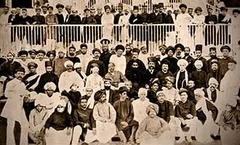
Indian National Congress
group formed by Hindu nationalist leaders of India in the late 1800's to gain greater democracy and eventual self-rule
Facism
A political system headed by a dictator that calls for extreme nationalism and racism and has no tolerance for opposition
Totalitarianism
A form of government in which the ruler is an absolute dictator (not restricted by a constitution or laws or opposition etc.)
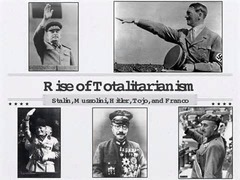
Militarism
A policy of glorifying military power and keeping a standing army always prepared for war
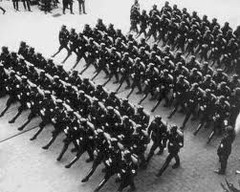
Atomic Bomb
a nuclear weapon developed in the US in which enormous energy is released by nuclear fission; first used during WWII on the Japanese cities of Hiroshima and Nagasaki
Fire bombing
Bombs dropped on Germany and Japan with intentions to spread fires and take down cities
Aremenian Genocide
Ottoman Muslim Turks target Christian minority group from 1915-1917
Holocaust
A methodical plan orchestrated by Hitler to ensure German supremacy. It called for the elimination of Jews, non-conformists, homosexuals, non-Aryans, and mentally and physically disabled.
Genocide
the deliberate killing of a large group of people, especially those of a particular ethnic group or nation.
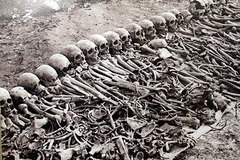
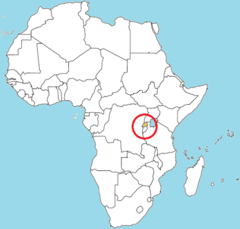
Rwandan Genocide
The killing of more than 500,000 ethnic Tutsis by rival Hutu militias in Rwanda in 1994. The conflict between the dominant Tutsis and the majority Hutus had gone on for centuries, but the suddenness and savagery of the massacres caught the United Nations off-guard. U.N. peacekeepers did not enter the country until after much of the damage had been done.
Bolsheviks
A party of revolutionary Marxists, led by Vladimir Lenin, who seized power in Russia in 1917.
Central Powers
In World War I the alliance of Germany and Austria-Hungary and other nations allied with them in opposing the Allies. Included the Triple Alliance of Germany, Austria-Hungary, & Italy. Italy eventually leaves the Triple Alliance and joins the Allied Powers
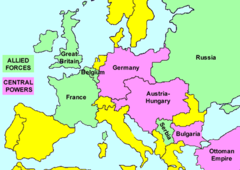
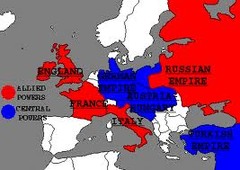
Allied Powers
Great Britain, France, Italy, Russia, and later the US. Included the Triple Entente of Great Britain, France, and Russia
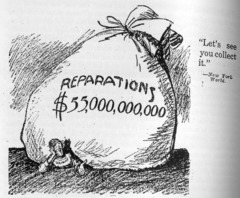
Reparations
As part of the Treaty of Versailles, Germany was ordered to pay fines to the Allies to repay the costs of the war. Opposed by the U.S., it quickly lead to a severe depression in Germany.
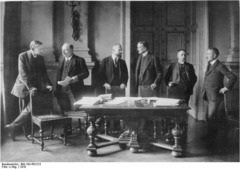
Paris Peace Conference
The great rulers and countries excluding Germany and Russia met at Versailles to negotiate the repercussions of the war; leaders included Loyd George (Britain), Woodrow Wilson (America), Clemenceau (France) and Italy. The Treaty of Versailles was made but not agreed to be signed and the conference proved unsuccessful.
Fourteen Points
A series of proposals in which U.S. president Woodrow Wilson outlined a plan for achieving a lasting peace after World War I; created the League of Nations
Weimar Republic
The new German republic the in 1921 owed 33 billion annually to the allied reparations commission. In order to recover from its severe economic issues the annual fees were reduced each year depending on the level of German economic prosperity and Germany received large loans each year from the United States.
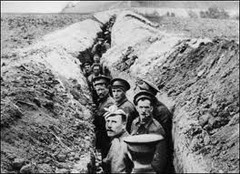
Trench Warfare
A form of warfare in which opposing armies fight each other from trenches dug in the battlefield; used prolifically during WWI
Stalemate
A situation in which no progress can be made or no advancement is possible; Western front of WWI
Collectivize
to run or organize a farm according to principles of united control; often used by Communist countries to expedite industrial and agricultural production resulting in shortages
Balfour Declaration
British document that promised land in Palestine as homeland for Jews in exchange for Jews help in WWI
Mao Zedong
(1893-1976) Leader of the Communist Party in China that overthrew Jiang Jieshi and the Nationalists. Established China as the People's Republic of China and ruled from 1949 until 1976.
Russian Revolution of 1917
Czar forced to give up throne and assassinated; two revolutions, the first of which, in February (March, New Style), overthrew the imperial government and the second of which, in October (November), placed the Bolsheviks in power - leading to change from capitalist economic system to communist economic system
Chinese Revolution of 1911
The collapse of China's imperial order, officially at the hands of organized revolutionaries but for the most part under the weight of the troubles that had overwhelmed the government for the previous half-century. It ended 2,000 years of imperial rule in Chian. Led by Dr. Sun Yat-sen.
Turkification
A process of cultural change designed to make all citizens of the empire feel a part of a common Turkish heritage and society
ethnic conflict
different ethnic groups struggle to achieve certain political or economic goals at each other's expense
Young Turks
Movement of Turkish military and civilian elites that developed ca. 1900, eventually bringing down the Ottoman Empire.
Kemal Atatürk (Turkey)
• nationalist leader who westernized, modernized, democratized, and secularized Turkey after World War 1
Institutional Revolutionary Party (PRI)
Mexican political party that dominated the country's political institutions from its founding in 1929 until the end of the 20th century. Virtually all important figures in Mexican national and local politics belonged to the party. The PRI's establishment shifted power from political-military chieftains to state party units and to those sectors of the party representing peasants, urban labourers, and the military
The Great War (WWI)
1914-1918 involved all of Europe and perpetrated enormous slaughter and devastation. It brought widespread misery, social disruption and economic collapse.
Gavrilo Princip and the Black Hand
The Man who was responsible for killing the Archduke Franz Ferdinand, who ruled over Austria-Hungary. His assassination was the immediate cause of World War I. The Black Hand was the organization in which Princip part of.
Secret Alliances
When nations joined together to support each other. Was originally meant to keep peace, but instead pushed nations into WWI. Triple Entente Vs. Triple Alliance
Self-determination
the right of people to choose their own form of government
Consription
an enforced enrollment or military draft
Lusitania
A British passenger ship that was sunk by a German U-Boat on May 7, 1915. 128 Americans died. The sinking greatly turned American opinion against the Germans, helping the move towards entering the war.
Zimmerman Telegram
March 1917. Sent from German Foreign Secretary, addressed to German minister in Mexico City. Mexico should attack the US if US goes to war with Germany (needed that advantage due to Mexico's proximity to the US). In return, Germany would give back Tex, NM, Arizona etc to Mexico.
ANZAC
The Australian and New Zealand Army Corps, which was a combined force of Australian and New Zealand volunteer soldiers
Gallipoli Campaign
(1915) Allied invasion of the Gallipoli Peninsula in the Straits, unprofitable fighting for months, huge casualties but the allies had to withdraw, so a large victory to Turkish forces
Big Four (Paris Peace Conference)
British Prime Minister (David Lloyd George), US President (Woodrow Wilson), French Premier (Georges Clemenceau), and Italy Premier (Vittorio Orlando)
Treaty of Versailles
Treaty that ended WW I. It blamed Germany for WW I and handed down harsh punishment.
WWI weapons
Mustard Gas, U Boat, Trench Warfare, Tanks, Machine Guns, Airplanes
All Quiet on the Western Front
(1929) a novel written by Erich Maria Remarque illustrating the horrors of World War I and the experiences of veterans and soldiers. It was extremely popular, but also caused a lot of political controversy when it was first published, and was banned in Germany in the 1930's.
Inflation
a general increase in prices and fall in the purchasing value of money.
deficit spending
Government practice of spending more than it takes in from taxes
The three R's (Relief, Recovery, Reform)
Relief, Recovery, and Reform; FRD's plan to address the Great Depression
Kolkhoz
in the Soviet Union, a small farm worked by farmers who shared in the farm's production and profits, a collective farm
New Economic Plan (NEP)
Lenin's 1921 policy to re-establish limited economic freedom in an attempt to rebuild agriculture and industry in the face of economic disintegration
John Maynard Keynes
British economist whose theories helped justify New Deal deficit spending
Russian Civil War (1918-1921)
War in Russia between Red Russians, who supported the communist revolution of the new Bolshevik government, and the White Russians, who were loyal army officers fighting the revolution. The White Russians also received help from the Allies. But under Trotsky's leadership, the Red Army eventually wins.
Spanish Civil War
In 1936 a rebellion erupted in Spain after a coalition of Republicans, Socialists, and Communists was elected. General Francisco Franco led the rebellion. The revolt quickly became a civil war. The Soviet Union provided arms and advisers to the government forces while Germany and Italy sent tanks, airplanes, and soldiers to help Franco.
Guernica
a Spanish town that was brutally bombed and was full of innocent civilians it was supposed to encourage fear, Picasso painted a famous painting capturing Guernica
Politburo
Ruling committee of the Communist Party
Fascism
A political system headed by a dictator that calls for extreme nationalism and racism and no tolerance of opposition
Totalitarian State
country where a single party controls the government and every aspect of the lives of the people
Luftwaffe
the German air force before and during World War II
Hyperinflation
A very rapid rise in the price level; an extremely high rate of inflation., inflation that is out of control
Francisco Franco
Fascist leader of the Spanish revolution, helped by Hitler and Mussolini
Gulag
Russian prison camp for political prisoners
PEMEX
Mexico's powerful state-owned oil monopoly.
Decolonization
the action of changing from colonial to independent status
Civil Disobedience
A nonviolent, public refusal to obey allegedly unjust laws.
Big Three
allies during WWII; Soviet Union - Stalin, United Kingdom - Churchill, United States - Roosevelt
Mohandas Gandhi
Leader of the Indian independence movement and advocate of nonviolent resistance. After being educated as a lawyer in England, he returned to India and became leader of the Indian National Congress in 1920.
Muhammad Ali Jinnah
Indian Muslim politician who founded the state of Pakistan. A lawyer by training, he joined the All-India Muslim League in 1913. As leader of the League from the 1920s on, he negotiated with the British/INC for Muslim Political Rights
Jawaharlal Nehru
Indian statesman. He succeeded Mohandas Gandhi as leader of the Indian National Congress. He negotiated the end of British colonial rule in India and became India's first prime minister (1947-1964).
Chiang Kai-shek
General and leader of Nationalist China after 1925. Although he succeeded Sun Yat-sen as head of the Kuomintang, he became a military dictator whose major goal was to crush the communist movement led by Mao Zedong.
Pan-Arabism
A movement that calls for unification among the peoples and countries of the Arab World, from the Atlantic Ocean to the Arabian Sea. It is closely connected to Arab nationalism, which asserts that the Arabs constitute a single nation.
Satyagraha
the form of nonviolent resistance initiated in India by Mahatma Gandhi in order to oppose British rule and to hasten political reforms
Salt March
passive resistance campaign of Mohandas Gandhi where many Indians protested the British tax on salt by marching to the sea to make their own salt.
March First Movement
non-violent protest by Korea against the Japanese, Japanese crushed the uprising and massacred many Koreans, became a rallying symbol for Korean nationalists
May Fourth Movement
A national protest in China in 1919, in which people demonstrated against the Treaty of Versailles and foreign interference (specifically Japan and western Europe).
Chinese Communist Party
The ruling party in China organized and led by Mao Zedong
Kuomintang
The Chinese Nationalist Party, formed after the fall of the Qing Dynasty in 1912.
Long March
The 6,000-mile (9,600-kilometer) flight of Chinese Communists from southeastern to northwestern China. The Communists, led by Mao Zedong, were pursued by the Chinese army under orders from Chiang Kai-shek.
Palestine
A territory in the Middle East on the eastern coast of the Mediterranean Sea. Disputed with Israel.
Amritsar Massacre
killing by British troops of nearly 400 Indians gathered at Amritsar to protest the Rowlatt Acts
Manchukuo
In 1932 Japan established this puppet state in their conquered territories of Manchuria. In 1933 the League of Nations reprimanded Japan, and so the nation withdrew from the organization, which was at the same time as Germany withdrawing as well
Greater East Asia Co-Prosperity Sphere
As announced in 1940 by Japan's prime minister, the area extending from Manchuria to the Dutch East Indies in which Japan would expand its influence
Zionist Movement
a nationalist movement among the Jews to establish a home land in Palestine
Jomo Kenyatta
A nationalist leader who fought to end oppressive laws against Africans; later became the first Prime Minister of Kenya
Leopold Senghor
Senegal's first president who served as president from 1960 to 1980
Adolf Hitler
Austrian-born founder of the German Nazi Party and chancellor of the Third Reich (1933-1945). His fascist philosophy, embodied in Mein Kampf (1925-1927), attracted widespread support, and after 1934 he ruled as an absolute dictator. Hitler's pursuit of aggressive nationalist policies resulted in the invasion of Poland (1939) and the subsequent outbreak of World War II. His regime was infamous for the extermination of millions of people, especially European Jews. He committed suicide when the collapse of the Third Reich was imminent (1945).
Neville Chamberlain
Great British prime minister who advocated peace and a policy of appeasement
Sudetenland
Land that Germany thought was rightfully theirs due to the large German speaking population, coveted by Hitler, subject of Chamberlain's Appeasement Policy towards Germany
Danzig
A city that, prior to WWI, belonged to Germany. After WWI, when the lands near it became part of the Polish Corridor, it was declared a "free city" independent of any country. It was reincorporated into Nazi Germany in 1939.
Nuremberg Laws
1935 laws defining the status of Jews and withdrawing citizenship from persons of non-German blood.
Lebensraum
Hitler's expansionist theory based on a drive to acquire "living space" for the German people
Anschluss
The union of Austria with Germany, resulting from the occupation of Austria by the German army in 1938.
Munich Agreement
Agreement between Chamberlain and Hitler that Germany would not conquer any more land, and if did, Britain would declare war
Rome-Berlin Axis
the alliance between Italy and Germany (Mussolini and Hitler)
Anti-Comintern Pact
treaty between Germany and Japan promising a common front against communism