Novel Drug Delivery Systems (NDDS) and Drug Targeting
 Call Kai
 Learn
Learn Practice Test
 Spaced Repetition
 Match
Match Flashcards
 Knowt Play
1/61

There's no tags or description
Looks like no tags are added yet.
Name | Mastery | Learn | Test | Matching | Spaced | Call with Kai | Chat |
|---|
No analytics yet
Send a link to your students to track their progress
62 Terms
existing
__________ drug delivery system: the purpose is to confine a drug in a dosage form and there is no control on the drug once it is inside the body. Not all of the drug reaches its target, so side effects may occur when the dose is increased
patient
NDDS is beneficial for the ____________ because they improve performance in terms of compliance, safety, and efficacy.
pharma industry
NDDS is beneficial for the ___________________ because it offers a competitive advantage, extends patent life, and increases market share
10-12
a new chemical entity typically costs $500 million and takes ____________ years to bring to market
3-4
novel drug delivery costs $20-50 million and takes ______________ years to bring to market
NDDS
allow for drug release control, control of absorption/release site location, alternative route to bypass liver, drug targeting, and stimuli-responsiveness (ex: pH, temperature, pathological conditions)
hold, release, target, bio-compatible
An ideal delivery system will:
____________ the drug until it reaches its target, ____________ the drug once it reaches its target, will _____________ the drug, and is _______________ (won't hurt the body)
disease
NDDS targets the specific location of the _______________, whereas conventional drug therapy targets the systemic circulation which may result in side effects and toxicity since a larger dose is required
drug targeting
drug accumulation in the target zone irrespective of the delivery system and route of administration
targeted drug delivery
goal is to increase drug concentration in selective parts of the body
-prolongs and localizes therapeutic effect on diseased tissue
-minimizes adverse effects
-reduces the frequency and dose of medication
-reduces concentration fluctuation in target organs
localization
mechanisms of ____________________: passive targeting, active targeting, and phagocytosis
active targeting
mechanism of localization that uses ligands and antibody that utilize a specific cellular transport mechanism; target of drug molecule to the particular area by attaching an area-specific vector or ligand
phagocytosis
mechanism of localization that uses the characteristics of the drug to cause uptake by phagocytic cells (drug gets phagocytized)
direct application
method of drug administration that directly puts the drug at the site of interest
-intra-articular administration of hormonal drugs in therapy of arthritis
-intracoronary infusion of thrombolytic enzymes in the therapy of thrombus-induced myocardial infarction
passive targeting
uses the body's conditions to control movement of the drug. Ex: enhanced permeation and retention (EPR) effect
EPR effect
passive targeting mechanism that takes advantage of the size of the spaces between endothelial cells for drug delivery; the drug delivery system is small enough that it will pass through cancerous vasculature but not healthy tissues

greater
the space between cancerous endothelial cells is ________________ than the space between the healthy endothelial cells (leaky vasculature)
physical targeting
use of abnormal pH or temperature in the pathological zone; stimuli-responsive drug carriers that can disintegrate at lower pH values or higher temperature than in normal tissues releasing the entrapped drug
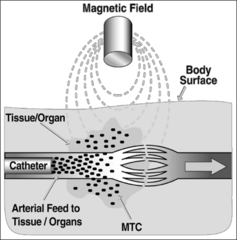
magnetic targeting
method of drug targeting in which the drug is entrapped on paramagnetic materials and applied with the help of external magnetic field
Ex: removal of cancer from peritoneum in ovarian cancer
prodrug
a therapeutic administered in inactive form that requires bioactivation by metabolic process once transported to its target organ/cell. Has improved bioavailability and selectivity
tumor:normal
an issue in drug targeting is that many times the normal tissue from which tumors are derrived cannot be safely destroyed; the ratio of ________________ tissue is often not high enough for the target to be unique (expressed in normal tissues)
mutation
an issue in drug targeting si the loss of target antigen expression due to rapid ________________ (antigen-loss variants)
classified
NDDS are ____________________ by design, route of administration, and type of drug molecule (small molecule, macromolecule, protein, or DNA/RNA)
BCS (biopharmaceutical classification system)
a guide for predicting the intestinal drug absorption provided by the U.S. Food and Drug Administration; restricts the prediction using the parameters solubility and intestinal permeability
type I
BSC class in which the drug is highly soluble and permeabile - drug can reach its target tissue and enter the cell. Gets into the blood fast
type II
BSC class in which the drug is permeable through the target cell but is not soluble - requires a system to dissolve it
type III
BSC class in which the drug is soluble but is not permeable though the intestines; requires a system to get it into the cell
type IV
BSC class in which the drug is not soluble and is not permeable to get into the target cell. Not ideal
solubility, permeability
the biopharmaceutical classification system (BCS) restricts the prediction of intestinal drug absorption using the parameters _____________ and intestinal _________________
EOP (elementary osmotic pump)
the ___________________ is an oral controlled release tablet in which drug molecules get released when the plastic osmotic membrane gets pushed back
oral fast-dispersing dosage forms
AKA fast dissolving, rapid-dissolve, rapid-melt, mouth-dissolving, and quick-disintegrating tablets
Ex: effervescent dosage forms: ibuprofen, paracetamol, cimetidine, naproxen, paracetamol and codeine combination product
colon
______________ delivery is ideal for local and systemic effect because it is a neutral pH area with few enzymes; therapy of IBD and colorectal adenocarcinoma; problem is having to go through stomach and intestines - use time based coating
enteric
pH sensitive ___________ polymers dissolve in pH 6-7 (intestines)
3
small intestinal transit time (SITT); relatively consistent = ______ +/- 1 hours
4
time-based coating for colon delivery breaks after __________ hours
BBB (blood brain barrier)
consists of tight junctions between endothelial cells and astrocytes that make sure there are no spaces between cells so that nothing gets to the brain - makes the brain difficult to target
invasive
___________________ brain targeting:
-intra-cerebral injection/implant
-disruption of blood brain barrier (BBB)
non-invasive
___________________ brain targeting: takes advantage of transporters through the BBB
-prodrug
-drug conjugates
-particulate/vesicular delivery
-nanotechnology
-ligans for active targeting: nutrients, antibody, transporters
-lontophoretic
-intranasal
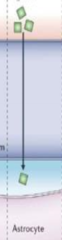
lipophilic
_____________ drug molecules pass through the BBB via the transcellular lipophilic pathway
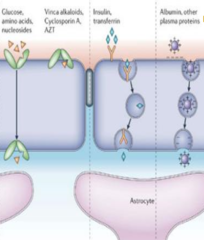
hydrophilic
_____________ drug molecules pass through the BBB through transport proteins (glucose, amino acids), receptor-mediated transcytosis (insulin), and adsorptive transcytosis (albumin)
transdermal drug delivery (TDD)
diffusion of the medication (drug) through skin into systemic circulation for distribution and therapeutic effect; absorption primarily occurs by passive diffusion through the stratum corneum
hydrogel
hydrophilic, polymeric networks capable of imbibing large amounts of water or biological fluids; homopolymers or copolymers are insoluble due to the presence of physical and chemical crosslinking - just swell (still absorb water - just don't dissolve)
micelle
surfactant molecules that arrange themselves in a spherical form in aqueous solutions; the formulation is a response to the amphipathic nature
Ex: polysorbates, polyoxyethylated caster oil, polyoxyethylated glycerides, lauroyl macroglycerides, and mono- and di-fatty acid esters of low molecular weight polyethylene glycols

Critical Micelle Concentration (CMC)
when the concentration of surfactants exceeds their _________________, micelle formation occurs, entrapping the drugs within the micelles
vessicular
micelles and liposomes are examples of _____________ systems;
advantages: better efficacy and less toxicity
disadvantages: rapid clearance by RES primarily liver, spleen, and kidney
surfactants
have one head and one chain --> form micelles
lipids
have one head and two chains --> form lipid bilayer
liposomes
vesicular structures based on lipid bilayers surrounding aqueous compartments

proliposomes
liposome that avoids difficulties encountered with the manufacturing of liposomes by forming liposomes at the point of drug delivery

stealth liposomes
liposomes in which attaching polyethylene glycol on the liposome form long-circulating liposomes - body sees the PEGs and does not attack (disguised)

amphotericin B
drug that has less side effects when delivered in a liposome
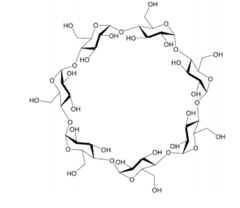
cyclodextrin
carbohydrate ring with a hydrophilic exterior and lipophilic core; each can only carry one drug inside; used for water insoluble drugs
complexation
the association between two or more molecules to form a non bonded entity with a well defined stoichiometry
0.1 and 100
microparticles are between ______ and _____ mcm in size
microparticles
advantages: protection of the encapsulated active agent, precisely and pre-programmed drug release over hours to months, and easy administration
disadvantages: difficulty of large-scale manufacturing, inactivation of drug during fabrication, and poor control of drug release rates
Ex: Lupron Depot and Nutropin Depot
protein/peptide
problems with _____________________ delivery:
-poor oral bioavailability
-protein denaturation in the digestive system
-acid hydrolysis in the stomach
-enzymatic degredation
-poor adsorption due to size
-poor adsorption due to polar/charge distribution
Ex: insulin for diabetes, interferon or mabs for cancer, TNF-a for inflammation, etc.
gene delivery
traps DNA/RNA in lipid nanoparticle to be taken up via endocytosis by target cell; used for mRNA vaccines
virus
a replication-defective _____________ vector is used for DNA vaccines
Pulsatile
_____________ drug delivery system: drug release is programmed by external stimuli like magnetism, ultrasound, electrical effect and irradiation - use osmosis, solubilization, and rupture of membrane
RIDDS (remote intelligent drug delivery system)
device implanted under the skin with inbuild sensors to monitor biomarkers of patient's symptoms, pulse rate, or blood oxygen levels
use wireless control
nanotechnology
broadly defined as science at nanometer range; the art of managing structures, devices and systems by controlling shape and size at the nanometer scale
next-generation delivery systems
Ex: including pulsatile drug delivery system, responsive drug delivery system, intelligent drug delivery system, remote intelligent drug delivery system (RIDDS), and nanotechnology