ASVAB Mechanical Comprehension part 4
 Call Kai
 Learn
Learn Practice Test
 Spaced Repetition
 Match
Match Flashcards
 Knowt Play
1/70

There's no tags or description
Looks like no tags are added yet.
Name | Mastery | Learn | Test | Matching | Spaced | Call with Kai | Chat |
|---|
No analytics yet
Send a link to your students to track their progress
71 Terms
What is a lens?
a curved piece of transparent material (such as glass or plastic) that bends light to create an image; Lenses can change how objects appear by affecting the path of light.
What are the two main types of lens?
Convex lenses
Concave lenses
What is a convex lens?
A lens that curves outward and is thicker in the middle; A convex lens causes light rays to come together (converge).
What is the shape of a convex lens?
Bulges outward
More material in the center
What are the examples of a convex lens?
Magnifying glass
Camera lenses
Microscopes
How does a convex lens affect how an object looks?
A convex lens makes objects appear larger; The lens bends light so the image appears magnified.
What is a concave lens?
A lens that curves inward and is thinner in the middle; A concave lens causes light rays to spread apart (diverge).
What is the shape of a concave lens?
Dips inwardMaterial is removed from the center
What are examples of concave lens?
Eyeglasses for nearsightedness
Peepholes
How does a concave lens affect how an object looks?
Makes objects appear smaller; The lens spreads light rays apart, causing the image to appear reduced.
What is a capacitor?
An electrical component that stores electrical energy in an electric field.
What is a capacitor made of?
Two conductive plates (surfaces)
A space or insulating material between them
What is a dielectric?
The insulating material between the plates
How is a capacitor constructed; what does a capacitor contain?
Two conductive plates
Insulator (dielectric) between plates
What does the two conductive plates in a capacitor do?
Store electrical charges
What does the insulator (dielectric) between plates in a capacitor do?
Prevents charges from directly flowing between plates
What does a capacitor do in a circuit?
Stores electrical energy
Allows changes in voltage
Blocks steady direct current (DC)
What does a capacitor resist?
Resists constant current because once charged, it stops additional DC flow.
Memory Trick:
"Capacitors catch DC and stop the flow."
How does a capacitor affect DC circuits?
A capacitor blocks DC current.
What happens in DC current?
The capacitor charges up.
Once fully charged, it prevents more current from flowing.
It acts like an open circuit.
What is an open circuit?
Broken path where current cannot flow.
How does a capacitor affect AC circuits?
A capacitor allows AC current to pass; AC voltage constantly changes direction, allowing the capacitor to repeatedly charge and discharge.
Do AC voltage have one direction?
NO, AC voltage constantly changes direction
When the AC voltage changes, how does this affect the capacitor?
Allowing the capacitor to repeatedly charge and discharge.
What is an inductor?
An electrical component that uses magnetism created by current flow to resist changes in current.
What forms when a current flows through a coil of wire (inductor)?
A magnetic field forms.
What is an inductor made from?
A coil of wire
How does an inductor work?
Works by using the relationship between:
⚡ Electricity
⬇
🧲 Magnetism
What happens when current changes in an inductor?
The magnetic field changes.
The changing magnetic field creates resistance.
The inductor opposes the change in current.
How does an inductor affect DC circuits?
An inductor allows DC current to pass.
What type of current do DC circuits have?
DC current is constant and does not create changing magnetic effects; A steady DC current eventually flows through the inductor with little resistance.
How does an inductor affect AC circuits?
An inductor resists AC current.
What is mechanical advantage?
The amount a simple machine multiplies or changes an input force.
What happens when mechanical advantage increases?
The machine produces a greater output force compared to the input force.
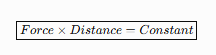
What is the relationship between force and distance in simple machines?
If a machine increases force, it must increase the distance over which the input force is applied.
Work Input = Work Output
If mechanical advantage increases while the input force stays the same, what must increase?
The distance traveled by the applied force must increase; A machine cannot create energy.
If forces stay the same in mechanical advantage what happens?
More distance = more work input
More work input = greater output force
Answer: Distance traveled by the applied force
Why do simple machines require more distance when they increase force?
Simple machines trade distance for force.
A machine can:
✅ Make a task easier by reducing required force
BUT:
❌ You must move the input force over a greater distance.
Example:
What is the relationship between input distance and output force?
If output force increases → input distance increases
If distance decreases → more force is required
Memory Trick:
"Force and distance trade places."
What is a windlass?
A machine that uses a rotating drum and rope to lift or lower heavy objects.
What happens to the drum when it turns in a windlass?
One section of rope winds onto the drum.
Another section may unwind.
Where are windlasses most commonly found?
Wells
Boats (anchors)
Cranes
Construction equipment
How does a windlass drum work?
A windlass drum rotates around its center.
How does a windlass work as it turns?
One rope wraps around the drum.
Another rope unwraps.
How does a windlass work as it turns if the drum has two different-sized sections?
The larger section winds more rope per turn.
The smaller section unwinds less rope per turn.
The difference between the two determines how much rope is shortened.
How do you find the change in rope length for one turn of a windlass?
Subtract the smaller circumference from the larger circumference.

How do multiple turns affect rope length?
Multiply the rope change for one turn by the number of turns.

Why doesn't the weight move the same distance as the rope?
If the windlass uses a movable pulley, the load is supported by two sections of rope.
Because both rope sections share the load:
The rope shortens twice as much as the load rises.
What is the formula for load movement?
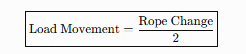
ASVAB Tip: When do you divide the rope movement by 2?
Only when the load is supported by two rope sections (a movable pulley system).
When there is one supporting rope, how does this affect the distance of the load?
Load moves the same distance as the rope.
When there is two supporting rope, how does this affect the distance of the load?
Load moves half the rope distance.
What is condensation?
The process in which a gas changes into a liquid.
What happens to water during condensation?
Water vapor (gas) cools.
It changes into tiny liquid water droplets.
What are examples of condensation?
Water droplets on a cold drink
Morning dew
Bathroom mirror after a hot shower
What causes condensation?
Warm air contains water vapor.
The water vapor touches a cold surface.
The vapor cools below its condensation point.
It changes into liquid water.
Why does condensation form on the outside of a cold pipe?
The pipe is cold.
The surrounding air is warm and contains water vapor.
The water vapor cools when it touches the cold pipe.
The vapor changes into liquid water.
When condensation forms on the outside of a cold pipe does this mean that the water leaked from the pipe?
The water does NOT leak from the pipe.
It comes from the air.
Which situation causes condensation on the outside of pipes?
Cold liquid inside the pipe + warm (hot) air outside the pipe.
EXPLANATION: The cold pipe cools the warm, moist air around it, causing water vapor to condense into liquid.
Memory Trick:
"Cold inside, warm outside = condensation outside."
When will condensation NOT form on the outside of a pipe?
he pipe is warm.
The surrounding air is cold and dry.
There isn't enough water vapor in the air.
What does condensation need?
Moist air
A cold surface
ASVAB Tip: Where does the water on the outside of a cold pipe come from?
The water comes from the air, not from inside the pipe.
Water vapor in the air cools.
It condenses into liquid on the pipe's surface.
How do gear teeth affect gear rotation?
The number of teeth on a gear affects how fast it rotates.
What is the relationship of smaller gear (fewer teeth) to gear rotation?
Smaller gear (fewer teeth) → rotates faster
What is the relationship of larger gear (more teeth) to gear rotation?
Larger gear (more teeth) → rotates slower
How do you calculate the gear ratio?
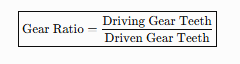
How do you find the number of rotations of the second gear?
Multiply the number of rotations of the driving gear by the gear ratio.
Memory Trick:
"Rotations × Ratio = Answer."

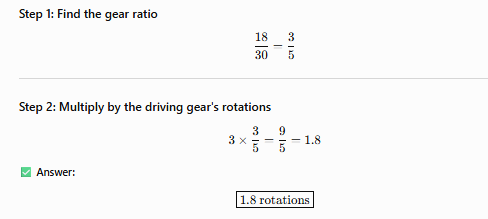
Example: A gear with 18 teeth rotates 3 times. It drives a 30-tooth gear. How many times does the larger gear rotate?
Answer: 1.8 rotations
ASVAB Tip: What happens when a small gear drives a large gear?
A small gear has fewer teeth, so it spins faster.
ASVAB Tip: What happens to the larger gear when a smaller gear drives it?
The large gear rotates fewer times.
Speed decreases.
Torque increases.
ASVAB Shortcut for Gear Rotation Problems
Count the teeth on each gear.
Find the gear ratio:
Driving teeth ÷ Driven teeth
Multiply the driving gear's rotations by the ratio.
Memory Trick:
"Count → Divide → Multiply."