Biology Lab 1 - Midterm Study Questions
 Call Kai
 Learn
Learn Practice Test
 Spaced Repetition
 Match
Match Flashcards
 Knowt Play
1/129

There's no tags or description
Looks like no tags are added yet.
Name | Mastery | Learn | Test | Matching | Spaced | Call with Kai | Chat |
|---|
No analytics yet
Send a link to your students to track their progress
130 Terms
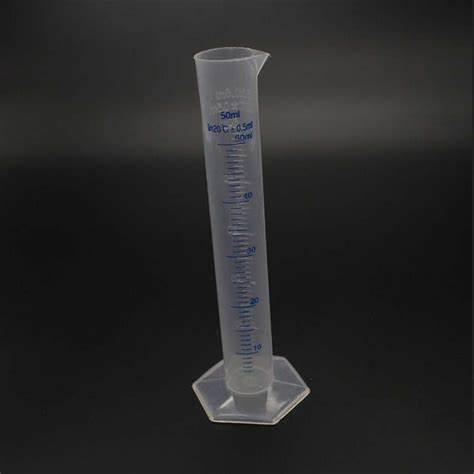
Name this lab measuring tools in the image below.
Measuring cylinder
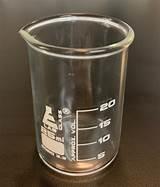
Name this lab measuring tools in the image below.
Glass beaker
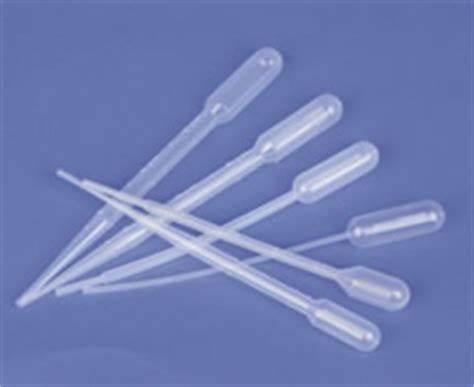
Name this lab measuring tools in the image below.
Pipette
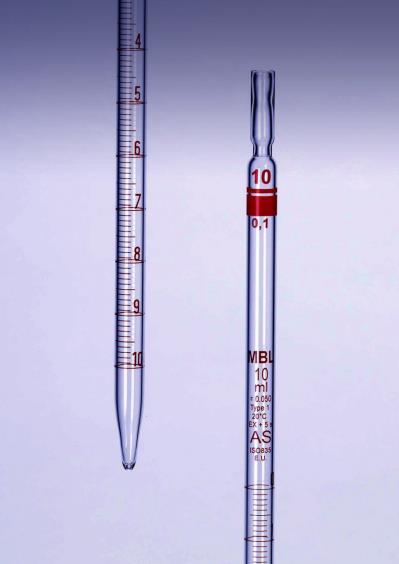
Name this lab measuring tools in the image below.
Glass pipettes (graduated pipettes)
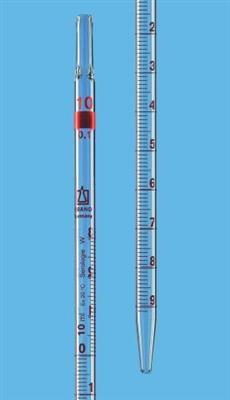
Name this lab measuring tools in the image below.
Another glass pipette
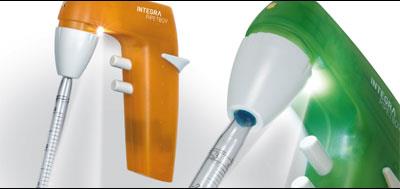
Name this tool.
Pipetting controller
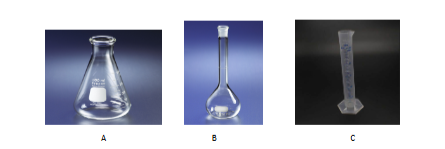
Which measuring tool is the most reliable for measuring the volume of liquid?
B. Volumetric Flask
Which measuring tool is the most reliable to measure the volume of liquid? Glass or Plastic?
Glass tools are generally more reliable because they are less likely to warp or react with chemicals.
Why do glass tools form a meniscus with water?
Glass forms a meniscus due to the adhesive forces between water molecules and the glass surface, causing the water to curve.
Define dependent variable.
The variable being measured or observed in an experiment.
Define independent variable.
The variable that is deliberately changed or manipulated.
Define experimental treatment.
The group or condition where the independent variable is applied.
Define control treatment.
The group or condition where the independent variable is not applied, used for comparison.
Define control variables.
Variables that are kept constant to ensure a fair test.
Define hypothesis.
A testable prediction about the relationship between variables.
Define scientific method.
A systematic approach to research involving observation, hypothesis formation, experimentation, and conclusion.
What is the best way to write a hypothesis?
A hypothesis should be clear, testable, and specific (e.g., "If X happens, then Y will occur").
What is a Null Hypothesis?
A Null Hypothesis states that there is no relationship between the variables being tested.
Go over conversion of metric measurement units.
1 meter = 100 centimeters = 1000 millimeters. 1 liter = 1000 milliliters. 1 gram = 1000 milligrams.
1 meter =
100 cm
100 cm =
1000 milimeters
1 liter =
1000 mililiters
1 gram =
1000 miligrams
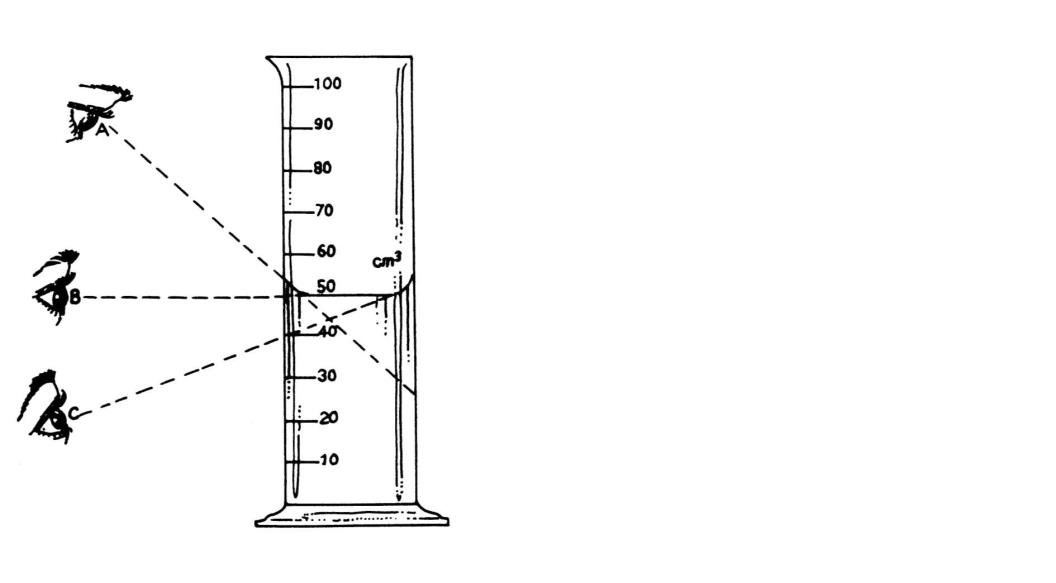
Which letter in the image below shows the correct way to read volume in a graduated cylinder?
(Depends on the image, but the correct way is to read the bottom of the meniscus at eyl
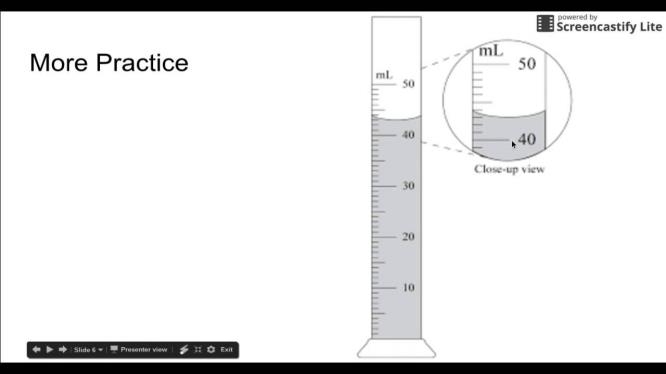
What is the volume of water in the cylinder?
46 ML
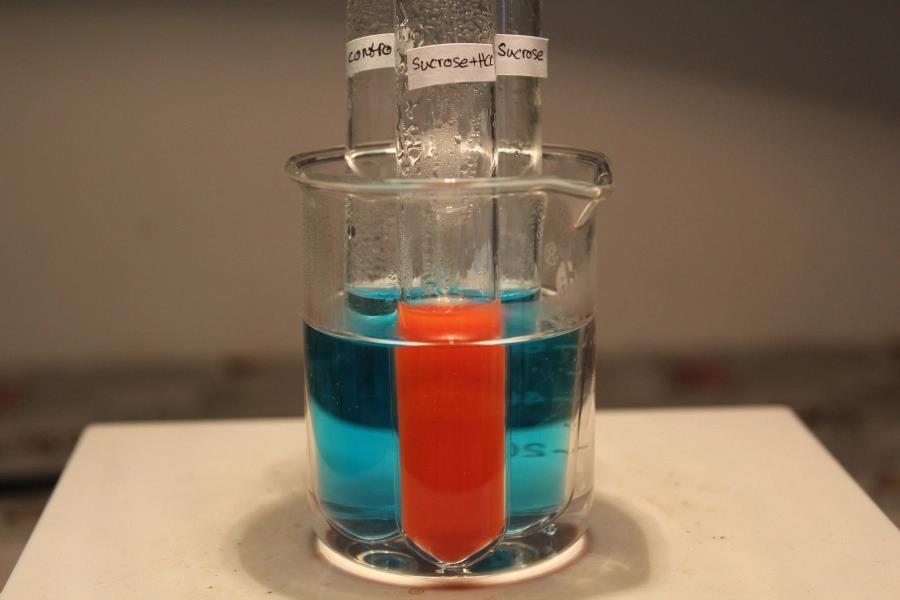
What chemical test is showing in the image above?
(Likely the Benedict's test for reducing sugars.)
What food type is identified by the Benedict Test?
Carbohydrates.
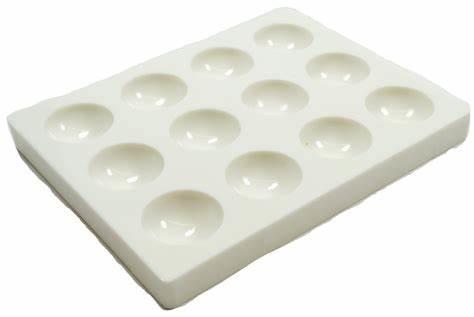
Name this apparatus.
Spot plate.
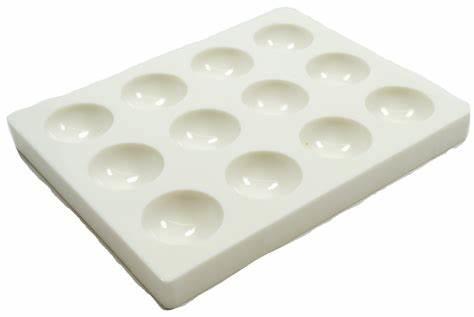
Which chemical tests were done using this lab tool?
(Tests like iodine for starch or Biuret for proteins.)
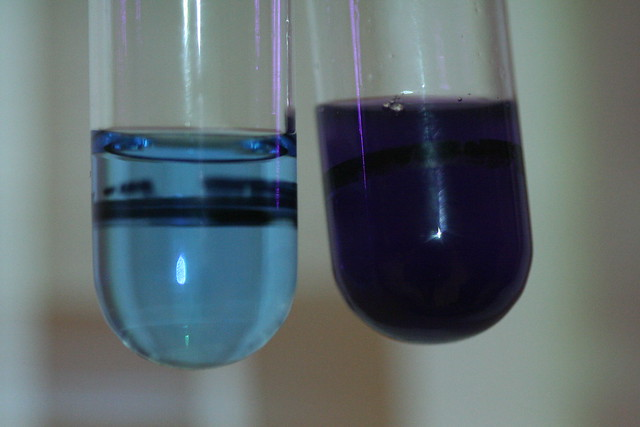
What is the negative test color in protein identification?
Blue (Biuret reagent remains blue in the absence of proteins).
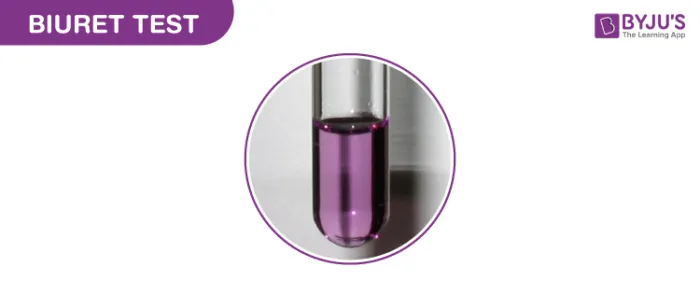
Is this a positive or negative Biuret test result.
Purple (Biuret reagent turns purple in the presence of proteins).
Which reagent is used in protein identification?
Biuret reagent.
Which test molecule is identified with the reagent Iodine?
Starch (iodine turns blue-black in the presence of starch).
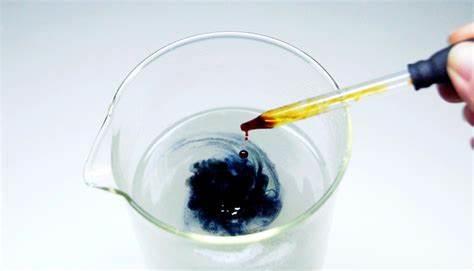
Why the solution in the beaker is turning into a blue-black color with Lugol Iodine? Explain
The blue-black color is observed when Lugol's iodine is added to a starch solution.
What is the negative test color in starch identification experiment?
Yellow or brown (iodine remains yellow-brown in the absence of starch).
What is the positive color in starch identification experiment?
Blue-black (iodine turns blue-black in the presence of starch).
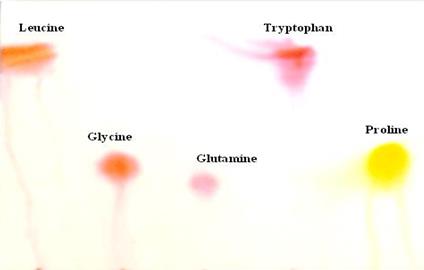
What did you learn about the test above?
The ninhydrin reagent is used to test whether amino acids are present.
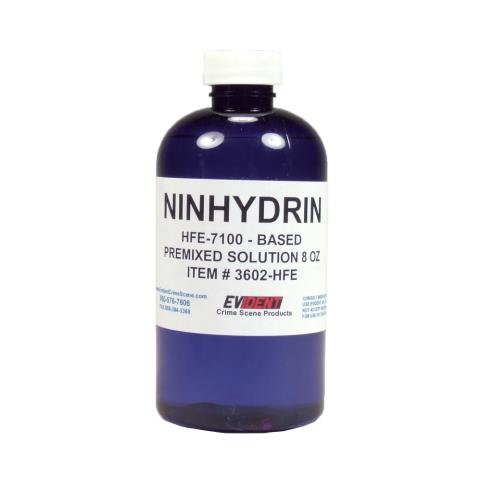
What is this reagent used to indicate during test?
Ninhydrin is used to indicate the presence of amino acids during the test.
If you add biuret to food molecules and they turn purple, which biological molecules have you just identified?
Proteins.
What is a monosaccharide?
A monomer of carbohydrates or a simple sugar (e.g., glucose).
Which test positively identifies monosaccharides?
The Benedict's test (colors ranging from green to yellow to orange to red).
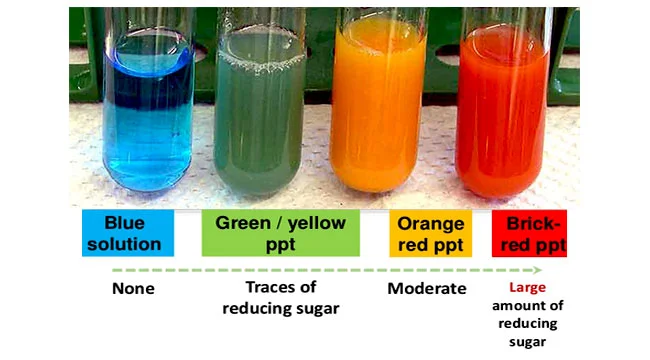
In the Benedict’s test, the colors Orange and Red indicates moderate to high amounts of what?
Reducing sugars
TRUE or FALSE: All dissachirides are reducing sugars.
FALSE; not all disaccharides are reducing sugars. Its half and half.
Give examples of monosaccharides.
Glucose, fructose, galactose.
Give an example of a polysaccharide.
Starch, cellulose, glycogen.
What is the name of the monomer of protein?
Amino acids.
What is the example of the monomer of starch?
Glucose.
Name the reactions that create a polymer from monomers.
Dehydration synthesis (or condensation reaction).
Which reaction breaks down a polymer into its monomers?
Hydrolysis.
Which biological molecules are identified by the reagent Sudan IV?
Lipids.
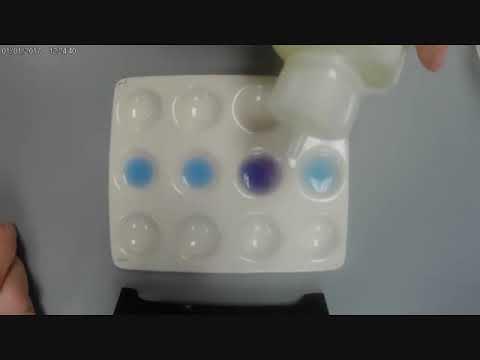
Which groove in the spot plate has protein?
The third one, it is purple.
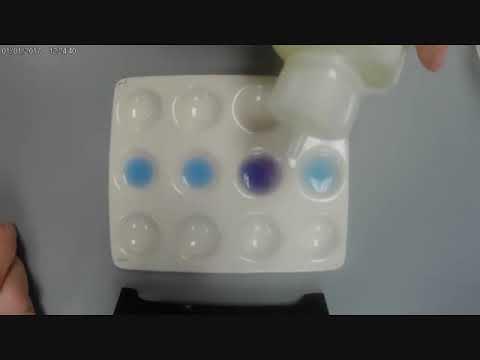
Which reagent did we use?
Biuret reagent.
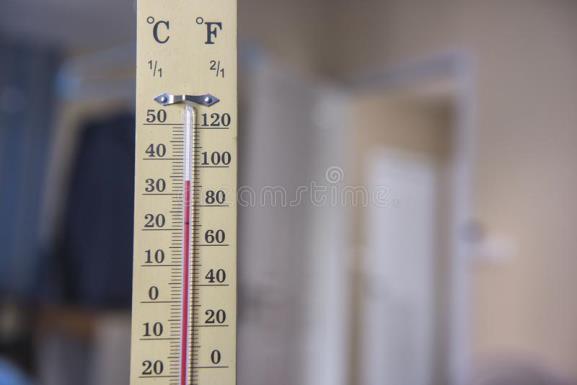
What is the temperature in the thermometer?
34°C mark and the 92°F mark.
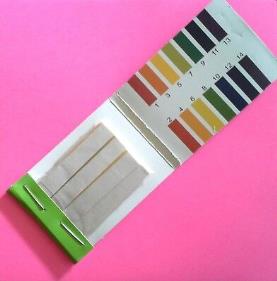
These color papers are used in which lab activity?
pH testing.
NaOH, base or acid?
NaOH is basic.
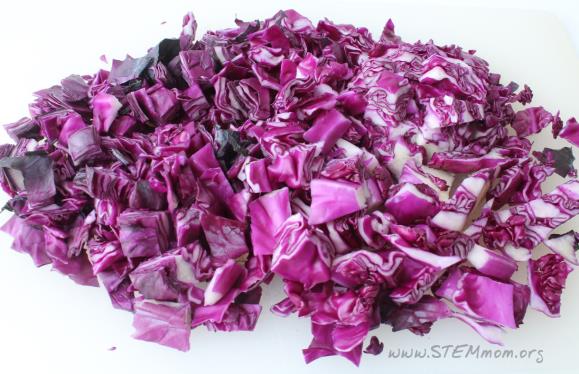
In which lab activity do we use red cabbage?
pH indicator experiment.
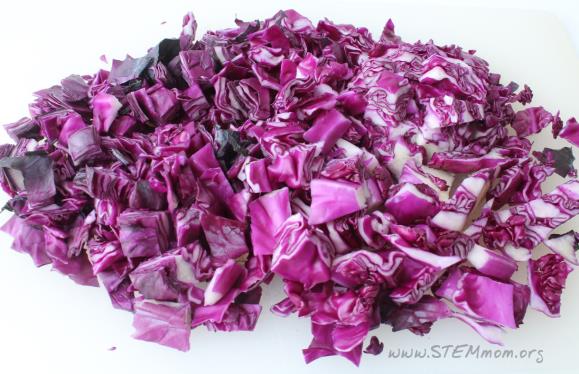
What is the name of the active compound in this vegetable that is used as an indicator?
Anthocyanin.
What colors does cabbage turn into in acidic solutions?
Red/Pink.
What colors does cabbage turn into in basic solutions?
Green/Yellow.
What colors does cabbage turn into in neutral solutions?
Purple.
What is the function of a buffer solution?
A buffer solution resists changes in pH.
How does a buffer help our body?
Buffers help maintain a stable pH in blood and tissues.
What is the pH of water?
Water has a pH of 7. Neutral.
What is the pH of gastric acid?
Gastric acid has a pH of 1.
Is bleach a base or an acid?
Bleach is basic.
Define acidic solution.
It has a pH less than 7.
Define basic solution.
It has a pH greater than 7.
Define neutral solution.
pH = 7.(e.g., water)
Some examples of body fluids and medicines with their pH values from your lab manual.
Blood: pH 7.35-7.45. Stomach acid: pH 1.5-3.5. Urine: pH 4.5-8.0. Antacids: pH > 7.
Which meds are better if you have acid indigestion?
Antacids (e.g., Tums, Rolaids).
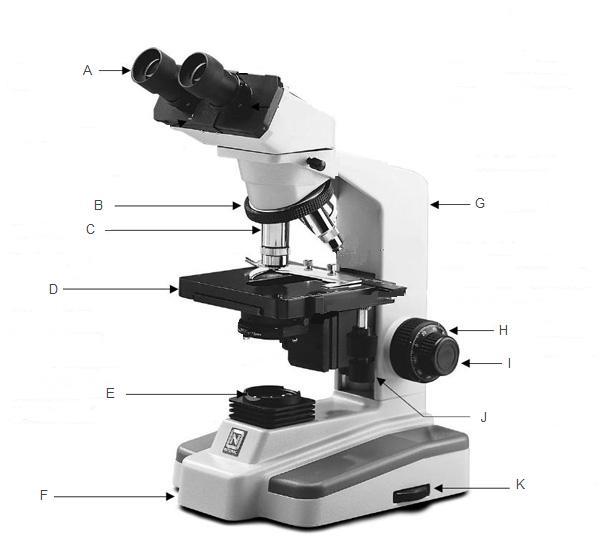
What is A?
Eyepiece (Ocular Lens): Magnifies the image.
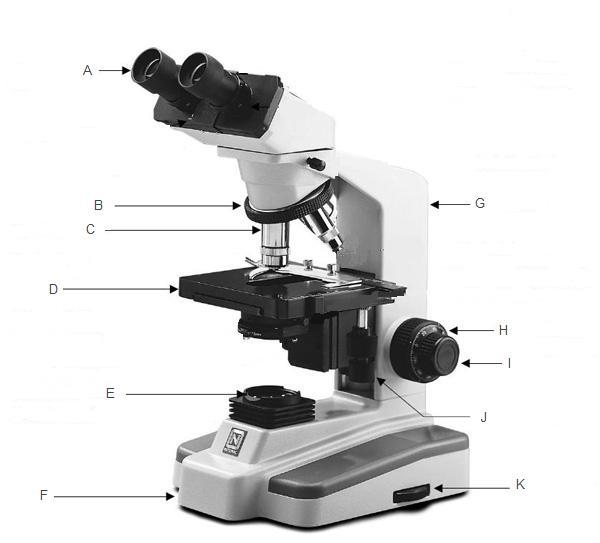
What is B?
Nosepiece: holds and rotates the objective lenses.
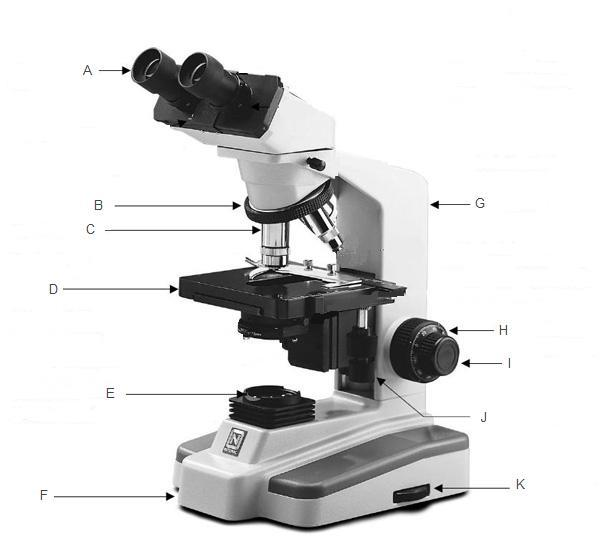
What is C?
Objective lenses (4x, 10x, 40x, 100x)
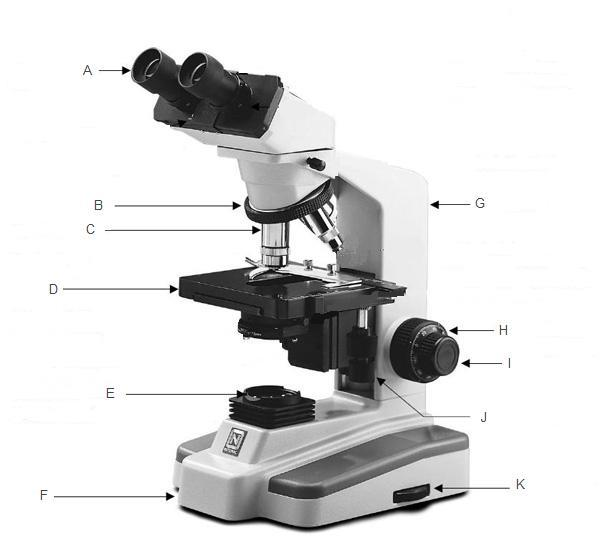
What is D?
Stage.
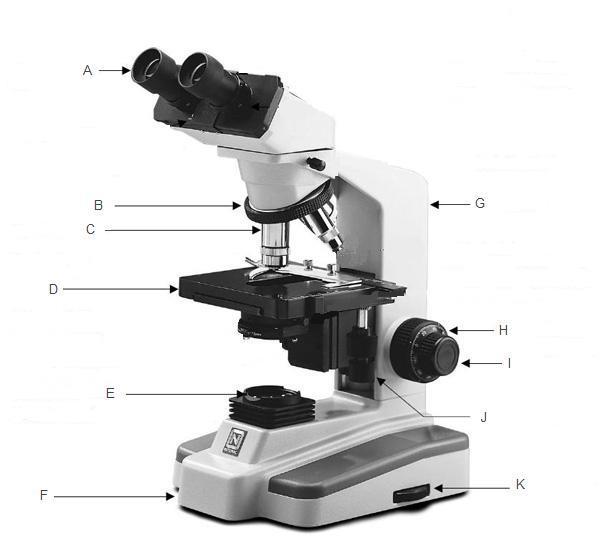
What is E?
Light. Above it is the Condenser/Diaphragm which focuses the light.
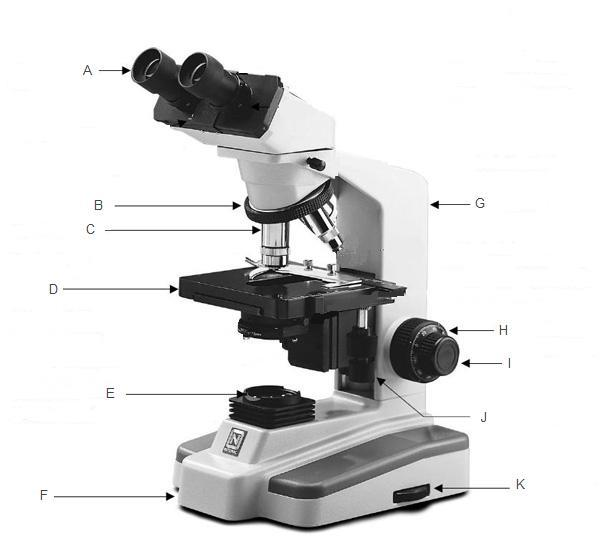
What is F?
Base.
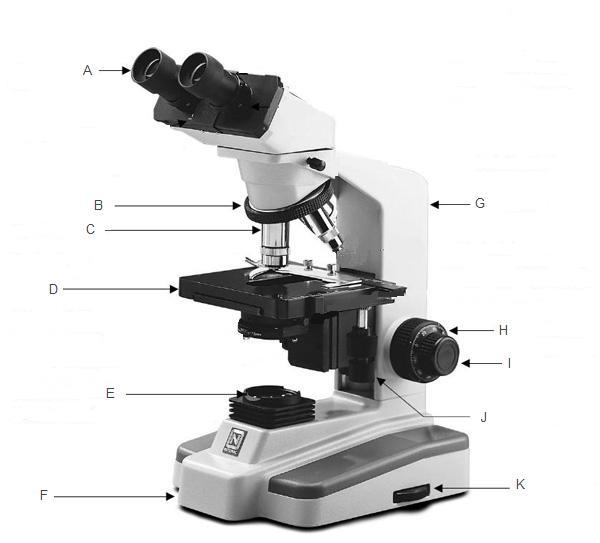
What is G?
Arm.
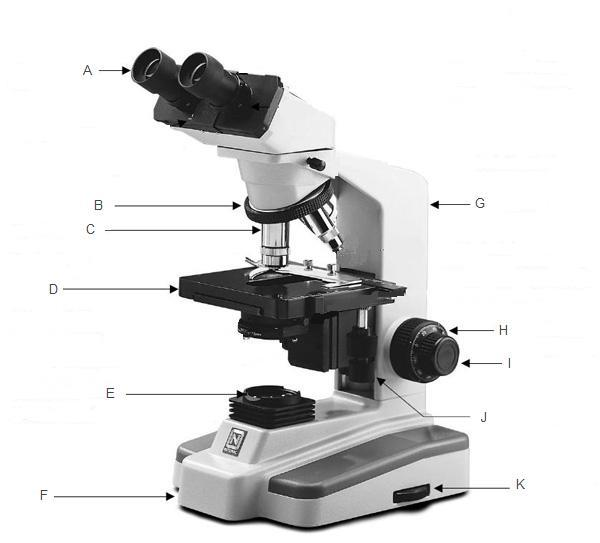
What is H?
Coarse Adjustment Knob: This knob moves the stage for large and quick focus.
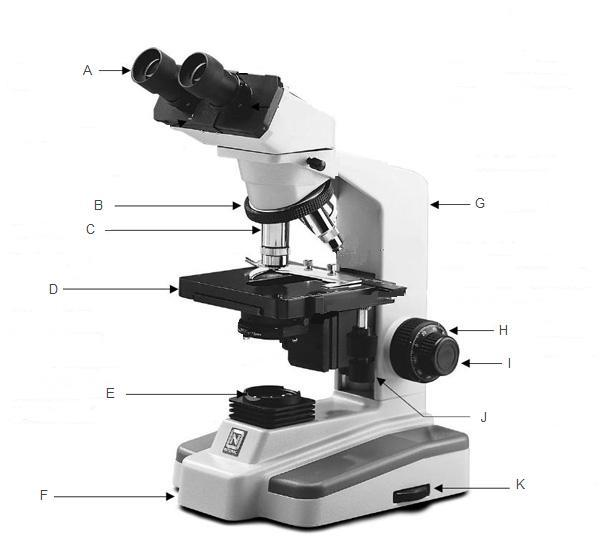
What is I?
Fine Adjustment Knob: Knob used for making very precise focus after the coarse adjustment has been made.
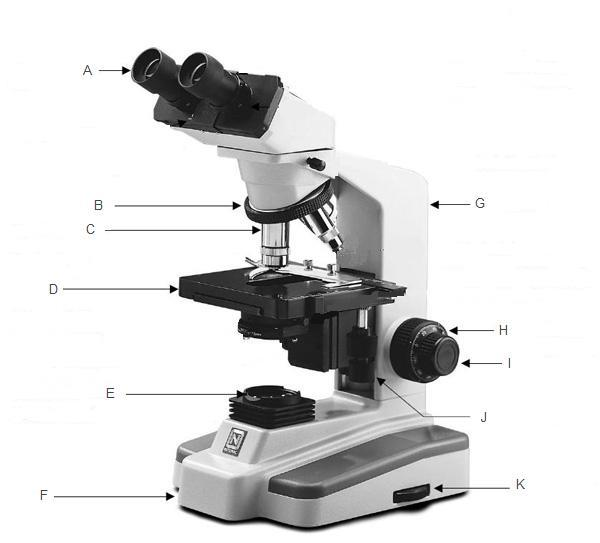
What is J?
Stage Knobs: Knob that that moves the stage left and right.
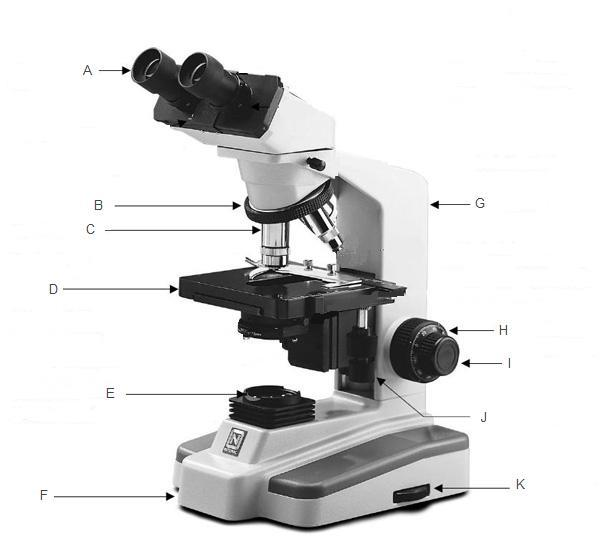
What is K?
Brightness Slider: Adjusts the amount of light emitted
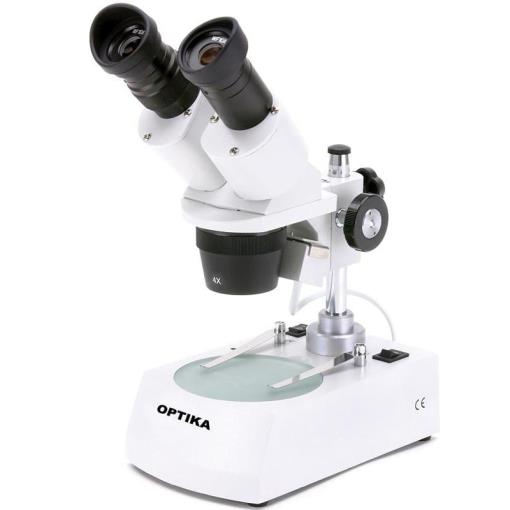
Name this microscope.
Compound microscope
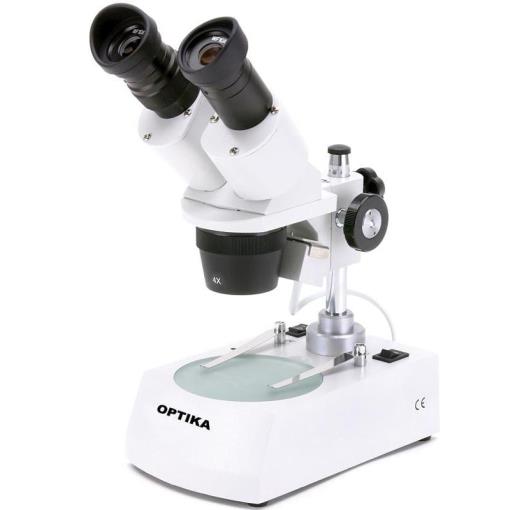
What kind of image does it produce?
A 2D, magnified image.
What does the term TM of a microscope mean ?
Total magnification.
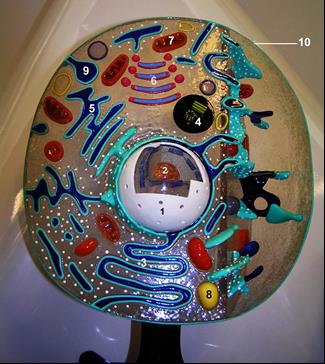
What is 1?
Nuclear Envelope: Membrane that protects nucleus, controls what enters and exits the cell.
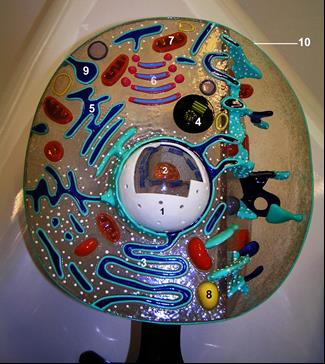
What is 2?
Nucleolus: Inside the Nucleus, it makes ribosomes.
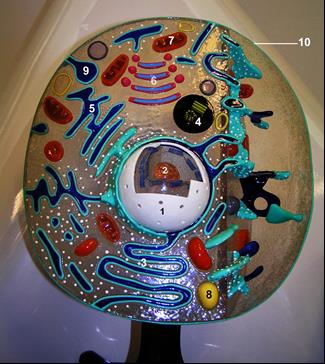
What is 3?
Rough ER: has ribosomes.
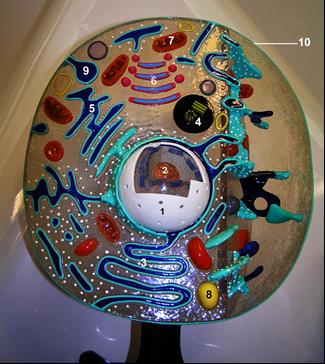
What is 4?
Centrioles: Involved in cell division.
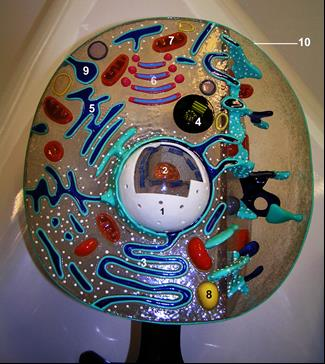
What is 5?
Smooth ER: makes lipids(fats)
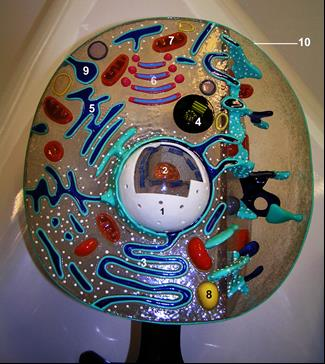
What is 6?
Ribosomes: Makes proteins.
Golgi Apparatus: Modifies, sorts, and packages proteins for transport.
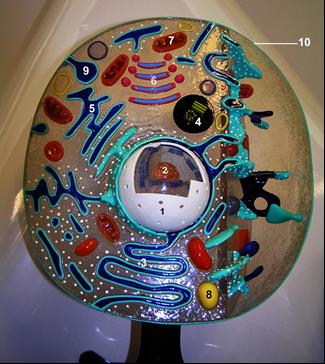
What is 7?
Mitochondrion – The cell’s energy maker, it produces ATP (energy).
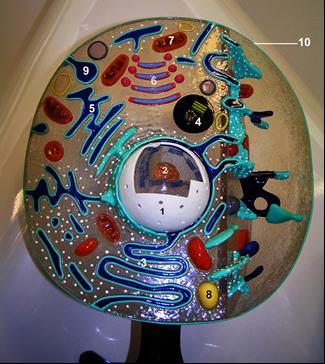
What is 8?
Lysosome: Breaks down waste with enzymes
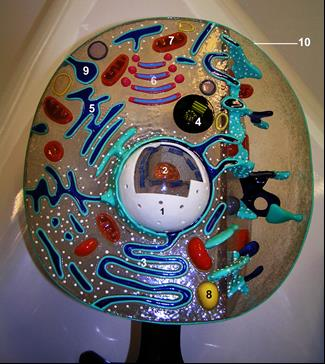
What is 9?
Vesicle: a small, membrane-bound sac that transports materials within the cell.
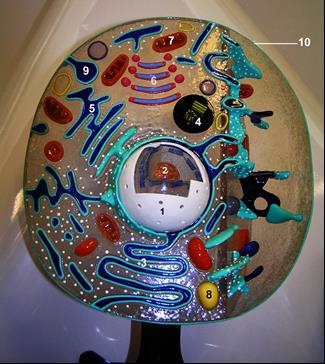
What is 10?
Plasma Membrane: The outer part of the cell that controls what can come in and out.
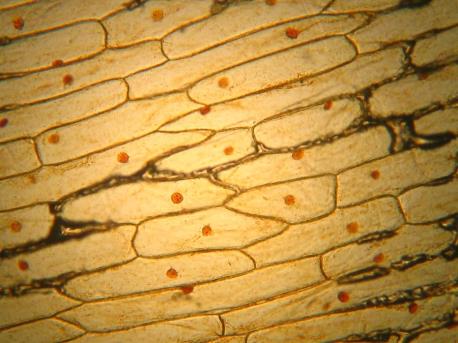
What cell is this.
Onion cell.
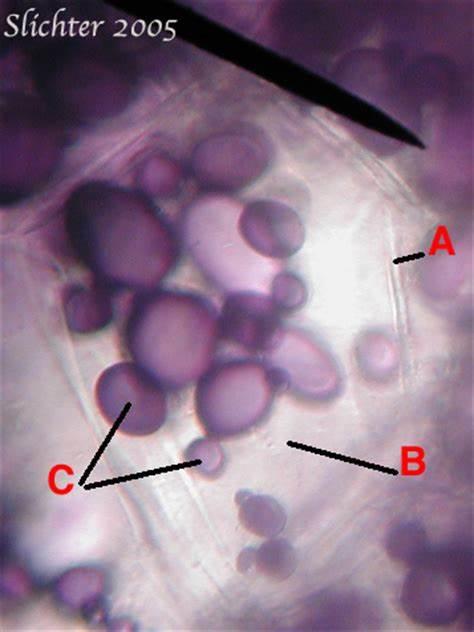
What cell is this.
Potato cell.
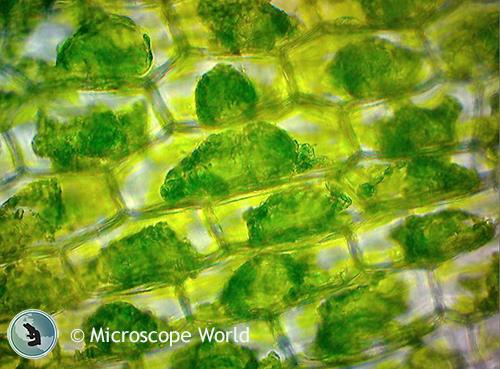
What cell is this.
Elodea cell
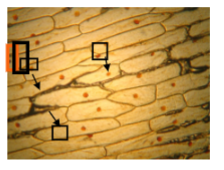
Label structures a, b, c.
Cell Wall
Cytoplasm
Nucleus
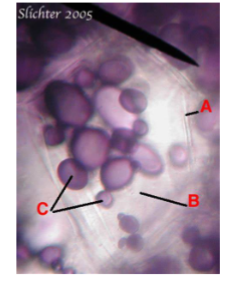
Label structures A, B, C.
A. Cell wall
B. Cytoplasm
C. Starch
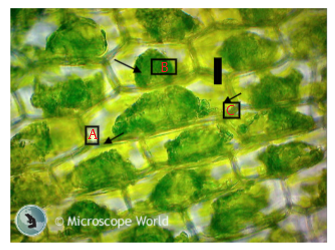
What type of solution are these Elodea cells in?
Hypertonic; plasmolysis has occurred.