Type Ch 6
 Call Kai
 Learn
Learn Practice Test
 Spaced Repetition
 Match
Match Flashcards
1/86

There's no tags or description
Looks like no tags are added yet.
Name | Mastery | Learn | Test | Matching | Spaced | Call with Kai | Chat |
|---|
No analytics yet
Send a link to your students to track their progress
87 Terms
Who is William Morris?
The founder of the Arts & Crafts Movement, designed fonts Golden, Chaucer and Troy, and home furnishings, wallpaper and fabrics.
Kelmscott Press
Printed large editions of historical texts is a style reminiscent of Gothic book design.
Paul Renner
Designed the font Futura
Significance of the Linotype machine?
Increased speed of typesetting tenfold, typesetters used keyboard to set type
Linotype
Used keyboard to line up matrices then cast one line at a time.
What is Hot Type?
Uses heat to cast the letters from metal.
Rudolf Koch
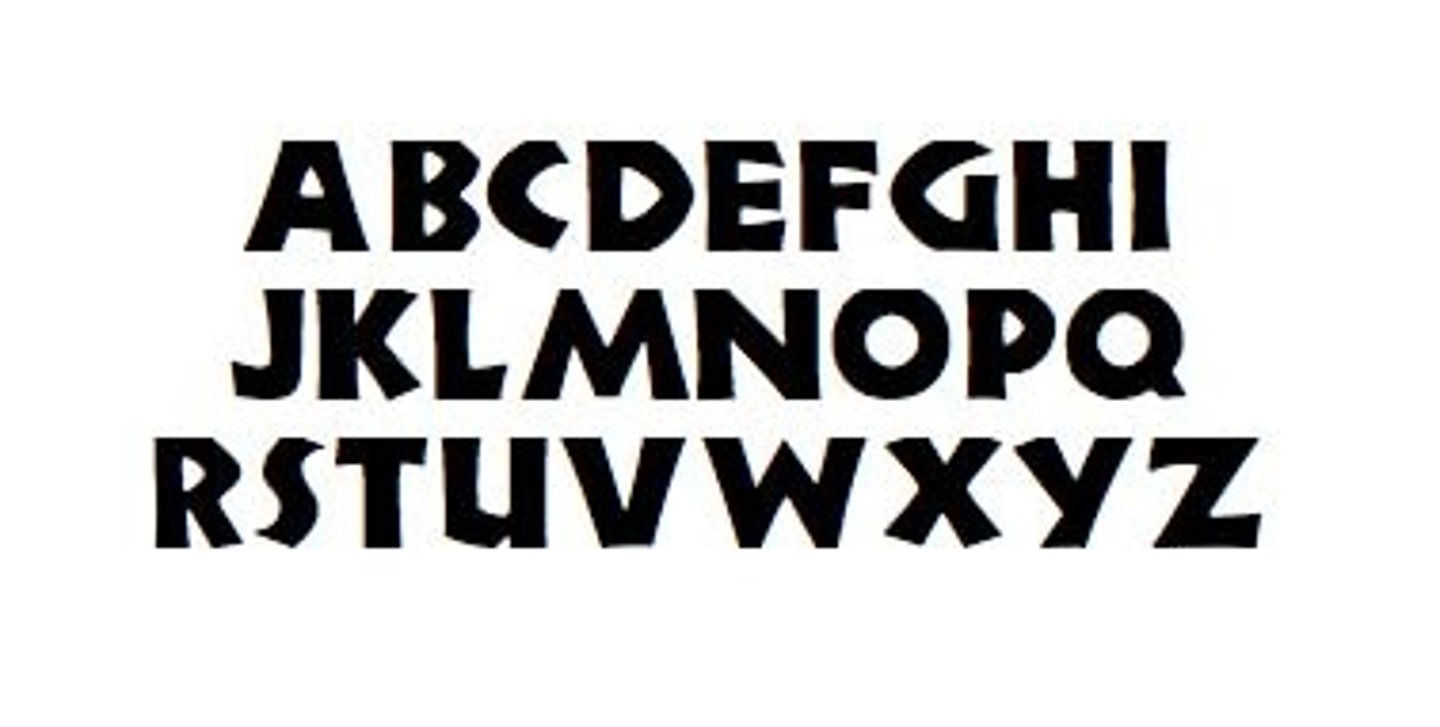
Designed the fonts Neuland and Kabel
Eric Gill
Stone carver who designed the font Gill Sans, Johanna, and Bunyan.
Frederic Goudy
Founder of the Village Press and designer of over 122 fonts
Aldo Novarese
Designed the fonts Fenice, Microgamma and Eurostile.
Stanley Morrison
Worked to design the font Times New Roman for The Times newspaper of London.
Times New Roman
Has a large eye on e and condensed letters.
What is an ampersand?
The and sign
Victorian Art
Design developed in late 1800's, type is known for lavish ornamentation, decorative curlicues and natural elements.
Arts & Crafts Movement
Founded by William Morris as reaction against the shoddy product design and materials used in industrial revolution.
Art Nouveau
Art movement: glorified female beauty & natural ornamentation with symmetry. Fonts had sinewy, graceful curving structure.
Art Deco
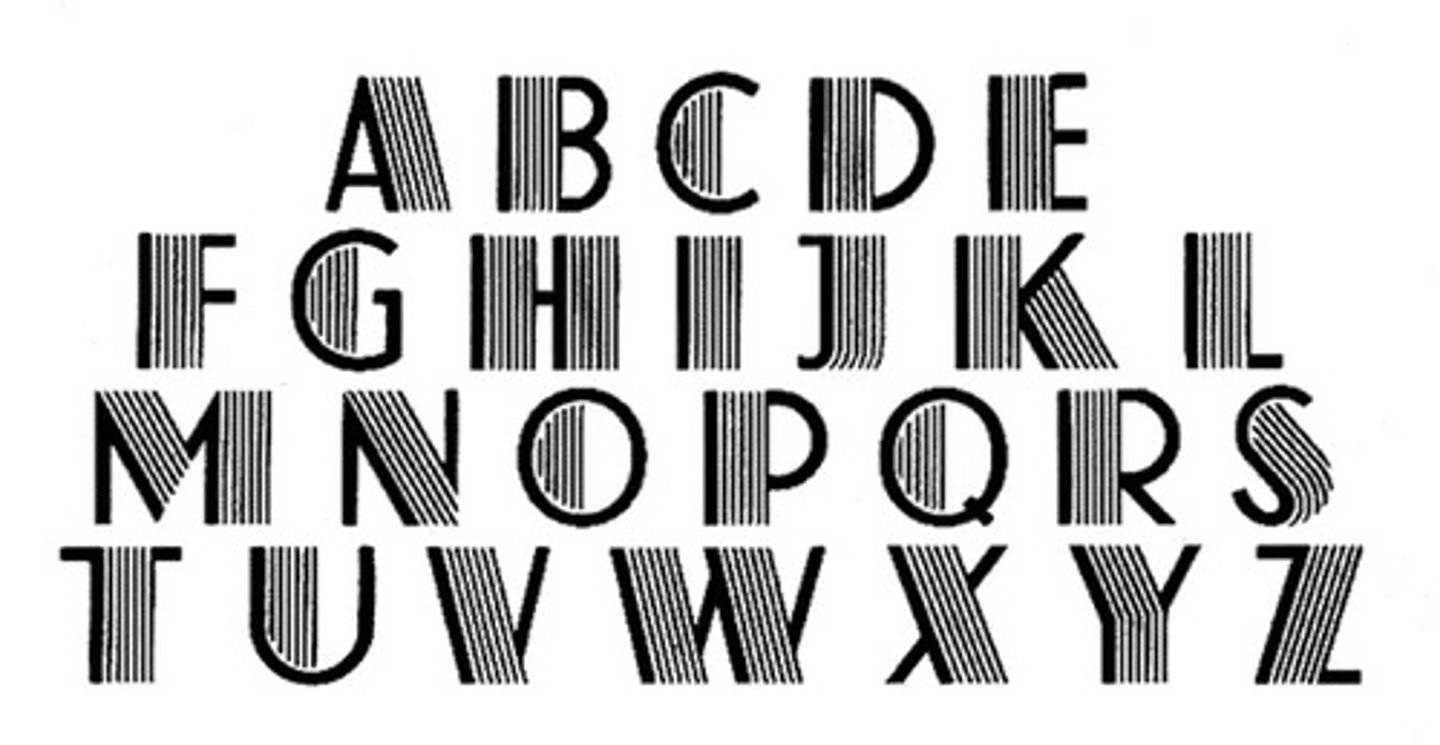
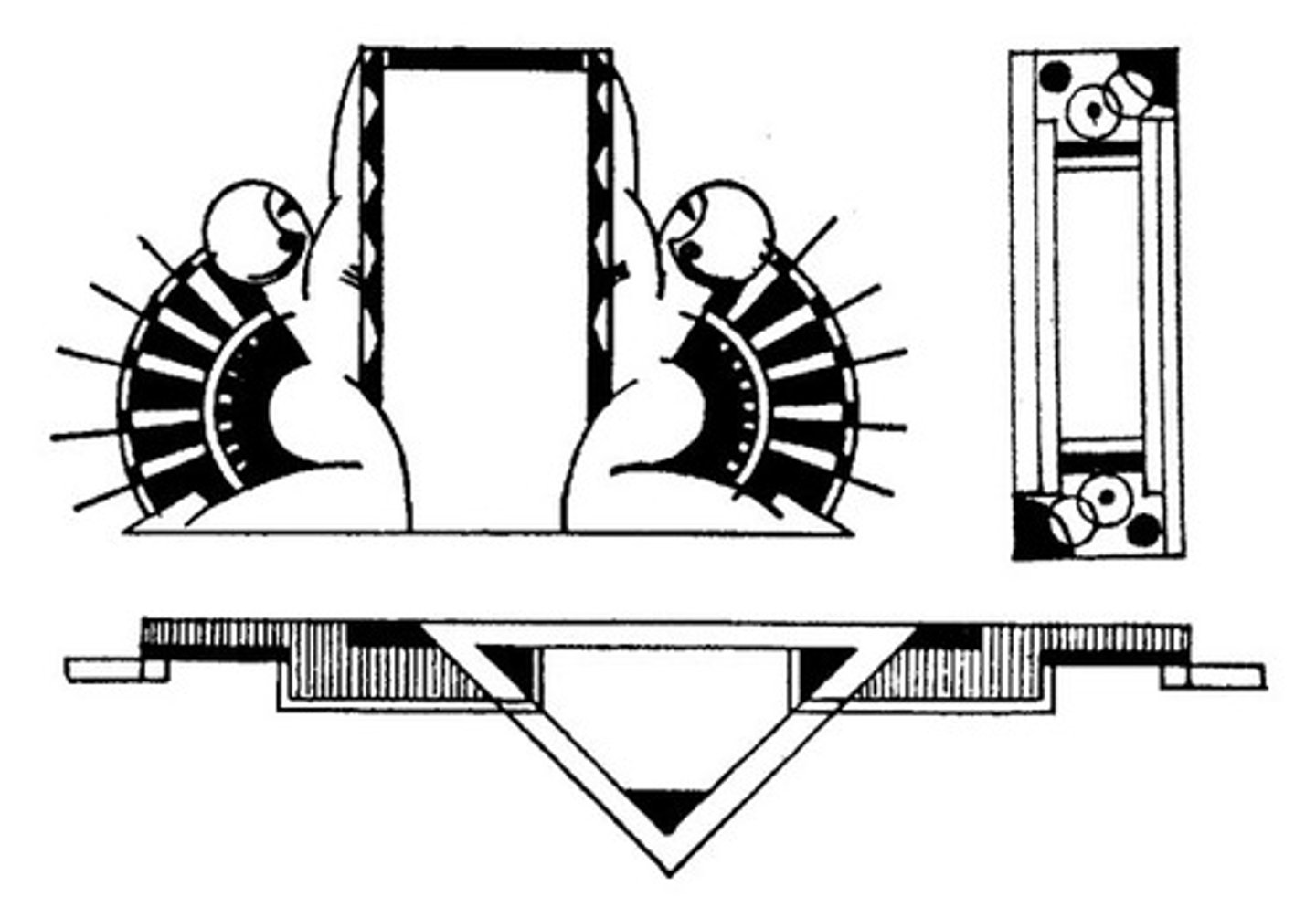
High contrast, symmetrical, geometric forms in black and white.
Bauhaus
Reaction to unnecessary Victorian decoration. Desired minimalism, streamlined design to mass market.
Bauhaus School
German art school "form follows function" "less is more"; reaction against the overly ornate art Nouveau styles.
Herbert Bayer
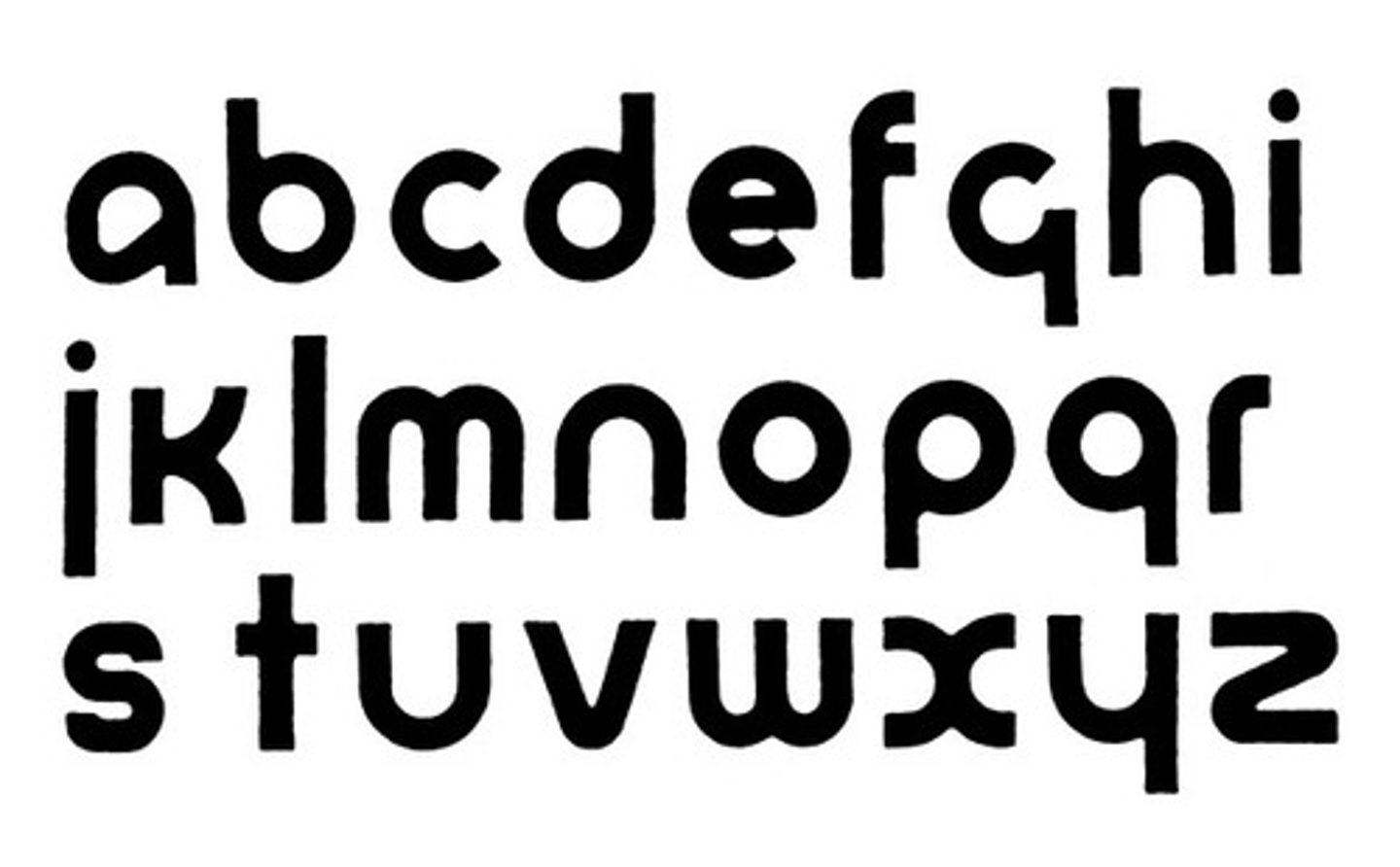
Created the font Universal, tried to fuse upper and lowercase letters into one.
Dada type designers
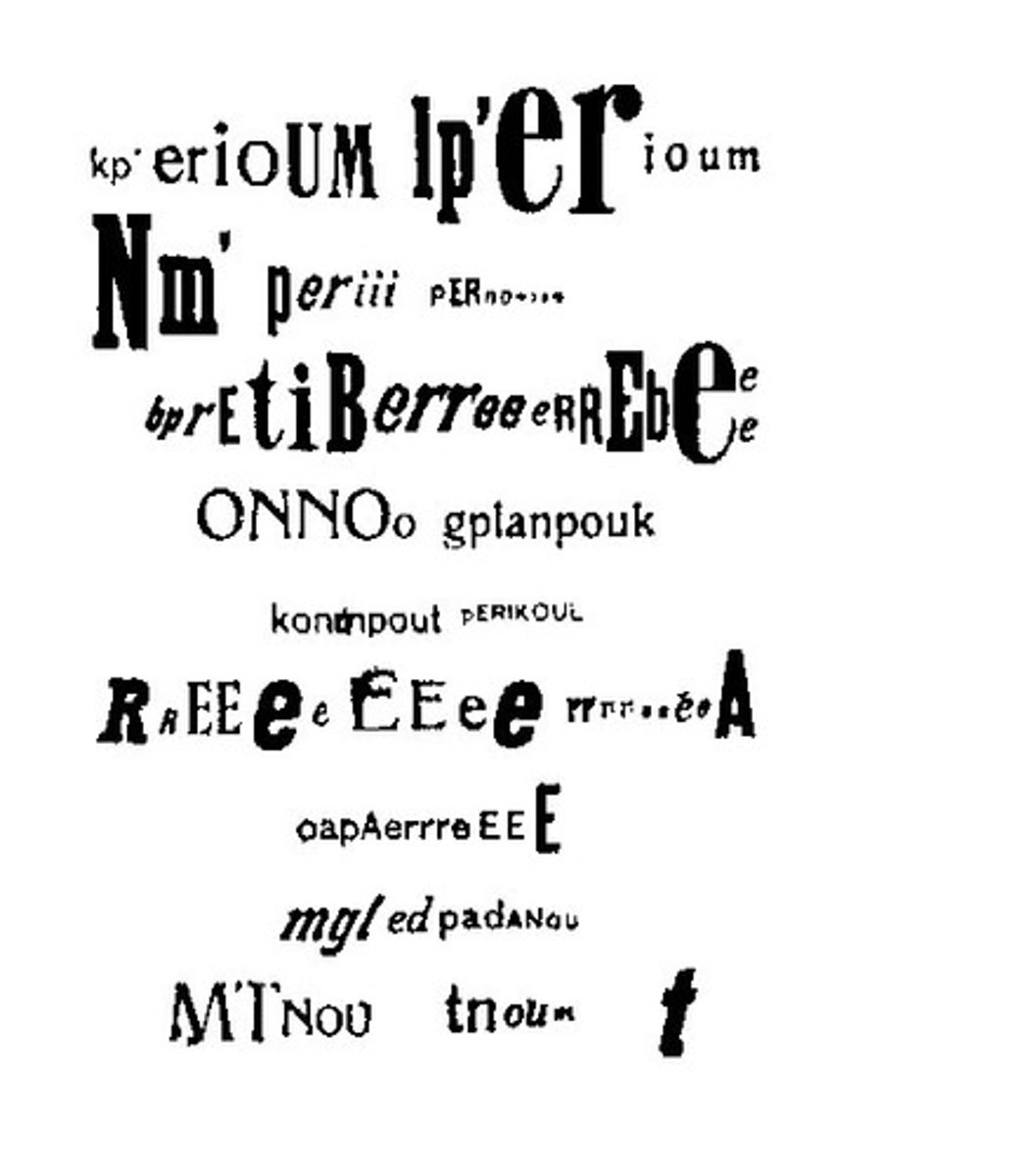
Different sizes of lead type on the press bed at varying angles, with no intent to spell or communicate.
Dada
Zurich, Switzerland based art movement (post WWI) thought art was dead, everything was art, challenged notion of beauty as a part of art.
DeStijl
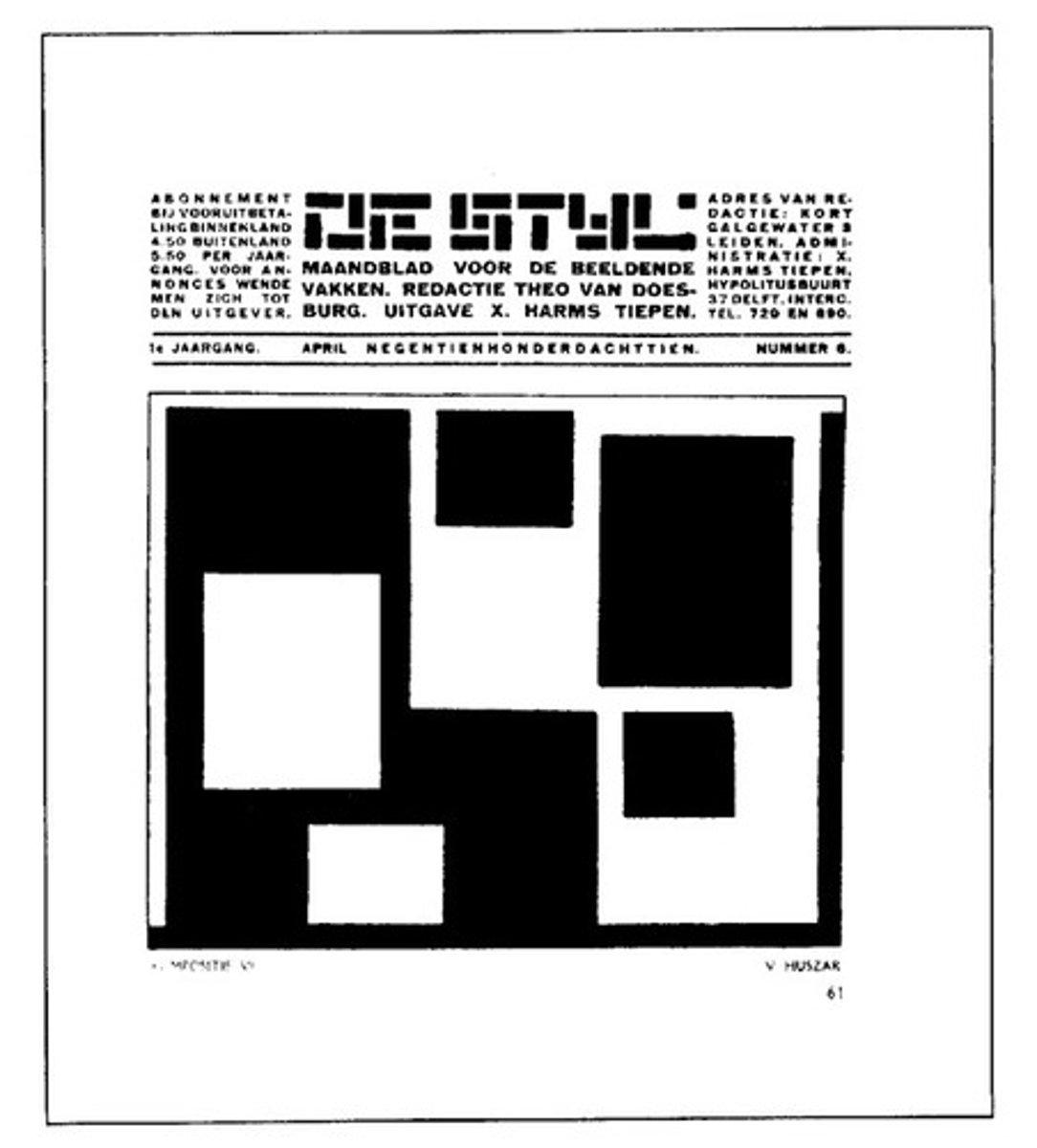
Artform in the Netherlands, geometric based art rooted in right angles, rectangles, grid lines, etc.
Bauhaus Philosophy
Less is More, Form Follows Function.
Theo van Doesburg
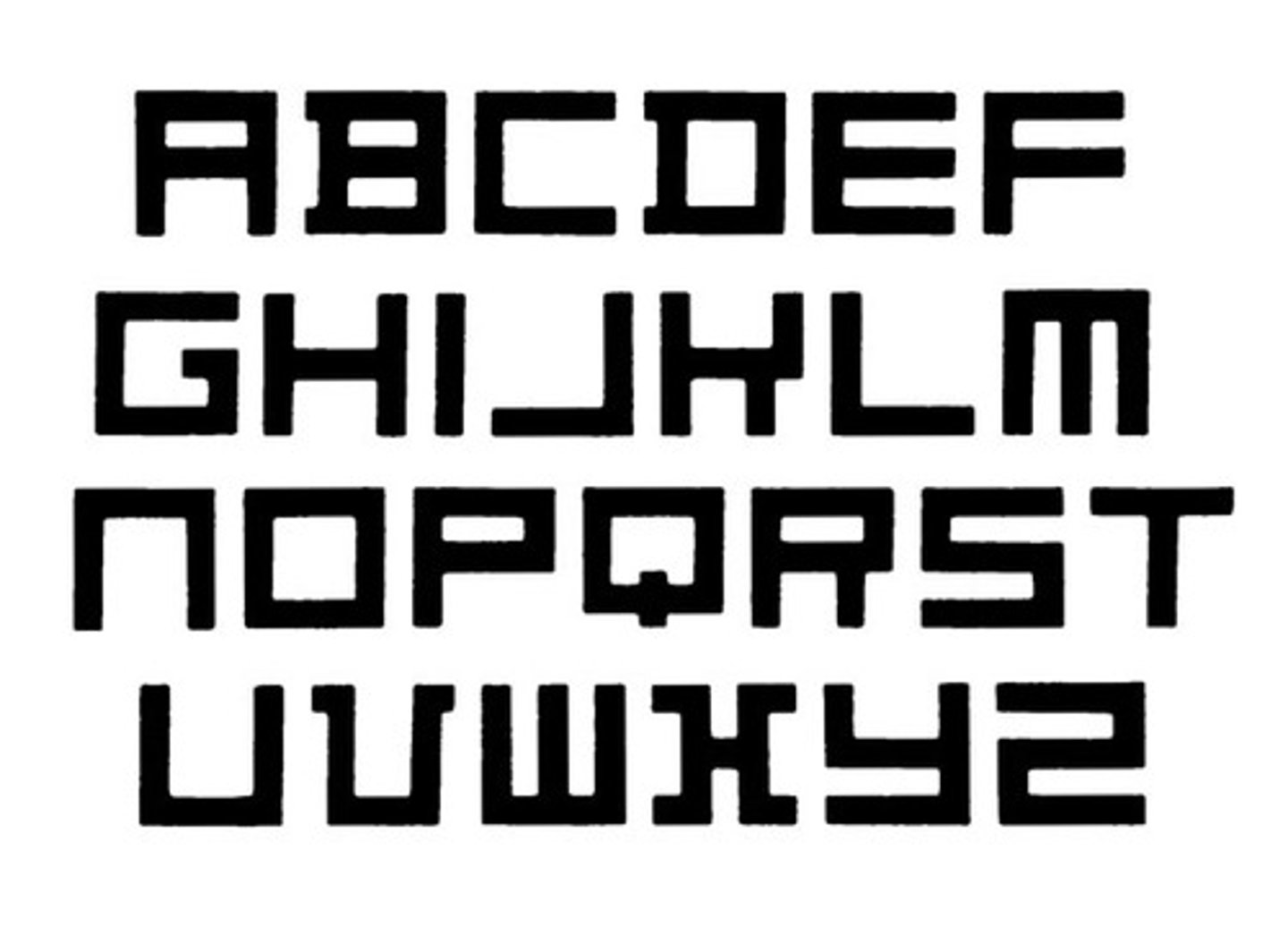
Created an Alphabet in DeStijl style, omitted curves and angles in the letters.
Constructivism
Russian art form after the Bolshevik Revolution: art for the people as posters and magazines; shapes & type on diagonals.
What is Cold Type?
Type created using negatives, lenses for enlargement and photosensitive paper.
Psychedelic Art
Tries to replicate the effects of mind-altering drugs.
Herb Lubalin
Designer of Mother & Child logo; designed Avant Garde font; able to illustrate with type.
Seymour Chwast
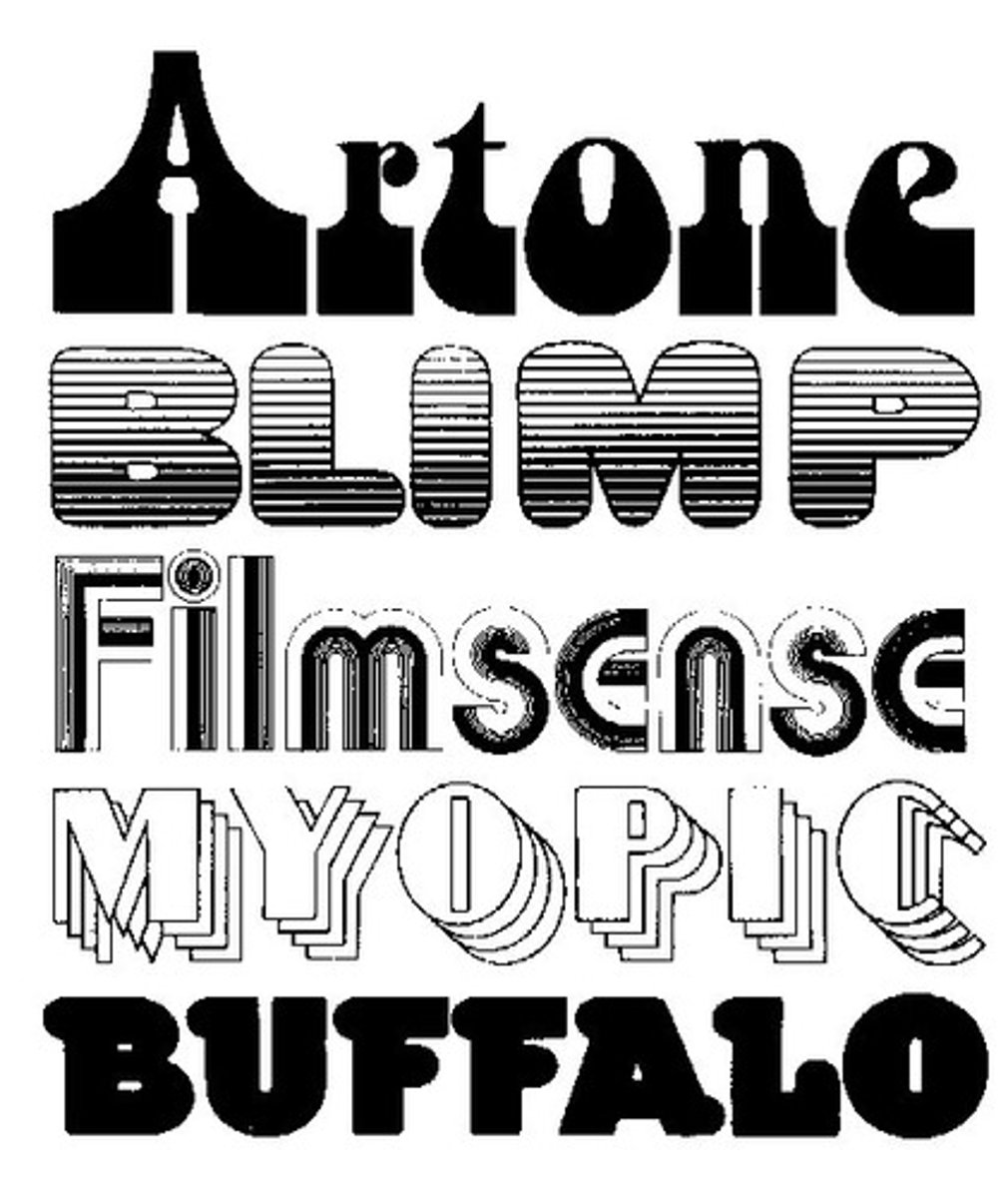
Illustrator designed fonts Artone, Blimp, Filmsense, Myopic with aesthetics of the '60s.
Hermann Zapf
Accomplished calligrapher, designed from original sources: Palatino, Melior & Optima.
Ed Benguiat
Designed over 500 fonts including Panache, Souvenir, Barcelona, and Korinna.
ITC International Typeface Corporation
Redesigned classic fonts with higher x-height for better readability.
Post-Modernism
Combination or pastiche of elements from prior art movements to create a new style in one font.
An Alphabet designed by Theo vanDoesburg, DeStijl aesthetic
Art Deco font with high contrast geometric shapes.
Art Deco frames that utilize geometric shapes
Art Nouveau natural motifs.
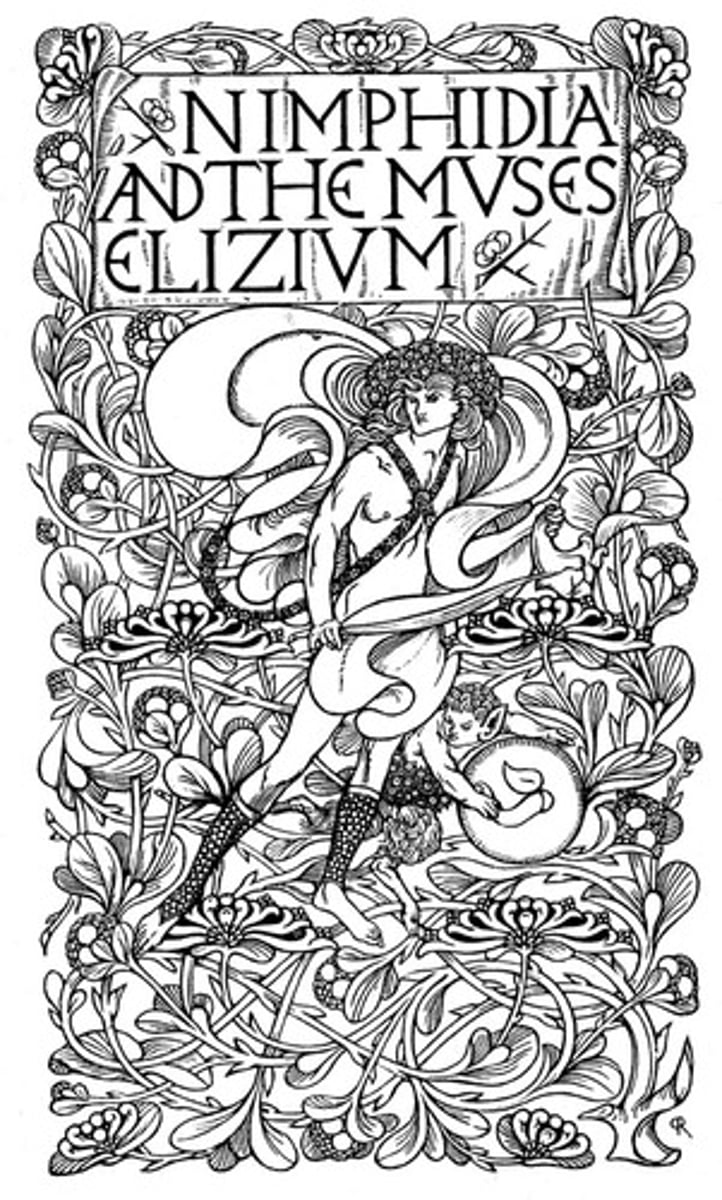
Art Nouveau type and ornamentation
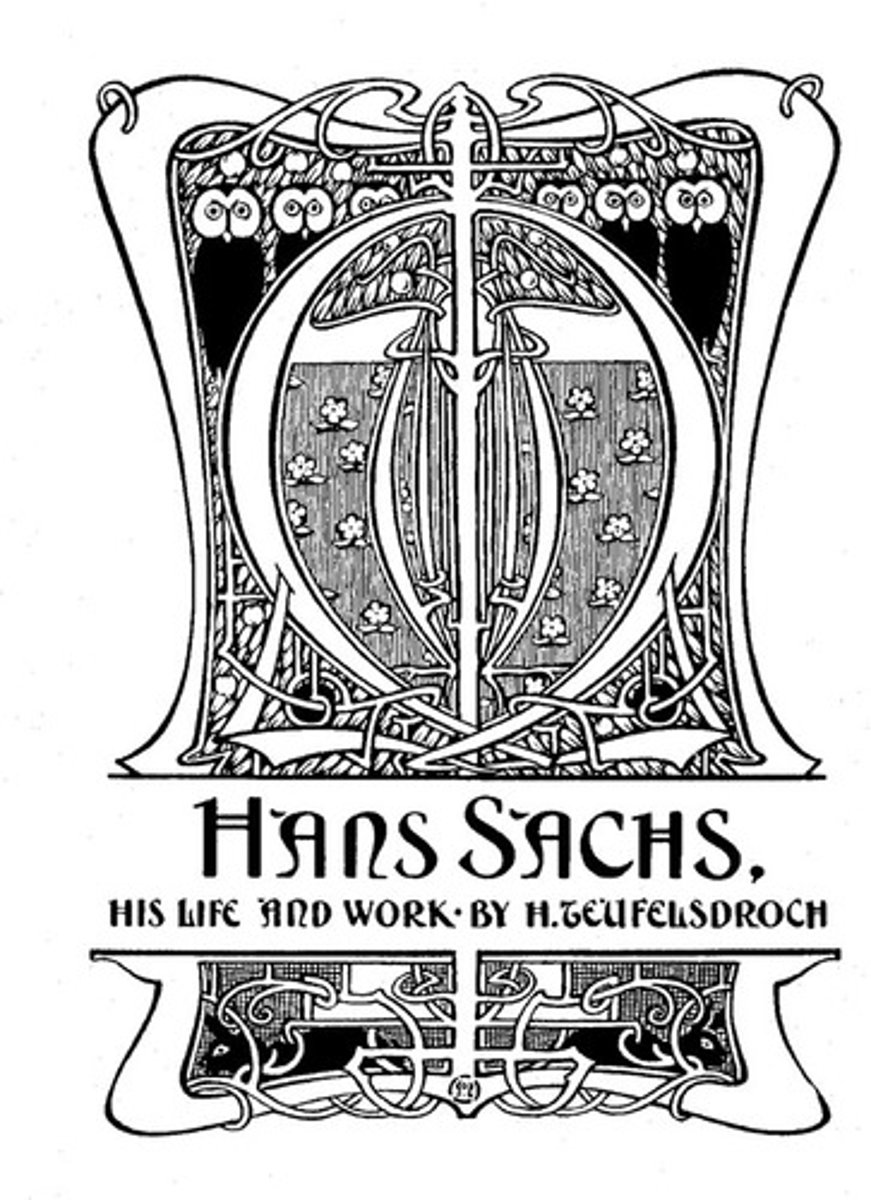
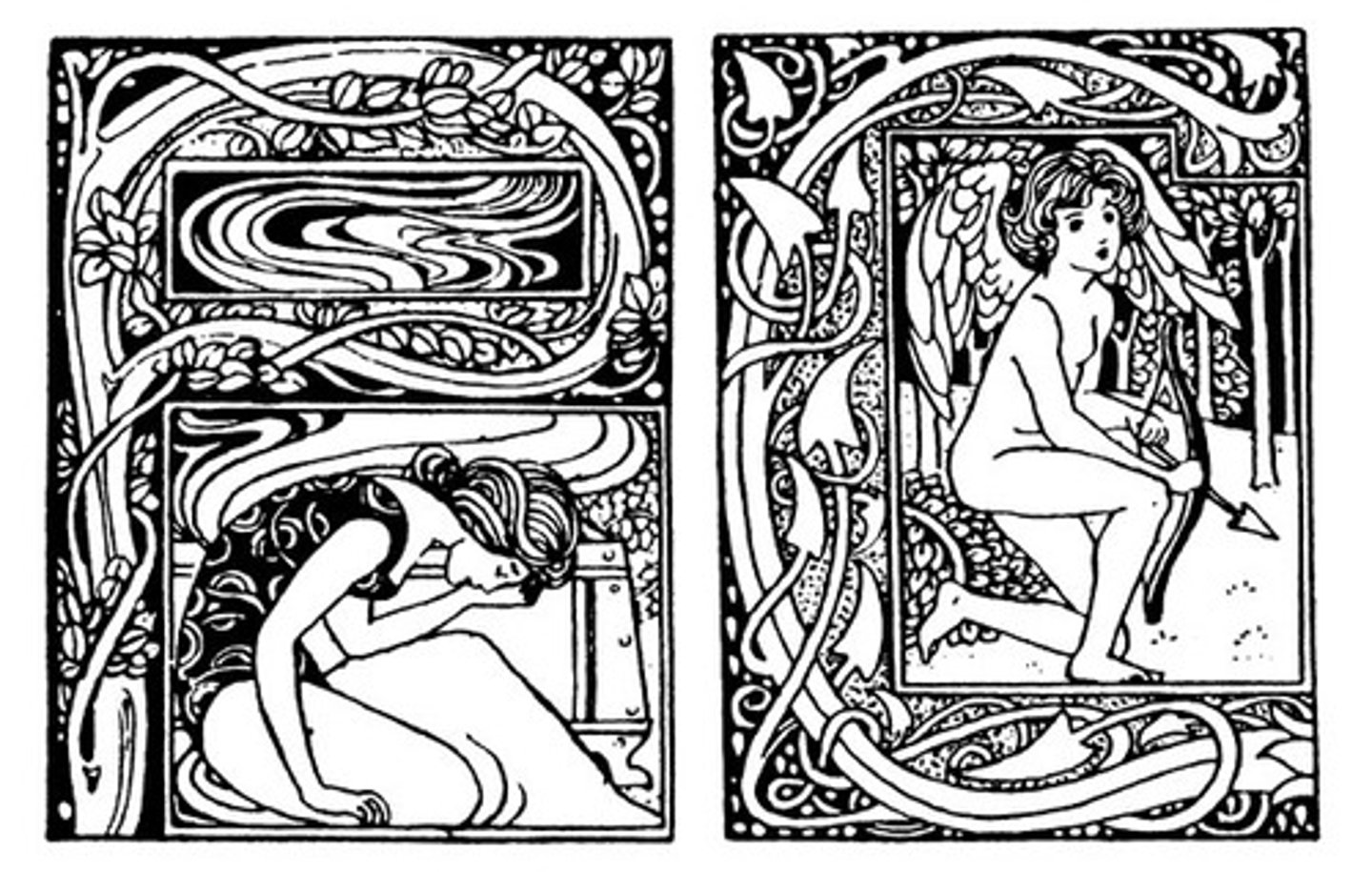
Art Nouveau initial capitals with flowing naturalistic forms.
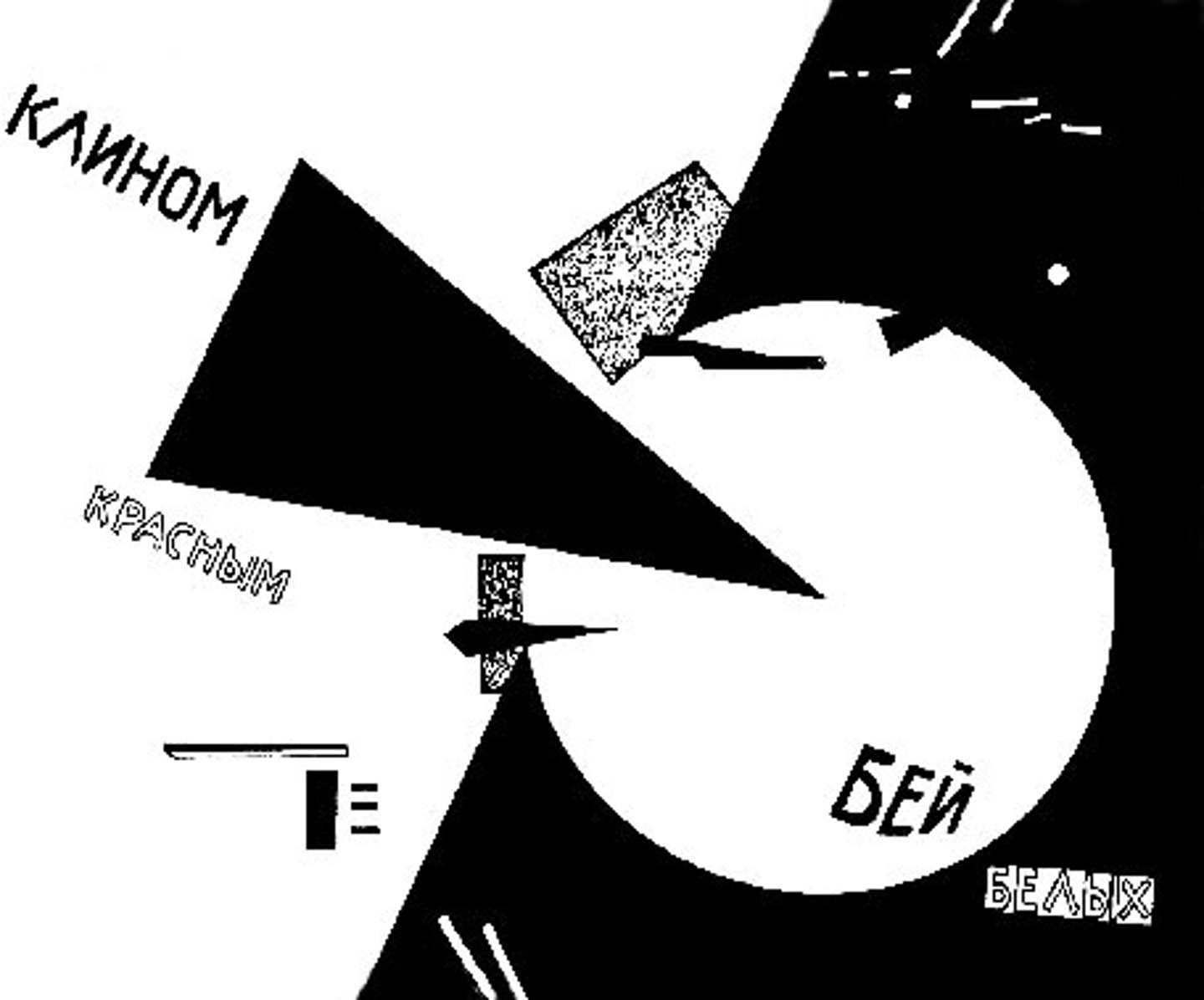
Constructivist layout
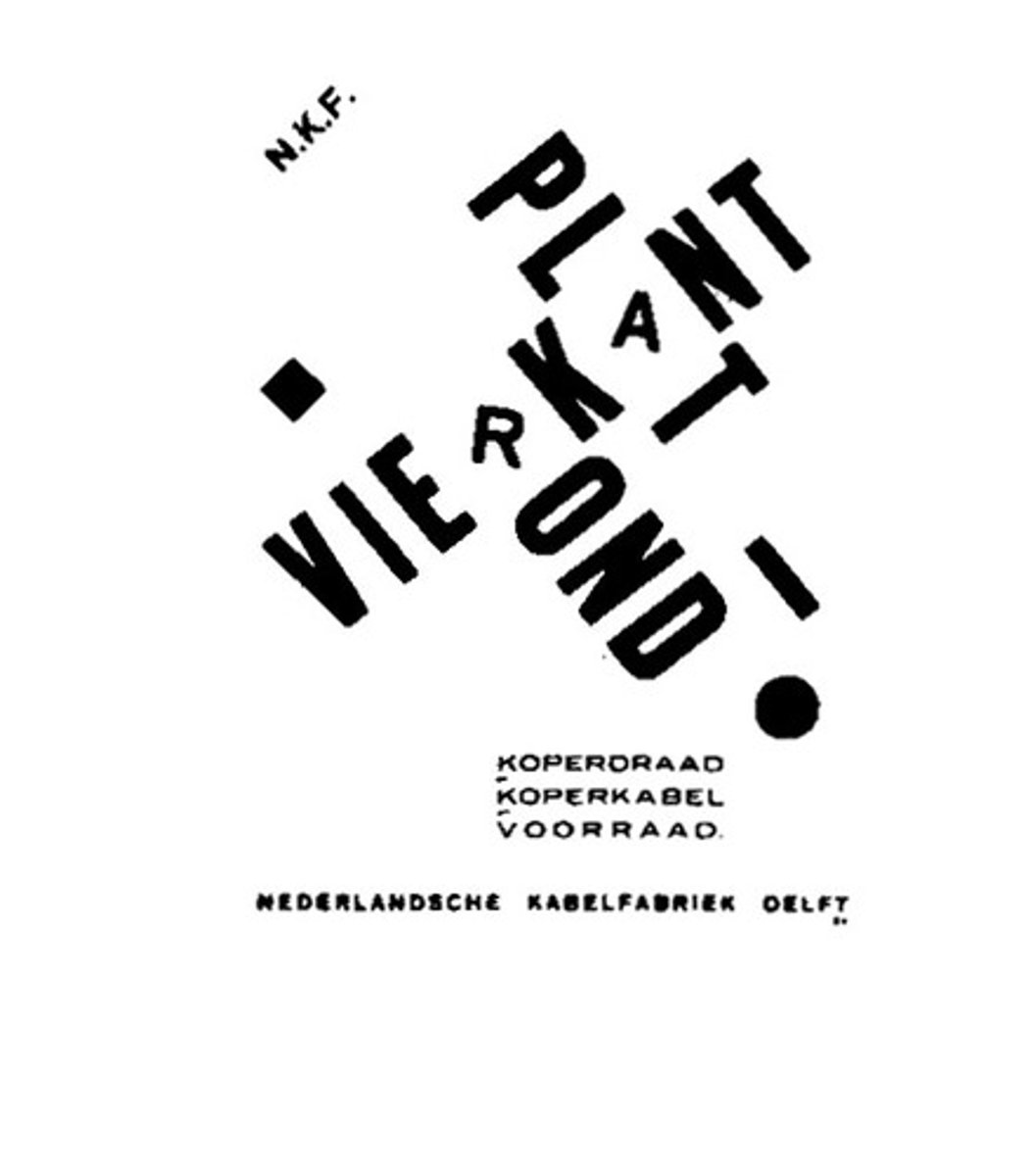
Constructivist layout showing the use of geometric forms and angled type.
Dada Type that was placed randomly on the pressbed to make nonsense and printed.
DeStijl layout using rectangular and square forms
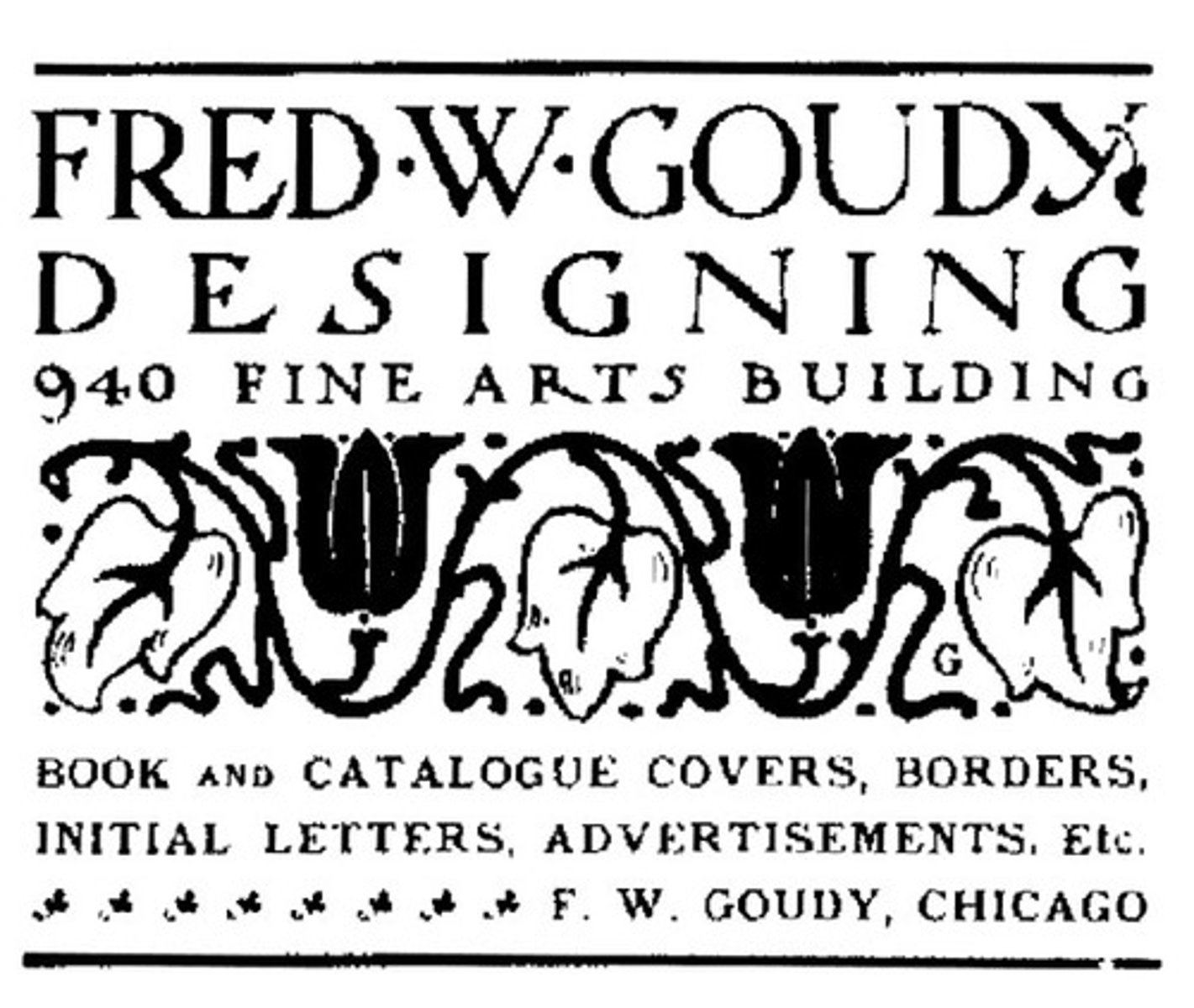
Frederic Goudy's Village Press colophon
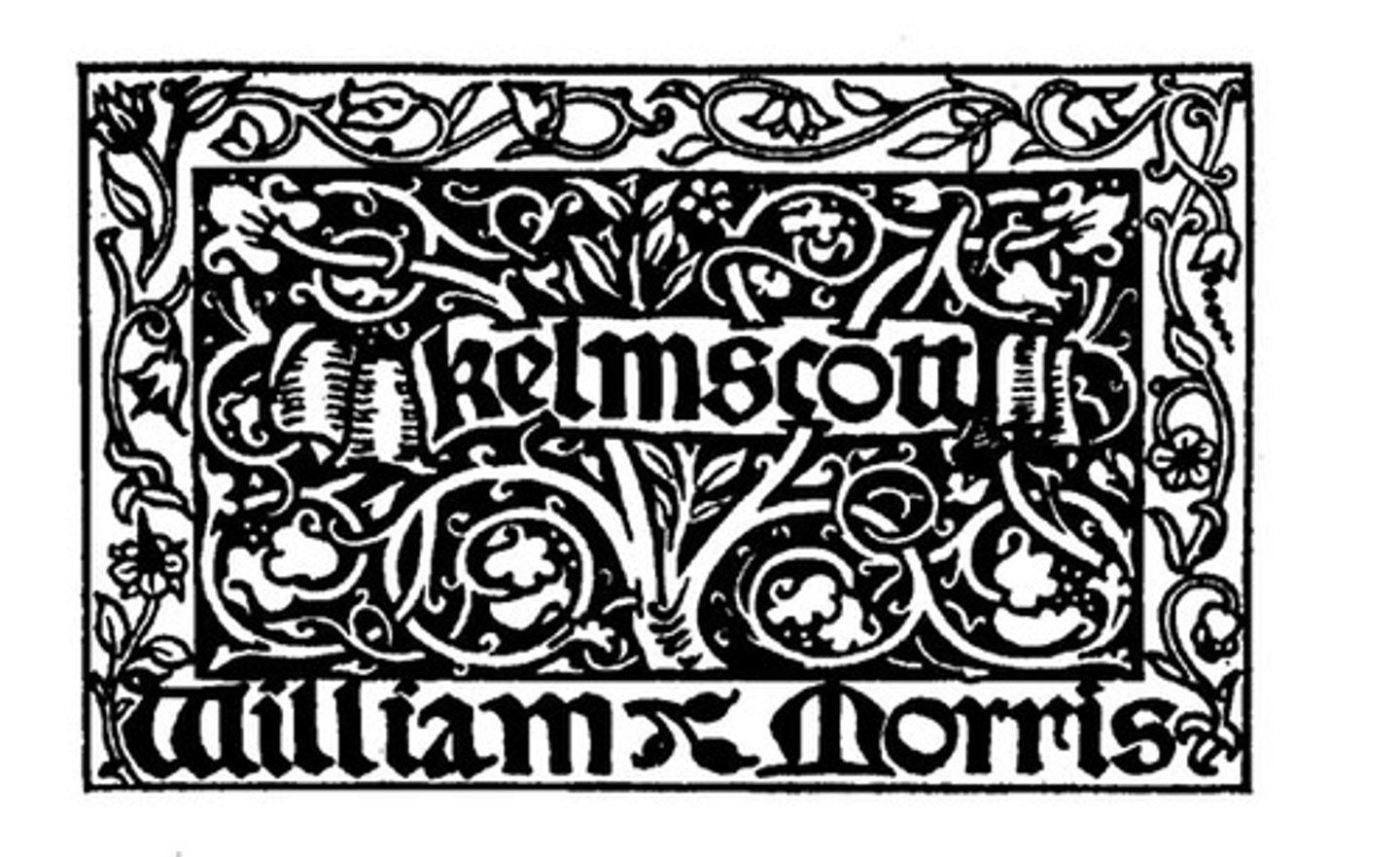
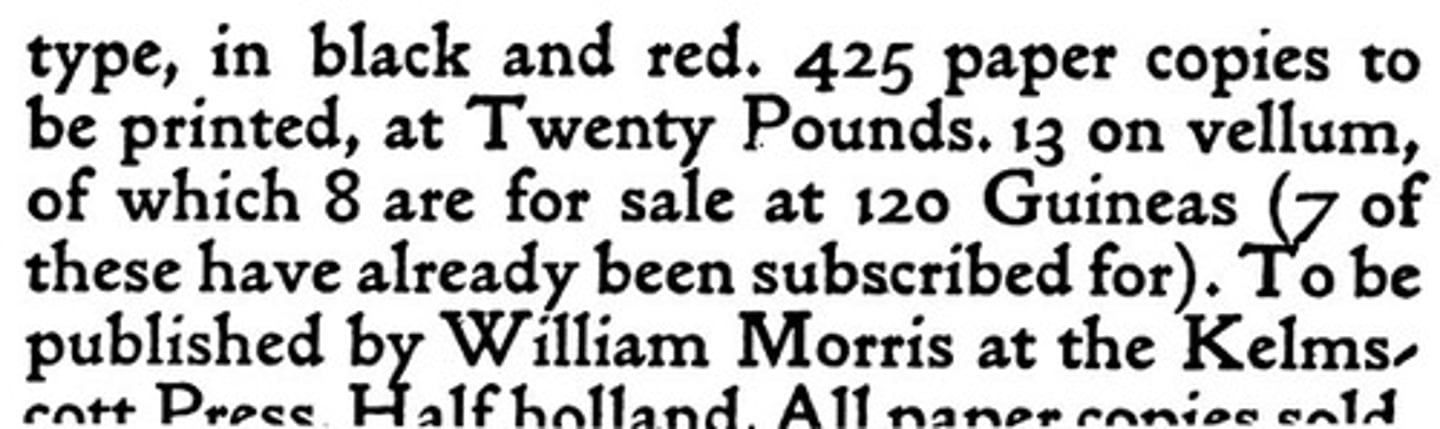
William Morris' Kelmscott Press colophon
Kelmscott book
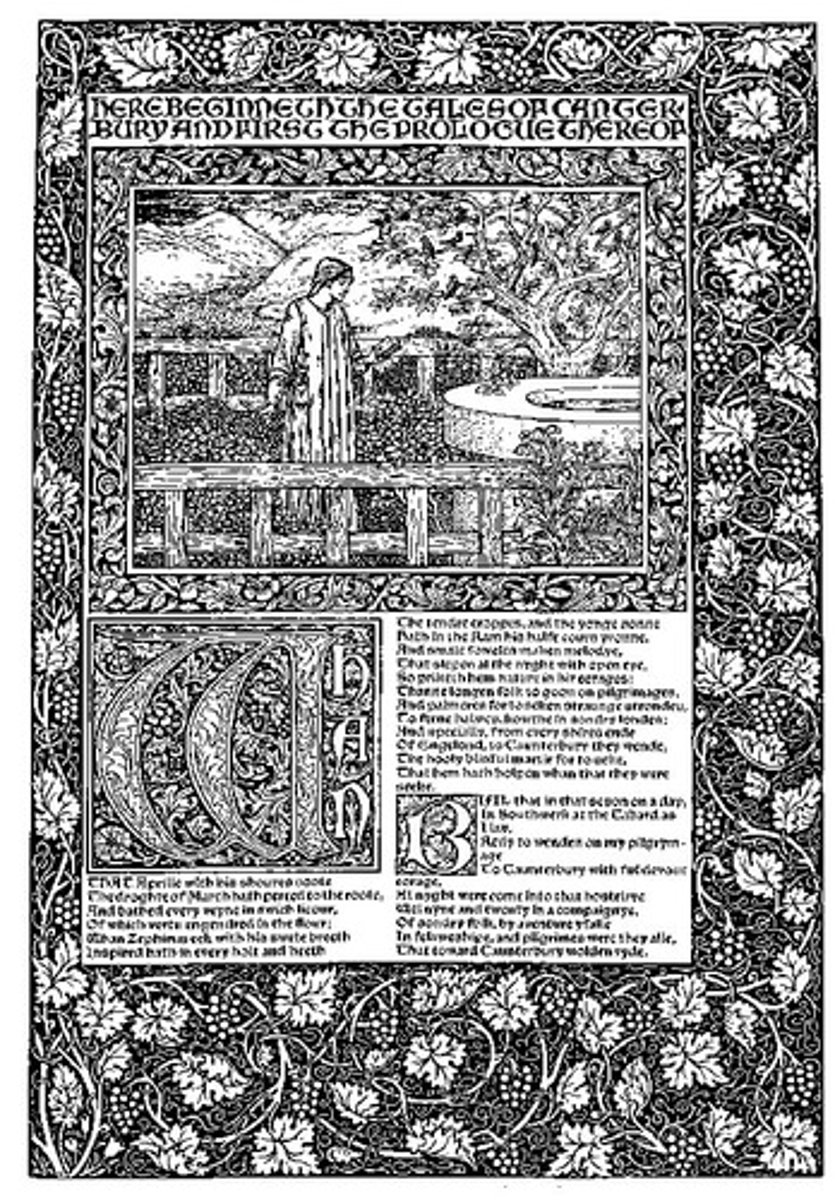
Golden typeface by William Morris.
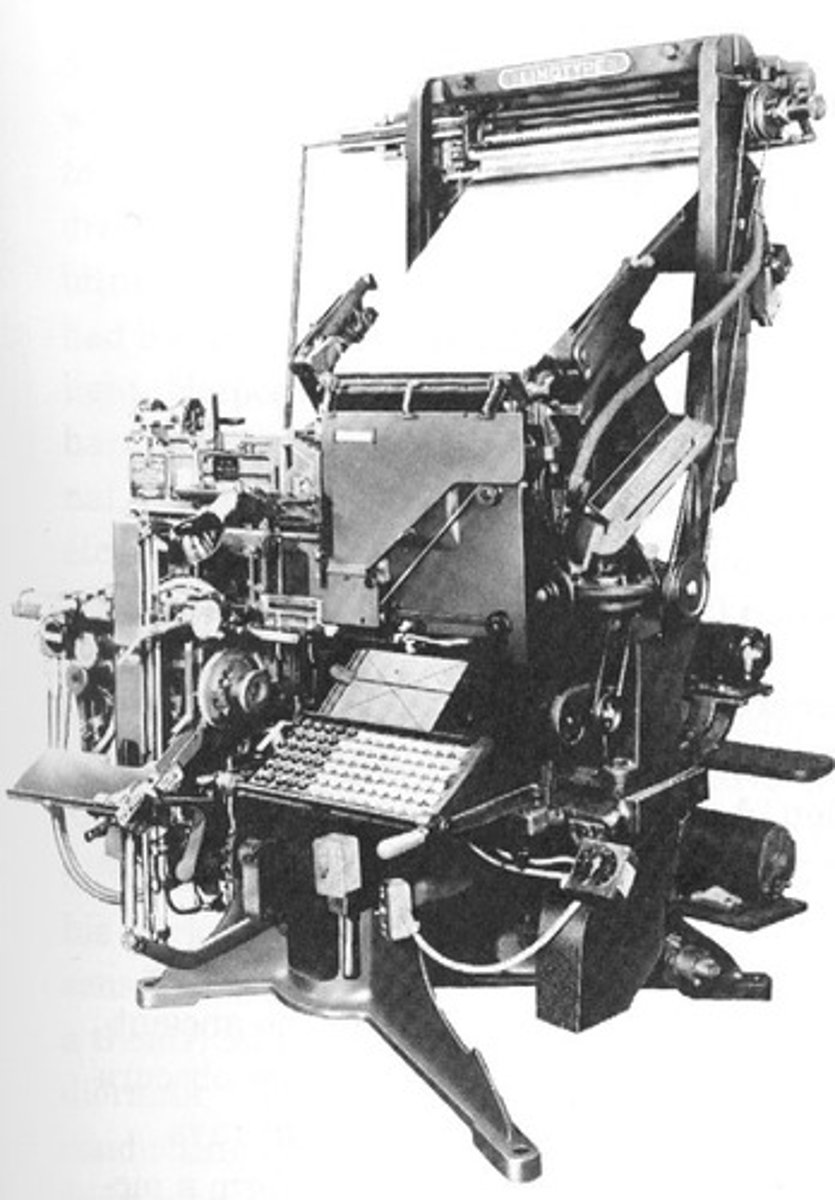
Linotype machine created by Otto Mergenthaler 1886
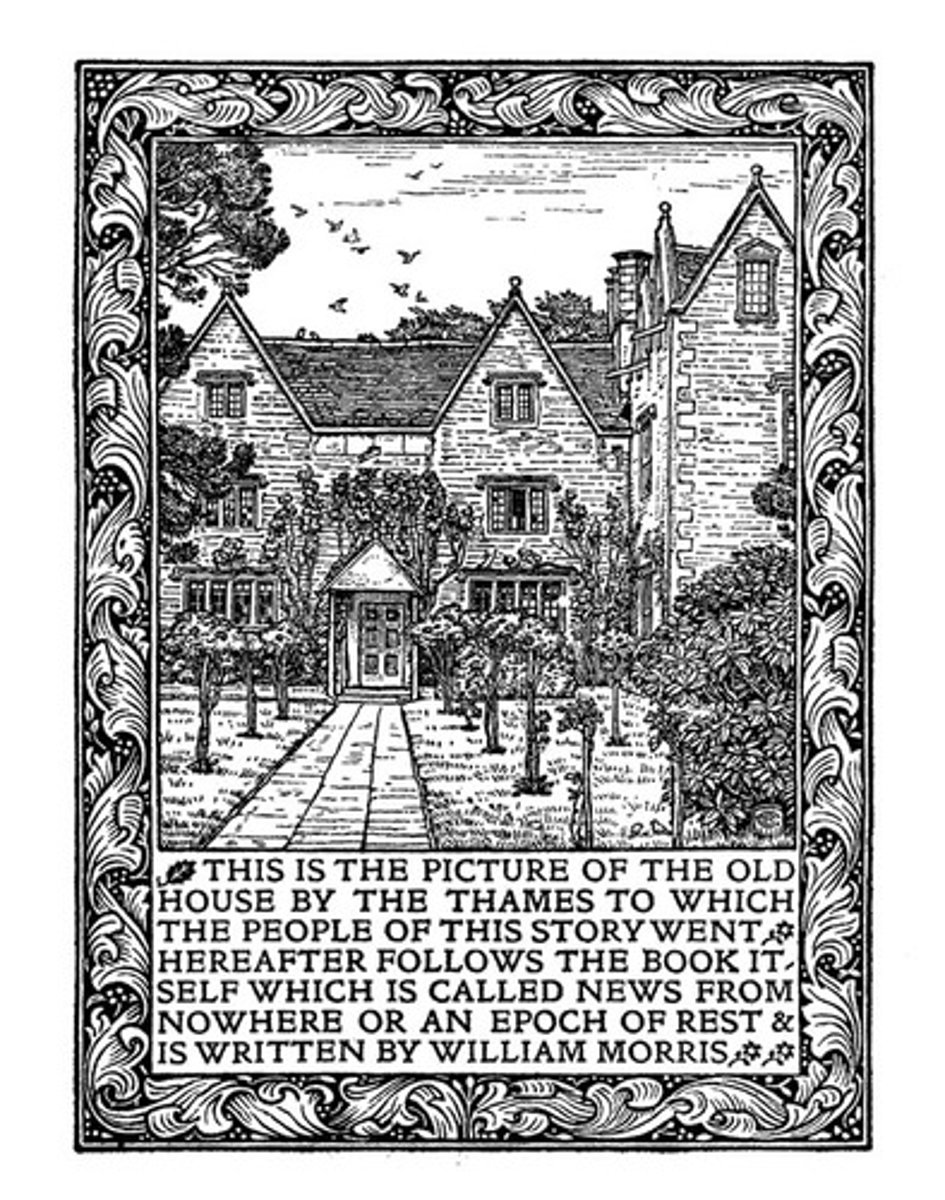
Page showing Morris' home from a Kelmscott publication.
Optical Character Recognition or OCR Type
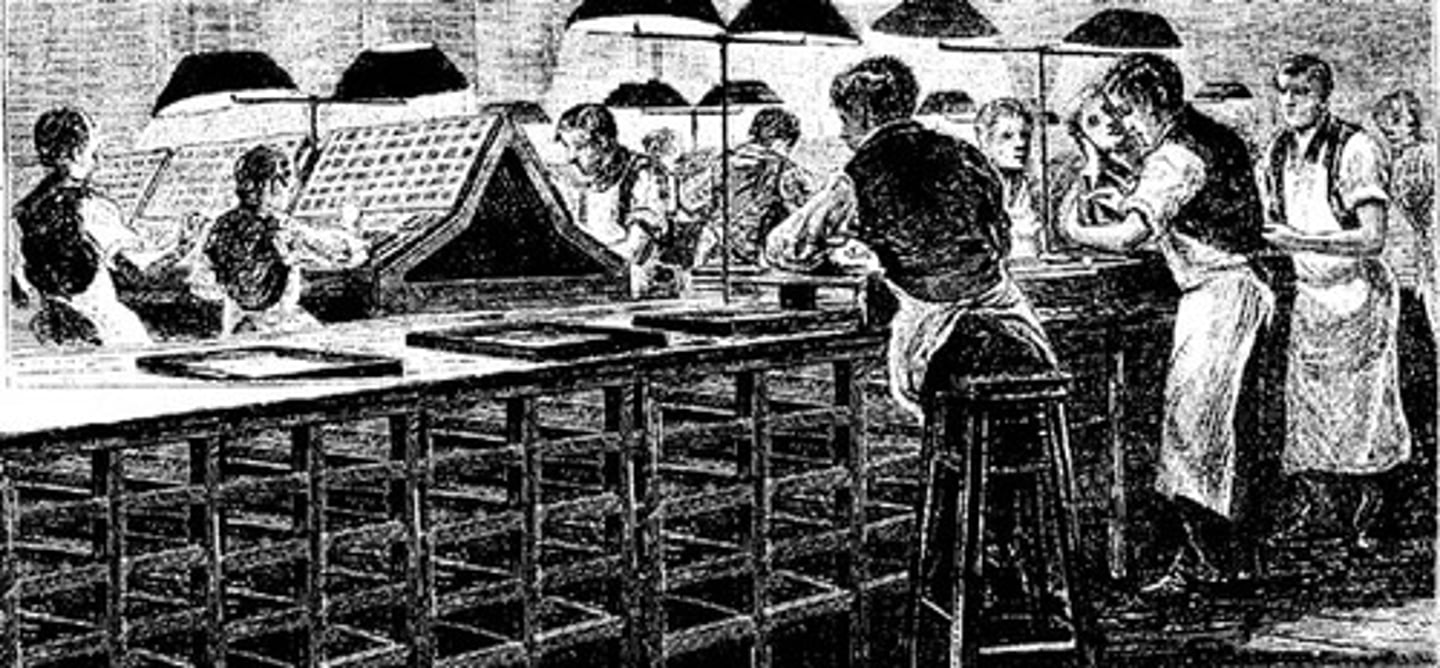
Typesetting a daily newspaper by hand.
Universal Type by Herbert Bayer
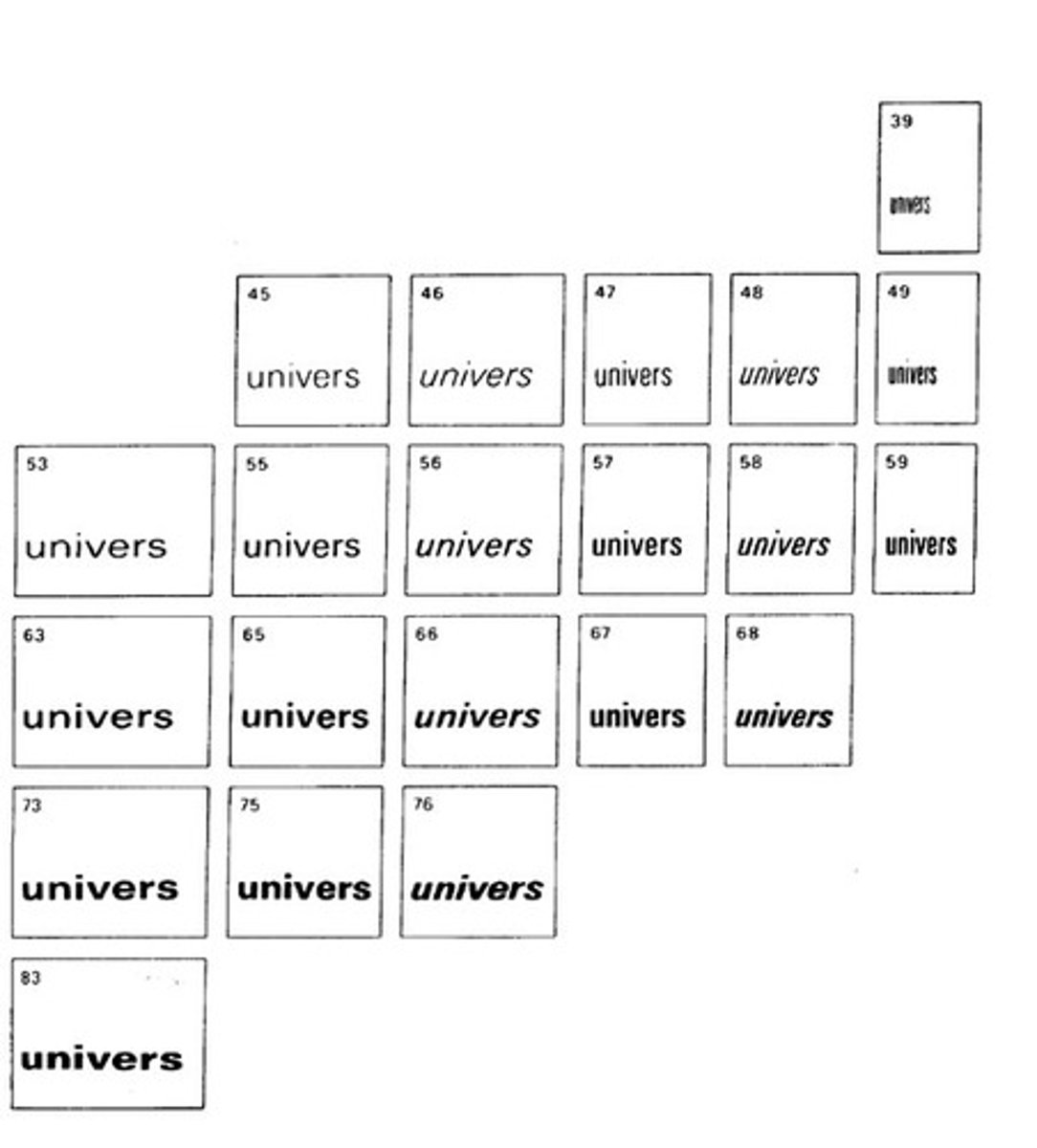
Univers family by Adrianne Frutiger
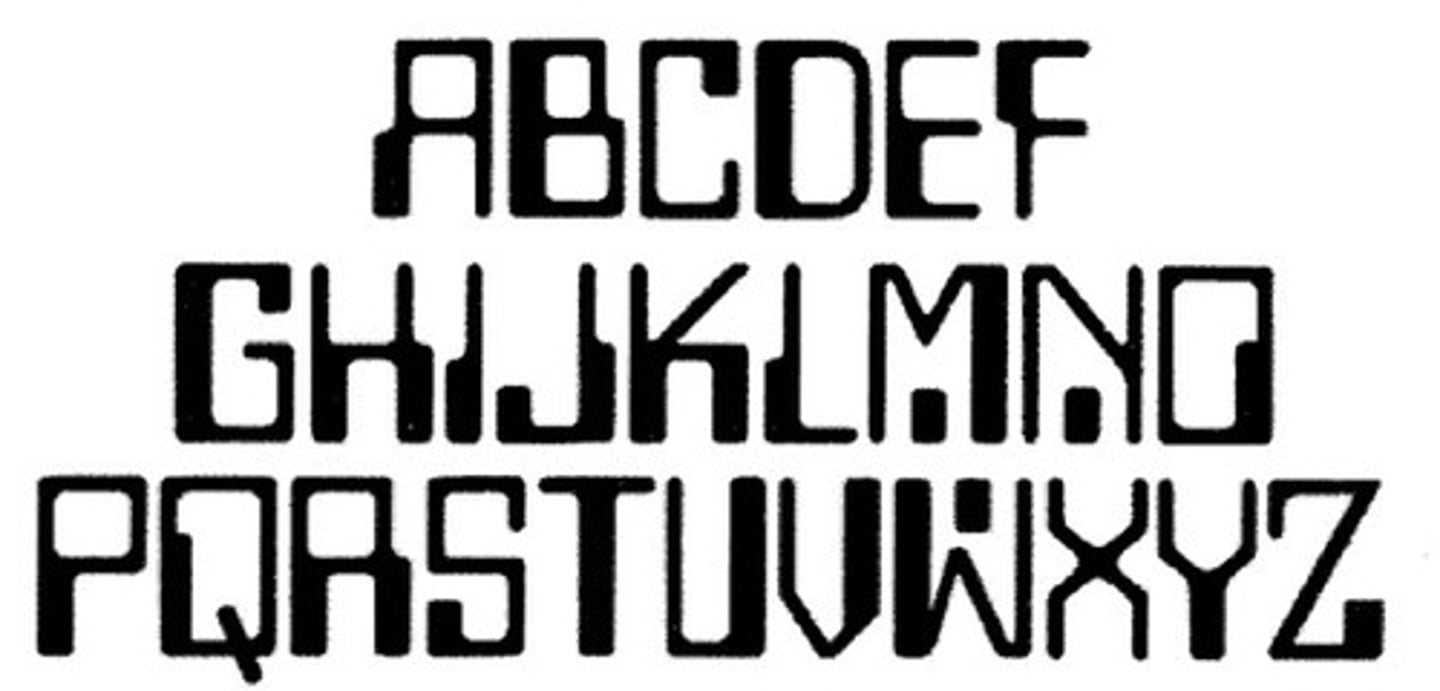
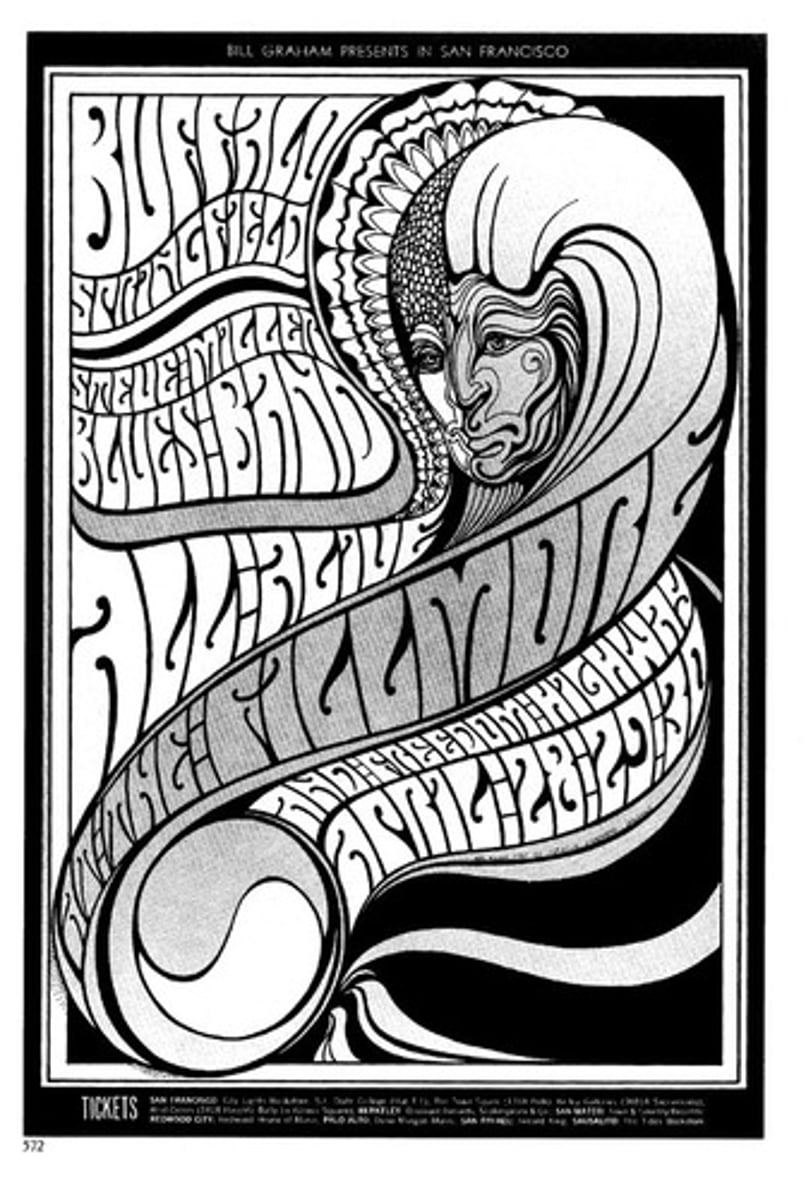
Psychedelic Type by Wes Wilson
Herb Lubalin

Seymour Chwast 60's fonts
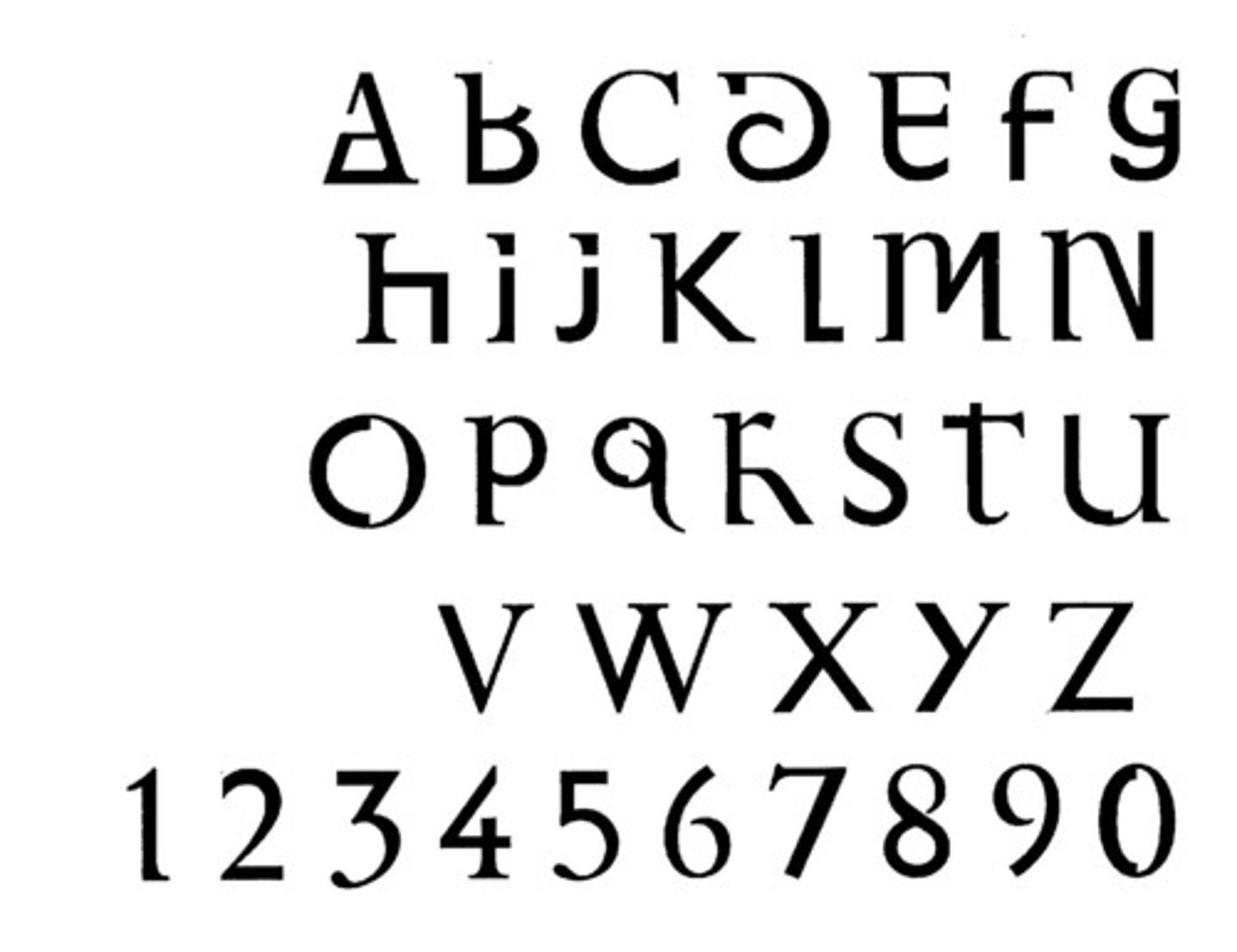
Postmodern font
Neuland by Rudolf Koch
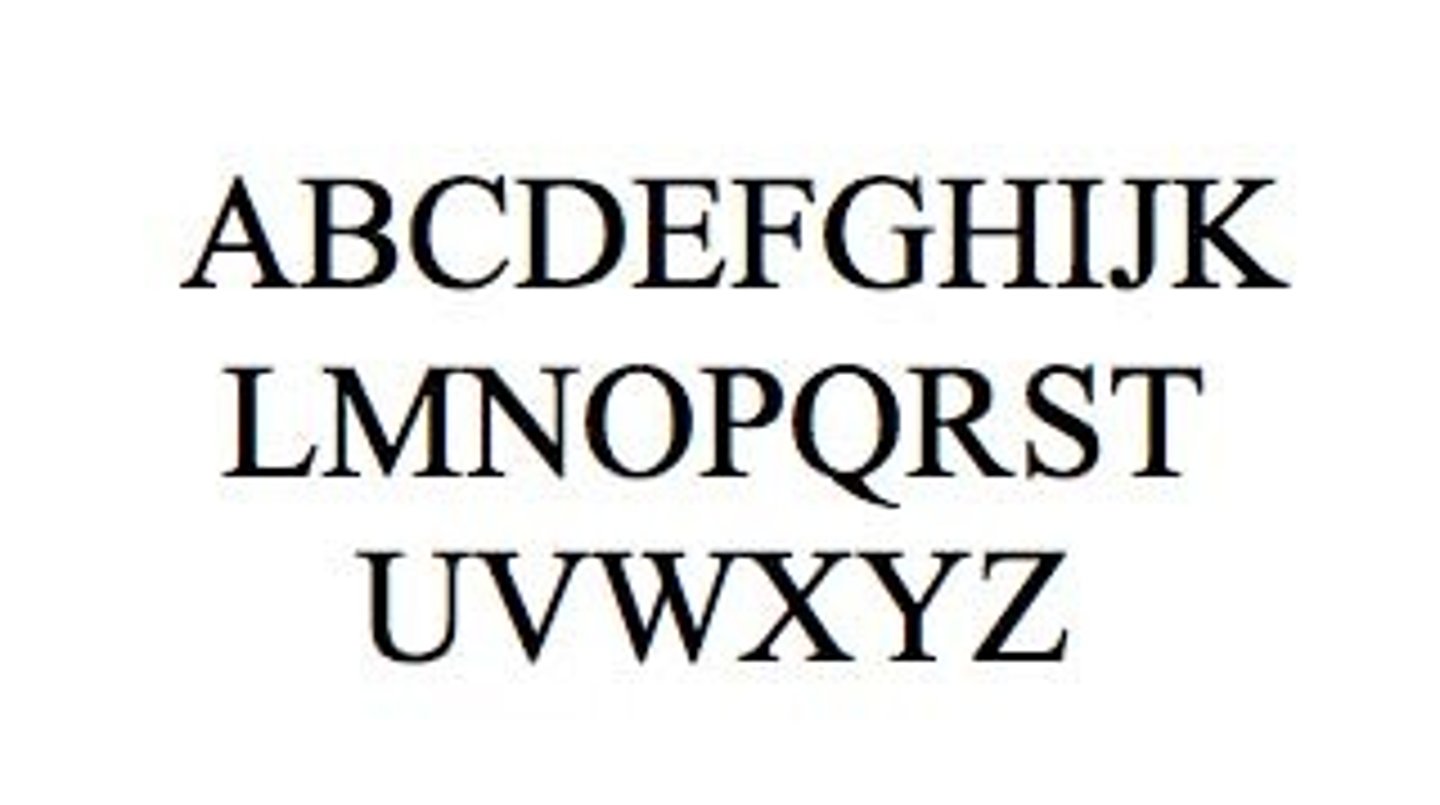
Times New Roman Stanley Morrison
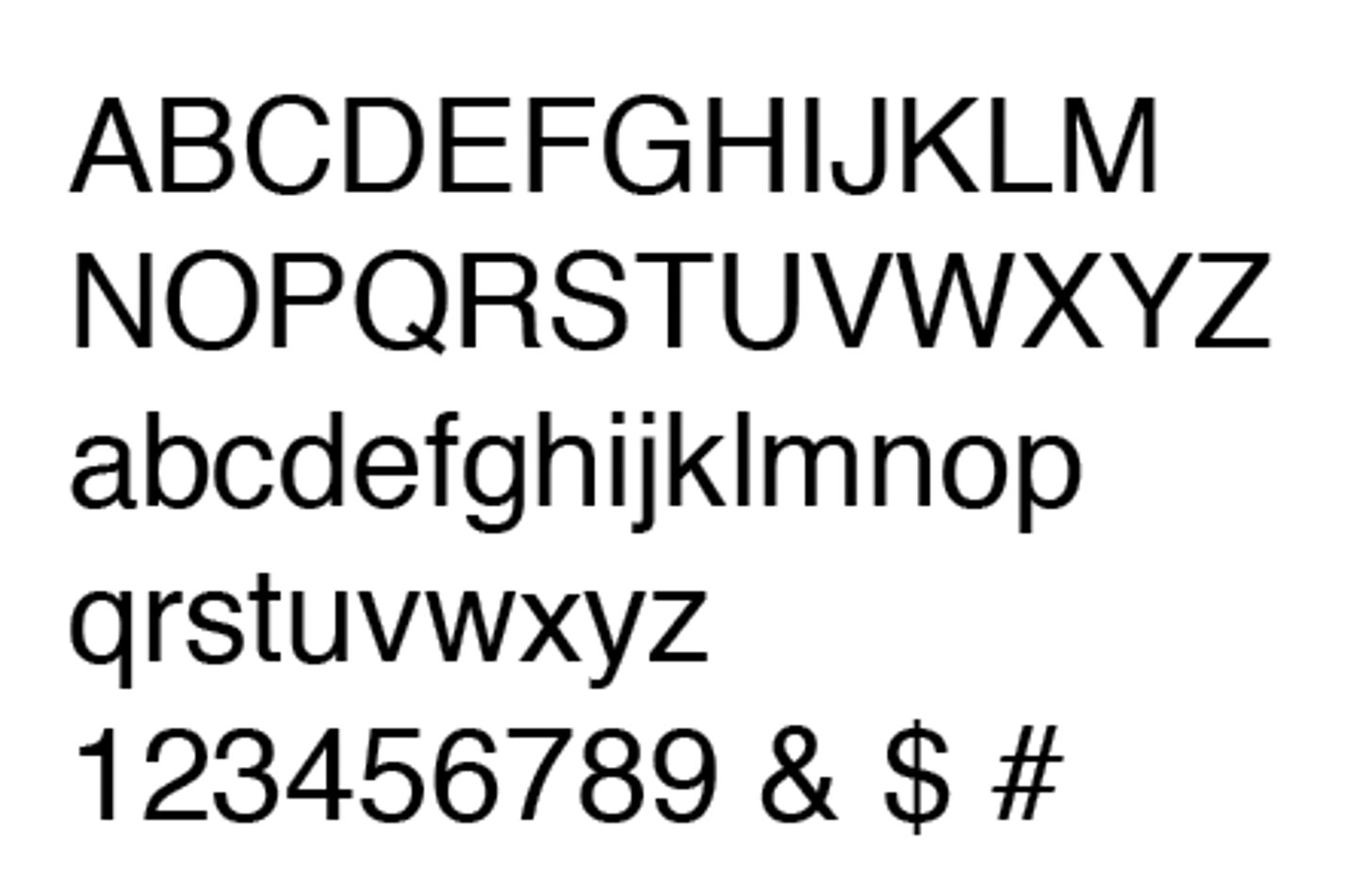
Helvetica
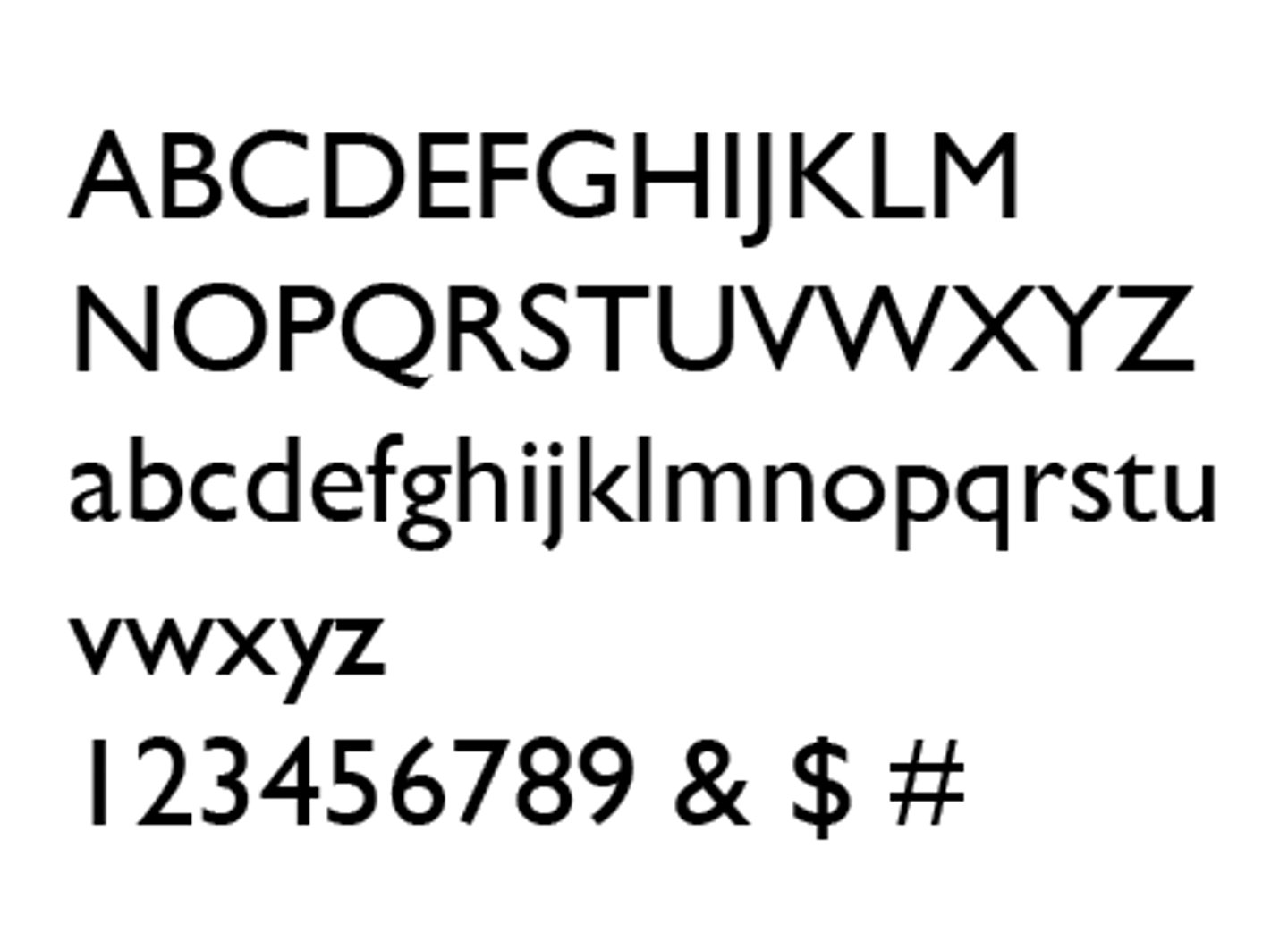
Gill Sans
Colophon
Printer's mark, number and paper listed at end of limited edition books.
Tittle
Dot on lowercase i or j.
Rudolf Koch
Designed Neuland & Kabel
Looked Medieval
Kelmscott Books
William Morris fonts
Troy, Golden and Chaucer
Art Nouveau
Decorative art, popular in 1880s - 1930s. Characterized by flowing lines, vines and flowers.
Victorian Style
Named after and based on the tastes of Queen Victoria
Slug
Name given to a last line of lead type
Colophon
Name for the lines giving the edition of book and the printer's mark
Printing in Europe was invented by
Johann Gutenberg
Year printing in Europe started
1450
PLace in Europe where printing started
Mainz, Germany
Point Size is measured from
Ascender Line to Descender Line
Otto Mergenthaler
Created Linotype machine 1886
Linotype Machine
Allowed casting of a line of type as one piece; used typewriter keyboard.
Was the first Type Founder; cast type for printers to purchase
Claude Garamond
Minimalism
Art Moment of the 1970s; fabricators created industrial simple pieces
Years of the Civil Wat
1861-1865
Years of WW I
1914-1918
Years of US involvement in WW II
1941- 1945
Year the Linotype Machine was invented
1886
Why Otto Merganthaler won a lot of money
Reward by NYC newspapers for anyone who could reduce time of hand type composition
Family of type designed with numbers rather than Bold & Italic
Univers
Designer of the first Helvetica
Max Meidinger
Edward Johnston
Who Eric Gill stole the design of Gill Sans from