(3) Islamic World: Notable Concepts (inc. Religious, Political, Economic, Social, Technological, Scientific, etc.) and Notable Groups and Organizations
 Call Kai
 Learn
Learn Practice Test
 Spaced Repetition
 Match
Match Flashcards
 Knowt Play
1/58

Earn XP
Description and Tags
Both Religious and Non-Religious
Name | Mastery | Learn | Test | Matching | Spaced | Call with Kai | Chat |
|---|
No analytics yet
Send a link to your students to track their progress
59 Terms
Quraysh (All Facts)
One of the many Bedouin tribes in the vast Arabian Peninsula during the 500s
Islam (All Facts)
In Arabic, it means “submission” for it was based on the principle Mohammed preached of submitting to Allah’s will
Muslims (All Facts)
Followers of Islam, their name in Arabic means “they who submit”
Hijrah (All Facts)
Term used to refer to the flight of Mohammed from Mecca to Medina in 622
The calendar of the Islamic World starts on this year, which is effectively its year zero
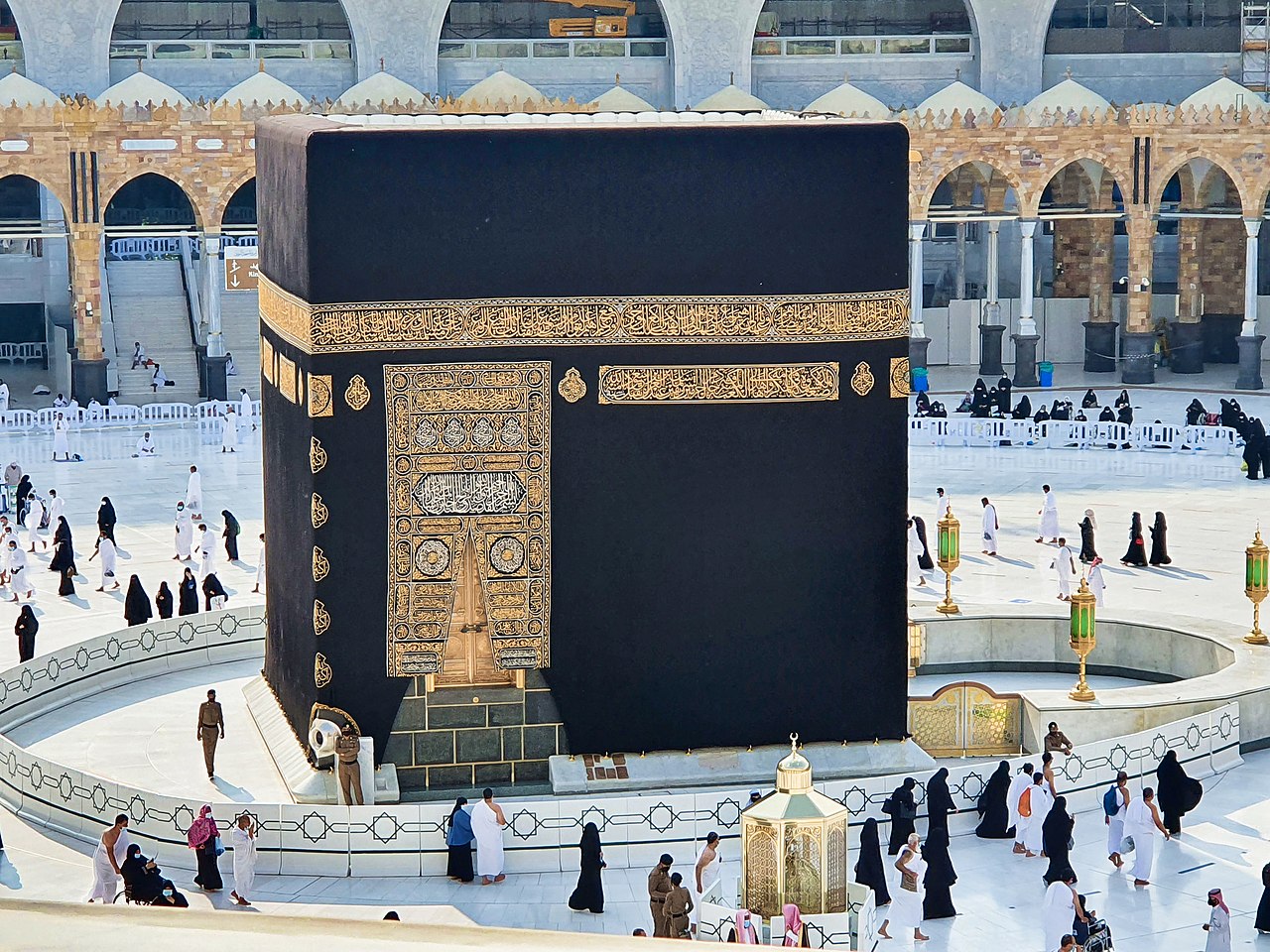
Kaaba (All Facts)
Meteoric black stone initially used by the pagan and polytheist Arabs in Mecca, it was transformed into a holy site by Mohammed who promised to make it a site of pilgrimage for Muslims if and when the Meccans recognized him as Prophet of God
Caliph (All Facts)
Term used to refer to a person considered a political–religious successor to the Islamic prophet Muhammad and a leader of the entire Muslim world
Comes from the Arabic word for “successor”
In the non-Arab areas of Islamic expansion, their control led to discrimination against non-Arabs, not usually extending to persecution of non-Arabs, however, and the discrimination itself fading by the 800s
The namesake’s soldiers were forbidden to own territory they had conquered
However, people paid tribute to them rather than to Byzantine rulers
Ummah (All Facts)
Term used to refer to the entire Muslim world or Muslim “body of believers” (Muslim equivalent of the “body of Christ” or the “Church”)
Quran (All Facts)
The set of sacred revelations believed to have been given directly to Mohammed by Allah
The sacred book of the Muslim faith
Revered by Muslims as the actual word of God, which was passed on to their Great Prophet Mohammed
Was written down and collected for the first time in 651, almost 20 years after the Prophet’s death, during the reign of Uthman of the Rashidun Caliphate
The revelations were haphazardly recorded and/or memorized by Mohammed’s secretaries as he uttered them
Was known for its striking calligraphy
Although Muslims were prohibited from showing human or animal forms in their art, this did not stop them producing beautiful images in and of their writing
Kharijites (All Facts)
Early sect of Muslims that splintered from the Muslim community
They believed that Ali’s refusal to continue the Battle of Siffin against Muawiya and accept its outcome was an outrage against divine justice and un-Quranic
They decided that assassination would be the best way to avenge themselves against Caliph Ali after he had attacked them at Nahrawan after they rebelled against him for deciding to negotiate with Muawiya instead of continue the fight against him in the Battle of Siffin
Their plan to kill the other signatory of the negotiations in the Battle, Ali’s opponent, Muawiya, had failed
They espoused egalitarian and regional doctrines which inspired Abu-Yazid to revolt against the Fatimid Caliphate of Ifriqiyah (Tunisia)
Shia Islam (All Facts)
Minor sect of Islam that believes that
Islamic Leadership should go to Mohammed’s descendants
The Caliph Ali was the true successor to Mohammed, rather than Abu Bakr, because the Caliph Ali was Mohammed’s son
The Caliph Ali was immune from sin and error and had been divinely chosen as “Iman” to transmit his office to his descendants
Husayn ibn-Ali was the true successor to the Caliph Ali, rather than Muawiya, because Husayn ibn-Ali was Mohammed’s grandson
Quranic interpretation was reserved only for Mohammed’s descendants
They were truer to Islamic law than their opposing factional counterparts
Sect of Islam which rejected the Umayyad Caliphate’s rule as being justified
Sunni Islam (All Facts)
Major sect of Islam that believes that
Islamic Leadership should go to the most capable
Abu Bakr and Muawiya were the true successors to Mohammed because they were the most capable
Doctrinal authority changes hands with each caliphate
Sect of Islam which emerged during the Umayyad Caliphate, it saw their rule as justified and supported them
Imam (All Facts)
Term used to refer to any position of Islamic leadership, often political and/or religious in nature
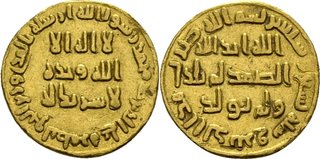
Dinar (All Facts)
Currency used in the Islamic Empire by the Umayyad Caliphate and Abbasid Caliphates
Mu’tazilism (All Facts)
School of Islamic theology founded by Wasil ibn-Ata which emphasized rationality / rationalism
School of Islamic theology which held that God’s actions are dictated by justice and reason and that free will exists
School of Islamic theology which held that the Quran is not eternal with God, but was created by God at a certain time and revealed to the Great Prophet Mohammed
This particular belief implied that if God created the Quran at one time, then it could be interpreted differently at another time or supplemented by further revelation and that this further revelation could extend into the time of the caliphs
Arab Muslims (Economy)
By 750, they began crossing the Sahara from North Africa in large numbers to trade in gold
Paper (All Facts)
Technology which the Arab Muslims learned how to make after two Tang Chinese POWs from the Battle of Talas were compelled to reveal the secret to manufacturing it
This led to the establishment of the first namesake mill under the Abbasid Caliphate some years later after the battle, which was located in Baghdad
Alids (All Facts)
Descendants of Fatima, the Great Prophet Mohammed’s daughter and her husband Ali for which they are named
They tried and failed to topple the Umayyads during the Third Fitna
Abbasids (All Facts)
Descendants of al-Abbas, the Great Prophet Mohammed’s uncle
They tried and succeeded in toppling the Umayyads during the Third Fitna and their namesake revolution, succeeding the Umayyads as a new caliphate
Pharmacy / Apothecary (All Facts)
Public Institution that first appeared in history in Baghdad during the Islamic Golden Age of the Abbasid Caliphate in 770
Sufi Islam / Sufism (All Facts)
Islamic sect that emphasized ascetic mysticism
It was a mystical literary and philosophical movement within Islam
It emphasized introspection to grasp truths that its adherents believed could not be understood through learning
Islamic sect which sought and stressed divine love through the immediate personal union of the soul with God
Islamic form of contemplative life which was heavily influenced by Christian monasticism
This influence is seen in their practices of
Solitary meditation
long vigils
celibacy
wearing of woolen habits (clothes)
They sought a life
Inspired only by God
Unhindered by materialism
Their name comes from the habits made of coarse wool which they wore
It developed as a reaction against more orthodox interpretations of the Quran
Sect which may have begun as a mystical response to the perceived love of luxury by the early Umayyad Caliphate
Its ideological proponent and first martyr was Al-Hallaj, crucified for his teachings of the namesake
Its missionaries played an important role in the spread of Islam, tending to adapt to local cultures and traditions and interweaving local religious elements into Islam in order to win many converts
Though Muslims, they shared similarities with Bhakti Hindus in that both groups
Developed as mystical movements
Emphasized inner reflection in order to achieve a direct personal relationship with a deity
Placed less emphasis on strict adherence to traditional beliefs and rituals, thus appealing to people outside their traditions and helping spread their respective religions
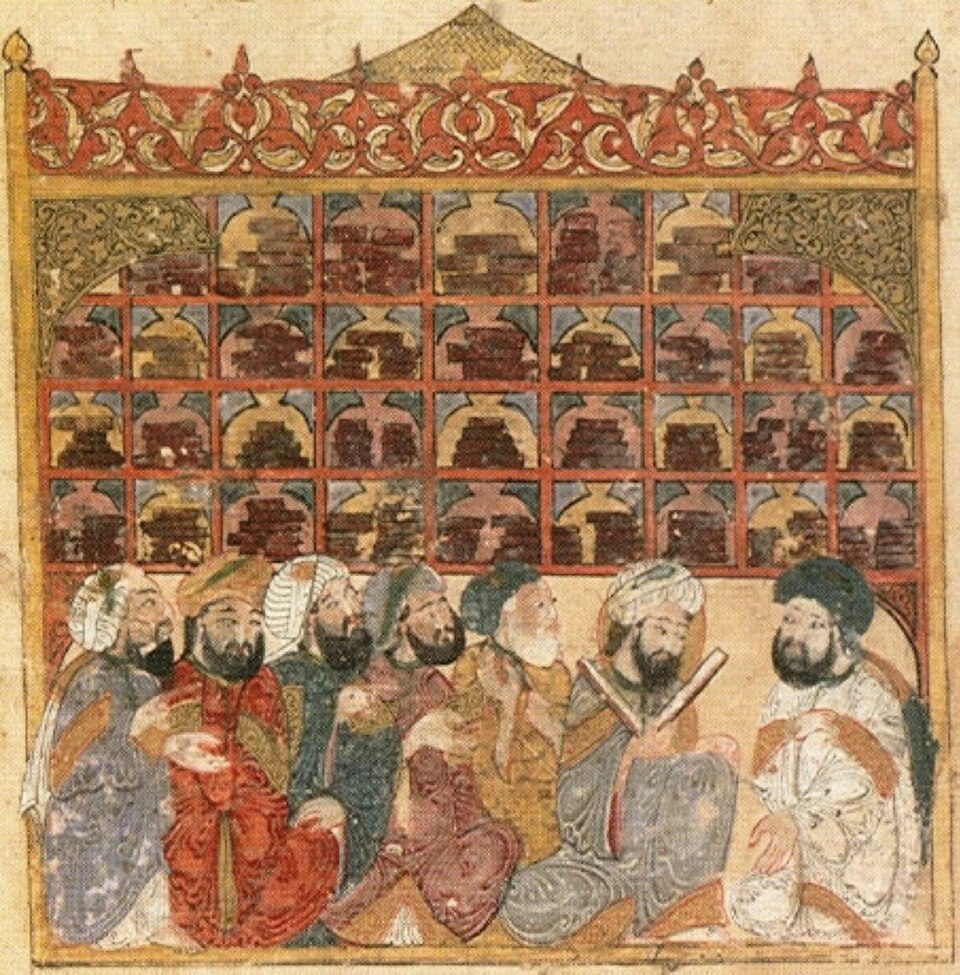
House of Wisdom (All Facts)
Founded by Caliph Al-Amun of the Abbasid Caliphate during the Islamic Golden Age, it was a renowned center of learning to which scholars traveled from far away to it, it was located in Baghdad
It helped the Islamic community transfer knowledge throughout Afro-Eurasia
It was made to support efforts to translate ancient Greek wisdom into Arabic
The texts were not translated from the original Greek but from versions in Syriac
Greek authors translated included Galen, Ptolemy, Aristotle, and Dioscorides
Texts on history, poetry, and drama were considerably neglected
The translators themselves were mostly Christians

Syriac (All Facts)
Language spoken by early Christians that was related to Arabic
Language which Abbasid scholars used to translate Greek texts into Arabic in the “House of Wisdom” during the Islamic Golden Age
Khorram-Dinan (All Facts)
Revolutionary religious and social freedom movement based in Iran led by Babak that opposed to the Abbasid Caliphate
Sifr (All Facts)
Arabic term which meant “nothing” or “empty” or “it is not” or “it cannot be” which referred to the number zero
The Islamic World had used Greek numerals before devising their own in 770
They wrote the number zero with a dot or point (unlike Hindy mathematicians, which expressed zero with a circle)
The introduction of the number zero marks a fundamental advance for mathematicians, enabling a decimal system to be used
This system had not carried over to the Church, which continued to use the complex Roman numeral system instead for quite some time after the introduction of the number zero to the Islamic World in the 700s and 800s
Diwan (All Facts)
Term used to refer to a collection of poems by a single author
Ketama Berbers (All Facts)
They were the basis of the military of the Fatimid Caliphate
They helped Abd Allah al-Mahdi Billah and Abu Abdallah al-Shi'i to overthrow the Aghlabid Dynasty and establish the Fatimid Dynasty
They were longtime enemies of the Aghlabid Dynasty
Qarmatians (All Facts)
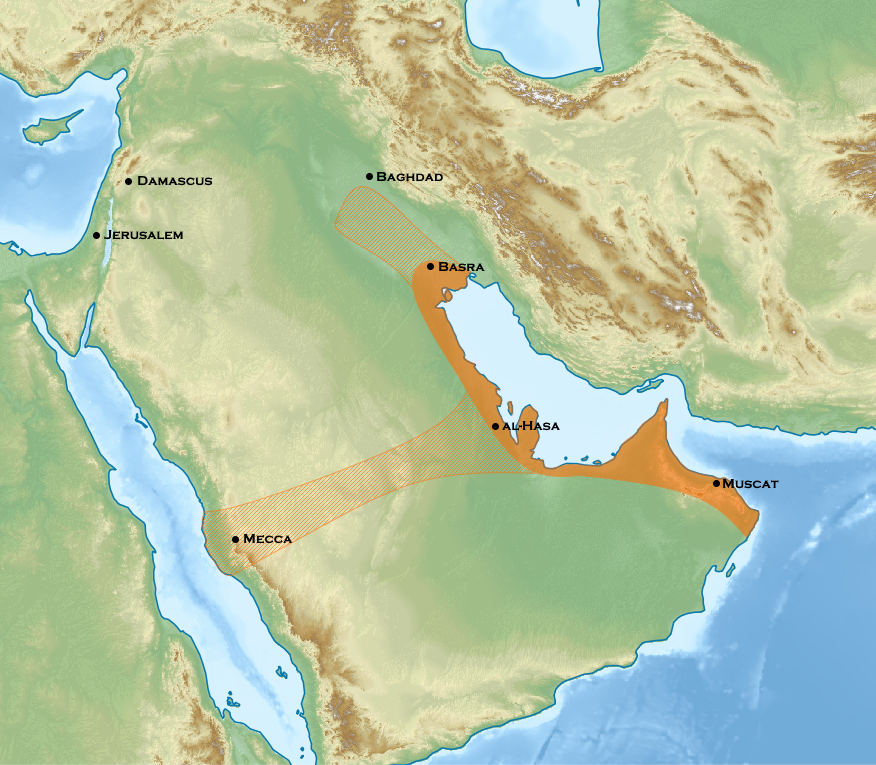
Breakaway group of revolutionary Muslims led and founded by Hamdan Qarmat
They shocked the Islamic world after they
Sacked Mecca for a week
Stole the Kaaba from Mecca (the Black stone which was the focus of the Hajj pilgrimage, the holiest site in Islam), which they did either
For religious reasons, believing that revering a stone was idolatrous
For political reasons, hoping that doing so would divert Mecca’s lucrative pilgrimage traffic to the region they controlled (where they could enslave them)
They (totally) rejected the Abbasid Caliphate
They were (possibly) allied with the Fatimid Caliphate in Ifriqiyah (Tunisia)
They established their own state (in modern-day Bahrain) in eastern Arabia (in modern-day Saudi Arabia)
They developed a unique society in which they
Were an oligarchical republic, in that their ruler was seen only as the “first among equals”
Constructed a “society of equals” despite relying heavily on slaves
Were like a proto-Islamic-Communist society
They attacked Mecca-bound pilgrims
They sacked the Port of Basra
They represented a decline in the power of the Abbasid Caliphate, which did not do anything to prevent or stop the Kaaba from being robbed by them
Saracens / Arab Pirates (All Facts)
They dominated the Western Mediterranean from the 870s onward
They captured much of Spain and Italy
Ports on the south coast of Frankia have been dominated by them
Not content with piracy at sea from their base at Fraxinetum, they extended their activities inland, terrorizing travelers as far north as the Alps
Mozarabs / Musta’ribs (All Facts)
Term(s) used to refer to the Christian communities living in Al-Andalus (or Islamic Iberia / Spain, including the Umayyad Emirate / Caliphate of Cordoba) which adopted Arab culture but kept their Christianity (Christian religion)
Their name in Arabic means “would-be Arabs”
They were prominent in their enclaves within Toledo and Cordoba and had their own churches, bishops, and monks
Their churches were built in the namesake architectural style, which combined Muslim horseshoe arches and ribbed domes with Roman columns
Their chant, a synthesis of Islamic and Christian modes, was used for their Latin liturgy
Group of Christians which would eventually move to the Kingdom of Leon and parts of Northern Spain, which brought with them the remarkable techniques of Islamic decoration they learned and used while in Al-Andalus and applied them to Christian subject-matter
St. Beatus of Liebana was a popular monk of the namesake group
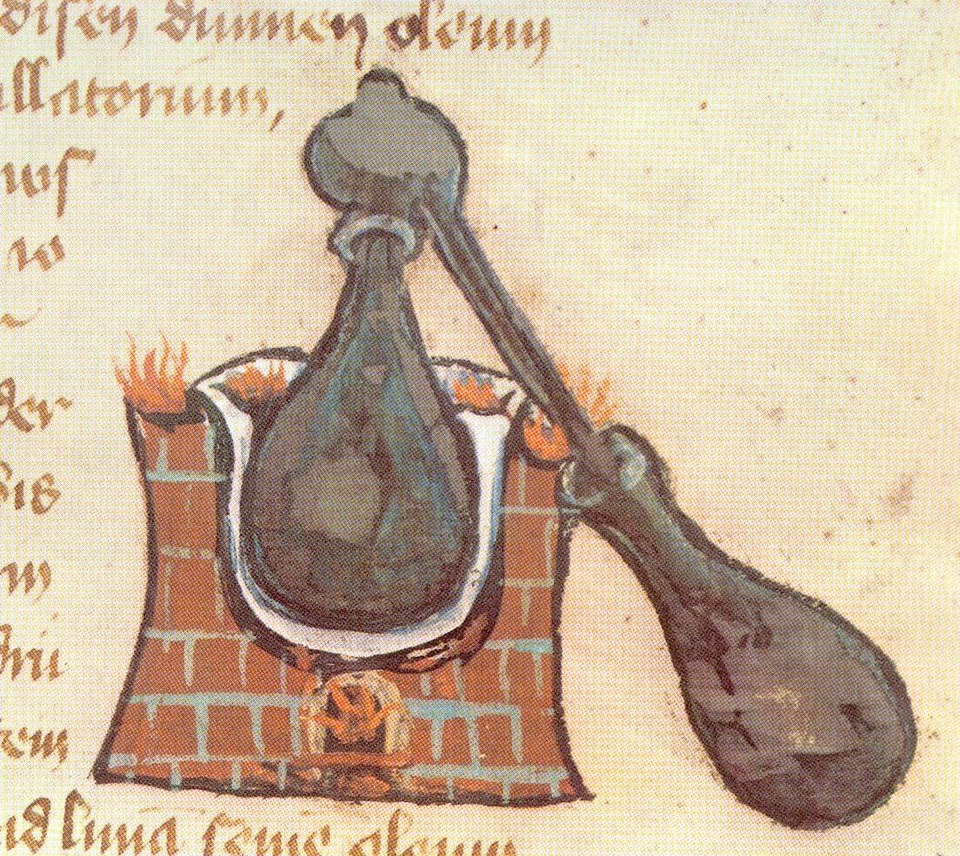
Alembic (All Facts)
Apparatus for distilling chemicals and perfumes
It played an important part in Arab chemistry and strongly influenced its development
It began to be illustrated in Arabic books by the 900s
Lateen Sails (All Facts)
Triangular fore-and-aft sails which were brought to the West by the Arab-Muslims by the 800s
Spanish Metal Mines (All Facts)
Located in Al-Andalus, they were taken over by the Muslims in Al-Andalus (the Moors)
They prepared copper by reacting its salts with iron, a primitive forerunner of modern electroplating methods
Lute (All Facts)
The first fretted instrument to arrive in Europe via the Arab-Muslims, which they brought with them when conquering Spain
Rebec (All Facts)
Ancestor of the violin
Had a violin-type of bow
Mamluks (All Facts)
Enslaved people purchased by Arabs who were frequently ethnically Turkic from Central Asia to serve as soldiers and bureaucrats
They had more opportunities for advancement than did most enslaved people at the time
In Egypt, they seized control of the government there to establish their namesake sultanate, challenging and eventually overtaking the Abbasid Caliphate
Shariah (All Facts)
Its common use in the Islamic World, especially across the Mamluks, Seljuks, and Delhi Sultanate created similar legal systems in the different regions
Islamic Merchants (All Facts)
Were viewed with much more prestige than in other societies at the time; whom were esteemed as long as they
Maintained fair dealings
Gave to charity in accord with the 5 Pillars
After all, the Great Prophet Muhammad was a merchant himself, as well as his first wife
With the revival of trade on Silk Roads, they could grow rich from their dealing across the Indian Ocean as well as Central Asia
Some were sent out as missionaries
Many involved in the Indian Ocean trading networks moved to Indian port cities and married, having their wives converted to Islam
Islamic Slavery / Slaves (All Facts)
Islam prohibited the namesake practice amongst Muslims when it came to other Muslims or groups whom they viewed as monotheistic including Jews, Christians, and Zoroastrians
Nonetheless, it permitted the namesake practice amongst non-monotheists in which peoples were often imported from Africa, Central Asia, and the Kievan Rus
However, it was not hereditary in nature
Upon conversion to Islam, many of the namesake were freed by their owners
Islamic Enslaved Women (All Facts)
Group of women which found themselves serving as concubines to Islamic men who already had wed their allotment of four wives, but were unusually allowed more independence, such as to go to markets and to run errands, compared to married Muslim women
In fact, only this group of women were permitted to dance or perform musically before unrelated men
These opportunities to earn money sometimes enabled the namesake women to accumulate enough to buy their freedom
Islamic Free Women (All Facts)
Group of women who often covered their heads and faces, even before the time of the Great Prophet Mohammed, but a practice which was solidified under Islam
They were allowed to study and read, but were not able to do so in the company of men unrelated to them
Islamic Women (All Facts)
Their status was raised by the Great Prophet Muhammad in many ways given that he
Treated his wives with love and devotion
Insisted that dowries be paid to the future wife rather than to her father
Forbade female infanticide, a common practice during his time
Overall, their status was higher than Jewish or Christian women in that they were
Allowed to inherit property
Retain ownership of property after marriage
Allowed to remarry if widowed
Allowed to receive a cash settlement if divorced
Allowed to initiate divorce under certain conditions
Allowed to practice birth control
Protected from retaliation who testified in a shariah court, despite their testimony only being worth half that of a man
The rise of towns and cities in the Islamic world resulted in new limitations on the namesake’s rights, including the introduction of the veil and the harem
Hijab (All Facts)
Term used to refer to either
The practice of dressing modestly
The namesake specific type of head covering
Male Head Coverings (All Facts)
Included
Turbans
Skull Caps
Dowry (All Facts)
Term used to refer to the payment prospective husbands made to secure their brides
In the Islamic World beginning with the Great Prophet Muhammad, they were to be paid to the future wife rather than to the father, which was standard practice at the time
Harem (All Facts)
Dwelling set aside for wives, concubines, and the children of these women in the Islamic World
Dhow (All Facts)
Ships which had long and thin hulls that made them excellent for carrying goods (as opposed to being useful for conducting warfare, which they were not)
Ships which carried many of the goods in the trade that Al-Andalus (Muslim Iberia) conducted between Europe and China and Southeast Asia
Chess / Ya Shah / “Oh King! A Challenge” (All Facts)
Board game which may have had its origins in Ancient Greece, but returned to the west in several slow moves from India
In the 800s, Caliph Harun al-Rashid had presented the board game to Emperor Charlemagne
Its pieces included an elephant and camels as well as a magic bird called a rukh
Saracens (All Facts)
Historical label used to refer to any Muslim inhabiting the Middle East and North Africa during the Middle Ages
In 1019, they attacked the Mediterranean port of Narbonne in France
Assassins (All Facts)
Islamic sect which murdered the Seljuk Vizier Nizam al-Mulk
Moors (All Facts)
Term used to refer to Muslim inhabitants of North Africa and the Iberian Peninsula (Al-Andalus / Spain), primarily of Berber and Arab descent
They introduced cotton and silk manufacture into Spain and Sicily
University of Baghdad (All Facts)
University of Cordoba (All Facts)
University of Cairo (All Facts)
University of Bukhara (All Facts)
1090 - 1256 - Order of Assassins / Hashishin (All Facts)
Rebel Muslim sect from Persia
They were an Ismaili Muslim breakaway group
They carried out ruthless murders for their cause against Islamic orthodoxy
They were rumored to have taken the drug hashish, which was said to induce a kind of euphoria accompanied by visions of eternal bliss that were so ecstatic that they could not wait to die
Its headquarters were established at Jabal Ansariyah in Syria
They threatened both Christians as well as Muslims with their fanatics and danger
They had undercover agents planted in camps and cities throughout Persia amongst generals serving in the Abbasid Caliphate and Seljuk Empire
Political leaders in the region lived in fear of receiving a “knife on the pillow” warning from the sect
They were successful in killing their great enemy Nizam al-Mulk, minister to the Seljuk sultans
They were ruled by grand masters, the first of which was named Hasan Sabah
Averroists (All Facts)
Followers of the namesake Muslim scholar and philosopher
They were condemned by the bishop of Paris in France in 1270
Mawlawites / Mevlevis / Whirling Dervishes (All Facts)
Islamic Brotherhood founded by Rumi
The namesake hypnotic whirling dance is in fact a liturgical service, with every gesture carefully and meticulously prescribed through which members of the fraternity seek to attain ecstasy and higher truth
Cannons (All Facts)
First developed and employed by the Moors (North African Muslims) in the 1250s, they
consisted of iron buckets charged with gunpowder and filled with stones
were ignited by means of a touch hole near the bottom of the bucket
1500s - 1600s - Moriscos (All Facts)
Ex-Muslim Christian converts in Spain
Some genuinely believed in Christianity and may have even tried to give up their Moorish ways
However, the majority of the 300K-strong community by the time of King Philip III essentially remained Muslims
Their language, society, clothes, customs, and even their eating and drinking remained alien to native Spaniards
Few truly abandoned the Quran
In order to remain residents of Spain, they had to convert to Christianity
They were pressured to change their ways for a century, for with a large presence in North Africa, they were seen as a major threat to Spanish national security
They had remained second-class subjects throughout Spain and were exploited, hated, and feared, and plagued by bandits of their own race
Despite all this, they maintained resistance to assimilation
Under the reign of King Philip II, they were persecuted and were forbidden to speak Arabic or wear their traditional dress
Under the reign of King Philip III, they were ordered to be completely expelled from Spain
This was because they refused to fully assimilate in Spanish society