Learn: Human Anatomy: Organ Systems | Quizlet
 Call Kai
 Learn
Learn Practice Test
 Spaced Repetition
 Match
Match Flashcards
 Knowt Play
1/32

There's no tags or description
Looks like no tags are added yet.
Name | Mastery | Learn | Test | Matching | Spaced | Call with Kai | Chat |
|---|
No analytics yet
Send a link to your students to track their progress
33 Terms
Integumentary System Functions
protects, excretes, aids in regulation of body temperature and produces vitamin D
Skeletal System Functions
body support, protection and provide site for blood cell formation
Muscular System Functions
contract and shorten, allow movement and generates heat
Nervous System Functions
allows body to detect changes in its internal and external environment and helps maintain homeostasis
Endocrine System Functions
helps maintain homeostasis, promotes growth and development
Cardiovascular System Functions
a transport system that carries blood (containing oxygen, carbon dioxide, nutrients, wastes, ions, hormones, and more) to and from tissue cells (antibodies and other proteins in blood protect the body)
Lymphatic (Immunity) System Functions
pick up fluid leaked from blood vessels and returns it to blood, cleanses blood of disease and protect body (from foreign substances, using lymphocytes)
Respiratory System Functions
keeps blood supplied with oxygen and removes carbon dioxide
Digestive System Functions
breaks down food and removes excess as feces
Urinary System Functions
gets rid of wastes (urea, uric acid and ammonia) and maintains (water, electrolyte, and acid-base) balance
Reproductive System Functions
Provides sperm and eggs (mammary glands provide nutrients for the infant)
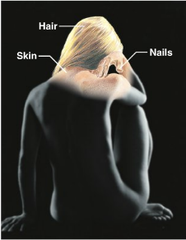
Integumentary Organs
skin (hair, nails)
Skeletal Organs
bones (cartilages, tendons, ligaments, joints)
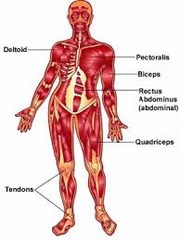
Muscular Organs
muscles (attached to skeleton)
Nervous Organs
brain (spinal cord, nerves, sensory receptors)
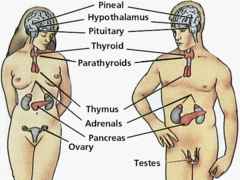
Endocrine Organs
thyroid (pituitary, thymus, adrenal, ovaries, testes, pancreas)
Cardiovascular Organs
heart (blood vessels, blood)
Lymphatic (Immunity) Organs
lymph nodes (spleen, lymphatic vessels, thymus, tonsils)
Respiratory Organs
trachea (nasal passages, pharynx, larynx, bronchi, lungs)
Digestive Organs
stomach (esophagus, oral cavity, small and large intestine, accessory organs like: teeth, salivary glands, liver, pancreas)
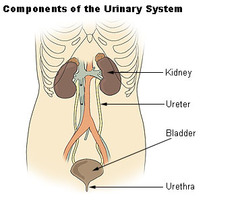
Urinary Organs
kidneys (ureters, bladder, urethra)
Reproductive Organs
Penis or Vagina (male: testes, prostate gland, scrotum female: ovaries, uterine tubes, uterus, mammary glands)
Integumentary System
Skeletal System

Muscular System
Nervous System

Endocrine System
Cardiovascular System

Lymphatic (Immunity) System

Respiratory System

Digestive System

Urinary System
Reproductive System
