A&P 1 Unit 2: Chemistry & Biochemistry
 Call Kai
 Learn
Learn Practice Test
 Spaced Repetition
 Match
Match Flashcards
 Knowt Play
1/110

Earn XP
Description and Tags
*NOT DONE IINCLUDE NORMAL STUFF WHEN I DO THIS LATER (AND LOs?)
Name | Mastery | Learn | Test | Matching | Spaced | Call with Kai | Chat |
|---|
No analytics yet
Send a link to your students to track their progress
111 Terms
Chemistry
The study of the composition, properties, and behavior of matter
Matter
Anything that has mass and takes up space; “Stuff”
What are the states of matter?
3 States:
Solid
Liquid
Gas
Solid
Has a definite shape and volume
ex: Bones, teeth
Liquid
Has a definite volume and changeable shape
ex: Water
Gas
Has changeable shape and volume
Ex: The air we breathe
Energy
The capacity to do work or to put matter into motion
What are the two kind of energy?
Kinetic Energy (KE)
Potential Energy (PE)
Kinetic Energy (KE)
Energy in motion
*Can be transferred into PE

Potential Energy (PE)
Stored or inactive energy; An object with PE has the potential to do work, but is not currently doing work.
*Can be transferred into KE

Chemical Energy
Energy stored in the bonds of chemical substances.
ex: ATP
*There’s also chemical PE and chemical KE.
Electrical Energy
Results from the movement of charged particles
ex: Household wiring, our nervous system
Mechanical Energy (ME)
Energy directly involved in moving matter
ex: Pushing pedals on a bike to make it move (Physically pushing on something)
Radiant Energy
AKA: Electromagnetic Energy (EM)
Energy that travels in waves
Ex: Visible light, UV light, x-rays
Elements
Unique substances that cannot be broken down by ordinary chemical methods
Ex: Nitrogen (N), Hydrogen (H)
Atoms
Small particles that are unique building blocks (like Lego pieces) of each element
Each element is made up of 1 kind of atom ex: Hydrogen is made up of H atoms
Consist of subatomic particles: Protons (+), neutrons (0), electrons (-)
What are the 4 major elements of the human body?
HONC:
Hydrogen
Oxygen
Nitrogen
Carbon
What are some of the lesser elements that make up ~4^% of our body mass?
9 Elements:
Calcium
Phosphorus
Potassium
Sulfur
Sodium
Chlorine
Magnesium
Iodine
Iron
What are some of the trace elements that make up less than 0.01^% of our body mass?
Chromium, Copper, Zinc, etc.
Required in small amounts and are often found as part of or the activator of our enzymes
Review question from lecture:
Where is chemical energy stored? How can it be used?
Stored in the bonds of chemical substances
Released and transformed when bonds are broken or rearranged
Review question from lecture:
What are the four major elements making up approximately 96% of human body mass?
HONC: Hydrogen, Oxygen, Nitrogen, and Carbon
ADD FLASHCARDS HERE W/ PRACTICE QUESTIONS FROM KAHOOTS, ETC. AND THEN CONTINUE FLASHCARDS ON THE NEXT LECTURE IN THIS UNIT
ALSO: Finish doing description for this flashcard set AND when I finish writing it, make sure I have everything and make any edits and provide diagrams, think, mneunomics when needed and then study for quiz
Biochemistry
The study of the chemical composition and reactions of living things
Inorganic compounds
Do NOT contain carbon
ex: Water, salts, many acids and bases
*Equally as necessary for life as organic compounds.
Organic compounds
Contains carbon
ex: Carbohydrates, lipids, proteins, nucleic acids
*Equally as necessary for life as inorganic compounds.
Salt
An inorganic compound (carries an electrical charge) / ionic compound that contains cations (+) other than protons (H^+) and anions other than OH^-
Dissociate (bonds break) in water
Electrolytes
Conduct an electrical current in solution
What is true about all ions?
All ions are electrolytes - substances that conduct electrical current in solution
Acid
Donate H^+ ions (protons)
Ex: HCl —> H^+ and Cl^-
Bases
Proton (H^+) acceptors
Ex: NaOH —> Na^+ + OH^-
*Sodium hydroxide dissolves and completely separates in water.
pH
The “potential of Hydrogen or power of Hydrogen”
The relative concentration of H^+ ions (protons)
What is the range of pHs?
Zero to fourteen
What are the three categories of pH values?
Basic / Alkaline
Neutral
Acidic
Basic pH (Alkaline)
Less H^+ and more OH^-
Higher pH (>7)
Neutral pH
pH of 7
Neutral = The number of H^+ is equal to the number of OH^- ions
Acidic pH
pH greater than 7
Has more H^+ ions
pH of blood
7.4
pH of Water
pH of 7 - “The universal solvent”
pH of gastric juice
2
pH of 1M (1 Mole) of sodium hydroxide
14
pH of gastric juice
2
Review:
What is the difference between organic and inorganic compounds? Can you name some examples of each?
Organic compounds contain carbon while inorganic compounds do NOT contain carbon
Organic compound ex: Carbohydrates (#1 source of energy), lipids (#2), proteins (#3), and nucleic acids
*Nucleic acids do not provide energy.
What is true about organic and inorganic compounds?
They are both equally essential for life.
What are ionic compounds?
A chemical substance is made of positively and negatively charged ions held together by electrostatic attraction
Salts - All ionic compounds are classified as salts.
What is a salt? Provide an example. How do bonds break?
Ionic compound containing cations (+ change) other than H^+ and anions (- charge) other than OH^-.
Ex: NaCl
Bonds break by dissociating in water
What is true about all ions?
All ions are electrolytes
Electrolytes are substances that conduct an electrical current in solution.
What are electrolytes?
Electrolytes are substances that conduct an electrical current in solution.
What are inorganic compounds?
Acids and bases
What are acids? Provide an example.
Proton donors
Donate H^+ ions, increase H^+
Example: HCl —> H^+ + Cl^-
What are bases? Provide examples.
Poton acceptors - Accept H^+ ions
Ex:
NaOH (Sodium Hydroxide) —> Na^+ + OH^-
OH^- + H^+ —> H20
FIGURE OUT THIS ORDER AND DELETE REPEATS AND MAKE SURE I HAVE EVERYTHING
*Format review questions like I had for Knowt for A&P Unit 1
Review:
If a substance has a pH of a 4.5, is it acidic, basic, or neutral?
Acidic
What are organic compounds?
4 Types of organic compounds:
Carbohydrates
Lipids
Proteins
Nucleic Acids *do not provide energy but make up DNA
What are carbohydrates?
Carbo = Carbon
Hydrate = Water
Organic compounds composed of C, H, and O
Think: “Hydrated carbon”
What falls under carbohydrates?
Sugars and starches
What are the types of carbohydrates?
Classified by size
3 Types:
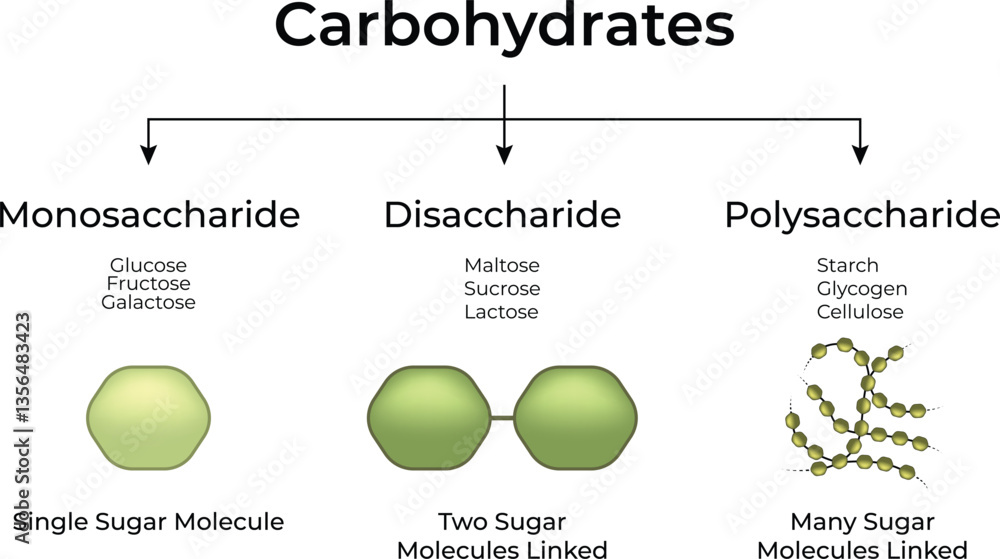
Monosaccharides - One sugar
Ex: Glucose
Disasccharides - Two or more sugars
Ex: Maltose
Polysaccharides - Many sugars
Ex: Starch

What are monosaccharides? Provide an example.
Simple sugars: A single chain or single-ring structure
“Building blocks” of carbohydrates; Monomers
Ex: Glucose (C6H12O6)

What is glucose? Provide the chemical formula.
The main fuel to make ATP (energy), which is especially important in the brain
Makes up our blood sugar / blood glucose
Chemical formula: C6H1206
What is diabetes mellitus?
Medical condition caused by chronic high bloood sugar (hyperglycemia)
Background on diabetes:
Food breaks down into glucose for cellular energy.
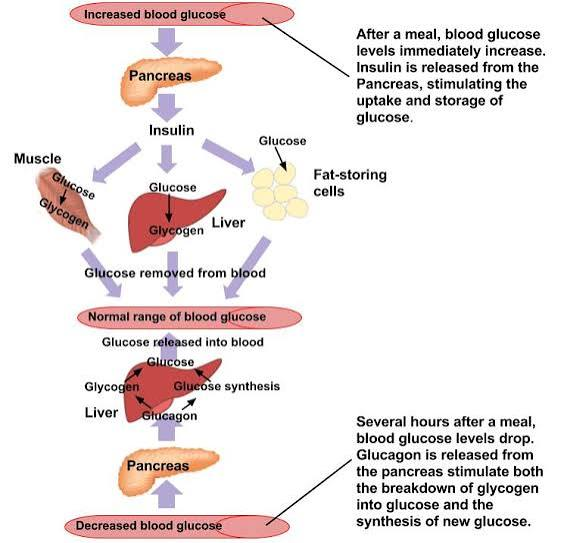
Insulin is a hormone that allows glucose to move from the bloodstream into cells.
With diabetes, the pancreas makes little or no insulin (depending on severity) OR the body cannot use insulin correctly, which causes sugar to build up in the blood (leading to hyperglycemia or high BG).
Type 1: Autoimmune condition in which body attacks insulin producing cells, which means the body makes no insuliin
Type 2: A condition in which the body becomes resistant to insulin and does not make enough to overcome it; Most common form.
*The regulation of blood sugar (BG) is a negative feedback loop.
What is glycolysis?
Glyco = Glucose
Lysis = Breakdown
The process of breaking down glucose, which generates ATP.

What are disaccharides? Provide an example.
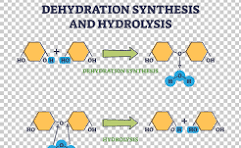
Disaccharides are “double sugars” or two monosaccharides that are joined by dehydration synthesis (DHS).
Ex: Sucrose = glucose + fructose
*Carbs can be mono or disaccharides.

What is dehydration synthesis (DHS)?
DHS is a condensation reaction and it’s a chemical process where two smaller molecules join together to form a larger molecule, releasing a water molecule in the process.
Primary mechanism for body to build complex biological polymers like carbohydrates, proteins, and lipids form simpler monomers.
*Carbs can be mono or disaccharides.
What are polysaccharides?
Complex sugars or polymers of monosaccharides that are joined by dehydration synthesis (DHS).
Ex: Glycogen, starch, cellulose which are all polymers of glucose
What is glycogenesis?
Glyco = Glycogen
Lysis = Breakdown
The breakdown of glycogen into glucose to use glucose for energy (ATP)

What are carbohdyrates? What is the role of carbohydrates in the body?
Supplies a source of cellular fuel - quick energy
Glucose is the main fuel to make ATP
This is your body’s first and main source of energy for cellular functions.
Review:
What is the main fuel to make ATP?
Glucose: C6H12O6
What is glycogen?
Highly branched polysaccharide composed of glucose units
The main form of short-term carbohydrate energy storage
What are lipids? Provide an example.
Organic compounds composed of C, H, O
*The proportion of Oxgyen is much lower in lipids than in carbohydrates
Ex: Fats, oils, and waxes
In what substances are lipids soluable?
Lipids are insoluble in H20, but readily dissolve in other lipids and organic solvents
Ex: Alcohol, ether, etc.
What are the different types of lipids?
4 Types of lipids:
Triglycerides
Phospholipids
Steroids
Eicosanoids
What are triglycerides?
The #2 form of short term energy
Neutral fats or lipids
What are triglycerides made up of?
Composed of fatty acids (the backbone of DNA) and glycerol (3:1 ratio)
What is glycerol?
A 3 carbon molecule
A modified simple sugar
What is a fatty acid?
A linear chain of Carbon and Hydrogen atoms with -COOH at the end
Can vary: Saturated or unsaturated
Saturated
Contain only single bonds between carbon atoms
Fully packed or saturated with hydrogen atoms, creating a straight chain
Unsaturated
Contains at least one double bond between carbon atoms therefore they have fewer H atoms
Bent or kinked chain
What is the role of triglycerides in the body?
To protect and insulate the body organs
Major source of stored energy
Where are triglycerides found?
Found in subcutaneous tissue and around the organs
What are phospholipids?
Modified triglycerides with 1 glycerol, 2 fatty acid chains, and 1 phosphate group)
What do phospholipids make up?
The cell membrane: Phospholipid bilayer
What are the characteristics of phospholipids?
Polar phosphate head (Hydrophilic = “Water loving”)
Nonpolar fatty acid tail (Hydrophobic = “Water hating”)
What is the role of phospholipids in the body?
The main component of cell membranes
What are steroids?
Flat lipid molecules with four interlocking hydrocarbon rings
What are some of the functions of steroids in the human body?
Cholesterol - A component of the cell membrane
Raw material to create steroid hormones (homeostasis)
Vitamin D (bone growth)
Bile salts (fat digestion), etc.
What are eicosanoids?
Lipids made up of 20-Carbon fatty acids
What are some of the functions of eicosanoids in the human body?
Prostalaglandins (in all cell membranes)
Blood clotting
Labor contractions
Regulation of blood pressure, etc.
What is a lipid panel?
Screening test that measures blood lipid levels including:
Total cholesterol
LDL
HDL
Triglycerides
What is LDL?
Low-Density Lipoprotein
The “bad cholesterol” that can build up in the walls of arteries (atheroscleorsis) and an increased risk of heart disease
What is HDL?
High Density Lipoprotein
“Good” cholesterol that protects against heart disease by removing LDL from the blood and thus preventing it from building up in the arteries
What diseases are associated with high levels of triglycerides?
Heart disease and diabetes
Review:
What is the structure of a triglyceride?
One glycerol attached to three fatty acid chains
Review:
What is a saturated vs unsaturated fat?
Review:
What is LDL vs HDL?
LDL = Bad cholesterol
HDL = Good cholesterol
What are proteins?
Organic compounds composed of C, H, O, and N
*May contain S
Make up 10% to 30% of cell mass
Have the most varied functions of all molecules
The last source of energy
Used to build basic structures ex: muscles, bones, cartilage, skin, nails, hair, etc.
Ex: Hemoglobin - carry oxygen, etc.
What are enzymes?
Catalysts: Speed up a reaction
What are amino acids?
“Building blocks” of proteins (Think: Lego pieces)
Contains an amino group (-NH²) and a carboxyl group (-COOH)
All amino acids are identical except for their R group - 20 R groups exist in nature, therefore there are 20 amino acids
*Think of each amino acid like a letter in the alphabet because different combinations create different words (different proteins)
What process helps form amino acids?
Dehydration synthesis (DHS) joins adjacent amino acids
What is a peptide bond?
A bond between two adjacent amino acids
What is a peptide bond?
A bond between two amino acids
What is a dipeptide? Tripeptide? Polypeptide? Macromolecules?
Dipeptide: 2 amino acids bonded together
Tripeptide: 3 amino acids bonded together
Polypeptide: 10+ amino acids
Macromolecules: 100 to 100,000 amino acids
*Think of each amino acid like a letter in the alphabet because different combinations create different words (different proteins)