COG PSYCH 4
 Call Kai
 Learn
Learn Practice Test
 Spaced Repetition
 Match
Match Flashcards
 Knowt Play
1/25

There's no tags or description
Looks like no tags are added yet.
Name | Mastery | Learn | Test | Matching | Spaced | Call with Kai | Chat |
|---|
No analytics yet
Send a link to your students to track their progress
26 Terms
Patients with apperceptive agnosia can perceive an object’s features but not the object in its entirety
They cannot link this input to visual knowledge but can draw well from memory
What is apperceptive agnosia?
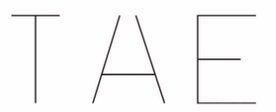
There are variations in “stimulus input”
Uses contextual influences
This word is ‘THE’, even if the H looks like an A, we know that it spells ‘THE’.
How is the process of object recognition complex?
Top-Down – processes shaped by knowledge
Concept-driven
Prior knowledge and experience
EX) Context effects
In everyday life, we tend to do top-down processing.
You have your answers already, you know how things will go.
EX) “How are you?” “I’m doing good, you?”
What is Top-Down Processing?
Process shaped by the stimulus
Data-driven, raw sensory details
EX) “How are you?” “I’m running late to a class.”
What is Bottom-Up Processing?
Recognition begins with identifying visual features in the input pattern.
Vertical lines, curves, diagonals, etc.
Evidence for feature detectors in the visual system
Larger units can then be detected by assembling the smaller pieces
How are features important?
Tasks in which participants examine a display and judge whether a particular target is present
Efficient when target is defined by a simple feature
Slow when target is defined by a combination of features
These findings suggest that feature analysis is a separate step from the step in which detected features are combined
What are Visual Search Tasks?
A device used to present stimuli for precise amounts of time
Tachitoscopic presentations with modern computers
What is a Tachitoscope?
feature detection
What does object recognition start with?
It’s easier to perceive and recognize letters-in-context than if they appear in isolation
The word-superiority effect can be demonstrated using a “two-alternative, forced-choice” procedure
Participants are shown a word (i.e. ‘dark’) or a single letter (i.e. ‘E’)
Did the display contain an E or a K?
More accuracy when the original stimulus was a word rather than a single letter.
What is the Word-Superiority Effect?
Well-formedness – how closely a letter sequence conforms to the typical patterns of spelling in the language
The more well-forced a letter sequence..
The easier it is to recognize the sentence
The greater the context effects produced by the sequence on recognition
EX) HZYQ vs. FIKE vs. HIKE
What is the Degree of Well-Formedness?
Well-formedness also influences errors
Likely: DPUM misread as DRUM
Unlikely: DRUM misread as DPUM
This goes to show that there are automatic processes
People can perceive stimuli as being more regular than they actually are
TPUM misread as TRUMPET
How does Well-Formedness influence errors?
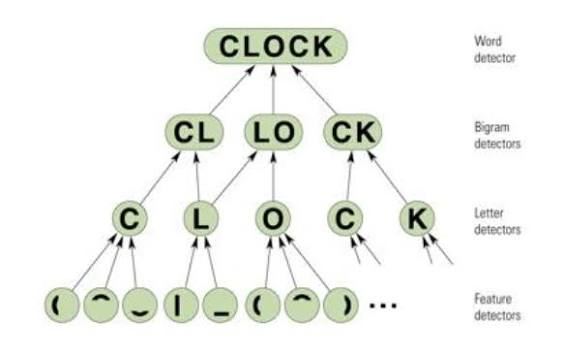
A hierarchical network of mental "detectors" used to explain how the human brain recognizes patterns, letters, and words.Starts from bottom-up
What is a Feature Net?
Each detector in the network has an activation level.
With input, this activation level increases
Some detectors will be easier to activate than others
Detectors fire when their response threshold is reached
Similar to a neuron’s threshold for firing an AP
Individual detectors are probably complex assemblies of neural tissue, not individual neurons or groups of neurons
How is the Feature Net designed?
Recency – detectors that have fired recently will have higher activation levels
A warm-up effect
Frequency – detects that have fired frequently will have higher activation levels
An exercise effect
In a Feature Net, what do the starting activation levels depend on?
Yes, but only when it is a well-primed detector.
The priming will depend on frequency and recency
The network is biased to respond to inputs similarly to how it has responded previously
Will a weak signal be enough to trigger something?
The bias to recognize frequent or primed words can result in errors, but it also results in correct recognition more often than incorrect recognition
It helps more than it hurts
How can we make recognition errors?
No. Knowledge is not locally represented. Rather, feature nets contain distributed representation.
Knowledge in a network is reflected by relationships across detectors.
Is knowledge locally represented?
The same mechanisms that enable the network to resolve ambiguous inputs (i.e. sloppy handwriting) and recover from errors can also result in recognition errors
Perfect accuracy is sacrificed for efficiency
What is ‘Efficiency vs. Accuracy’?
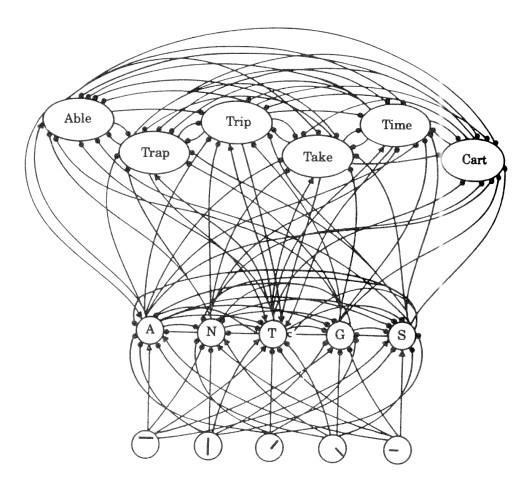
McClelland and Rumelhart Model
Emphasizes the role of inhibitory connections among detectors
Information flows bottom-up, top-down, and within the same level
Includes excitatory connections and inhibitory connections
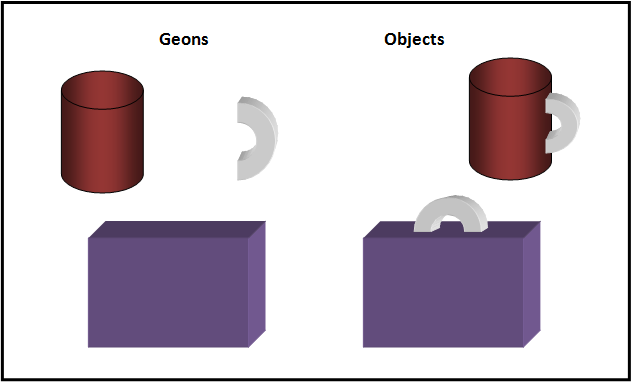
Recognition by components (RBC) model
Applies the feature net model to recognition of three-dimensional objects
McClelland and Rumelhart Model on this card. RBC model on the other card
What are the descendants of the Feature Net?
Researchers continue to develop recognition models
Models designed to explain human capacities
Models designed to build computer systems that can recognize objects
How do the models work?
Detection and cataloguing of visual input
Analysis of incoming patterns
Inhibitory and activating connections
What are the known approaches and new frontiers to Object Recognition?
Prosopagnosia – an inability to recognize individual faces (including their own) despite otherwise normal vision
Unable to assign identity.
Some people are super-recognizers, with extremely accurate face recognition
Opposite of prosopagnosia
Advantages for politicians and salespeople
How do we know that recognizing faces specifically seems to involve specialized neural structures?
Faces.
Faces show a powerful inversion effect
The effect is much larger than for other types of stimuli
The difference between words and faces is that faces are much more similar, whereas words have more variability
Are faces or words more recognizable?
Yes
Some researchers suggest that other types of recognition are special in the same way a facial recognition
EX) A bird-watcher who developed prosopagnosia lost the ability to distinguish faces and types of warblers
The fusiform face area (FFA) is particularly responsive to faces, but high levels of activation can also be produced by tasks requiring subtle distinctions
Are other types of recognition special in the same way as facial recognition?
Holistic Perception – perception of the overall configuration rather than an assemblage of parts
Evidence from the composite effect
Same-race vs. Cross-race facial recognition
People tend to be more accurate in recognizing faces from their own racial background
Implies potentially different recognition mechanisms
What is the Holistic Recognition style?
Limits of Feature Nets
Some target objects depend on configurations, not individual features
Knowledge that is external to object recognition nevertheless influences recognition
What are the limitations of Feature Nets?
Some top-down effects can be explained by feature nets.
EX) The Word-Superiority Effect
Other Top-Down effects, however, need more explanation
Larger priming effects are evident for words viewed in a sentence rather than in isolation
Context and expectations influence perception
What are the Benefits of Larger Contexts?