Legal Studies AOS1
 Studied by 0 people
 Call with Kai
 Learn
Learn Practice Test
 Spaced Repetition
 Match
Match Flashcards
 Knowt Play
1/10

There's no tags or description
Looks like no tags are added yet.
Name | Mastery | Learn | Test | Matching | Spaced | Call with Kai |
|---|
No study sessions yet.
11 Terms
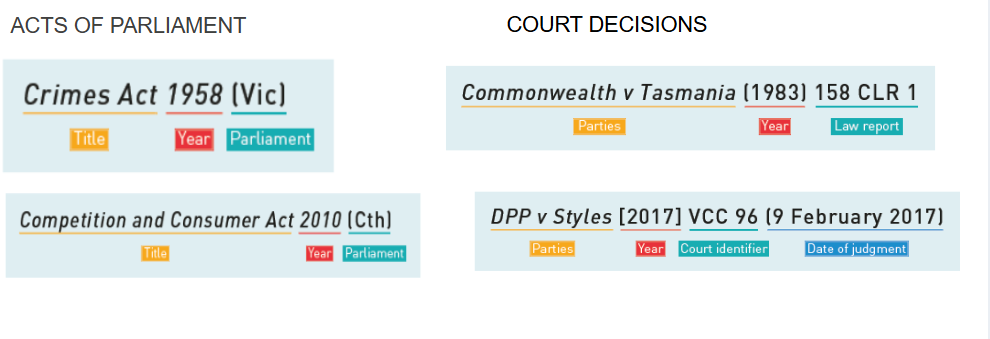
Difference styles of legal citations
Purpose of the criminal justice system
to determine weather the accused is guilty and impose sanctions if they are found guilty
parties in a criminal case
accused
prosecution
Types of offences
summary offences
- minor offences
heard in magistrates court
called a hearing
no jury
most are outlined in the summary offences act
e.g disorderly conduct, drinking offences, minor assaults
95% of offences are minor
indictable offences
- serious offences
heard in a county or supreme court before a judge & jury
entitled to a jury trial if the accused pleads not guilty
called a trial
outlined in crimes act
some heard summarily - outlined in criminal procedures act
e.g homicide offences, fraud, drug trafficking
indictable offences heard & determined summarily
- less serious offences
if the court & accused agree
outlined in criminal procedures act
maximum 2 years imprisonment for 1 offence
maximum 5 years imprisonment for 1+ offence
e.g robbery < $100,000
difference between theft, robbery and burglary
theft: take
rob: force e.g threaten
burglary: breaking in & entering
Committal proceeding
pre-trial hearings and proceedings held in magistrates court for indictable offences
involve several steps (filing and mentioning hearings & cross examination of witnesses)
committal hearing
court hearing as part of the committal proceeding
held in magistrates court, to determine weather there is sufficient evidence to support a conviction
Key Principles of the Criminal Justice System
Burden of Proof
Party who has responsibility to prove the facts of the case
usually the party that initiates the claim
Criminal case: prosecution
Standard of Proof
Level of certainty or strength of evidence required to prove the case
Criminal Case: Beyond reasonable doubt
Presumption of innocence
Guarantee that an accused will be assumed not-guilty until charge has been proven beyond reasonable doubt
Right is protected under the charter of human rights and responsibilities act
The rights of an accused - Unreasonable delay
The right to be tried without unreasonable delay
An accused is entitled to have their charges heard in a timely manner
Delays should only occur if considered reasonable
‘reasonable’ not defined - includes complexity of the case - no. of offenders, crime scenes, witnesses - source: human rights charter
children are seen ASAP
Charter of human rights and responsibilities act of 2006 (vic)
protects Victorians by it being considered when creative legislation & implementing policies
contains 20 rights that everyone must have access to
e.g right to silence, right to access courts, right to be given reasons for decisions
Example - DPP (prosecution) V Gray
accused charged w/ several indictable offences
no date set for committal hearing
likely delays = no certainty
accused applied for bail & argued it was not appropriate to continue to be detained
justice in supreme court noted that accused could spend more time in custody than he was likely to spend in prison as a sanction
therefore, accused released on bail
Bail: temporary release of an accused person waiting trial
remand: to place (a defendant) on bail or in custody
The rights of an accused
The right to silence
Accused has a right to refuse to answer any questions during the investigation of a crime
accused does not have to give evidence in a criminal trial
no negative conclusions or interferences can be drawn because an accused exercised this right
source: common law (judge makes decisions based on previous cases) & statute law (written law- legislation, overrides common law)
the right to trial by jury
person charged w/ indictable offense in entitled to have their guilt decided by a jury of their peers
source: Aus constitution (commonwealth indictable offences) AND Criminal procedure act (Victorian indictable offences)
The rights of Victims (1)
The right to give evidence using alternative arguments
the criminal procedure act (2009) vic allows for witnesses to give evidence using a range of alternative arguments in cases involving:
- a sexual offence
- a family violence offence
- an offence for sexual exposure, obscene, indecent, threatening language or behavior in public
Arrangements can include:
giving evidence from a place other than the courtroom by means of CCTV
screens that remove the accused from the witness' line of vision
legal practitioners may be required not to be formally dressed in robes or required to be seated
The rights of Victims (2)
the right to be informed about proceedings
victims are entitled to be informed at reasonable intervals about the progress of an investigation into a criminal case, and ant court proceedings
information includes:
- details of the offence charged against the accused
- the time and date of the hearing
- outcome & sentence imposed
- details of any appeals
- right to be entitled to attend any court hearing
the right to br informed of the likely release date of the accused
victims of a criminal act of violence can be included on the victims register
victims will receive information about an offender who has been imprisoned including:
- notification of the release of the prisoner on parole at least 14 days before the release
- notification if the offender escapes from prison
victim may also be able to make a submission if the imprisoned offender may be released on parole
 Note
Note  Flashcards (55)