D104 - Intermediate Accounting II (Updated Version)
 Call Kai
 Learn
Learn Practice Test
 Spaced Repetition
 Match
Match Flashcards
 Knowt Play
1/96

There's no tags or description
Looks like no tags are added yet.
Name | Mastery | Learn | Test | Matching | Spaced | Call with Kai | Chat |
|---|
No analytics yet
Send a link to your students to track their progress
97 Terms
Depreciation Base
Original cost - Salvage value
Methods of Depreciation
Activity method (units of use or production)
Straight-line method
Decreasing-charge methods (accelerated)
Sum-of-the-years’-digits
Declining-balance method
Special depreciation method
Group & composite methods
Hybrid or combination methods
Activity Method
Depreciation Charge = [(Cost - Salvage Value)(Actual Activity)] / (Total Estimated Activity)
Straight-Line Method
Depreciation Charge = (Cost - Salvage Value) / (Estimated Service Life in Yrs)
Sum-of-the-Years’-Digits
Depreciation Charge = (Cost - Salvage)[(Remaining Useful Life) / (Sum-of-the-years’ digits]
Declining-Balance Method
Does not deduct salvage value
Step one: straight-line rate = 100% / (Useful Life)
Step two: DDB Rate = (2)(straight-line rate)
Step three: Depreciation expense = (DDB Rate)(Beginning period book value)
Composite Method
Assets are dissimilar and have different lives
Smallest depreciation in the first year of an asset’s life
Straight-line method
Composite Depreciation Rate
(Depreciation per year for all assets - straight-line) / (Total cost of assets)
Composite Life
Length of time it takes a company to depreciate its assets on a composite basis
Composite Life = [(Total depreciation base of assets) / [(Total costs of assets)(Composite deprecation rate)]
Hybrid or Combination Method
Assets are similar in nature and have approximately the same useful lives
Production variable method: combination of straight-line and activity approach
Depreciation & Partial Periods
Must determine depreciation expense for full year and then prorate depreciation expense between the two periods involved
[(Actual months) / (12 months)] (Full year depreciation)
Fractional-Year
Nearest fraction of a year: depreciate 8 2/3 months in the first year
Nearest full month: most common. Depreciate for 9 months in the first year
Half year in period of acquisition and disposal
Full year in period of acquisition, none in period of disposal
None in period of acquisition, full year in period of disposal
Changes in Depreciation in Subsequent Periods
Charges for depreciation in subsequent periods (assuming straight-line method) are determined by diving the remaining book value less salvage value by the remaining estimated life
Depreciation Entry
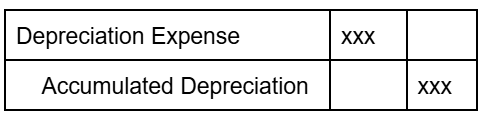
To determine impairments you use..
Recoverability test
Recoverability Test
Sum of the expected future net cash flows (undiscounted) < carrying amount = impairment
Sum of expected future net cash flows (undiscounted) >= carrying amount = no impairment
Impairment Loss
Amount by which the carrying amount of asset exceeds its fair value
Measuring Impairments
Fair value is measured based on market price if available. Otherwise, use present value of expected future net cash flows to determine fair value
Impairment Loss Entry
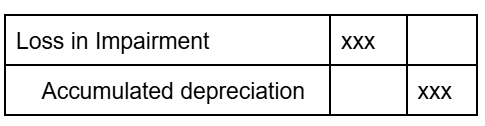
Restoration of Impairment Loss
After recording impairment loss, the reduced carrying amount of an asset held for use becomes its new basis
A company may NOT restore an impairment loss for an asset held for use
Impairment of Assets to be disposed of
Assets held for disposal are like inventory; companies should report them at the lower-of-cost-or-net realizable value
A company can write up or down an asset held for disposal in future periods, as long as the carrying value after the write-up never exceed the carrying amount of the asset before the impairment
Depletion Base
Sum of acquisition cost of the deposit, exploration costs, development costs, and restoration costs
Development Costs
Tangible equipment costs: all transportation and other heavy equipment needed to extract the resource and get it ready for market
If equipment can be moved and used for other projects, do not include in depletion base
Some equipment cannot be moved (a drilling rig foundation) so they are included
Intangible development costs: drilling costs, tunnels, saft & well. NOT considered part of depletion base
Depletion Cost per Unit
[(Total Depletion Base - Salvage Value)] / (Total estimated units available)
Depletion Charge
(Depletion cost per unit)(Number of units extracted)
Depletion Entry
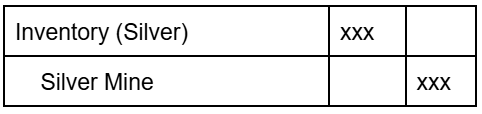
Selling Inventory Entry
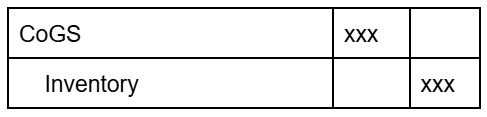
Asset Turnover
How efficiently a company uses its assets to generate sales
Asset Turnover Ratio = (Net Sales) / (Average Total Assets)
Profit on Margin Sales
Analyzes return on sales of PPE
Profit Margin on Sales = (Net Income) / (Net Sales)
Return on Assets
Measures probability well since it combines the effects of profit margin and asset turnover
Return on assets = (Net Income) / (Average Total Assets) = (Profit Margin on Sales)(Asset Turnover)
Typical Current Liabilities
Accounts Payable
Notes Payable
Dividends Payable
Customer advances and deposits
Unearned revenues
Sales taxes payable
Current maturities of long-term debt
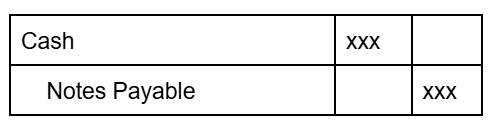
Interest-Bearing Note - Issuance Entry
Interest-Bearing Note - Adjusting Entry to Recognize Interest
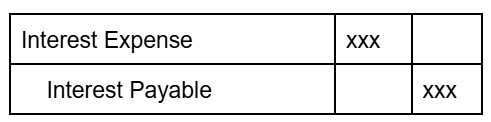
Interest to be Recognized
(Amount received)(Interest percentage)(# of months / 12 months)
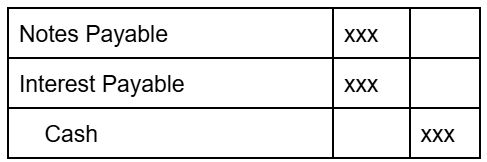
Interest-Bearing Note - Payment Entry
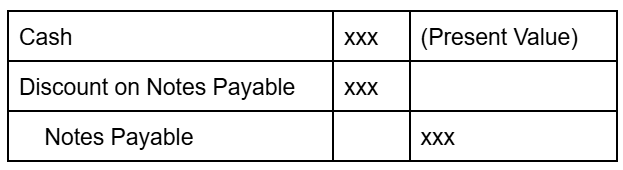
Zero-Interest-Bearing Note Issued - Issuance Entry
Unearned Revenues - Sale Entry

Unearned Revenues - Redeemed Entry
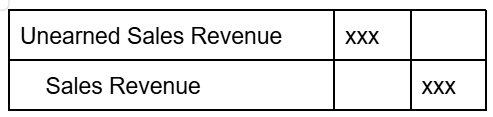
Sales Taxes Payable - Segregated Entry
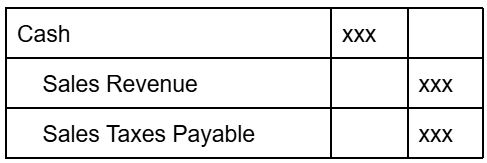
Sales Taxes Payable - Non-Segregated Entry

Sales Taxes Payable - Non-Segregated Formulas to Separate Accounts
The amount recorded in the Sales Revenue is compromised of the sales amount plus the tax percentage of the sales amount
Sales Revenue (with Sales Tax) = (Sales Revenue Balance) / [(1 + Percentage Interest)]
Sales Tax Collected = Sales Revenue - [Sales Revenue (with Sales Tax)]
Sales Tax Payable = (Sales Tax Collected)(1 - Percentage Interest)
Gain Contingencies
Do NOT record gain contingencies, onl dislcose in notes when a high probability exists for realizing them
Loss Contingencies
Accrue an estimated loss by a charge to expense and a liability recorded only if BOTH conditions are met:
Probable a liability has been incurred at the date of the financial statements prior to their issuance
The amount of the loss can be reasonably estimated
Reporting a Loss Contingency
To report a loss and a liability in the financial statements, the cause for litigation must have occurred on or before the date of the financial statements
Common Loss Contingencies
Litigation, claims and assessments
Guarantee and warranty costs
Consideration payable (premiums & coupons)
Environmental liabilities
Warranty
Product guarantee. Promise made by a seller to a buyer to make good on a deficiency of quantity, quality or performance in a product
Two types:
Assurance-type
Service-type
Assurance-Type Warranty
Included in sales price
Warranty that product meets agreed-upon specifications
Record a warranty libaility
Expensed in the period the goods are provided or services performed
Service-Type Warranty
Not included in sales price
Warranty that provides an additional service beyond the assurance-type warranty
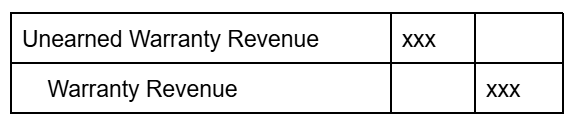
Usually recorded in "Unearned Warranty Revenue” and recognize revenue on a straight-line basis
Assurance-Type Warranty - Sales Entry for Year 1
(# of units sold)(Total cash acquired) for Year 1
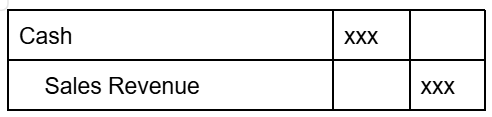
Assurance-Type Warranty - Payment for Warranty Costs Entry Year 1
$ in warranty costs incurred for Year 1

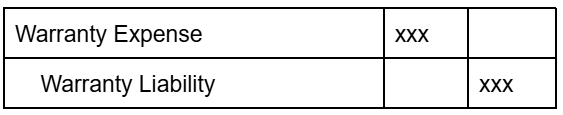
Assurance-Type Warranty - Adjusting Entry for Estimated Warranty Expense/Liability Year 2
(Total expected warranty expense) - (Warranty Expense Year 1)
Assurance-Type Warranty - Payment Entry for Warrant Costs in Year 2
(Total expected warranty expense) - (Warranty Expense Year 1)
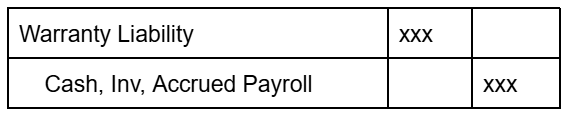
Service-Type Warranty - Recognize Revenue Entry
(Total cost of warranty) / (Years it lasts)
Cash Rebate
Buyer can obtain by returning the store receipt, a rebate coupon, and universal product code (UPC label) or “bar code” to the manufacturer
Consideration Payable - Purchase Entry
(# items purchased)(Cost per item purchased)
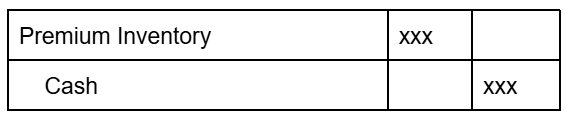
Consideration Payable - Sale Entry
(# of items sold)(Cost per item sold)
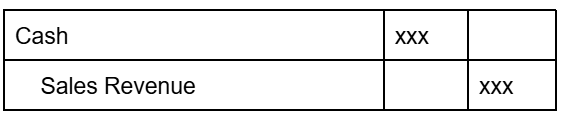
Consideration Payable - Actual Redemption Entry
Cash = [(# of items redeemed) / (# of items needed to redeemed)] ($ amount needed to redeem)
Premium Expense = [(# of items redeemed) / (# of items needed to redeemed)] (Cost per item purchased)
![<ul><li><p>Cash = [(# of items redeemed) / (# of items needed to redeemed)] ($ amount needed to redeem)</p></li><li><p>Premium Expense = [(# of items redeemed) / (# of items needed to redeemed)] (Cost per item purchased)</p></li></ul><p></p>](https://assets.knowt.com/user-attachments/553c737d-fd96-42d0-ab04-66bd8171fe9c.png)
Consideration Payable - Adjusting Entry for Additional Premium Expense and Estimated Premium Liability
Total estimated redemptions = (Total items sold)(Percentage of estimated redemptions)
Cost of estimated redemptions = [(Total estimated redemptions) / (# of items needed to redeem)](Cost of item purchased - $ amount to redeem)
Redemptions to date = Estimated redemptions - actual redemptions
</p></li><li><p>Redemptions to date = Estimated redemptions - actual redemptions</p></li></ul><p></p>](https://assets.knowt.com/user-attachments/ff4068ab-ecde-4017-a44e-ba4353815979.png)
Loss contingency that only meets one condition
If the loss is either probable or estimable, but not both, and if there is at least a reasonable possibility that a company may have incurred a liability, it must disclose the following:
Nature of contingency
Estimate of the possible loss or range of loss or a statement that an estimate cannot be made
Current Ratio
Current Ratio = (Current Assets) / (Current Liabilities)
Acid-Test Ratio
Acid-Test Ratio = (Cash + Short-term investments + Net accounts receivable) / (Current liabilities)
What is a bond valued at?
A bond is valued at the present value of its expected future cash flows, which consists of: interest and principal
Stated, coupon, or nominal rate
Interest rate written in the terms of the bond indenture
The issuer of the bonds sets this rate
Face value
Par value, principal amount, or maturity value
Effective Yield or Market Rate
Rate of interest actually earned by bondholders
Discount or Premium Bonds
The difference between the face value and the present value of the bonds determined the actual price buyers pay for the bonds
Discount: bonds sell for less than face value
Premium: bonds sell for more than face value
Inverse relationship between the market interest rate and the price of bonds
If bonds sell at a discount, effective yield > stated rate
If bonds sell at a premium, effective yield < stated rate
Bonds Issued at Par on Interest Date
When a company issues bonds on an interest payment date at par (face value), it accrues no interest
No premium or discount exists
Bonds Issued at Par on Interest Date - Entries
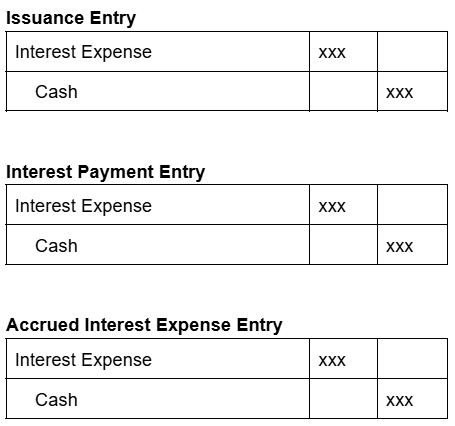
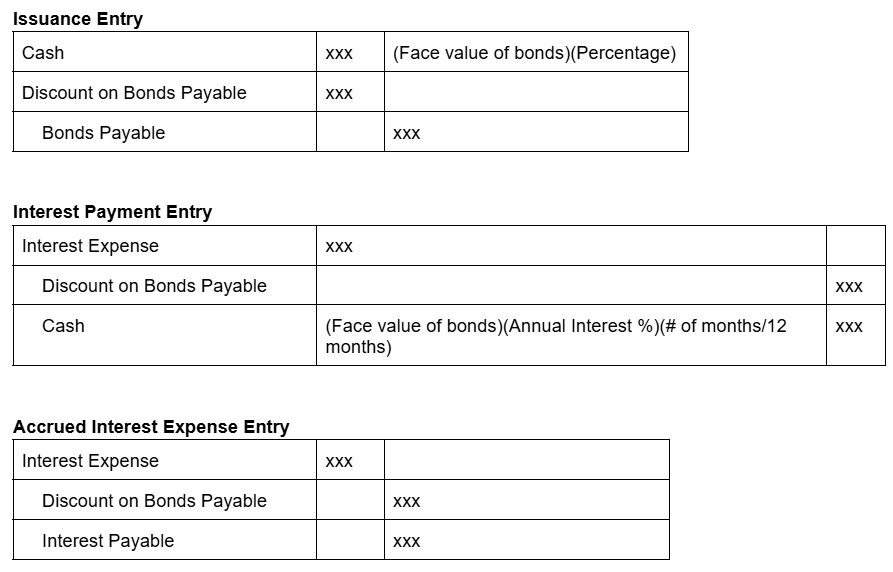
Bonds Issued at Discount on Interest Date - Entries
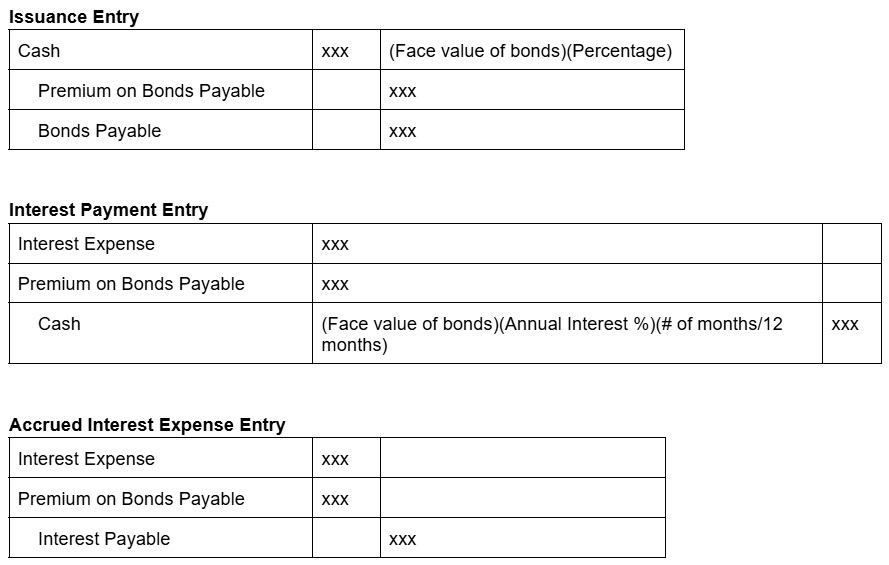
Bonds Issued at Premium on Interest Date - Entries
Bonds Issued Between Interest Dates
Buyers of the bonds will pay the seller the interest accrued from the last interest payment date to the date of issue
Ex.: If a bond is issued on March 1 and it is payable semiannually on Jan 1 and July 1, you will pay for interest accrued on Jan-Feb on March 1
Effective-Interest Method
Used for amortization of a discount or premium
AKA Present value amortization
Steps:
Compute bond interest expense first by multiplying the carrying value (book value) of the bonds at the beginning of the period by the effective-interest rate
Determine the bond discount or premium amortization next by comparing the bond interest expense with the interest (cash) to be paid
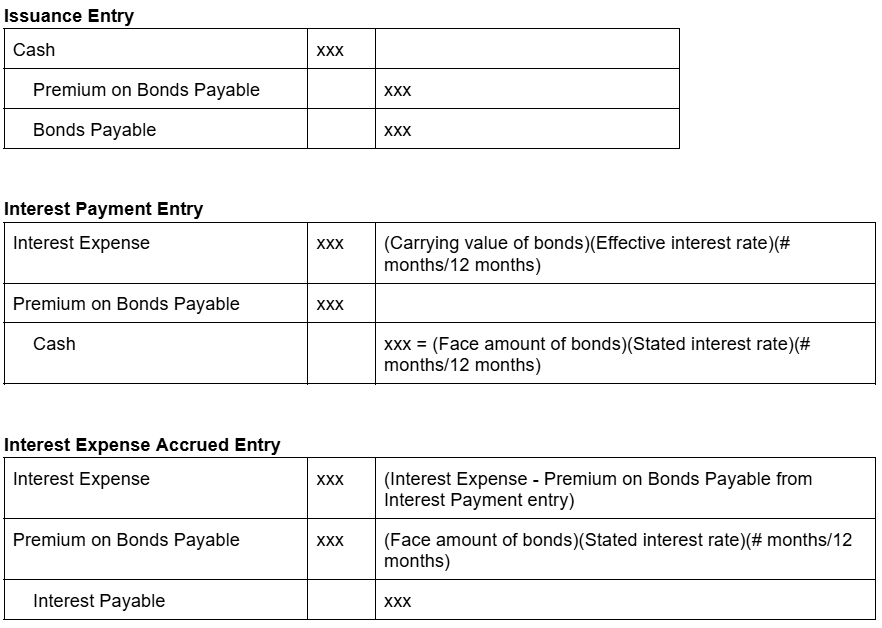
Effective-Interest Method - Amortization Amount

Effective-Interest Method - Discount Bonds
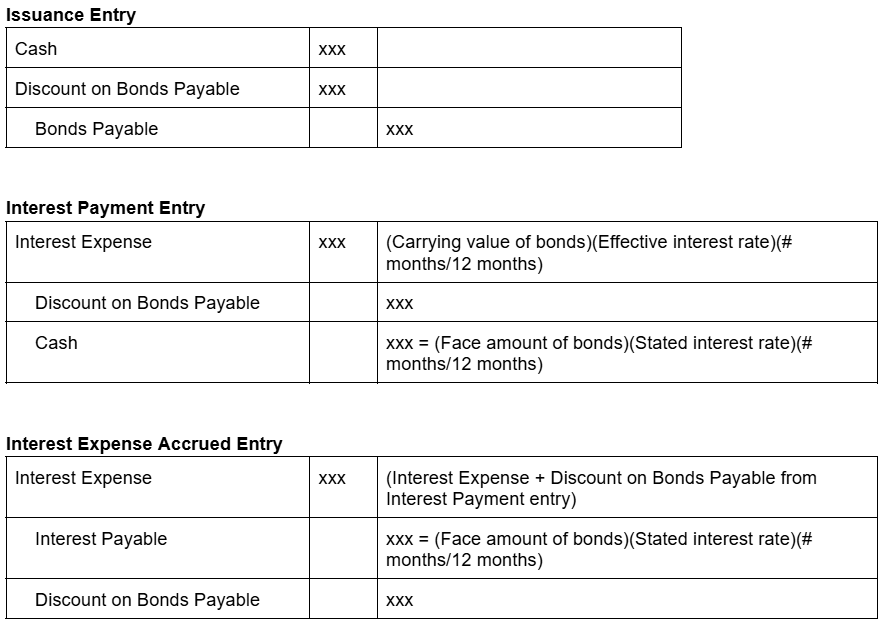
Effective-Interest Method - Premium Bonds
Ending Warranty Liability
Beginning liability + Warranty expense - Claims paid
Warranty Expense
(Units sold)(Estimated cost per unit)
Effective-Interest Method - Discount vs Premium
Discount bond
Interest expense > Cash interest
Credit Discount on Bonds Payable
Carrying value increases over time
Premium bond
Interest expense < Cash interest
Debit Premium on Bonds Payable
Carrying value decreases over time
Reacquisition Price
Amount paid on extinguishment or redemption before maturity, including any call premiums and expense of reacquisition
Reacquisitions price < Net carrying amount = Gain from extinguishment
Reacquisition price > Net carrying amount = Loss from extinguishment
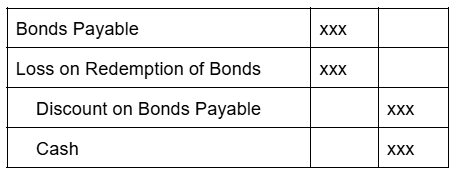
Reacquisition - Calculating Loss on Redemption
Reacquisition price = (Par value of bond)(Percentage)
Unamortized discount = [(Reacquisition price - face value - unamortized discount balance)] x (# of years left / total # of years)
Refunding
The replacement of an existing issuance with a new one
Reacquisition - Loss Entry
Book Value of Bonds
Face Value - Unamortized Discount
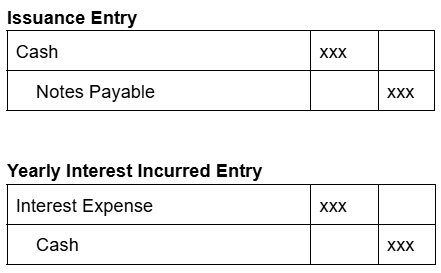
Notes Issued at Face Value
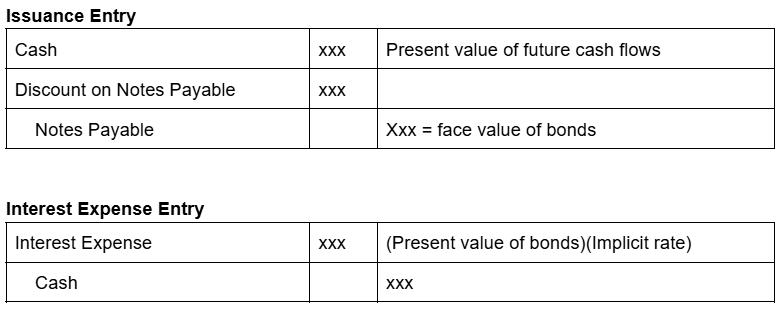
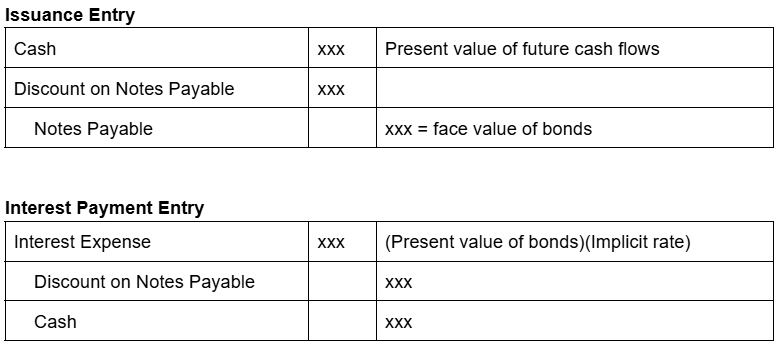
Zero-Interest-Bearing Notes
AKA Non-Interest Bearing
Measures the note’s present value by the cash received
Interest is implied
Implicit Interest Rate
Rate that equates the cash received with the amounts to be paid in the future
Zero-Interest-Bearing Notes - Entries
Interest-Bearing Notes - Entries
Special Notes Payable
If there is no stated rate of interest, the amount of interest is the difference between the face amount of the note and the fair value of the property
Two ratios that provide info about debt-paying ability and long-run solvency:
Debt to Assets
Times Interest Earned
Debt to Assets Ratio
Measure percentage of total assets provided by creditors
Debt to Assets Ratio = (Total Liabilities) / (Total Assets)
Includes current and long-term liabilities
The higher the percentage, the greater the risk the company may be unable to meet its maturing obligations
Times Interest Earned
Indicates company’s ability to meet interest payments as they come due
Times Interest Earned = (Net Income + Interest Expense + Income Tax Expense) / (Interest Expense)