ec 101 ch 14-16 (production and costs, competition, and monopoly)
 Call Kai
 Learn
Learn Practice Test
 Spaced Repetition
 Match
Match Flashcards
 Knowt Play
1/54

There's no tags or description
Looks like no tags are added yet.
Name | Mastery | Learn | Test | Matching | Spaced | Call with Kai | Chat |
|---|
No analytics yet
Send a link to your students to track their progress
55 Terms
What is total revenue (TR)?
TR = Price × Quantity.
What is total cost (TC)?
The market value of all inputs used in production.
What is profit?
Profit = TR − TC.
What are explicit costs?
Costs requiring a monetary payment.
What are implicit costs?
Opportunity costs that do not require money (e.g., forgone interest).
What is economic profit?
TR − (explicit + implicit costs).
What is accounting profit?
TR − explicit costs.
What is a production function?
Relationship between inputs and output.
What is marginal product (MP)?
Additional output from one more unit of input.
What is diminishing marginal product?
MP decreases as input increases.
What are fixed costs (FC)?
Costs that do not vary with output.
What are variable costs (VC)?
Costs that change with output.
What is average total cost (ATC)?
ATC = TC / Q
What is average variable cost (AVC)?
AVC = VC / Q.
What is average fixed cost (AFC)?
AFC = FC / Q
What is marginal cost (MC)?
MC = ΔTC / ΔQ.
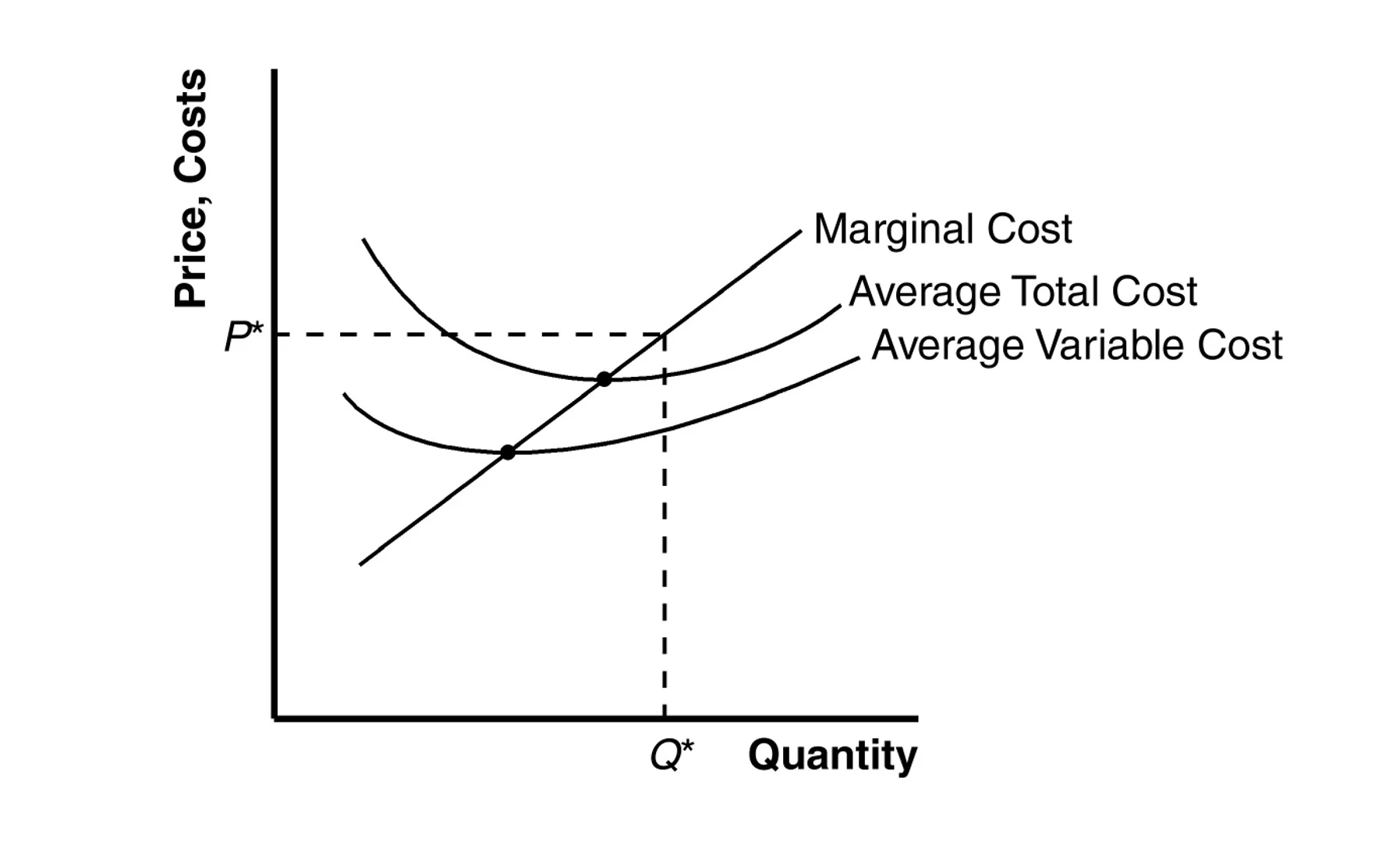
Why is ATC U‑shaped?
AFC falls, AVC rises (diminishing marginal product).
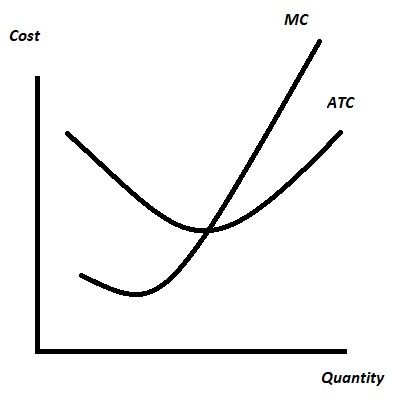
Where does MC intersect ATC?
At ATC’s minimum (efficient scale).
What is the difference between the short run and long run in production?
Short run: at least one input is fixed.
Long run: all inputs are variable; firms can fully adjust scale.

What are economies of scale?
LRATC falls as output increases.
What are constant returns to scale?
LRATC stays constant as output increases.

What are diseconomies of scale?
LRATC rises as output increases.
What is a competitive market?
Many buyers/sellers, identical products, free entry/exit, price takers.
What is average revenue (AR) for a competitive firm?
AR = P
In perfect competition, the firm is a price taker, so the market sets a constant price P.
Average revenue (AR) = total revenue ÷ quantity = (P⋅Q)/Q=P
Because each additional unit sells at the same price, marginal revenue (MR) also equals P.
Therefore: AR = MR = P for a competitive firm.
What is marginal revenue (MR) for a competitive firm?
MR = P.
What is the profit‑maximizing rule?
Produce where MR = MC.
When should a competitive firm increase output?
If MR > MC
When should a firm decrease output?
When MR < MC, because producing the next unit would reduce profit.
When should a firm shut down in the short run?
If TR < VC or P < AVC
When should a firm exit in the long run?
If TR < TC or P < ATC
When will firms enter a market?
If P > ATC
What is the competitive firm’s short‑run supply curve?
a perfectly competitive firm will only produce in the short run when marginal costs (MC) > average variable costs (AVC)
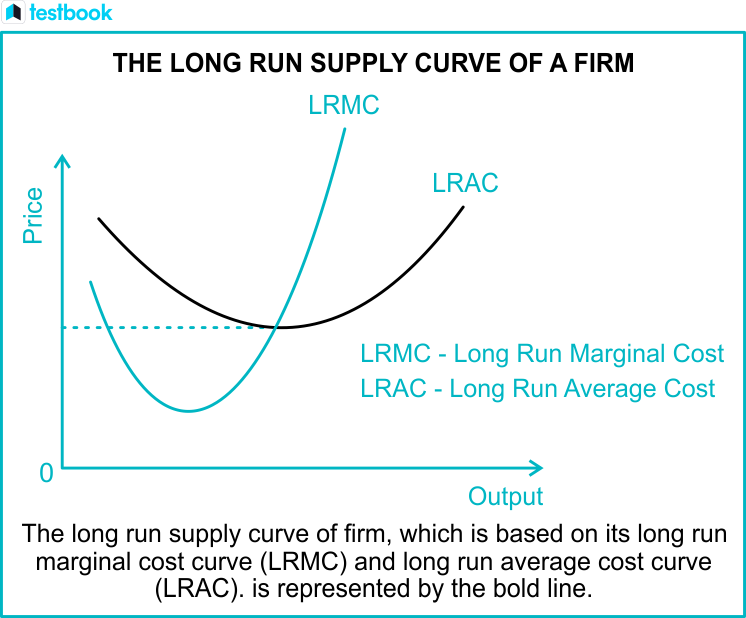
What is the competitive firm’s long‑run supply curve?
the portion of its marginal cost (MC) curve that lies above its minimum average total cost (ATC)
Why do competitive firms earn zero economic profit in long run?
Entry/exit drives P to minimum ATC.
What is a monopoly?
A sole seller with no close substitutes; a price maker.
What causes monopolies?
Monopoly resources — A single firm controls a key input needed for production (rare in practice).
Government regulation — The government grants exclusive rights (patents, copyrights, licenses).
Natural monopoly — A firm can supply the entire market at lower cost than multiple firms due to economies of scale.
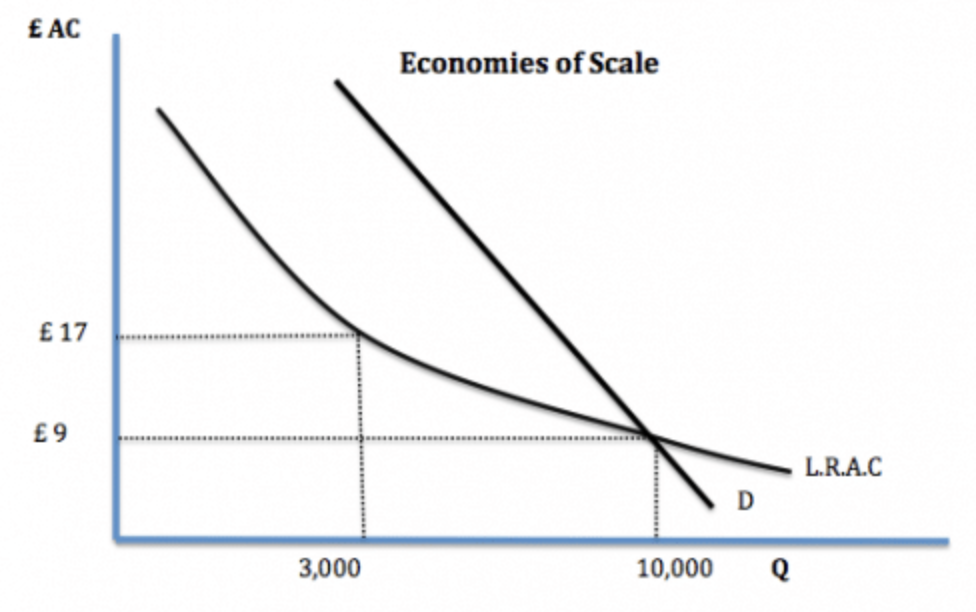
What is a natural monopoly?
A firm whose ATC declines over the entire range of output.

What demand curve does a monopoly face?
The downward‑sloping market demand curve.
Because the monopolist is the sole provider, it can only sell a higher quantity by lowering the price, implying that demand is not perfectly elastic.
Consequently, the monopoly’s marginal revenue is lower than its price.
Why is MR < P for a monopoly?
Lowering price to sell more reduces revenue on all units.

What is the monopoly’s profit‑maximizing rule?
Produce where MR = MC, then charge price on demand curve.
How does monopoly price compare to marginal cost, and why?
a monopolist sets P > MC because it chooses output where MR = MC and then charges the demand price at that quantity.
this markup creates deadweight loss and reflects market power.
How is monopoly profit calculated?
Profit = (P − ATC) × Q.

What is the socially efficient output?
Where demand intersects MC (P = MC).
How does monopoly output compare to the efficient (competitive) quantity, and why?
A monopoly produces less than the efficient quantity because it restricts output to raise price.
It sets MR = MC, while the efficient level is where P = MC.
This output reduction creates deadweight loss.
What is deadweight loss?
Lost total surplus from underproduction.
Is monopoly profit itself a social loss?
No — it’s a transfer from consumers to producers. The loss is the deadweight loss.
What is price discrimination?
Charging different prices to different customers for the same good.
What does price discrimination require?
Ability to separate customers by willingness to pay.
What is perfect price discrimination?
Charging each customer exactly their WTP; no deadweight loss.
Examples of price discrimination?
Movie tickets
Airline pricing
Coupons
Financial aid
Quantity discounts
What are antitrust laws?
Laws that promote competition (Sherman Act, Clayton Act).
What is marginal‑cost pricing regulation?
Setting price = MC for natural monopolies.
What are the main problems with marginal‑cost (MC) pricing?
MC pricing → price < ATC → firm can’t cover costs; weak incentive to cut costs.
What is public ownership?
Government runs the monopoly; may reduce cost‑minimizing incentives.
Why might government choose to do nothing?
Intervention may worsen outcomes; requires political judgment.