lab 15 (photo)
 Call Kai
 Learn
Learn Practice Test
 Spaced Repetition
 Match
Match Flashcards
 Knowt Play
1/107

There's no tags or description
Looks like no tags are added yet.
Name | Mastery | Learn | Test | Matching | Spaced | Call with Kai | Chat |
|---|
No analytics yet
Send a link to your students to track their progress
108 Terms
Serosa
Simple squamous epithlium + areolar CT
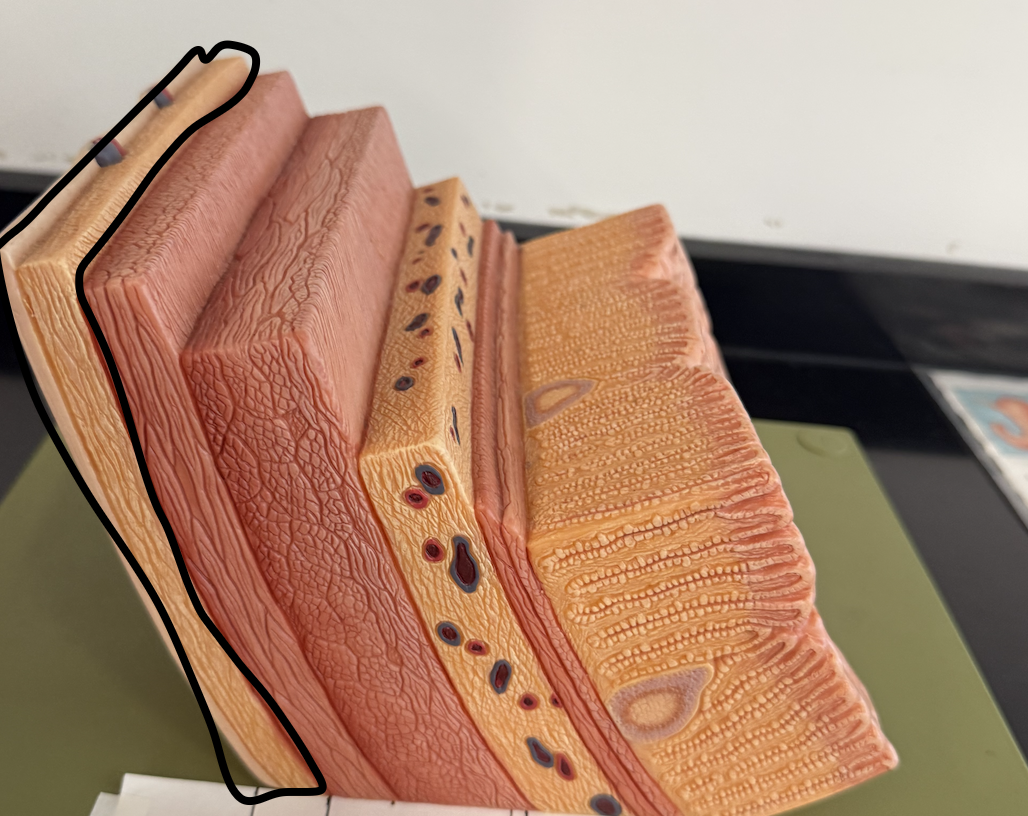
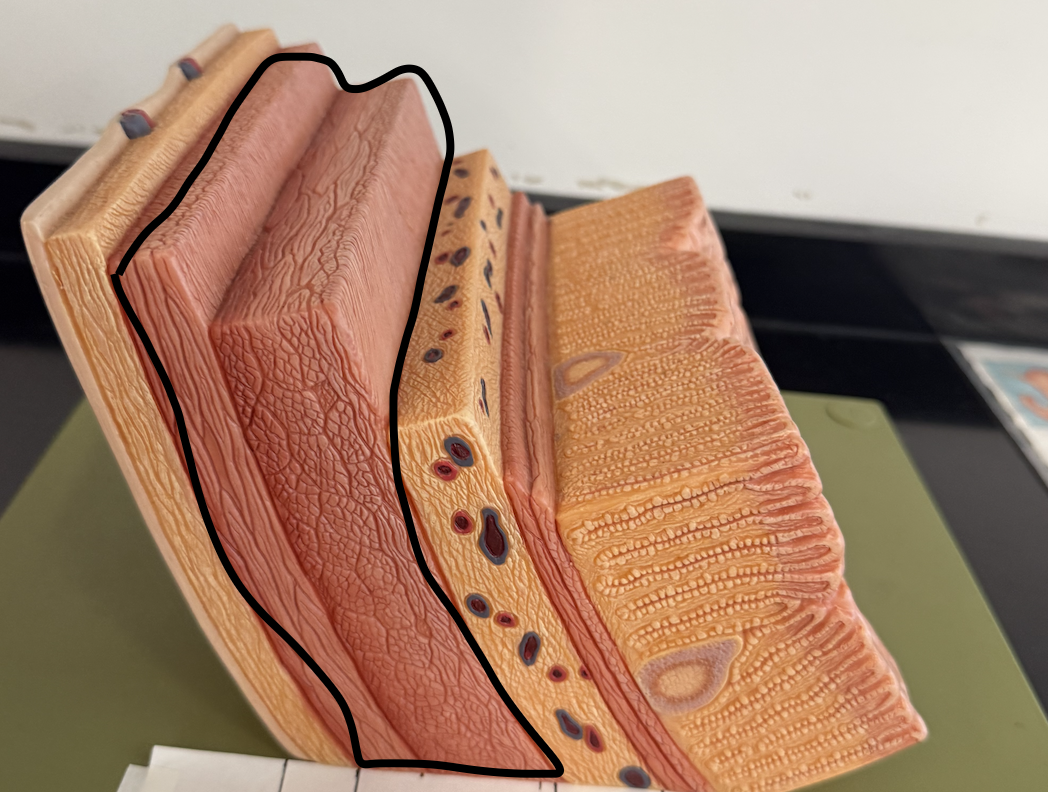
Muscular layer/muscularis
Circular and longitudinal smooth muscle
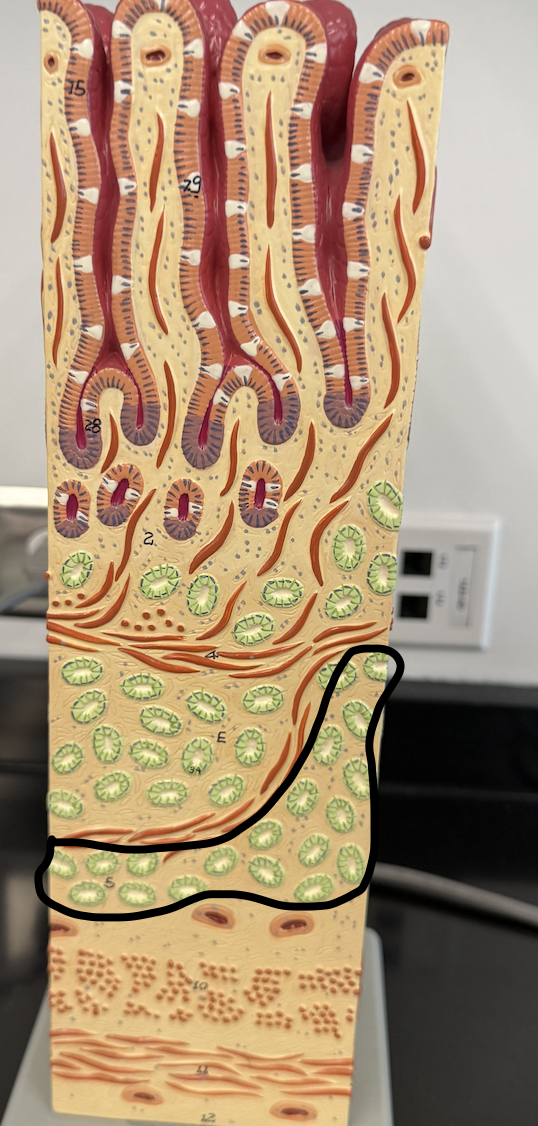
Submucosa
Areolar CT, blood vessels, lymph vessels
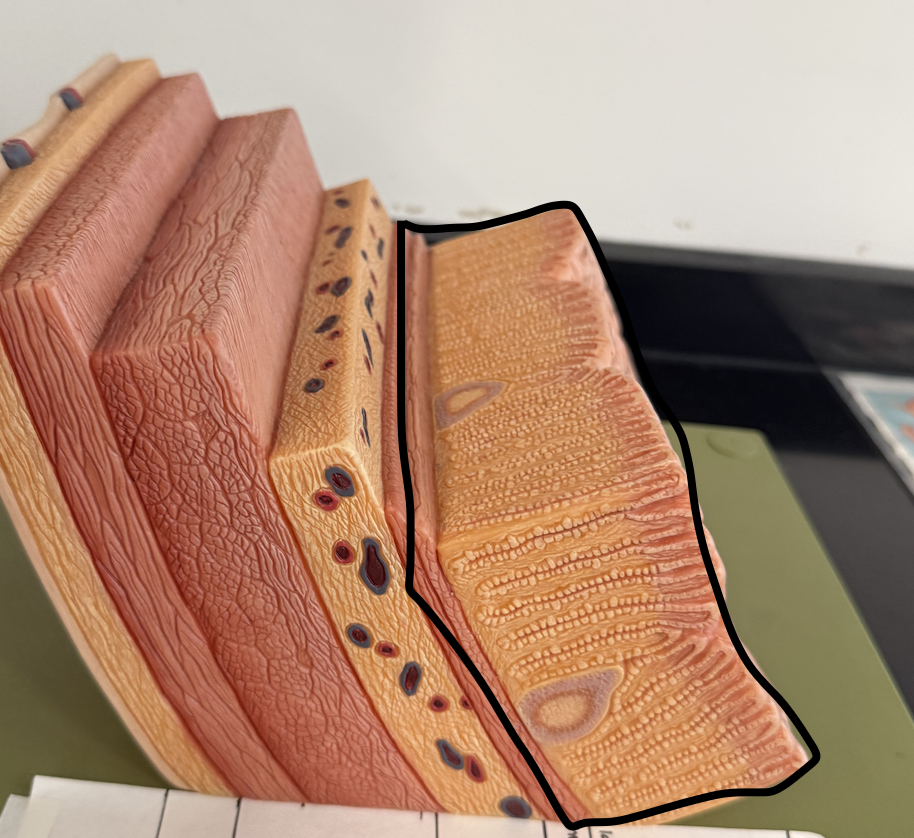
Mucosa
Muscularis mucosae, lamina propria, mucous membrane
Muscularis Mucosae
Elastic fibers + circular + longitudinal smooth muscle
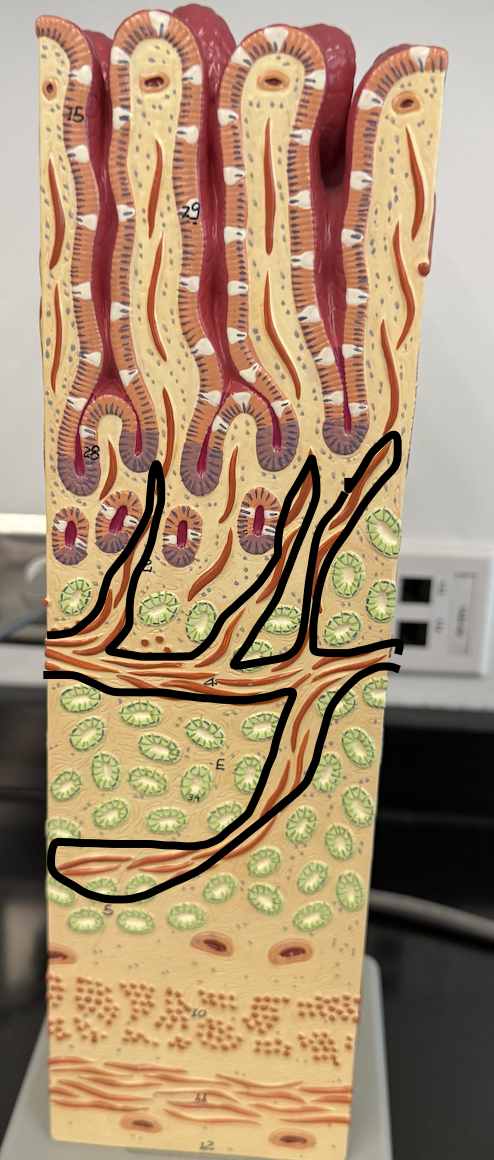
Lamina Propria
Areolar CT, blood vessels, lymph vessels and nodules
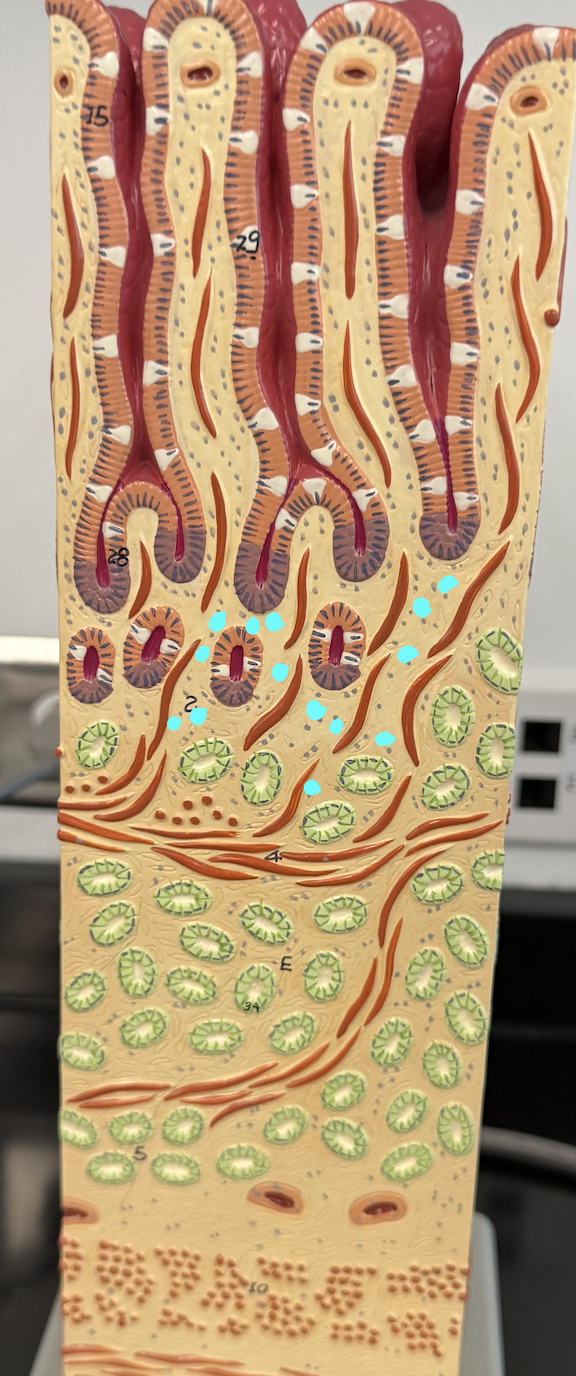
Mucous membrane
Layer of epithelium, CT + muscle
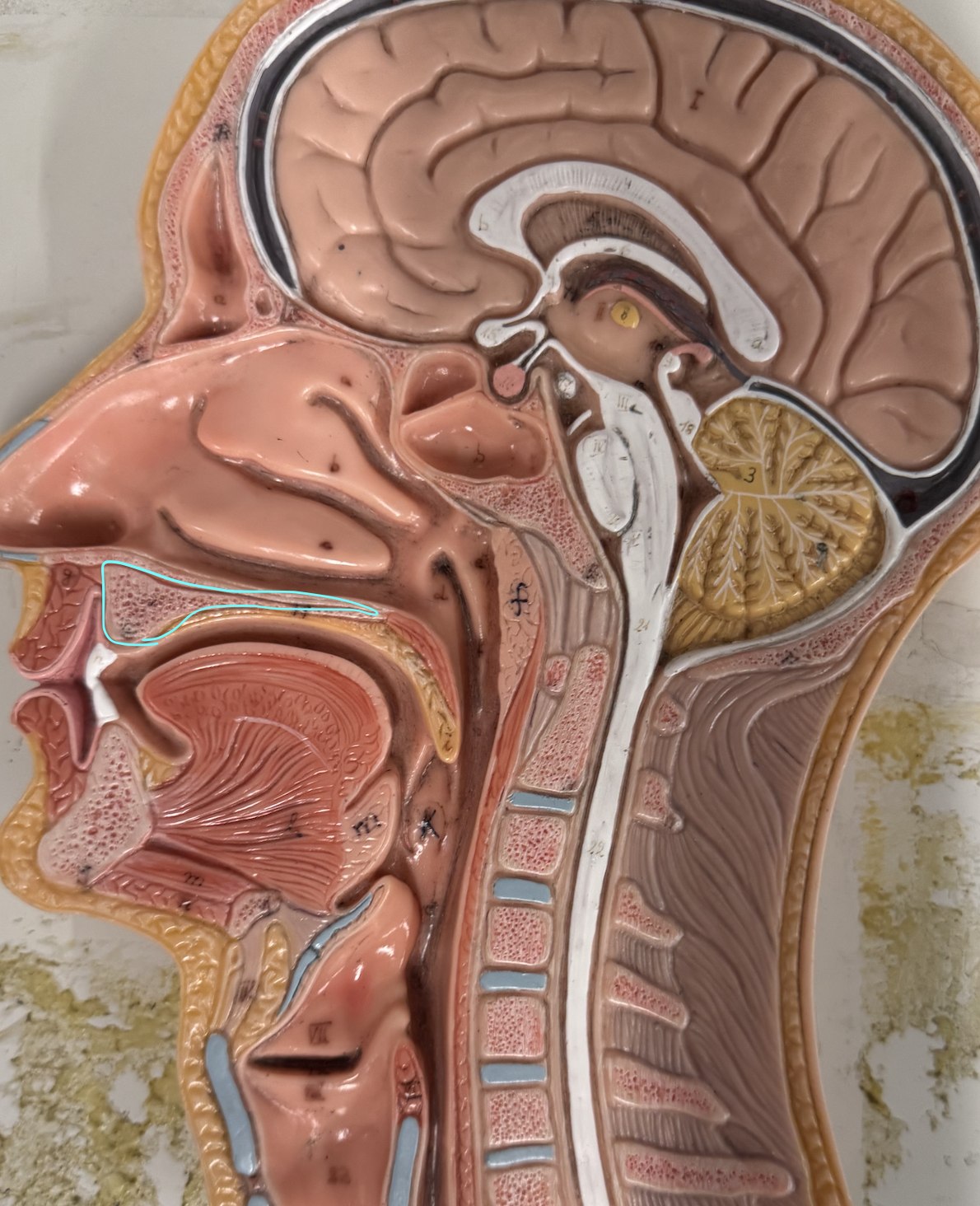
Hard palate
Bony
forms root of oral cavity + plays an important role in swallowing
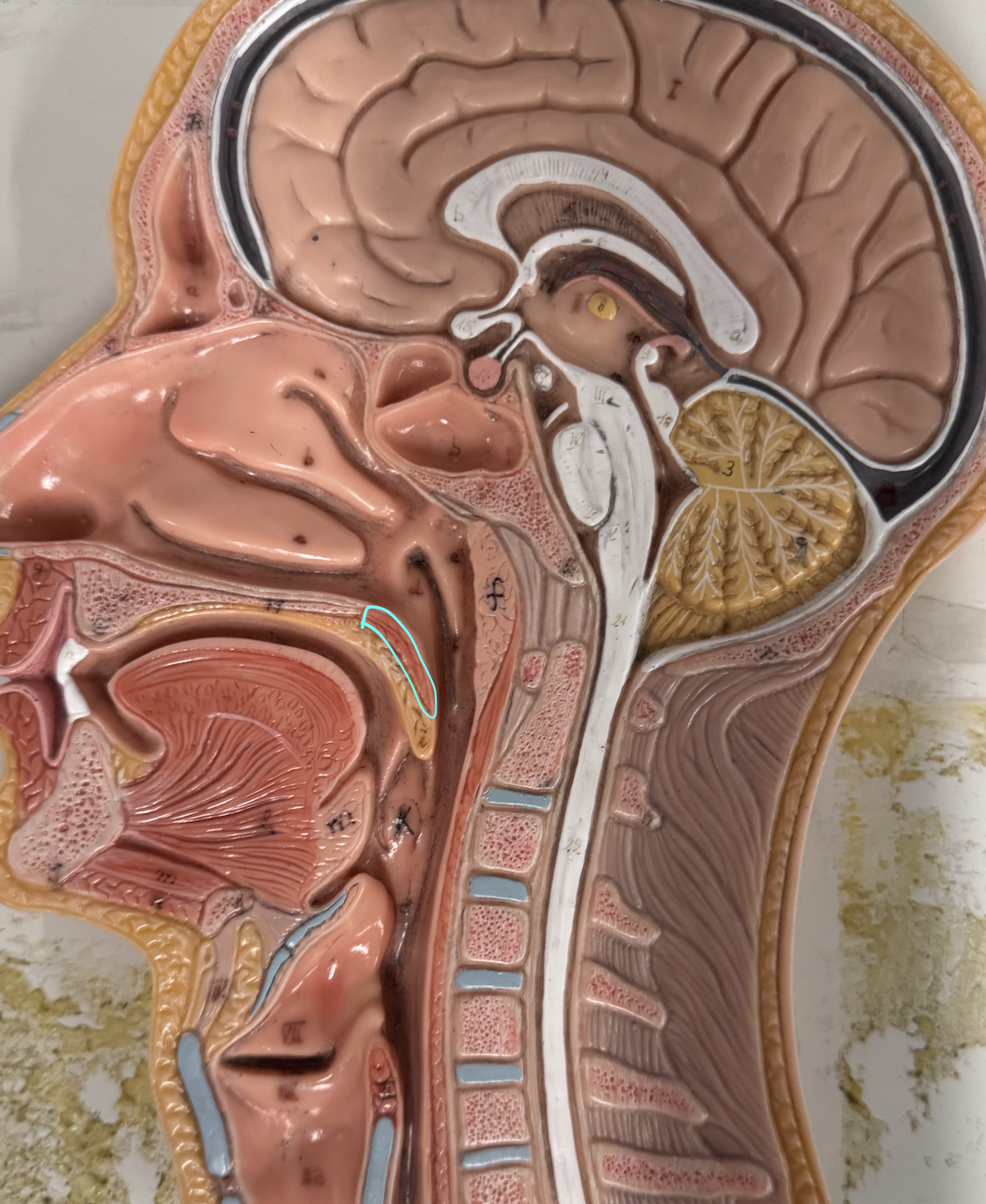
Soft palate
Muscular
forms root of oral cavity + plays an important role in swallowing
Uvula
secretes saliva to keep your throat moist + lubricated
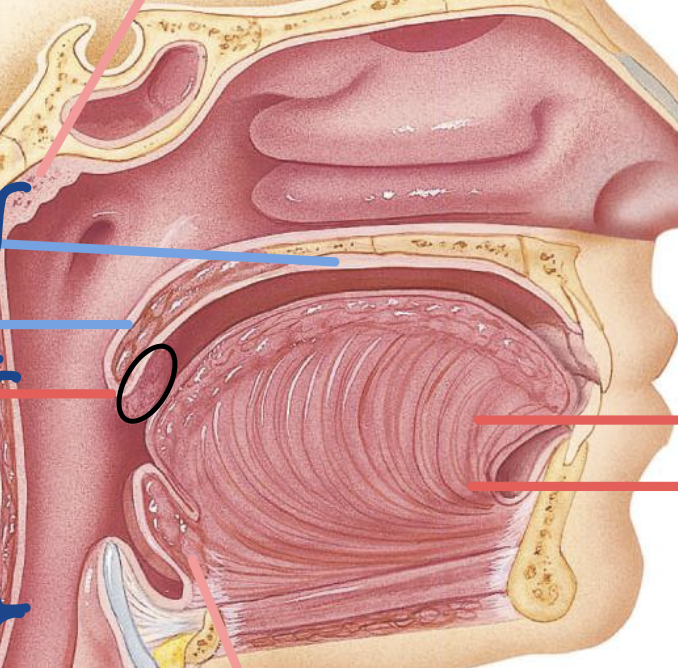
Tongue
Pushes food around when you eat + mixes it w/ saliva to form food bolus
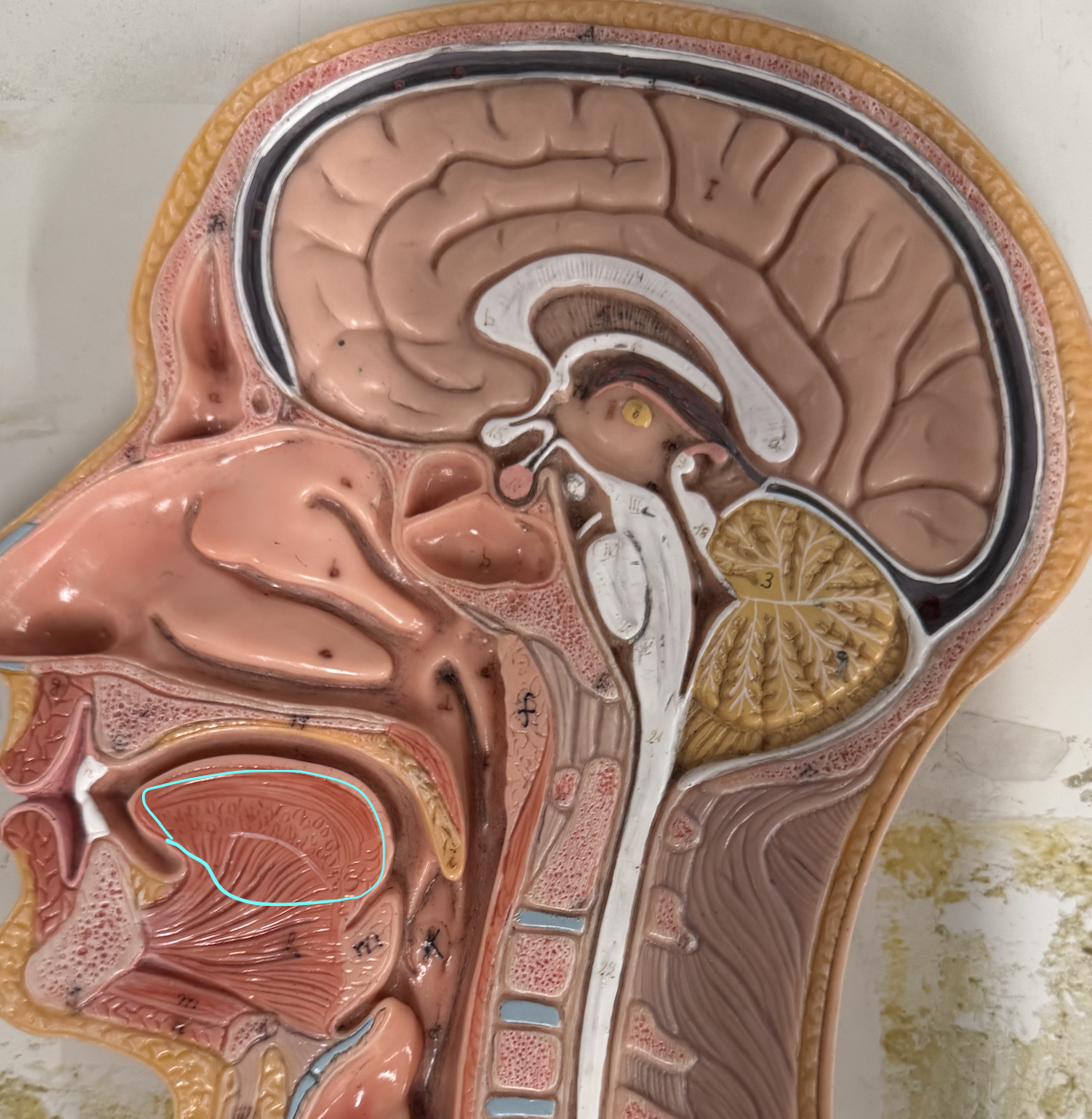
Lingual frenulum
Involved in mechanical digestion, attaches tongue to floor of mouth
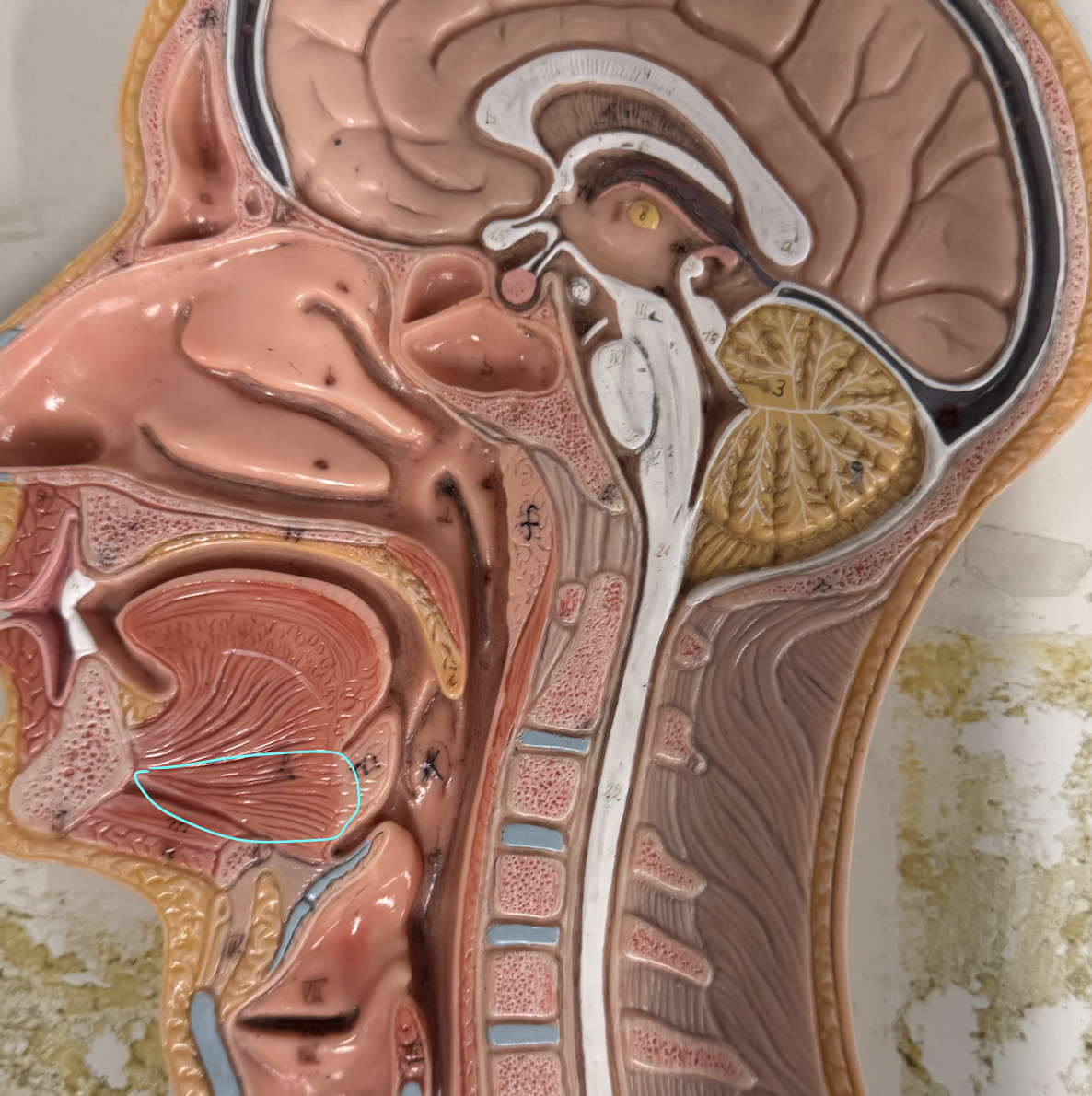
Teeth
incisors, canines, premolars, molars
Incisors
involved in mechanical digestion, grind food b4 swallowed
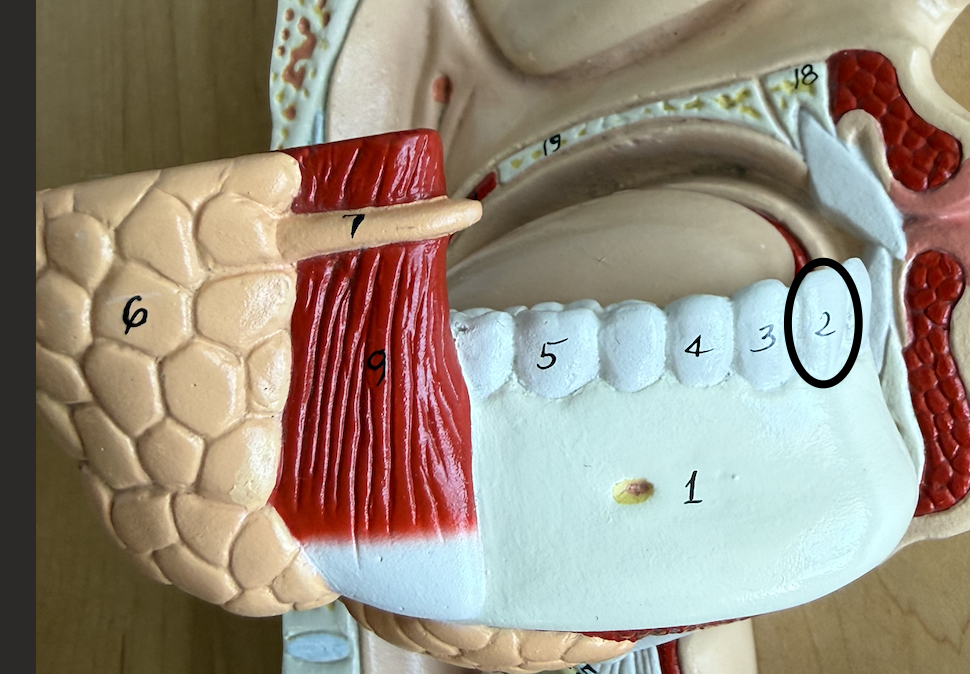
Canines
involved in mechanical digestion, grind food b4 swallowed
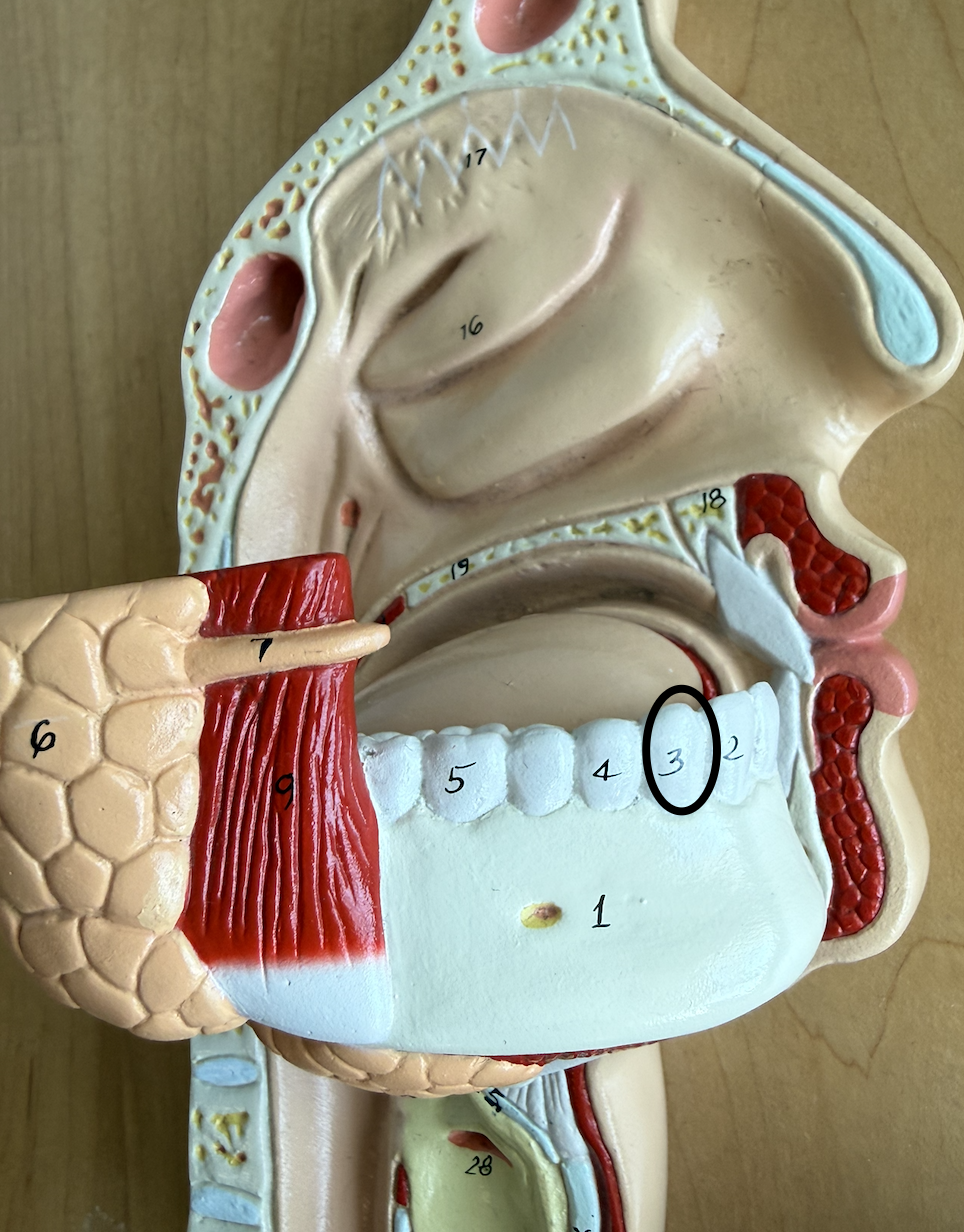
Premolars
involved in mechanical digestion, grind food b4 swallowed
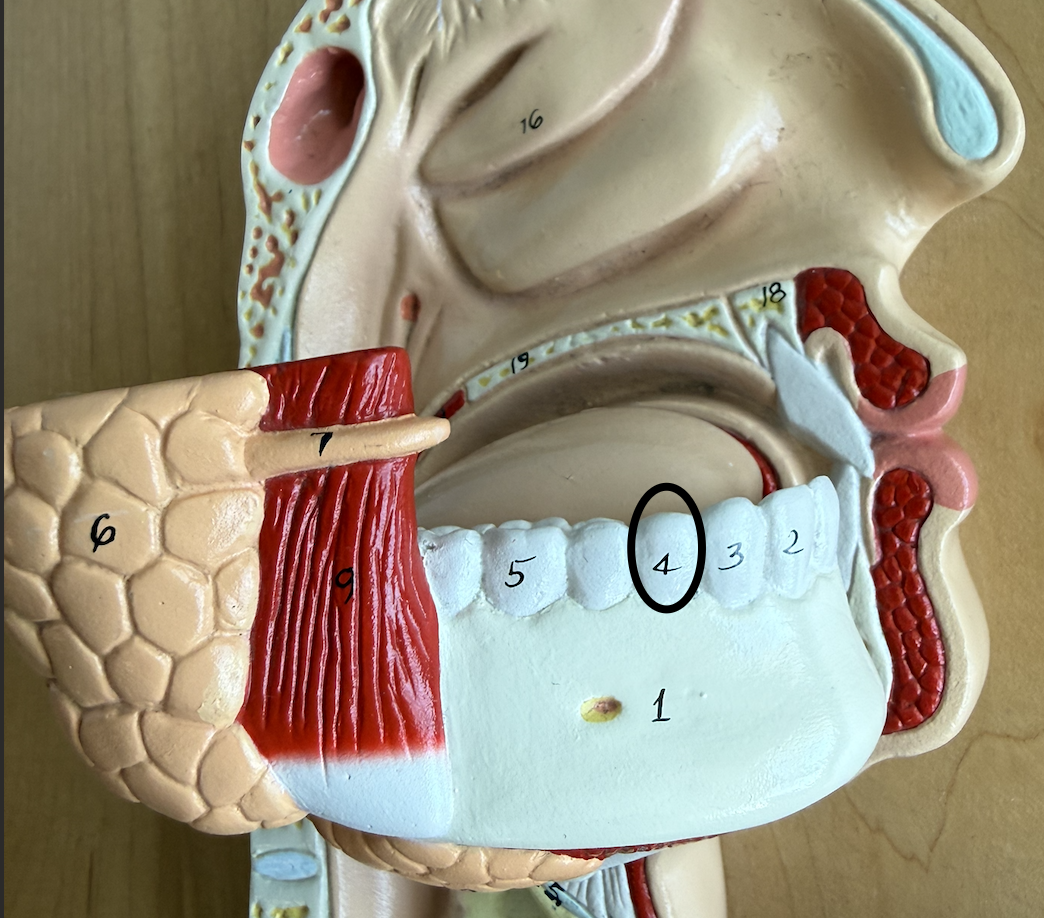
Molars
involved in mechanical digestion, grind food b4 swallowed
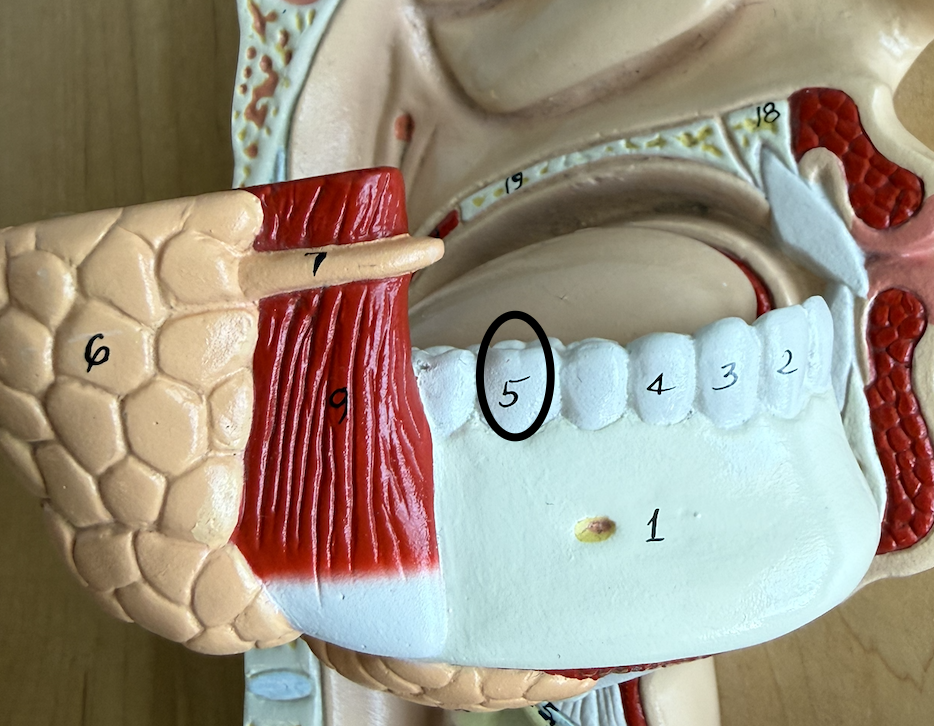
Gingiva (gums)
holds teeth in place, serves as a protective barrier against harmful bacteria
Salivary glands
Parotid, sublingual, submandibular
Parotid gland
Secretes salivary amylase
Secretes mucous + salivary amylase which starts chemical digestion in mouth
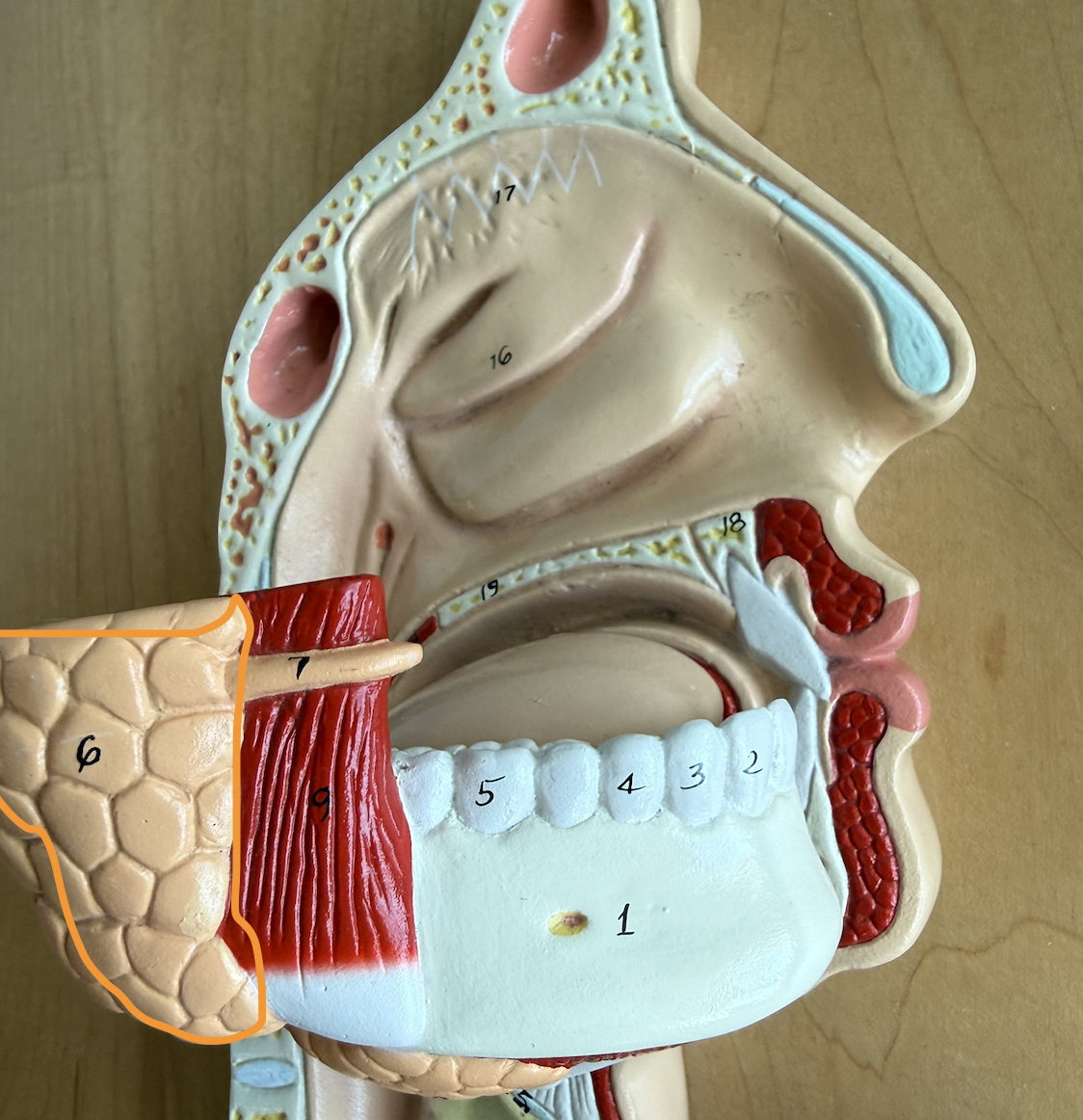
Sublingual gland
Mucous
Secretes mucous + salivary amylase which starts chemical digestion in mouth
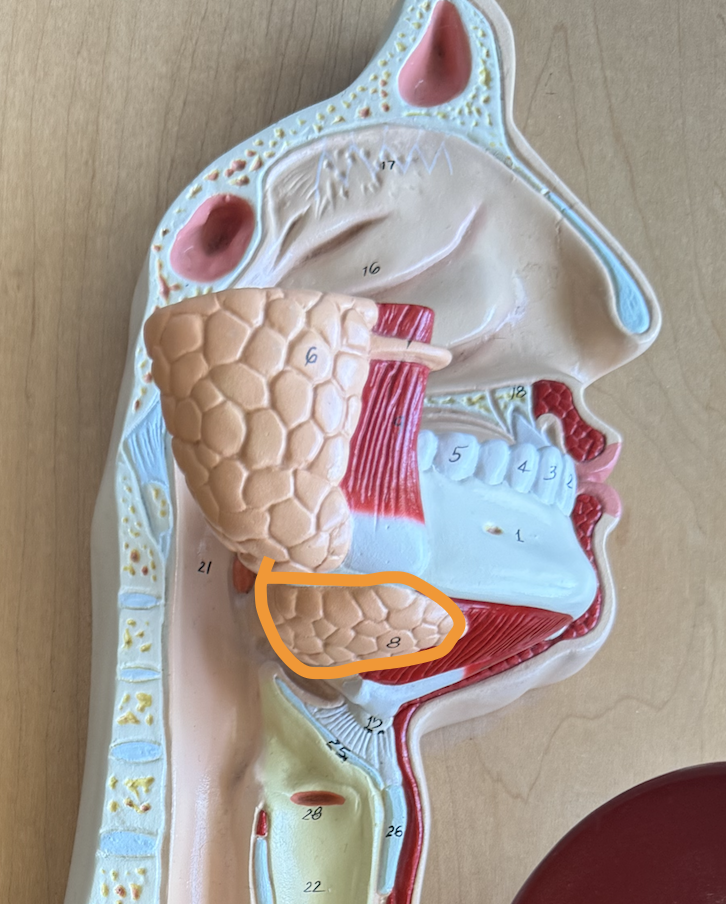
Submandibular gland
Salivary amylase + mucous
Secretes mucous + salivary amylase which starts chemical digestion in mouth
Pharynx
Oropharynx, laryngopharynx, nasopharynx
Oropharynx
passageway for food + liquid to enter the esophagus; pushes food bolus → esophagus
Laryngopharynx
passageway for food + liquid to enter the esophagus; pushes food bolus → esophagus
Nasopharynx
functions only in respiration (b/c passageway b/w nose + pharynx)
passageway for food + liquid to enter the esophagus; pushes food bolus → esophagus
Esophagus
upper esophogeal sphincter, lower esophogeal sphincter
Upper esophageal sphincter
superior end; skeletal muscle of musularis layer → voluntary
conducts food from laryngopharynx → stomach by peristalsis
Lower esophageal sphincter
lower 3rd; smooth muscle → involuntary
conducts food from laryngopharynx → stomach by peristalsis
Salivary gland
Stomach
Cardia, fundus, body, pylorus, lesser curvature, greater curvature
Cardia
Serves as temporary holding area for food + is site for chemical + mechanical breakdown for food
Fundus
Serves as temporary holding area for food + is site for chemical + mechanical breakdown for food
Body
Serves as temporary holding area for food + is site for chemical + mechanical breakdown for food
Pylorus
Serves as temporary holding area for food + is site for chemical + mechanical breakdown for food
Lesser curvature
Concave side
Serves as temporary holding area for food + is site for chemical + mechanical breakdown for food
Greater curvature
Convex side
Serves as temporary holding area for food + is site for chemical + mechanical breakdown for food
Gastric folds of mucosa (rugae)
Creates extensive stretching to accommodate incoming food
Lesser omentum
Pathway for blood vessels entering the liver + connects stomach to duodenum + liver
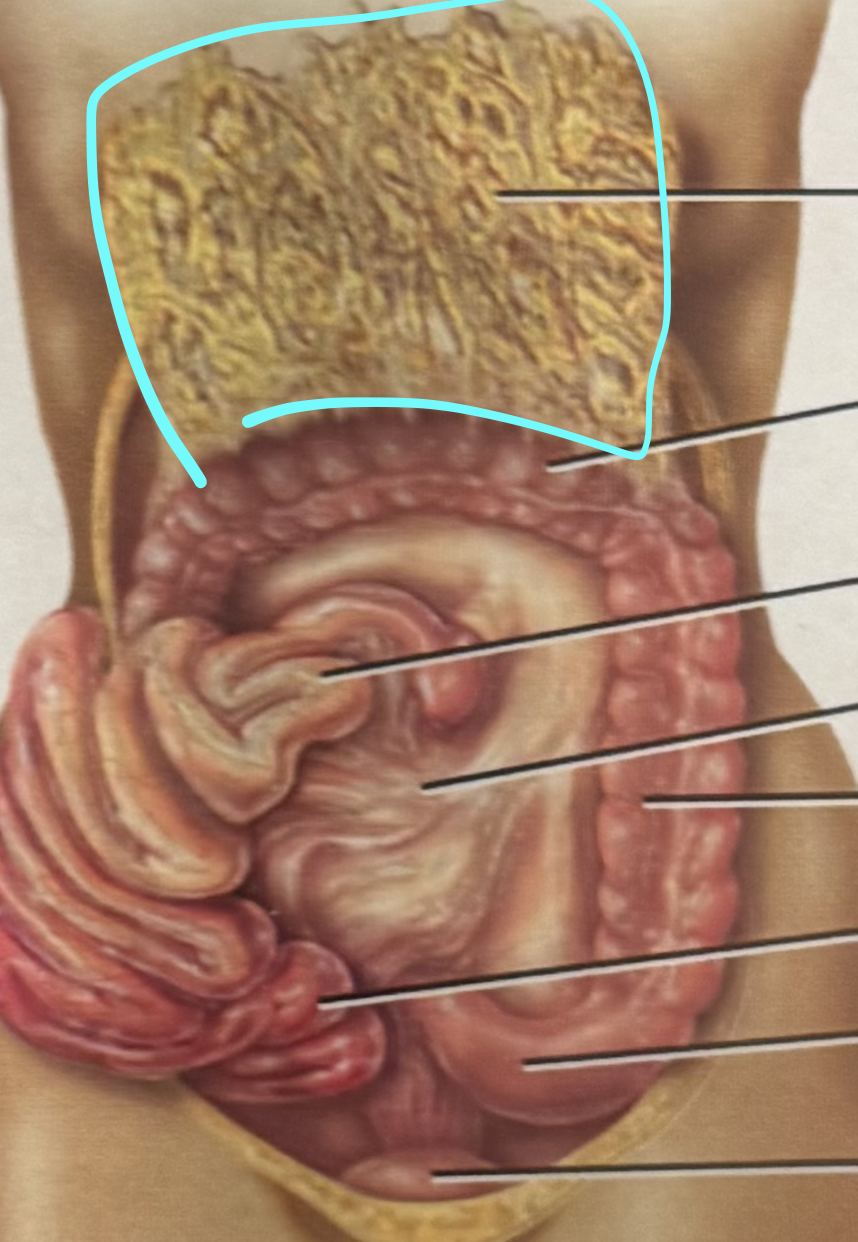
Greater omentum
Covers folds of small intestine; contains adipose tissue + lymph nodes
Pyloric sphincter
opens to allow passage of chyme into duodenum of small intestine
Stomach
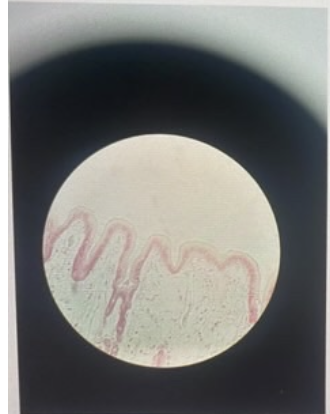
Stomach epithelium
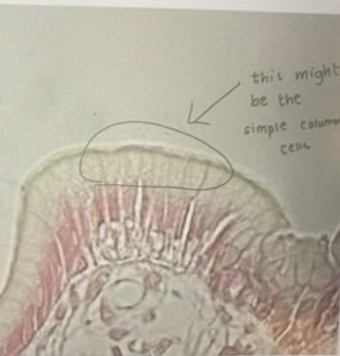
Pancreatic acini + islets
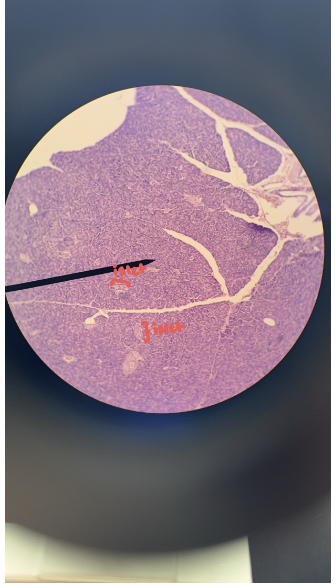
Pancreas
accessory duct, pancreatic duct
Accessory duct
empties directly into duodenum
accessory digestive organ; releases secretions enzymes into duodenum of small intestine
Pancreatic duct
Joins bile duct to form hepatopancreatic ampulla
accessory digestive organ; releases secretions enzymes into duodenum of small intestine
Liver
Left + Right + common hapatic duct,
Left haptic duct
Stores + convert excess nutrients from blood to correct deficiencies + excretes bile from hepatocytes → cystic ducts of gallbladder converged by common hepatic duct
Right hepatic duct
Stores + convert excess nutrients from blood to correct deficiencies + exertes bile from hepatocytes → cystic ducts of gallbladder converged by common hepatic duct
Common hepatic duct
Left + right converged
Stores + convert excess nutrients from blood to correct deficiencies + exertes bile from hepatocytes → cystic ducts of gallbladder converged by common hepatic duct
Gall bladder
stores bile until needed for digestion
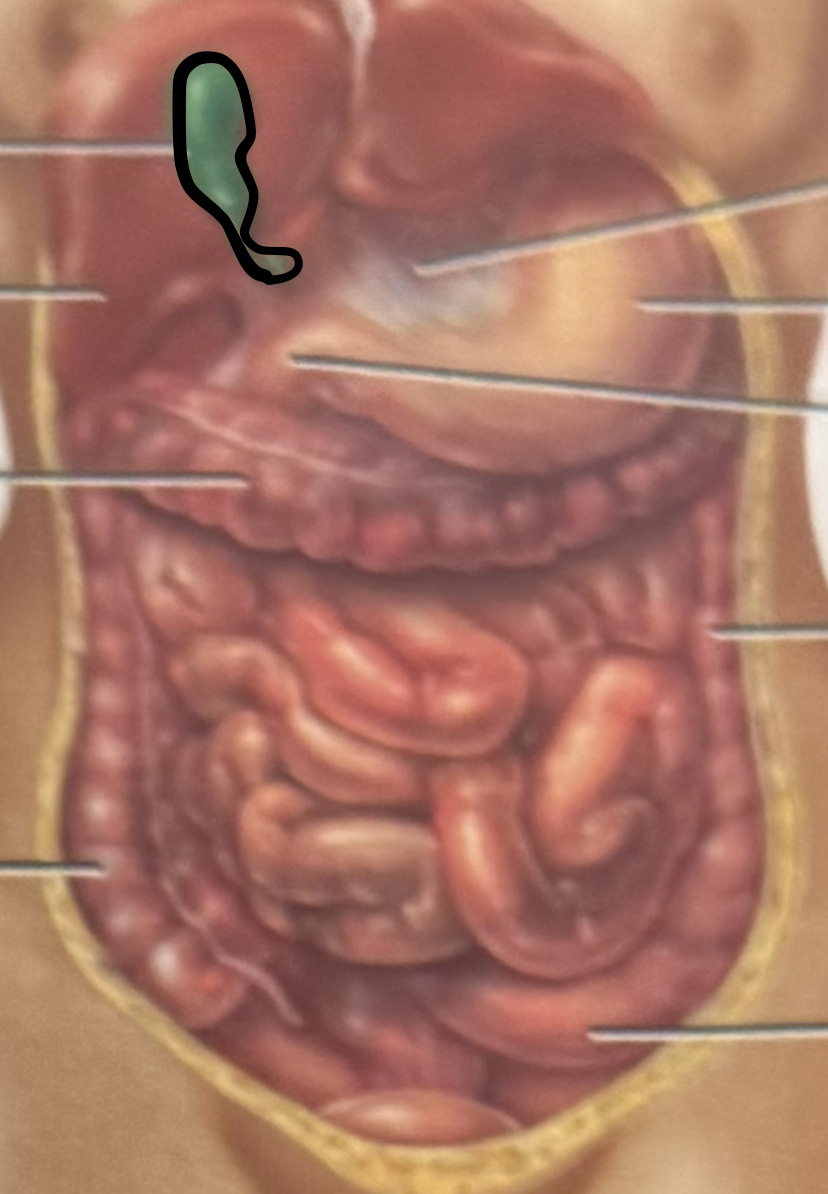
Cystic duct
allows bile to flow in the gallbladder, unites w/ common heptatic duct to form common bile duct
Common bile duct
joins pancreatic duct at hepatopancreatic ampulla where bile can be secereted
hepatopancreatic ampulla
acts as reservoir for pancreatic juices + bile + empties into duodenum of small small intrestine at the major duodenal papilla
Major duodenal papilla
acts as reservoir for pancreatic juices + bile + empties into duodenum of small small intrestine at the major duodenal papilla
Duodenum
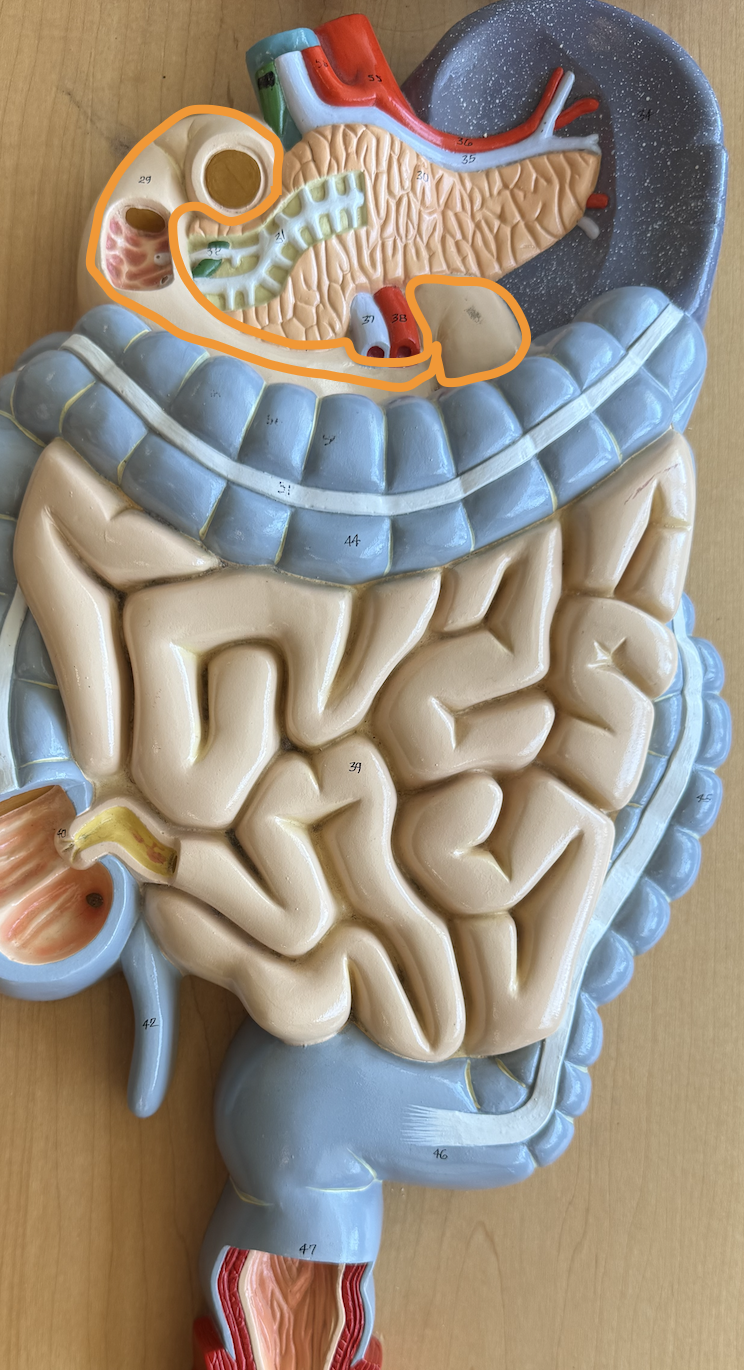
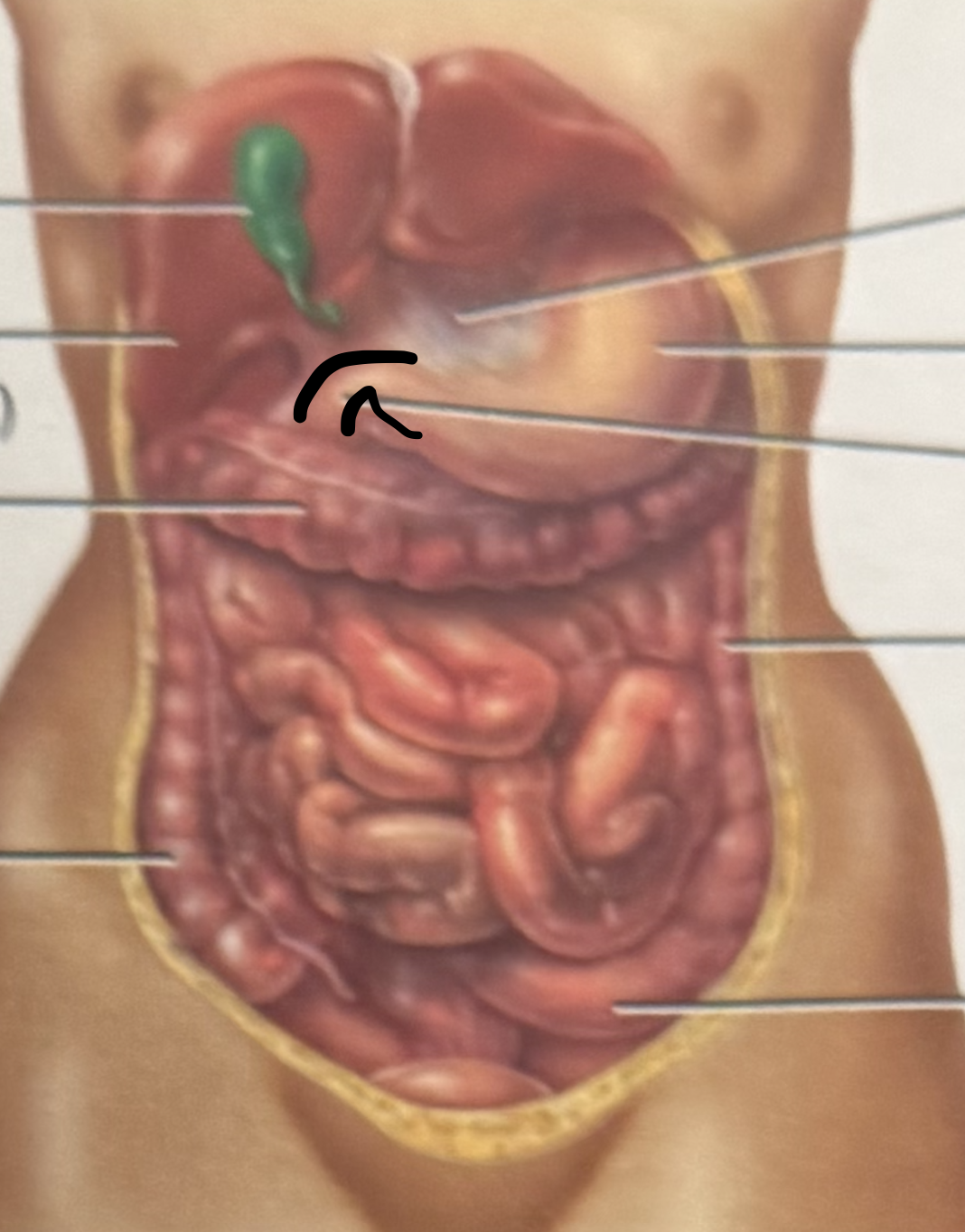
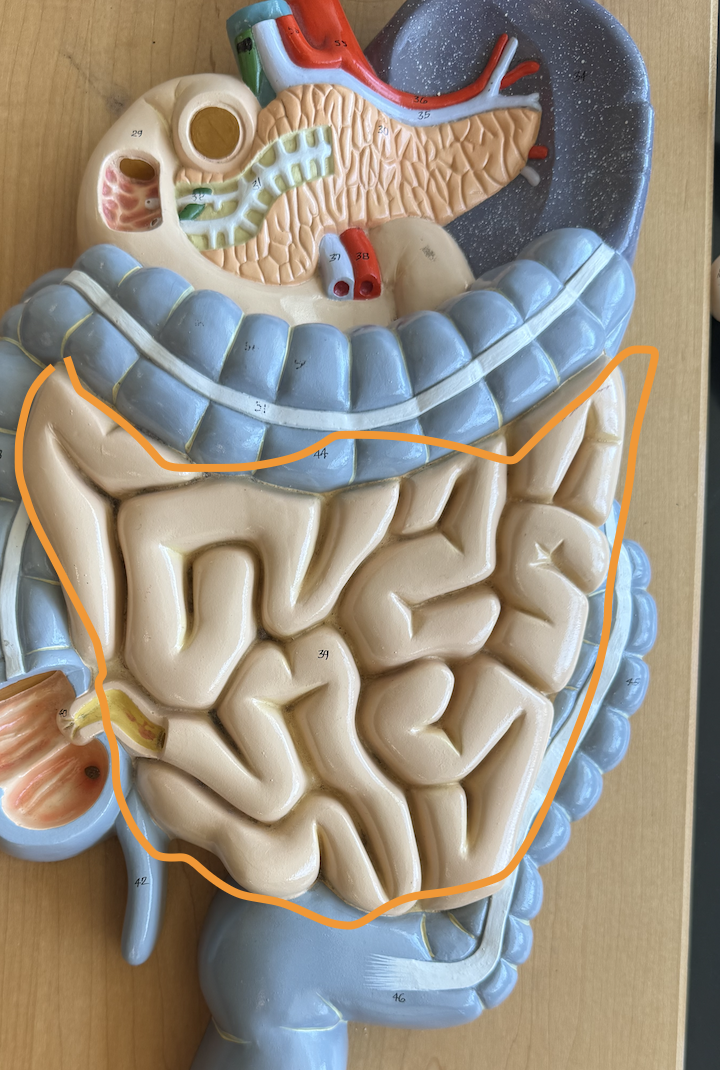
Jejunum
Produces digestive juices + enzymes to bread down food + empties it inot the large intestine, also absorbs nutrients
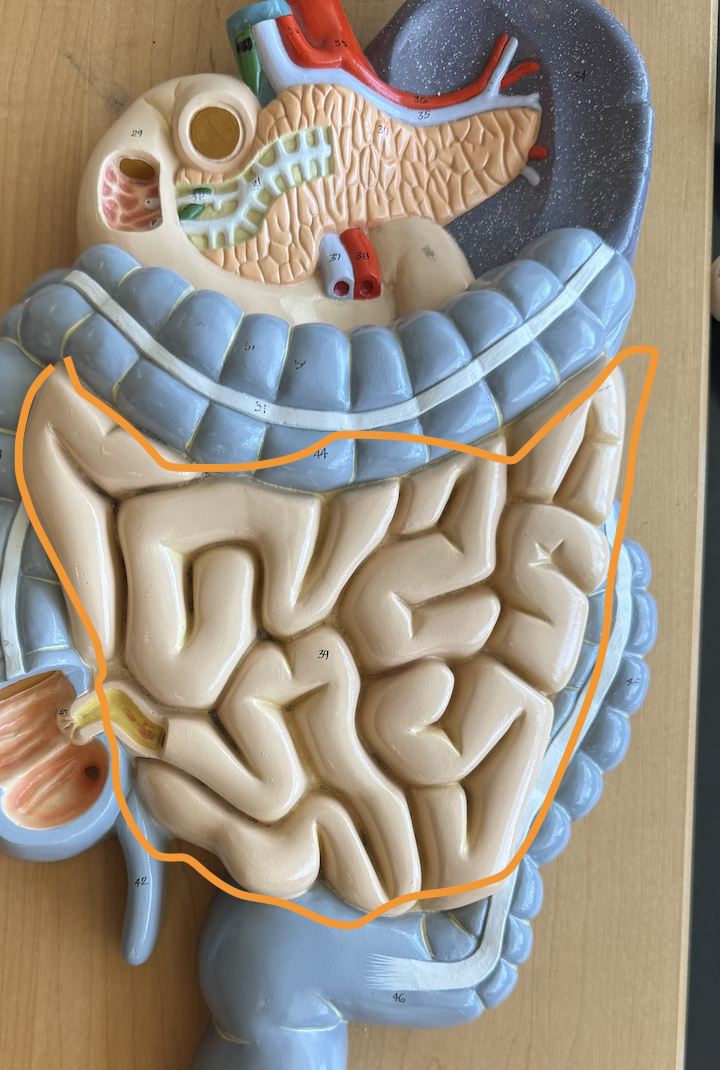
Ileum
Produces digestive juices + enzymes to bread down food + empties it inot the large intestine, also absorbs nutrients
Ileal orifice (ileocecal sphincter)
regulates entery of chyme → large intestine from small intestine
Mesentery
Binds jejunum + ileum to the posterior abdominal wall
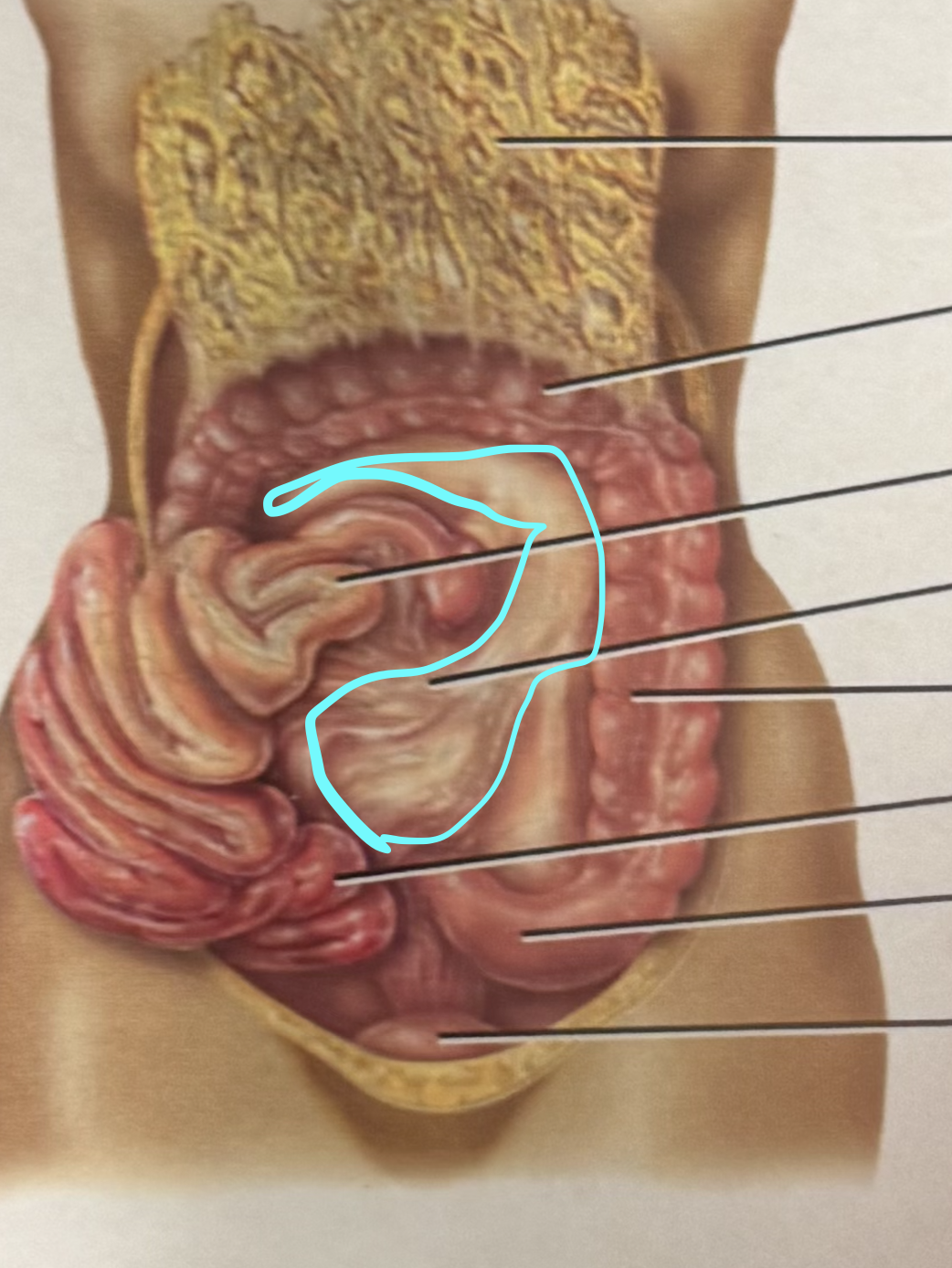
Circular folds
Increases SA to absorb nutrients in the small intestine
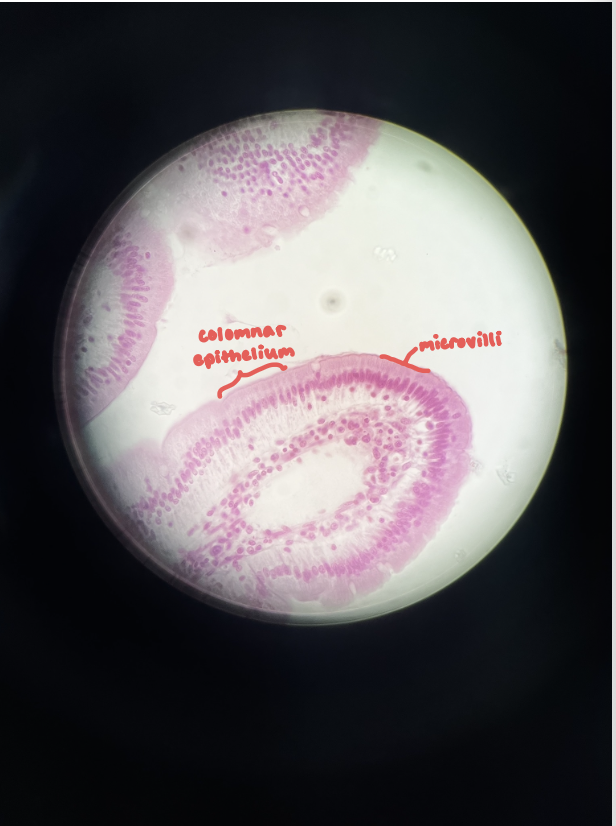
Duodenum microscope
Cecnum
opens into the colon + moves chyme from small → large intestine
Vermiform appendix
Contains an aggregation of lymphatic nodules; has immune + lymphatic functions
Colon
Ascending, transverse, descending, sigmoid
Ascending Colon
Responsible for formation + expulsion of focus + reabsorbs water + ions
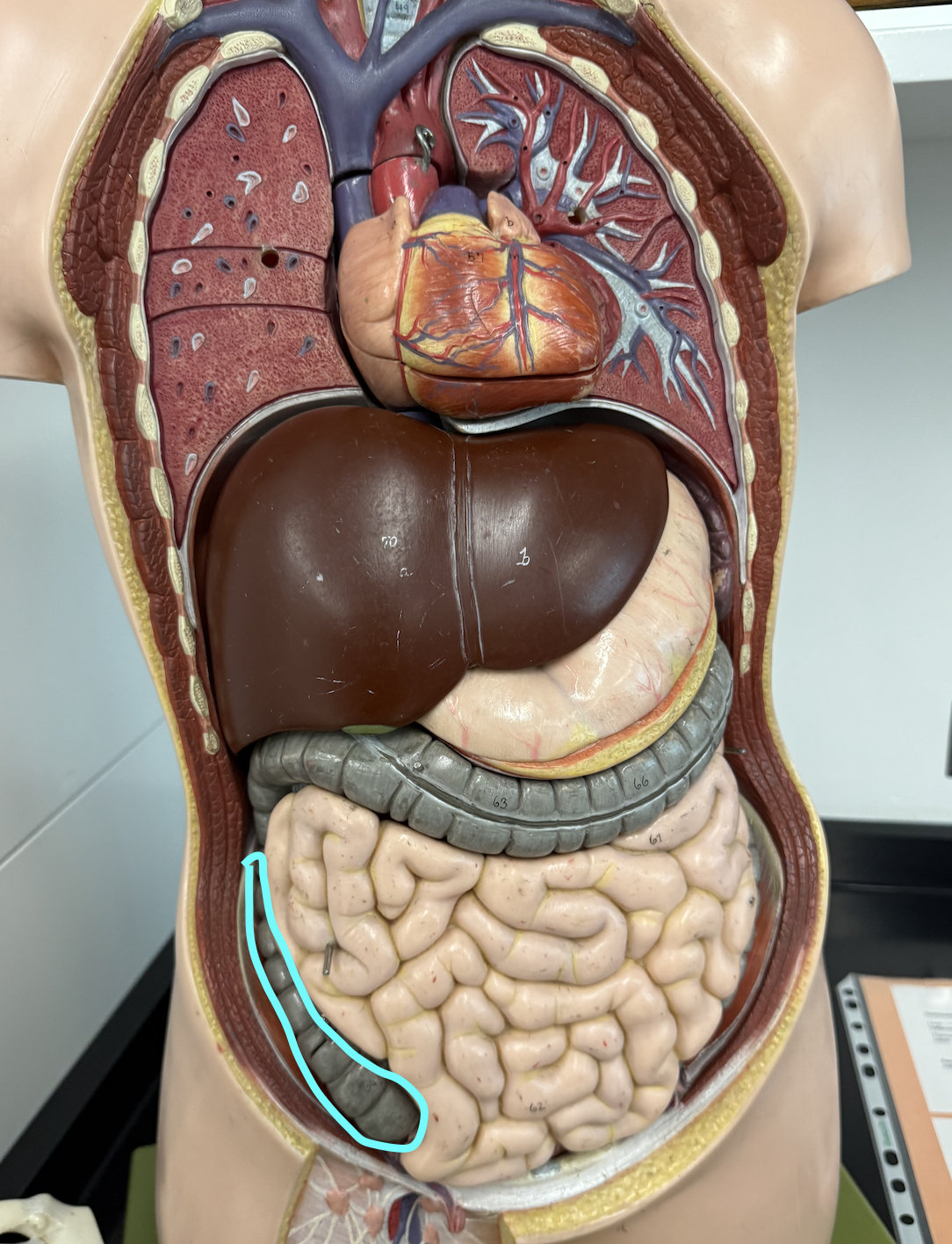
Transverse Colon
Responsible for formation + expulsion of focus + reabsorbs water + ions
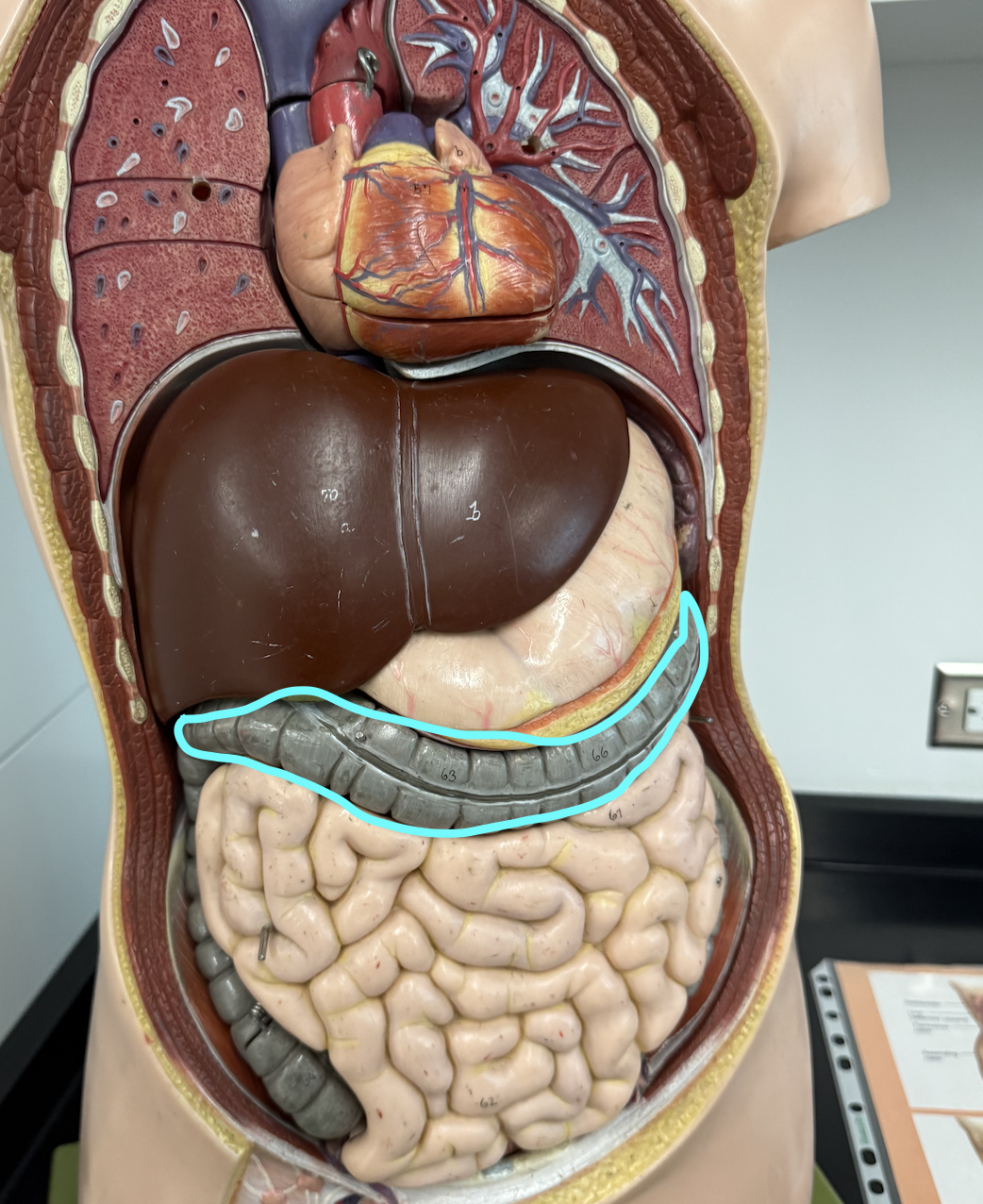
Descending Colon
Responsible for formation + expulsion of focus + reabsorbs water + ions
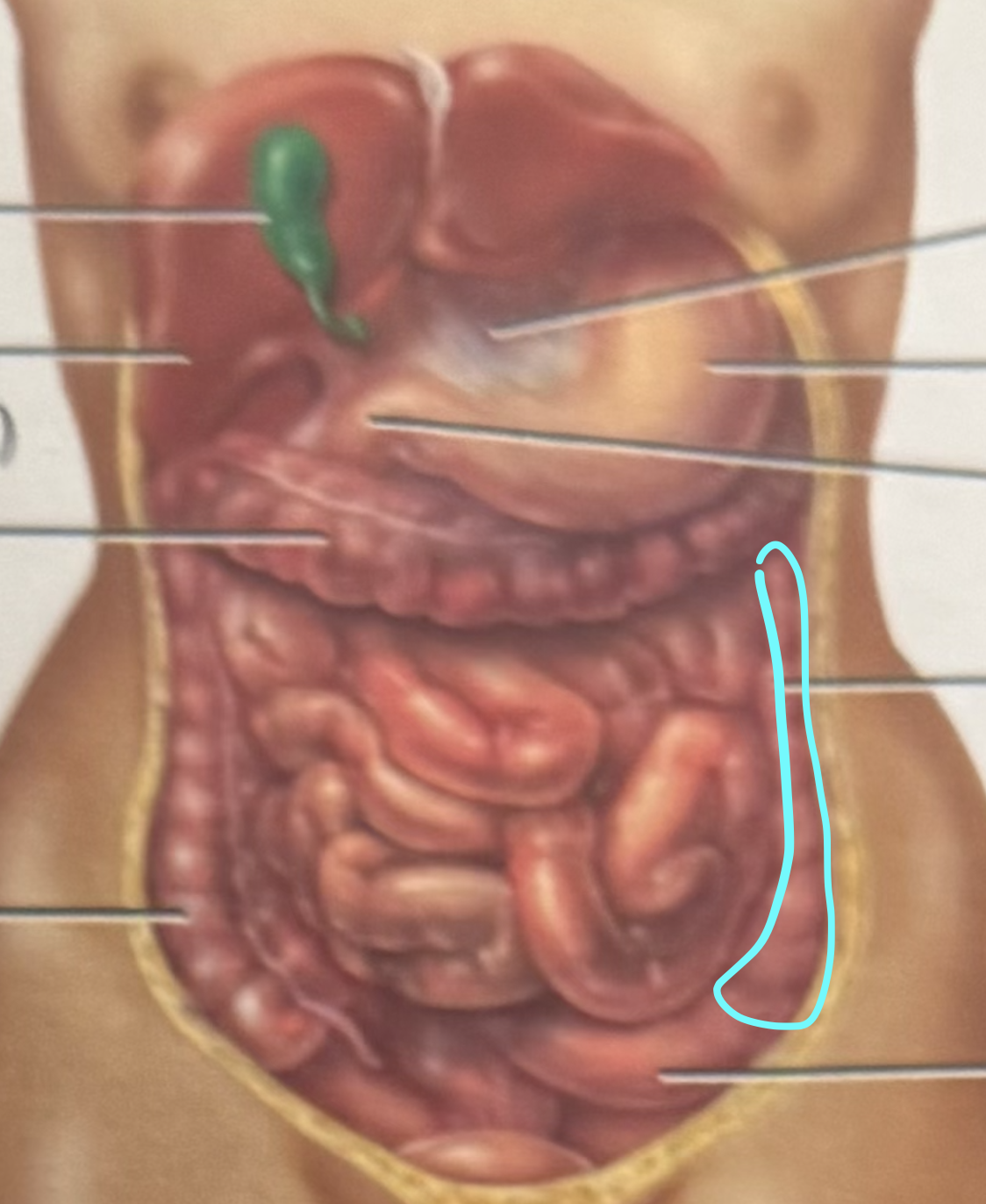
Sigmoid colon
Responsible for formation + expulsion of focus + reabsorbs water + ions
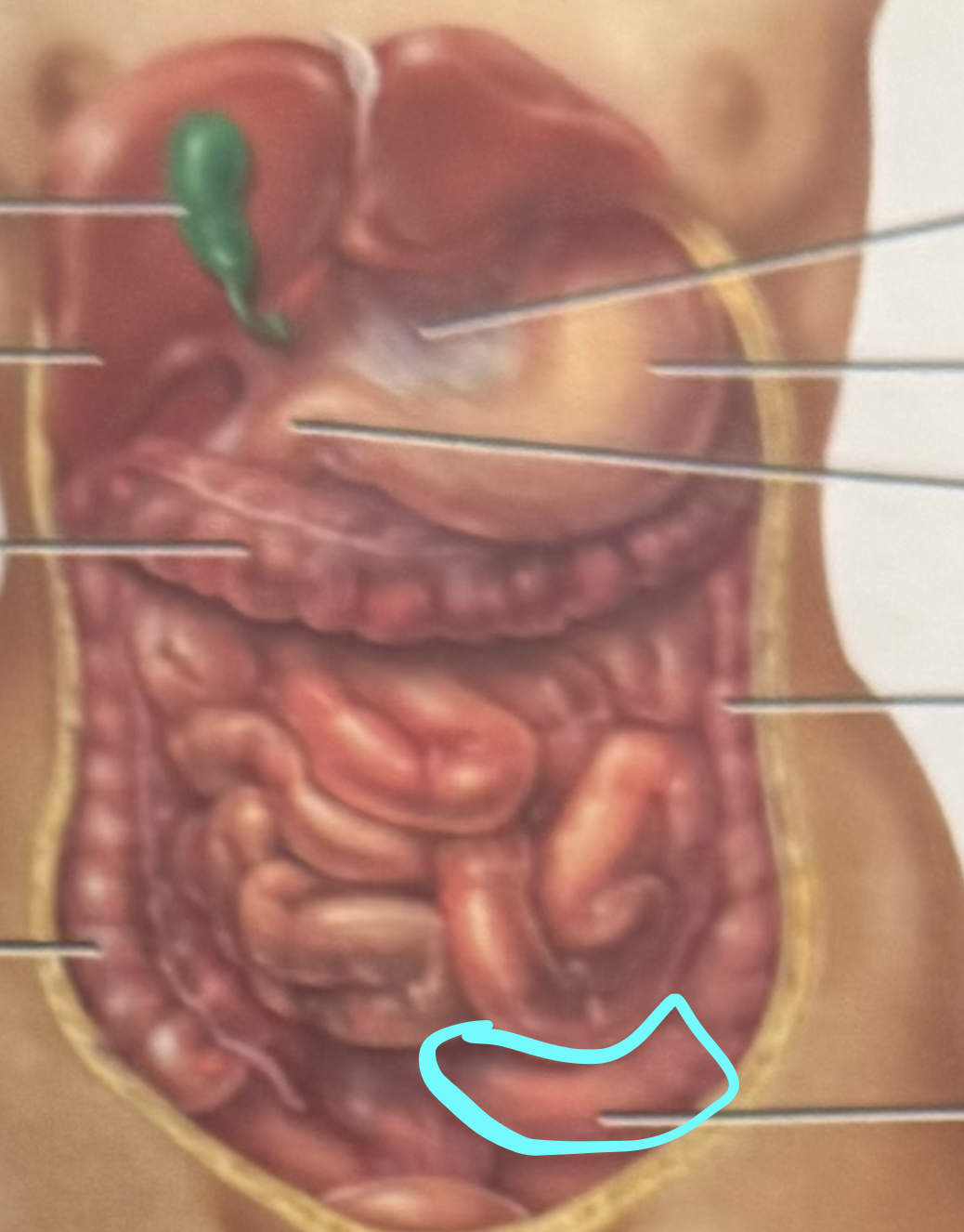
Rectum
end of the Gl tract; stores feces util they can be eliminated
Anus
Internal anal sphicter, external anal sphinceter
Internal anal sphincter
expels feces from body; takes part in defecation through relaxation of the sphincters
External anal sphincter
Voluntarily controlled to allow/postpone defecation
expels feces from body; takes part in defecation through relaxation of the sphincters
Mesocolon
binds transverse + sigmoid colons to posterior abdominal wall
Teniae coli
longitudinal muscle bands that causes pouches to form in the colon → haustrae
Haustrae
pouches of colon in which walls contract to squeeze the digested contents → next hastrum
Large intestine
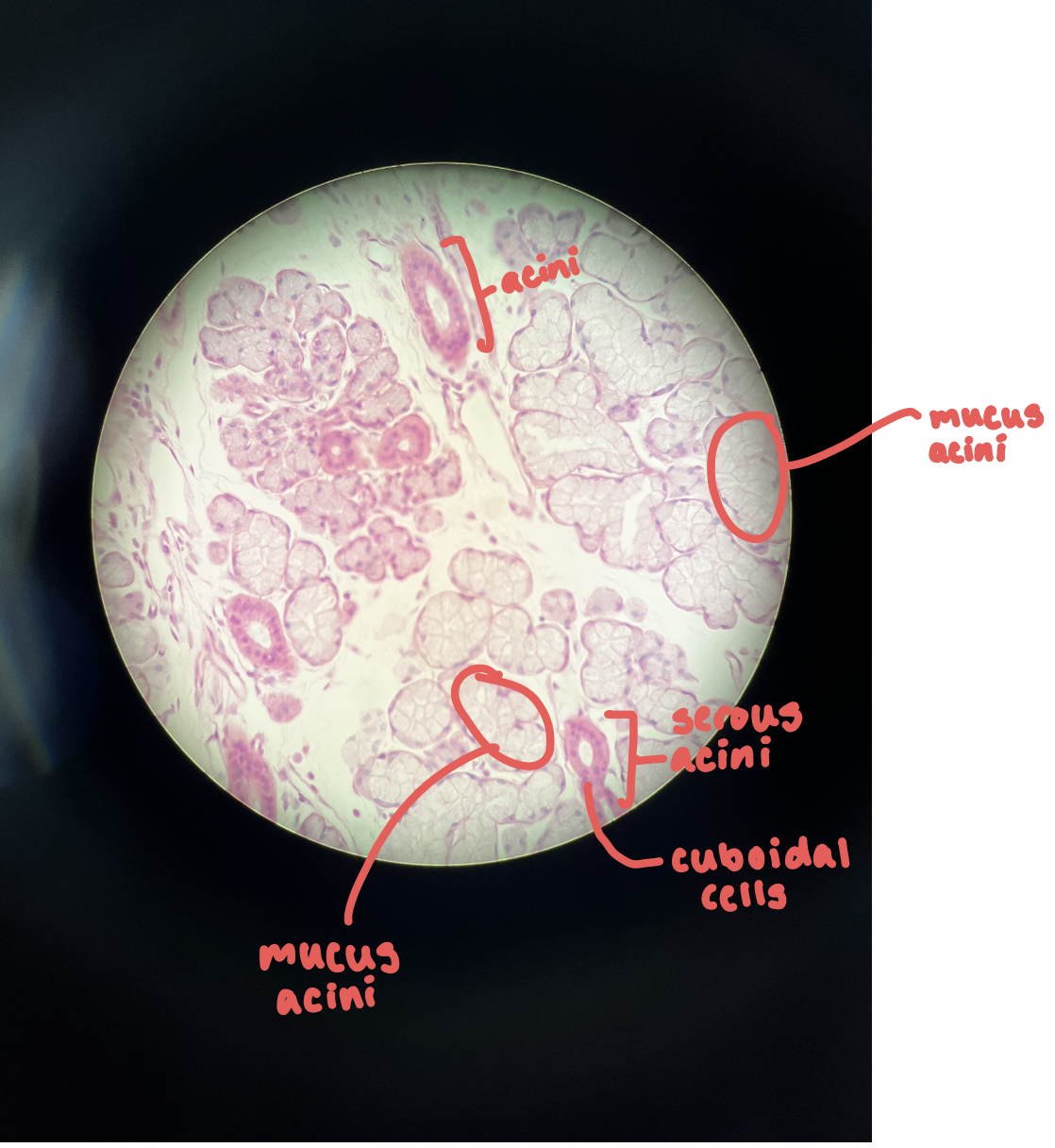
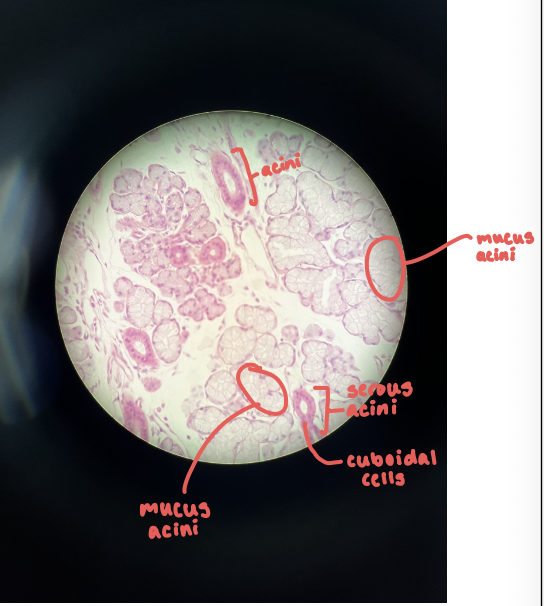
Salivary Gland
Has Mucous acini + serous acini
Mucous acini
secretes mucous, lubricates mouth to protect teeth + helps w/ swallowing
Serous acini
secretes serous fluid, liquid hydrolysis + taste
Stomach
Chief cells, G cells, Parietal cells, Mucous cells
Chief cells
Secretes pepsinogen, activates into pepsin; turns proteins → peptides
G cells
Secretes gastrin, stimulates additional secretions of gastric juices when food arrives in the stomach
Parietal cells (hydrochloric acid)
Secretes hydrochloric acid, activates pepsinogen → pepsin for enzymatic digestion
Parietal cells (intrinsic factor)
Secretes intrinsic factor, necessary for absorption of vitamin B12 in the ileum of small intestine
Pancreas
Trypsinogen, pancreatic lipase, pancreatic amylase, sodium bicarbonate
Trypsinogen
Breaks down peptide bonds in certain a.a (digestion of protein)
Pancreatic lipase
digests triglycerides (monoglycerides + fatty acids)
Pancreatic amylase
Splits polysacharides → oligosccharides
Sodium bicarbonate
Converts acid chyme to an alkaline pH
Liver
Hepatocytes
Hepatocytes
Secrete bile, emulsifies fat to help absorption of lipids
Small intestine
Goblet cells, duodenal glands, intestinal glands
Goblet cells (large)
Secrete mucus, protects lining of small intestine
Duodenal glands
secrete alkaline mucus, neutralizes acid chyme
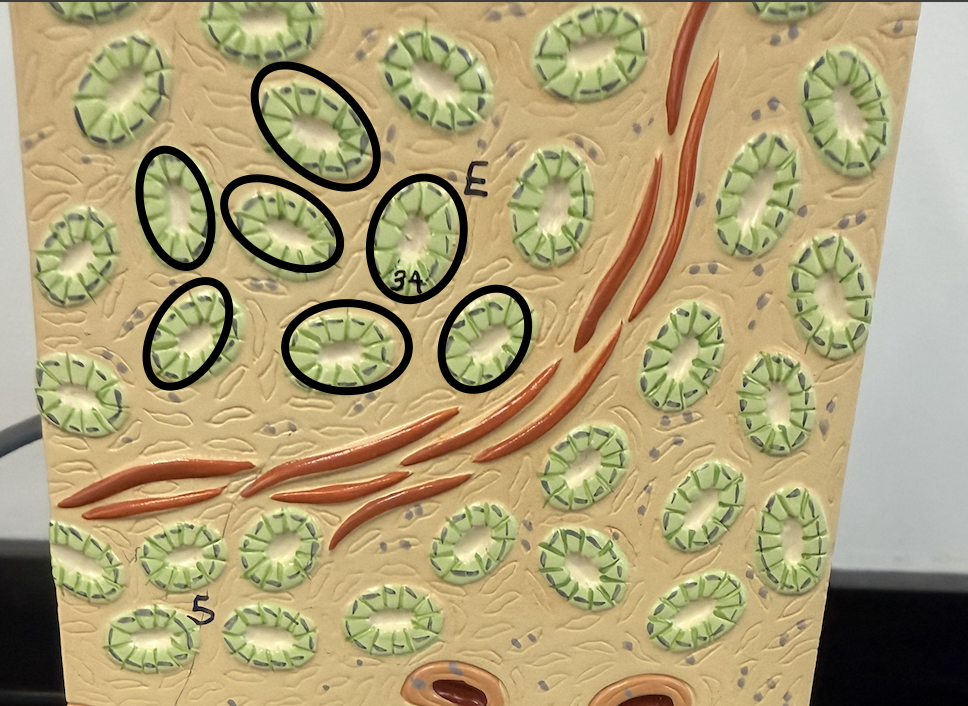
Intestinal glands
secretes intenstinal juice, provides a liquid medium to aid for absorption
Large intestine
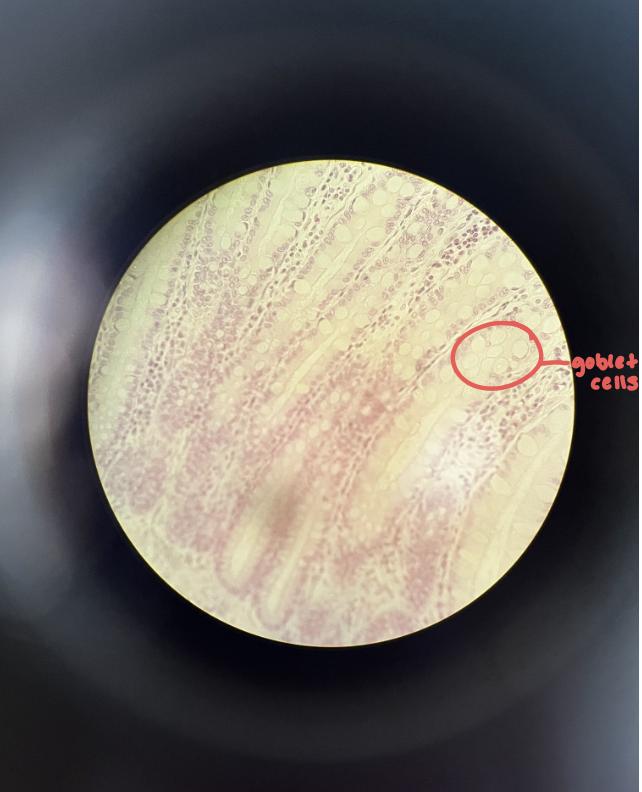
Goblet cells
Goblet cells (small)
secretes mucus, lubricates intesntine to facilitate passage of fecal material
List the structures (or parts of structures) involved in mechanical digestion.
Teeth, tongue, stomach, small + large intestine