Anatomy Lab: Histology
 Call Kai
 Learn
Learn Practice Test
 Spaced Repetition
 Match
Match Flashcards
 Knowt Play
1/12

Earn XP
Description and Tags
Epithelial Tissues, Connective Tissues, Membranes
Name | Mastery | Learn | Test | Matching | Spaced | Call with Kai | Chat |
|---|
No analytics yet
Send a link to your students to track their progress
13 Terms
Define a tissue.
Tissues are a group of cells that are similar in structure and function
Name the 4 types of tissues.
Epithelial
Connective
Nervous
Muscle
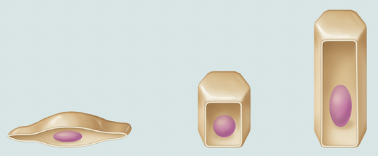
Classify each of the following epithelial cells


How do we classify epithelia?
Classification is based on the number of cell layers
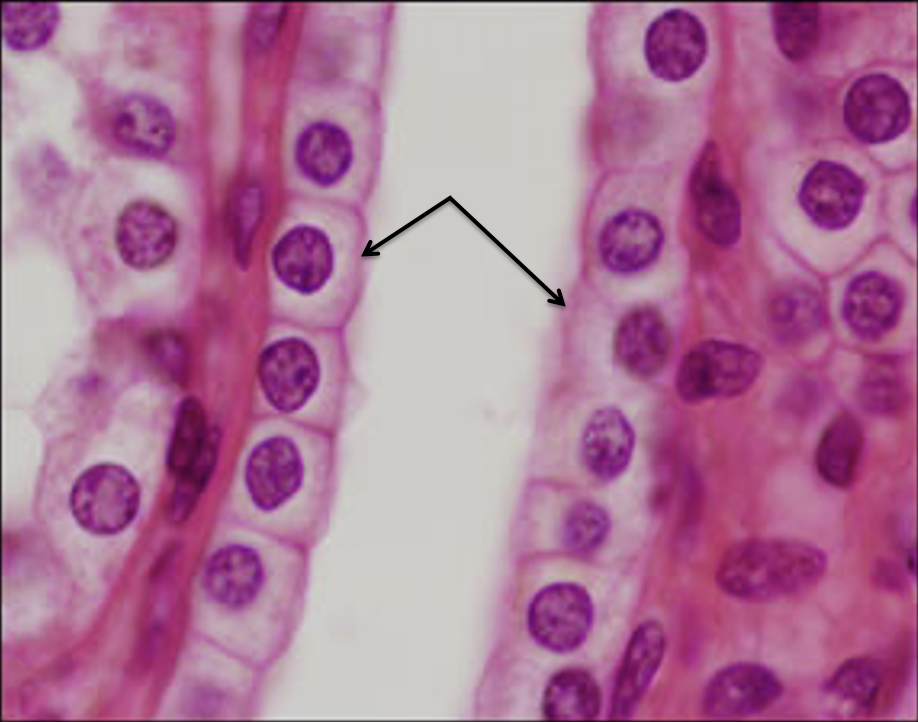
Identify this epithelium.
Simple Cubodial
Epithelium: Simple Columnar
Description: A single layer of tall cells with round to oval nuclei
many cells have microvilli and some have cilla
layer main contain mucus-secreting unicellular glands (goblet cells)
Function: Absorption, secretion of mucus, enzymes, etc.
Ciliated type: propels mucus (or reproductive cells) —> ciliary action; lines small bronchi, uterine tubes, and some regions of the uterus
Nonciliated type: lines most of the digestive tract (stomach to rectum), gallbladder, and excretory ducts (of some glands)


Identify this epithelium.
Simple Columnar
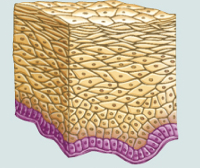
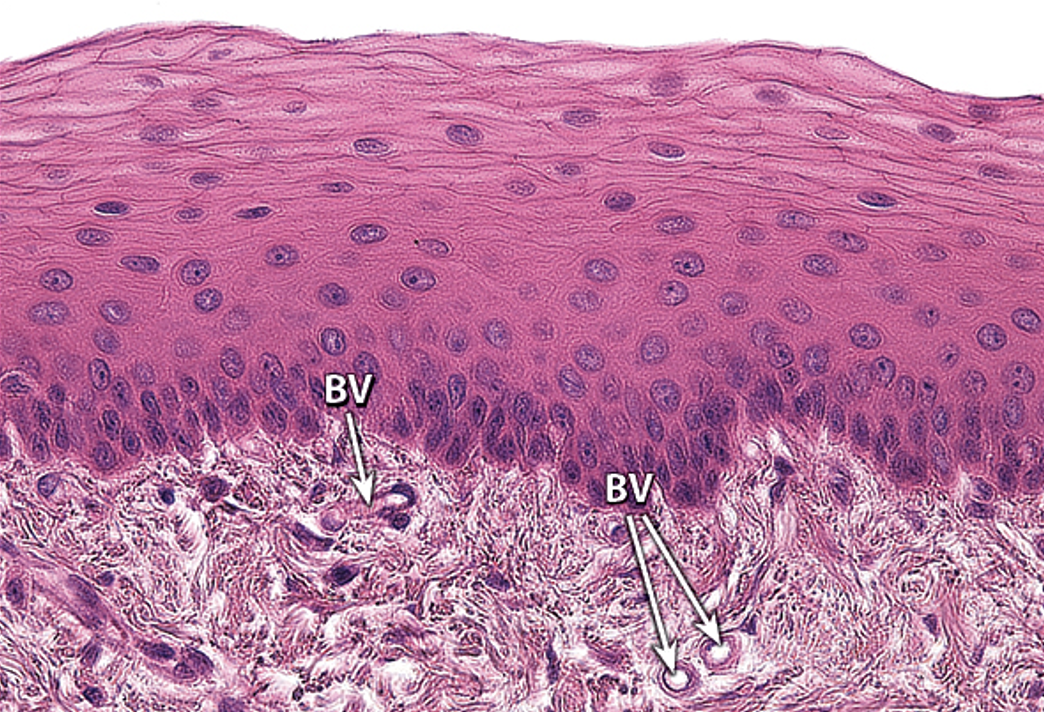
Epithelium: Stratified Squamous
Description: A thick epithelium composed of several layers
basal cells are cuboidal or columnar and are metabolically active. Active in mitosis and produce the cells of the more superficial layers
Surface cells are flattened (squamous): in the keratinized type the surface cells are full of keratin and dead
Function: Protects underlying tissues in areas subjected to abrasion
Location:
Nonkeratinized type: forms the moist linings of the esophagus, mouth, and vagina
Keratiized: forms the epidermis of the skin, a dry epithelium
Identify this epithelium.
Nonkeratinized Stratified Squamous

Identify this epithelium.
Keratinized Stratified Squamous

Identify this epithelium.
Stratified Cuboidal

Identify this epithelium.
Stratified Columnar