The Renaissance in Northern Europe
 Studied by 0 people
 Call Kai
 Learn
Learn Practice Test
 Spaced Repetition
 Match
Match Flashcards
 Knowt Play
1/20

There's no tags or description
Looks like no tags are added yet.
Name | Mastery | Learn | Test | Matching | Spaced |
|---|
No study sessions yet.
21 Terms
Iconography
the study of the meaning of images
Intuitive Perspective
using observational skills to create a sense of depth and 3-D
Oil Paint
-revolutionizes painting, invented in the 1430's in Flanders
-oils are more adaptable than tempera and will replace it in 1500
-slow to dry and can be applied in layers
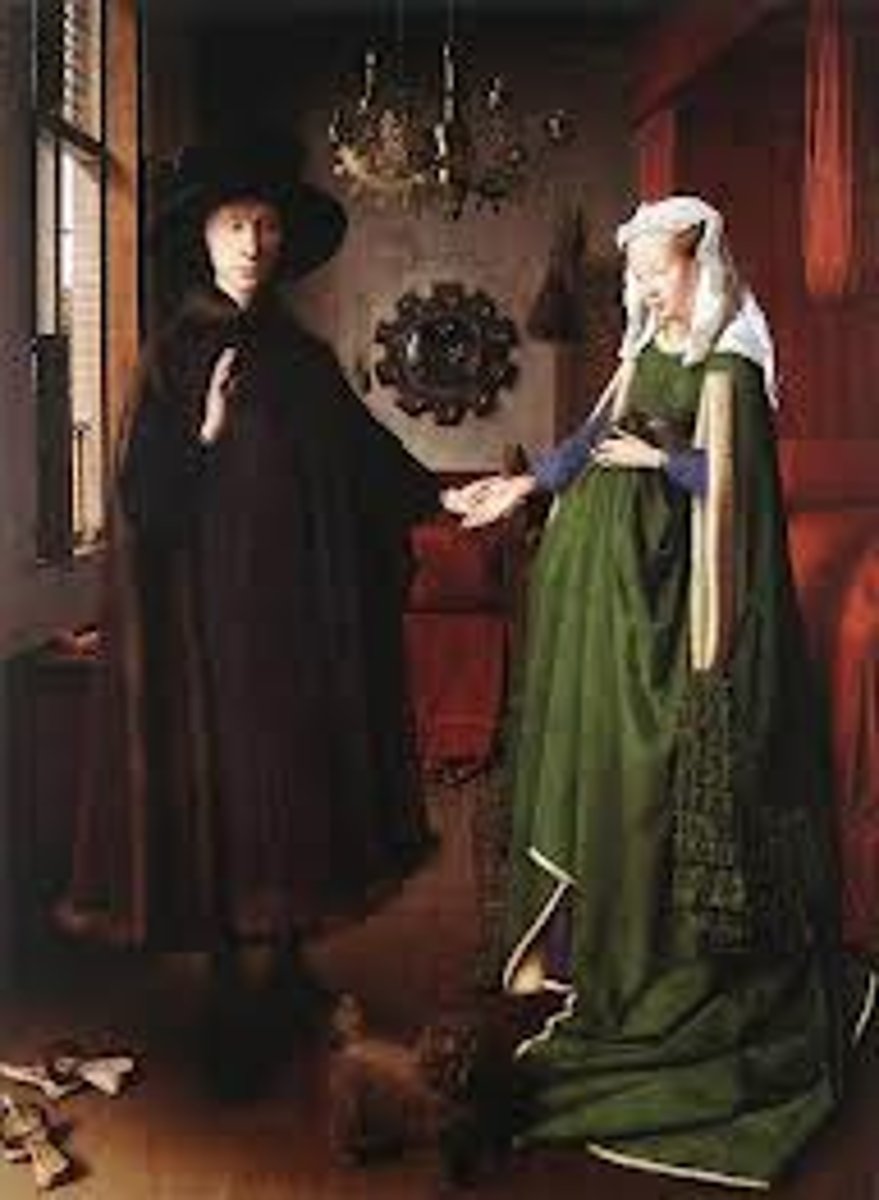
Arnolfini Portait
Jan van Eyck, 1434
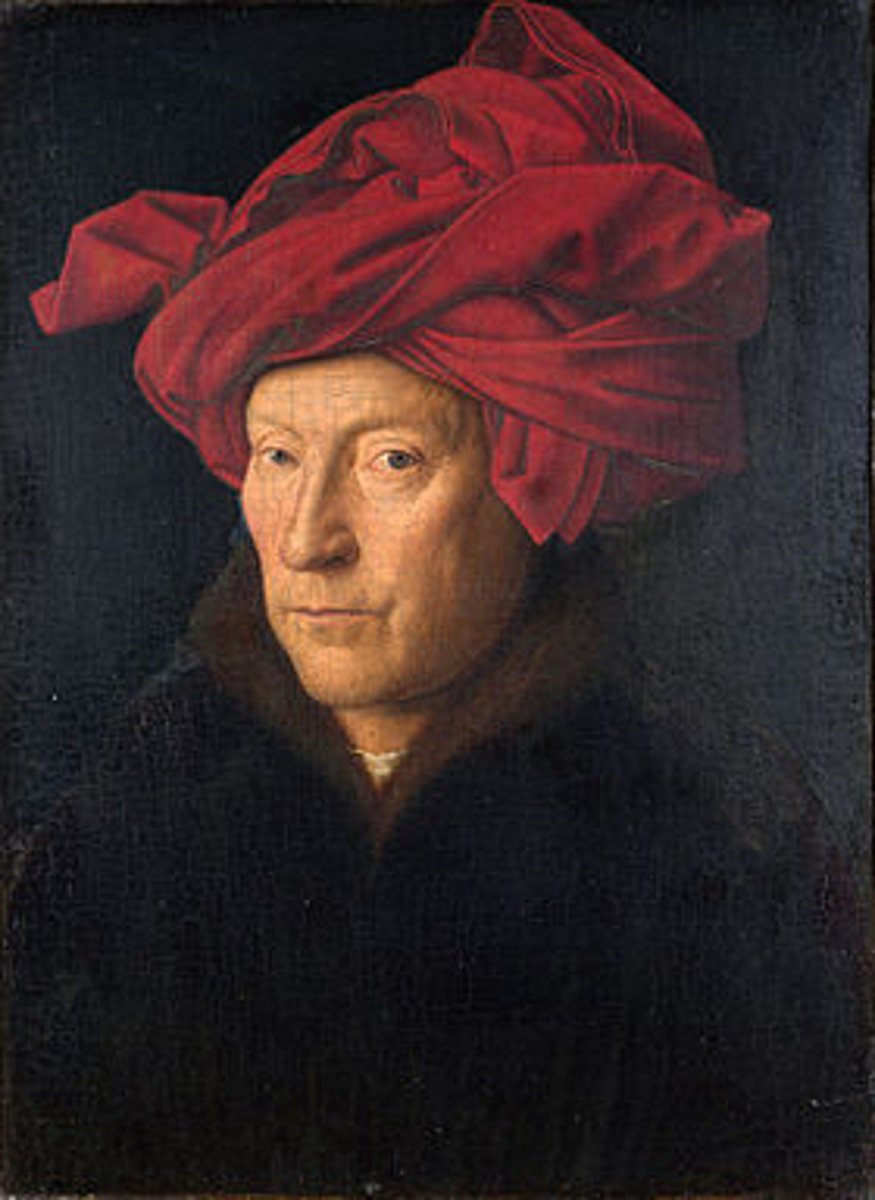
Man in a Red Turban
Jan van Eyck, 1433
-self portrait, frame states "as i can"
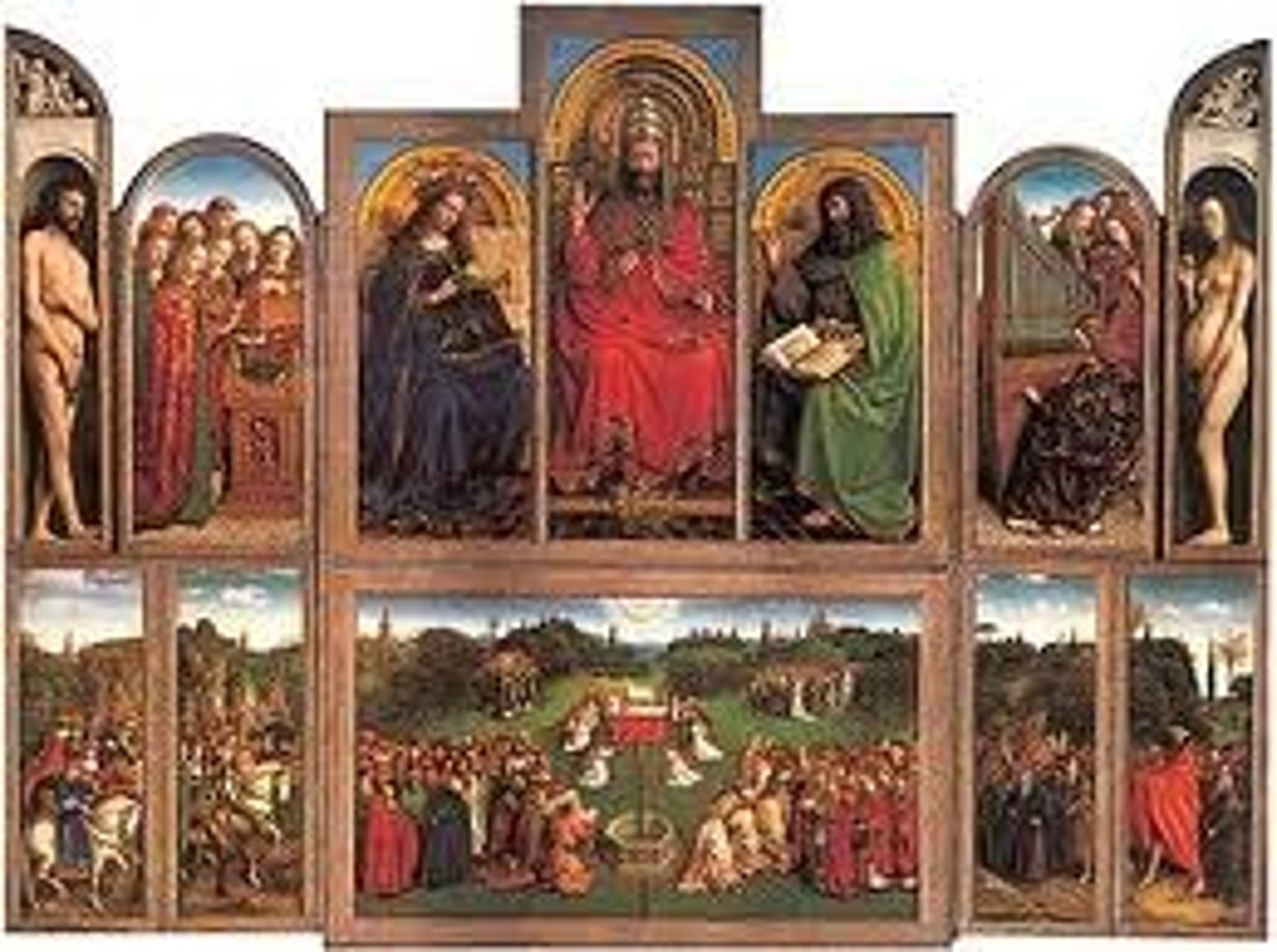
Ghent Altarpiece
Jan and Hubert van Eyck, 1432
-dont know who did what
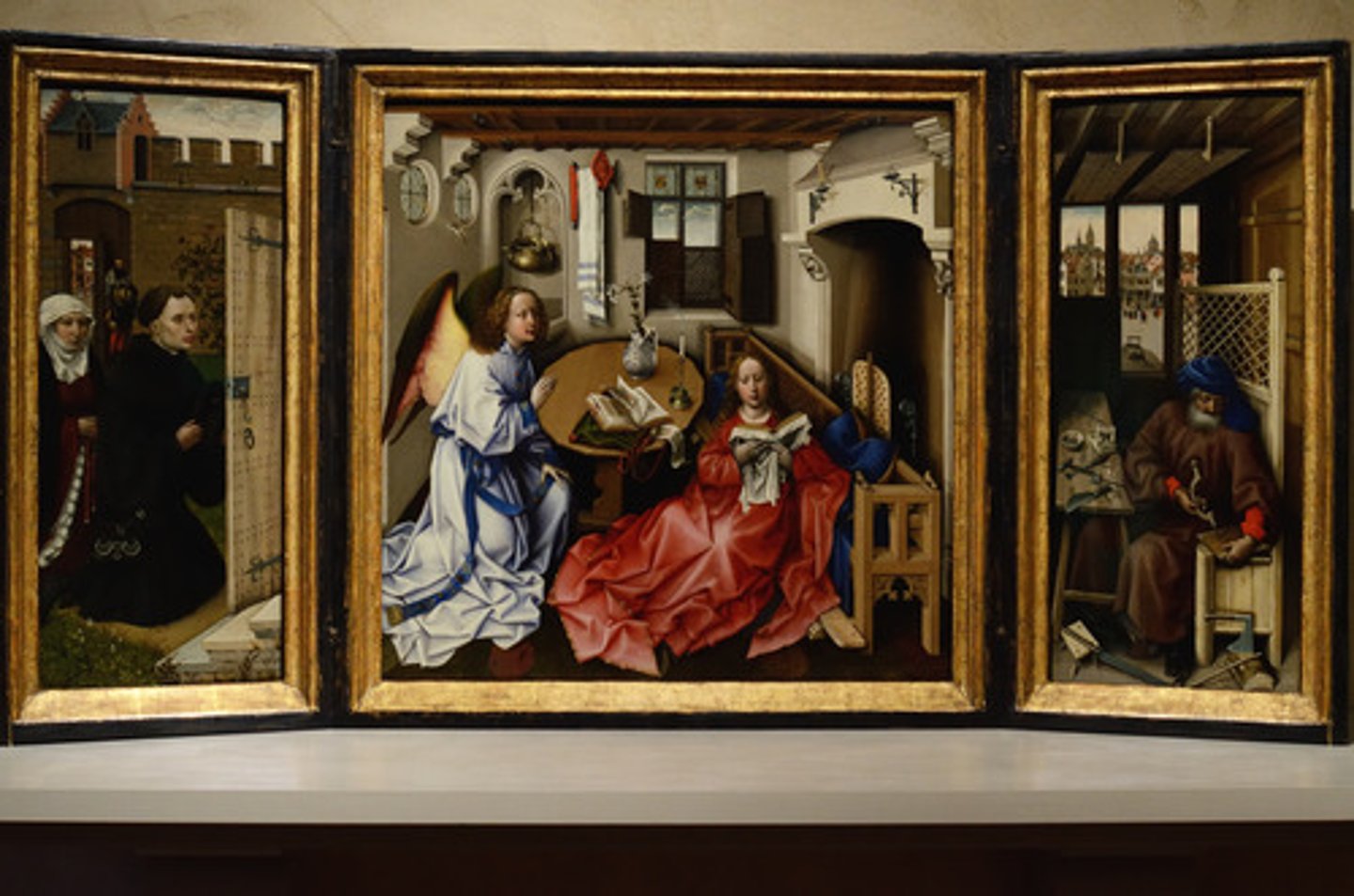
Merode Altarpiece
Robert Campin, 1425-1430
Relief Printing Process
like a rubber stamp where what is raised from the surface is printed
-involves wood cuts, wood engravings, and linocuts
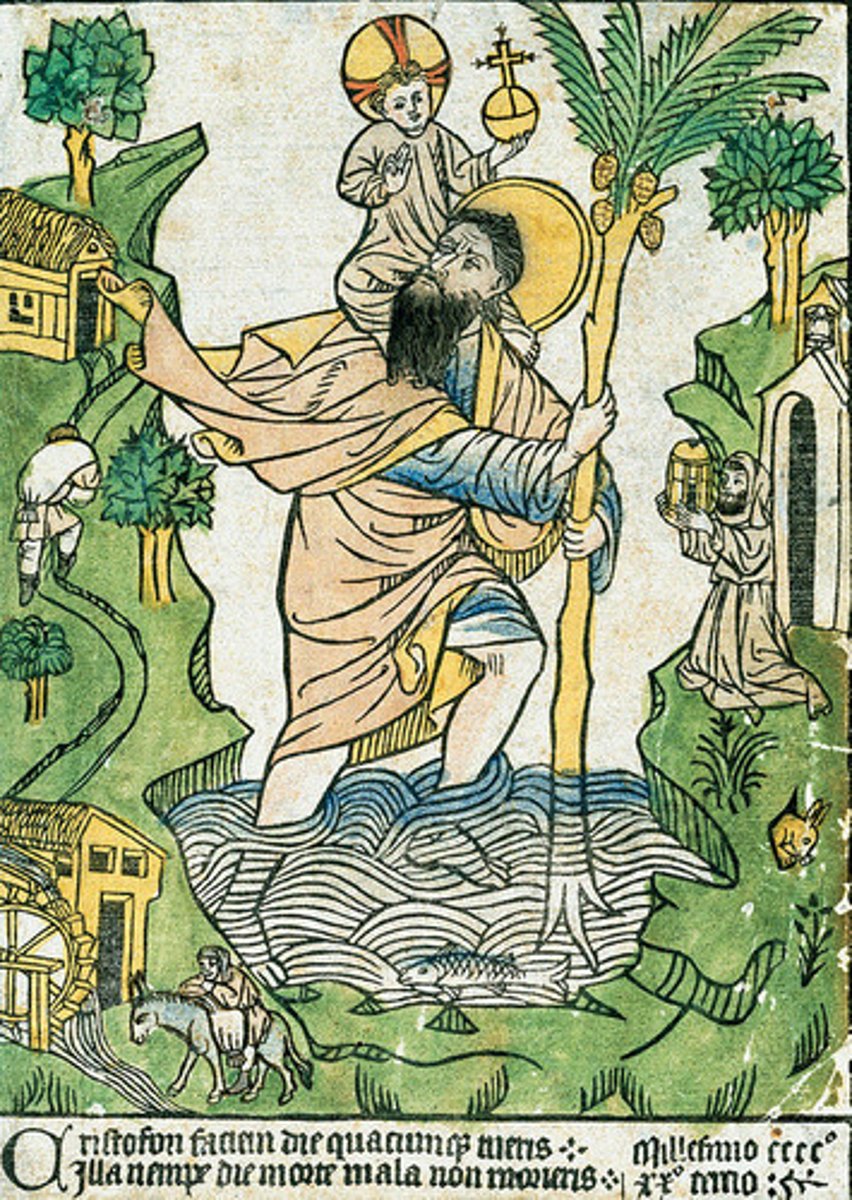
Woodcut
starts with a block of wood, then draws design, then carve out areas without ink, then ink the block, then print
The Buxheim of St Christopher
Woodcut, Mid 15th Century
Wood Engraving
uses a different cut of lumber, nearly eliminating any visible grain
Linocut
uses linoleum instead of wood and its softer, but it distorts with each press
Intaglio Printing Process
printing from the negative area, sunk down with groves
-has engravings, etchings, and dry points
Engraving
used to reproduce works of art and illustrate books, uses a burin which is a V shaped tool
The Temptation of St Anthony (Demons Tormenting St Anthony)
Martin Schongaeur, c.1480-90
Drypoint
short print run, pulling burin towards you
Etching
made with acid
Self Portrait
Albrecht Durer, 1500
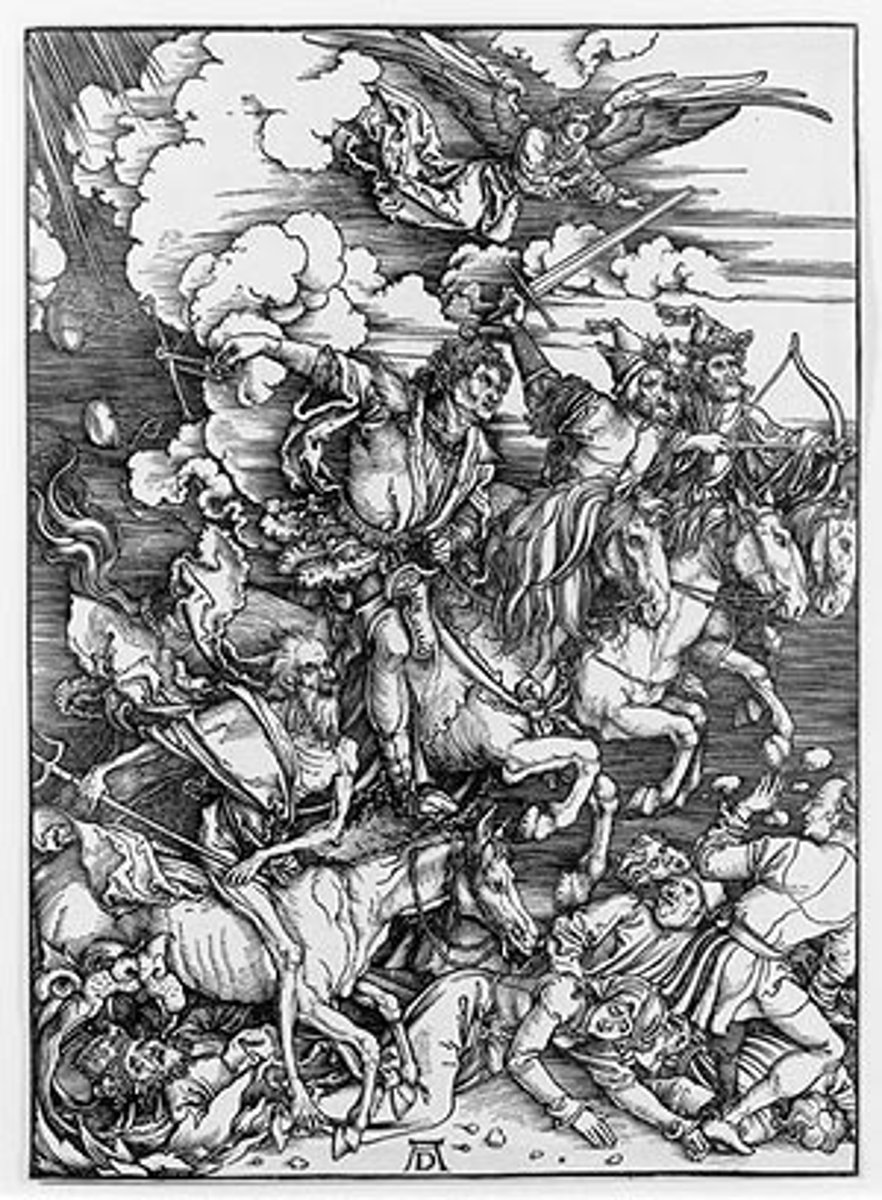
The Four Horesman of the Apocolypse
Albrecht Durer, 1497-98
-conquest, war, plague/famine, death
Insenheim Altarpiece
Matthias Grunewald, 1510-1515
Gardem of Earthly Delights
Hieronymus Bosch, 1505-15