637 Ch4 CVD in Women
 Call Kai
 Learn
Learn Practice Test
 Spaced Repetition
 Match
Match Flashcards
 Knowt Play
1/19

There's no tags or description
Looks like no tags are added yet.
Name | Mastery | Learn | Test | Matching | Spaced | Call with Kai | Chat |
|---|
No analytics yet
Send a link to your students to track their progress
20 Terms
Describe the gender differences in risk and prevalence of CVD in women vs. men.
More women than men die every year
>80% of women have at least one historical RF for CAD
Women are underrepresented in CVD studies
>60yr → significant increase in risk and prevalence of CAD in women than men
Some women are asymptomatic, mortality rate of CHF is higher, have more hospitalizations, deficits in ADLs, and greater healthcare costs
What are the chances of women developing CVD in accordance with risk factors?
Women w/ 2+ RFs have 50% chance of developing CVD
Women more likely to sustain endothelial damage from smoking
Younger women taking oral contraceptives
Physical inactivity, can’t increase to 3METs on Bruce Protocol exercise stress test
Obesity, metabolic syndrome after menopause
HTN more prevalent in black women
High cholesterol
Diet & DM
Stress, age, fam history
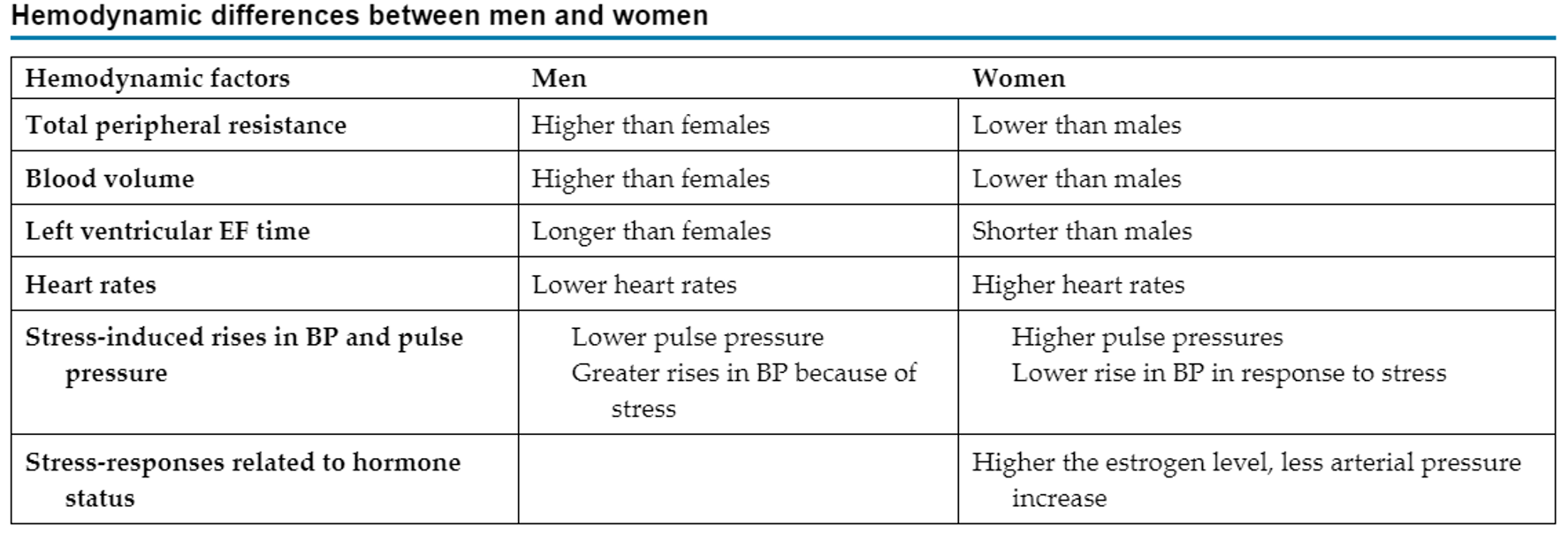
What are hemodynamic differences between men and women?
Women have lower TPR, blood volume, and LVEF time, but higher HRs, pulse pressures, and the higher the estrogen level, the less arterial pressure increase
What are other CVD RFs for women?
Metabolic syndrome, systemic inflammatory disease, history of pregnancy complications, elevated C-reactive protein and/or Ca score, ABI, carotid intima thickness, lifestyle choices
Pregnancy: preeclampsia, gestational diabetes, pregnancy-induced HTN
No alcohol and lots of exercise play a large protective role in women
A female pt presents with chest pain only at night and during stressful events, is this considered angina?
Not considered angina
At rest and during sleep, women present with what kind of sxs?
Atypical angina in correlation w/ severe fatigue, pain in shoulder blades, SOB
With obstructive CAD, women have increased what?
Greater risk burden, more functional disability
Increased risk of in-hospital mortality and SCD after MI
10-20% of women w/ STEMI do not have obstructive CAD
What are womens’ risk with non-obstructive CAD? Why? What is the independent predictor of CAD?
16% risk of CVD event
More plaque erosion & distal embolization, more microvascular dysfunction, endothelial dysfunction & coronary reactivity, alterations in vasculature structure, microvascular disease, higher incidence of inflammatory conditions, & hormonal influences over lifetime
Brachial pulse pressure
What are exercise stress test guidelines for women when diagnosis CVD in women?
ST segment changes (>2mm depression, down sloping, or horizontal) occur at low workloads or persists into recovery - high risk status
What is the Duke Treadmill Score?
Independent predictor of mortality & cardiac mortality in asymptomatic women
Is the Duke Treadmill Score a better predictor than exercise capacity alone?
No, and does not provide prognostic information for asymptomatic women
Use standard Bruce protocol, measures maximum net ST segment deviation and exercise-induced angina
What is SPECT? Limitations?
Single photon emission computed topography; recommended for symptomatic women w/ intermediate-high pretest likelihood of CAD and in women w/ normal/abnormal baseline ECG incapable of max exercise
Breast tissue and obesity mess w/ image quality, radiation exposure, women have smaller hearts so areas of reduced myocardial perfusion may be missed
What is the DASI Questionnaire?
Duke Activity Status Index; subjective questionnaire on ADLs
2/3 of CVD events = women who score under 4.7 METs
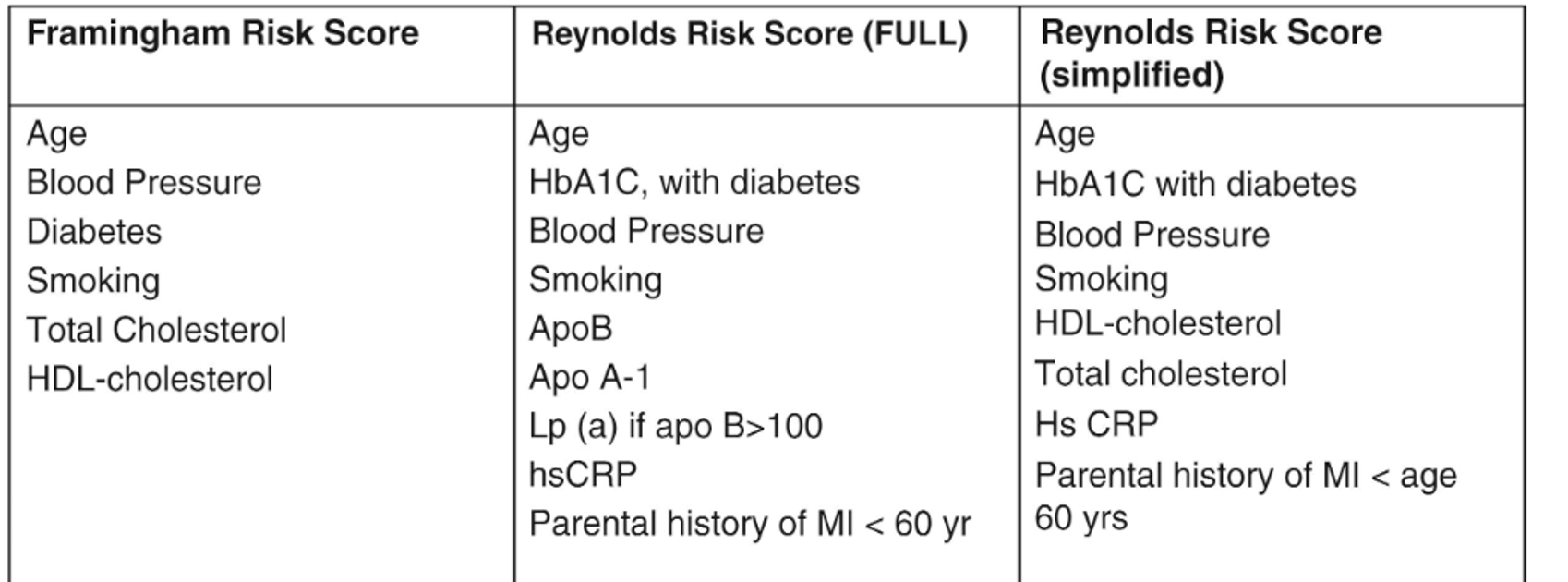
What is the Framingham Risk Score? Reynolds Risk Score? How do they compare?
FRS - measures HTN, smoking, DM, elevated total and LDL-C, and low HDL-C
Underestimates risk of CAD in women
RRS - age, systolic BP, Hb A1C if diabetic, current smoking, total and HDL-C, CRP, and parental history, including MI before 60yrs
Improved accuracy for women b/c CRP
What is the best risk score to assess women’s risk for CVD?
Reynolds Risk Score
What are gender differences for medical management, obstructive CAD, non-obstructive CAD, and CABG differences?
Gender differences
Women are less likely to receive preventative recommendations
Receive less heparin, ACEIs, glycoprotein IIb/IIa inhibitors in hospital; D/C w/ less aspirin, statins, ACEIs, BBs, and lifestyle counseling
Less likely to be treated to reach LDL-C goal
Treated less aggressively for ACS
Obstructive CAD: undergo less cardiac catheterization and revascularization
Non-obstructive CAD: treated w/ reassurance, sedative-hypnotic prescriptions and repeat hospitalizations, and repeat angiography for refractory sx
Limited research on meds that work for women
CABG: women experiences less angina relief
What are barriers for women to participate in CR?
Family responsibilities
Strength of MD’s recs
Location and availability of programs
Perception that CR programs are male oriented in terms of class schedules, educational materials, and privacy of facilities
What are pregnancy CV changes & complications?
MI, cardiomyopathy, arrhythmias
HTN → preeclampsia
HR & blood vol increases, CO & SV increase in 2T and reduces in 3T, maternal VO2 increases, systemic vascular resistance reduces
Why do atherosclerotic changes begin in women earlier than men?
Stress, depression, trauma, life changing events
More likely to be diagnosed w/ psychiatric disorders
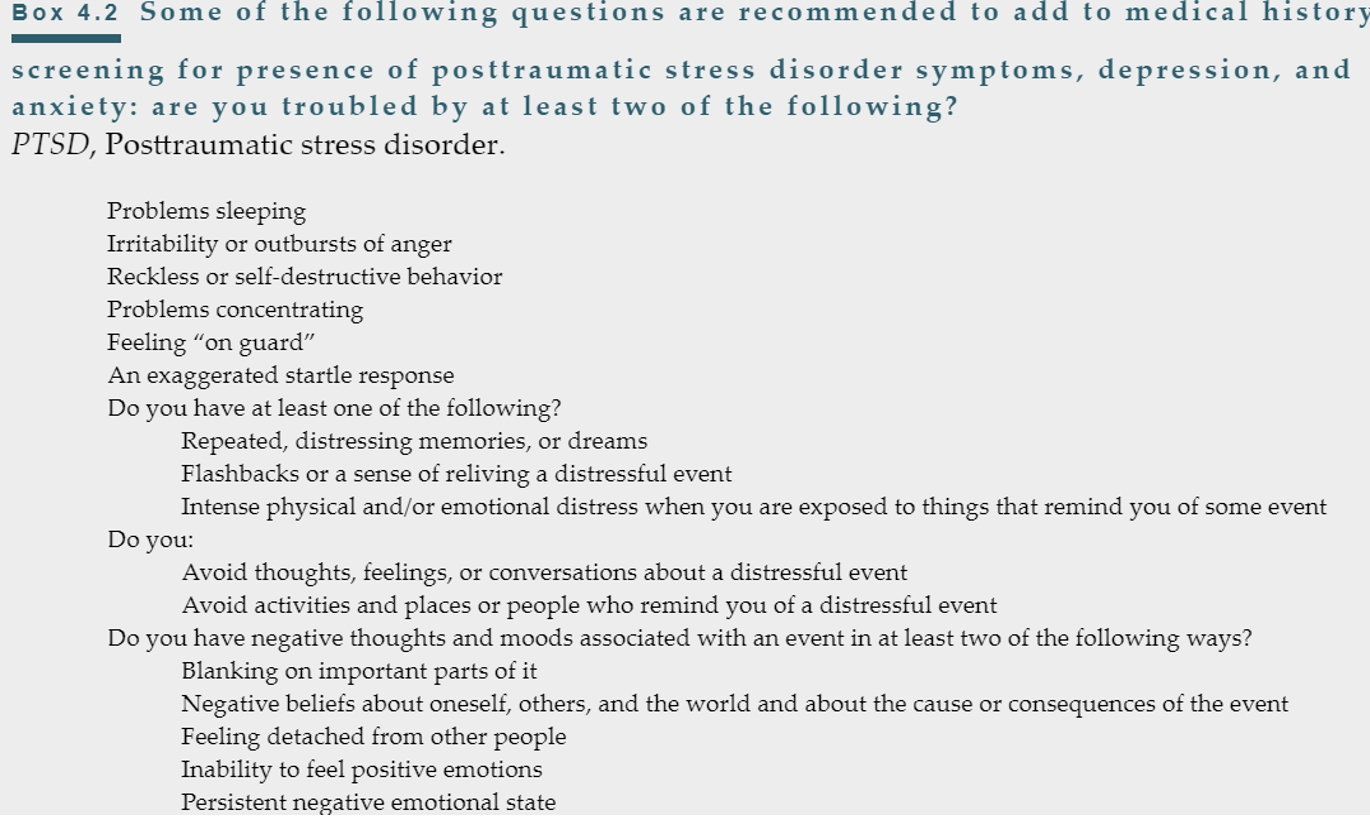
What are some questions to ask to screen for PTSD sx, depression, and anxiety?