Understanding Forest Health Museum Facilitator
 Call Kai
 Learn
Learn Practice Test
 Spaced Repetition
 Match
Match Flashcards
 Knowt Play
1/31

There's no tags or description
Looks like no tags are added yet.
Name | Mastery | Learn | Test | Matching | Spaced | Call with Kai | Chat |
|---|
No analytics yet
Send a link to your students to track their progress
32 Terms
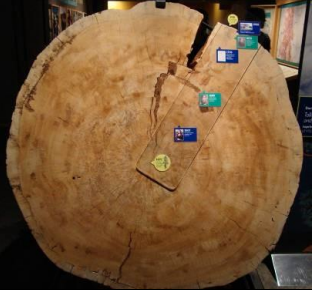
What is this and what does it show? Bonus: What is the history of this specimen?
Ponderosa Pine tree cookie
Serves as a record of over 500 years of climate history in Colorado
Bonus:
Pith date of 1429 and cutting date of 1931
It was originally displayed in the White River National Forest Visitor Center and was saved form disposal in 1956 by a DMNS staff member.
It was resurfaced and mounted in 2009.
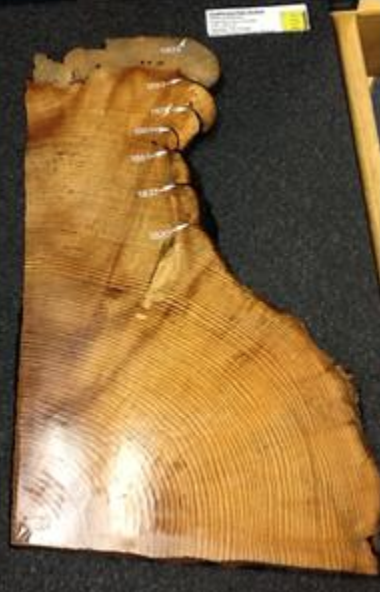
What is this and what does it show? Bonus: Why are the dates on it important?
Ponderosa Pine tree cookie dated 1736-1935
Shows 6 fire scars between 1820 and 1893, with an average of 14.6 years between fires
Bonus:
After 1893, there was a 42-year age gap with no fire scars, reflecting a period of human fire suppression. The change in fire suppression led to denser forests and more intense, destructive fires.
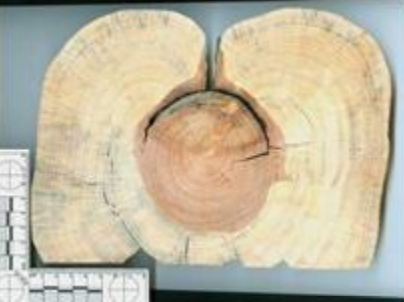
What is this and what does it show?
Ponderosa Pine tree cookie
Shows that the tree experienced a nearly fatal fire early in its life, leaving a fire scar that covers nearly half of its circumference. The tree survived and continued to grow new rings from the surviving cambium layer, nearly sealing the original scar.
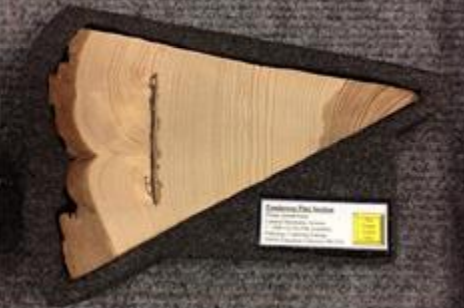
What is this and what does it show? Bonus: How can the cause of the scar impact the surrounding forest?
Ponderosa Pine tree cookie
In 1966 the tree was struck by lightning. The tree continued to grow and the scar was sealed over within a few years.
Bonus:
Lightning strikes like this one are responsible for starting hundreds to thousands of forest fires across North America each year.
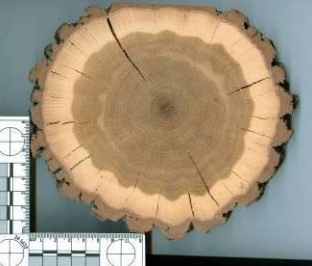
What is this and what does it show? Bonus: What do the differing ring sizes and cracks tell us?
Gambel Oak tree cookie
Heartwood and Sapwood is very visible here. The heartwood is the darker-colored, inner core. The Sapwood is the lighter-colored, outer layer.
Bonus:
Some rings are wider and some are narrower, reflecting changes in temperature, precipitation, and soil conditions.
Wood holds water when it is alive. When the tree cookie is cut, the water evaporates, shrinking the wood slightly, and forming cracks in the tree cookie.
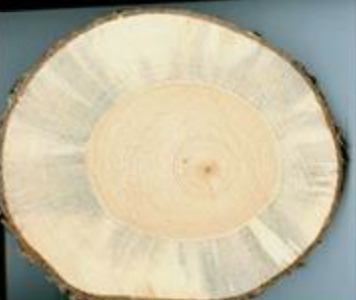
What is this and what does it show? Bonus: What is reaction wood and why is it present in this tree cookie?
Lodgepole Pine tree cookie
This shows evidence of pine bark beetle infestation and the presence of blue-stain fungi. When attacked by beetles, trees release toxic resins to defend themselves, but he fungi carried by the beetles inhibit this response. The fungi are mostly limited to sapwood, but their discoloration can seep inward over time.
Bonus:
Reaction wood is thought to be a trees response to external factors that helps the tree return to and maintain a vertical posture. We know that there is reaction wood here because the pith is off center. This tree likely lived on a hill and developed thicker rings on the downhill side to support its growth straight up.
Extra Bonus:
This tree came from a member of the DMNS security team’s yard when it had to be removed due to beetle kill.
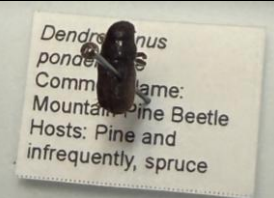
What is this? What trees does it infest? What does its lifespan look like?
Mountain Pine Beetle (native Colorado bark beetle)
They primarily infest Ponderosa Pine, Lodgepole Pine, and Limber Pine trees. Attacking females prefer large diameter trees until they are depleted from the forest.
They complete a generation within one year from egg to adult.
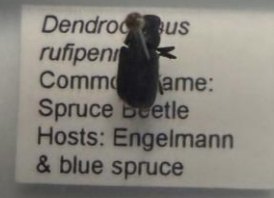
What is this? What trees does it infest and what are the signs of infestation? What does its lifespan look like?
Spruce Beetle (native Colorado bark beetle)
They infest Engelmann Spruce and occasionally Colorado Blue Spruce. They prefer large diameter trees until they are depleted from the forest.
When infested needles turn a pale yellowish-green color and tend to drop to the ground after high winds. Needles typically drop the second summer after the tree has been infested. Boring dust (from beetles boring new entry holes) may also accumulate in bark crevices and around the base of the tree. Streams of resin along the main trunk is associated with recently attacked trees.
A two year life cycles is most common and adults fly to seek new hosts in late May-July.
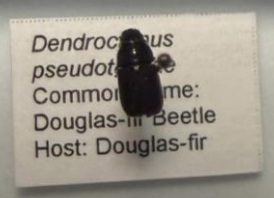
What is this? What trees does it infest and what are the signs of infestation? What does its lifespan look like?
Douglas-fir Beetle
They infest Douglas-fir trees, generally in mature Douglas-fir forests that have had below-average rainfall, however they can also infest trees that have fallen of been cut and left out for removal at a later date.
When infested, needles fade to rust colored and drop off after about a year. Other indicators of infestation is small groups of dead and dying Douglas-firs, reddish brown boring dust around the base of the trees and in bark crevices, woodpecker damage (from them searching for beetle larvae), and exit holes in the bark after beetles have left the tree.
Adult beetles seek new trees to attack from late spring to early fall.
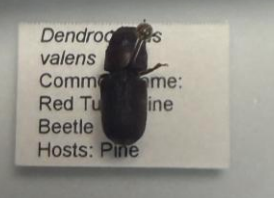
What is this? What trees does it infest? Bonus: What do attacks from this beetle indicate?
Red Turpentine Beetle (native Colorado bark beetle)
They colonize the lower bole and larger roots of stressed, injured, dying, and recently dead pine trees.
Bonus:
These are not considered aggressive beetles, as they rarely cause tree mortality directly; instead their attacks indicate that a tree is weakened by injury or disease and in a state of decline.
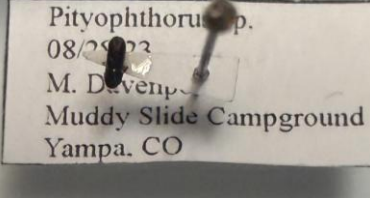
What is this? What trees does it infest and what are the signs of infestation?
Twig Beetle (native Colorado beetle)
They attack conifers such as pines, true firs, Douglas-fir, and spruce, however pine trees are the most commonly attacked from these beetles. They attack small branches and twigs. Young trees and trees that are stressed are vulnerable to Twig Beetles.
Attacks are evident through flagging (branches that turn brown, wilt, or die), or curling branch tips. Often only a portion of the tree will be attacked by them and they are rarely the sole cause of mortality.
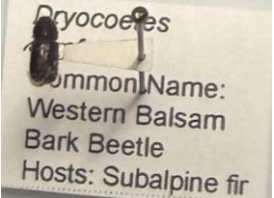
What is this? What trees does it infest and what are the signs of infestation? What does its lifespan look like?
Wester Balsam Bark Beetle (native to high-elevation forests in Colorado)
They primarily infest subalpine fir and are often found in trees that are already stressed by drought, root disease, or other environmental factors.
Infestation signs include fading needles that turn yellow to reddish-brown, boring dust in bark crevices, and resin flow from entry points.
Adults typically fly and attack new host trees from late June through August.
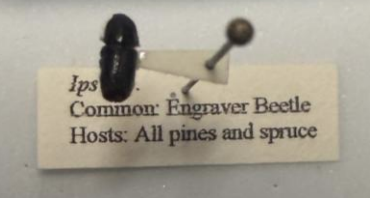
What is this? What trees does it infest and what are the signs of infestation? What does its lifespan look like? Bonus: Where did they get their name from?
Engraver Beetle (genus Ips) (native bark beetles)
They infest various pine species including Ponderosa Pine and Lodgepole Pine. They are secondary invaders, preferring weakened or recently felled trees, but can become aggressive during drought or after fire damage.
Signs of infestation include reddish-brown boring dust, pitch tubes (small resin blobs), and fading needles.
Adults emerge in spring and summer, seeking new hosts.
Bonus:
Their name comes from the intricate galleries they carve into the inner bark, which resemble engravings.
Which 2 beetles on the cart carry blue fungus?
Engraver Beetles (Ips sp.) and Western Balsam Bark Beetles
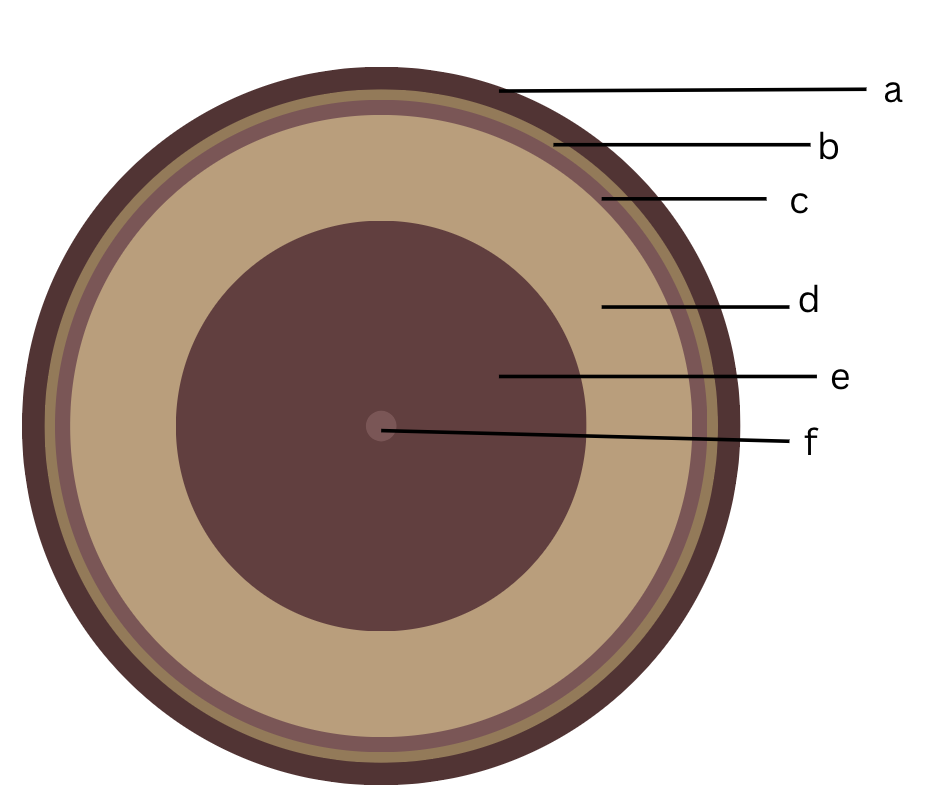
What layer is the outer bark and what is its function?
A. Its function is to protect the tree.
What layer is the sapwood / xylem and what is its function?
D. It transports water throughout the tree.
What layer is the heartwood and what is its function?
E. It provides stability and strength. Over time older sapwood cells die and become heartwood. Heartwood is often more resistant to decay because it contains natural preservatives.
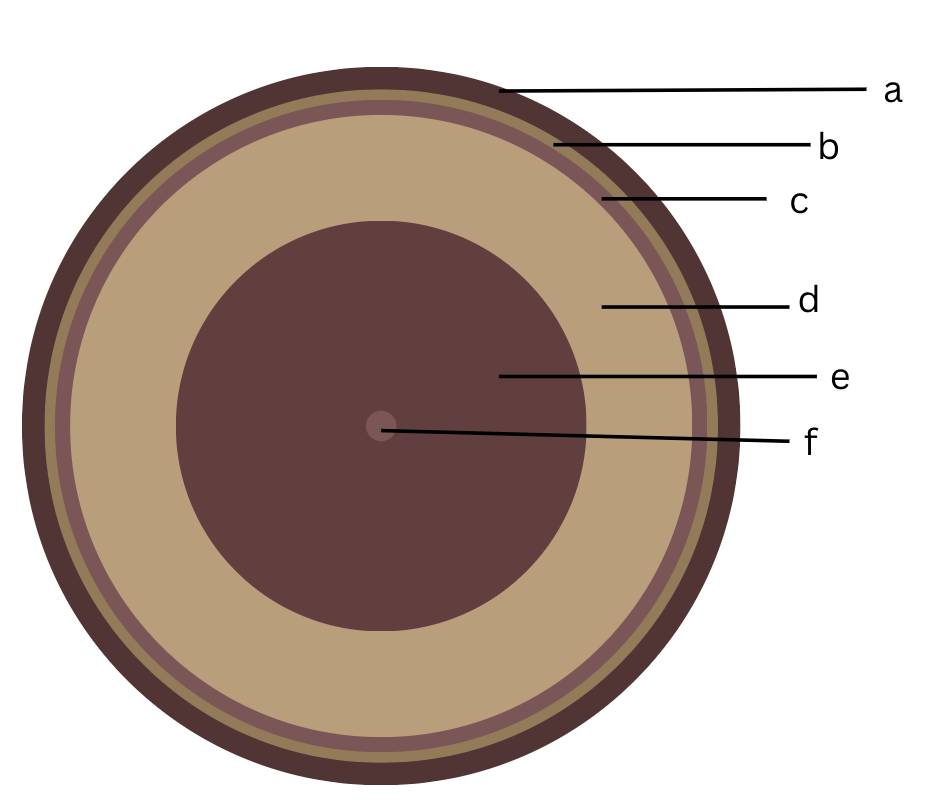
What layer is the cambium and what is its function?
C. It is the growing layer of the tree that builds new cells.
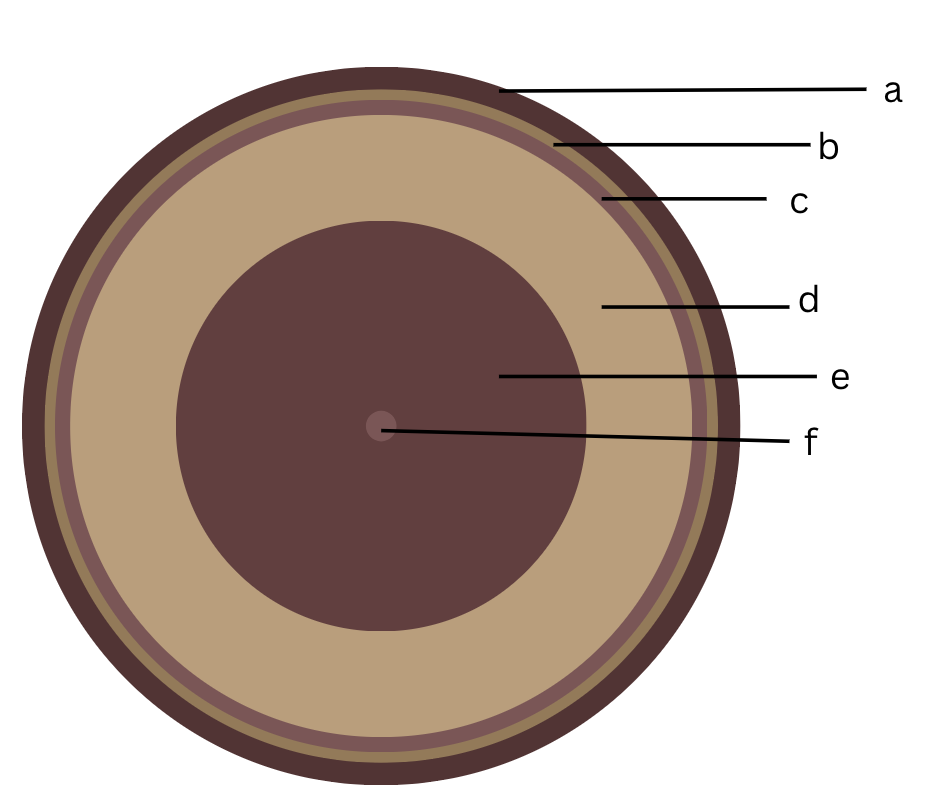
What letter shows the pith and what does pith represent?
F. The pith represents the first growing point of the tree. It is the oldest part of the tree.
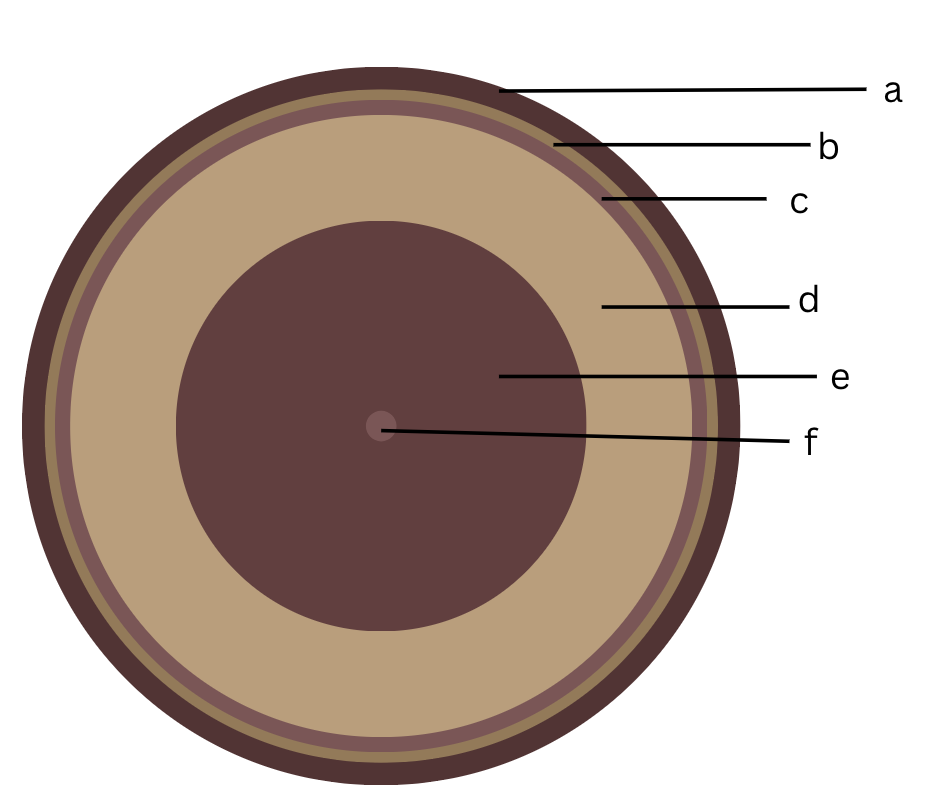
What layer is the phloem and what is its function?
B. The phloem carries nutrients throughout the tree.
What do the rings of the tree tell us?
Rings tell us the age of the tree. Every year the tree develops a new ring.
What does the distance of the rings tell us?
The distance of the rings tells us about the water and nutrients the tree got in a given year. If the rings are closer, the tree got less water or nutrients, and if the ringer are further away the tree got more water or nutrients during that period. For very large trees though the outer rings will often be closer together though just because of the large circumference.
How do fires help keep our forests healthy?
Forest fires clear out dead trees and make space for new growth.
What have been some negative effects of fire suppression?
Due to the fire suppression prior to the 1970’s, our forests have become overgrown and too dense. When fires do burn through them, they have too much fuel and burn hotter and bigger. This is causing more destruction of the forest rather than clearing.
How do forests help provide people with clean drinking water?
Forests play a vital role in providing clean drinking water, with over half of the U.S. supply originating from forested areas. Acting like a sponge and filter, trees and plants intercept rainfall, protect soil from erosion, and help recharge groundwater.
What is the impact of wildfires on our water supply?
Wildfires burn vegetation and leaf litter, making soil less absorbent and more prone to runoff. This leads to sediment buildup in reservoirs and contamination of water supplies. Climate change adds further stress, causing unpredictable snowmelt and rainfall that overwhelm water systems. Wildfire ash and fire retardants can drastically alter water quality, affect pH levels and introducing harmful substances like lead and arsenic. These changes make water treatment more complex and increase reliance on infrastructure to ensure safe drinking water.
How do pine beetles damage trees?
They tunnel into the inner bark of trees, mate and lay eggs inside the tree’s phloem. Then the larvae feed on the phloem, interrupting the tree’s ability to move nutrients and water. Beetles can also introduce blue stain fungus to trees (it is on their backs), which inhibits the tree’s defense mechanisms, such as resin production.
Do all pine beetles travel in swarms?
Most pine beetles fly individually, not in a swarm like bees. However, the first beetle to successfully enter a tree releases chemical scents (pheromones) that attract many more beetles. This coordinated attack overwhelms the tree’s defenses (like sticky sap).
Does sapwood have specific channels to move water up vs. down or are they bi-directional?
They are mostly one‑way pathways. Water and minerals move upward from roots to needles through xylem. Sugars and nutrients made by needles move up and down through phloem. These tissues are separate layers, not shared or reversible.
On the ponderosa pine with several burn scars, they are all on the same side of the tree. Does this indicate that the fires approached from the same direction? Or fire burned ash/charcoal easier than healthy tissue?
This usually means fires repeatedly approached the tree from the same direction. A few possible reasons could be prevailing winds, slope direction (fires burn uphill more intensely), or a nearby fuel source (grasses, shrubs). Once a scar forms, that side may burn more easily in later fires, but initial scars typically indicate fire direction, not weak tissue alone.
How do larvae feeding on the phloem disrupt the pine tree’s ability to move nutrients & water?
Beetle larvae eat the phloem, which:
Blocks sugar movement from needles to roots
Starves the roots and living tissues
Eventually stops water uptake too (because roots fail)
The larvae create girdling tunnels that act like cutting a tree’s internal lifelines.
What is that one tree that needs fire for its seeds to grow? (lots of guests ask this question)
Lodgepole pines, ubiquitous across much of the West, are one of the first species to grow after a fire because of their serotinous cones. These “serotinous” cones can hang on a pine tree for years, long after the enclosed seeds mature. Only when a fire sweeps through, melting the resin, do these heat-dependent cones open up, releasing seeds that are then distributed by wind and gravity. (Info is from the National Forest Foundation)