Consciousness and Attention: Neural Mechanisms and Psychological Processes
 Call Kai
 Learn
Learn Practice Test
 Spaced Repetition
 Match
Match Flashcards
 Knowt Play
1/73

There's no tags or description
Looks like no tags are added yet.
Name | Mastery | Learn | Test | Matching | Spaced | Call with Kai | Chat |
|---|
No analytics yet
Send a link to your students to track their progress
74 Terms
What is consciousness?
Conscious experience; a moment of awareness of any mental content.
What does consciousness allow a person to do?
Generate a series of conscious experiences including feelings, understanding sensory input recalling autobiographical events, emotions, moods, ideas, memories, etc.
How is consciousness described in terms of personal experience?
Consciousness is personal; only you have access to your own consciousness.
What are some states that can be considered conscious states?
Drug state, drowsy state, sleep, coma, etc.
How can we infer another person's consciousness?
By imagining how another would feel and observing clues from body language, expressions, and behavior. We can also assess brain activity during experiences, but we can’t read minds
Threshold Phenomenon
According to this theory, consciousness only occurs when a sufficient number of neurons are activated.
What is required for a stimulus to reach conscious awareness?
A sufficient number of neurons must be activated, leading to neural synchronization. The activity reverberates, magnifies, and extends over much of the brain. Exchange of information across brain regions is crucial for generating awareness
Conscious experience of visual perception
Requires reverberating exchange of information. Area V5/MT – perceives movement
Pathway from retina
Superior colliculi to V5/MT
What is blindsight?
The ability of patients with cortical blindness to detect movement despite being blind due to damage in V1.
Binocular Rivalry
slow and gradual shifts of the eye sweeping from one side to another
Stimulus seen by each eye evokes a particular pattern of brain responses measured by fMRI
Research shows that switching to each stimulus is accompanied by a shift in a pattern of activity over a large portion of the brain

What is the role of the hippocampus in memory?
It is involved in conscious (declarative) memories through interactions with multiple cortical structures.
Volition
Choosing among multiple options. Closely associated with our subjective feeling of consciousness
What is the difference between conscious and unconscious decisions?
Conscious decisions involve careful analysis, while unconscious decisions are based on gut feelings.
Split Brain Patients
Their two hemispheres operate largely independently, when normally, of course, our two hemispheres work together, and they do not recognize that.
Alien Hand Syndrome
A phenomenon in which one's hand is not under control of the conscious mind. This can occur in patients with various forms of brain injury, including split-brain patients, stroke patients, and patients of neurodegenerative diseases
Phantom Limbs
When limbs are lost (e.g., amputation, injury, etc.), patients report feeling like their lost limb is still present. Sensations from these phantom limbs are usually unpleasant, and often painful.
Phantom Pain
Perception of pain in a missing limb
Mirror Therapy
It involves the patient viewing their intact limb in a mirror and moving it around (it looks like the missing limb is still present).
Mirror Neurons
Neurons that fire not only during movements, but also while watching others move.
What did Soon et al. (2008) find about decision making?
Prefrontal and parietal activity predicted decisions 10 seconds before participants were aware of their choices.
Why do we have consciousness?
We can process information without being aware of it (E.g., implicit memory)
Conscious awareness of events that are not present? (E.g., phantom limbs, hallucinations )
What is the significance of the unconscious in human behavior?
It regulates many processes like heart rate and influences psychological phenomena such as memory and decision making.
Evidence of unconscious processes
Capacity of consciousness is too small to encompass everything.
Our conscious experiences must be prepared by other processes that are not conscious (Actions start unconsciously).
Importance of unconscious processes
Homeostatic regulation: Regulation of heart rate, breathing, digestion, blood pressure, etc.
Many psychological phenomena: Many types of memory, attitude formation, goals, stereotyping, creativity, decision making, etc.
What is the mere-exposure effect?
Frequent encounters with an item can increase positive feelings towards it, often without conscious awareness.
What is a eureka experience?
A sudden creative insight that seems to happen out of nowhere, often after sleeping on a problem (memry consolidation during sleeping).
What is the role of the unconscious in reflex actions?
Many reflexes occur automatically through nerve interactions without requiring conscious thought.

What are fixed action patterns (FAPs)?
Actions that, once started, continue until they are completed, often seen in animal behavior.
Migratory behavior
Circadian rhythms change for migration even in birds kept in a lab, away from others and the external environment
What is the significance of automatic social behaviors?
They are reflexive actions that occur in response to social cues, like yawning when someone else yawns.
Memories
Unconscious (Implicit) memories
Conditioning, procedural/motor memories
What is operant conditioning?
Learning based on rewards and punishments that reinforce or discourage behavior.

What is the impact of amnesia on implicit memory?
Patients with amnesia can still perform tasks requiring implicit memory, such as mirror drawing, despite lacking episodic memory.

How do implicit memories differ from explicit memories?
Implicit memories involve skills and conditioned responses, while explicit memories involve conscious recollection.
What is the central route in persuasion?
It involves direct, relevant, logical messages aimed at careful thinkers.
What is the peripheral route in persuasion?
It relies on superficial cues and does not require careful thinking, often exploiting heuristics.
Exploits Heuristics
Mental shortcuts that allow us to think quickly
What is evaluative conditioning?
Attitude formation or change that occurs when an item is paired with positive or negative stimuli.
Other Tricks of Persuasion
“Free gifts” & reciprocity
Social proof
Foot-in-the-door technique
Door-in-the-face technique
“And that’s not all”
Sunk cost trap
Scarcity
What is the relationship between consciousness and free will?
The debate centers on whether our conscious experiences of choice are genuine or merely illusions created by brain processes.
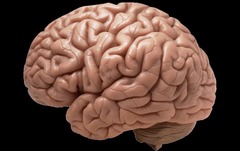
What is the role of the brain in generating consciousness?
Consciousness emerges from complex neural circuits, with greater complexity leading to higher degrees of consciousness.
What is the significance of neural synchronization in consciousness?
It is crucial for the exchange of information across brain regions that generates awareness.
What are some examples of unconscious influences on decision making?
Advertising techniques that exploit heuristics and the mere-exposure effect are examples of unconscious influences.
What is attention?
A moment of awareness, but without assumptions of consciousness.
How is attention different from consciousness?
Attention does not necessarily require consciousness.
Limited capacity
We can’t pay attention to everything
What is sustained attention?
The ability to maintain focus over time, such as TSA workers looking for suspicious items.
What is divided attention?
Paying attention to multiple sources of information at once or switching between them.
What is selective attention?
Focusing on certain information while intentionally blocking out other information.
What is the Cocktail Party Effect?
The phenomenon where important stimuli, like hearing your name, capture your attention in a noisy environment.
What is dichotic listening?
A technique where two messages are presented simultaneously to each ear.
What can people typically report from an unattended message in dichotic listening?
They can usually identify the gender of the voice (or other physical characteristics) but not the content of the message.
What is multitasking?
Working on more than one task at a time, which is often difficult.
What is task switching?
The act of alternating attention between different tasks, often mistaken for multitasking.
What is inattentional blindness?
The failure to notice unexpected objects or events when attention is focused elsewhere.
What is change blindness?
The failure to notice changes in a visual scene, often due to focused attention.
What brain region is involved in processing sensory information and attention?
The posterior parietal cortex.
What is hemispatial neglect (Contralateral Neglect)?
Loss of attention to one side of the body or space, often due to damage in the right hemisphere, specifically the posterior parietal cortex. Often seen following a stroke. and patients might not be aware of it.

What is EEG Alpha Activity?
The dominant frequency band in human EEG, prominent at rest and during meditation, is often the largest over the parietal cortex. 8-12Hz. May play a role in both selection and suppression of attention. Kind of like a gating function

What does alpha modulation indicate?
It reflects how attention is directed towards or away from certain stimuli.
Event related desynchronization
Decrease in alpha amplitude. Related to outward attention (and sensory processing)
Event related synchronization
Increase in alpha amplitude. Related to inward attention (and sensory suppression)
What is attentional control?
The ability to actively select and focus attention on relevant stimuli.
What are executive functions?
Cognitive abilities linked to the control and regulation of thoughts and behaviors.
What are the three components of attention studied in the Attention Network Task (ANT)?
Alerting, Orienting, and Executive Attention.

What triggers alerting in attention?
An unexpected external stimulus that increases arousal.
What is the role of the locus coeruleus in attention?
It increases brain arousal by releasing norepinephrine throughout the brain.

What is orienting in the context of attention?
Redirecting or shifting attention to stimuli in the environment.
What brain structures are involved in orienting attention?
The superior and inferior colliculi in the midbrain.
What is executive attention responsible for?
Choosing an attentional focus to achieve a specific goal.
Which brain areas are involved in executive attention?
The prefrontal cortex, posterior parietal cortex, anterior cingulate cortex, and striatum.
Default Mode Network
a number of brain areas that are active while you're not processing information from the external environment.
Areas involved in Default Mode Network
These brain regions are all medially located (i.e., toward the inside). They involve areas of medial frontal cortex, medial temporal cortex (including the hippocampus), and medial parietal cortex.