Y25_Tiếng anh_Chapter 2: The integumentary system
 Studied by 0 people
 Call Kai
 Learn
Learn Practice Test
 Spaced Repetition
 Match
Match Flashcards
 Knowt Play
1/49

There's no tags or description
Looks like no tags are added yet.
Name | Mastery | Learn | Test | Matching | Spaced |
|---|
No study sessions yet.
50 Terms
Integument → Integumentary (adj)
Ex: The integumentary system (Hệ da)
(n): the natural outer covering of an organism or body part.
Cutaneous
(adj): related to skin
Do “The integumentary system” có nghĩa bao quát hơn (dùng để chỉ cả hạ bì, lỗ chân lông, nang tóc, móng,…). Còn “contanous” chủ yếu nói về biểu bì và trung bì.
Tại sao lại dùng “The integumentary system” để chỉ hệ da thay vì “The cutaneous system”?
Appendages
Ex: Hair and nails are appendages of the skin.
(n): bộ phận phụ
Abrasion
Ex: The patient had a minor abrasion on the knee after the fall.
(n): vết trầy xước
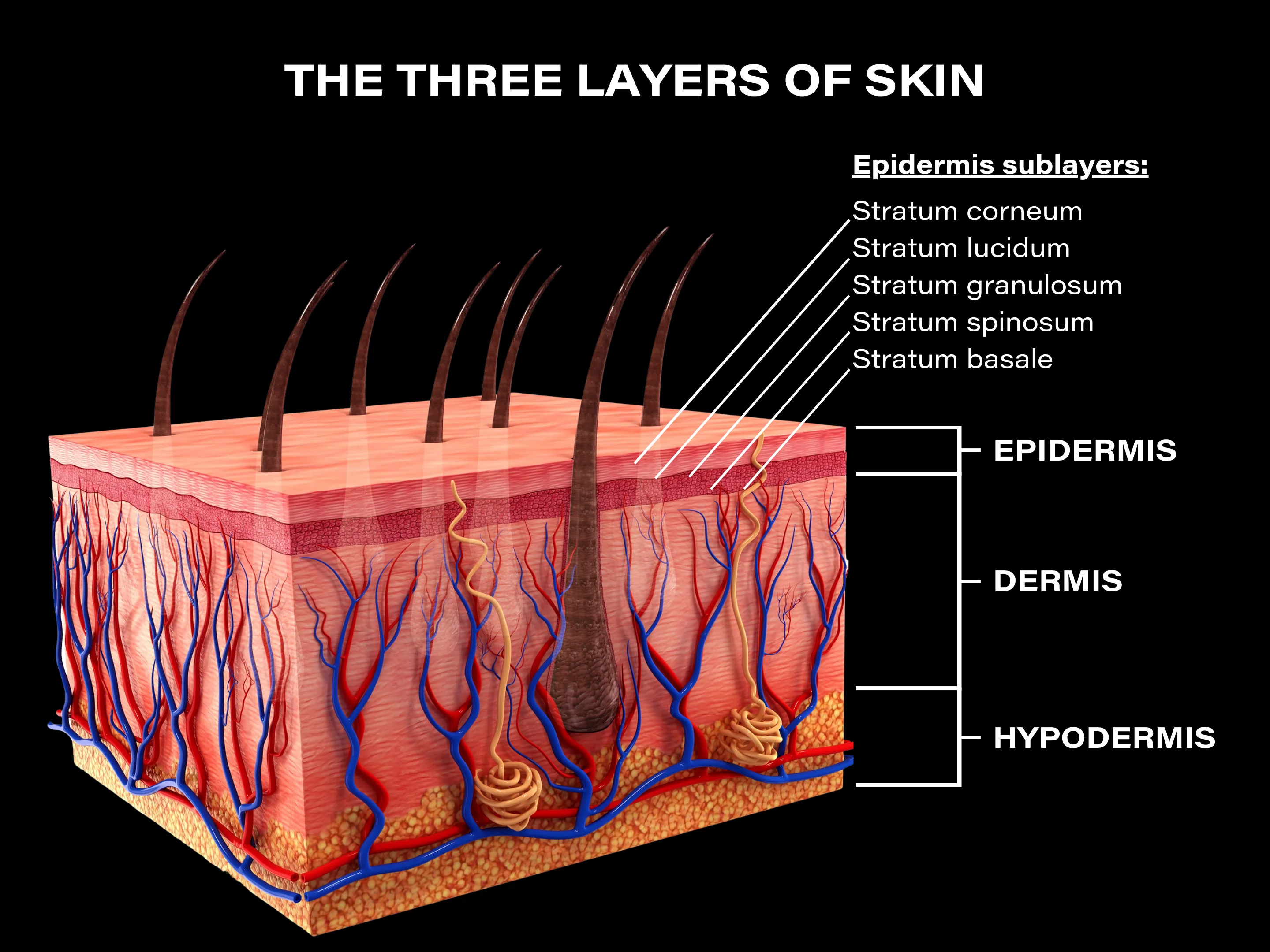
Epidermis → Dermis → Hypodermis
(n): Biểu bì → Trung bì → Hạ bì
Epithelium → Epithelial (adj)
(n): Biểu mô (phần mô ngăn cách giữa cơ quan với môi trường)
Keratinocyte → Keratinizaion (n)
(n): TB sừng → Quá trình sừng hóa
Melanocyte
(n): TB tiết melanin
Langerhans cell
(n): TB Langerhans (giúp trình diện kháng nguyên)
Sebaceous gland
(n): Tuyến bã nhờn
Collagen: protein gives skin strength and elasticity.
Elastin: A protein that allows skin and tissues to stretch.
Reticular fibers: provide structural support in the skin.
Công dụng của collagen, elastin và reticular fibers?
Subcutaneous
(adj): Dưới da
![<p><span style="font-family: Calibri, sans-serif;">Follicle [Count] → Follicular (adj)</span></p>](https://knowt-user-attachments.s3.amazonaws.com/a5be9000-7c0f-425d-9e0e-59a819cc3a55.png)
Follicle [Count] → Follicular (adj)
(n): Nan lông, nang
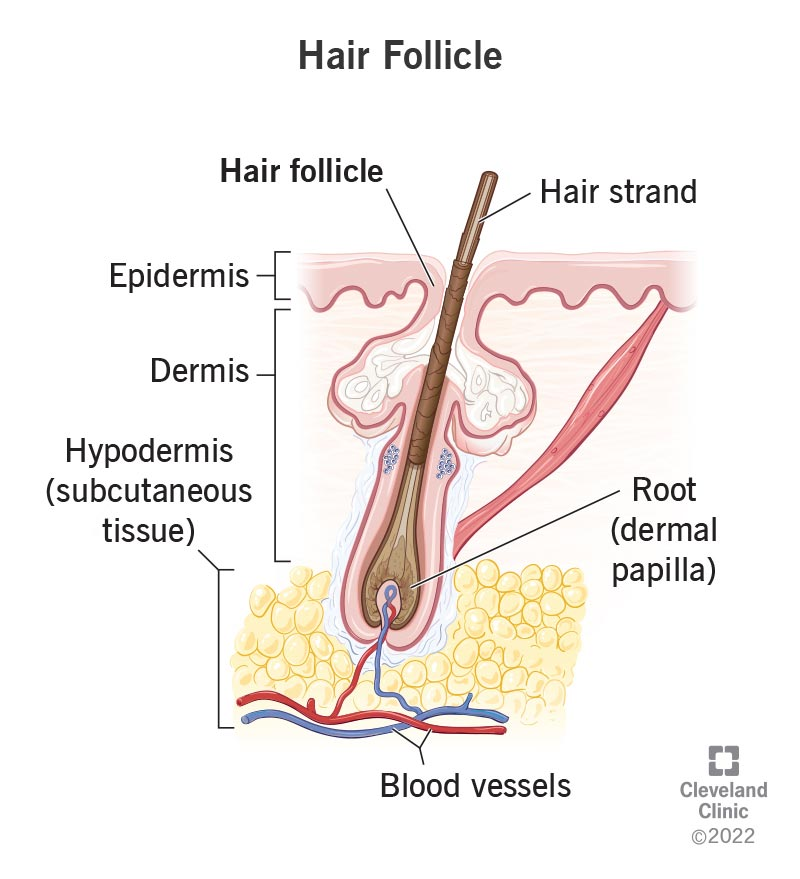
Papilla (singular) → Papillae (plural)
(n): chân (tóc)
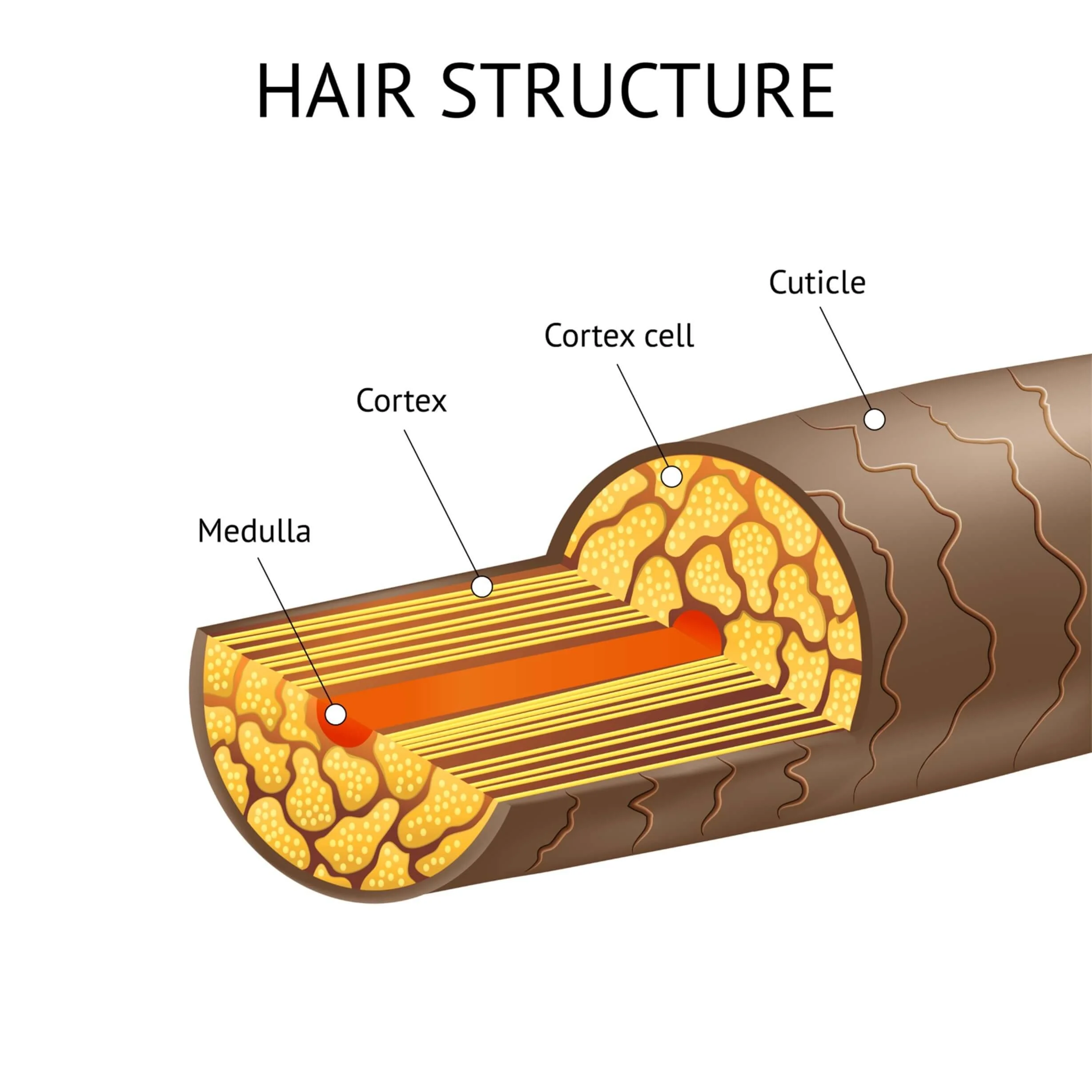
Cortex (singular) → Cortices (plural) → Cortical (adj): thuộc vỏ
(n): vỏ
![<p>Cuticle [Count] → Cuticular (adj)</p>](https://knowt-user-attachments.s3.amazonaws.com/c879c83b-acf6-4425-8a21-7432343c8bdd.png)
Cuticle [Count] → Cuticular (adj)
(n): lớp biểu bì tóc
![<p>Medulla [Singular] → Medullae [Plural] → Medullary (adj) </p>](https://knowt-user-attachments.s3.amazonaws.com/7fb7aedb-ab0d-49d8-b6bf-90194385357c.png)
Medulla [Singular] → Medullae [Plural] → Medullary (adj)
(n): Tủy tóc
Shaft
Ex: The shaft of the hair (= the hair shaft) extends above the skin.
(n): Thân tóc
![<p>Matrix [Singular] → Matrices [Plural]</p>](https://knowt-user-attachments.s3.amazonaws.com/31ca2bc9-004d-4343-a02b-b9d829c465ce.png)
Matrix [Singular] → Matrices [Plural]
(n): Nền móng
![<p><span>Lunula [Singular] → Lunulae [Plural]</span></p>](https://knowt-user-attachments.s3.amazonaws.com/873c46db-4319-4a2b-bff9-7bc3d90ea278.png)
Lunula [Singular] → Lunulae [Plural]
(n): Bán nguyệt móng
Sebum
(n): Bã nhờn
Sweat gland = sudoriferous gland
(n): tuyến mồ hôi
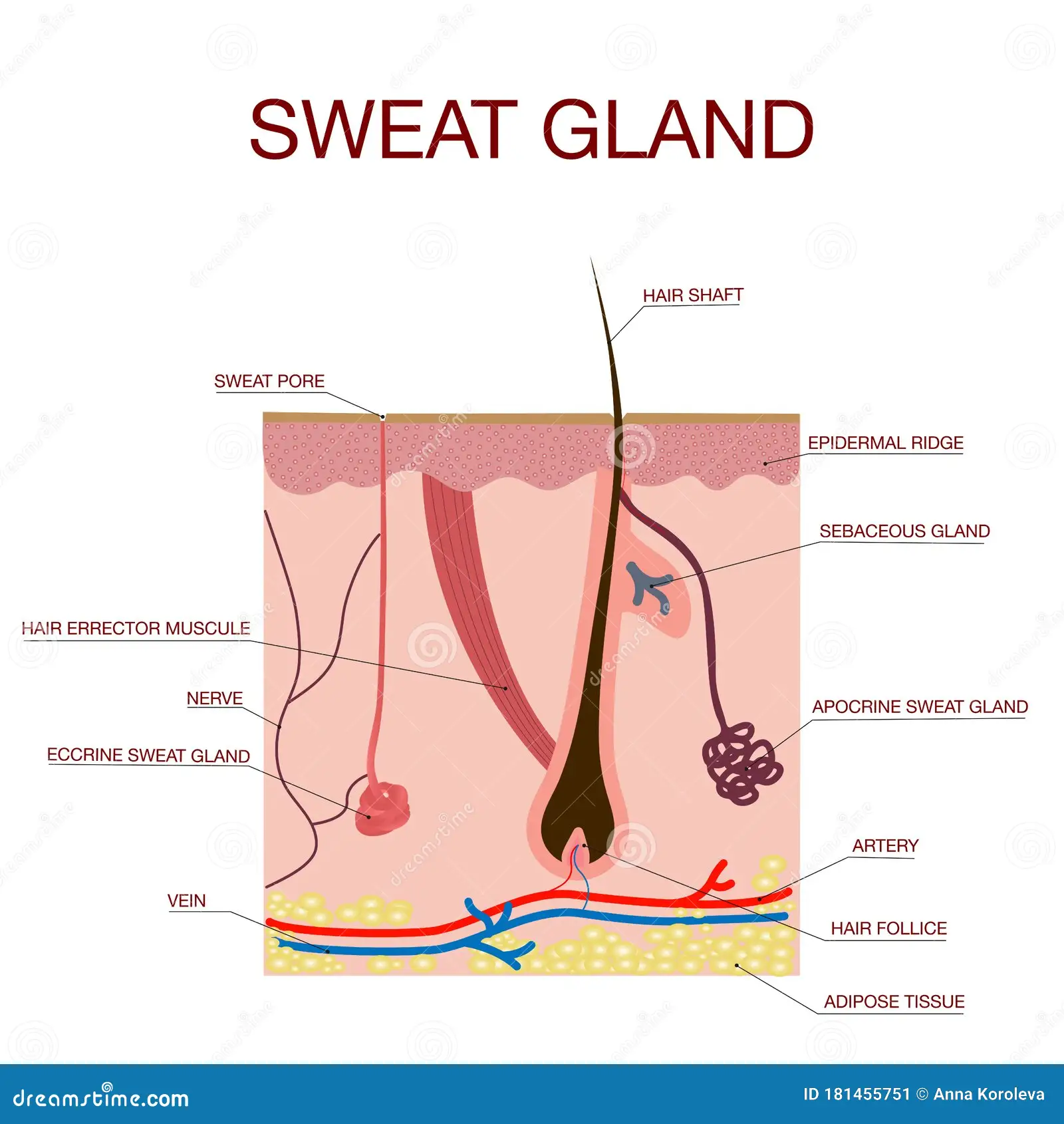
Eccrine gland
(n): Tuyến mồ hôi toàn thân
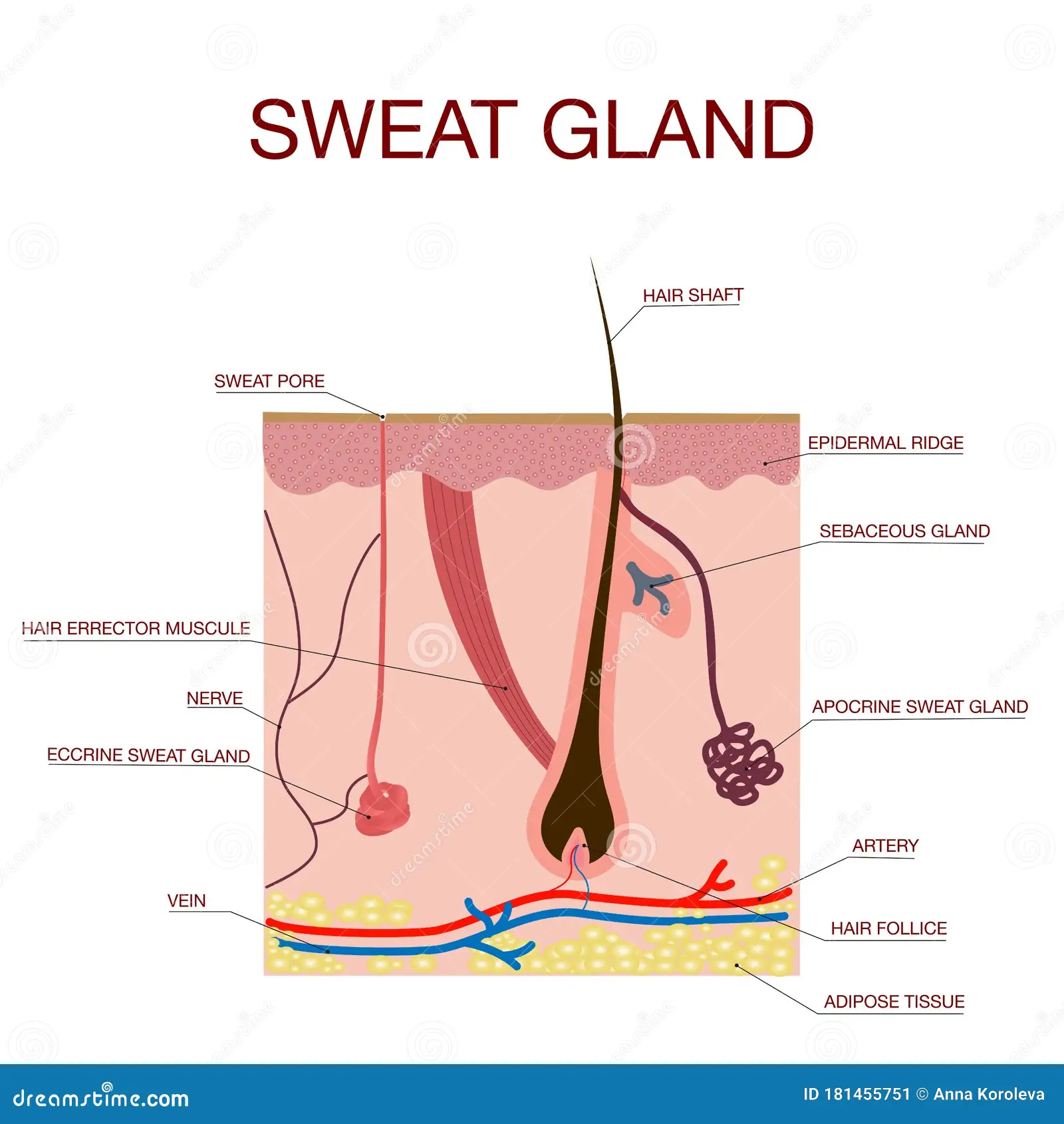
Apocrine gland
(n): Tuyến mồ hôi đầu hủy
Eccrine gland: tiết mồ hôi (chủ yếu là nước, chất điện giải, một số chất bài tiết), xuất hiện trên toàn bộ bề mặt cơ thể (đặc biệt là lòng bàn tay/chân).
Apocrine gland: tiết mồ hôi (có chất béo, protein) vào lông, tóc, xuất hiện ở nách, vùng kín.
Sự khác nhau giữa “Eccrine gland” và “Apocrine gland”?
Electrolyte → Electrolytic (adj)
(n): chất điện giải
Body odor → Odorous (adj)
(n): the unpleasant smell caused by bacteria breaking down sweat
Infection → Infect (v): gây nhiễm trùng → Infectious (adj) → Infective (adj)
(n): sự nhiễm trùng
Difference between “infective” and “infectious”?
Infective: Chủ yếu nói đến khả năng nhiễm trùng.
Infectious: Chủ yếu nói đến sự truyền nhiễm của virus, bệnh, vi khuẩn,…
puberty
(n): Tuổi dậy thì
Herpes
(n): a viral infection causing blisters, especially around the mouth or genitals. → Mụn rộp
remission
(n): a temporary reduction or disappearance of the signs and symptoms of a disease. → Thuyên giảm
ringworm
(n): a contagious fungal infection of the skin presenting in ring-shaped patches. → Hắc lào
Infectious = Contagious = Communicable
(adj): lây/truyền nhiễm → 2 synonyms
dandruff
(n): gàu
melanoma
(n): u hắc tố ác tính
psoriasis
(n): a chronic autoimmune condition causing rapid skin cell production. → vảy nến
lesion
(n)_[Count]: tổn thương
erythema
(n): redness of the skin caused by increased blood flow. → ban đỏ
fissure
(n): nứt da
excoriation = abrasion
(n)_[Count]: trầy xước. → 2 synonyms
ulcer
(n)_[Count]: an open sore on the skin or mucous membrane. → Vết loét
albinism
(n): bạch tạng
Vitiligo
(n): bạch biến
Congenital = Innate = Inborn
(adj): Bẩm sinh
Cold sores
(n): small blisters around the mouth caused by herpes simplex virus. → Mụn rộp môi
Crust
(n)_[Count]: a hard outer layer formed on the skin after a wound or infection dries.
![<p>(n)_[Count]: a hard outer layer formed on the skin after a wound or infection dries.</p>](https://knowt-user-attachments.s3.amazonaws.com/e6661e01-c7d8-4560-af8c-31b54b0cc17c.png)
Scaly rashes
(n): skin eruptions (phát ban) with dry, flaky, and rough patches.
Furuncle
(n): Nhọt