AP Psych Unit 0
 Call Kai
 Learn
Learn Practice Test
 Spaced Repetition
 Match
Match Flashcards
 Knowt Play
1/63

There's no tags or description
Looks like no tags are added yet.
Name | Mastery | Learn | Test | Matching | Spaced | Call with Kai | Chat |
|---|
No analytics yet
Send a link to your students to track their progress
64 Terms
Perspectives in psych
different ways of understanding and explaining human behavior and mental processes
psychodynamic perspective
focuses on unconcious drives, conflicts, and childhood experiences and how they shape behavior
behavioral perspective
focuses on observable behaviors, interactions w the environment, how they’re learned, and the effect of those behavior’s direct consequences
humanistic perspective
focuses on personal growth, self-actualization, and free will
biological perspective
focuses on physiological/anatomical bases of behavior in humans
evolutionary perspective
focuses on how behaviors/mental processes serve as adaptations for survival and reproduction
sociocultural perspective
focuses on how social norms + culural values influence behavior
biopsychosocial perspective
focuses on combining biological, psychological, and social factors to provide a comprehensive understanding of human behavior
mental processes
thinking/everything happening mentally
confirmation bias
tendencry to interpret information in a way that confirms what is already believed
hinsight bias
tendency of people to believe they knew something would happen even if they didn’t predict it beforehand
overconfidence
tendency of people to have too much confidence in their own judgement/abilities
cognitive biases
tendencies that can lead people to distort their thinking and can lead to incorrect conclusions
scientific method
systematic approach to study human behavior and metal processes (in psych)
hypothesis
specific, testable prediction or educated guess about the relationship between the variables/outcomes of the study
falsifiable
able to be proven wrong
peer review
a process in research articleswhere they are evaluated by experts in the field before they are published
replication
repeating/reproducing research, determines reliability
reliability
consistency of results with each other
validity
accurately measures what its trying to
APA
American Psychology Association
Research design
broad framework for how an experiment/study should proceed
research methods
specific techniques used to do studies, tool/methods to gather information
quantitative data
numbers data
qualitative data
non-number data, e.g. smell
likert scale
a measurement tool used in psych surveys to quantify people’s attitudes, perceptions, and opinions. (strongly agree → strongly disagree scale)
structured interviews
predetermined questions are asked of everyone in the same order/manner. standardizes interviews to decrease bias
survey technique
research method in psych used to collect information from participants
wording effect
subtle changes in the wording/phrasing of a question that can influence people’s perceptions/opinions of the question
social desirability bias
tendency of individuals to answer questions in a manner that is viewed favorably by others/conforms to social norms
naturalistic observation
research method in psych where researchers observe and record behavior in real world settings without manipulating variables
case study
research method in psych that involves an in depth examination of a single individual, group, or phenomenon
third variable problem
possibility of a 3rd, unmeasured, variable influencing the relationship between variables
scatterplot
visual representation used in correlational research to display the relationship between 2 variables
correlational coefficient (r )
statistical measurement used in correlational research to quantify tthe strength + direction of the relationship between the two variables
experimental method
used to establish a causational relationship between two variables
confounding variables
something unaccounted for that could influence the result of a measurement
operational definition
how the researcher manipulates/measures a variable, outlines exact procedures/operations used to measure/quantify abstract concepts/constructs, ensures clarity/consistency
experimental group
receives the IV
control group
not exposed to IV
placebo condition
administering a placebo to 1 group (usually the control)
placebo effect
when one’s condition improves simply because they believe they are receiving treatment (even if they are not)
random assignment
ensures experiment is not biased, ensures we can claim causation
experimenter bias
researcher’s expectations/beliefs influencing results
single-blind study
participants are blind to which group (control/lvl of IV) they are in
double-blind study
participants and researchers are blind to who is in which group (control/lvl of IV)
sample
subset of individuals or cases selected from a larger population
representative sample
sample accurately reflects diversity of population
convenience sampling
selecting based on availability/accessibility
random sample
self-explanatory (ensures we can generalize to population)
sample bias
occurs w unrepresentative sample, less generalizable
generalizability
extent to which findings can be generalized to a larger population
statistics
tool use to convert data into information
descriptive statistics
summarize + describe data set
inferential statistics
use data from sample to extrapolate and generalize to population
measures of central tendency
self-explanatory; mean, median, and mode
range
highest point - lowest point
normal curve/bell curve
normal distribution; symmetrical, unimodal, rougly follows empirical rule (we dont care about the last part though)
regression to the mean
extreme scores tend to get closer to average when measured again and again
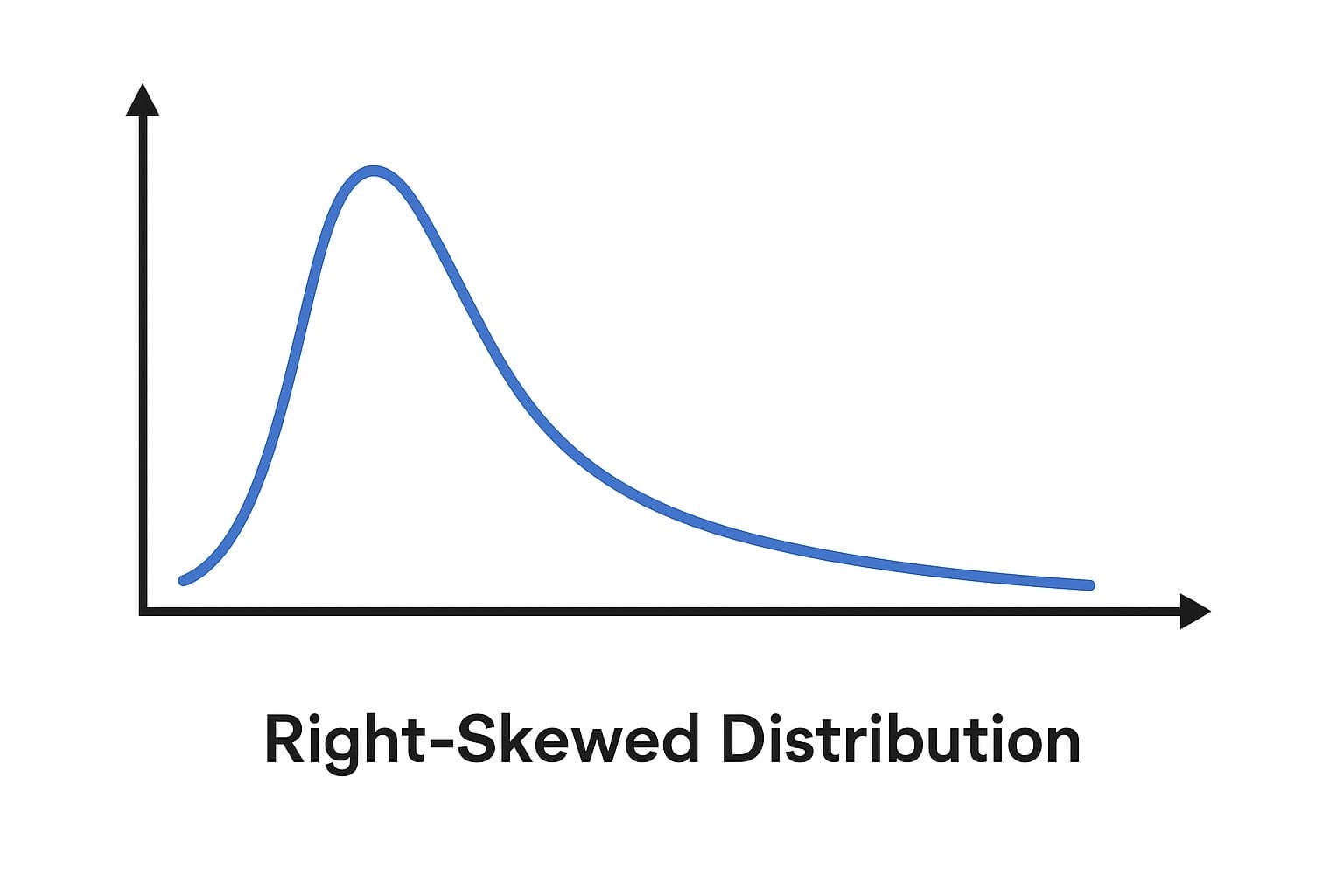
positive skew
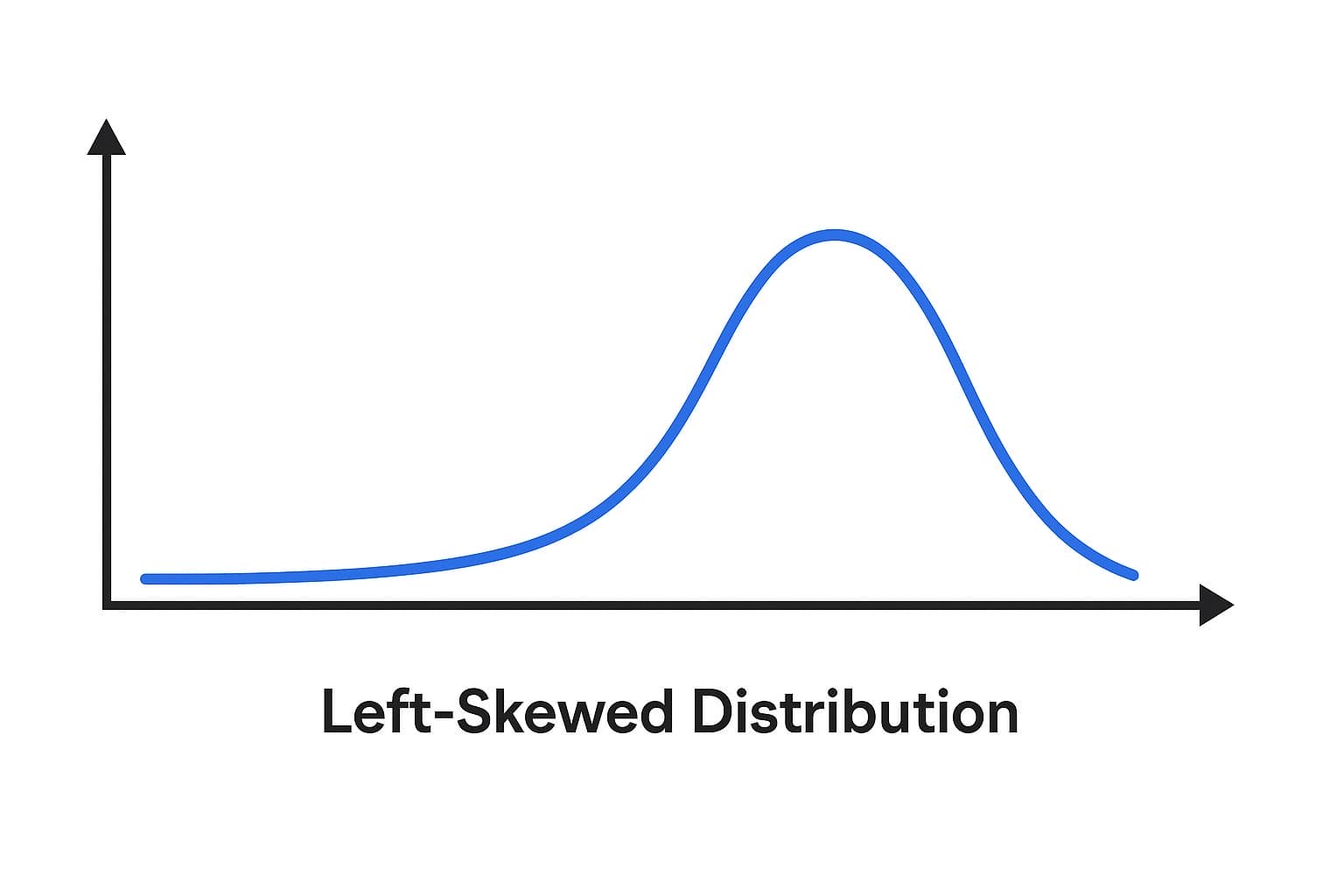
negative skew
standard deviation
how far from the mean the data points are
percentile rank
percent of data equal to and less that a point
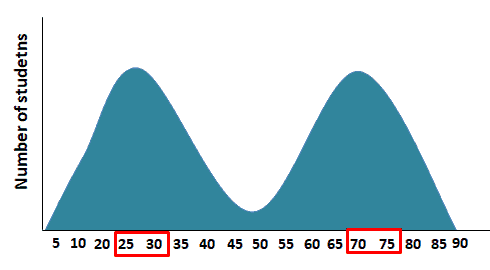
bimodal distribution
two peaks/high points on graph