BIOL 130 Chapter 4 - Nutrition
 Call Kai
 Learn
Learn Practice Test
 Spaced Repetition
 Match
Match Flashcards
 Knowt Play
1/21

There's no tags or description
Looks like no tags are added yet.
Name | Mastery | Learn | Test | Matching | Spaced | Call with Kai | Chat |
|---|
No analytics yet
Send a link to your students to track their progress
22 Terms
Nutrients
substances the body needs for energy, building materials, and control of body processes.
What are the six major classes of nutrients? (secret 7th one)
Carbohydrates, proteins, lipids, water, vitamins, minerals, (fiber)
Cats - Carbs Prefer - Proteins Fresh - Fats (lipids) Veggies - Vitamins, Water - water, and Milk - minerals
Essential nutrients
Cannot be synthesized by the human body, at least not in sufficient amounts for normal functioning, so these nutrients must be obtained from food.
i.e. tryptophan is an essential AA.
Nonessential nutrients
can be synthesized in the body in sufficient quantities for normal functioning.
i.e. lysine is not an essential AA and can be synthesized by humans.
What are carbohydrates?
This nutrient mainly from grains, fruits, and vegetables. used by the body for energy. Ingestible ones are fiber.
One gram of this provides 4 calories of energy.
What are proteins?
organic compounds made up of amino acids.
Meat and fish are major sources . There are plant sources as well, like soybeans and other legumes.
One gram of this provides 4 calories of energy.
Functions of proteins
Proteins in food are broken down during digestion to provide amino acids needed for protein synthesis.
Proteins in the human body are the basis of many body structures, including muscles and skin built from AA’s by condensation reactions.
Proteins also function as enzymes that catalyze biochemical reactions as hormones that regulate body functions in other ways, and as antibodies that help fight pathogens.
Any AA’s not needed for these purposes are excreted in urine, converted to glucose for energy, or stored as fat.

What are lipids?
commonly called fats, are organic compounds made up mainly of fatty acids. Fats in foods, as well as fats in the human body, are typically triglycerides.
One gram of this provides 9 calories of energy.
Functions of lipids
Fats provide the body with energy and serve other vital functions, including helping to make and maintain cell membranes and functioning as hormones.
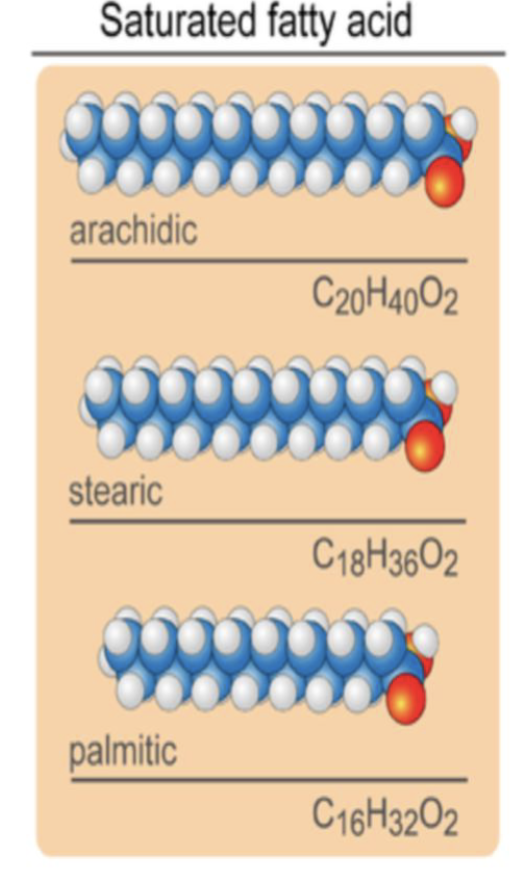
Saturated fats
Fats are classified depending on their type of bonds in their fatty acids.
This type of fat, carbon atoms share only single bonds, so each carbon atom is bonded to as many hydrogen atoms as possible.
This type of fat tend to be solids at room temperature.
Unsaturated fats
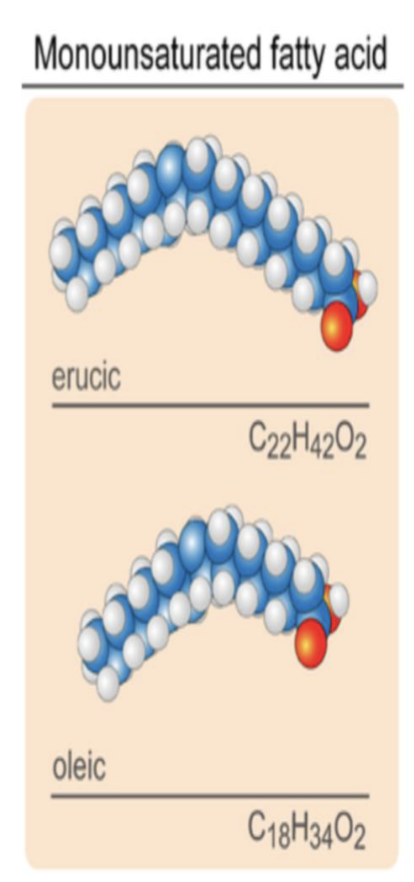
This type of fat, at least one pair of carbon atoms share a double bond, so these carbon atoms are not bonded to as many hydrogen atoms as possible.
tend to be liquids at room temperature. in the diet come mainly from certain fish such as salmon and from plant foods such as seeds and nuts.
Monounsaturated vs polyunsaturated
Monounsaturated fats are unsaturated fats with just one double bond.
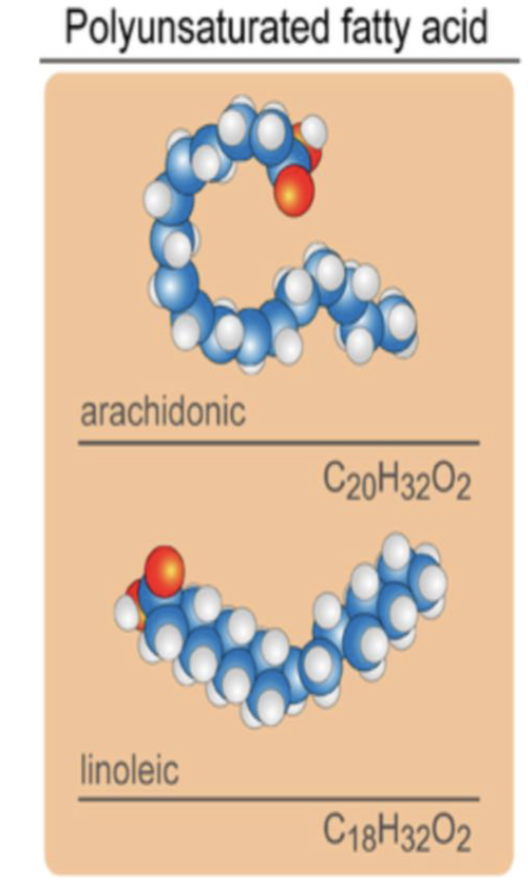
Polyunsaturated fats with multiple double bonds.
Are fatty acids essential?
Most fatty acids are NOT essential. The body can make them as needed generally from other fatty acids. There are only two exceptions.
What are the two fatty acids that are essential?
Omega-3 and omega-6 fatty acids.
The most commonly used cooking oils in processed food are rich in omega-6 fatty acids, so most people get plenty of these fatty acids in their diet.
Omega-3 fatty acids are not as prevalent in foods. Good food sources of omega-3 fatty acids include oily fish such as salmon and plant sources like walnuts and flax seeds.
What are trans fats?
This type of fat contains types of bonds that are rare in nature.
Typically created in an industrial process called partial hydrogenation. Used in variety of processed foods because they tend to have a longer shelf life without going rancid. Known to be detrimental to human health in any quantity.
Vitamins
organic compounds that generally function as coenzymes.
A coenzyme is a helper molecule that is required for a protein enzyme to work.
In this capacity, it plays many roles in good health, ranging from maintaining normal vision to helping the blood clot (vitamin k)

Minerals
An inorganic chemical elements that are necessary for normal body processes and good health. because they are inorganic and not synthesized biologically, all are considered essential nutrients. ie calcium is necessary for things like bone strength and nerve function.
What are some benefits of healthy eating?
Reduces risk of obesity, cardiovascular disease, type 2 diabetes, osteoporosis, and cancer.
Extends length of life, mental health benefits.
Reduces depression, anxiety, stall or reduce the risk of dementia and have a positive effect on memory.
Nutrient balance and nutrient density
Nutrient balance: eating a wide range of foods, especially fruits and vegetables, is the basis of healthy eating.
Nutrient density: Kale has about 20times the nutrient density for vitamin K, as iceberg lettuce for the same serving. Consider eating food with volume and nutrient dense.
White bread v whole wheat bread
White bread 1 slice:
79 cals, 1g of fat, 15 carb, 0.8 dietary fiber, 2.7g protein
Whole wheat bread 1 slice:
69 cal, 0.9 of fat, 12 g carb, 9g of dietary fiber, 3.6 protein
Eating whole wheat bread difference:
fewer calories, less fat, fewer carbs, a lot more fiber, more protein
Why are refined foods bad for you?
Refining typically removes many nutrients and most fiber. White bread is typically fortified by returning many of the nutrients artificially. Almost any refined foods suffers from the same issue (ie pasta, white rice, donuts)
The importance of my plate
Relative proportions of different types of foods you should eat at each meal (or cumulatively by the end of the day). The foods are selected from five different food groups: vegetables, fruits, whole grains, proteins, and dairy.
About half of the food on your plate should be vegetables and fruits, the other half should be whole grains and proteins. A serving of a dairy product should also accompany each meal.
