APWH Unit 7: Global Conflict
 Call Kai
 Learn
Learn Practice Test
 Spaced Repetition
 Match
Match Flashcards
1/84

There's no tags or description
Looks like no tags are added yet.
Name | Mastery | Learn | Test | Matching | Spaced | Call with Kai | Chat |
|---|
No analytics yet
Send a link to your students to track their progress
85 Terms
Collapse of Ottoman Empire
This event occurred in 1918 as a result of internal factors, such as civil unrest and external factors, mainly the empire's defeat during World War I and its occupation and partitioning by the victors. After a war of independence, Turkey emerged as a successor state in 1923.
Chinese Revolution
Long revolution in the period 1912-1949 that began with the overthrowing of the Chinese imperial system and ended with the triumph of the Communist Party under the leadership of Mao Zedong.
Russian Revolution
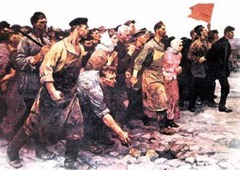
The revolution against the Tsarist government by the Bolsheviks which led to the abdication of Nicholas II and the creation of a provisional government in March 1917.
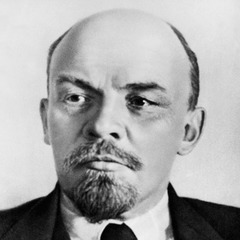
Vladimir Lenin
Leader of the Bolshevik (later Communist) Party. He led the Bolsheviks to victory during the Russian Revolution and the civil war that followed.
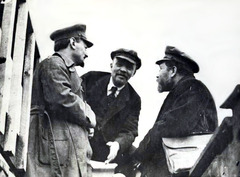
Bolsheviks
A party of revolutionary Marxists, led by Vladimir Lenin, who seized power in Russia in 1917 and overthrew the tsardom.
Mexican Revolution
A response to unequal distribution of wealth and Porfirio Diaz's dictatorial rule; leaders included Emiliano Zapata and Pancho Villa; people wanted land reform, democratic government, and less foreign influence.
Great Depression
An economic crisis that begin with the stock market crash in 1929 and continued through the 1930s. Left many jobless, homeless, and in poverty. Governments began to have a more active role in economics (Keynesian economics, New Deal, Five-Year Plans)
Result of Great Depression
Governments became more active in the economy.

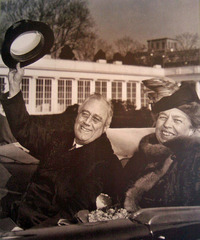
New Deal
A series of reforms enacted by the Franklin Roosevelt administration between 1933 and 1942 with the goal of ending the Great Depression.
Fascism
A political system headed by a dictator that calls for extreme nationalism, racism, and no tolerance of opposition.
Corporatism
A political system in which interest groups become an institutionalized part of the state or dominant political party; public policy is typically the result of negotiations among representatives of the state and key interest groups. Associated with fascism in Italy.
Five Year Plan
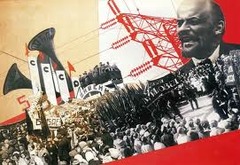
Stalin's economic policy to rebuild the Soviet economy after WWI. Stalin tried to improve heavy industry and improve farm output, but the plan resulted in famine.
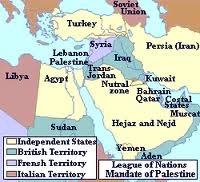
Mandate System
Allocation of former German colonies and Ottoman possessions to the victorious powers after World War I to be administered under League of Nations supervision.
Indian National Congress (INC)
Indian political party led by Jawaharlal Nehru and Mohandas Gandhi that advocated for independence from the British Raj.
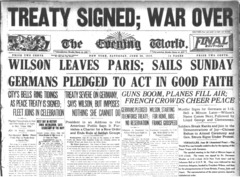
Treaty of Versailles
Treaty known for its harsh reparations towards the Germans after World War I.
Totalitarianism
A form of government in which the ruler is an absolute dictator (not restricted by a constitution, laws, or opposition).
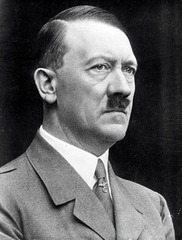
Adolf Hitler
German Nazi dictator during World War II (1889-1945); fascist; spearheaded the Holocaust.
Nazi Party
German political party led by Adolf Hitler, emphasizing nationalism, racism, and war. When Hitler became chancellor of Germany in 1933, this party became the only legal party and an instrument of Hitler's absolute rule.
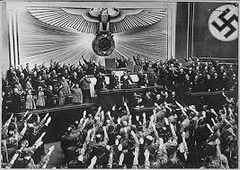
Militarism
A policy of glorifying military power and keeping a standing army always prepared for war.
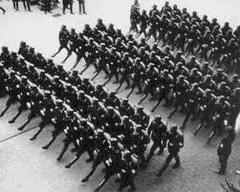
Imperialism
A policy of extending a country's power and influence through diplomacy or military force; competition contributed to WWI.
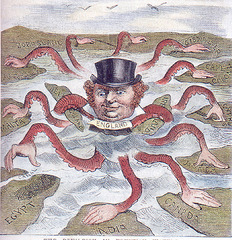
Nationalism
A strong feeling of pride in and devotion to one's country.
WWI Military Technology
machine guns, poison gas, tanks, airplanes, submarines
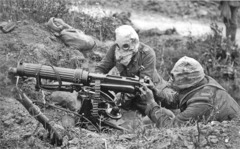
Total War
A war that involves the complete mobilization of resources and people, affecting the lives of all citizens in the warring countries, even those remote from the battlefields. Includes propaganda, art, media, and nationalism. WW1 is an example.
Communism
A theory or system of social organization based on the holding of all property in common, actual ownership being ascribed to the community as a whole or to the state.
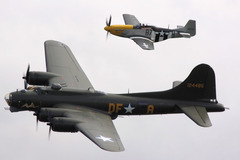
Military Technology in WWII
atomic bombs, fire-bombs
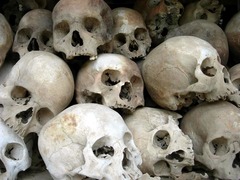
Genocide
Deliberate extermination of a racial or cultural group.
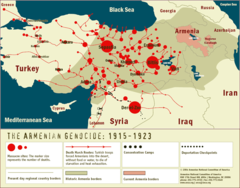
Armenian Genocide
The systematic destruction of the Armenian people and identity in the Ottoman Empire during World War I.
Cambodian Genocide
The systematic persecution and killing of Cambodians by the Khmer Rouge under the leadership of Pol Pot, who radically pushed Cambodia towards an entirely self-sufficient agrarian socialist society.
Rwandan Genocide
The killing of more than 500,000 ethnic Tutsis by rival Hutu militias in Rwanda in 1994. The conflict between the dominant Tutsis and the majority Hutus had gone on for centuries, but the suddenness and savagery of the massacres caught the United Nations off-guard. U.N. peacekeepers did not enter the country until after much of the damage had been done.
League of Nations
An international organization formed in 1920 to promote cooperation and peace among nations. Failed and was replaced by the United Nations.
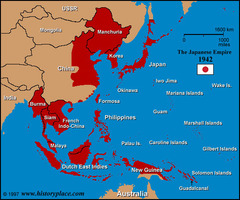
Greater East Asia Co-Prosperity Sphere
An imperialistic system founded by Japan consisting of other Asian countries during the early 20th century. Japan reduced its members to puppet nations, taking their raw materials and using them as new markets. "Asia for Asians."
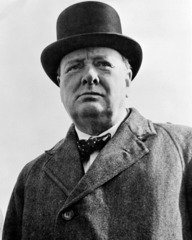
Winston Churchill
Prime Minister of Great Britain during WWII
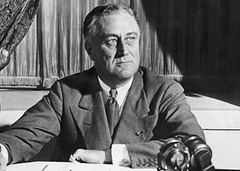
Franklin D. Roosevelt
President of the US during the Great Depression and World War II. Created the New Deal to counter the effects of the Great Depression.
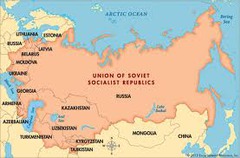
USSR
Union of Soviet Socialist Republics. Created by Lenin in 1922.
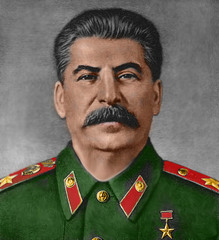
Joseph Stalin
Bolshevik revolutionary, head of the Soviet Communists after 1924, and dictator of the Soviet Union from 1928 to 1953. He led the Soviet Union with an iron fist, using Five-Year Plans to increase industrial production and terror to crush opposition.
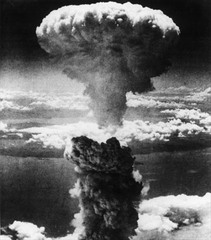
Atomic Bomb
The United States detonated two of these bombs over the Japanese cities of Hiroshima and Nagasaki on 6 and 9 August 1945, respectively. The two bombings killed between 129,000 and 226,000 people, most of whom were civilians, and remain the only use of nuclear weapons in armed conflict.
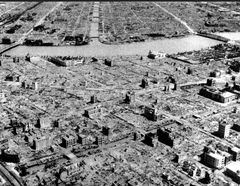
Firebombing
A bombing technique designed to damage a target, generally an urban area, through the use of fire, caused by incendiary devices, rather than from the blast effect of large bombs. The United States destroyed much of Japan in this manner.
Holocaust
A methodical plan orchestrated by Hitler to ensure German supremacy. It called for the elimination of Jews, non-conformists, homosexuals, non-Aryans, and the mentally and physically disabled. Resulted in the deaths of 6 million Jews.
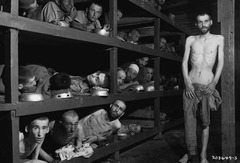
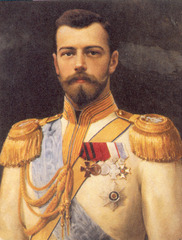
Czar Nicholas II
Russian Czar (a Romanov) during WWI; unpopular with the people; overthrown in March 1917; executed by the Bolsheviks after the November Revolution (1917).
Boxer Rebellion
1900 uprising in China aimed at ending foreign influence and imperialism in the country. A setback for Chinese development with the perception that China continued to weaken compared to Europe and Japan.
Kuomintang
The Chinese Nationalist Party, formed after the fall of the Qing Dynasty in 1912 by Sun Yat-sen.

Great Leap Forward
Mao Zedong's campaign to combine collective farms into People's Communes. It failed and resulted in the deaths of 20 million Chinese peasants.
Causes of WW1
Militarism, alliances, imperialism, nationalism, the assassination of Archduke Franz Ferdinand, conflict in the Balkans (M.A.N.I.A.C.).
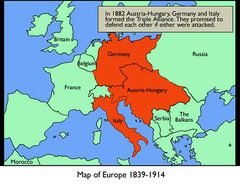
WW1 - Triple Entente (Allies)
France, Britain, Russia
WW1 - Triple Alliance (Central Powers)
Italy, Austria Hungary, Germany
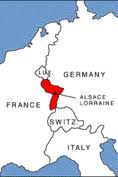
Alsace-Lorraine
An iron-rich territory France took from Germany during the Franco-Prussian war. This caused tensions between the two nations during World War 1.
Archduke Franz Ferdinand
The heir to the Austria-Hungarian throne. He was assassinated in Sarajevo by the Black Hand, a Serbian nationalist group. His assassination started World War I..
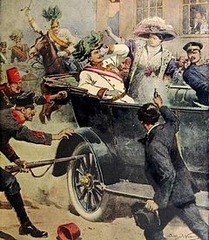
Black Hand
Serbian nationalist/terrorist group responsible for the assassination of Austrian Archduke Franz Ferdinand, which resulted in the start of World War I.
Schlieffen Plan
Germany's tactical solution for avoiding a two-front war with France and Russia. Under this plan, drawn up in 1905, France would be forced to a quick surrender by a German invasion in the north.
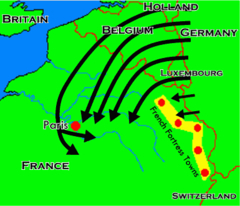
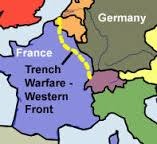
Western Front of WWI
A wartime front characterized by trench Warfare, small land gains, and a bloody stalemate. On this front, Germany fought Britain and France.
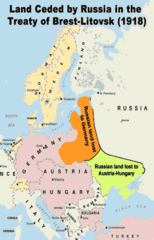
Treaty of Brest-Litovsk (1918)
A separate peace treaty signed on March 3, 1918, between the new Bolshevik government of Russia and the Central Powers; ended Russia's participation in World War I.
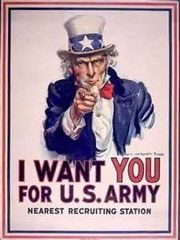
Propaganda
Ideas spread to influence public opinion for or against a cause.
Outcomes of WW1 peace deals on Germany
Loses navy, merchant marine, colonies, territories in the west (Alsace-Lorraine) and east (Poland, Czechoslovakia)
Allies occupy Rhineland (industrial center of Europe)
Allies and Wilson demand democracy
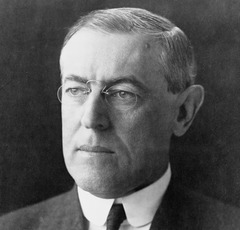
Woodrow Wilson
The 28th president of the United States, known for World War I leadership, the Treaty of Versailles, the 14 points post-war plan, and the League of Nations (but failed to win U.S. ratification).
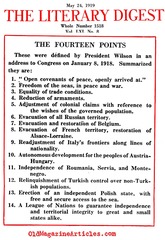
Wilson's 14 Points
A program for world peace following WW1 that included the League of Nations.
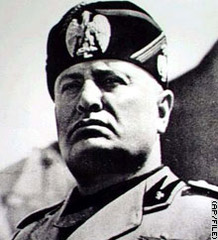
Benito Mussolini
Fascist dictator of Italy (1922-1943) who conquered Ethiopia (1935), joined Germany in the Axis pact (1936), and allied Italy with Germany in World War II. He was overthrown in 1943 when the Allies invaded Italy.
Collectives
Large farms leased from the state to groups of peasant farmers in Stalin's USSR.
Russo-Japanese War
(1904-1905) War between Russia and Japan over imperial possessions. Japan emerges victorious.
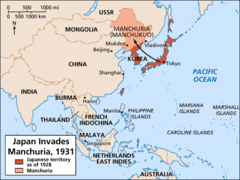
Manchukuo
Japanese puppet state established in Manchuria in 1931.
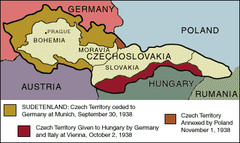
Sudetenland
Land that Germany thought was rightfully theirs due to the large German-speaking population there in Czechoslovakia during WW2.
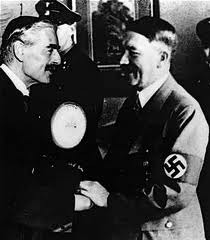
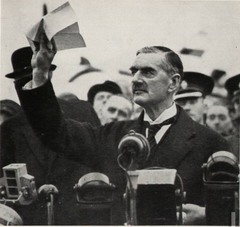
Munich Agreement
Agreement between Chamberlain (Great Britain) and Hitler that Germany would not conquer any more land.
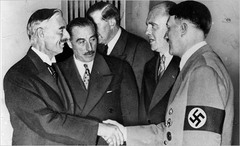
Appeasement
A policy of making concessions to an aggressor in the hopes of avoiding war. Associated with Neville Chamberlain's policy of making concessions to Adolf Hitler leading up to WW2.
Axis Powers (WWII)
Germany, Italy, Japan
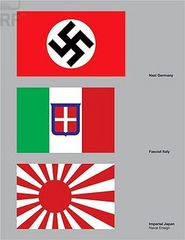
German-Soviet Nonaggression Pact
An consensus in which Germany and the Soviet Union agreed not to attack one another during WW2.
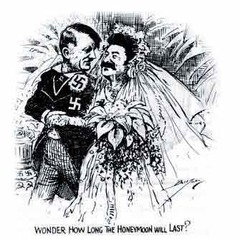
Blitzkrieg
"Lighting war"; a fast-moving warfare technique used by German forces against Poland in 1939.
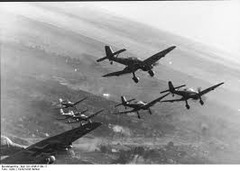
United Nations
An international organization formed after WWII to promote international peace, security, and cooperation.
World Bank
A specialized agency of the United Nations that makes loans to countries for economic development, trade promotion, and debt consolidation. Its formal name is the International Bank for Reconstruction and Development.
International Monetary Fund (IMF)
An international organization that acts as a lender of last resort, providing loans to troubled nations, and also works to promote trade through financial cooperation.
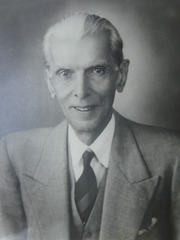
Muhammad Ali Jinnah
Indian Muslim politician who founded the state of Pakistan. A lawyer by training, he joined the All-India Muslim League in 1913. As leader of the League from the 1920s on, he negotiated with the British/INC for Muslim Political Rights.
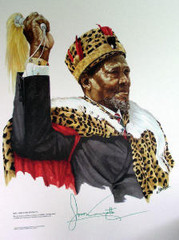
Jomo Kenyatta
A nationalist leader who fought to end oppressive laws against Africans; later became the first Prime Minister of Kenya.
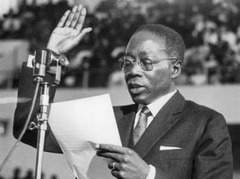
Leopold Senghor
Senegalese poet who wrote about the beauty and uniqueness of African culture; negritude movement.
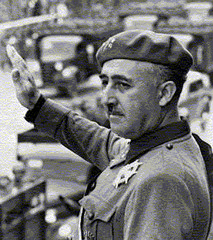
Francisco Franco
Fascist leader of the Spanish revolution, helped by Hitler and Mussolini.
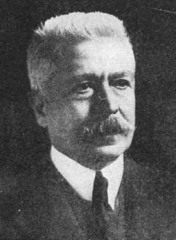
Vittorio Orlando
Prime Minister of Italy
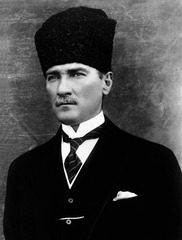
Mustafa Kemal Ataturk
A Turkish nationalist leader who became the first president of modern Turkey in the 1920s. He modernized and Westernized Turkey, including making it more secular.
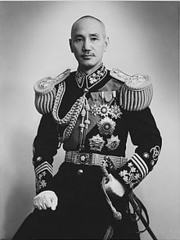
Chiang Kai-shek
General and leader of Nationalist China after 1925. Although he succeeded Sun Yat-sen as head of the Guomindang, he became a military dictator whose major goal was to crush the communist movement led by Mao Zedong.
Pancho Villa
A popular leader during the Mexican Revolution of 1910. An outlaw in his youth, he formed a cavalry army in the north of Mexico and fought for the rights of the landless in collaboration with Emiliano Zapata.
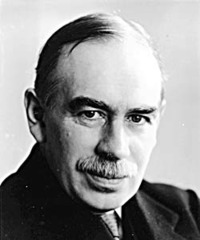
John Maynard Keynes
English economist who advocated the use of government monetary and fiscal policy to maintain full employment without inflation (1883-1946).
Neville Chamberlain
British prime minister (1937-1940) who advocated peace and a policy of appeasement. Known for the failed Munich Agreement.
David Loyd George
British Prime Minister (1916-1922)
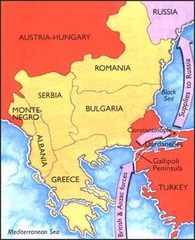
Gallipoli
A poorly planned and badly executed Allied campaign to capture a Turkish peninsula during 1915 in World War I. Resulted in heavy Allied losses.
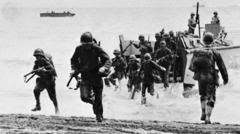
Guadalcanal
The first U.S. land victory over the Japanese, 1943.
Weimar Republic
German republic founded after the WWI and the downfall of the German Empire's monarchy.
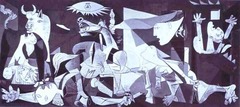
Guernica
A Spanish town full of innocent civilians that was brutally bombed to encourage fear. Picasso's most powerful anti-war painting.
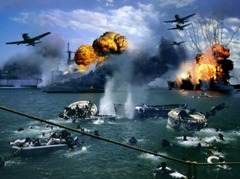
Pearl Harbor
United States military base on Hawaii that was bombed by Japan in 1941, bringing the United States into World War II.
Reichstag
The central legislative body under the Constitution of the Weimar Republic. Its main functions were legislation, including approval of the budget, and scrutiny of the Reich Government.