Onconephrology, renal cancer, renal cysts and tubulointerstitial diseases
 Call Kai
 Learn
Learn Practice Test
 Spaced Repetition
 Match
Match Flashcards
 Knowt Play
1/19

Earn XP
Description and Tags
Don't let your confidence become cystic—keep it solid and let your knowledge expand instead.
Name | Mastery | Learn | Test | Matching | Spaced | Call with Kai | Chat |
|---|
No analytics yet
Send a link to your students to track their progress
20 Terms
Immune Checkpoint Inhibitors (e.g., nivolumab, ipilimumab) are increasingly recognized to cause which type of kidney injury?
a. Obstructive uropathy from retroperitoneal fibrosis.
b. Acute tubulointerstitial nephritis.
c. Severe hypermagnesemia due to renal magnesium retention.
d. Renal artery stenosis from vascular remodeling.
Answer: b
Reference: Chapter 42, Onconephrology, Pages 1429
A 55-year-old patient on gemcitabine therapy for pancreatic cancer presents with new-onset hypertension, a dropping platelet count, and schistocytes on a peripheral blood smear. What histologic finding would a kidney biopsy likely show?
a. Extensive interstitial infiltration by B-cell lymphoma.
b. Thrombotic microangiopathy (TMA) with endothelial swelling and fibrin thrombi.
c. Amyloid deposits showing apple-green birefringence under polarized light.
d. Multiple crescents on light microscopy.
Answer: b
Reference: Chapter 42, Onconephrology, Pages 1426
Which histologic subtype accounts for 75% to 85% of all renal cell carcinoma (RCC) cases?
a. Clear cell RCC (ccRCC)
b. Papillary RCC (pRCC)
c. Chromophobe RCC (chRCC)
d. Collecting duct carcinoma
Answer: a
Reference: Chapter 41, Kidney Cancer, Page 1392
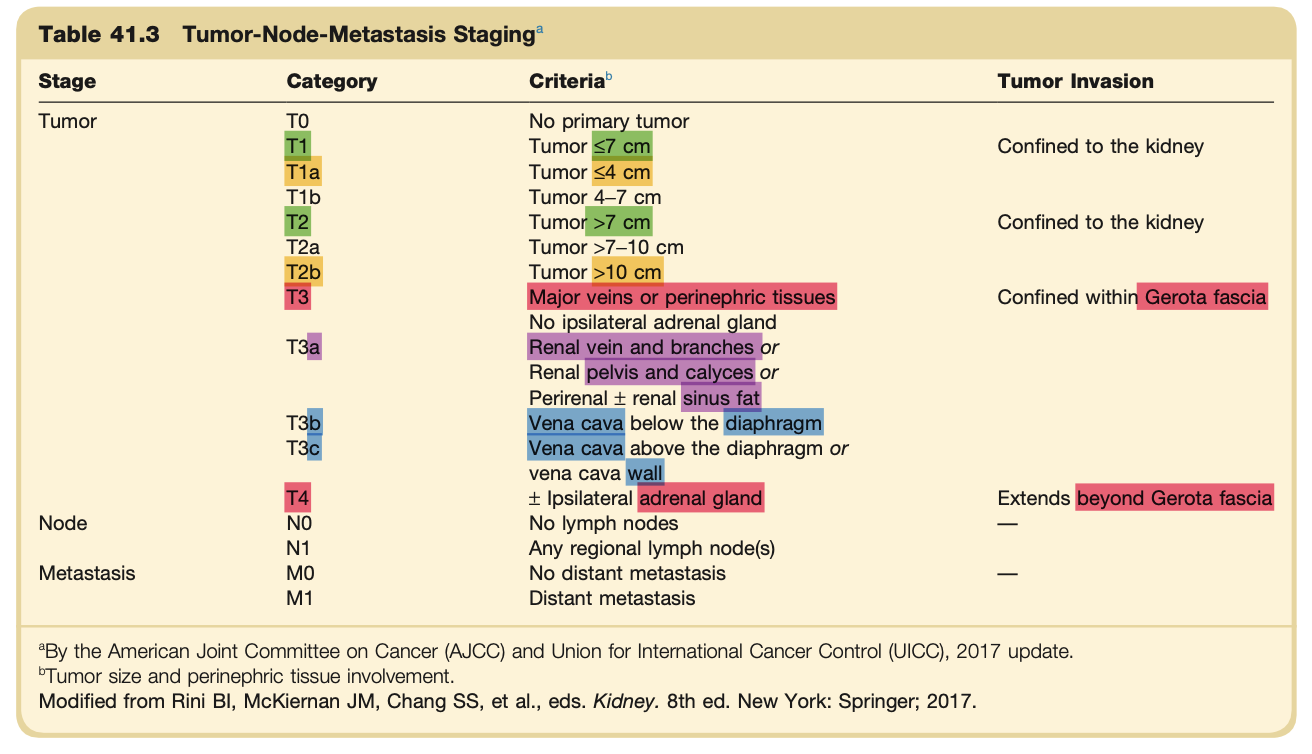
In the TNM staging system for RCC, a tumor that is 6 cm in diameter and limited strictly to the kidney is classified as:
a. T1
b. T2
c. T3
d. T4
Answer: a
Reference: Chapter 41, Kidney Cancer, Page 1399-1400
In the cellular pathogenesis of ADPKD, which intracellular second messenger is elevated and serves as a major driver of both fluid secretion and cell proliferation?
a. Calcium
b. Cyclic AMP
c. Nitric Oxide
d. Vitamin D
Answer: b
Reference: Chapter 45, Cystic Diseases, Page 1496.
Explanation: Low intracellular calcium in PKD cells leads to unregulated adenylyl cyclase activity and high cAMP, which stimulates the pathways for cyst growth
The Mayo Imaging Classification uses which parameter to stratify ADPKD patients into risk classes (A-E) to predict the rate of GFR decline?
a. The number of liver cysts on ultrasound.
b. The presence of intracranial aneurysms on MRA.
c. Height-adjusted total kidney volume (htTKV) and patient age.
d. The total number of white blood cells in the cyst fluid.
Answer: c
Reference: Chapter 45, Cystic Diseases, Page 1501.
Explanation: htTKV is a validated prognostic biomarker used to estimate the growth rate and risk of future renal failure
A 35-year-old ADPKD patient with a family history of sudden death has a new-onset severe headache. Which extrarenal manifestation must be urgently ruled out?
a. Posterior Reversible Encephalopathy Syndrome (PRES)
b. Intracranial Aneurysm (ICA).
c. Acquired Chiari Malformation.
d. Glioblastoma
Answer: b
Reference: Chapter 45, Cystic Diseases, Page 1534.e9.
Explanation: ICA is a major extrarenal complication of ADPKD, and a family history increases the risk
Medullary Sponge Kidney (MSK) is primarily characterized by which of the following?
a. Rapid progression to ESRD by age 40.
b. Large cortical cysts that compress the renal pelvis.
c. Malformation of the terminal collecting ducts with a high risk of nephrolithiasis.
d. Mutation in the PKD1 gene and liver fibrosis.
Answer: c
Reference: Chapter 45, Cystic Diseases, Page 1528 -1530.
Explanation: MSK is a benign condition affecting the medullary collecting ducts, often presenting with stones and hematuria rather than renal failure. MSK seldom progresses to ESRD
Exposure to Aristolochic Acid (found in certain Chinese herbs and Balkan endemic areas) is associated with which unique long-term risk?
a. Hypokalemia and hypomagnesemia.
b. High risk of urothelial (bladder/ureter) malignancies.
c. Nephrogenic diabetes insipidus.
d. Spontaneous closure of all simple renal cysts.
Answer: b
Reference: Chapter 35, Tubulointerstitial Diseases, Page 1218
Explanation: Aristolochic acid is a potent carcinogen; patients with this nephropathy often require bilateral nephroureterectomy if they proceed to transplant
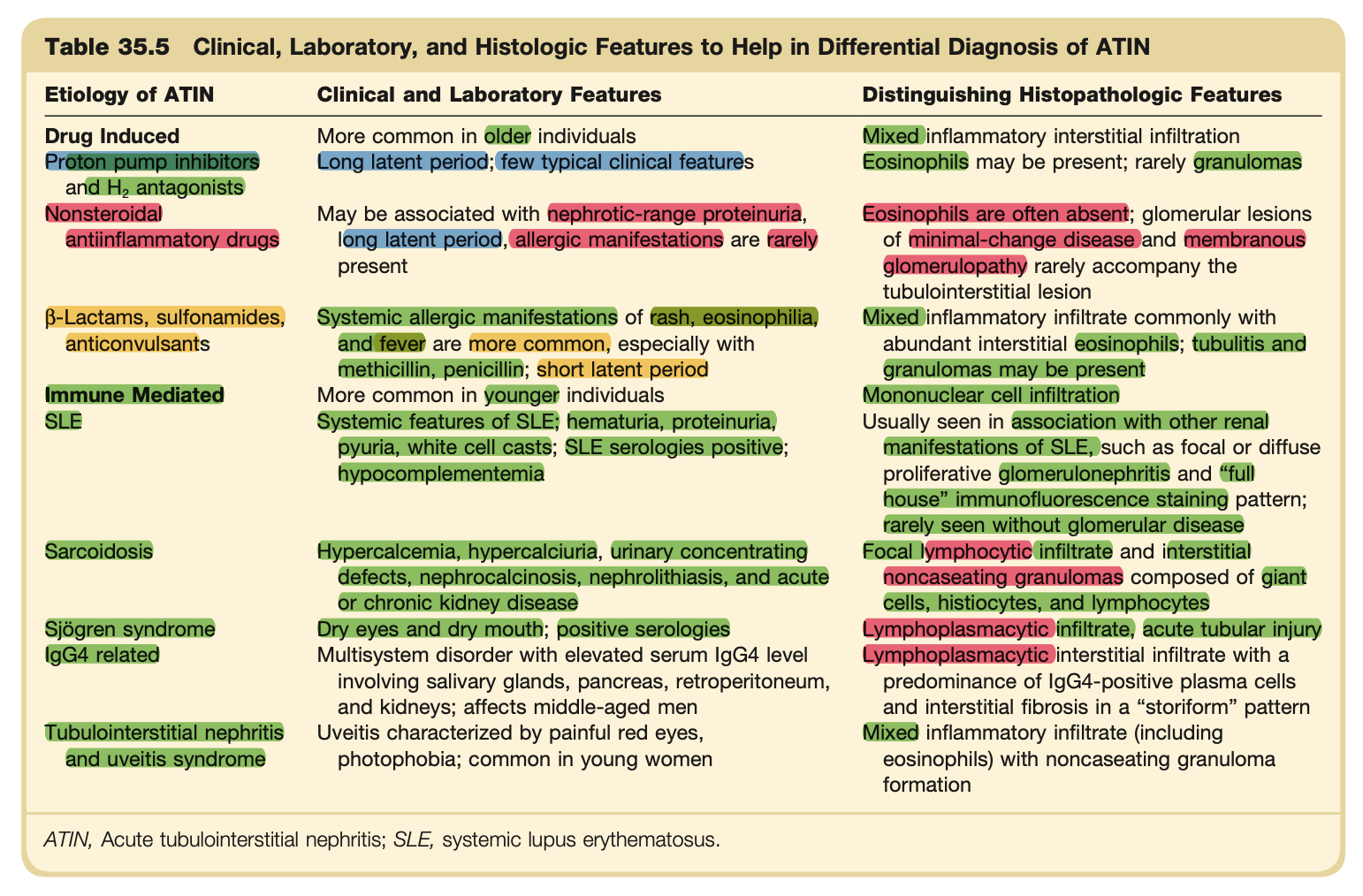
A 70-year-old patient presents with new-onset acute kidney injury and 5.5 grams of proteinuria per day. She reports self medicating an unrecalled and unsupervised daily medication for several months but deny any recent rashes, fevers, or joint pain. A kidney biopsy reveals a tubulointerstitial lesion and minimal-change disease. Which is the most likely etiology?
a. β-Lactam-induced ATIN
b. Nonsteroidal antiinflammatory drug (NSAID)-induced ATIN
c. Proton pump inhibitor
d. Systemic lupus erythematosus (SLE)
Correct Answer: b
Reference: Table 35.5, Clinical, Laboratory, and Histologic Features to Help in Differential Diagnosis of ATIN.
Explanation: This patient presents with nephrotic-range proteinuria (>3.5 g/day), a long latent period (several months), and a lack of allergic manifestations, all of which the table links to NSAID-induced ATIN (b). Furthermore, the presence of minimal-change disease on biopsy is a distinguishing histopathologic feature of NSAIDs.
A patient with metastatic colorectal cancer treated with Cetuximab. Which electrolyte disorder is associated with this drug?
a. Hyponatremia
b. Hypokalemia
c. Hypercalcemia
d. Hypomagnesemia
Answer: d
Reference: Chapter 42, Onconephrology: Kidney Disease and Cancer, Page 1423.
Explanation: Cetuximab blocks the EGFR-dependent TRPM6 channel in the distal convoluted tubule, leading to renal magnesium wasting.
In the syndrome of Tumor-Induced Osteomalacia (TIO), which finding is a hallmark facilitating the diagnosis of renal phosphate wasting?
a. Elevated serum calcium levels.
b. Elevated levels of fibroblast growth factor-23 (FGF-23).
c. High levels of 1,25-dihydroxyvitamin D.
d. Excessive skeletal mobilization of calcium.
Answer: b
Reference: Chapter 42, Onconephrology: Kidney Disease and Cancer, Page 1423.
Explanation: TIO is driven by tumor production of FGF-23, which causes renal phosphate wasting.
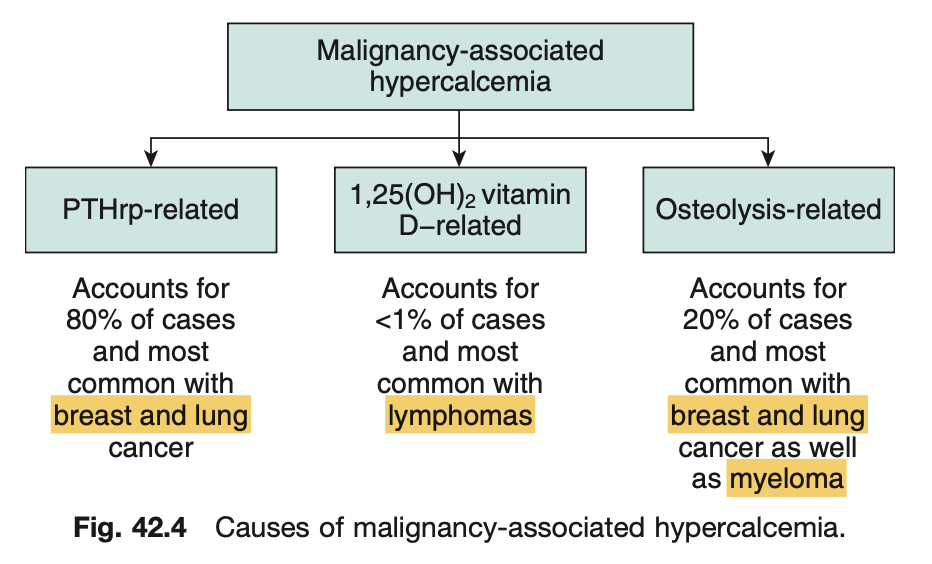
What is the most common mechanism of hypercalcemia of malignancy?
a. Paraneoplastic production of parathyroid hormone–related peptide (PTHrP) by the tumor.
b. Local osteolytic effects through the secretion of cytokines like IL-1 and TNF.
c. Activation of vitamin D to its active form (1,25-dihydroxyvitamin D) by the tumor itself.
d. Vitamin D supplementation.
Answer: a
Reference: Chapter 42, Onconephrology: Kidney Disease and Cancer, Page 1421
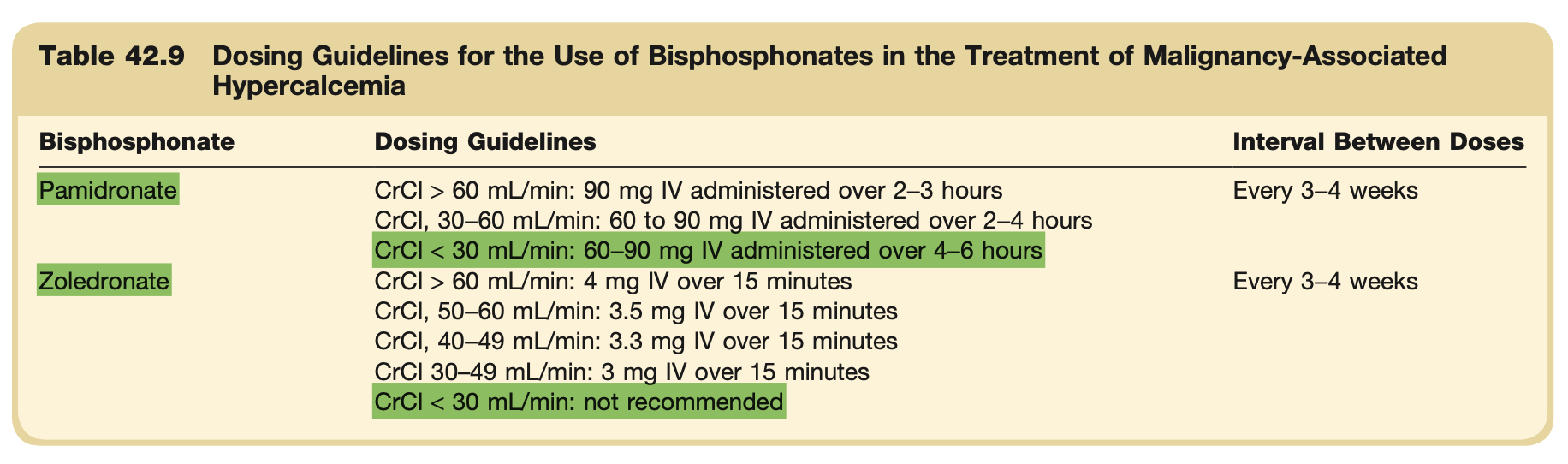
A clinician is planning to treat malignancy-associated hypercalcemia in a patient with an eGFR of 25 mL/min/1.73 m². According to dosing guidelines, which of the following is correct regarding Zoledronate?
a. It can be given at full dose regardless of renal function.
b. It is generally not recommended for use in patients with an eGFR < 30 mL/min.
c. It should be given as a rapid 2-minute bolus to minimize renal exposure.
d. It should be administered daily for 3 days to achieve a nadir.
Answer: b
Reference: Chapter 42, Onconephrology: Kidney Disease and Cancer, Page 1422 (Table 42.9).
According to the Cairo-Bishop criteria, which laboratory finding within 3 to 7 days of starting chemotherapy is required (as one of at least two findings) to diagnose Laboratory Tumor Lysis Syndrome (TLS)?
a. Serum potassium ≥ 5.0 mEq/L
b. Serum phosphorus ≥ 4.5 mg/dL (in adults)
c. Serum calcium ≥ 10 mg/dL
d. Serum uric acid ≥ 6 mg/dL
Answer: b
Reference: Chapter 42, Onconephrology: Kidney Disease and Cancer, Page 1409 (Table 42.3).
Explanation: Option b is a formal laboratory criterion for TLS. Option a is incorrect because the threshold is ≥ 6.0 mEq/L. Option c is wrong because the criterion is low calcium (≤ 7 mg/dL). Option d is wrong because the uric acid threshold is ≥ 8 mg/dL.
In the pathophysiology of Myeloma Cast Nephropathy, filtered pathogenic free light chains (FLCs) lead to intratubular obstruction by binding to which specific protein?
a. Albumin
b. Tamm–Horsfall protein (uromodulin)
c. β2-microglobulin
d. Bence-Jones protein
Answer: b
Reference: Chapter 42, Onconephrology: Kidney Disease and Cancer, Page 1411.
Explanation: Option b is correct; FLCs bind to Tamm–Horsfall protein in the distal nephron to form insoluble obstructing aggregates. Option a is incorrect. Option c is a filtered marker but not the binding partner for casts. Option d is another name for the FLCs themselves, not the binding agent
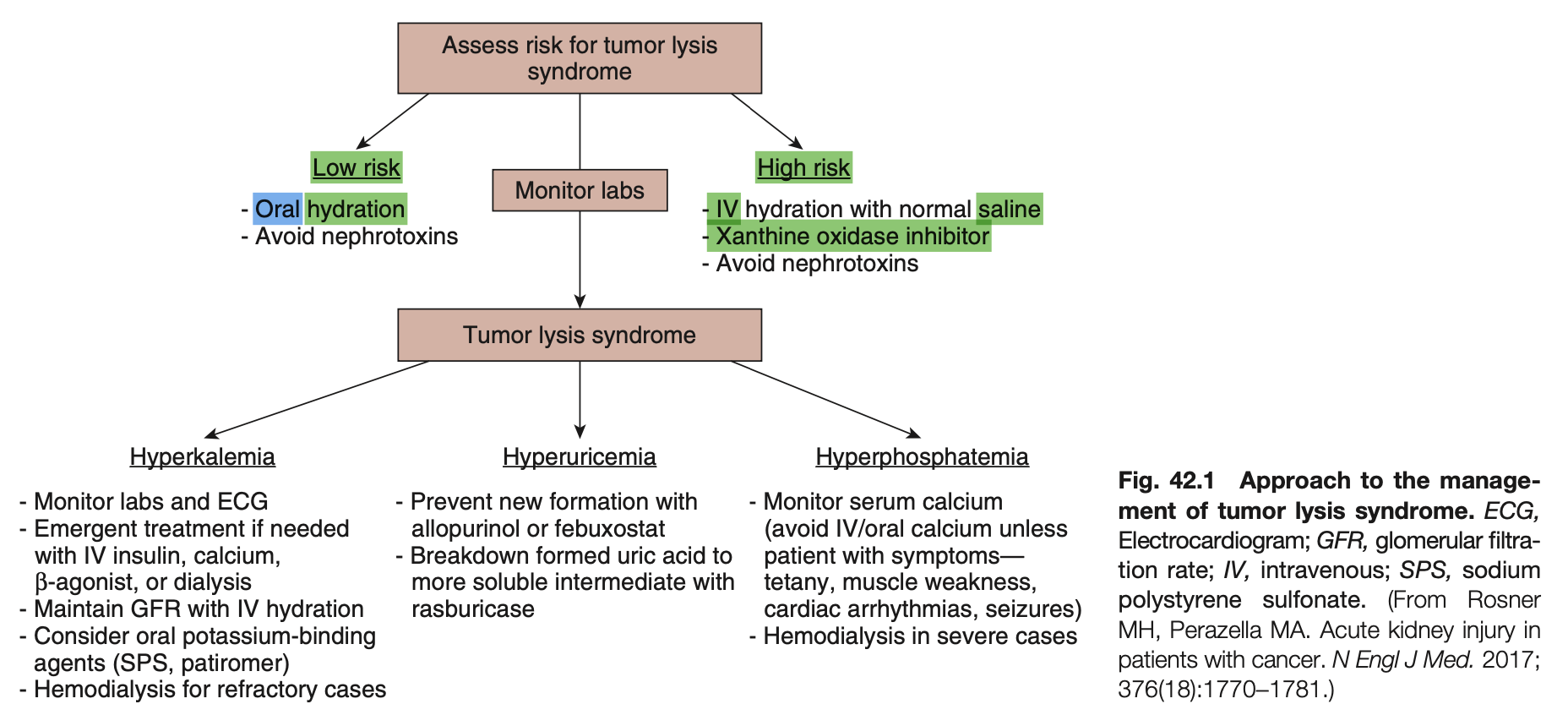
Which of the following best describes the management of a high-risk patient to prevent Tumor Lysis Syndrome (TLS) prior to the initiation of chemotherapy?
a. Oral hydration and monitoring labs every 48 hours.
b. IV hydration with 0.9% saline and a xanthine oxidase inhibitor.
c. Aggressive urine alkalinization with sodium bicarbonate.
d. Prophylactic hemodialysis to remove potential uric acid.
Answer: b
Reference: Chapter 42, Onconephrology: Kidney Disease and Cancer, Page 1410 (Fig 42.1).
Explanation: Option b is the recommended management for high-risk patients. Option a is for low-risk patients. Option c is not recommended because it increases the risk of calcium phosphate precipitation. Option d is reserved for established TLS with severe AKI or electrolyte disorders, not as standard prophylaxis.
How does the "classic triad" of drug-induced ATIN (fever, rash, and eosinophilia) typically present in clinical practice?
a. It is present in over 80% of all biopsy-proven cases of drug-induced ATIN.
b. It is most commonly seen in cases caused by Proton Pump Inhibitors (PPIs).
c. It is uncommon, occurring in only 5%–10% of patients, mostly with β-lactams.
d. It is a mandatory diagnostic requirement before a kidney biopsy is considered.
Answer: c
Reference: Chapter 35, Tubulointerstitial Diseases, Page 1203.
Explanation: Option a is an overestimate. Option b is incorrect because PPI-induced ATIN is characterized by a lack of typical clinical features. Option d is false as biopsy is often used more often when there is diagnostic dilemma when clinical signs are absent.
A 32-year-old woman presents with painful red eyes, photophobia, and weight loss. Laboratory evaluation reveals an AKI with an isolated proximal tubulopathy (Fanconi syndrome). If this represents TINU syndrome, what is the most likely renal histopathologic finding?
a. Diffuse global glomerulosclerosis with "full house" staining.
b. Mixed inflammatory infiltrate (including eosinophils) and noncaseating granulomas.
c. Extensive storiform fibrosis with IgG4-positive plasma cell predominance.
d. Acute tubular necrosis with "muddy brown" granular casts in the distal tubules.
Answer: b
Reference: Chapter 35, Tubulointerstitial Diseases, Page 1209 (Table 35.5).
Explanation: Option b describes the characteristic renal pathology of TINU syndrome. Option a describes SLE. Option c is pathognomonic for IgG4-related kidney disease. Option d describes ATN, which is a different entity.
A patient being treated with a VEGF inhibitor (e.g., bevacizumab or sunitinib) for metastatic RCC develops new-onset hypertension and proteinuria (1.5 g/day). According to management guidelines, what is the most appropriate next step?
a. Discontinue the VEGF inhibitor immediately and permanently.
b. Continue the drug and initiate supportive therapy with an ACE inhibitor or ARB.
c. Administer high-dose corticosteroids to treat drug-induced glomerulonephritis.
d. Perform a radical nephrectomy of the remaining kidney to stop the proteinuria.
Answer: b
Reference: Chapter 41, Kidney Cancer, Page 1404.
Explanation: Option b is correct; VEGF inhibitor-induced hypertension and proteinuria are common and typically managed supportively with ACE inhibitors or ARBs without interrupting cancer therapy unless the injury is severe (e.g., TMA or severe AKI)