xylem and phloem
 Call Kai
 Learn
Learn Practice Test
 Spaced Repetition
 Match
Match Flashcards
 Knowt Play
1/26

There's no tags or description
Looks like no tags are added yet.
Name | Mastery | Learn | Test | Matching | Spaced | Call with Kai |
|---|
No analytics yet
Send a link to your students to track their progress
27 Terms
Why do plants need transport systems
since they are multicellular they have a small SA:V so diffusion is too slow to meet their metabolic demands
What is the name of the transport system in plants
Vascular bundle
What tissues does the vascular bundle consist of
2 specialised tissues: xylem and phloem
What is a Herbaceous dicot
plant with 2 seed leaves (cotyledons) where the vascular bundles are distributed differently depending on which part of the plant it is
What is another name for a dicot
A dicotyledonous plant
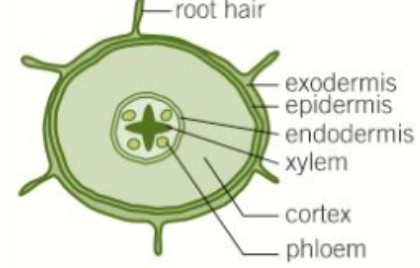
What is the structure of vascular bundle in the roots (cross section)
-vascular bundle is found at the centre
> Xylem in middle forming an X shape
> Phloem found between the arms of the x shaped xylem
Why is the specific arrangement of the vascular bundle in the root important
central arrangement provides strength to withstand pulling forces from the wind
What is the structure of vascular bundle in the stem (cross section)
-the vascular bundles are arranged in a ring around the edge of the stem
In each vascular bundle:
> xylem found on the inner side
> phloem found on the outer side
Why is the specific arrangement of the vascular bundles in the stem important
ring arrangement gives structural support preventing stem from bending
What is the structure of the vascular bundle in the leaf (cross section)
-the vascular bundle form veins
In each vascular bundle
> xylem on top
> phloem on bottom
Why is the specific arrangement of the vascular bundles in the leaf important
Supports the leaf & Maximises photosynthesis efficiency because:
> xylem closest to upper epidermis to supply water for photosynthesis
> phloem is below to transport sugars made during photosynthesis
What are the 2 functions of the xylem
To transport water and mineral ions from the roots up the plant
Provide mechanical strength to the plant
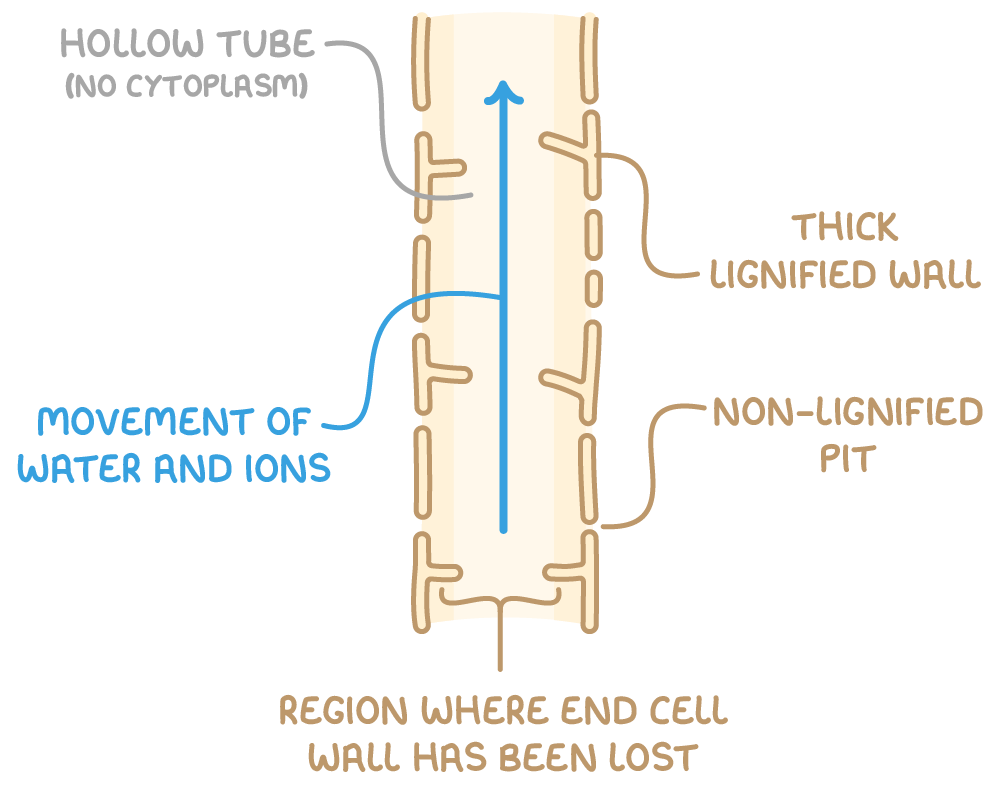
name the 4 adaptations of the xylem
thick walls with lignin
dead xylem
no end walls
non lignified bordered pits
describe how these 4 adaptations enable xylem to carry out its job
-thick walls with lignin = woody and waterproof substance which provides mechanical strengthen to the cell wall so it can withstand high pressure of water
-dead xylem = no organelles meaning its hollow tube - allowing smooth flow of water
-no end walls = elongated tube - allowing smooth flow of water
-non lignified pits (along the wall) = allowing water and mineral ions to move out to surrounding cells when necessary
What does assimilates mean
the products made during photosynthesis - mostly sucrose and amino acids
What does source mean and name examples
source = plant organs which produce assimilates
leaves - make sugars during photosynthesis
What does sink mean
Sink = all the other organs of the plant that use sugar for respiration to growth, carry out active transport, etc e.g. roots
What is the function of the phloem
To transport dissolved assimilates, products made during photosynthesis (mostly sucrose and amino acids) from the source to the sink (translocation)
Why does the phloem transport sucrose rather than glucose
Because sucrose is less reactive than glucose because its a nonreducing sugar - is less likely to interact with other substances during transport
How is sucrose obtained
glucose undergoes condensation reaction:
glucose + fructose > sucrose + water = so sucrose can be transported
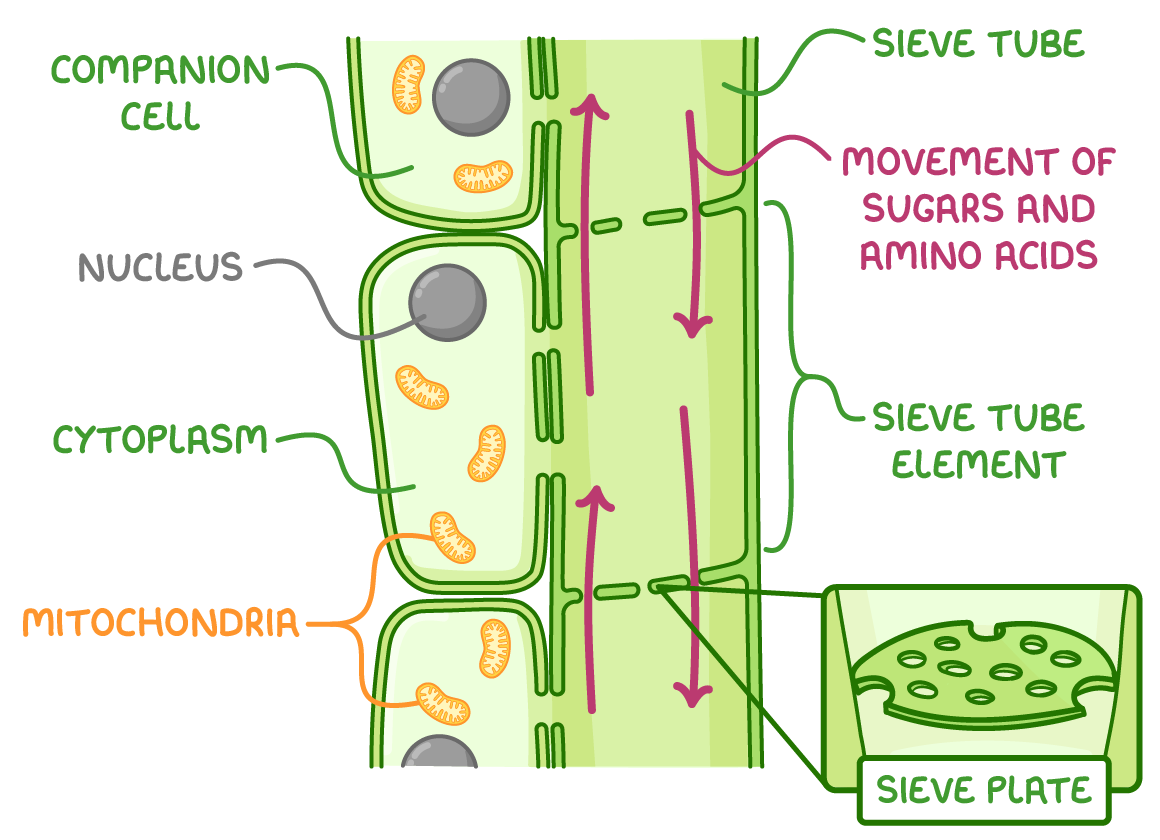
name the 4 adaptations of the phloem
sieve tube elements
sieve plates with pores
phloem lacks organelles
companion cell
describe how these 4 adaptations enable phloem to carry out its job
-sieve tube elements = connected end to end forming a long sieve tube
-sieve plates with pores = allows sugars and amino acids to flow through between sieve tube elements
-phloem lacks organelles for smooth flow of assimilates
-companion cell = keeps phloem alive & has many organelles e.g. large nucleus, mitochondria and ribosomes
Why is it so important that the companion cells has these organelles
Mitochondria - releases energy for active transport/translocation of substances into the sieve tube elements
Ribosomes - for protein synthesis
How are the companion cell and phloem connected
by the plasmodesmata
What is the plasmodesmata mean
gaps that link the cytoplasm of two cells together allowing substances to cross between them
What is the difference between plasmodesma and plasmodesmata
Plasmodesma refers to a single gap
Name the layers that make up the root (going from outside to inner most)
root hairs > exodermis > epidermis > cortex > endodermis > vascular bundle