Session 11: Common Fractures
 Call Kai
 Learn
Learn Practice Test
 Spaced Repetition
 Match
Match Flashcards
 Knowt Play
1/48

There's no tags or description
Looks like no tags are added yet.
Name | Mastery | Learn | Test | Matching | Spaced | Call with Kai | Chat |
|---|
No analytics yet
Send a link to your students to track their progress
49 Terms
What process occurs during secondary bone healing?
ENDOCHONDRAL OSSIFICATION
Soft callus (fibrocartilaginous) forms around the fracture, bridging the gap.
This gradually gets replaced by hard callus (woven bone) through endochondral ossification.
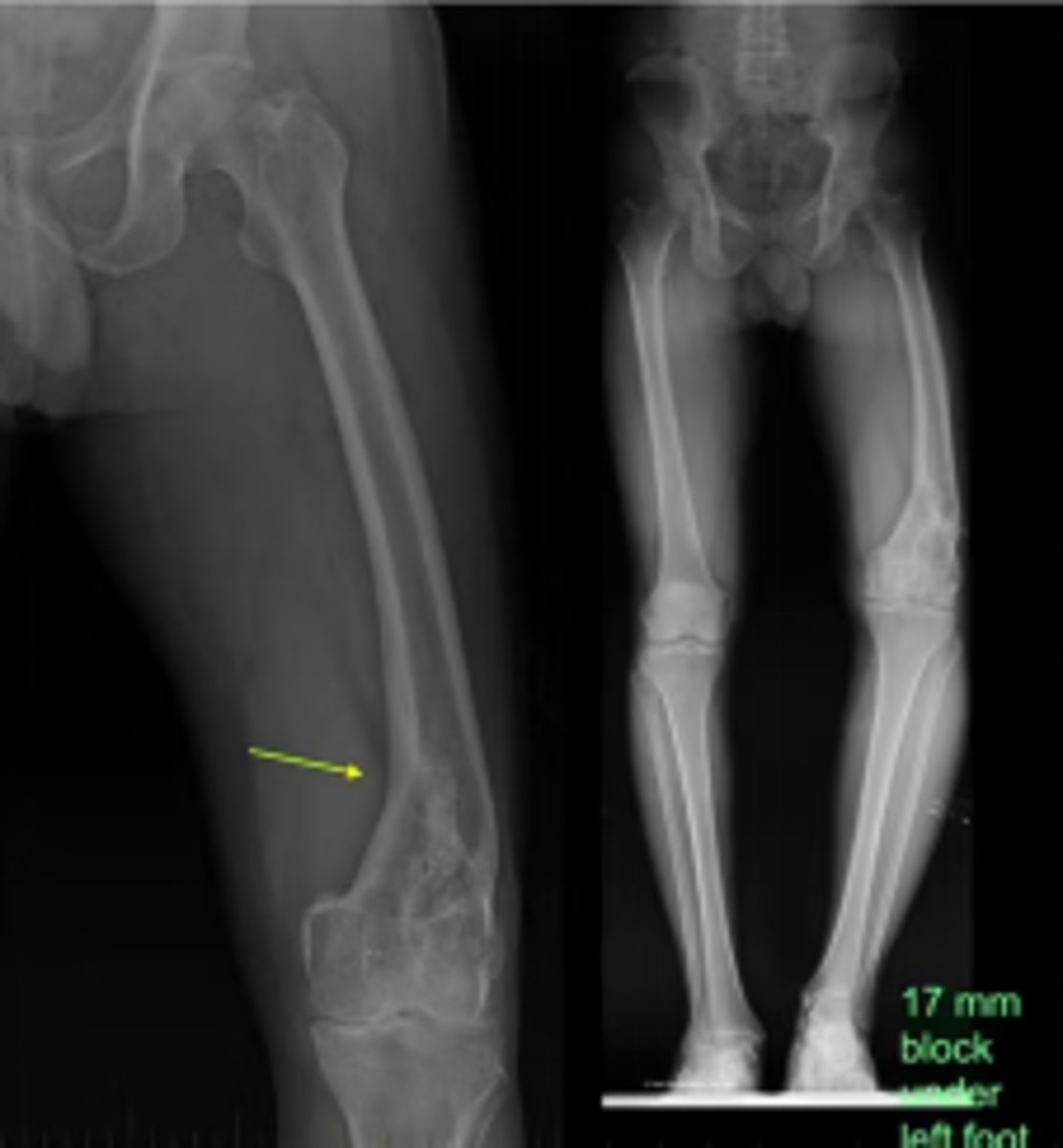
Which late fracture complication is shown in this X-ray?
Malunion
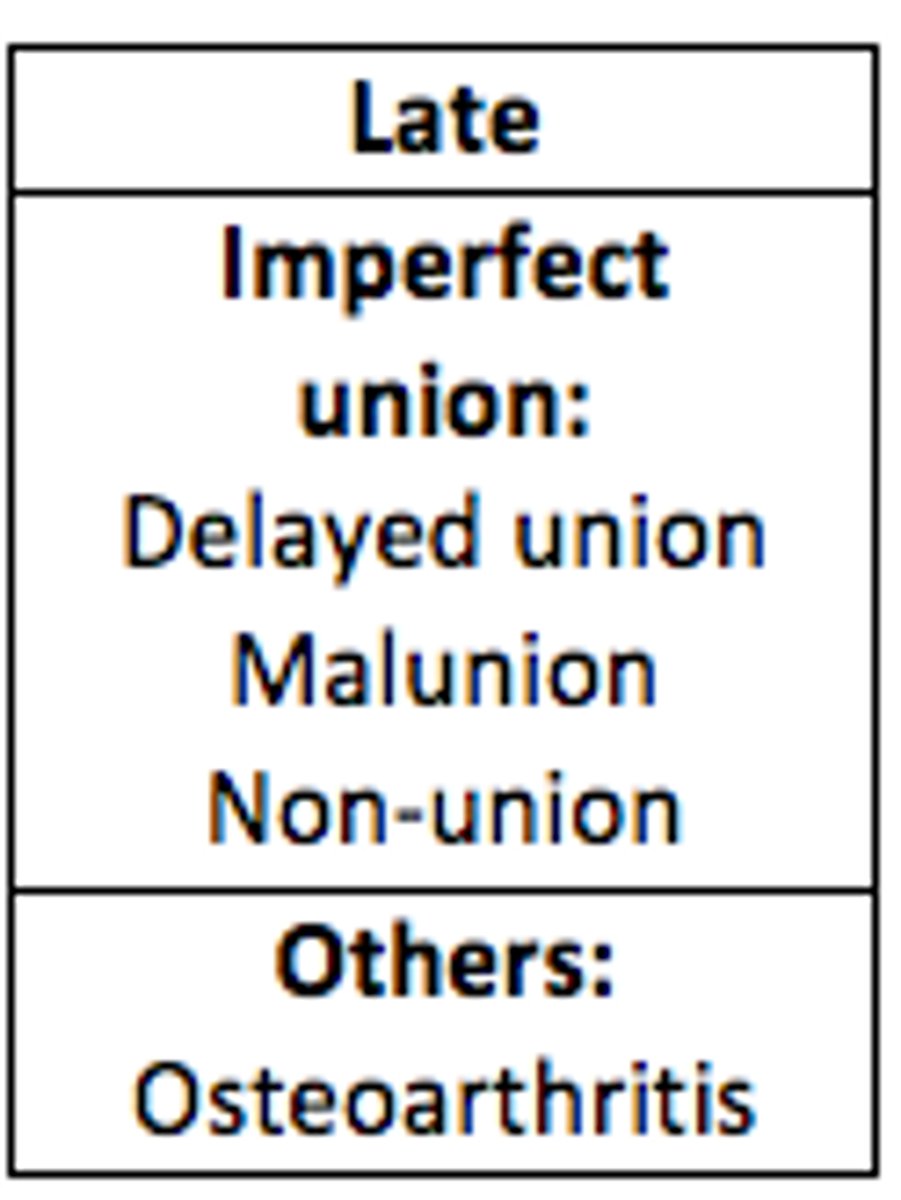
Late fracture complications
Delayed union
Fracture healing takes twice as long as expected for specific location
Non-union
Fracture healing does not occur within 6-9 months
Malunion
Healing in a non-anatomical position
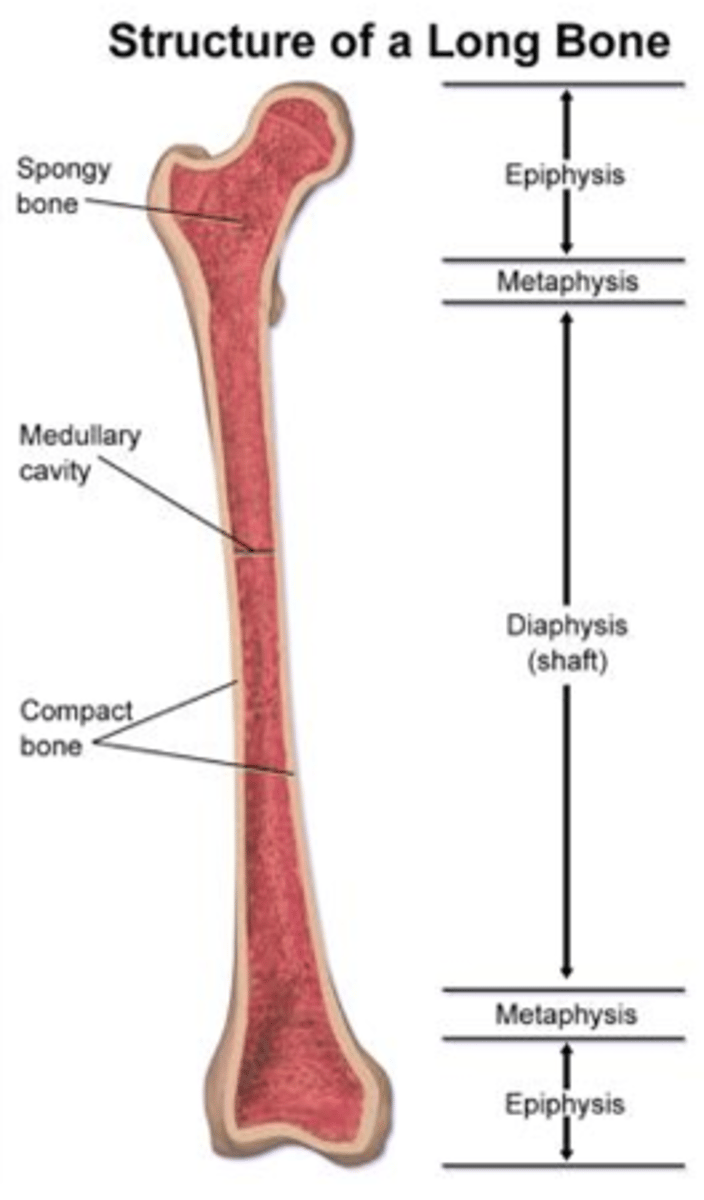
Most common fracture of long bones
Diaphyseal fractures of the tibia
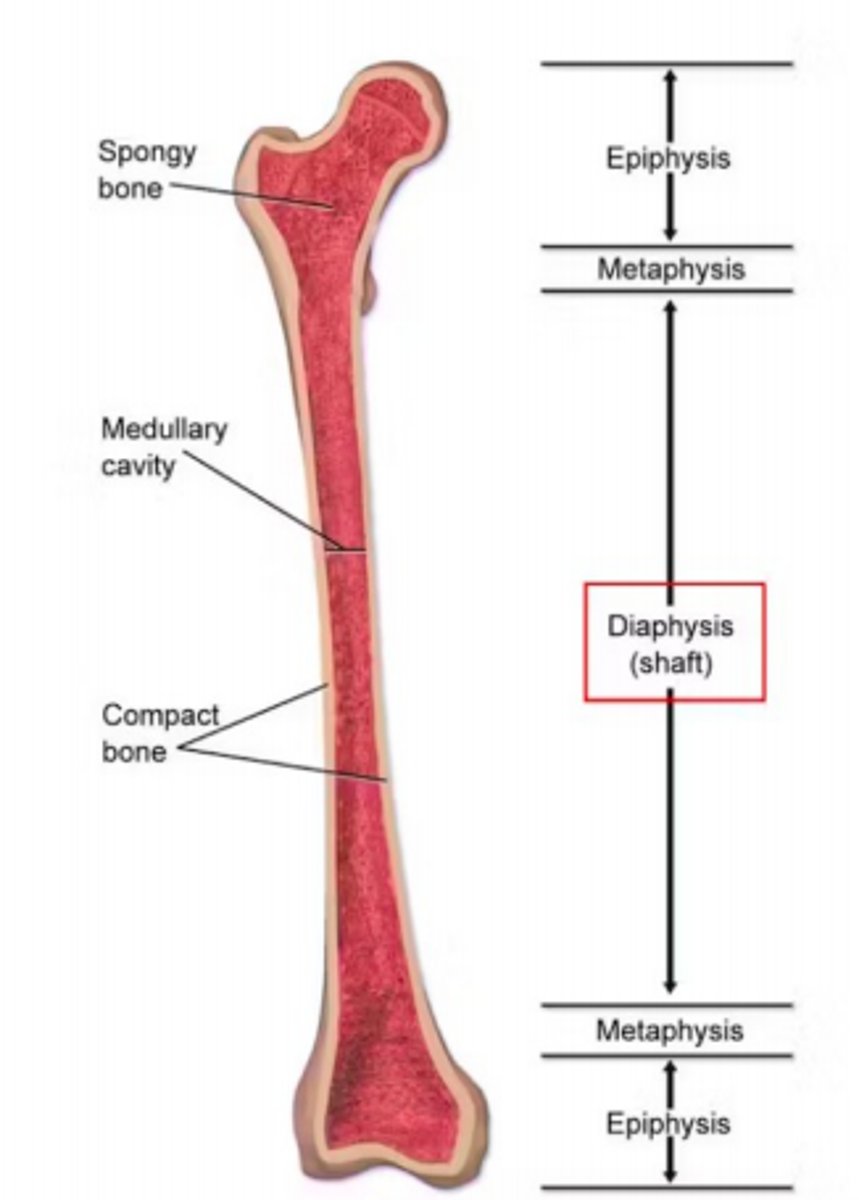
Anatomy of a long bone
Tibial shaft fracture
Caused by high-energy direct force e.g., fall from height
+/- severe soft tissue injury and compartment syndrome
Can also be caused by low-energy trauma e.g., indirect twisting injury > spiral fracture pattern (image)
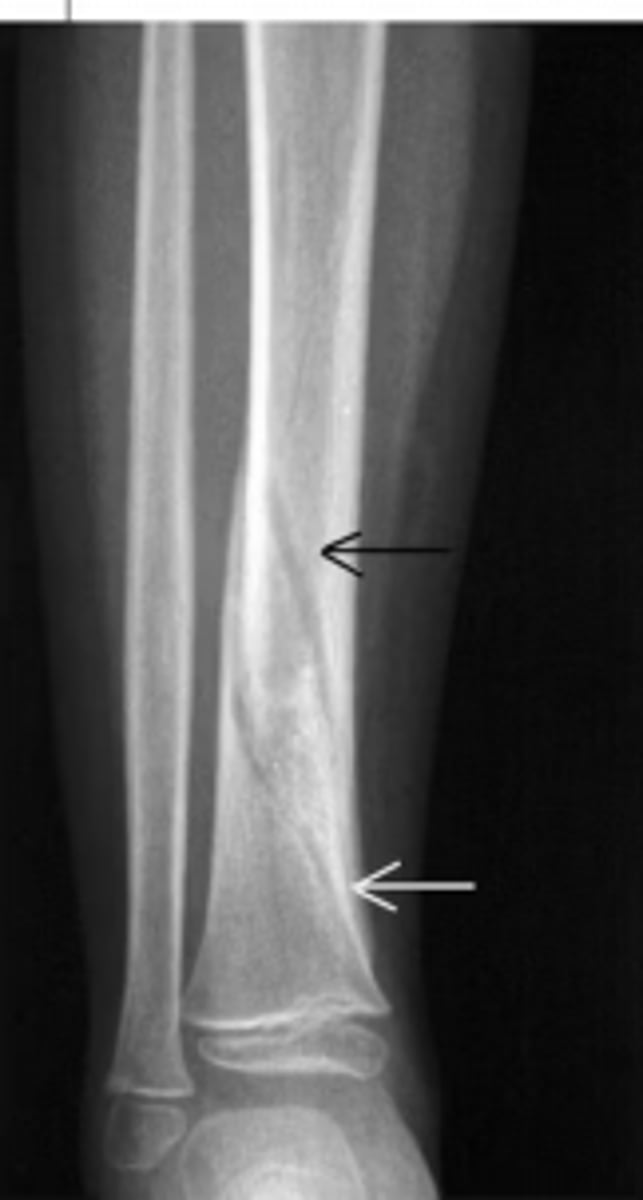
Compartment syndrome
Increased pressure in a closed fascial compartment, usually secondary to trauma
Causes
- Trauma
- Crush injury/fracture
- Most commonly tibial fracture
- Other: vascular injury, tight casts, DVT
Pathophysiology
- Fascial compartments have a fixed volume
- Adding fluid to the compartment e.g., blood, exudate - increase pressure
- If compartment pressure > capillary pressure = ischemia
Clinical Features
- Severe pain which is out of proportion to injury
- Tense compartment
- If it progresses = 5 P's of acute ischemia
The 5 P's of acute ischemia (compartment syndrome features)
Pain
Pallor
Perishingly cold
Paralysis
Pulselessness (late sign)
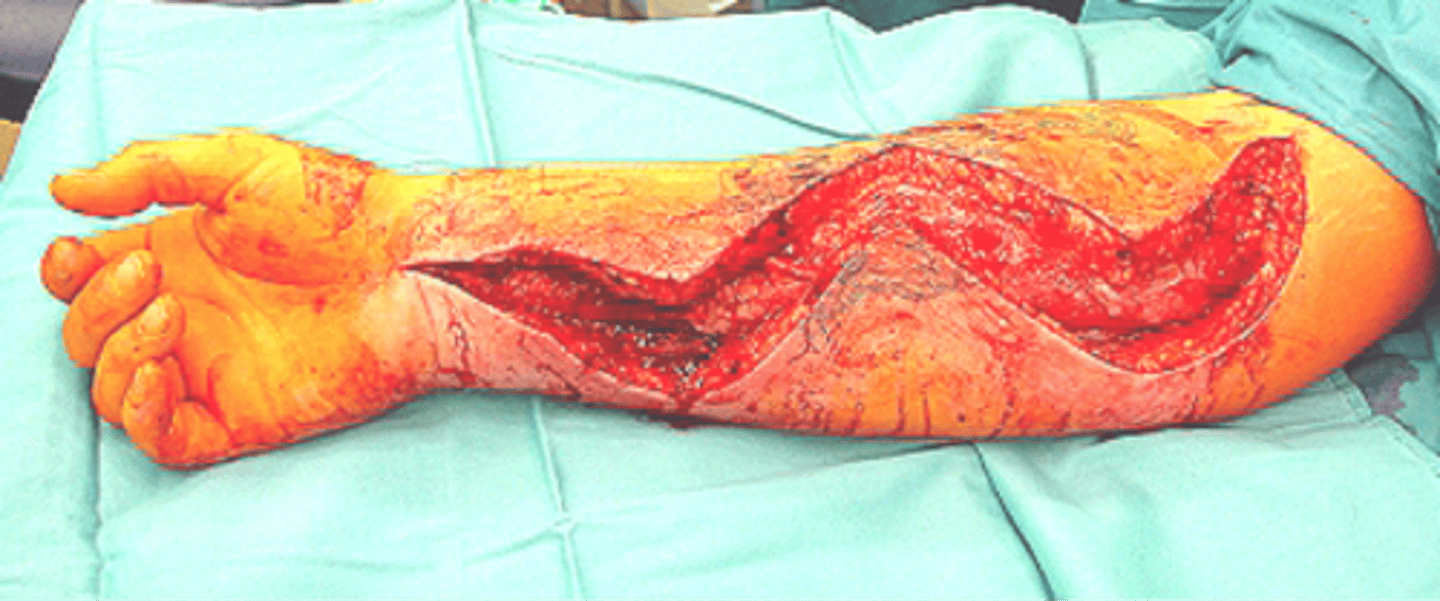
Management of compartment syndrome
Fasciotomy
Neck of femur fractures
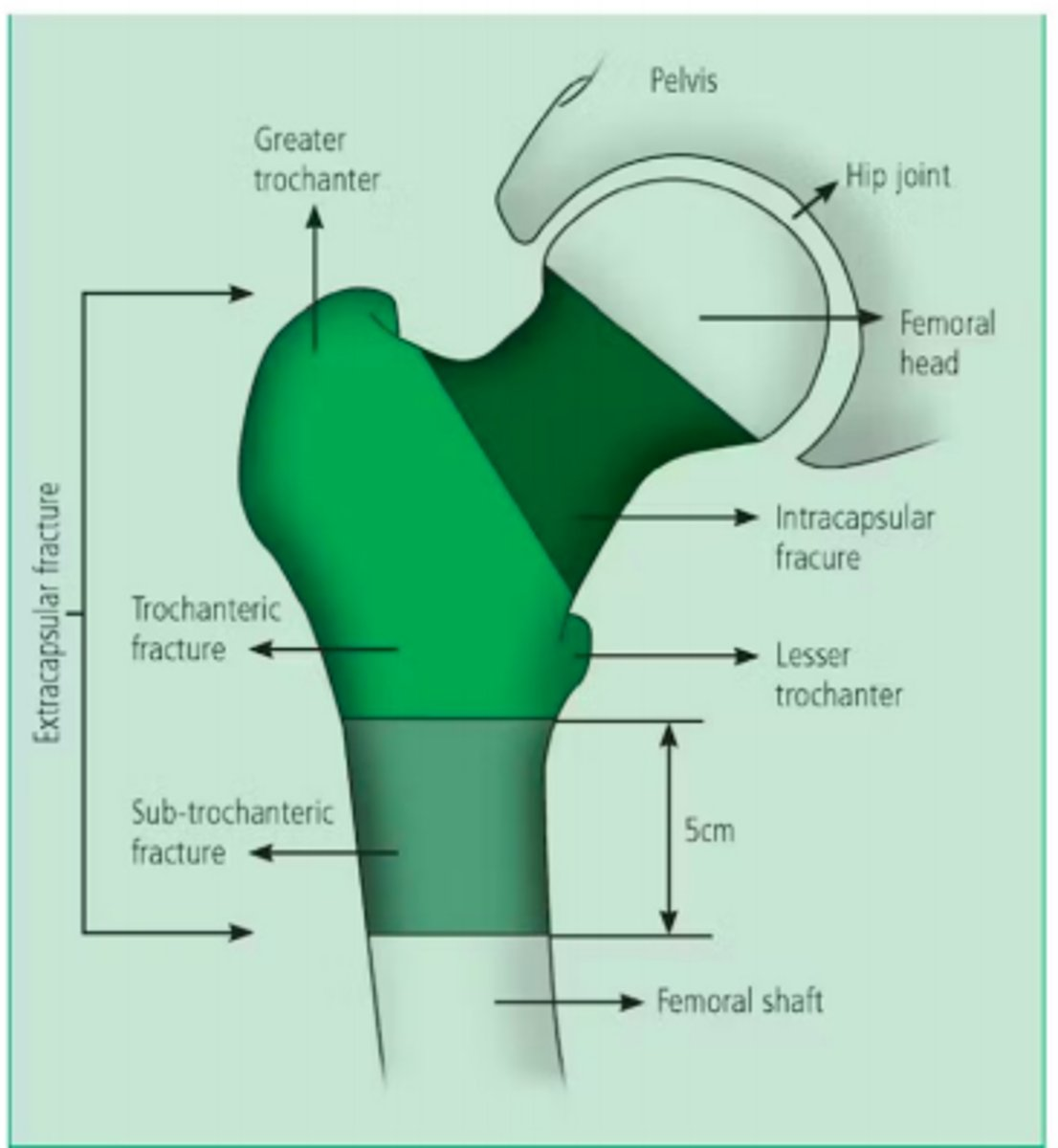
Causes
- Low energy injuries in frail patients e.g., osteoporosis (fragility fractures)
- High energy injuries in young patients e.g., RTC
- Pathological fractures (in bone with tumour/infection)
Classification
- Extracapsular = between greater & lesser trochanter
- Intracapsular = below lesser trochanter
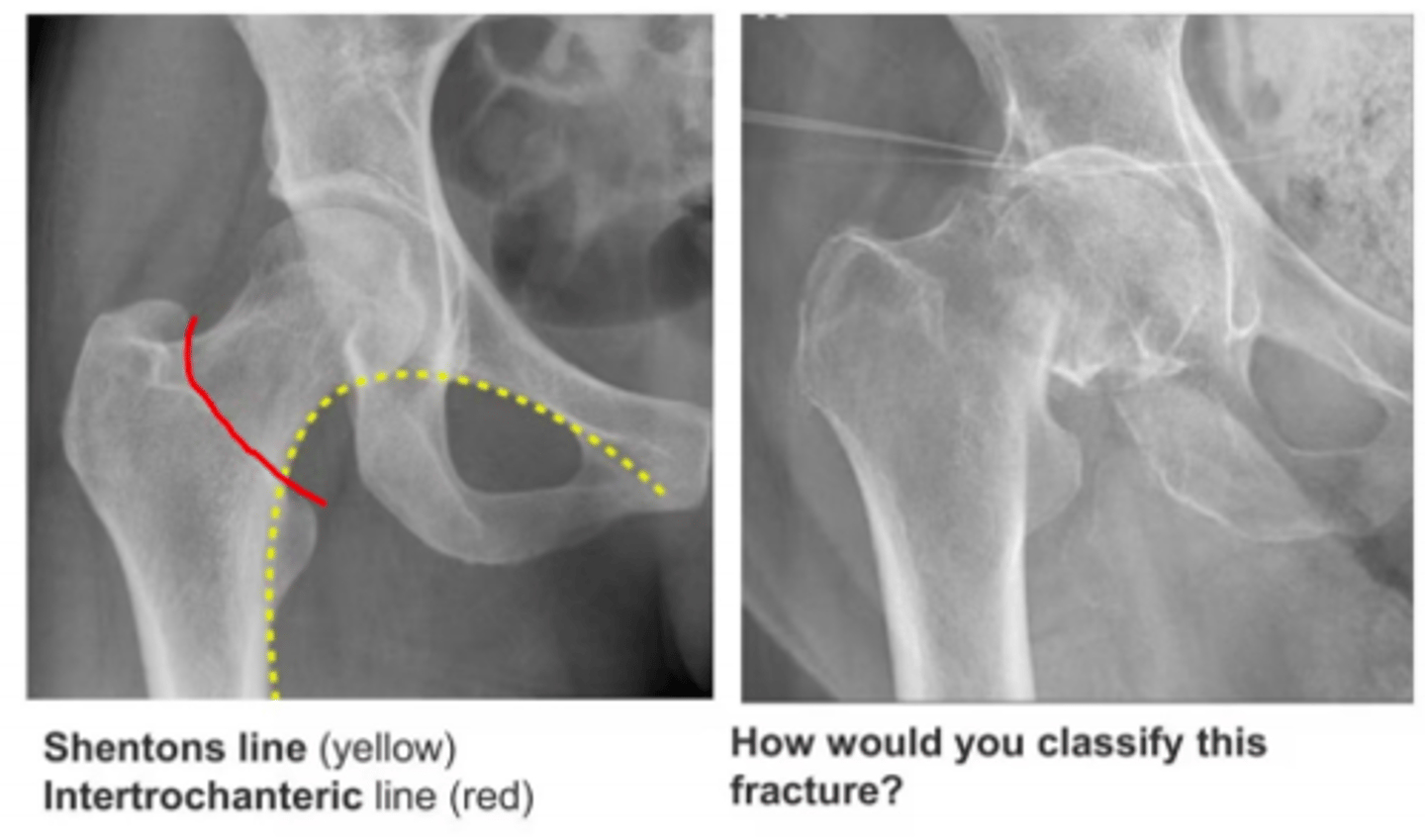
How would you classify this fracture (right)
Intracapsular neck of femur fracture
*Note: shenton's line is not smooth as it should be (left image)
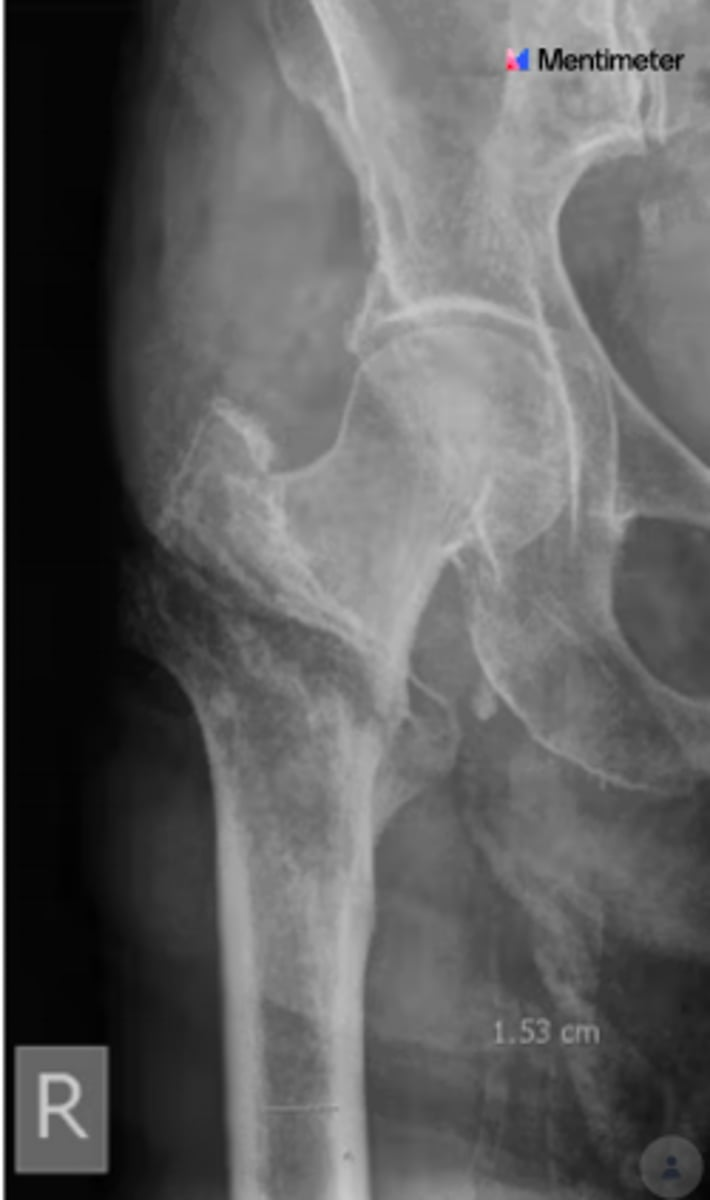
How would you classify this fracture?
Extracapsular neck of femur fracture (intertrochanteric)
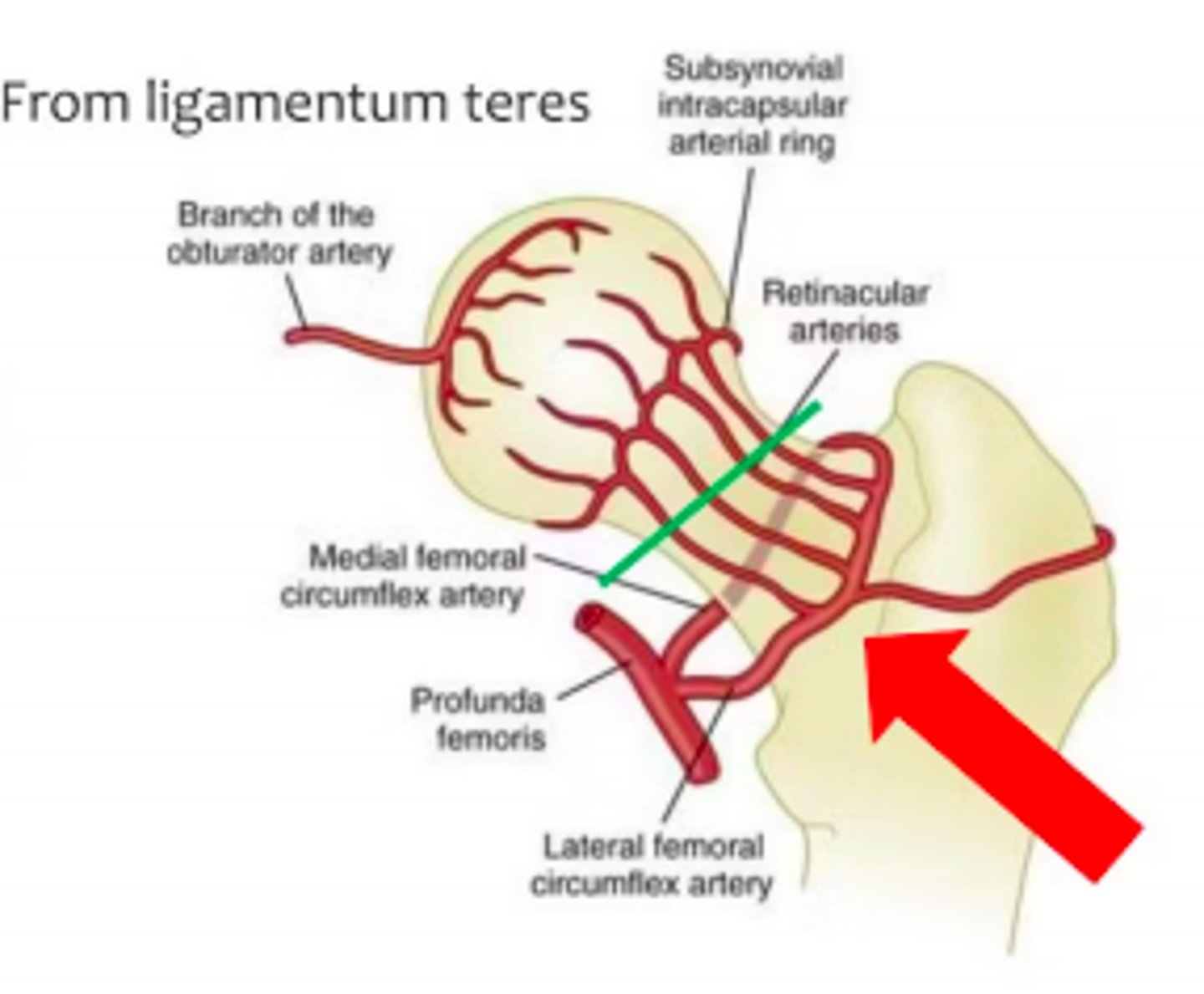
Why are neck of femur (intracapsular) fractures dangerous?
Majority of blood supply is retrograde (lateral and medial circumflex arteries)
An intracapsular fracture may disrupt the retrograde blood supply > risk of avascular necrosis to the femoral head
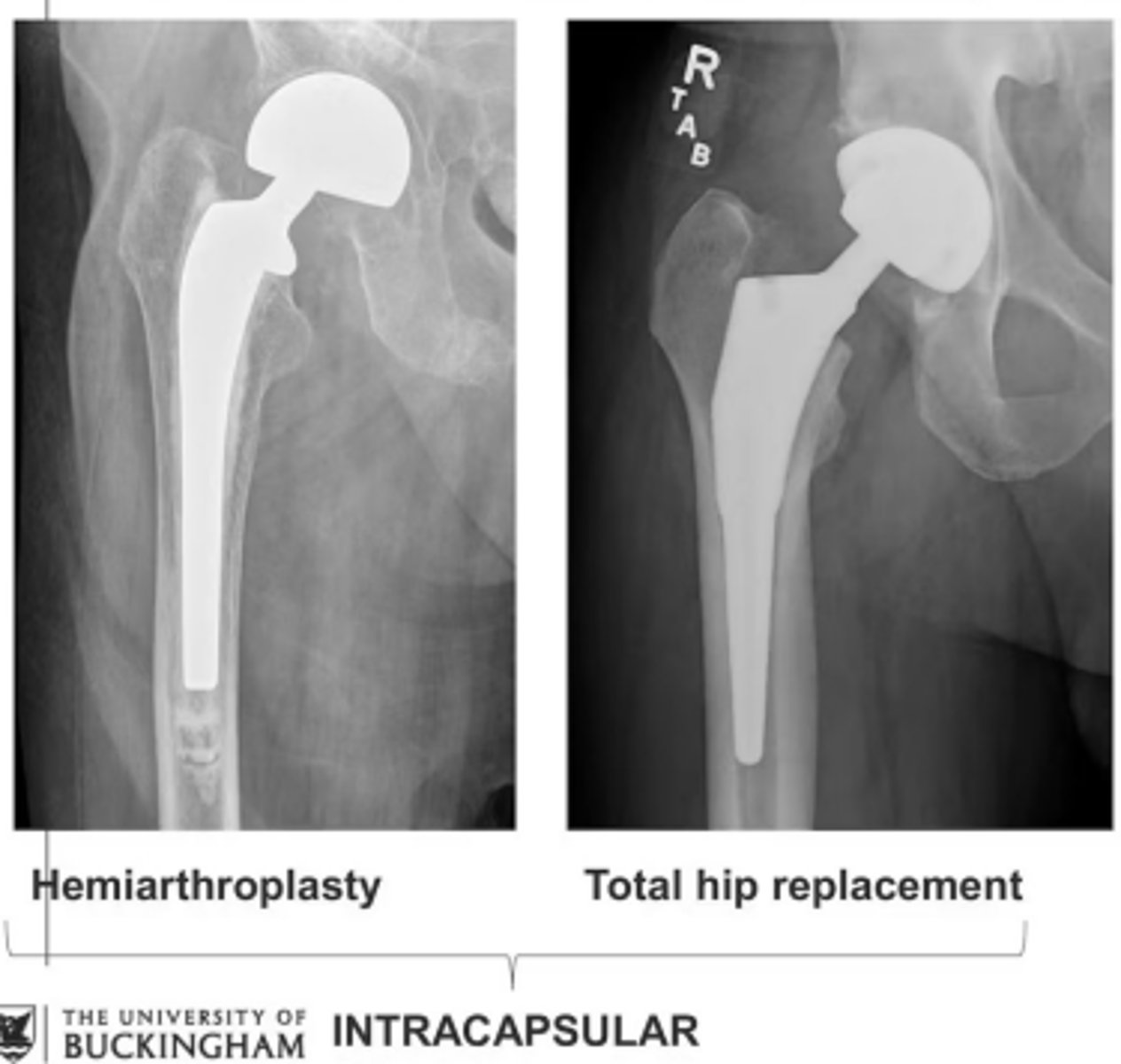
Tx intracapsular fractures of the femur
Hemiarthroplasty
Total hip replacement
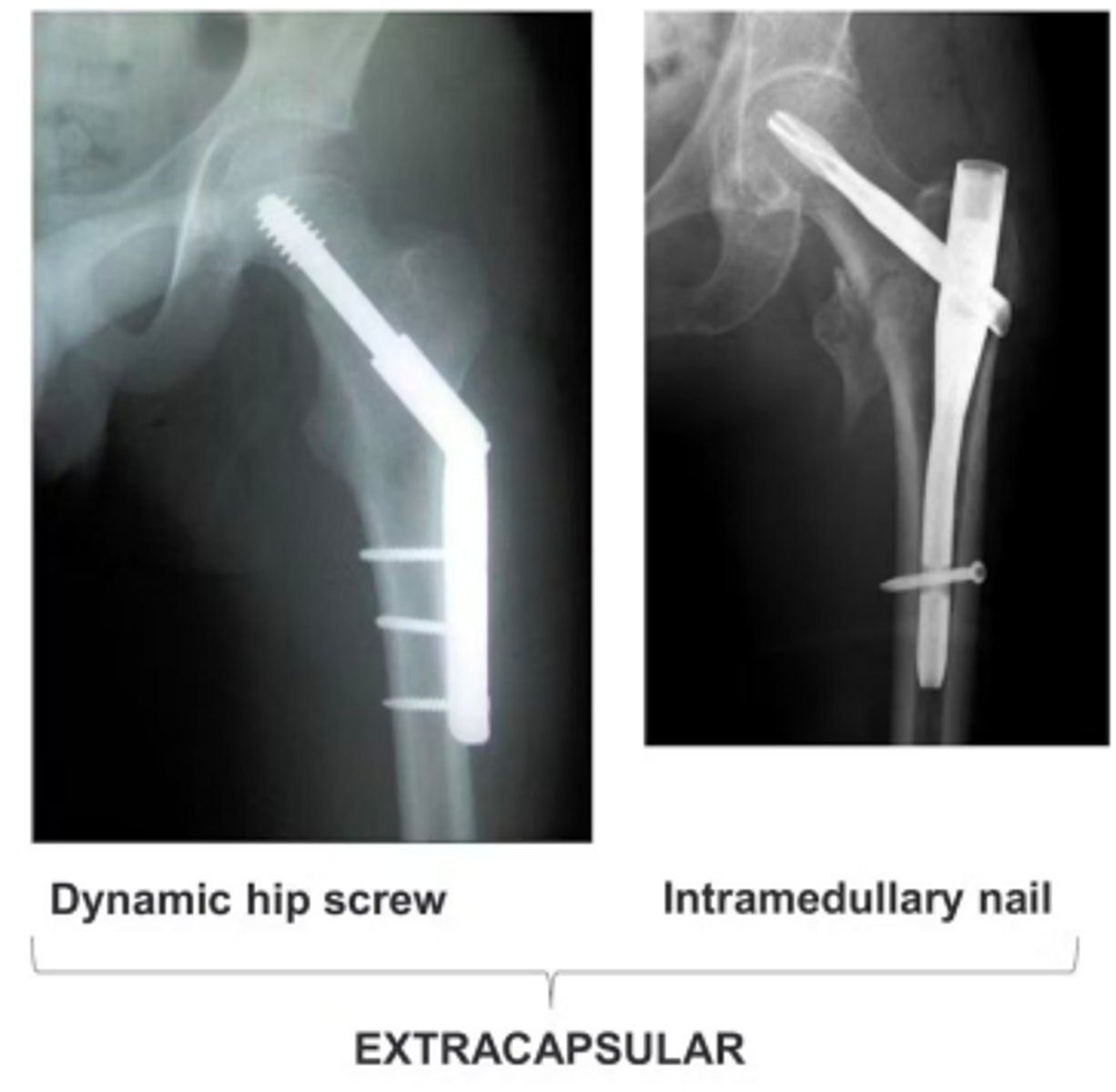
Tx extracapsular fractures of the femur
Dynamic hip screw
Intramedullary nail
Danis-Webber classification for ankle fractures (based on lateral malleolus)
Type A = below syndesmosis
Type B = at the level of the syndesmosis
Type C = above the syndesmosis
*The syndesmosis is a fibrous joint held together by ligaments near the ankle joint
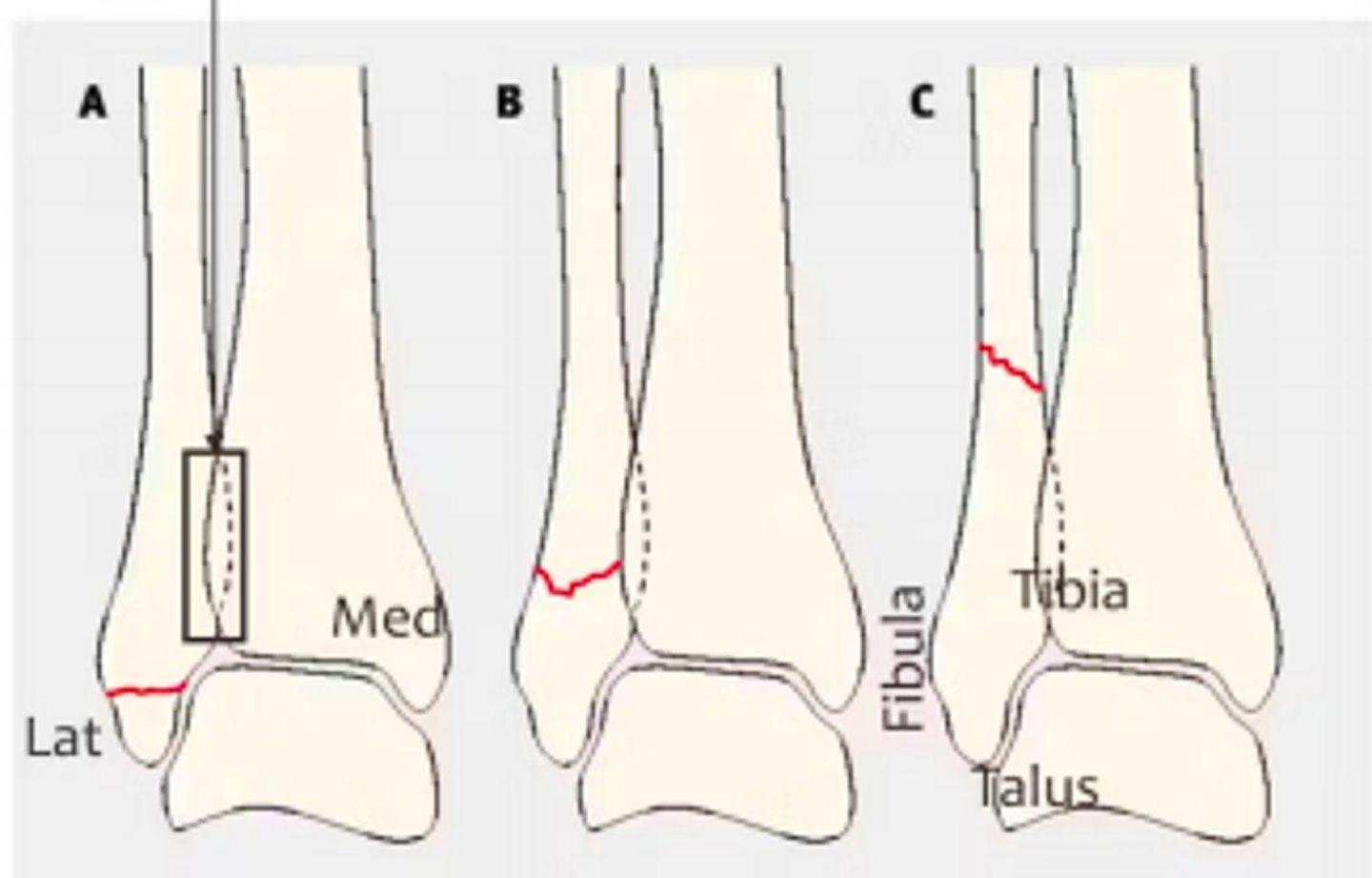
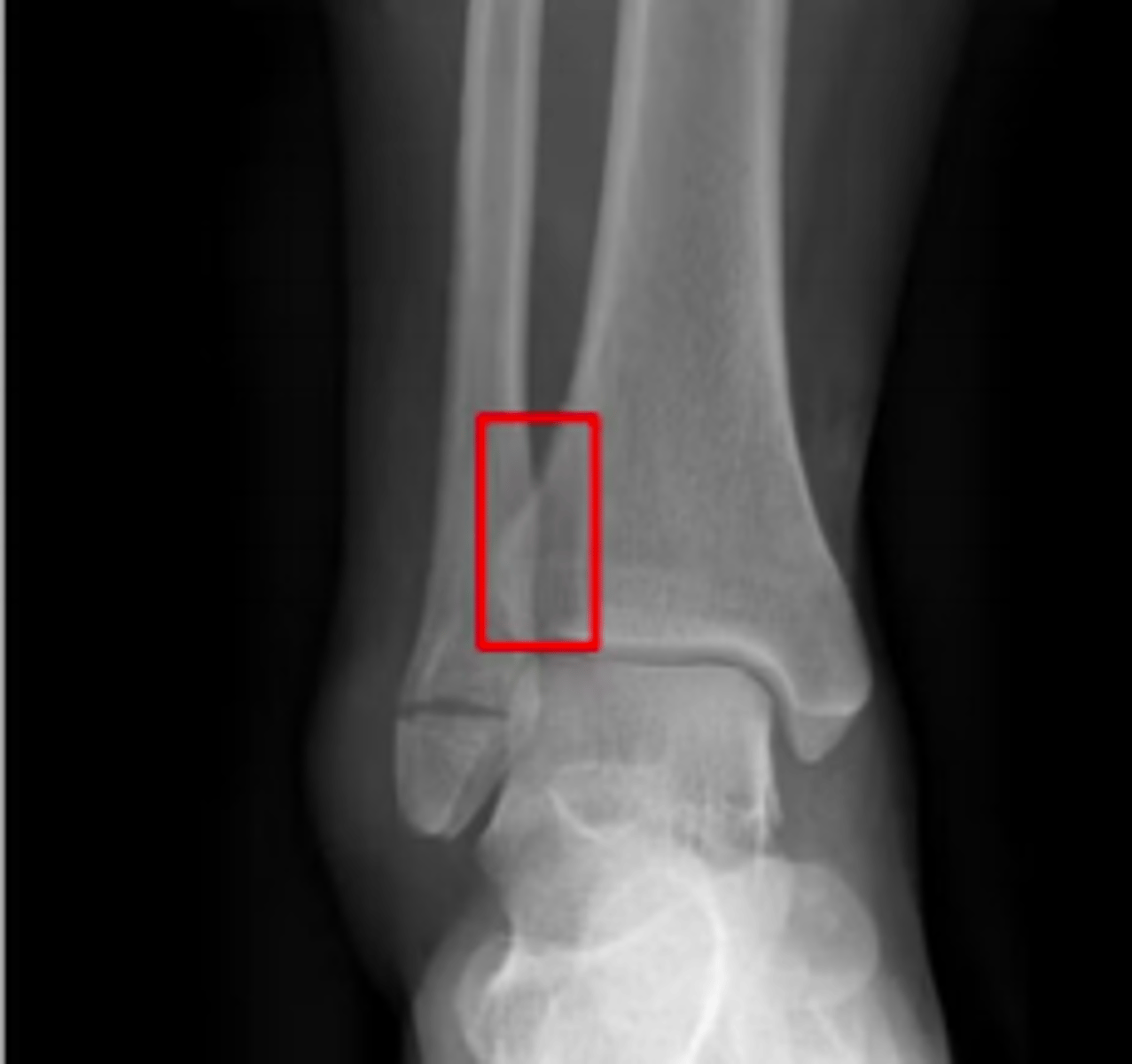
According to the Danis-Webber classification - what type of ankle fracture does this x-ray show?
Type A
Below syndesmosis
According to the Danis-Webber classification - what type of ankle fracture does this x-ray show?
Type B
At the level of the syndesmosis
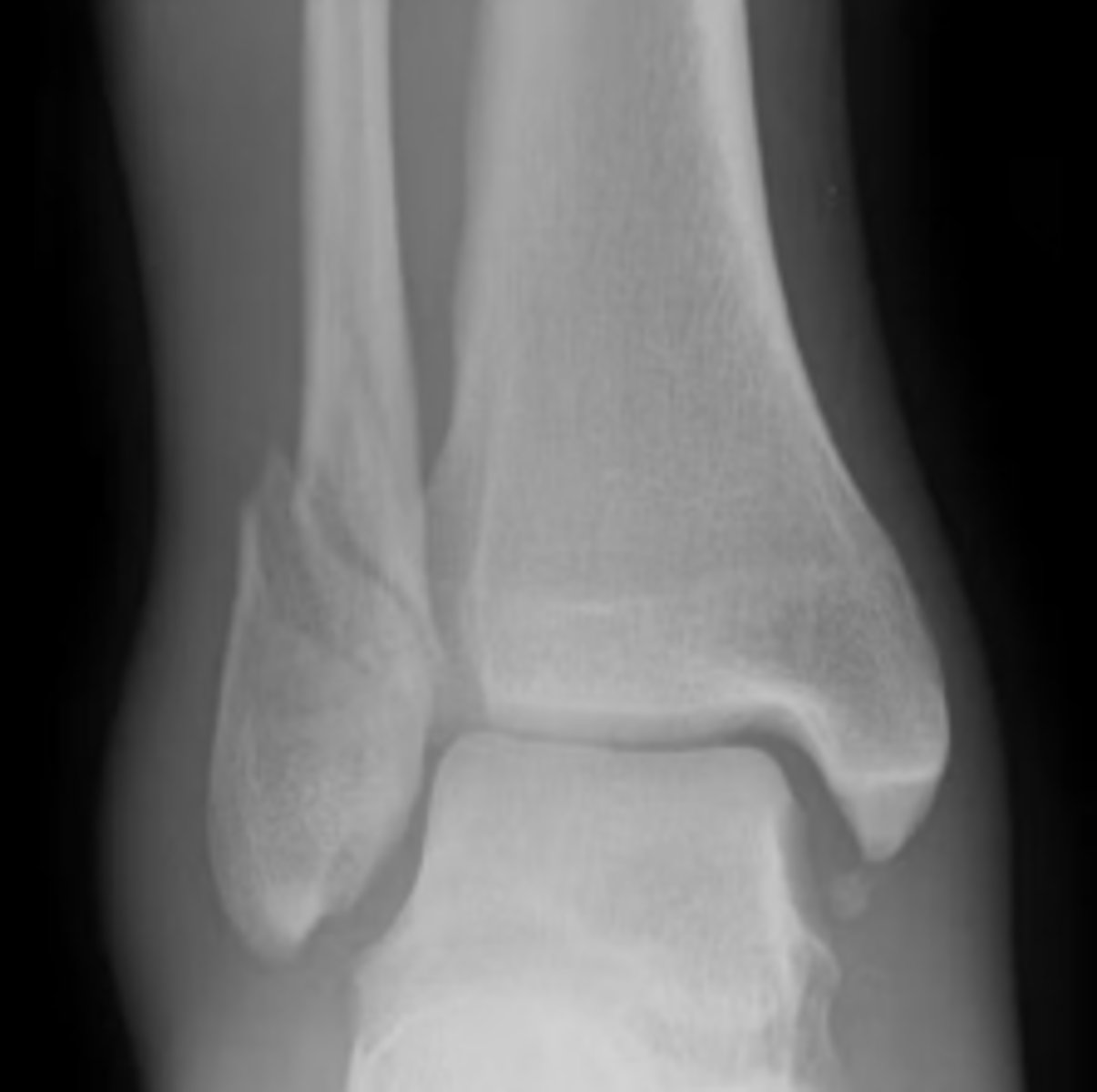
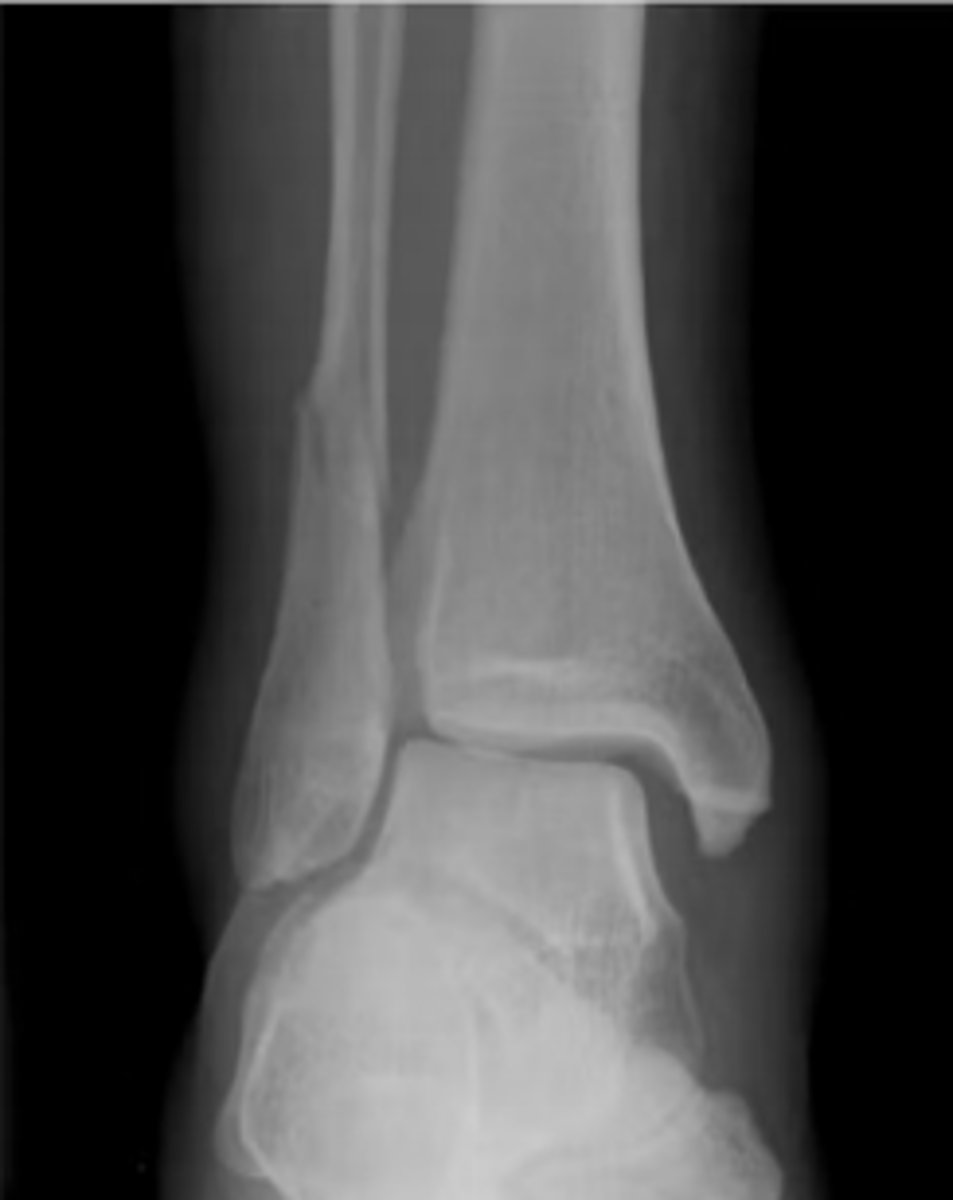
According to the Danis-Webber classification - what type of ankle fracture does this x-ray show?
Type C
Above the syndesmosis
Distal radius fractures and causes
Colle's fracture and Smith's fracture
Most common orthopaedic fracture
- Low energy injuries in older patients e.g., FOOSH
- High-energy injuries in young patients e.g., RTC
- Pathological fractures (in bone with tumour/infection)
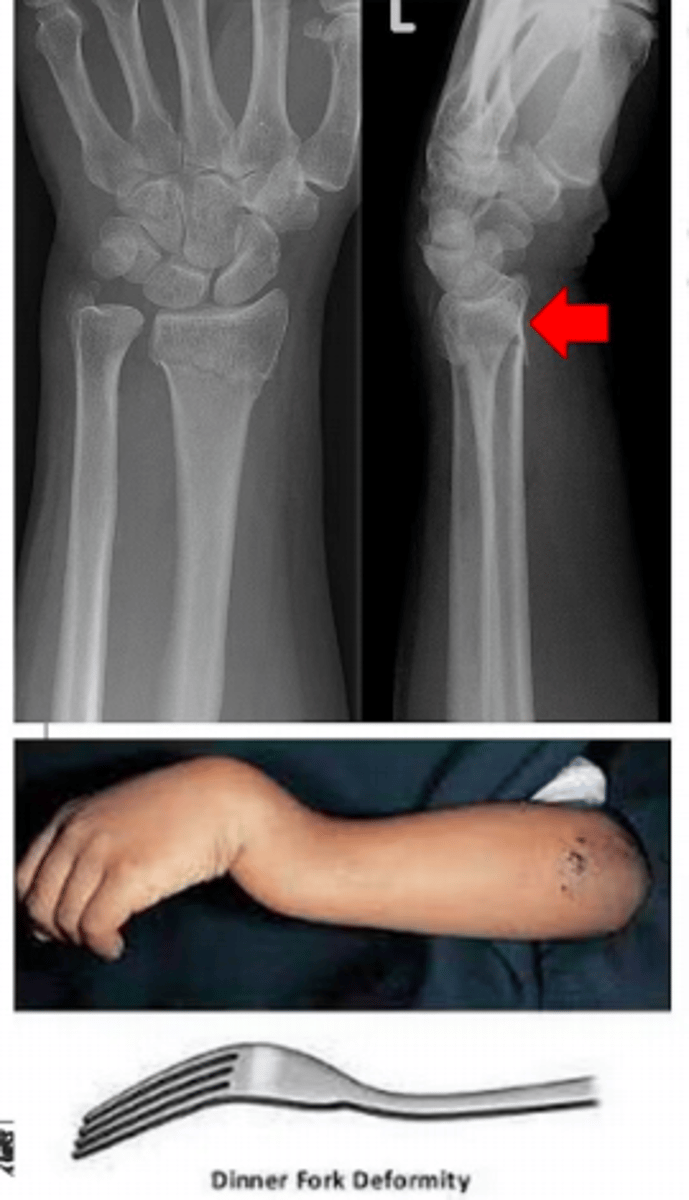
Colle's fracture
Extra-articular fracture of the distal radius
Dorsal angulation & dorsal displacement - dinner fork deformity
Caused by FOOSH to the FRONT of the hand
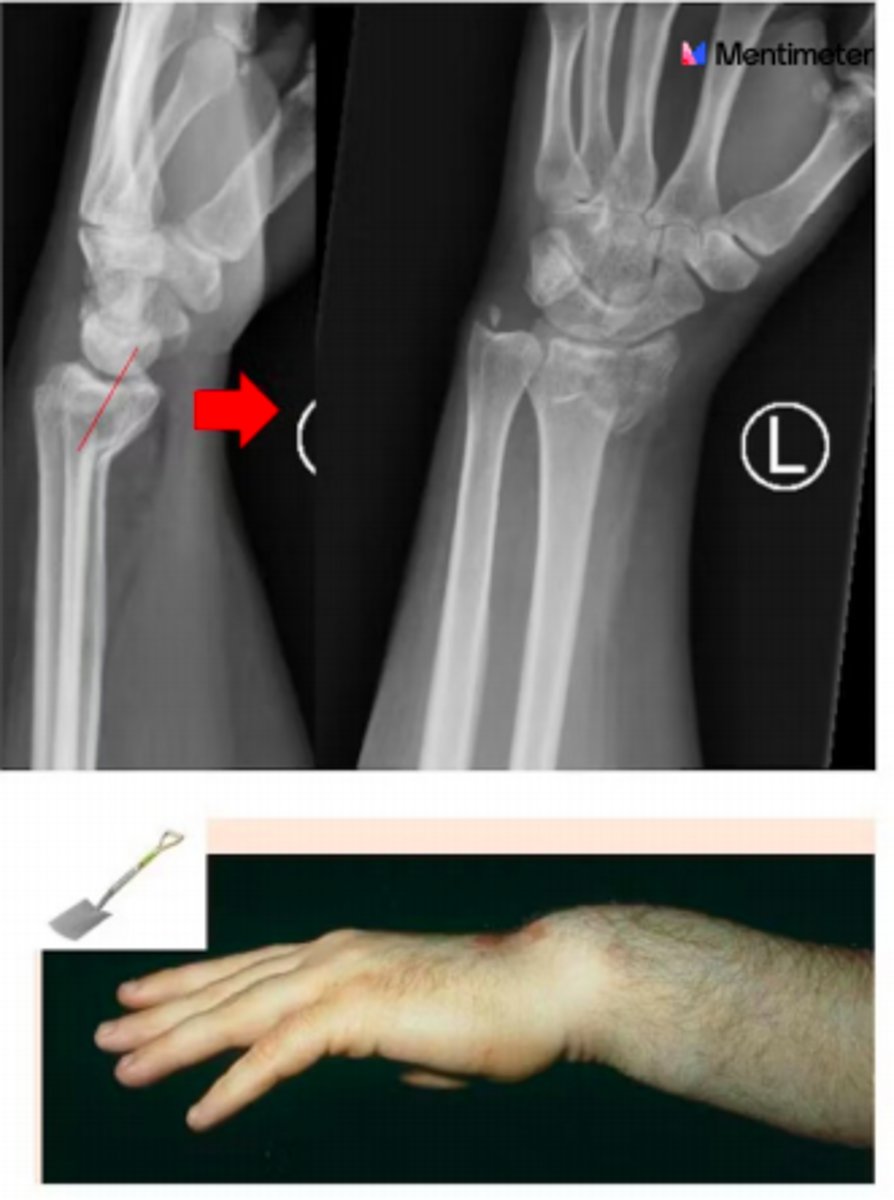
Smith's fracture
Extra-articular fracture of the distal radius
Volar angulation +/- volar displacement - garden spade deformity
Caused by FOOSH to the BACK of the hand
What is the most commonly fractured carpal bone?
Scaphoid bone
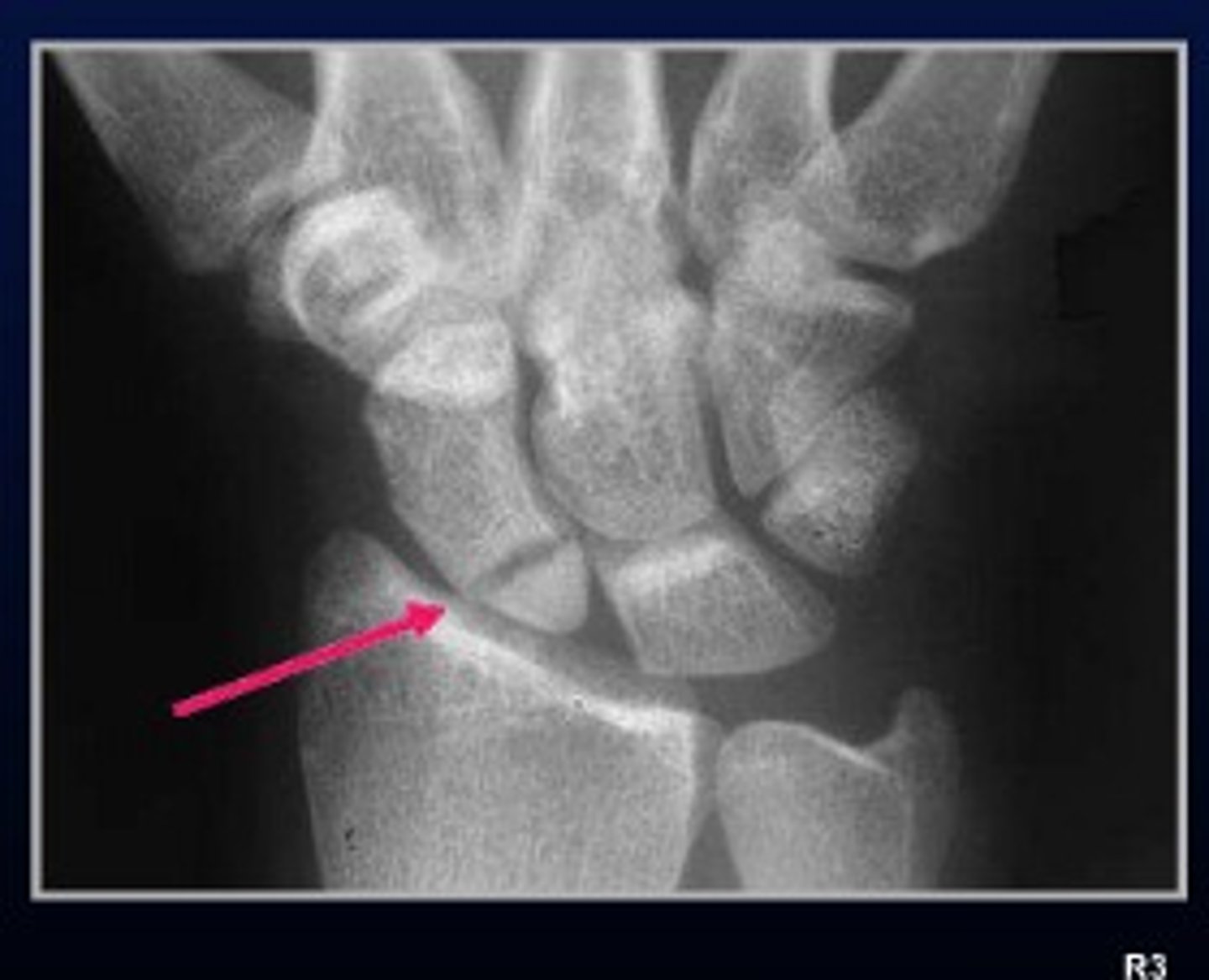
Scaphoid fracture
Most commonly fractured carpal bone
Presents with pain, tenderness of anatomical snuffbox, pain on axial loading on thumb
Caused by FOOSH
80% of scaphoid blood supply is retrograde through ___ ___ ___. Therefore, proximal fractures are at higher risk of avascular necrosis.
80% of scaphoid blood supply is retrograde through dorsal carpal branch. Therefore, proximal fractures are at higher risk of avascular necrosis.
Humerus fracture
MOI:
High-energy trauma
- Young people
- Soft tissue/neurovascular injury
Low-energy trauma
- Older people
- Falls
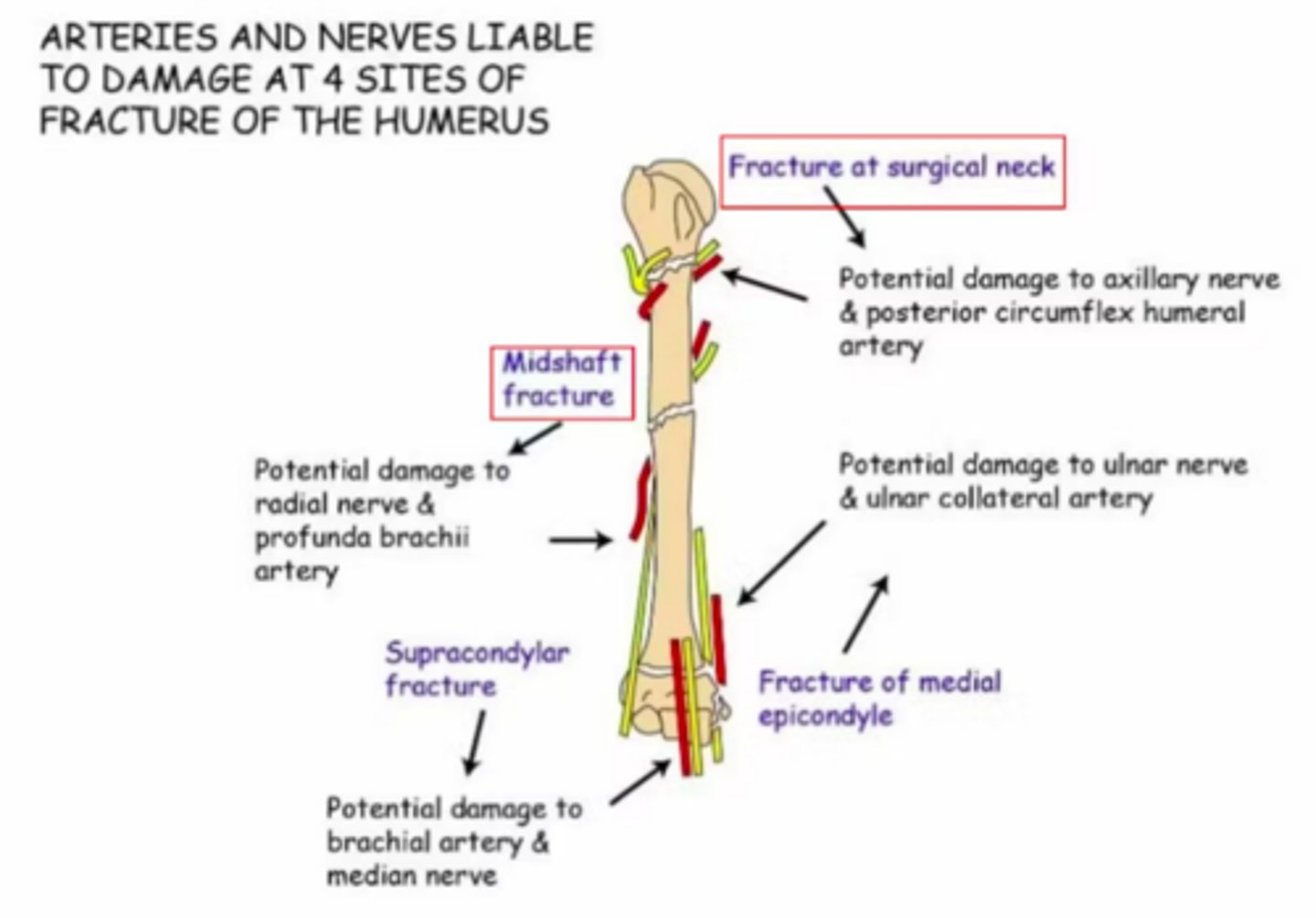
The surgical neck of humerus is more frequently fractured than the anatomical neck
A fracture at the surgical neck of the humerus will most likely damage what nerve?
Axillary nerve
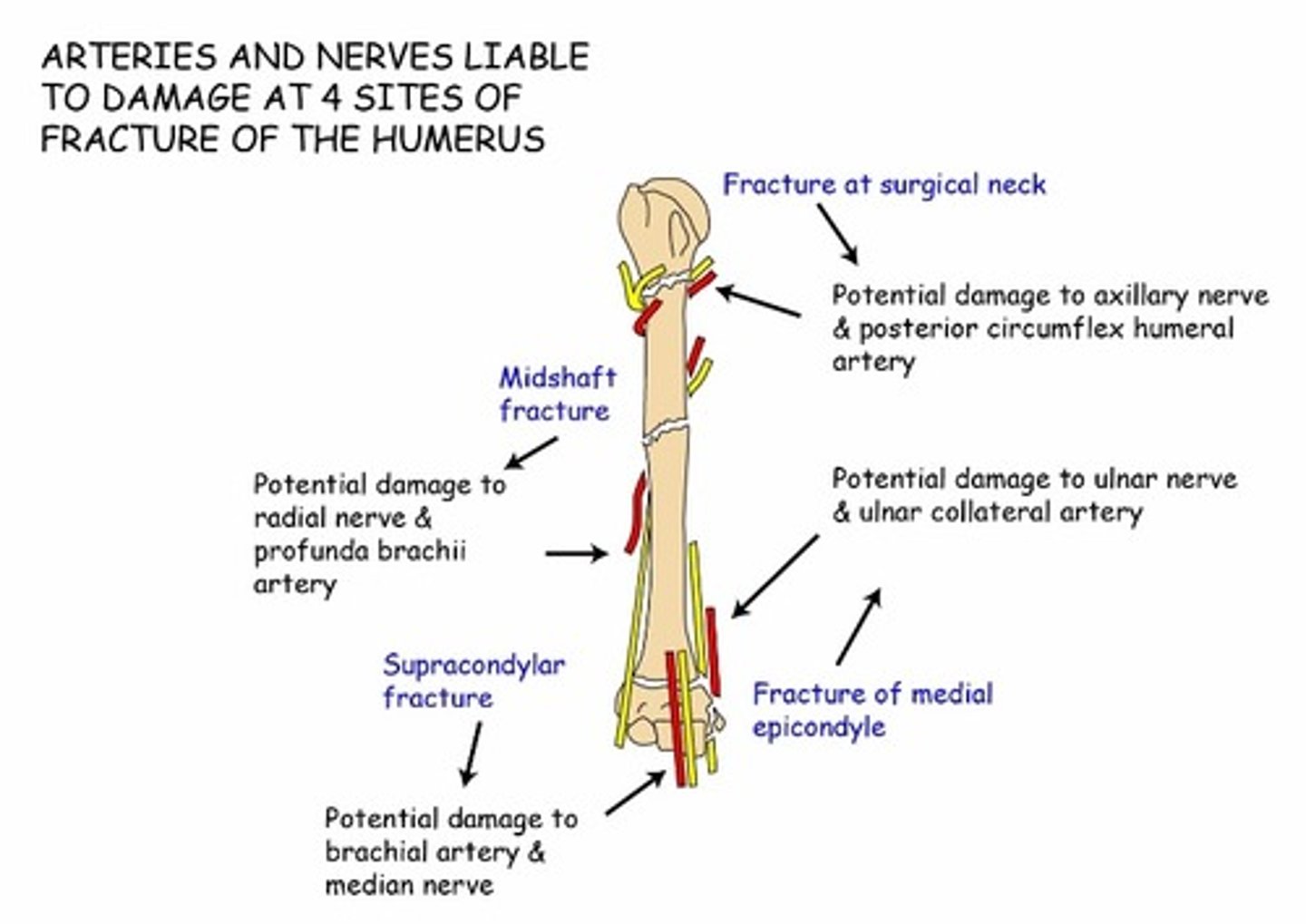
A fracture at the medial epicondyle of the humerus will most likely damage what nerve?
Ulnar nerve
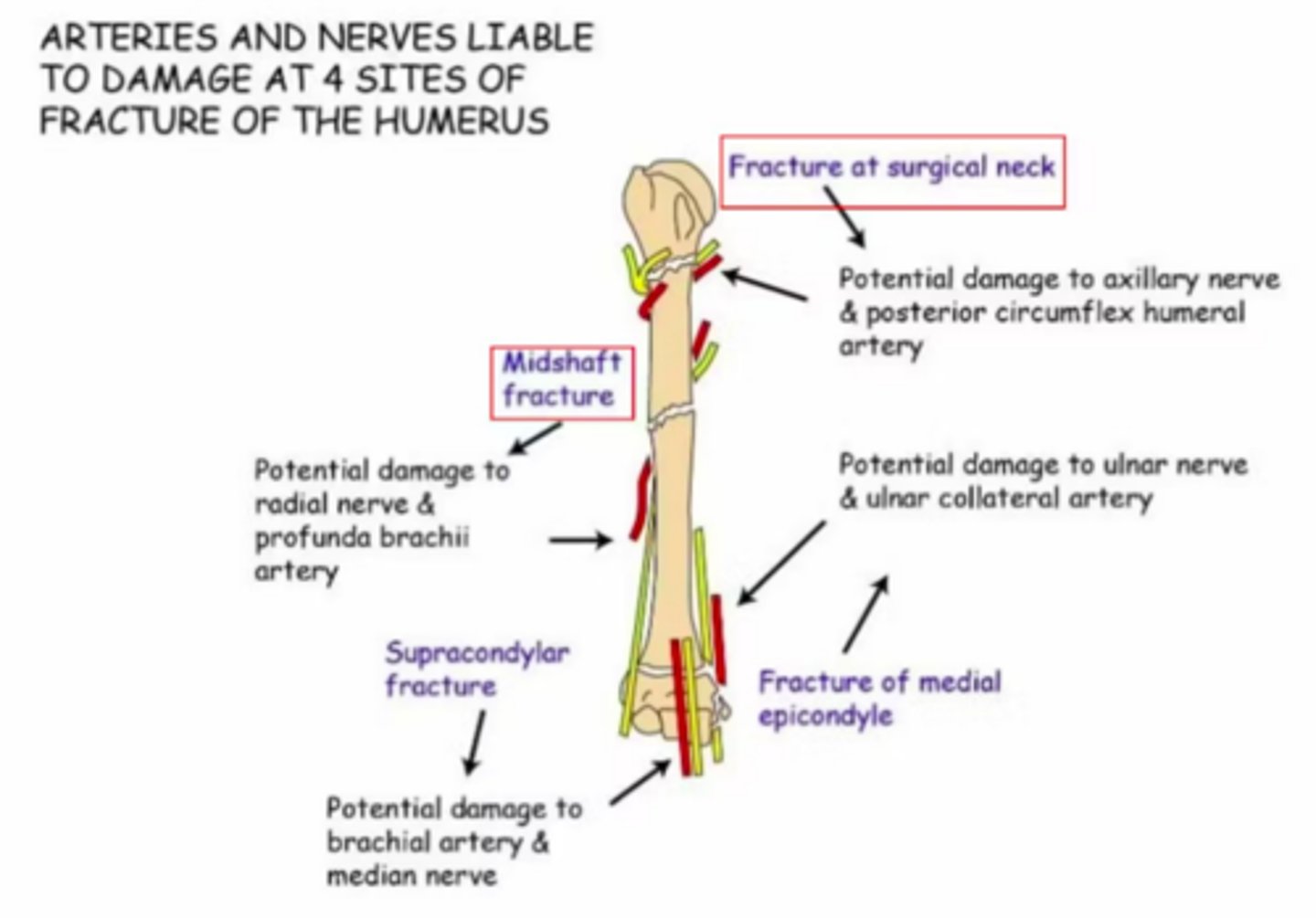
A supracondylar fracture of the humerus will most likely damage what nerve?
Median nerve
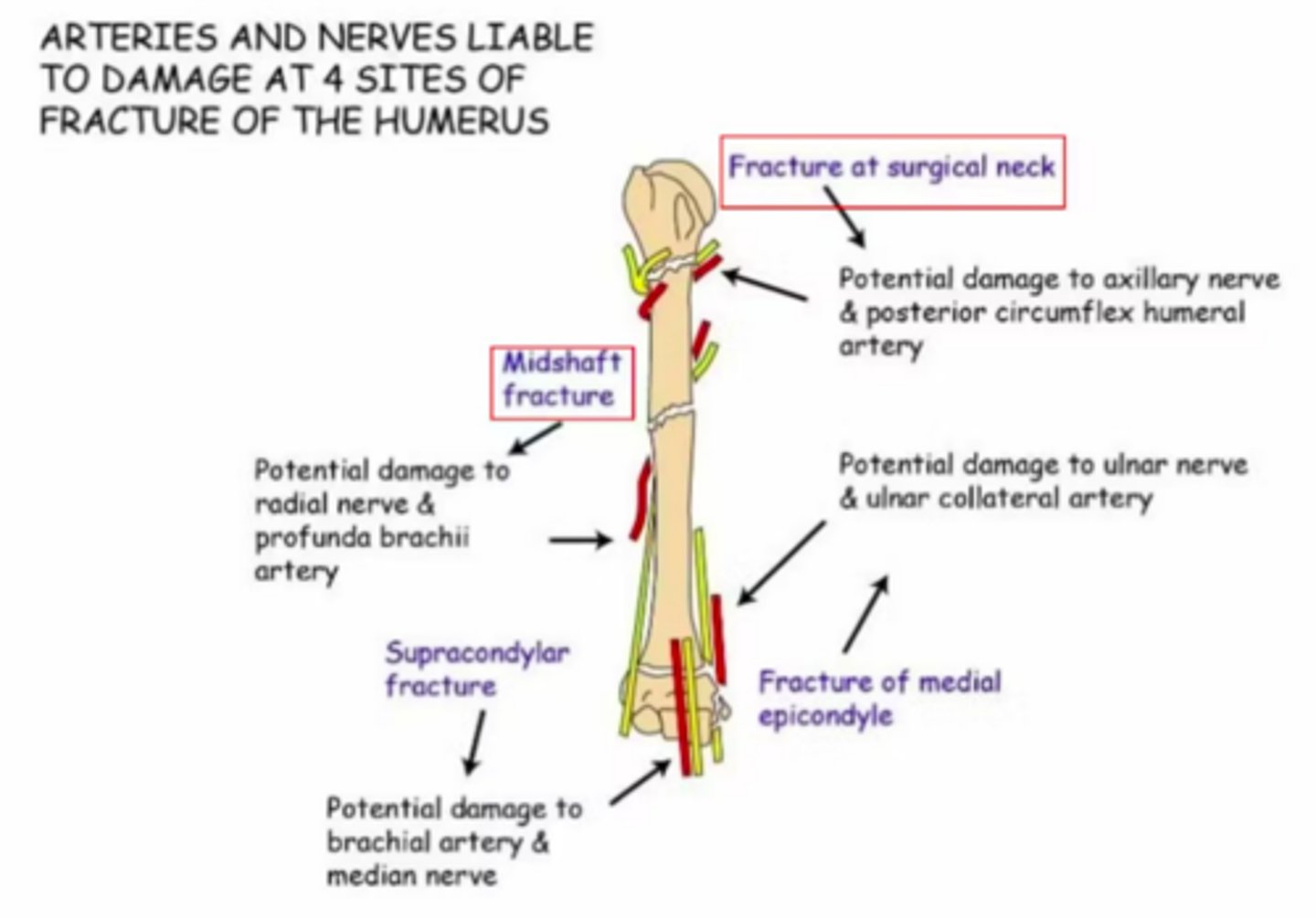
A midshaft fracture of the humerus will most likely damage what nerve?
Potential damage to radial nerve
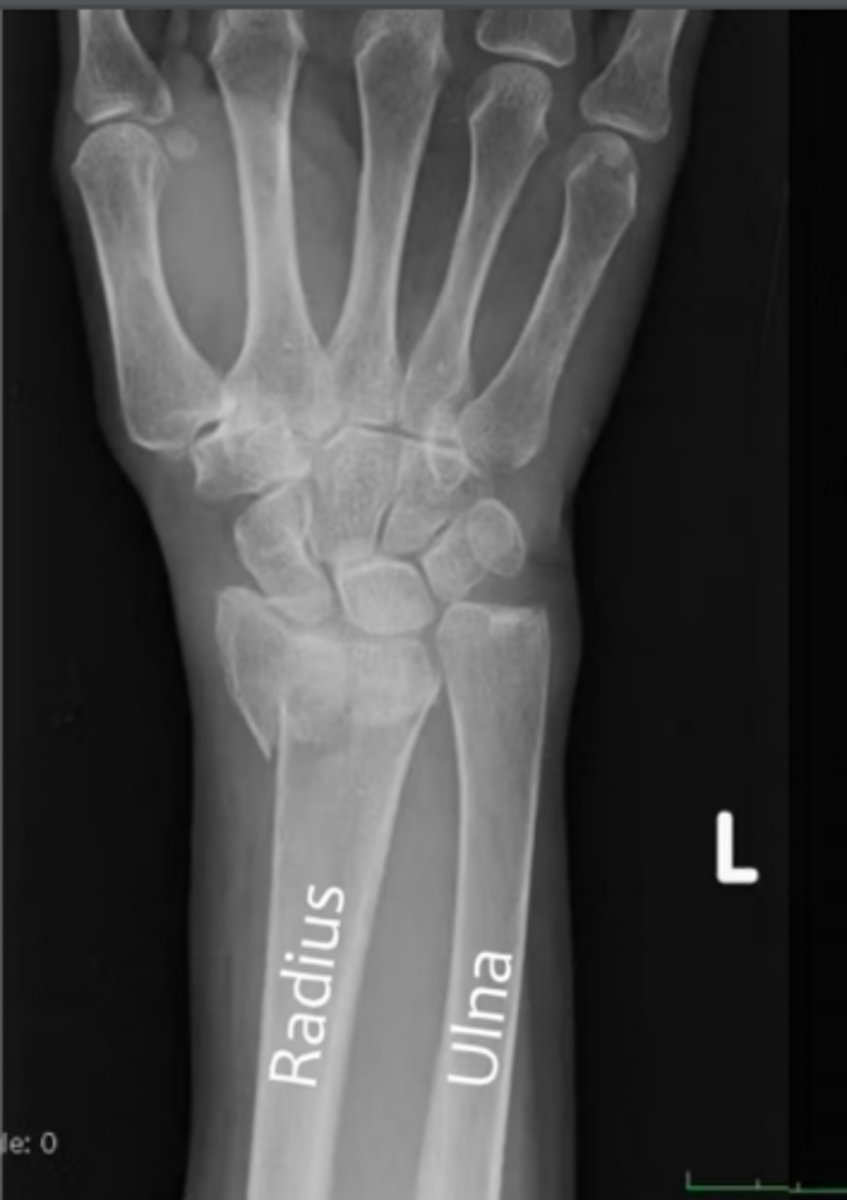
What fracture is observed in this x-ray image?
Radius fracture
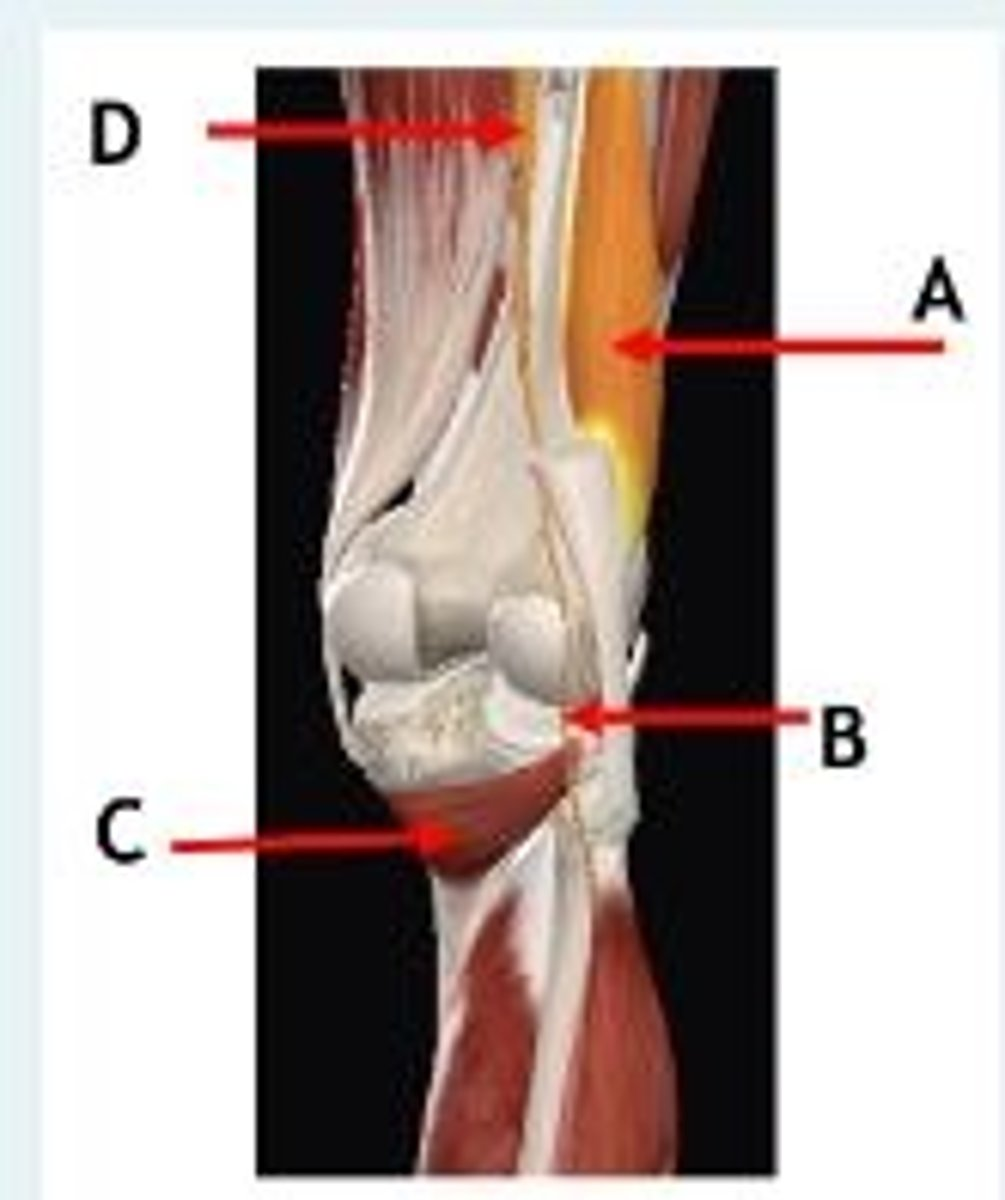
Match A, B, C, and D with the following options.
A → small head of biceps femoris
B → Common peroneal nerve
C → Popliteus muscle
D → Sciatic nerve
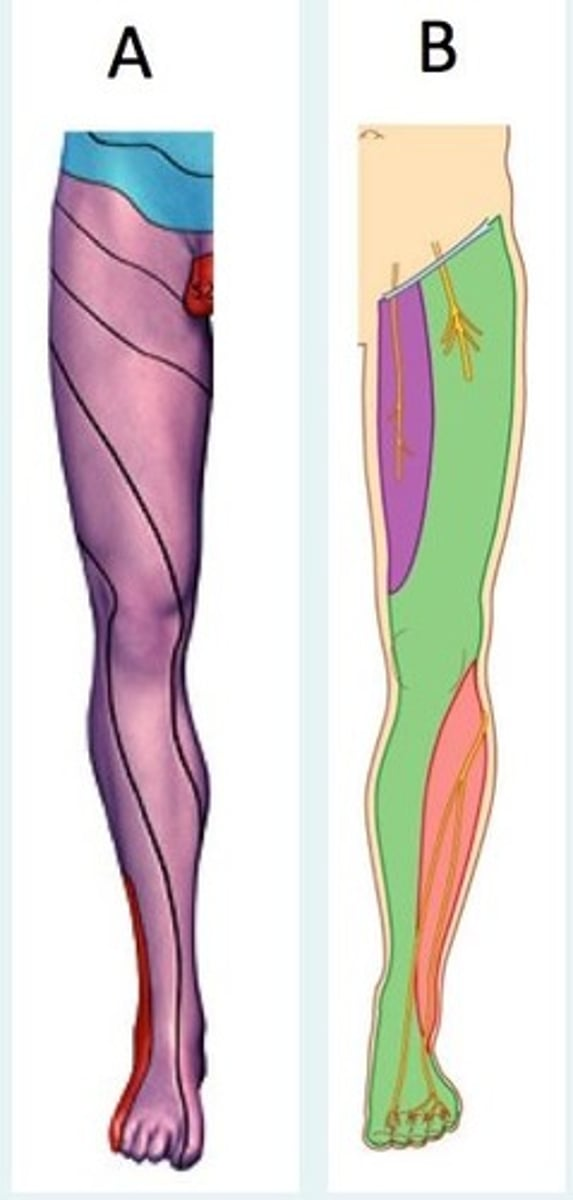
What is A and B?
A is a dermatome map
B is a cutaneous area nerve map
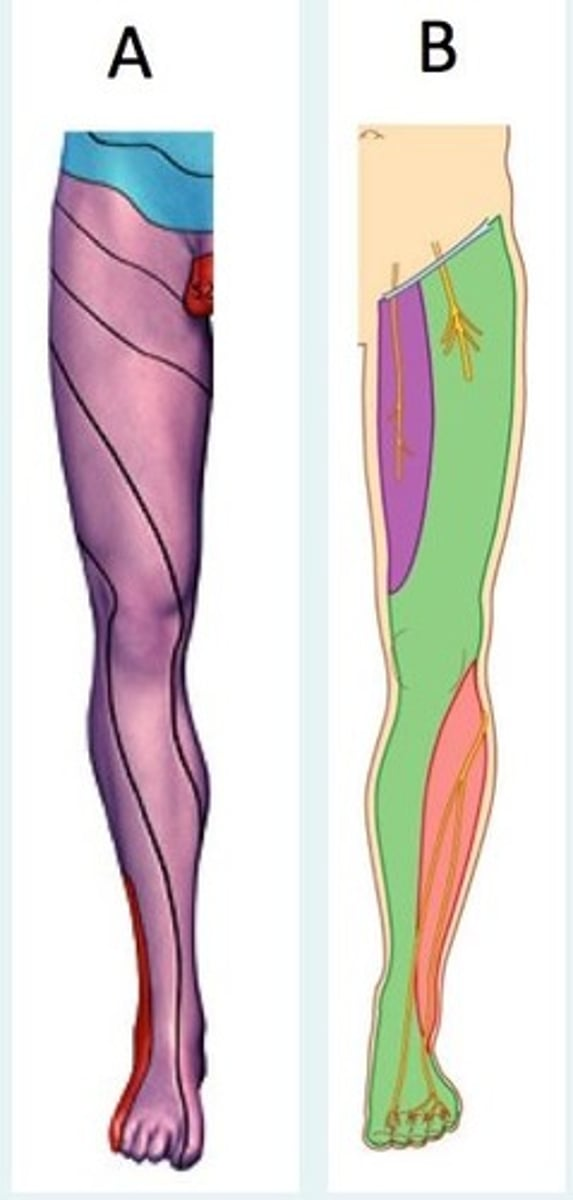
If you have complete numbness in one of the shaded areas in the image labelled ___, this likely points to a peripheral nerve being damaged and would likely include sensory and motor loss.
If you have complete numbness in one of the shaded areas in the image labelled B, this likely points to a peripheral nerve being damaged and would likely include sensory and motor loss.
You have a patient come into your office with an abnormal gait.
When they stand on their left leg with their right leg up in the air, their right hip drops below the level of his left hip. What type of gait would this present as?
Trendelenburg gait
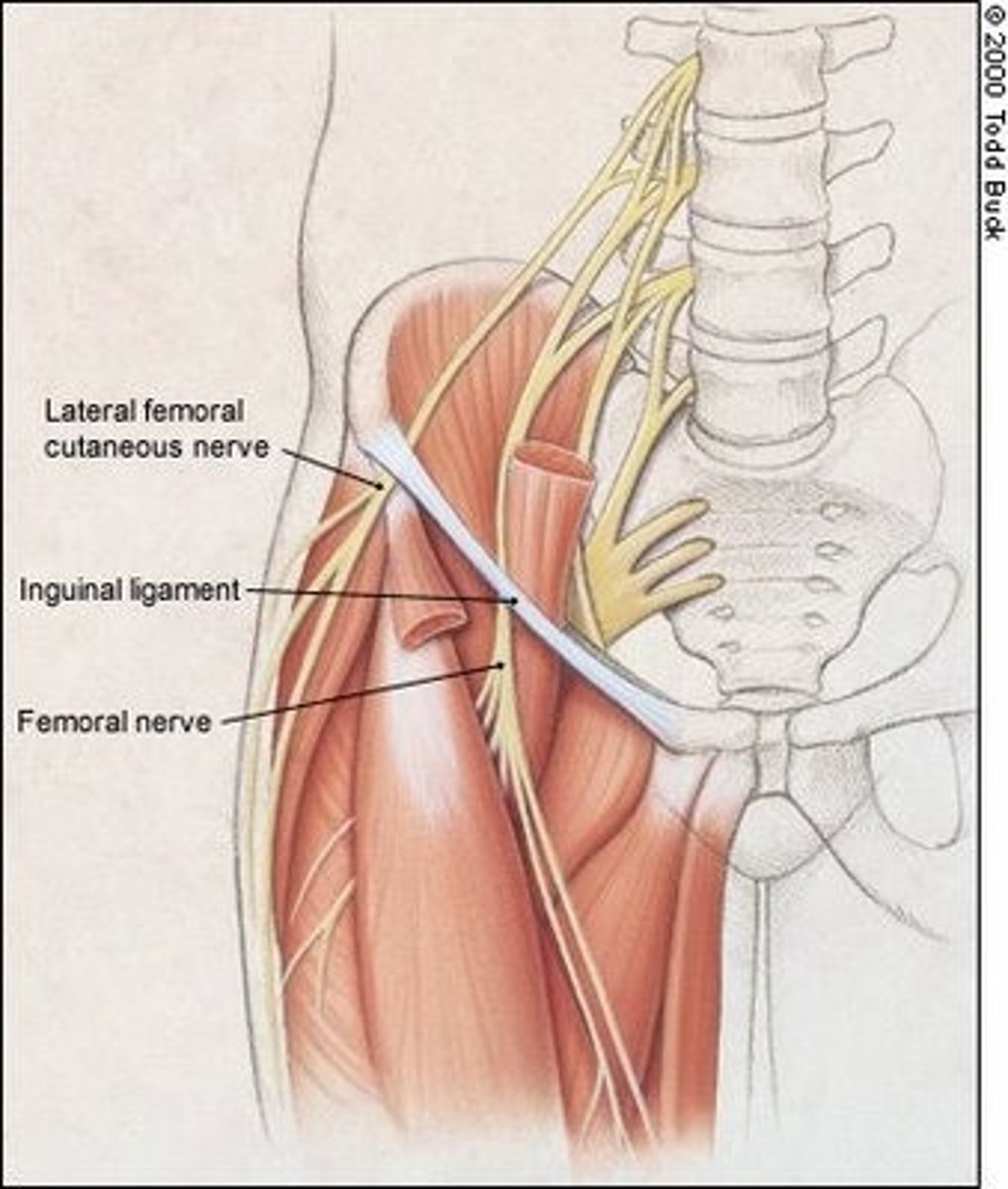
Which nerve emerges superficial to the sartorius muscle and if compressed can result in Meralgia Paresthetica AND how might this compression present in a patient?
Lateral cutaneous nerve of the thigh - numbness in the lateral thigh
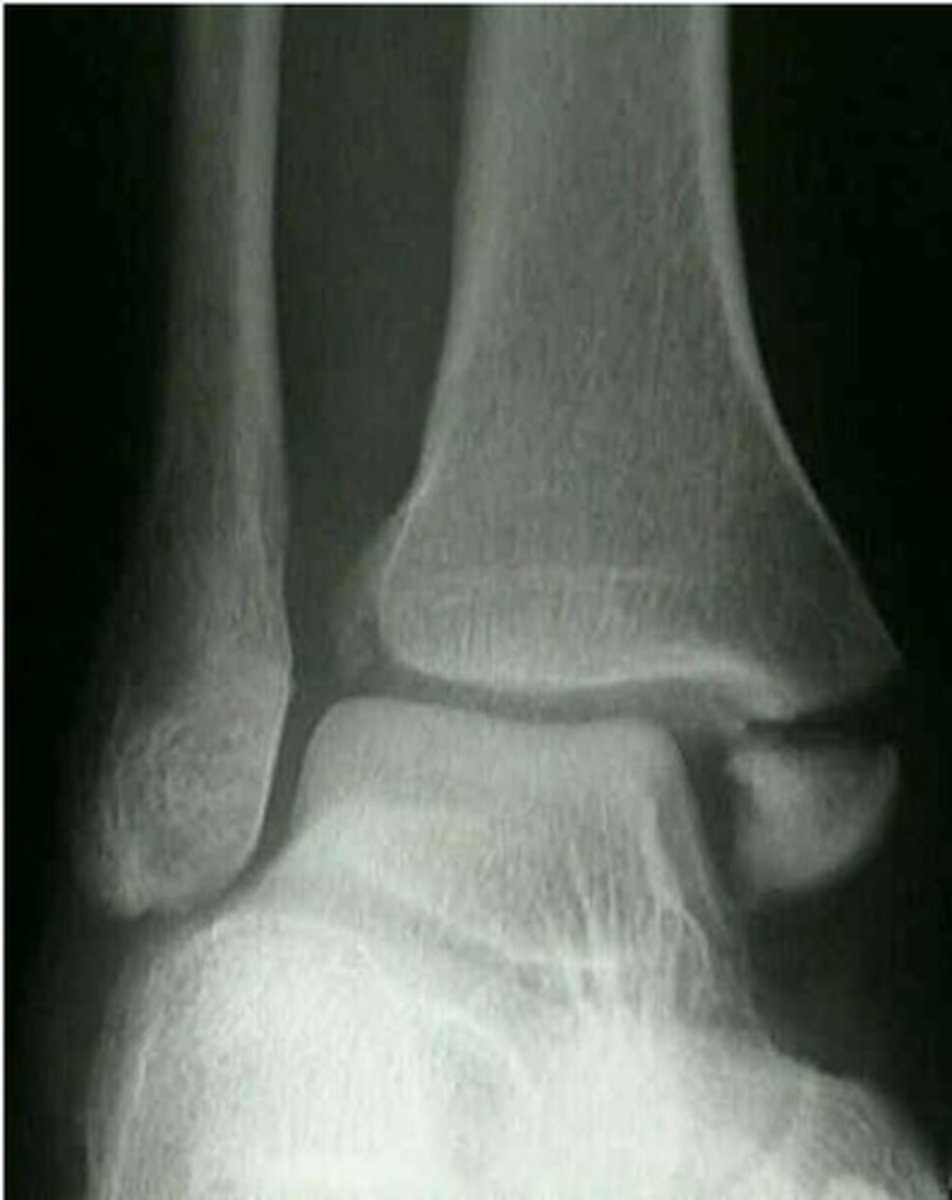
A 37 year old man was in a motorcycle accident and you are examining his injured ankle. You see his x-ray below.
What fracture do you see?
Medial malleolar fracture
Normally, when you consider inversion and eversion movements at your ankle, you have a greater range of movement when inverting your ankle.
Why is this?
Movements take place at the subtalar joints and the bony fibula on the lateral side of the ankle extends more inferiorly when compared to the medial distal end of the bony tibia, which prevents much eversion to occur
What important nerve and artery can be found in the tarsal tunnel & WHERE is this tunnel located?
Posterior tibial artery and tibial nerve can be found in the tarsal tunnel.
The tarsal tunnel passes posteriorly between the medial malleolus and calcaneus.
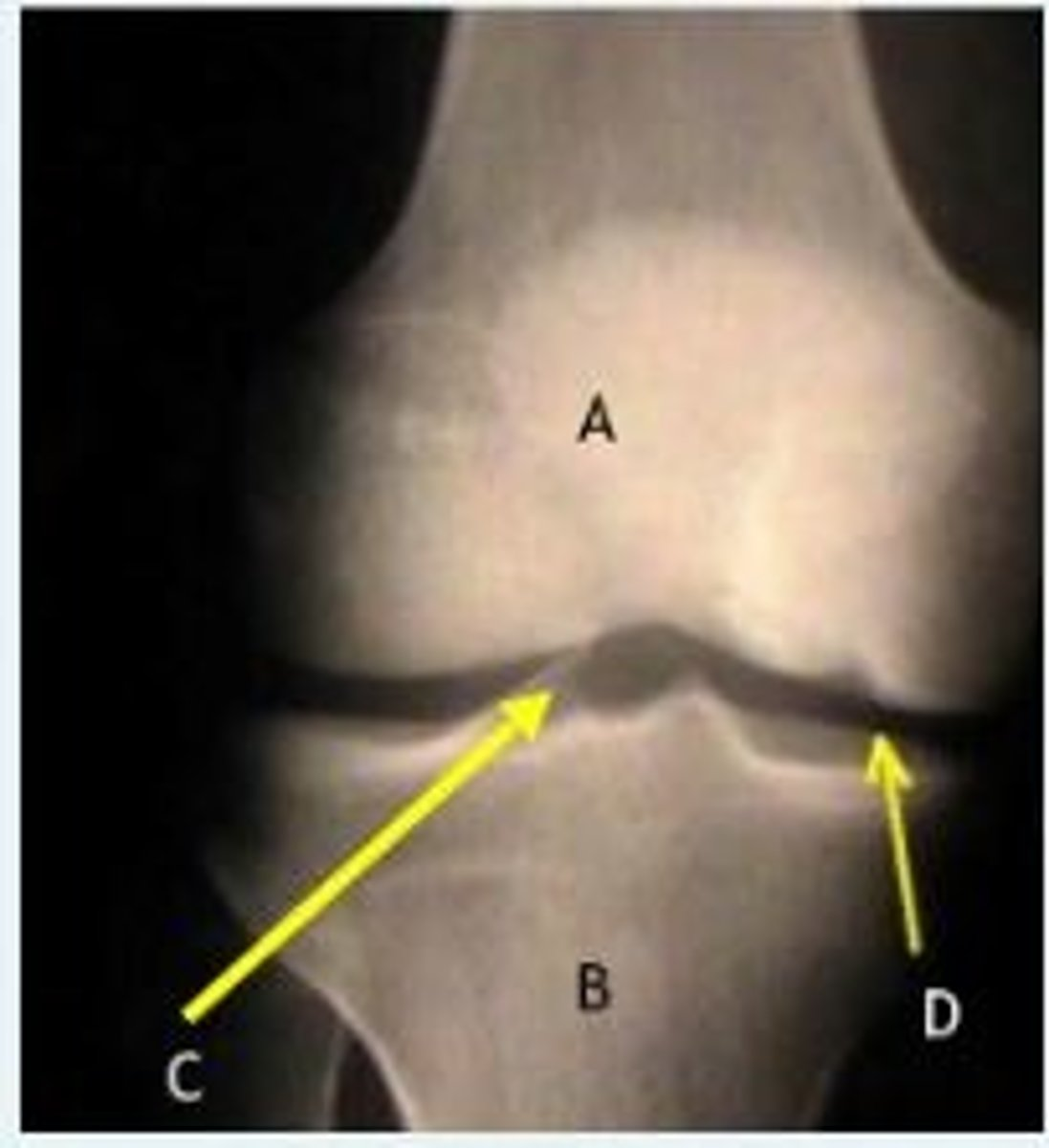
Label A-D
A = Femur lower end
B = Tibial tuberosity
C = Intercondylar eminence
D = Joint cavity/space
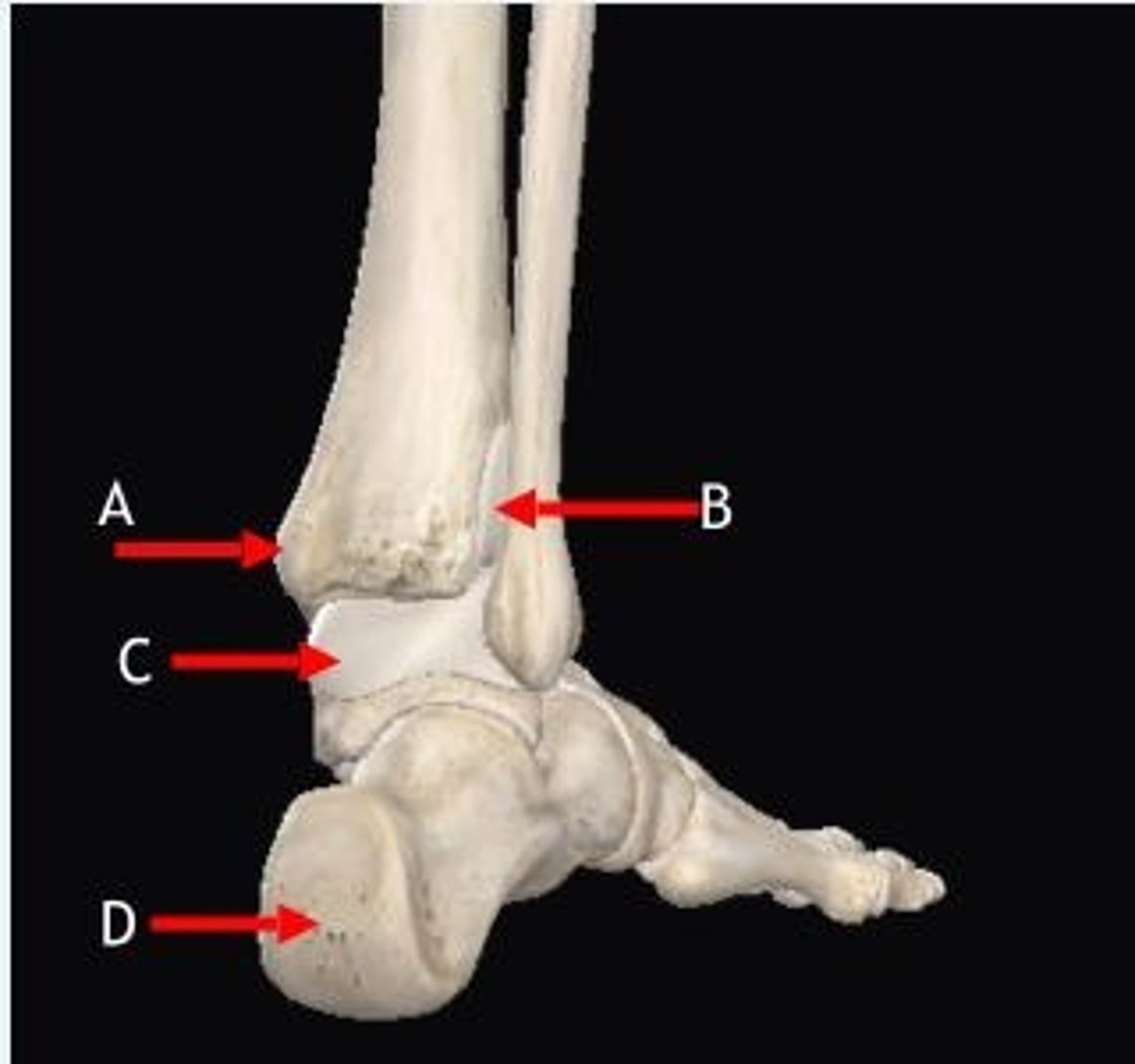
Identify labels A-D
A = Medial malleolus
B = Distal tibiofibular joint
C = Talus
D = Calcaneus
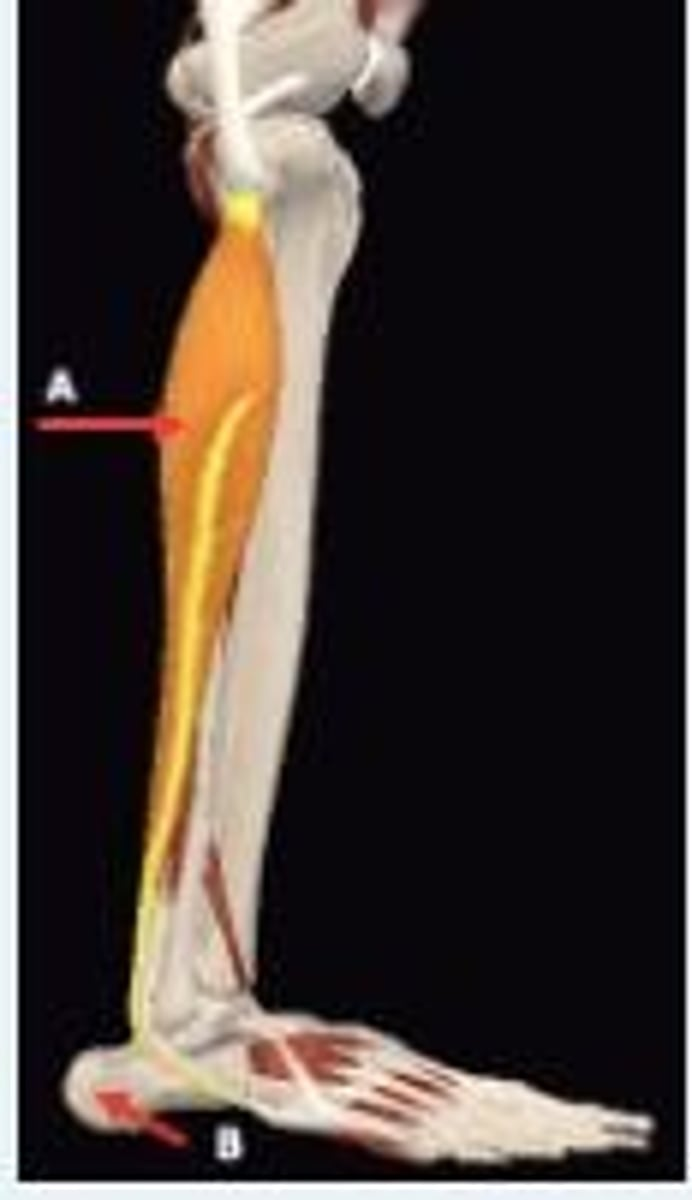
The label A represents ___ ___ muscle. It acts on ___ joint and moves the foot into the position of ___ movement of the foot. The B represents the heel bone called ___.
The label A represents peroneus longus muscle. It acts on subtalar joint and moves the foot into the position of eversion movement of the foot. The B represents the heel bone called calcaneus.
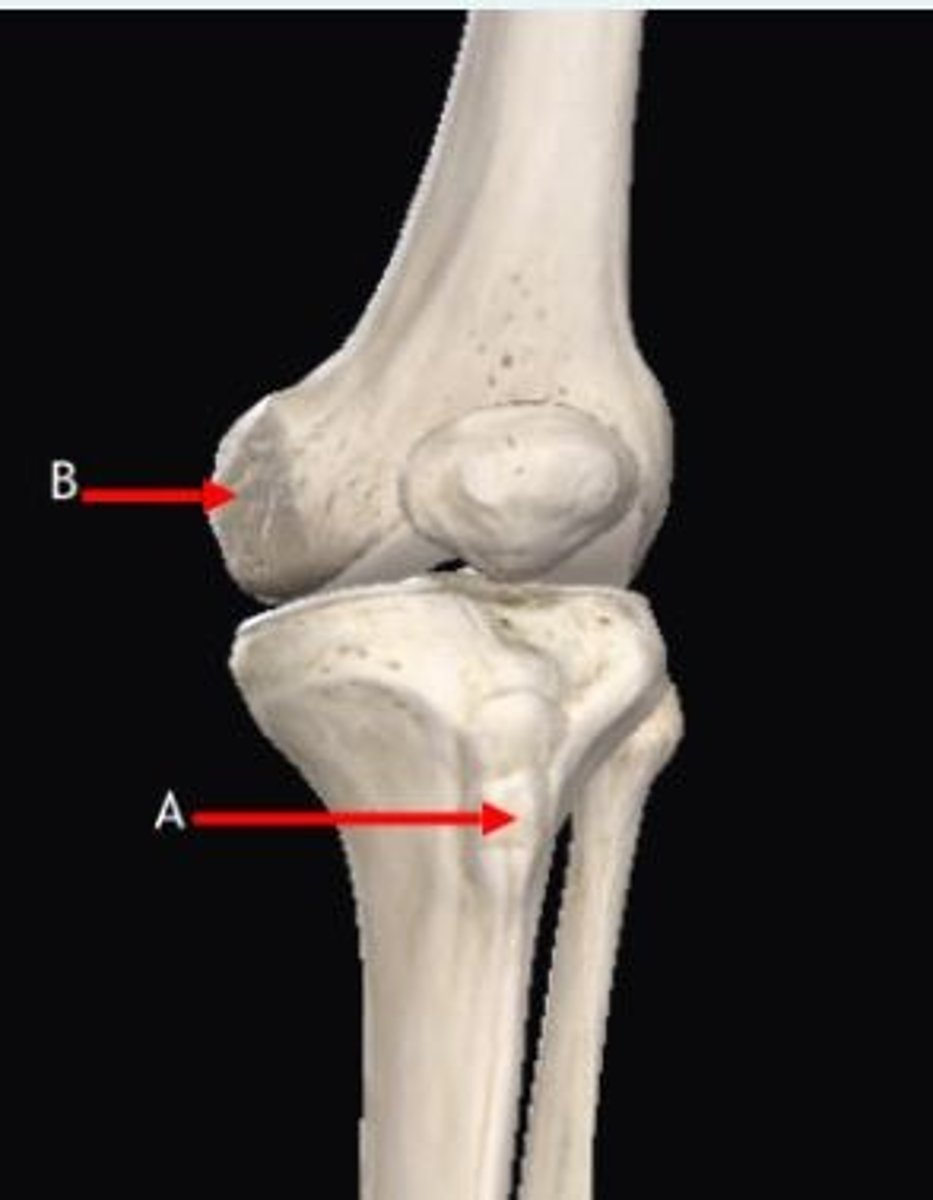
In the image below...
1) The site labelled A is a palpable landmark called ___
2) The ligament that attaches to site marked B is called ___
1) Tibial tuberosity
2) Medial collateral ligament
Sesamoid bones are found embedded in ________.
Tendons
*Think of the patella!
Four muscles that plantarflex the foot?
Flexor digitorum longus
Gastrocnemius
Soleus
Tibialis posterior
A car strikes a pedestrian on the lateral side of the leg at approximately the level of fibular neck; which nerve is most likely to be adversely damaged by such an injury
Common peroneal nerve
In an accident involving farm machinery, a farmer receives a cut on the dorsal side of his ankle. As you inspect and test for functional deficits, you find that a few tendons have been cut, but the accompanying nerve is intact. You would expect to find loss / weakness of...
Dorsiflexion of the foot
Which one of the following represents a clinical condition referred to as ‘water on the knee’?
Prepatellar bursitis
Which one of the following location / area does not need / have a bursa?
a) Around blood vessels
b) Tendons exposed to friction
c) Cartilage exposed to wear
d) Ligaments exposed to friction
e) Beneath skin covering a bone
a) Around blood vessels