Neuroglia, Synaptic Function, and Neural Communication: Key Concepts for Neuroscience
 Call Kai
 Learn
Learn Practice Test
 Spaced Repetition
 Match
Match Flashcards
 Knowt Play
1/28

There's no tags or description
Looks like no tags are added yet.
Name | Mastery | Learn | Test | Matching | Spaced | Call with Kai | Chat |
|---|
No analytics yet
Send a link to your students to track their progress
29 Terms
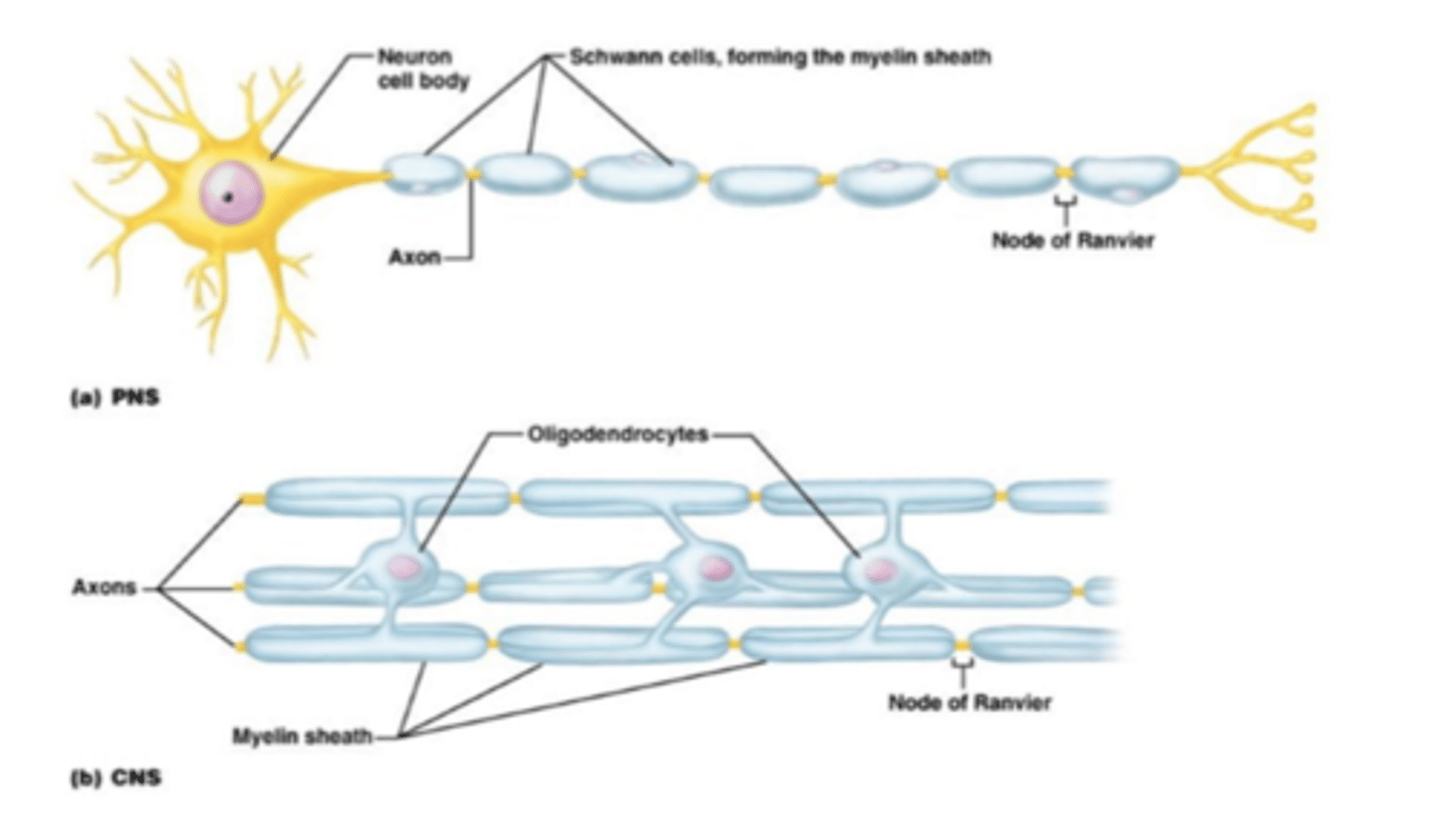
oligodendrocytes
glial cells that myelinate CNS axons
schwann cells
Supporting cells of the peripheral nervous system responsible for the formation of myelin.
oligodendrocyte vs schwann cell
A single oligodendrocyte can form myelin sheath on many different axons in neurons; whereas a schwann cell needs multiple of it to cover an axon.
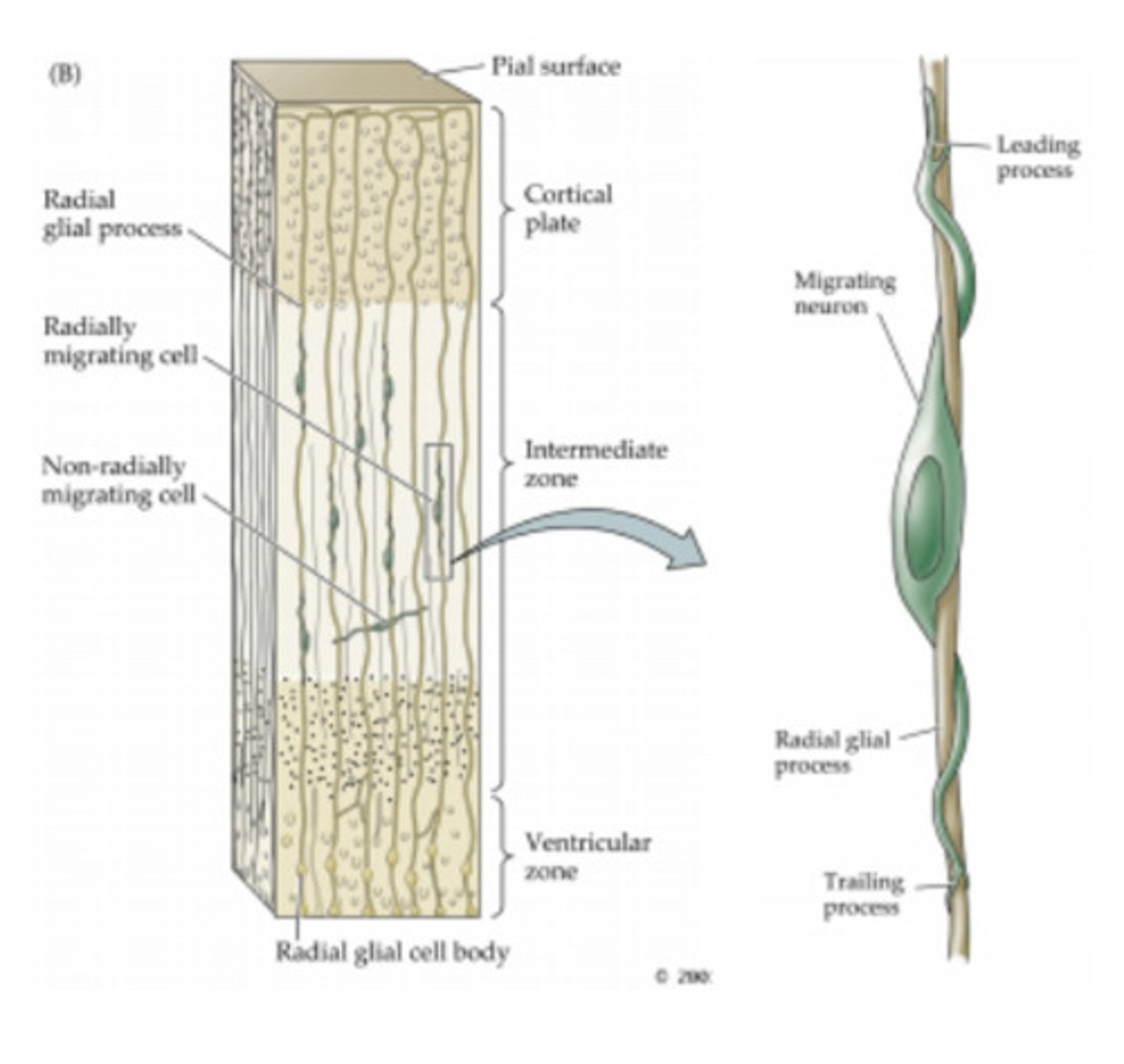
radial glia
guide the migration of neurons and their axons and dendrites during embryonic development
microglia
phagocytic cells that ingest and break down waste products and pathogens in the CNS. respond to injury and disease, provide energy to neurons.
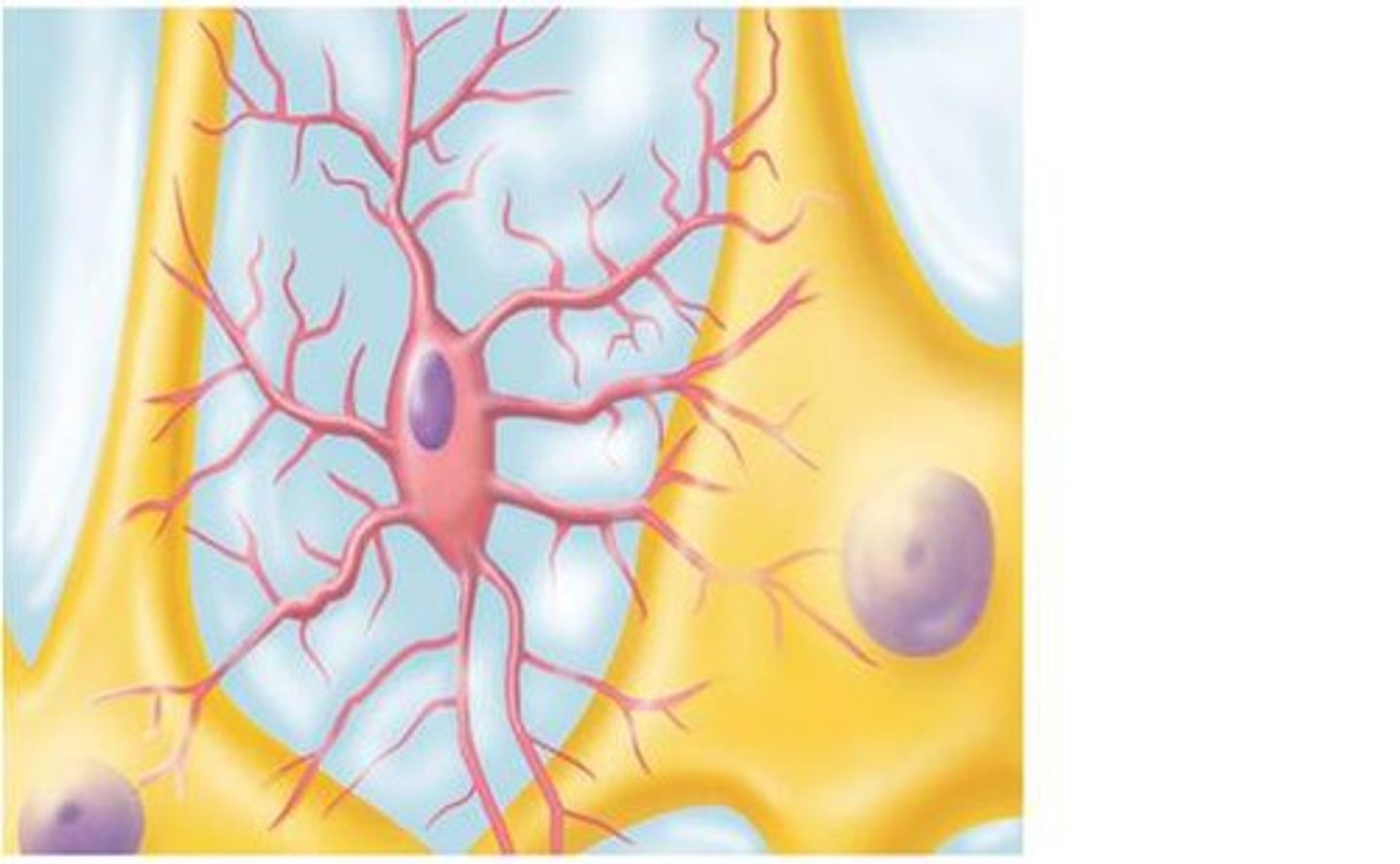
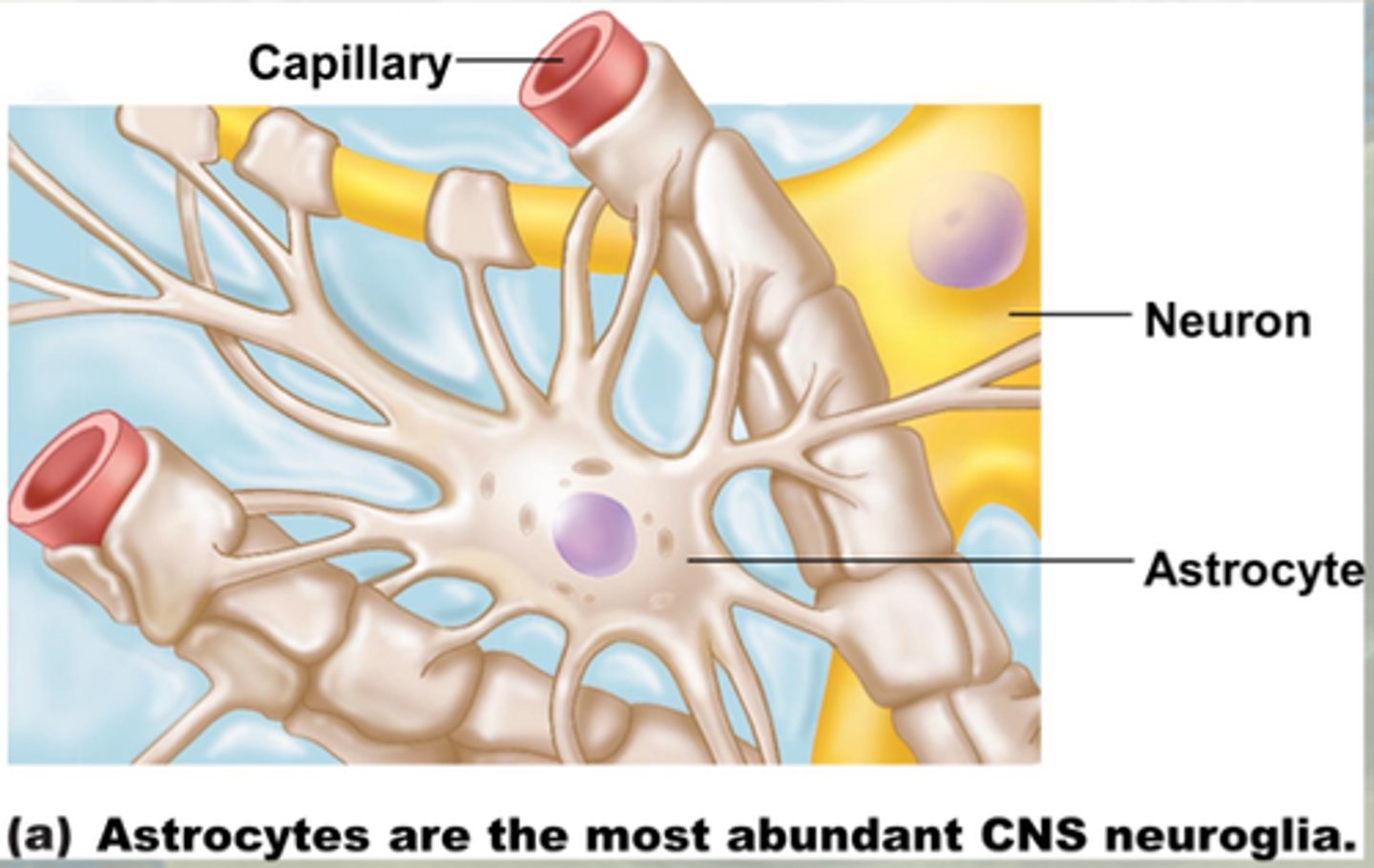
astrocytes
Provide structural and metabolic support for neurons. Form blood brain barrier. trigger formation of seven times as many connections in neurons
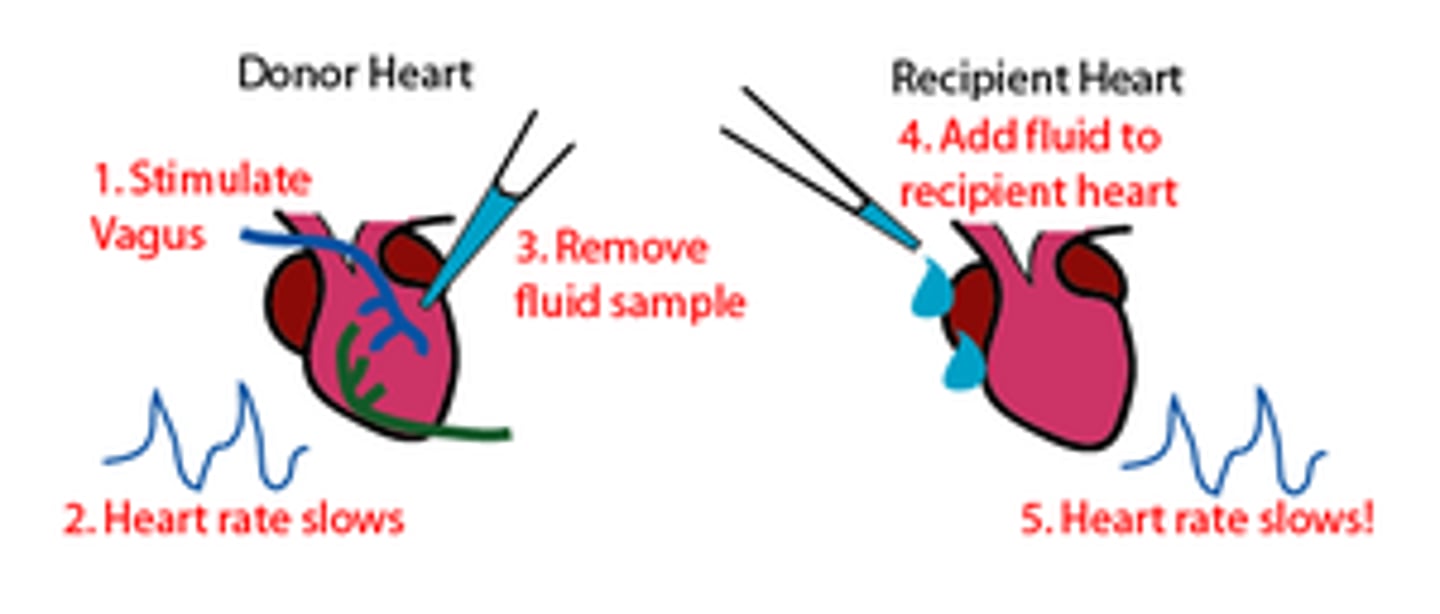
Otto Loewi
-conducted an experiment with frogs hearts to demonstrate a chemical interaction between nerves
-discovery of first neurotransmitter
Neurons release at least two different chemicals that have opposite effects.
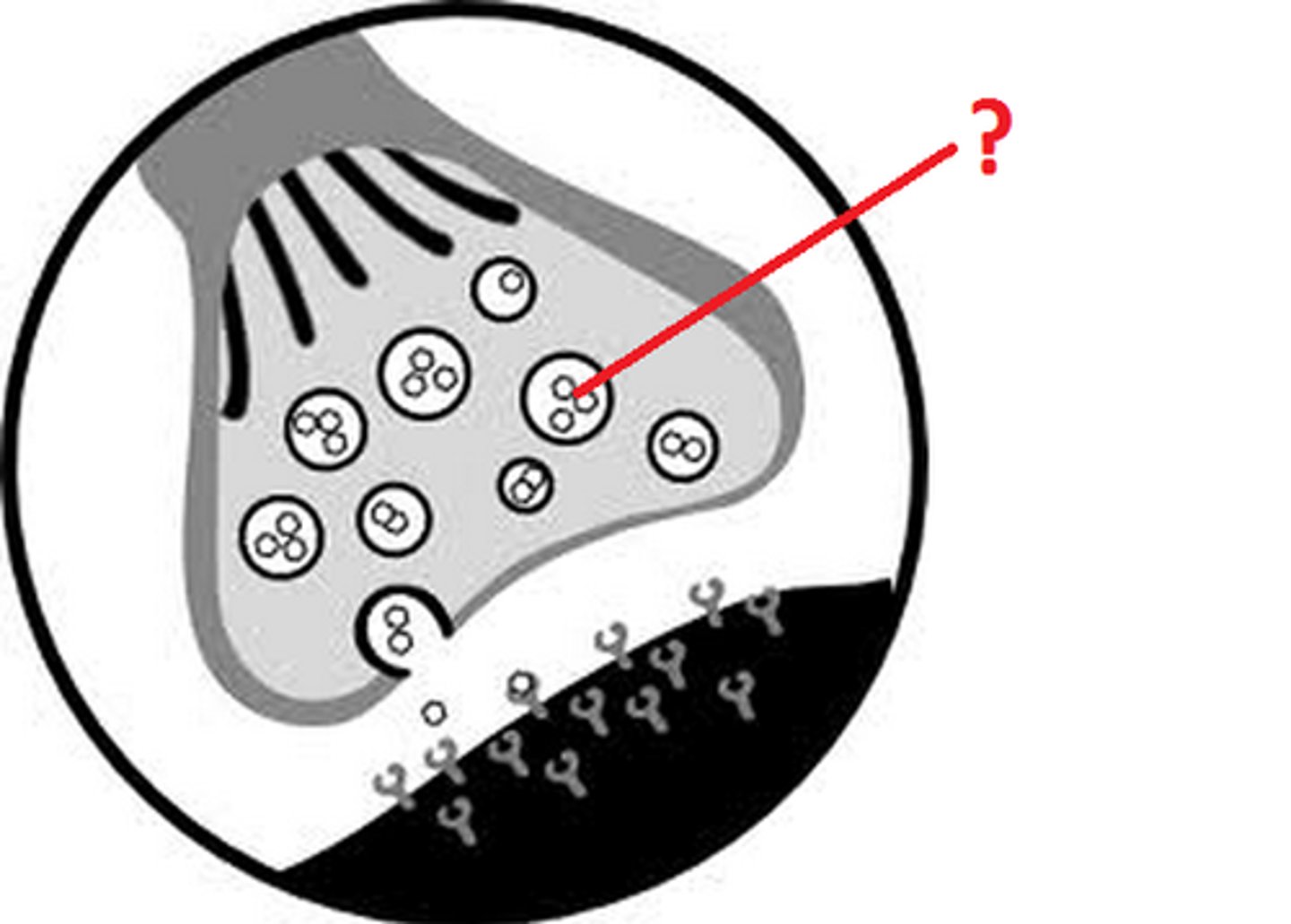
vesicles
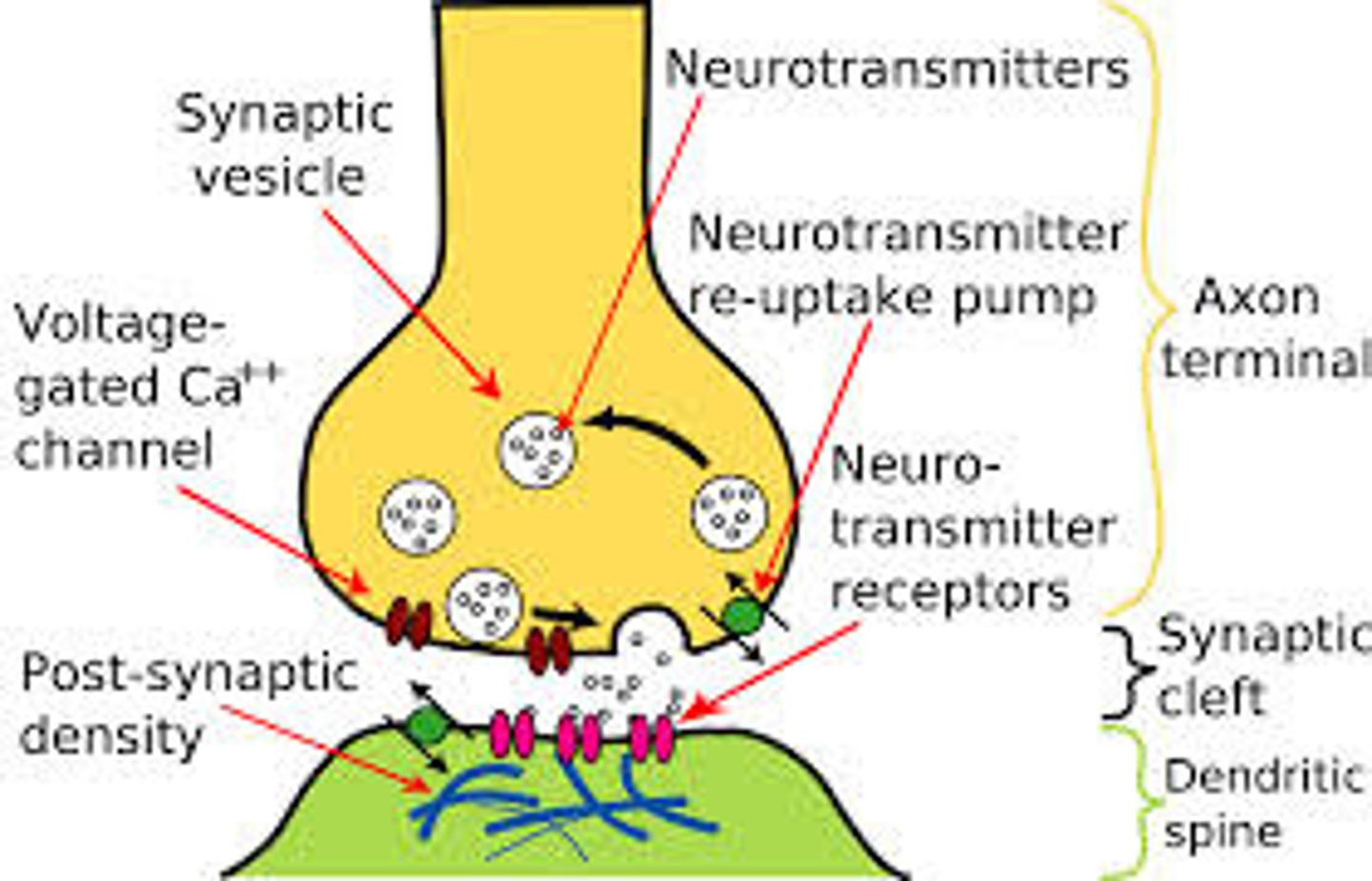
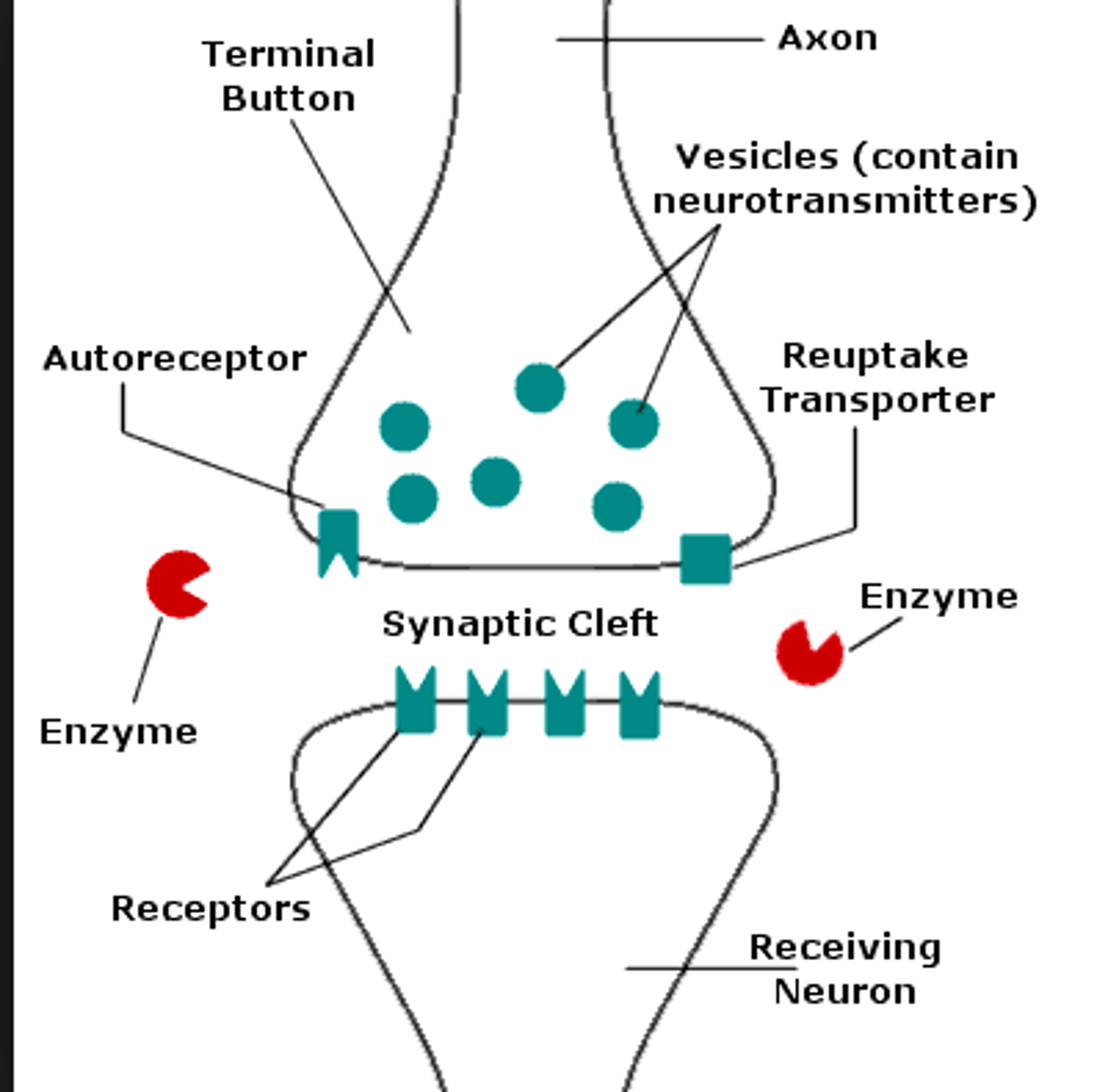
small membrane sacs that specialize in moving products into, out of, and within a cell. enclosed bubbles at axon terminals which store neurotransmitters.
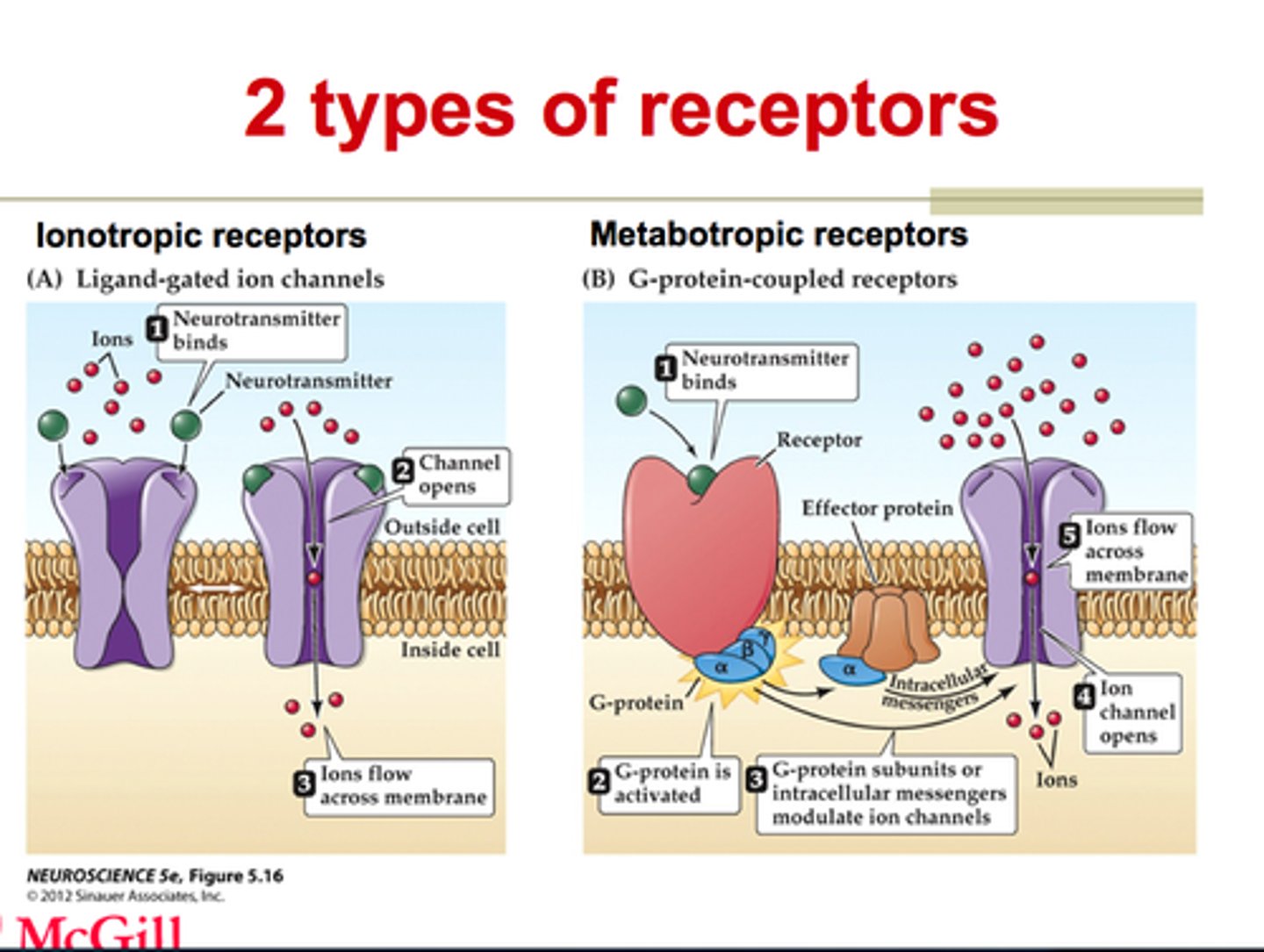
ionotropic receptors
receptors that are coupled to ion channels and affect the neuron by causing those channels to open. muscle activation, sensory processing, acts very quickly.
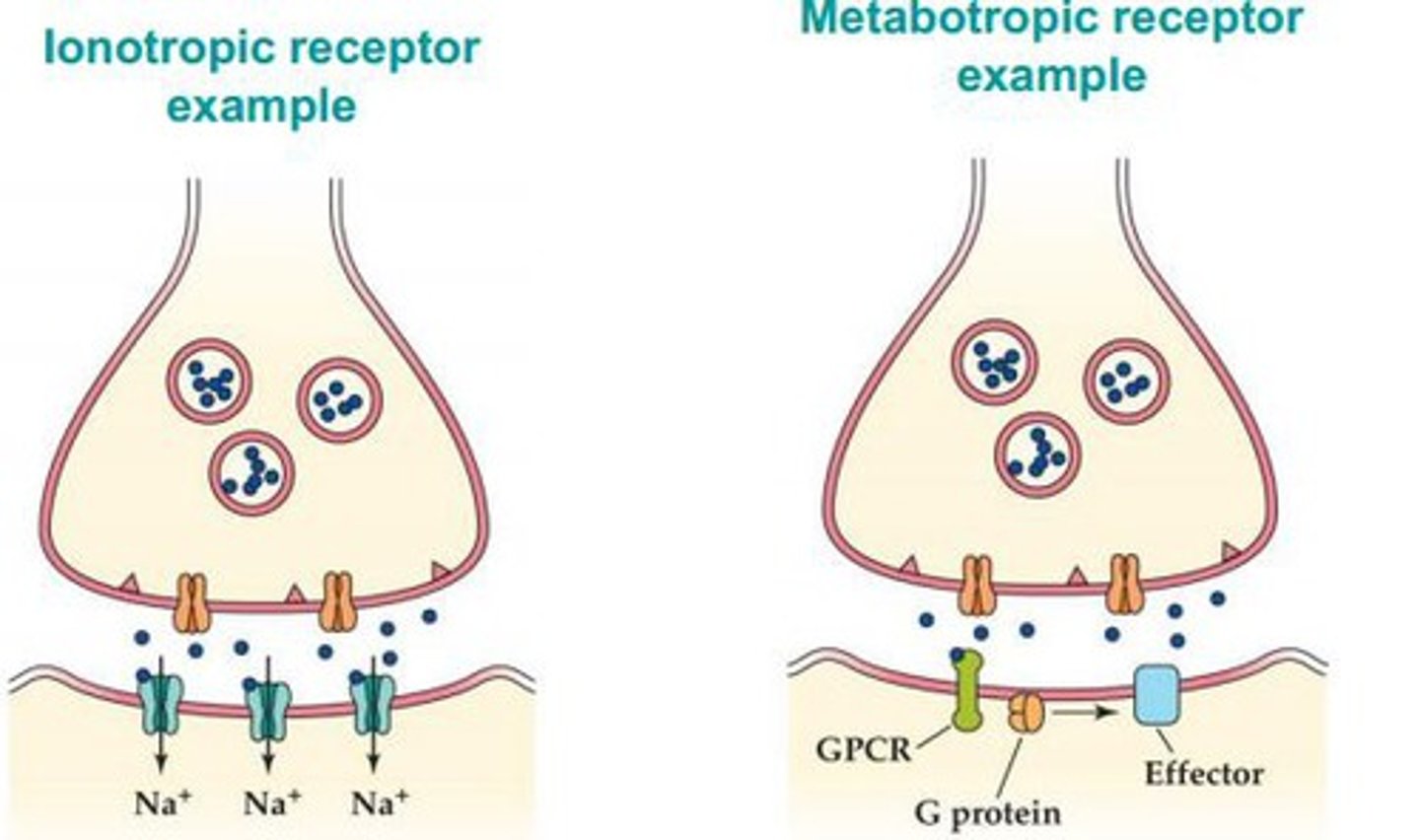
metabotropic receptors
receptors that are associated with signal proteins and G proteins. NOT an ion channel, act through a 2nd messenger.
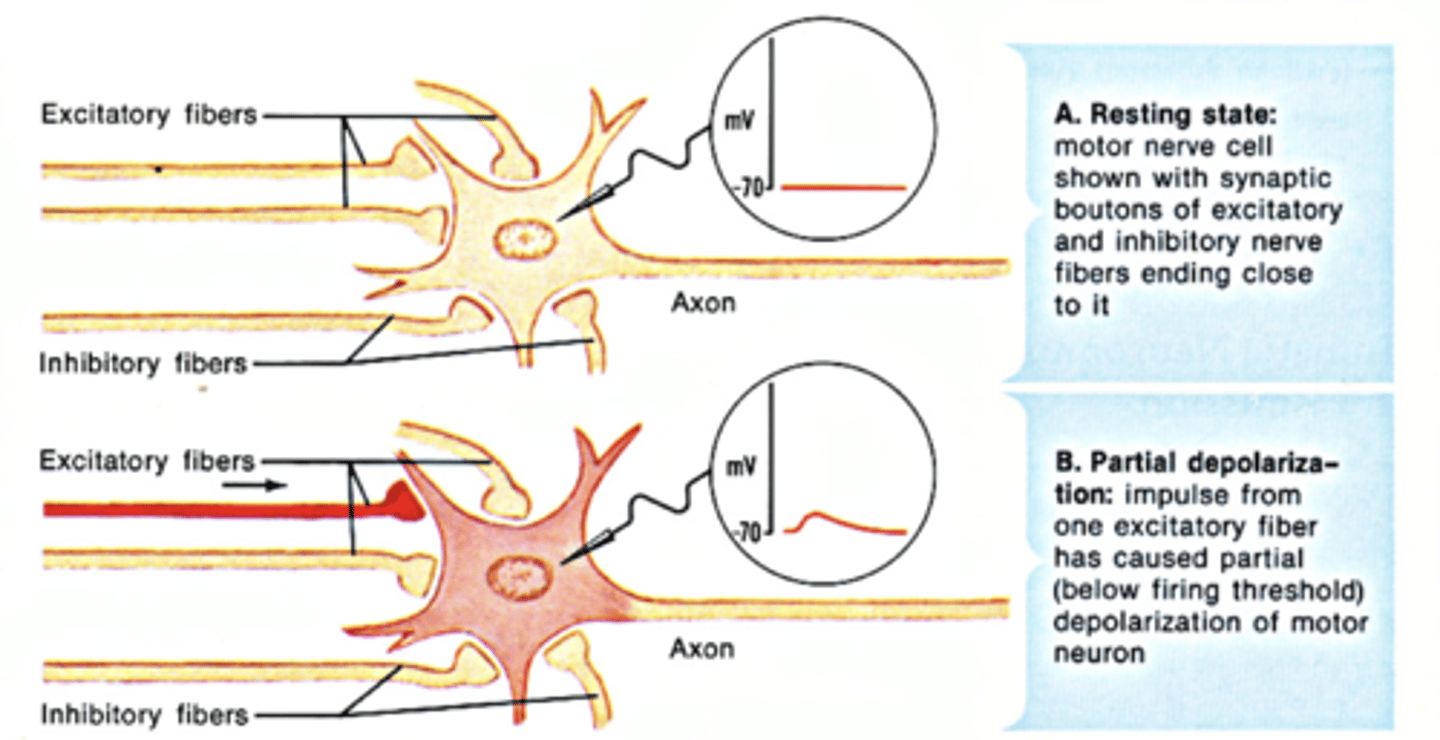
partial depolarization
A positive change in a neural membrane's voltage, which is excitatory and makes an action potential more likely to occur.
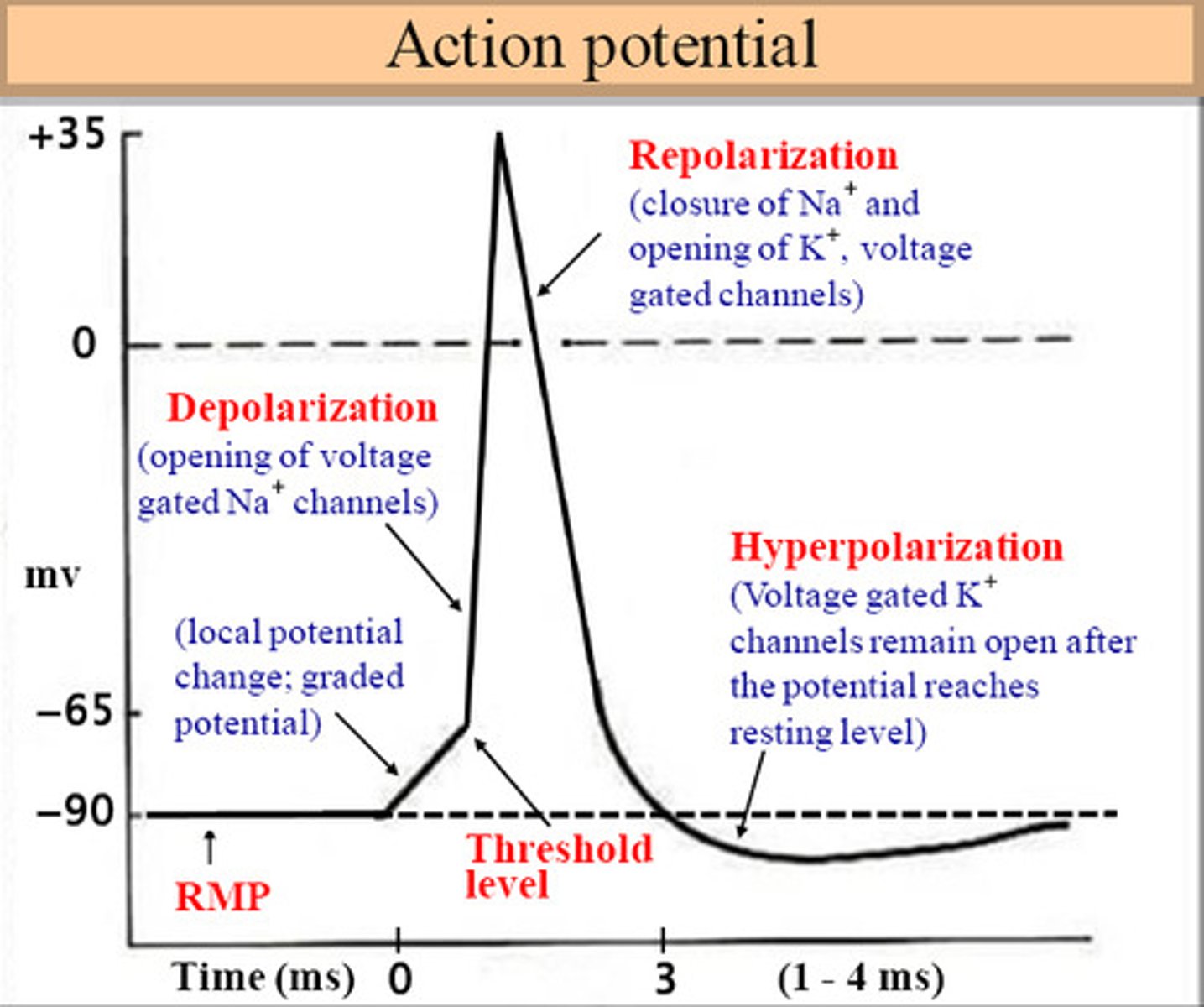
hyperpolarization
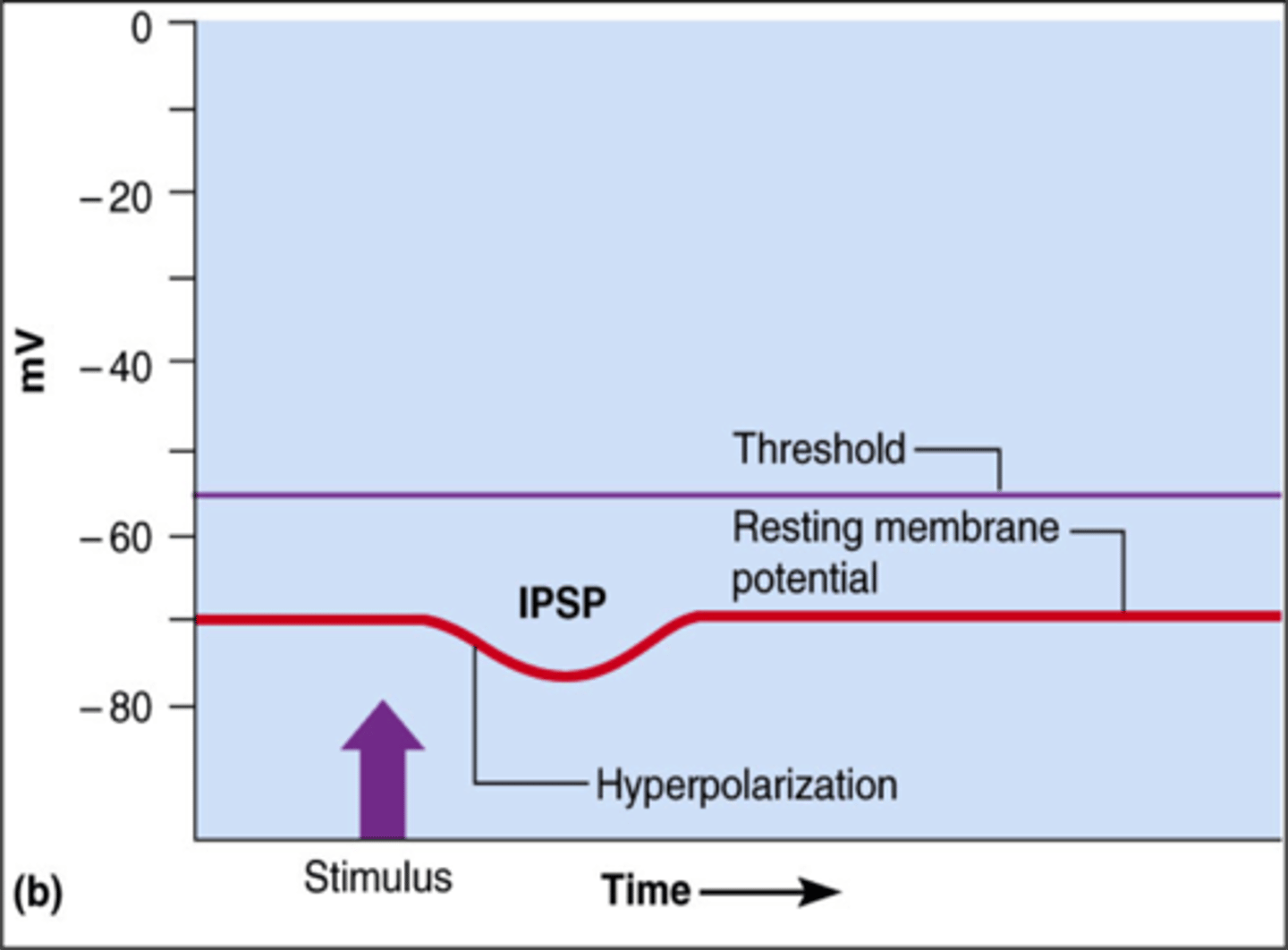
The movement of the membrane potential of a cell away from rest potential in a more negative direction. Makes an action potential less likely to occur.
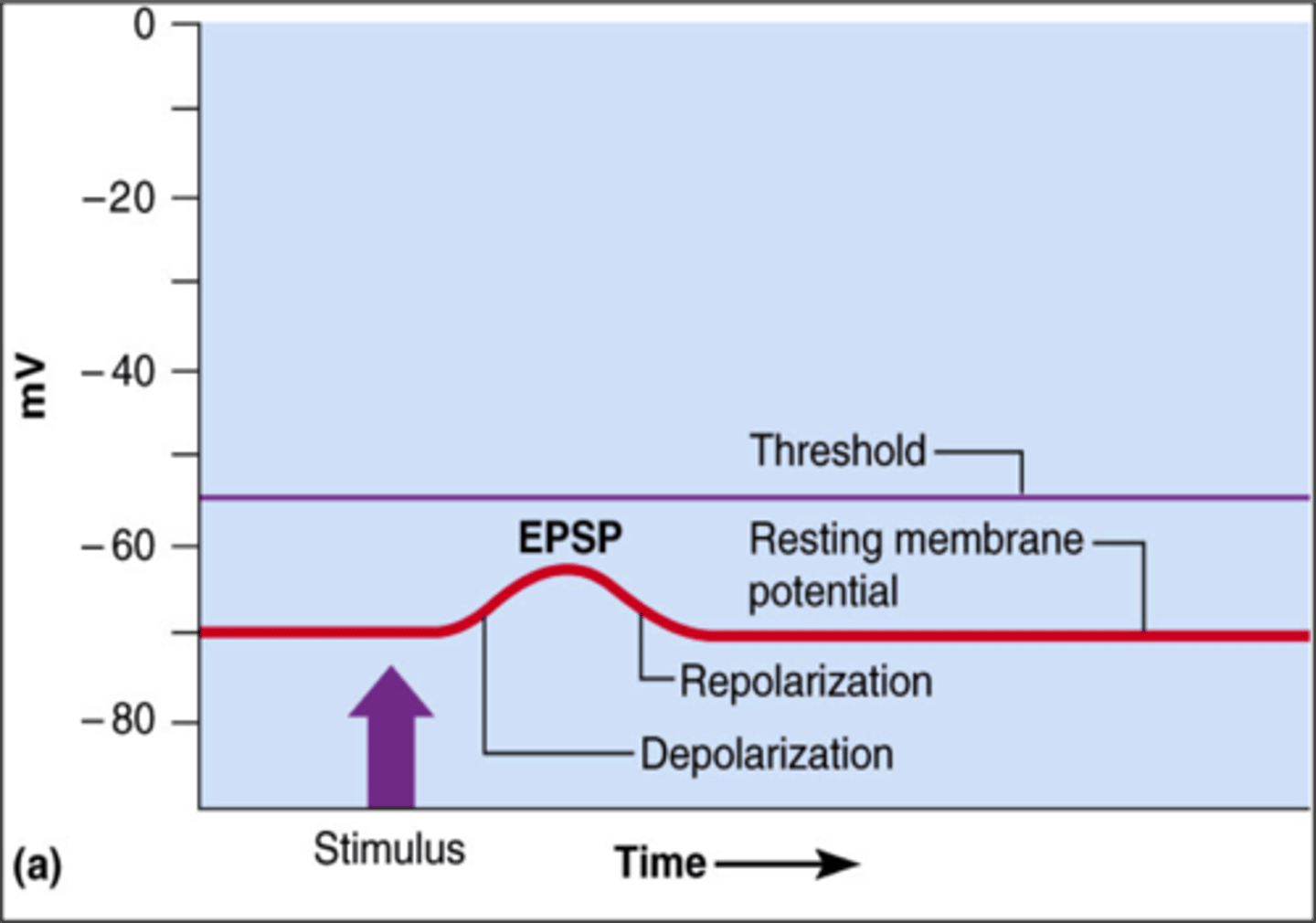
Excitatory Postsynaptic potential (EPSP)
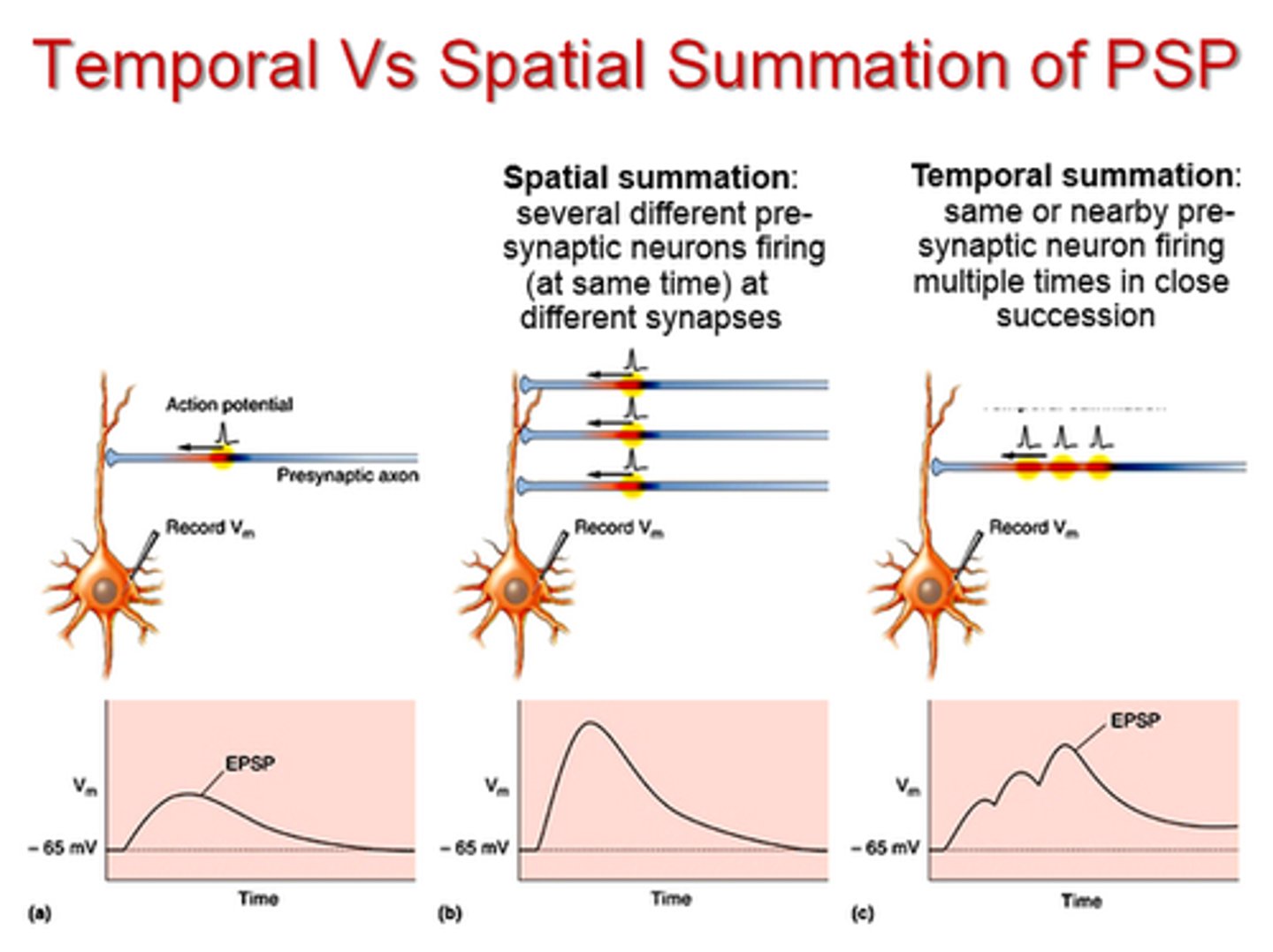
a slight depolarization of a postsynaptic cell, bringing the membrane potential of that cell closer to the threshold for an action potential. Likely using ionotropic receptors. Makes cell more positive, happens in postsynaptic neuron.
IPSP (inhibitory postsynaptic potential)
synaptic potential that makes a postsynaptic neuron less likely to generate an action potential. Open potassium channels, chloride channels, or both.
Spatial summation
Integration by a postsynaptic neuron of inputs (EPSPs and IPSPs) from multiple sources. Combines potentials occurring SIMULTANEOUSLY at different locations on the dendrites and cell body.
Temporal summation
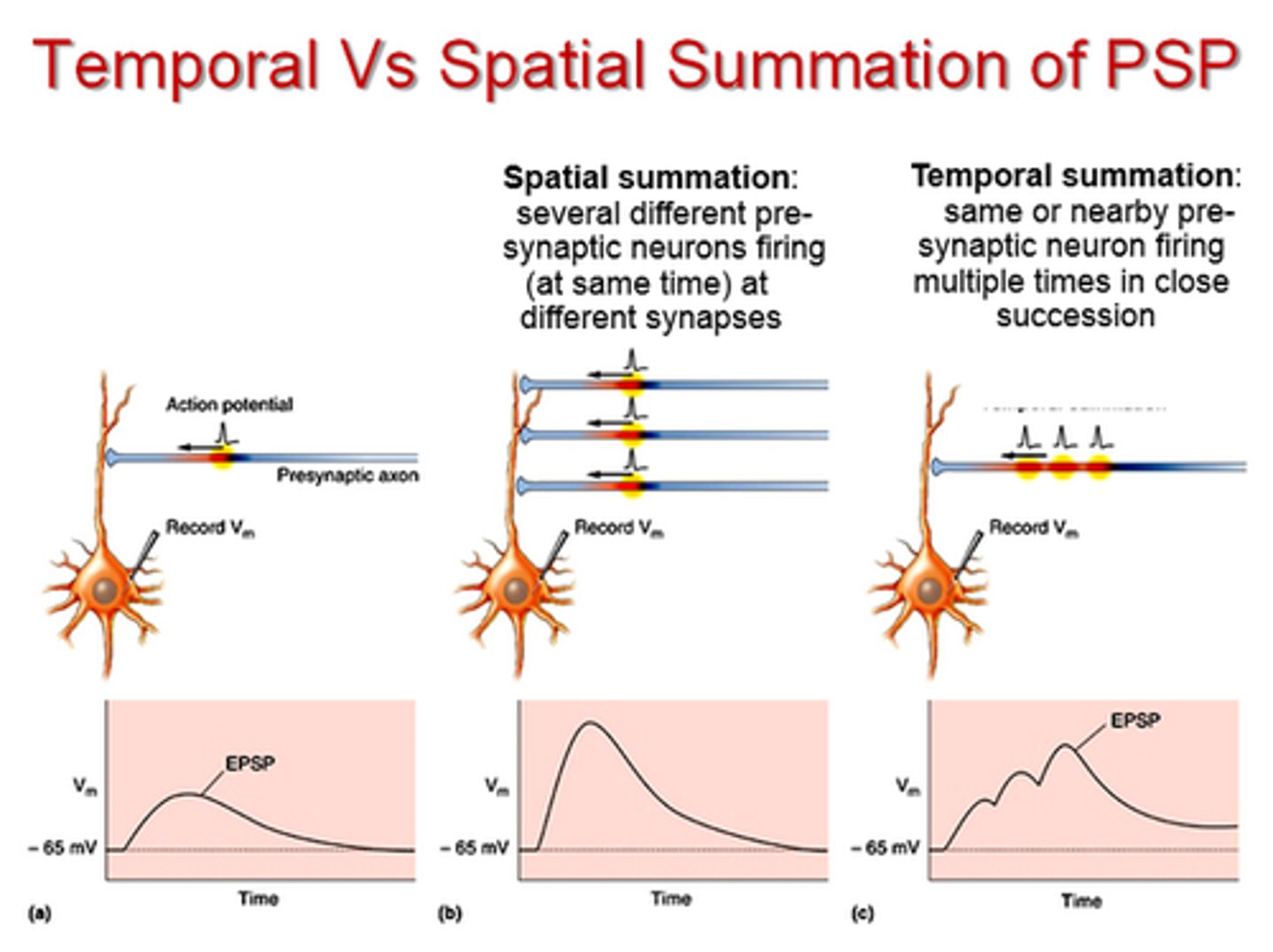
Combines potentials arriving a short time apart, from either the same or seperate inputs.
reuptake
Transmitters taken back into terminals by transporter proteins, where they are repackaged into vesicles for reuse. Astrocytes make sure that the synapse doesn't get overcrowded.
presynaptic excitation
Increases the presynaptic neuron's release of neurotransmitter onto the post synaptic neuron.
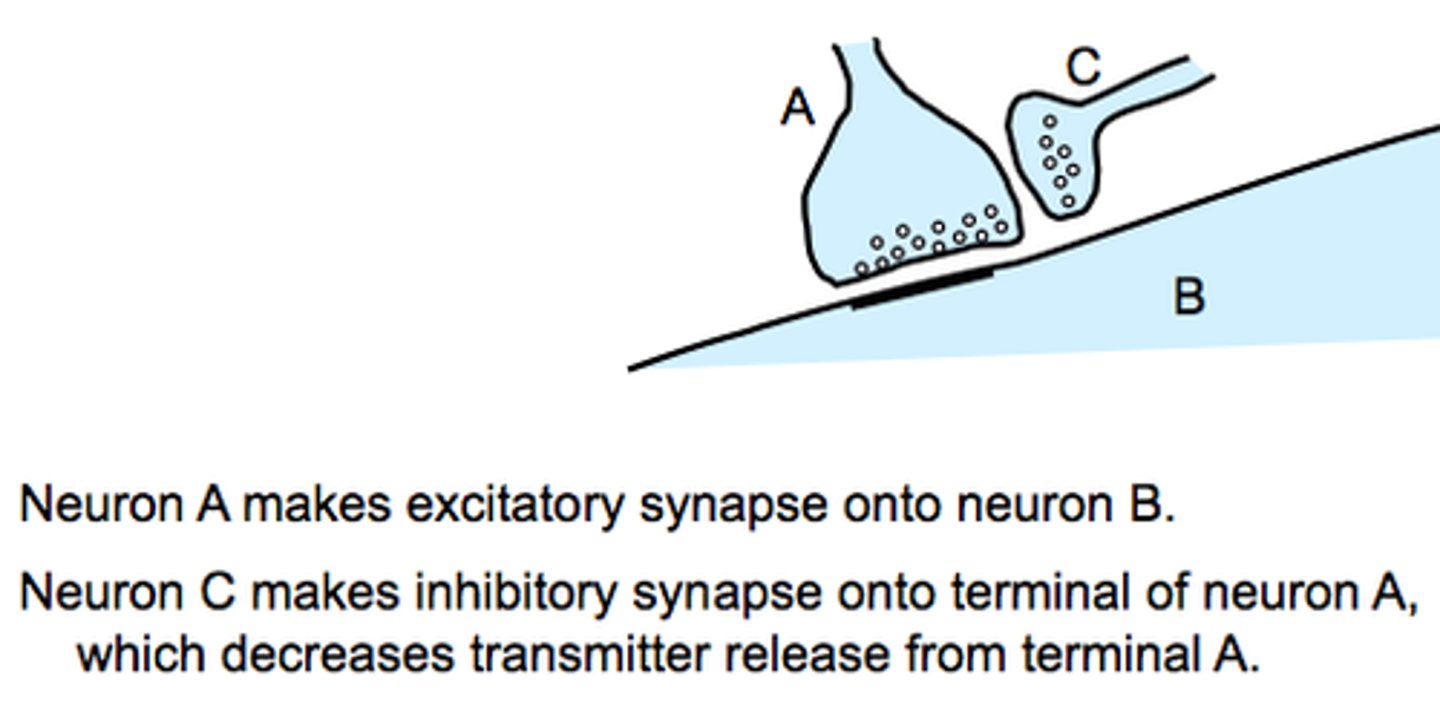
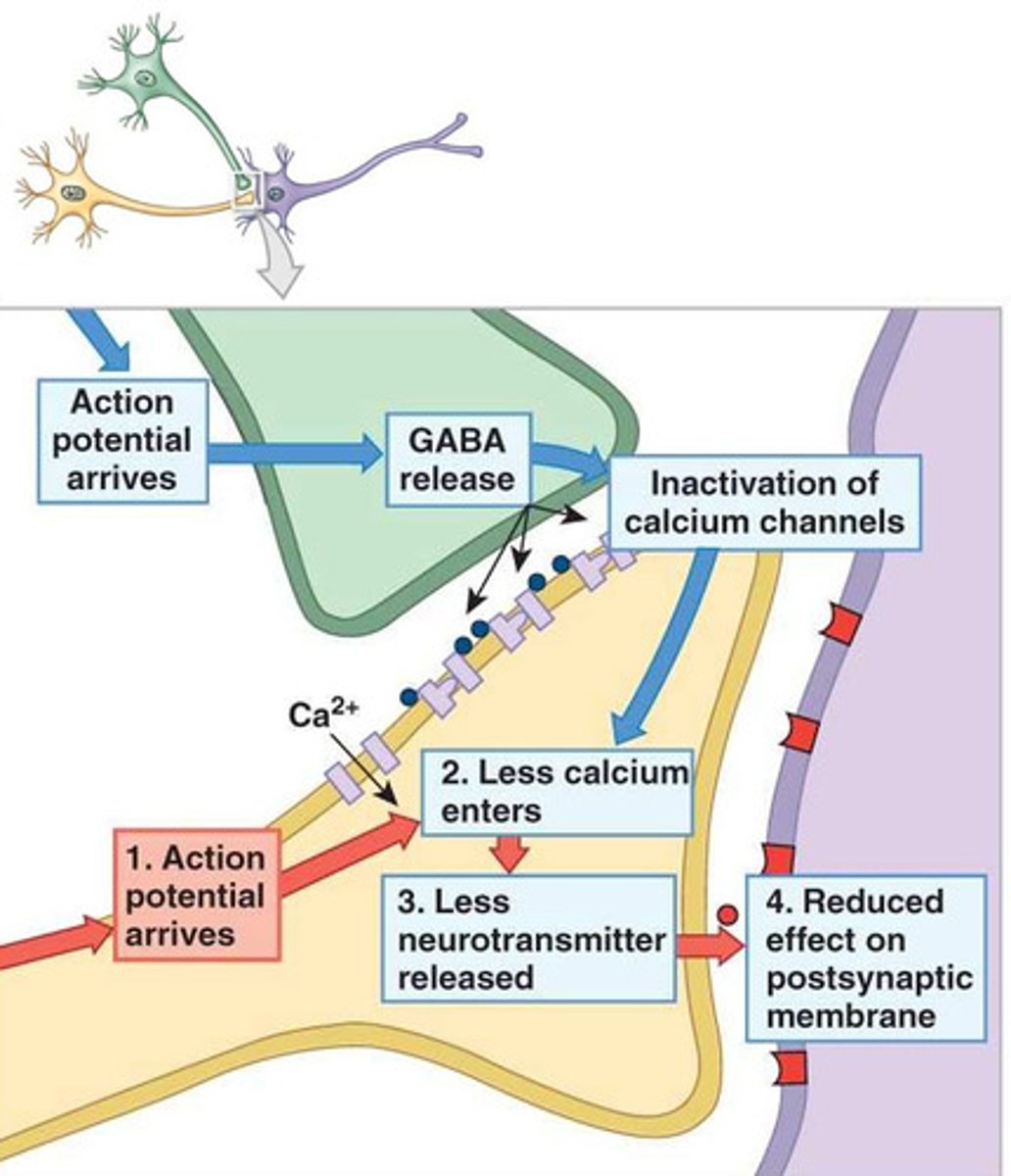
presynaptic inhibition
The action of a presynaptic terminal button in an axoaxonic synapse; reduces the amount of neurotransmitter released by the postsynaptic terminal button.
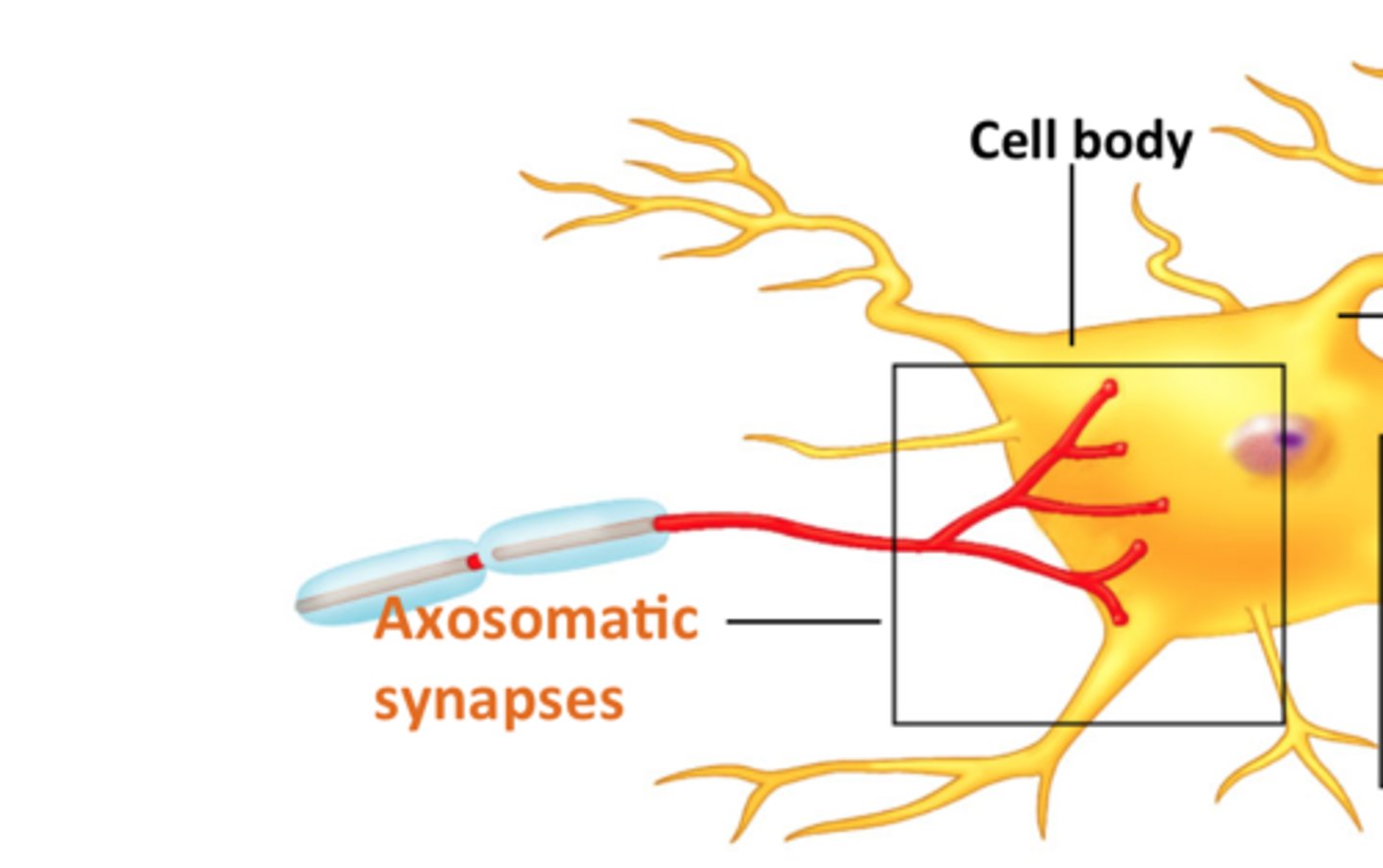
axosomatic
axon to cell body
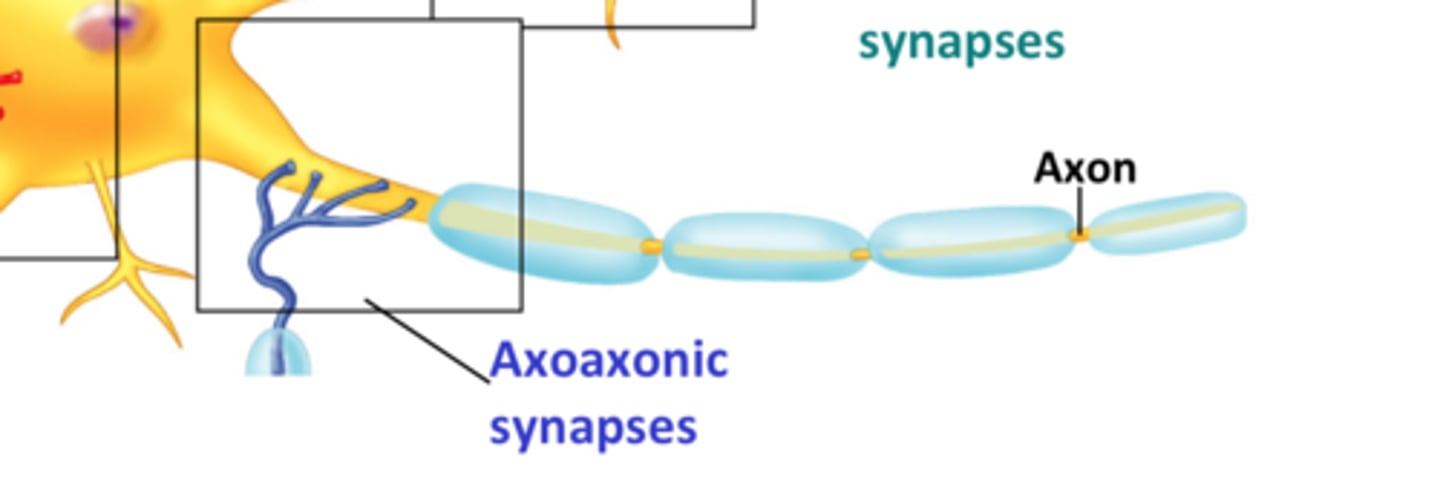
axoaxonic
axon to axon
autoreceptors
receptors on presynaptic terminals which sense amount of transmitter in cleft. PRESYNAPTIC
Dale's principle
The idea that a neuron has a unique identity with respect to neurotransmitter. A neuron was capable of releasing only a single transmitter.
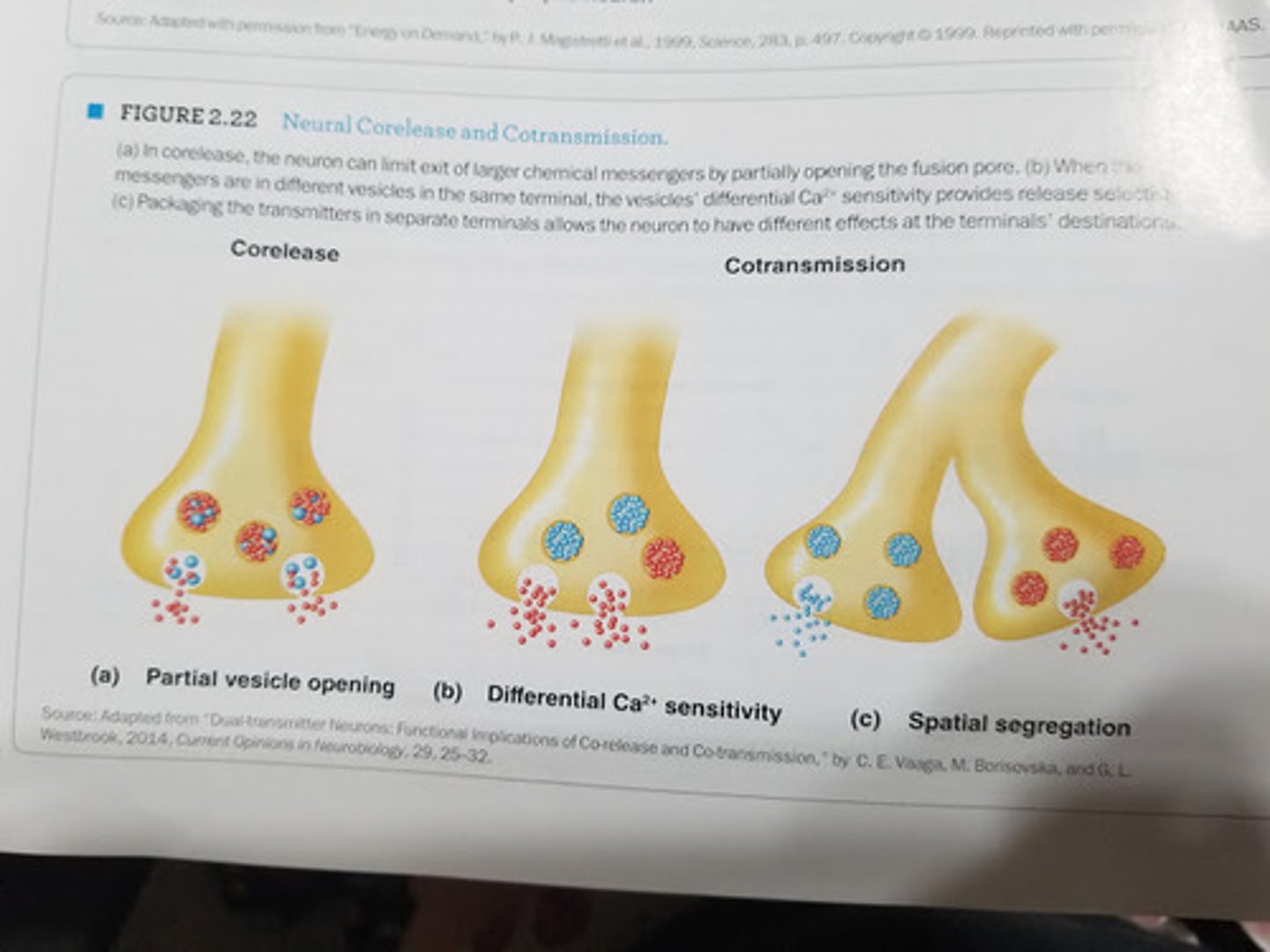
corelease
transmitters are packaged in the same vesicles. Often, they will be different sizes and result in partial vesicle opening. Depolarization of cell controls opening of vesicle.
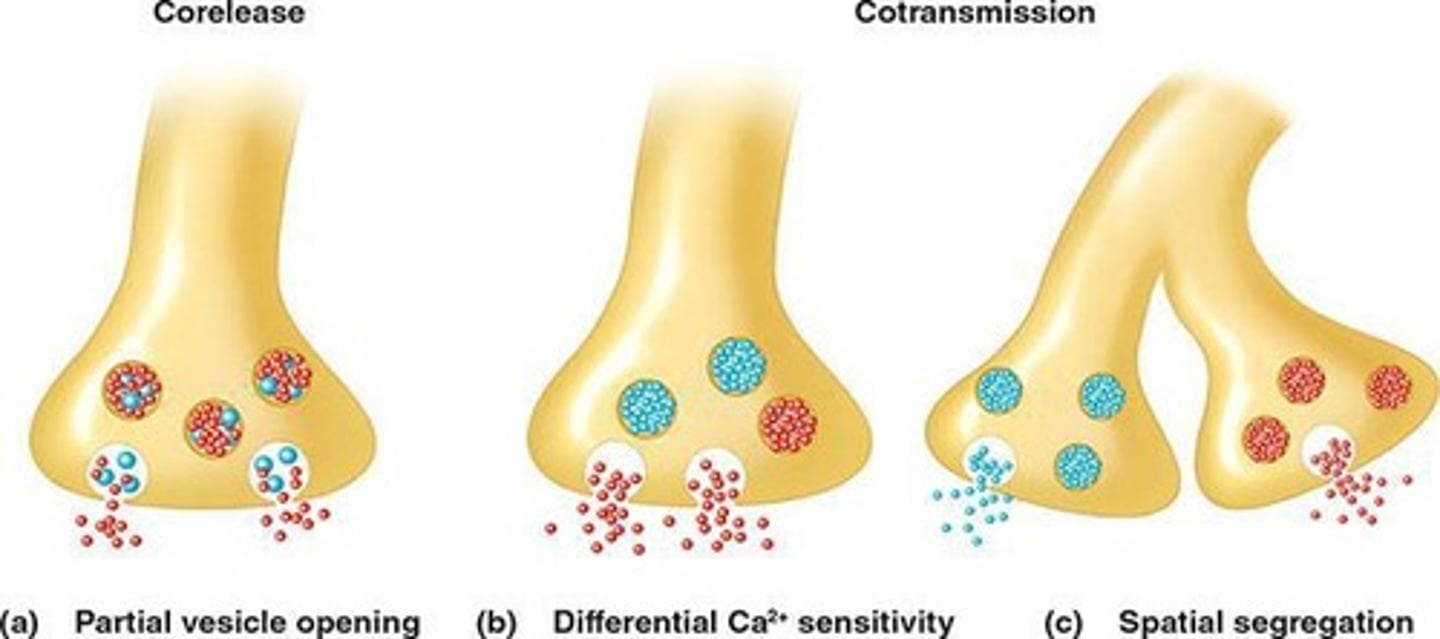
cotransmission
Neurons release more than one transmitter or modulator, each of which interacts with specific receptors and produces effects, often both pre- and postsynaptically.
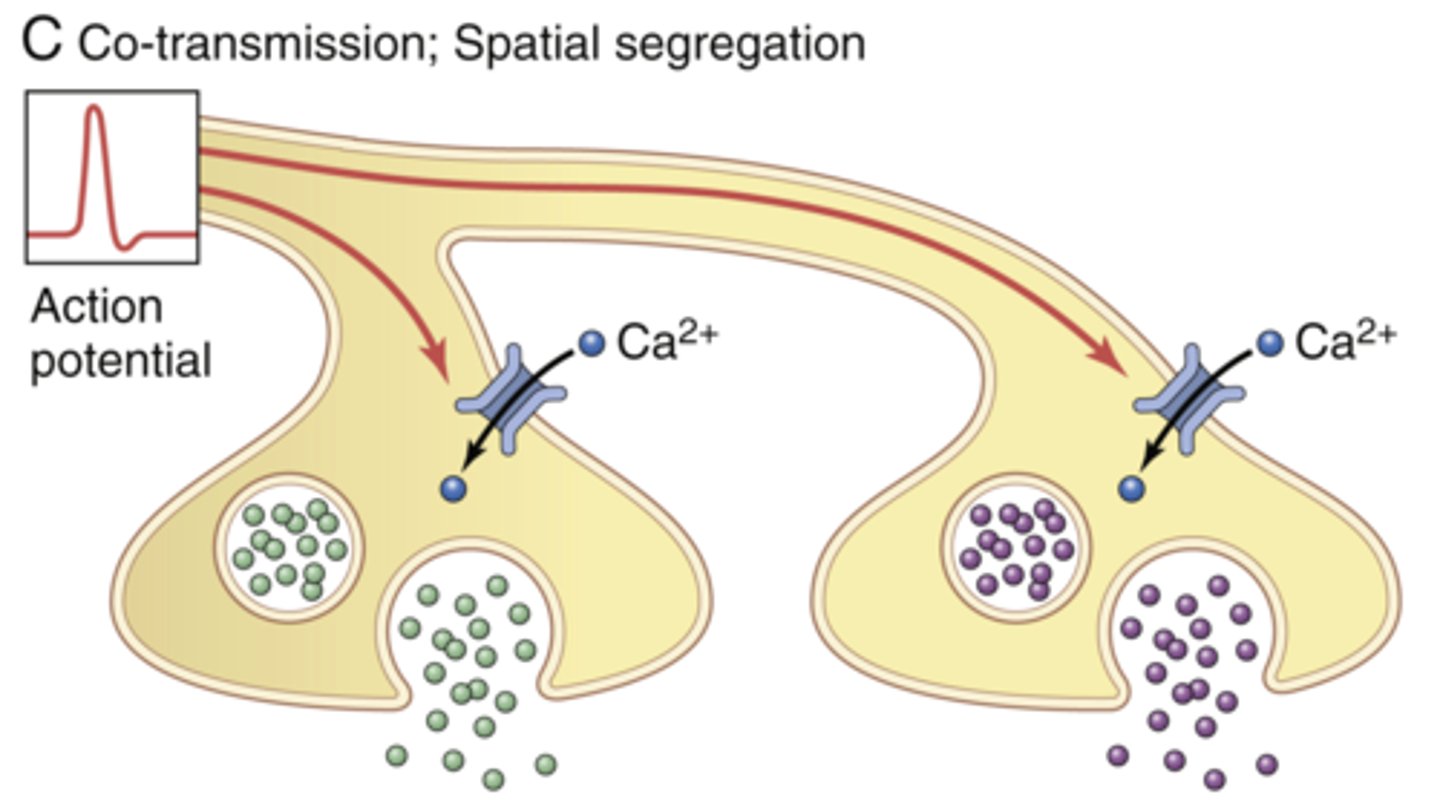
spatial segregation
neurotransmitters are released from separate branches.
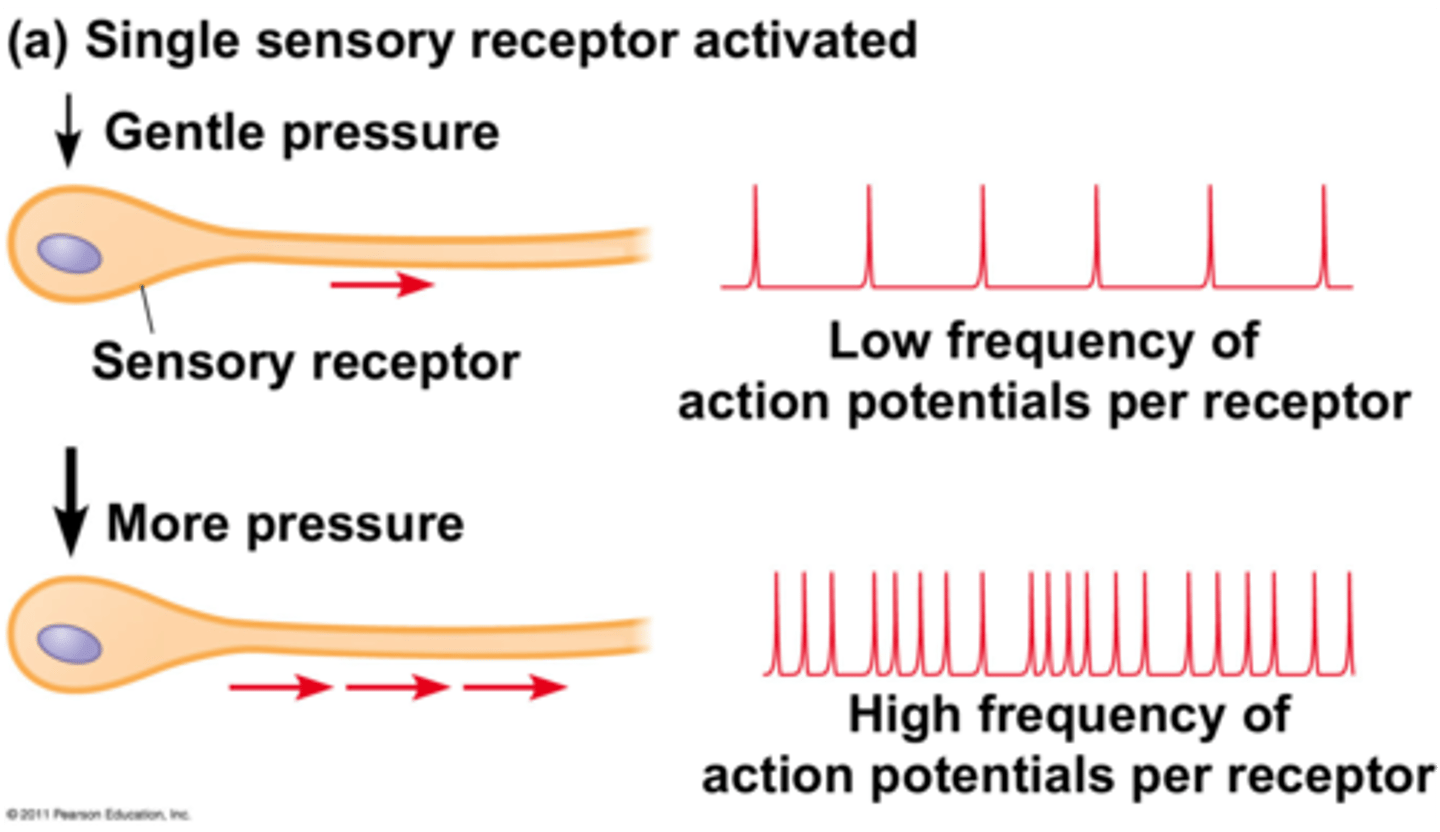
neural codes
varied intervals between spikes in nerve signals
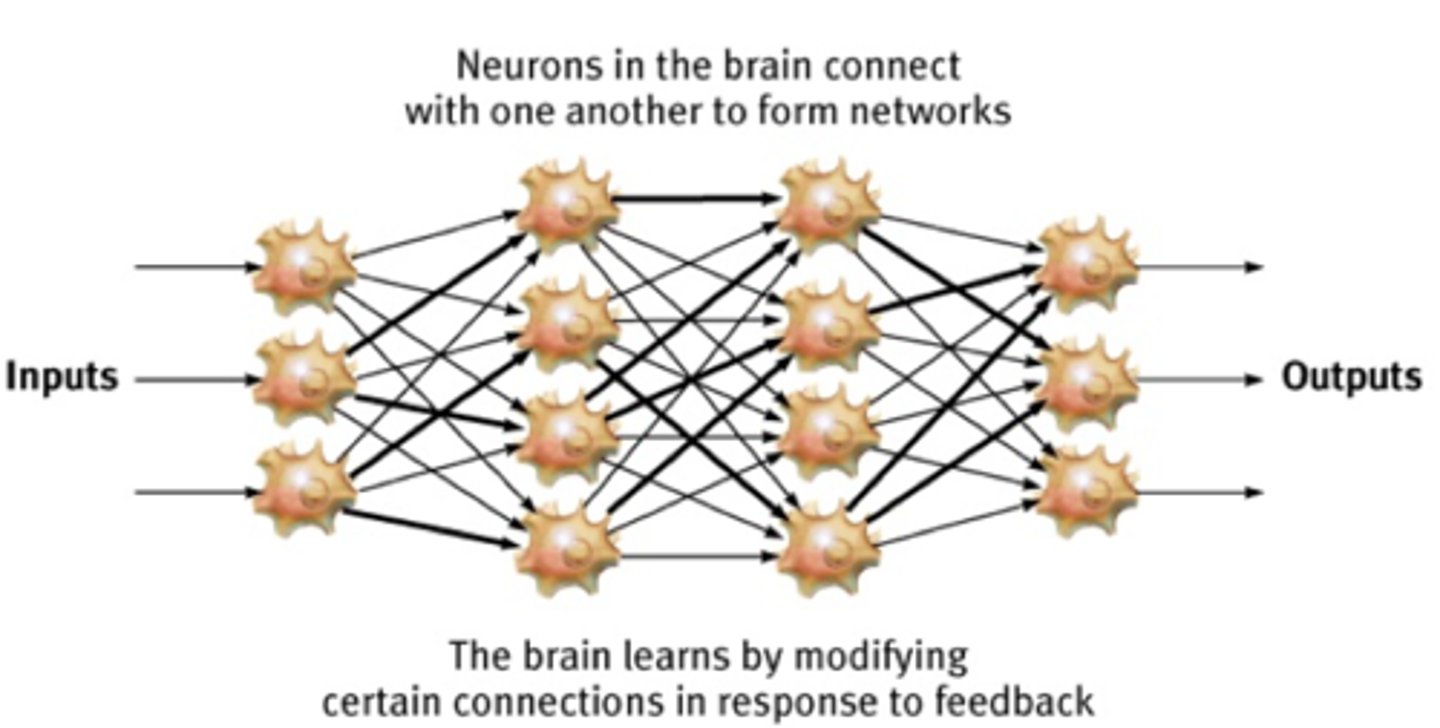
neural networks
interconnected neural cells. With experience, networks can learn, as feedback strengthens or inhibits connections that produce certain results. Computer simulations of neural networks show analogous learning.
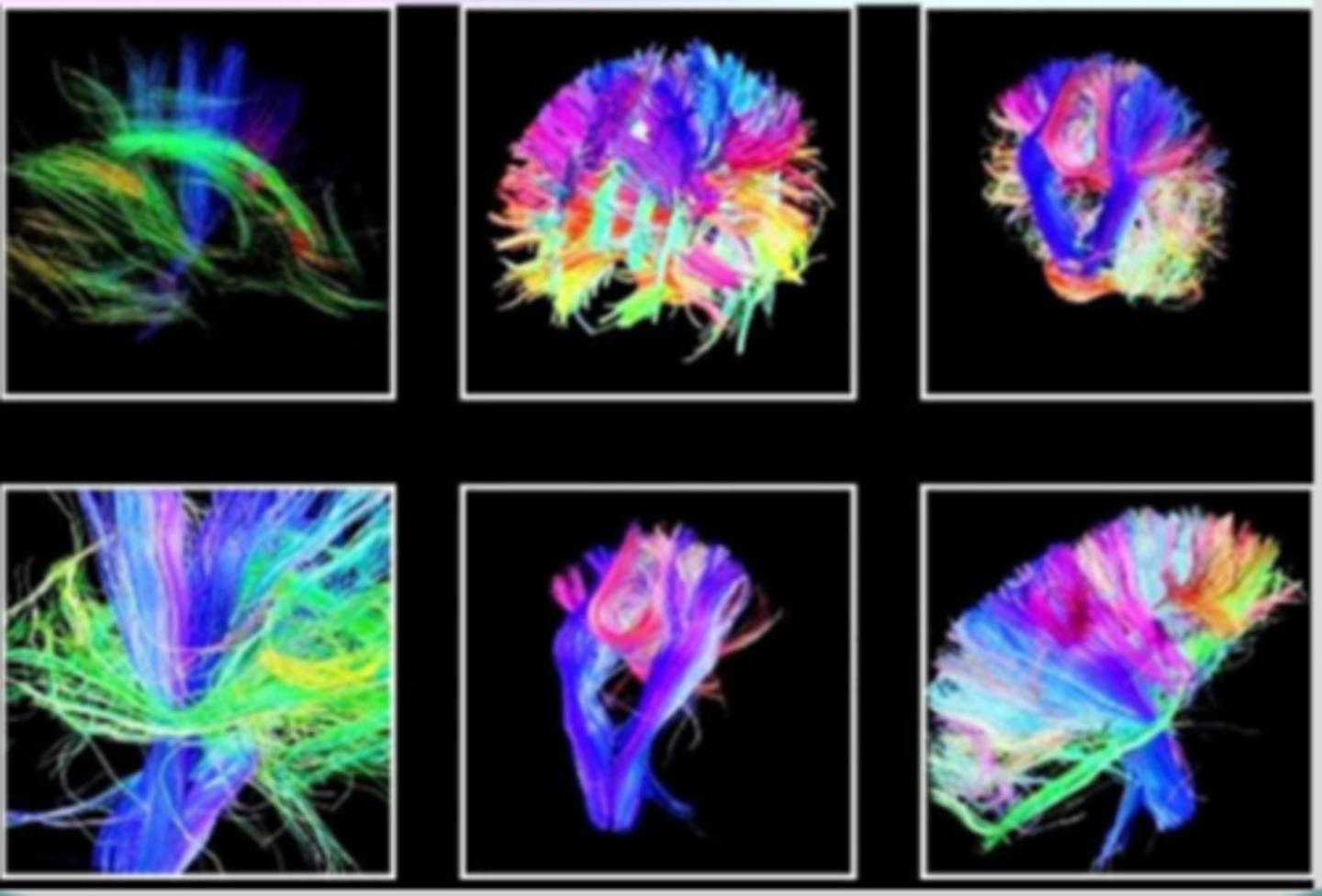
Human Connectome Project
a large-scale, multi-university effort to map the brain's circuits