DAT Biology: Endocrine System, Digestive System, Excretory System
 Call Kai
 Learn
Learn Practice Test
 Spaced Repetition
 Match
Match Flashcards
 Knowt Play
1/47

There's no tags or description
Looks like no tags are added yet.
Name | Mastery | Learn | Test | Matching | Spaced | Call with Kai | Chat |
|---|
No analytics yet
Send a link to your students to track their progress
48 Terms
Main Hormone Types (3)
Peptide Hormones
Steroid Hormones
Amino Acid Derived Hormones
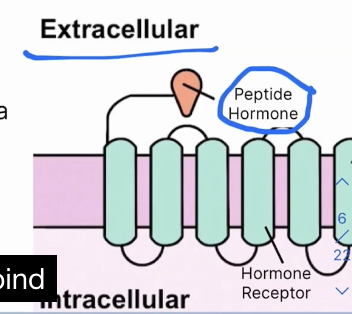
How to peptide hormones pass along their signals?
Proteins are large and polar, water soluble, flow through blood but NOT lipid soluble so they cannot pass through a cellular membrane
Bind to cell surface receptors rather than through cellular membranes
Goes through indirect stimulation (hormone is not directly binded to the receptors)
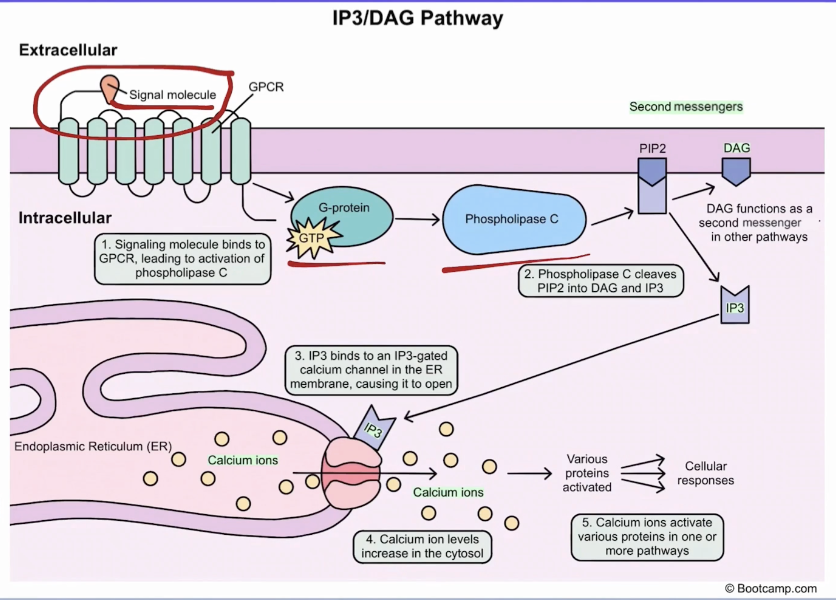
IP3/DAG Pathway
Regulates the release of stored Ca2+ from th eER into the cell cytosol
Pathway activated when peptide hormone binds the GPCR
GPCR activates the associated G protein via the binding of one GTP molecule
G protein activates the enzyme phospholipase C
Activated phospholipase C cleaves the lipid PIP2 into 2 separate secondary messengers (IP3 and DAG)
IP3 binds ligand gated Ca2+ channels on the surface of the ER
ER calcium channels open, releasing Ca2+ into the cytosol
Free Ca2+ goes on to affect multiple other pathways
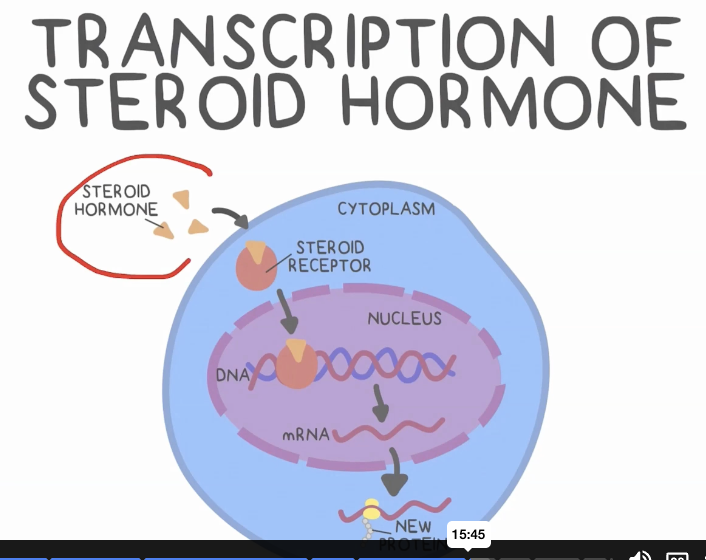
Steroid Hormones Process
Based on cholesterol, so they are lipophilic, able to directly pass through a cellular membrane (lipid, not water soluble, so needs a water soluble transport protein to travel through the blood)
Directly binds intracellular receptors of the cytoplasm or the nucleus, resulting in steroid-receptor complexes directly binding DNA to affect transcription
Cause slow and gradual genetic change, directly stimulating
Polar-Water Soluble Amino Acid-Derived Hormones
Epinephrine and nonepinephrine
Secondary Messengers Relaying Signals from Cell Surface Receptors to Effector Proteins
cAMP, IP3, DAG, Ca2+
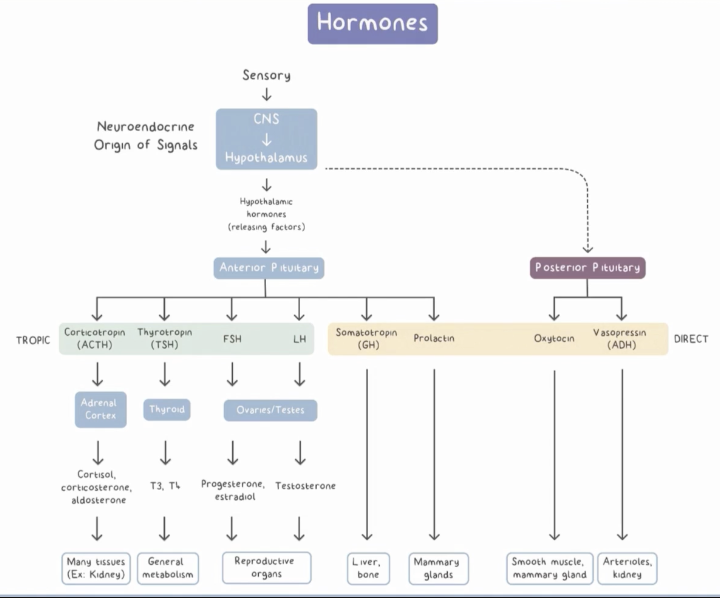
Anterior Pituitary Gland Stimulating Hormones — Hypothalamic Releasing Hormones
GnRH, TRH, CRH, and GRH
Anterior Pituitary Gland Hormones
Hormones released by the anterior pituitary gland once stimulated
Tropic and direct hormones
Tropic Hormone Examples
FSH (Follicle Stimulating Hormone)
LH (Lutenizing Hormone)
ACTH (Adrenocorticotorpic Hormone)
TSH (Thyroid Stimulating Hormone)
Direct Hormone Examples
Prolactin, Growth Hormone (Somatotropin)
Mneumonic for Anterior Pituitary Gland Hormones
FLAT PIG
F: Follicle Stimulating Hormone (FSH)
L: Lutenizing Hormone (LH)
T3 and T4 Similarities
Thyroid Gland Hormones
Released in response to TSH stimulation from the anterior pituitary, derived from the amino acid tyrosine, negative feedback effect on TSH and TRH secretion
Thyroid Disorders
Hypothyroidism, Hyperthyroidism
Goiter from Hypo and Hyperthyroidism
Hypothyroidism: Low T3 and T4: Oversecretion of TRH to compensate for missing T3 and T4 = enlarged thyroid gland
Hyperthyroidism: High T3 and T4: hyperactive thyroid gland = enlarged thyroid gland
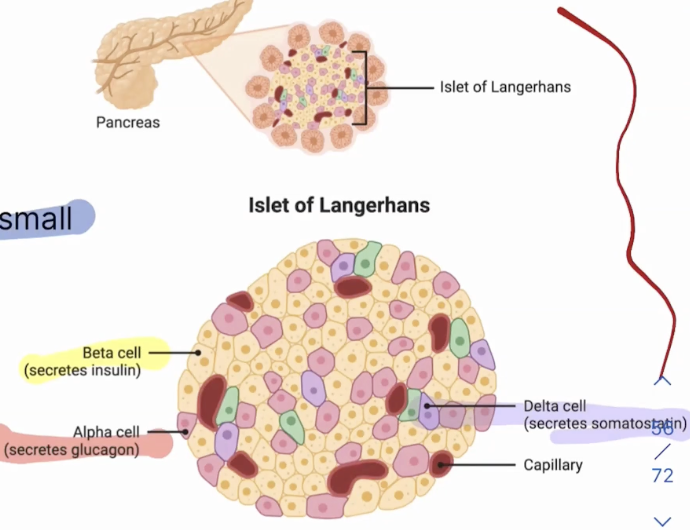
Endocrine Islets of Langerhans Releasing
Secretion of the peptide hormones glucagon, insulin, and somatostatin
Glucagon: released by alpha cells
Insulin: released by beta cells
Somatostatin: released by delta cells
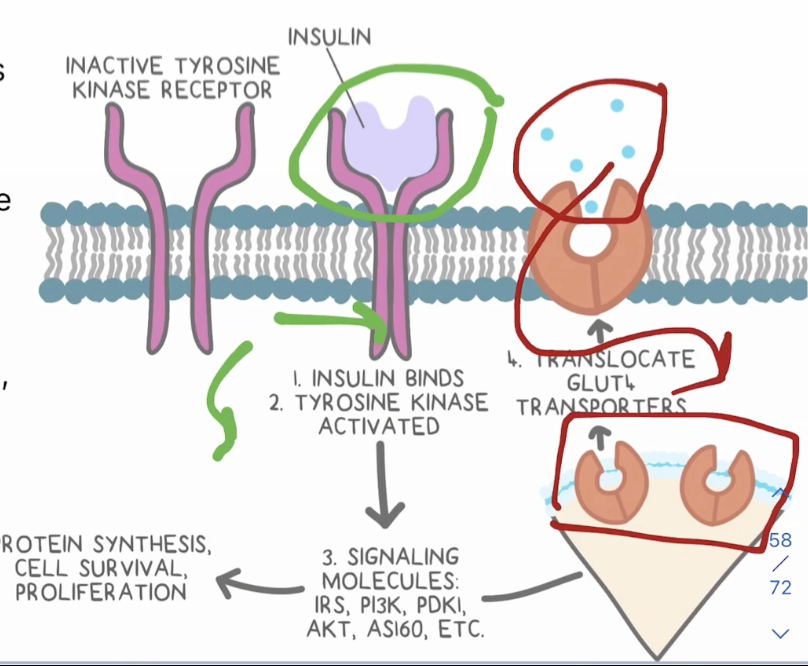
Insulin Process
Peptide hormone associated with RTKs
Resulting second messengers trigger the release of glucose transporters along the cellular membrane
Glucose flows out of the blood and into cells via the glucose transporters, decreasing blood glucose levels
Adrenal Gland General Anatomy
Bodies house 2 distinct adrenal glands (adrenal cortex and adrenal medulla), each associated with the superior surface of one of the body’s kidneys
Overall adrenal gland function is associated with stress combatting
Steroids vs. Amino Acids
Steroids: lipid soluble
Amino Acids: not as lipid soluble, use signal transduction pathways, transmitting signals faster
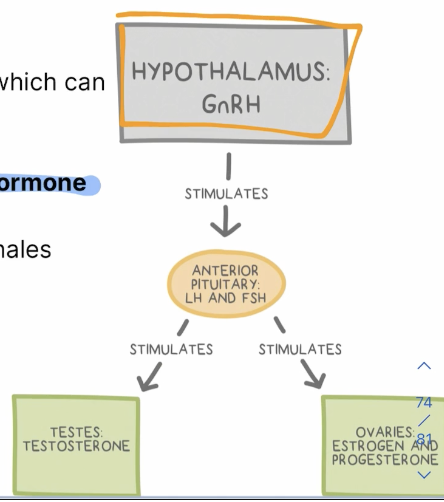
How to get hormones to the testes and ovaries?
Anterior pituitary gland producing tropic/direct hormones
LH and FSH — tropic hormones targeting the testes in males and ovaries in females
Hypothalamus releasing a hormone known as gonadotropin (GnRH) stimulating the release of other hormones
Creates estrogen and progesterone in ovaries, while it creates testosterone in testes
Human Digestive System Accessory Organs
Pancreas, liver, gallbladder
Aid digestive system, but not in the digestive system
Two Openings of the Human Digestive Tract
Mouth and Anus
Two Key Structures of the Stomach
Sphincters
Cardiac Sphincter, Pyloric Sphincter
Why do we have an inactive enzyme precursor for gastric pits in stomach cells and not just have an enzyme that breaks stuff down?
It will go ahead and break down the proteins of the chief cells itself if it is an enzyme breaking stuff down, which may degrade our own stomach cells
Therefore, we keep them in a dormant state (zymogen) and release them, interacting with an activator like stomach acid, activates them and targets env
Trip Through Stomach
Food Ball Here Through Esophagus → Cardiac Sphincter (making sure we have no backup problems) → Stomach where gastric lipase is gonna break down fats, pepsin is gonna activate + interacts with the gastric juices + breaks down proteins → churning and mechanical digestion breaks down food as well → turn food into chyme, exiting through the phyloric sphincter → deposit into the first part of the small intestine (duodenum)
Responses to Chyme Entering the Duodenum
Small intestine and digestive system accessory organs (pancreas, gallbladder, liver) work together to properly respond to and process acidic chyme from the stomach
How the Small Intestine Responds to Chyme
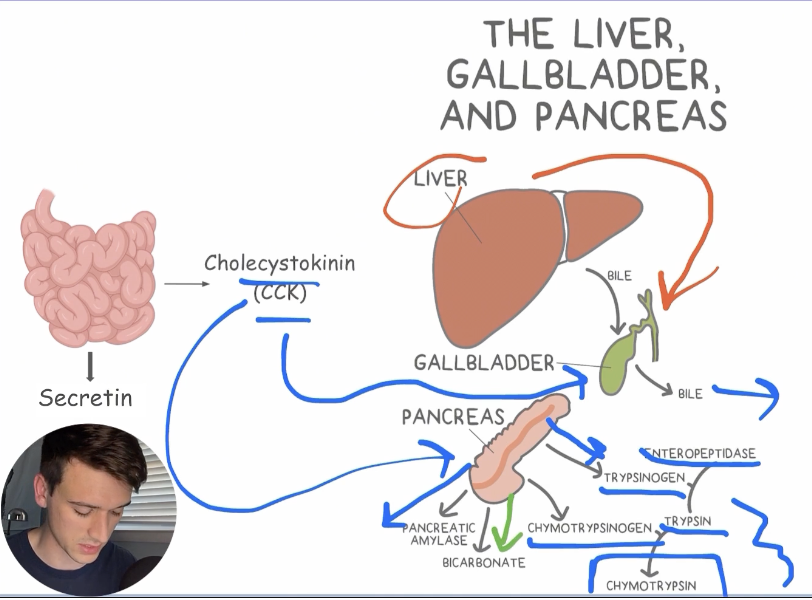
Releases hormone cholecystokinin (CCK) when proteins/fats are recognized in the duodenum
Slows the amount of chyme exiting the stomach and entering the duodenum (slowing gastric emptying)
Stimulate pancreas to release digestive enzymes
Stimulate gallbladder to release bile
Release hormone secretin: stimulates pancreas to release bicarbonate ion
Pancreas Response to Chyme
Releases digestive enzymes due to stimulation by the hormone CCK
Pancreatic Amylase: digests carbs (starch into maltose)
Tripsin and Chymotrypsin: proteases (digests proteins)
Released as trypsinogen and chymotrypisogen zymogens
Enteropeptidase converts trypsinogen to trypsin, trypsin converts chymotrypsinogen to chymotrypsin
Secretes HCO3- (bicarbonate ion) due to secretin because it is basic and nuetralizes the highly acidic environment
Liver Responses to Chyme
Produces bile which emulsified fats, important for the absorption of fats
Gallbladder Responses to Chyme
Stores and concentrates bile from the liver, releasing bile into the duodenum when stimulated by CCK
Mnemonic for Liver Functions
PUSH DOG
Protein Synthesis
Urea Synthesis
Storage
Hormone Synthesis
Detoxification
Glucose and Fat Metabolism
Liver Detoxification
Metabolizes chemicals/drugs in the blood to detoxify body
Detoxification Byproducts: Bile → Intestines ; Urea → Kidneys
Kupffer Cells: phagocytes of the body
Liver Function: Glucose Metabolism
Glycogenesis: creates glycogen from glucose monomers
Glycogenolysis: breaks down glycogen into glucose monomers
Gluconeogenesis: creates glucose from glycerol and amino acids
Liver Function: Protein Metabolism
Synthesis of Plasma Proteins from Amino Acids: creation of albumin and blood clotting factors
Conversion of Ammonia → Urea: Converting the dangerous byproduct of protein metabolism into a safer version for excretion
Structures of the Large Intestine
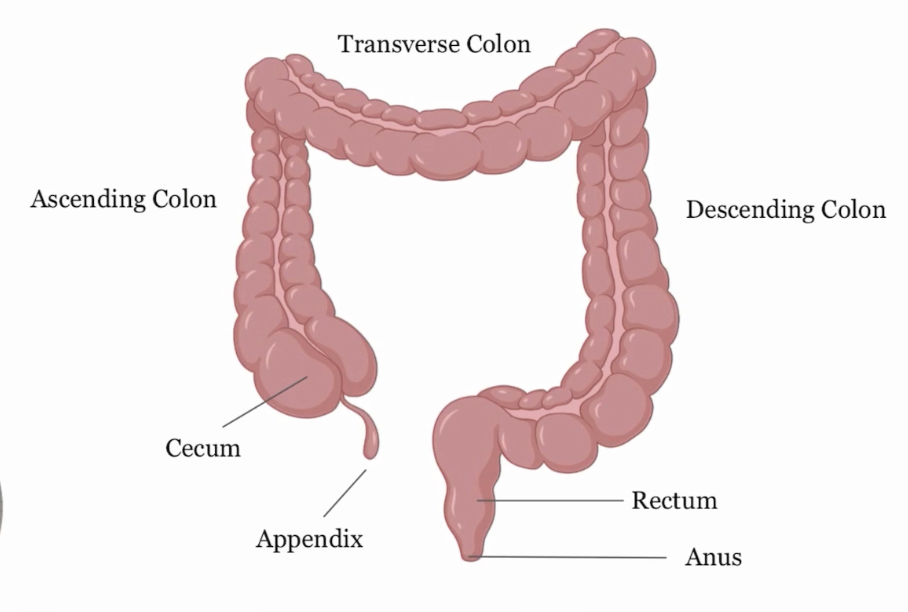
Functions of the Large Intestine
Water absorption
Mineral (salt absorption)
Vitamin production and absorption (reliant on a mutualistic relationship with certain bacterial species)
NOT nutrient absorption (SMALL intestine)
Microbiome Bacteria Responsbility
Produce B and K vitamins
Metabolism of Biel Acid (key indication of healthy intestinal microbiome)
Fermentation of fiber
Where is water reabsorbed
Kidney
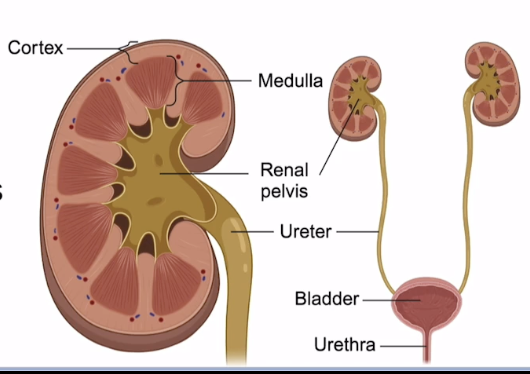
Kidney Structure
Outer Cortex
Inner Medulla
Kidney Key Functions
Regulation of blood pressure
Regulation of pH
Stimulate generation of red blood cells
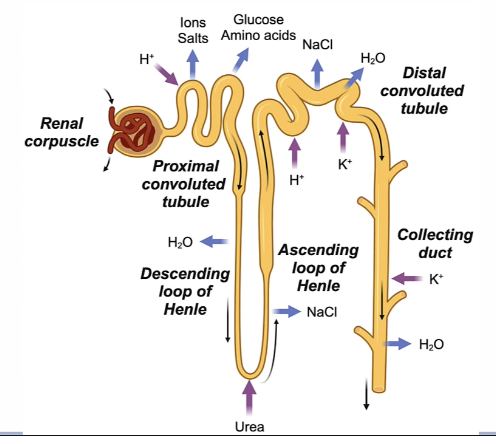
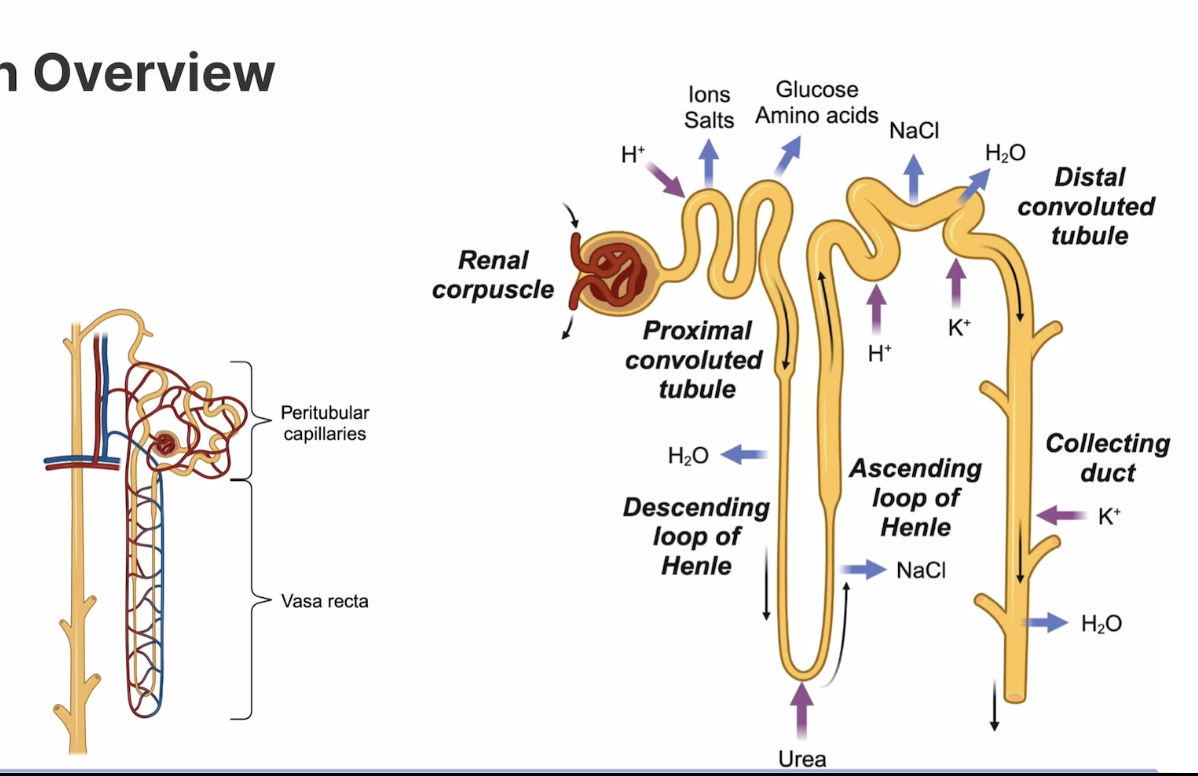
Nephron Main Structures
Glomerulus
Proximal convoluted tube
Loop of Henle
Distal convoluted tube
Collecting Duct
Pathway of Urine Post-Nephron
Collecting Duct → Renal Pelvis → Ureter → Bladder → Urethra
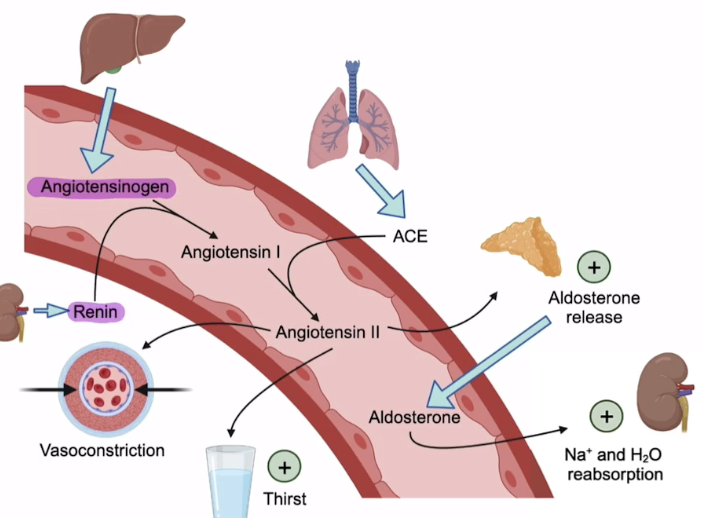
Angiotensin II: How does it do what it does?
Increases blood pressure and volume
Stimulates additional aldosterone release
Increases Na+ reabsorption at the proximal tubules (water follows, increasing bp)
Systemic vasoconstriction, condensing the vessels to increase pressure
Increase thirst, increasing liquid intake
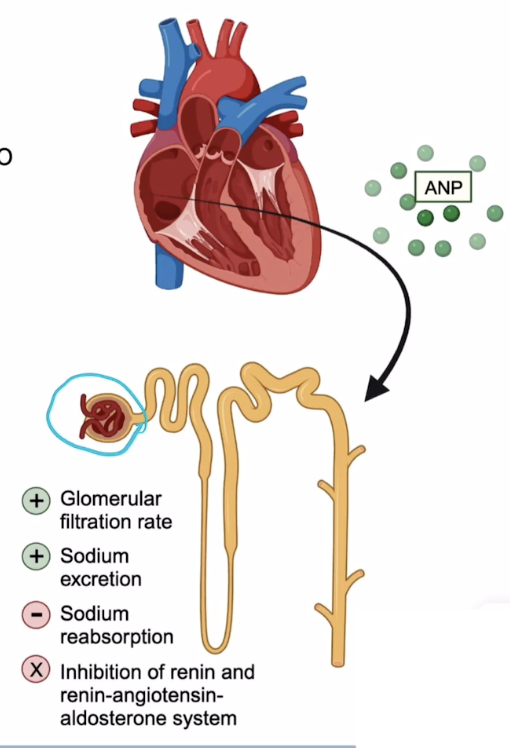
Atrial Natriuretic Peptide (ANP): How does it do what it does
Reduces blood pressure and volume
Increasing the glomerular filtration rate (GFR): filters more fluid from the blood into the kidneys, and since the kidneys cannot reabsorb all the extra fluid, it excretes into urine, reducing blood volume
Decreasing sodium reabsorption so less water follows so less pressure overall
Increasing sodium excretion so more water follows and leaves through urine
Inhibiting renin and the renin-angiotensin-aldosterone-system so that you don’t increase pressure through angiotensin II
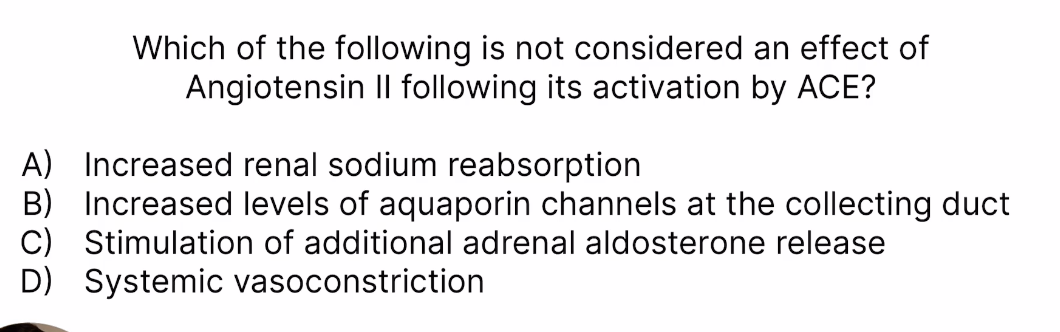
B. Increased levels of aquaporin channels at the collecting duct is not a direct effect of Angiotensin II. This action is primarily mediated by ADH (vasopressin), whereas Ang II directly causes sodium reabsorption, aldosterone release, and vasoconstriction.
ADH is responsible for water movement
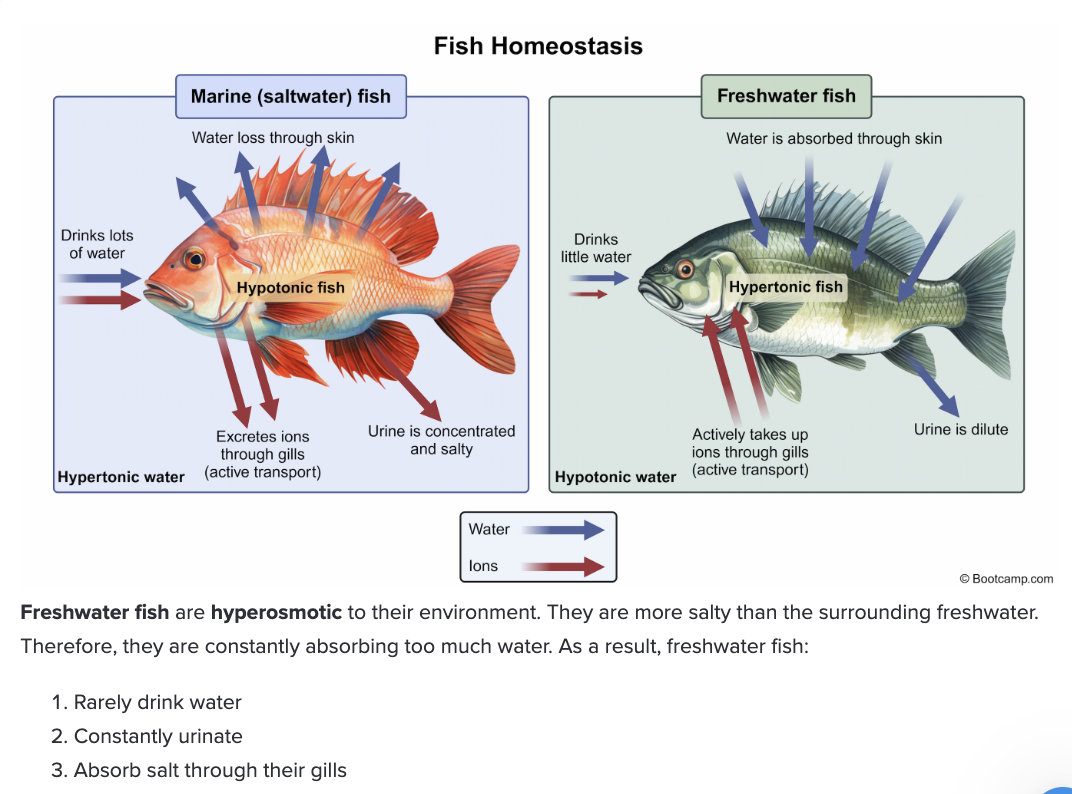
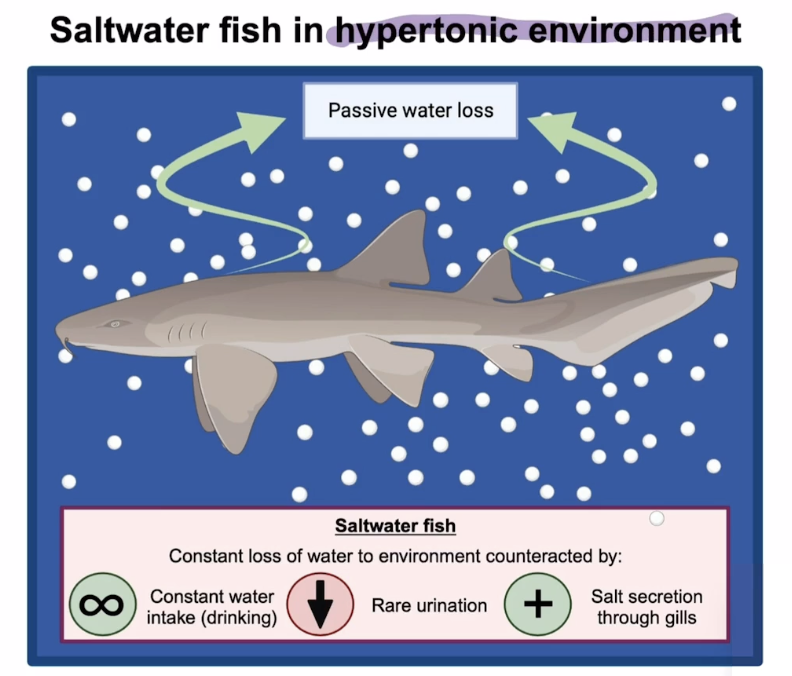
Explain Osmoregulation/Adaptations of Marine (Saltwater) Fish
Hypotonic to their environment, so environment has higher solute concentration, and passive water loss to the environment, they are lower concentration than surroundings
Adaptations: constant drinking, rare urination, secretion of salt through the gills
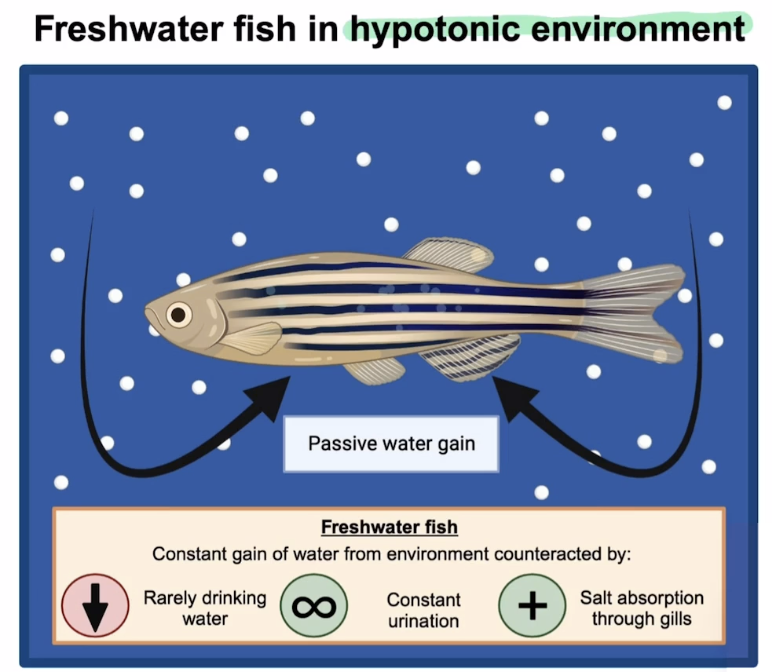
Explain Osmoregulation/Adaptations of Freshwater Fish
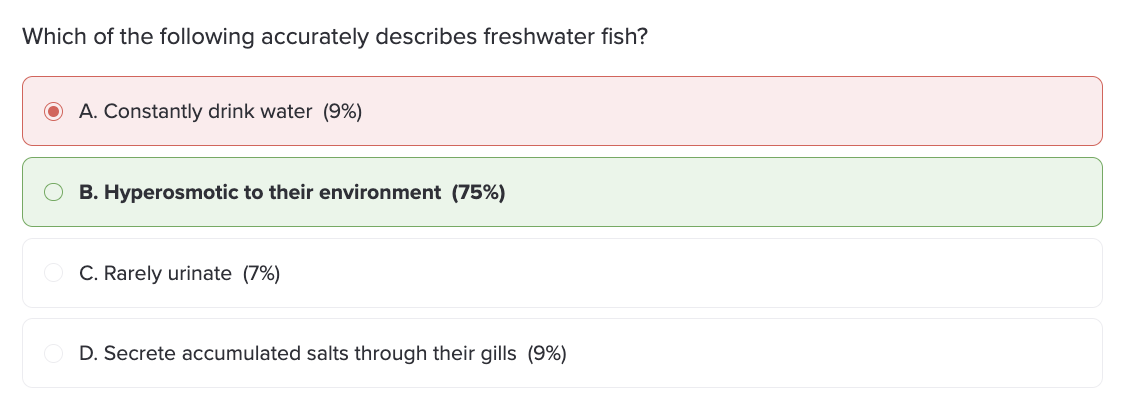
Hypertonic to their environment, environment has a lower solute concentration so passive water gain from environment and water moves into the fish
Adaptations: rarely drink water, constant urination, absorption of salt through their gills