ERTH1005 WK1-12
 Call Kai
 Learn
Learn Practice Test
 Spaced Repetition
 Match
Match Flashcards
 Knowt Play
1/192

There's no tags or description
Looks like no tags are added yet.
193 Terms
What is the problem with calling it ‘critical minerals"‘?
different definitions of what it considered ‘critical’ for different countries with their different purposes, like silica in aus
not all commodities are minerals like the phrase suggests, like nickel, which is an element
critical mineral definitions
Critical minerals” is a misnomer. The term critical
minerals actually refer to commodities (actually
elements, not minerals) extracted from minerals
that are essential and often in short supply to
enable technological changes (e.g., electrification of
transportation grid) in modern society.
mineral definition
A mineral is a naturally occurring solid with a
highly ordered atomic arrangement and a
definite, but not necessarily fixed,
homogeneous chemical composition. It is usually
formed by inorganic processes.
mafic vs felsic
mafic- dark and heavy (iron, magnesium, calcium)
felsic- light and light, lower temp (oxygen, silicone)
uses for mineralogy
geophysics, structural geology, geochronology, petrology, geochemistry, planetary studies, paleontology, marine science, environment science, economic geology, medical geology, mineral physics
quantum numbers

atomic vs ionic radii
to make up the right number of electrons, use elements of same size thats interchangeable such as nickel and magnesium
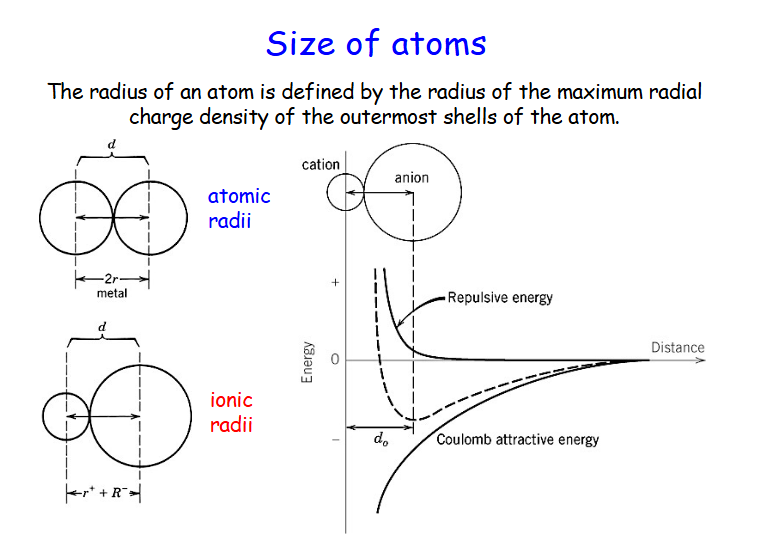
ionic radius
higher positive charge means less atomic radius, lower charge means more atomic radius

ionic bonding
forms when
one or more electrons in
the valence shell of an
atom are transferred to
the valence shell of
another so that both
elements achieve an inert
gas configuration
different bonds have different strengths and different melting points
e.g. halite

covalent bonds
orms when two
(or more) atoms share their outer
valence electrons (overlap of
orbitals) to achieve the stable
noble gas configuration.
e.g. diamond

metallic bonds
forms when
positively charge atomic nuclei share
electrons in their electron clouds
freely. In a sense, each atom is
sharing electrons freely with other
atoms, and some of the weakly bound
electrons are free to move from
atom to atom.
e.g. copper and pyrite

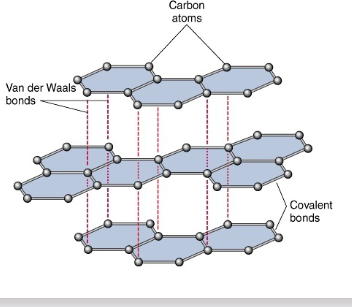
residual bonds
are weak bonds
that involve the attraction of partially charged atoms or
molecules. These partial charges are created when
electrons become concentrated on one side of an atom or
molecule to satisfy ionic or covalent bonds.
e.g. graphite
Van der Waals
type of residual bond that form by polarisation of residual charges
hydrogen bonds
an electrostatic bond between a
positively charged hydrogen ion and a negatively charged
ion, such as O2- or N3-.

crystaline
Crystaline (often spelled crystalline) is a common spelling variant that generally refers to being made of or resembling crystal, clear, or structured in a repeating atomic pattern
crystalinity
disorder and instability
order and instability
order and stability
how the ions interact with eachother

crystal structure
Crystal structure controls physical properties such
as cleavage, hardness, density, melting point, index
of refraction, etc.
• The nature of the
chemical bonding is the primary
control on crystal structure.
• Cations and anions can be thought of as spheres of
different sizes (i.e., representing different
elements), although this is of course a gross
oversimplification.
• Packing of metals: element(s) with (approximately)
the same size, very ordered packing that minimizes
void space (
closest packing).
• Packing of elements with different size: in general,
the smaller cations fill the voids in the closed-
packed array of larger anions (ionic bonding); they
are said to be
coordinated.
closest packing
hexagonal closest packing (HCP)
Face centred cubic closest packing (CCP)

coordination of ions

Paulings Rules: Rule 1 Coordination Principle

Rule 2: Electrostatic valency
In a stable ionic structure, the total strength of the valency
bonds that reach an anion from all neighboring cations is equal to
the charge of the anion.
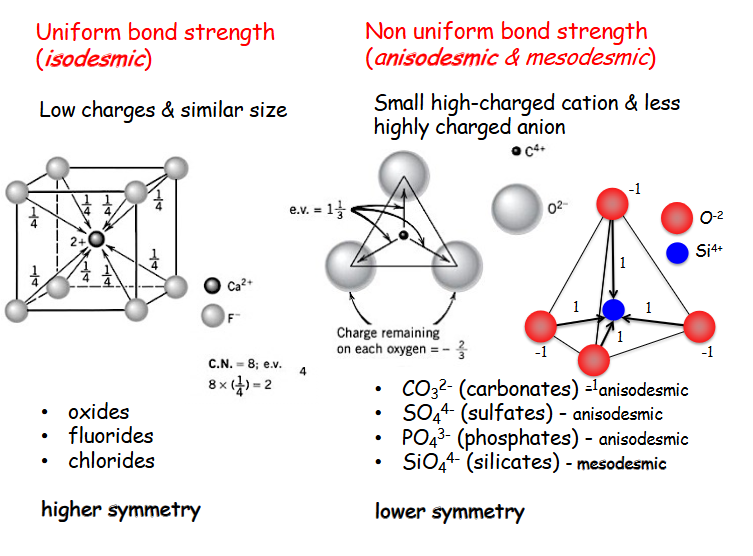
Rule 3: Sharing of Polyhedral elements
The existence of edges and particularly faces decreases the
stability of ionic structures.

Rule 4: Sharing of polyhedral elements II
In a crystal containing different cations, those of high valence
and small coordination number tend not to share polyhedral
elements with each other
Rule 5: Rule of parsimony
The number of essentially different kinds of constituents in a
crystal tends to be small.
crystallography
Crystallography is the study of the external form and
internal atomic arrangement of crystalline solids and the
principles that govern their growth, external shape, and
internal structure.
symmetry
– Translation symmetry: repetition of a motif through a volume.
– Point symmetry: repetition of a motif around a point.
repetition of objects through roation, reflection, inversion and translation
repeat unit cells
The 6 crystal systems

common symmetry elements

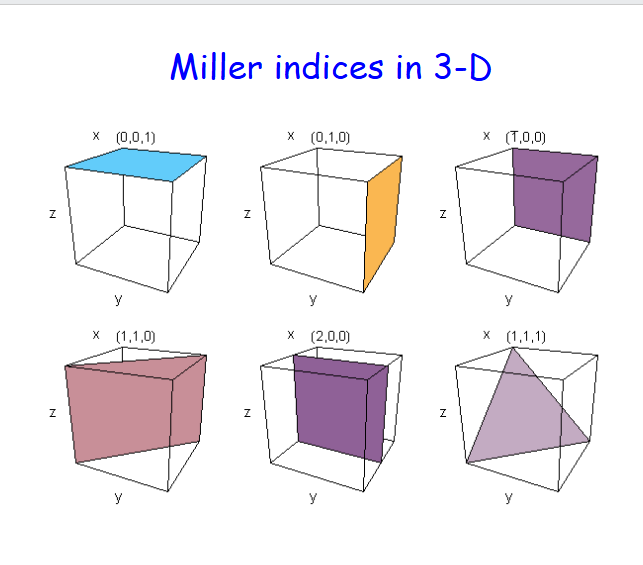
Miller indicies
1 if its touching, 0 if its parallel
isometric systems
equal measurement

non-isometric systems
can be combined with isometric but must be compatible

euhedral, subhedral & anhedral.
Euhedral (also called idiomorphic): Crystals that are completely well-formed with sharp, easily recognized, and fully developed faces. This happens when a crystal grows freely in an uncrowded environment like a liquid melt or a vug (cavity) with plenty of space. [1, 2, 3, 4]
Subhedral (also called hypidiomorphic): Crystals that show an intermediate form, having some well-developed faces mixed with irregular or incomplete faces. [1, 2]
Anhedral (also called xenomorphic): Mineral grains that have no smooth external crystal faces or regular geometric shapes at all. This occurs in crowded, competitive environments where growing crystals bump into each other and run out of free space. [1, 2, 3]
microscope diagram

wave properties
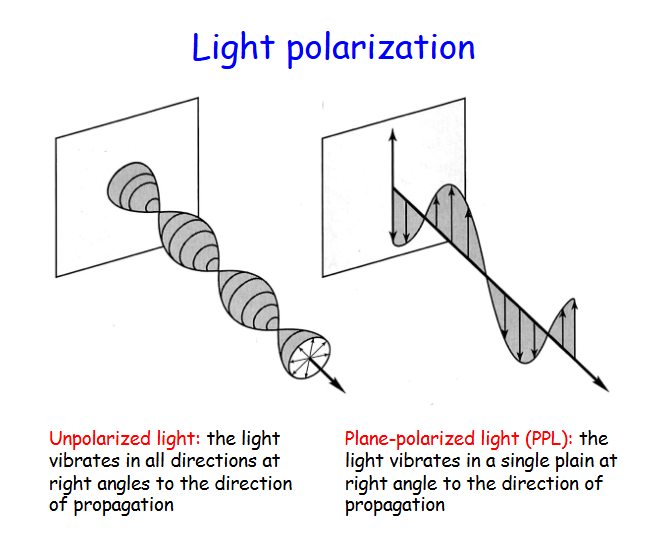
polarisation only allows EW light

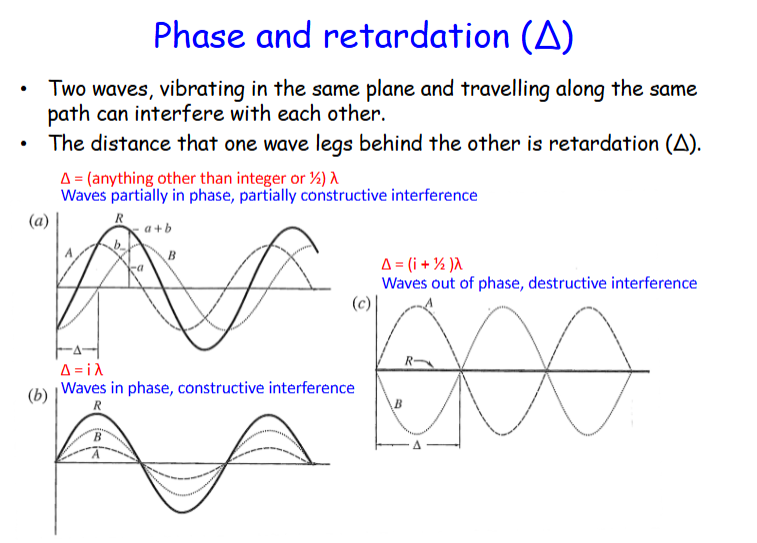
phase and retardation
Velocity of light changes depending on the medium (will change going through the crystal), frequency will tend not to change
so for example it will be slower in glass than air because the glass is denser. glass has more intereference because it is thicker
relief
degree to which a mineral stands out from the mounting medium

becke line
lower and lift the platform, and if the bright line goes in when you lower the stage- the one it goes into is higher density
light polarisation
colour and pleochroism
Colour: the wavelength that is not absorbed by the mineral
Pleochroism: change in colour (PPL) as stage is rotated
true colour: what you can see with your eye
isotropic- no pleochroism
anisotropic unixial- yes or no, if yes 2 colours
anisotropic biaxial- yes or no, if yes 3 colours
isotropic vs anisotropic mineral
Isotropic materials – the velocity of light is the same in all
directions (gases, liquids, glasses, minerals in the isometric
system).
- Single refractive index
Isometric
the colour wont change in ppl, will be extinct at 90 in xpl
Anisotropic materials – the velocity of light changes
depending on the orientation direction (crystals in the
tetragonal, hexagonal, orthorhombic, monoclinic, triclinic
systems).
- Light is broken into two polarized rays with different
velocities vibrating at right angles
- More than one refractive index
double refraction like in calcite
may change with stage rotation in ppl, interference colours in xpl
the dot that looks ‘deeper’ is the slower vibration
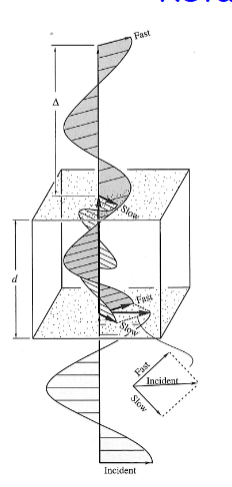
retardation
The light entering the mineral
with thickness
d is split into
slow and fast rays. In the time
it takes the slow ray to pass
through the mineral, the fast
ray will have traveled through
the mineral plus an additional
distance Δ, which is the
retardation.
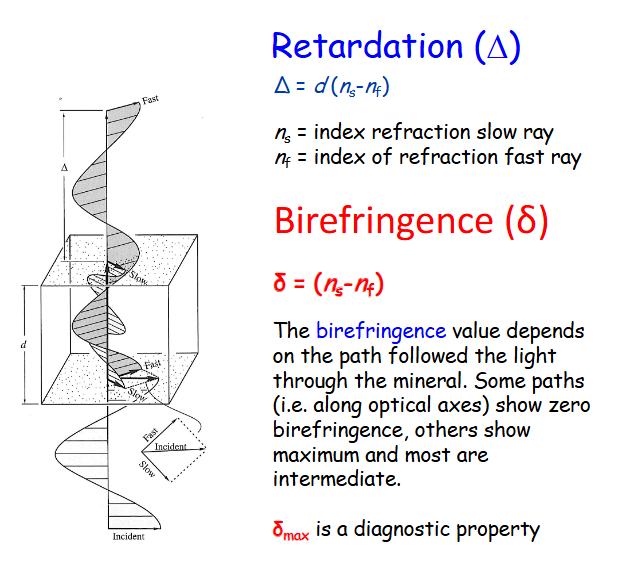
birefringence
The birefringence value depends
on the path followed the light
through the mineral. Some paths
(i.e. along optical axes) show zero
birefringence, others show
maximum and most are
intermediate
birefrigencexthickness=retardation
to measure, make the crystal parallel to plane of light
interference colours
Each wavelength will be
split into fast and slow
rays.
• Depending on thickness and
orientation, rays for some
wavelengths are
transmitted and some are
cancelled in the analyzer.
• The combination of
transmitted wavelengths is
perceived as interference
colours.
extinction
parallel
inclined
symmetrical
none
isotropic are always extinct, anisotropic should do extinct every 90 degrees

habit
nature and texture
can also be prismatic

form

interaction with light
Transparent: transmits light and through which an object may be seen.
Translucent: capable of transmitting light diffusely but is not transparent.
Opaque: does not transmit light, even on thin edges.
lustre
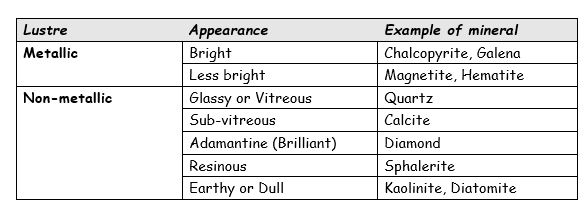
hardness
scratch test
cleavage and fracture

index of refraction
the velocity of light in air but also in mineral, n being less than one means it has a higher frequency than light (very unlikely). Remember the n numbers for different minerals
a mineral will stand out if it has a higher refractive index
isotropic vs anisotropic uniaxial and biaxial
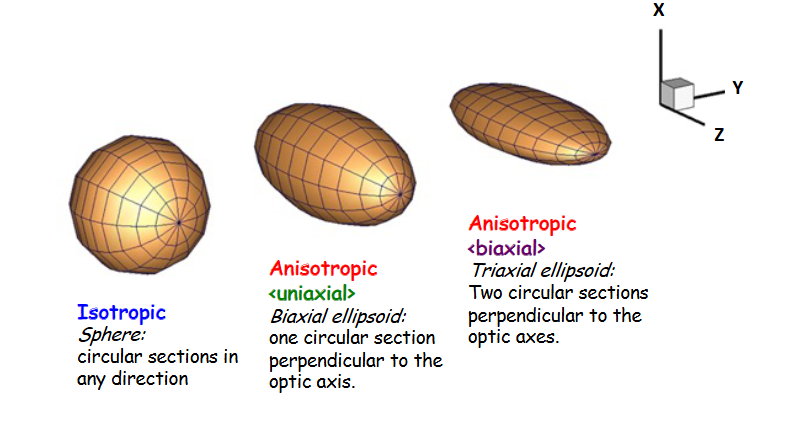
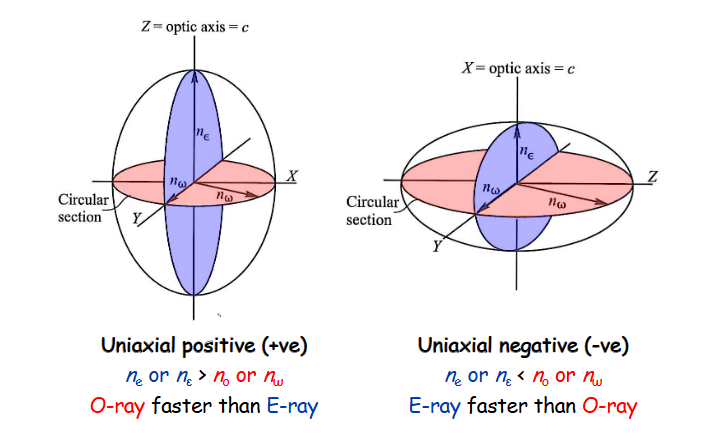
uniaxial negative and positive
birefingence of uniaxial minerals

uniaxial positive interference figure
try to find a crystal that is extinct all the time when polars are crossed, the triangle

uniaxial negative interference figure
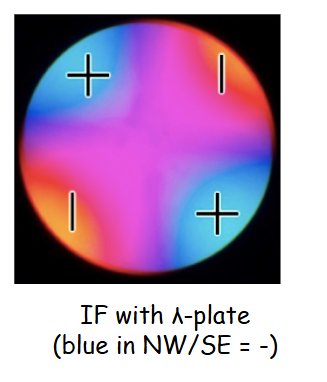
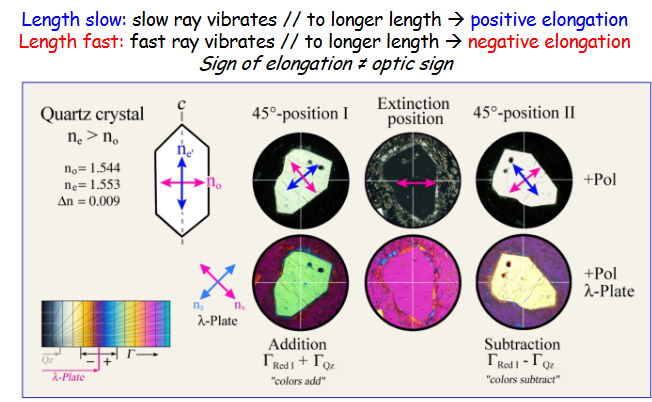
elongation
biaxial negative and positive

light travel relationship
denser material- further to travel, slower velocity, higher refractory index, more colour absorption, brighter colour
faster light=smaller refractory index
ordinary vs extraordinary rays
ordinary rays= look down optic axis, look from the top, more colour, ‘the triangle’, c axis perpendicular
extraordinary rays= side/elongated, extinct with rotation, c axis parallel
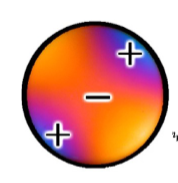
biaxial interference figure positive
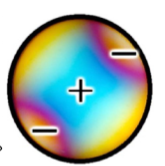
biaxial interference figures negative
optic axis
where i look on the crystal and only see one velocity. it will go extinct when you cross the polars.
coordination number of an element
ratio of anions to cations
olivine under microscope
Equant- grows approx the same amount in all directions
Curved fractures
Will appear white
Yellow lines (alteration), serpentine
High interference colours with polarised plate (very colourful) with high order colours like bright yellow
feyeyalite vs fosterite
fayalite has more iron compared to magnesium in it which makes it denser, fayalite has a higher refractive index because it slows down the light, bigger biorefringence
mantle vs crust composition
mantle- 35km down
denser material closer to core, nickel and iron rich
oxygen bonds to silica, hence in crust and mantle
olivine chemical formula
(Mg,Fe)2SiO4
can also contain calcium (ca)
pyroxene formula
SiO3 with mf or fe
weak beams on diagonal causes cleavage
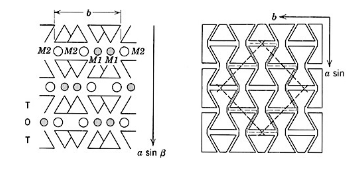
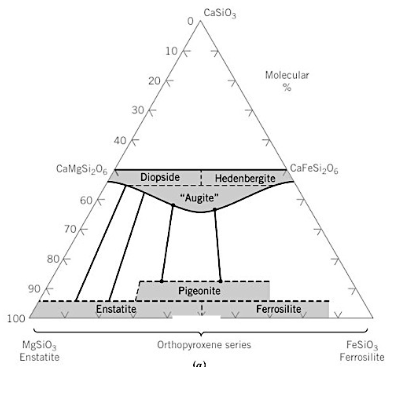
pyroxene classification
amphibole
double chains
Z8O22(OH)2

amphibole classification

minerals in olivine

Orthopyroxene is the darker mineral in the green
clynoperoxyne= grass green, looks like emeralds
olivine is the light green
Basalt is on the outside
spinel vs serpetine
Spinel= high relief, cubic, isotropic, bright yellow
Serpentine= in the racks, duller yellow, low relief
olivine with rust
Olivine breaks down by becoming red (iron)
Iron (2+) doesn't like oxygen,
has to add to 2 with si04, mostly iron could be fe1.6 mg0.4 si04
Rust= feOOH
Red in new caledonia because of the rust, magnesium that is leached in rust goes to coral reef, in central qld its white because the magnesium becomes magnesium carbonate
pyroxene hand sample
Density (heavy), environment, can appear bronze, dark
Will kind of have large grains, black lines intersect
clino vs orthopyroxene
One will be colourful (high interference colours) (clino), and the other will be grey or have low interference colours (it can go to second order rarely) (ortho)
clino will also go extinct in a different position
amphibole look
Shiny, long, black, larger
Colour zonation
Grain Shape: long
Relief: high
Colour: strong colours (yellow, green, pitch black), can have twinning, tri chroism (three different shades of colour is a characteristic), can also have zoning
Pleochroism: kind of
Interference colours: not very high
Birefringence:
Retardation:
Extinction: on angles?
Cleavage: 60 degrees and 120 in another (form an angled criss cross)
Other:
olivine in thin section
First look for relief then for interference colours
If you add water to orthopyroxene, serpentine will appear, similar base chemical formula
Grain Shape: orthorhombic, look like rounded rectangles
Relief: high, (the n numbers are high on the slides)
Colour: clino will often have twinning (two colours with a band in between), generally yellowey grey
Pleochroism (rotating without the polariser): no
Interference colours: ortho, first order, clino, higher order
Birefringence: low?
Retardation: high?
Extinction: when lines are facing NS, will go extinct on a 45 degree angle
Cleavage: straight/linear
Other:
triclinic
1 one fold with or without inversion
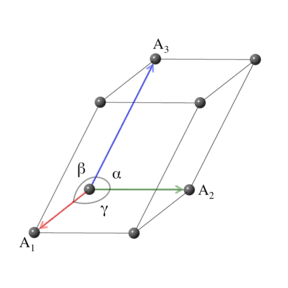
monoclinic
1 two-fold and or one mirror plane
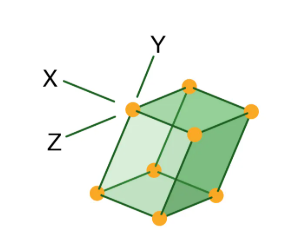
orthorhombic
3 two fold and or 3 mirror planes

tetragonal
1 four fold

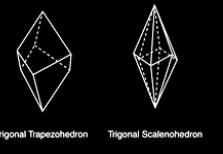
trigonal hexagonal
1 three fold
hexagonal
1 six fold

isometric
4 three fold
pinacoid
flat surface, applies to hexagonal and tetragonal prism
enstatite
MgSiO3
Ferrosilite
FeSiO3
Diopside
CaMgSi2O6
Hedenbergite
CaFeSi2O6
ionic radius of Mn, Fe, Co, Ni, Mg
0.6-0.8
ionic radius of Ca
1.0
phyllosilicates
platy or flaky habits, one prominant cleavage, 6 fold symmetry,
SiO4
includes serpetine group (antigorite), clay (kaolinite, talc), mica (muscovite, biotite), chlorite
phyllosilicate structure
O=OH
T-Si/Al O

tectosilicates
cation repulsion, low density, abundant silicate type in crust,
feldspar
(Ca,Na,K)(Si,Al)4O8
open structure accomodates large cations like K
4 alternating rings
feldspar composition

order-disorder polymorphism
heat controls this
e.g. sanidine completely disordered and microcline is completely ordered

feldspar phase diagram
