NR 3250 Urban Forestry Lectures 1.1 + 1.2
 Call Kai
 Learn
Learn Practice Test
 Spaced Repetition
 Match
Match Flashcards
 Knowt Play
1/26

There's no tags or description
Looks like no tags are added yet.
Name | Mastery | Learn | Test | Matching | Spaced | Call with Kai | Chat |
|---|
No analytics yet
Send a link to your students to track their progress
27 Terms
Forestry definition
The science and art of attaining desired forest conditions and benefits
This condition is established through interaction with owners and stakeholders, who are goal-setters, to aid them in understanding the benefits and costs of any alternative goal and condition
First definition of Urban Forestry
By Jorgensen in 1965:
“A specialized branch of forestry and has as its objective the cultivation and management of trees for their present and potential contributions to the physiological, socioligical, and economic well-being or urban society.”
Arboriculture definition
A specialized dicipline within horticulture that deals with the planting and care of individual trees and related landscaping vegetation.
Urban Forestry vs Arboriculture
Urban Forestry addresses tree aggregates
Arboriculture deals with individual trees
Urban Forestry includes Arboriculture
Exurban definition
A region or settlement that lies outside a city and usually beyond its suburbs and that often is inhabited chiefly by well-to-do families
Tree canopy
Urban forests make up a significant amount of America’s tree canopy
Over 130 million acres of America’s forests are located in cities and towns
Make up of Urban Forests
Urban parks
Street Trees
Green belts
Gardens
River and coastal promenades
River corridors
Wetlands
Nature preserves
Shelter belts
Green roof
Vertical forest
East Coast Greenway
Nationally connected, locally rooted trail for safe active transportation and recreation that transforms the way people move toward health, community and sustainability
3,000 miles
450 connected communities

Importance of Urban Forests
In 2010, about 81% of Americans live in urban centers - census bureau
Urban forests provide many benefits
Ecological, economic, aesthetic
Ancient History of Urban Forests
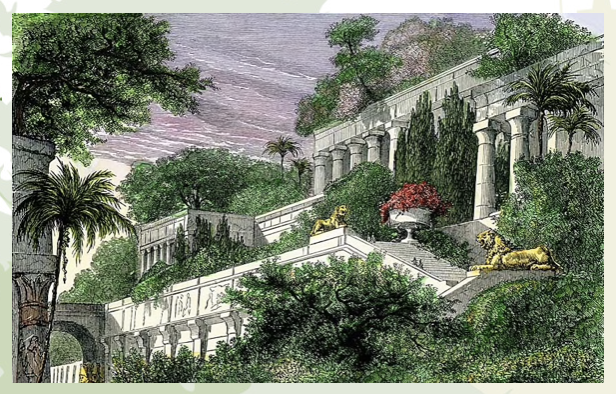
“Hanging Gardens of Babylon”
One of the 7 wonders of the world
Early Egyptians described transplanting trees with balls of soil in 2000 BC
In 13AD, Kublia Khan required tree planting all public roads in and around Beijing for shade and to mark them in the snow
The regulation stated that trees be planted only two paces apart
Trees are still planted close together in Beijing
Recent History of Urban Forestry
The “Romantic Landscape” began in Europe where public green spaces, suburban residential areas and parks sprawled outward for people to escape the deplorable urban conditions (“urban blight”) of the industrialized urban centers
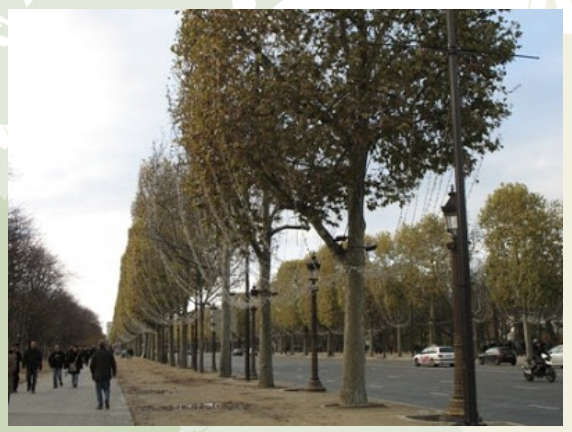
Napoleon transformed Paris in the 1850s and 60s using a radial street pattern of tree-lined boulevards and by building public parks, squares, monuments and gardens
The Renaissance in Italy, France and Spain saw the growth of villas on the periphery of cities, containing walled gardens and tree-lined paths
This pattern continued throughout Europe and became the pattern for revitalizing the old cities. However, most of these investments were made by the wealthy class, for the wealthy class
Beginning in the 19th century, there began an interest in providing these well-established benefits to the “humbler” working classes
American Towns
Early colonial villages in New England were built around a village green for functionality and military purposes, not aesthetics

Modern Times
As time progressed, cities like Philadephia and Washington DC were designed with open spaces, filled with trees, in pursuit of the same romantic landscape that had not yet emerged in Europe
However, insurance companies were reluctant at first to ensure homes with yard trees, stalling further efforts until the effects on industrialization began having the same effects here as in Europe
Central Park
New York’s Central Park set a pattern for many other cities
Romantic Landscape
In the spirit of the Romantic Landscape, suburbs for the emerging middle and upper classes sprang up on the outskirts of cities being blighted by industrialization
Smart Development
As the sprawl continued, lot size declined rapidly and limited space for tree planting
This trend did not reverse itself until the late 1960s when home buyers started placing high premiums on wooded parcels
Tree planting became of national interest at this time
Arbor Day
First observed in Nebraska in 1872 with J.S. Morton when over 1 million trees were planted
This trend spread and has played a major role in defining the emerging profession of urban forestry
Only recently has urban and community forestry begun to shed the image of a profession dedicated to just planting trees
The spread of exotic diseases, like Dutch Elm Disease and the Chestnut Blight, expanded the role of Urban Forestry further
Following WWII (1921)
An early effort to expand urban forests
American Forests launches memorial tree planting campaigns to plant trees in cities across America
First Lady Florence Harding plants first memorial tree in Washington DC
First National Conference
Trees and Forests in an Urbanizing Environment
1971
University of Massachusetts
Urban Forestry Act 1974
A bill to authorize the Secretary of Agriculture to make grants to cities and park districts to encourage the increased planting of trees and shrubs and to encourage other urban forestry programs
Declares the growth of trees and shrubs helps to improve the quality of the urban environment by preventing erosion, providing shade, and reducing noise and air pollution levels
Authorizes grants to cities to pay 100% of tree planting costs
Political
Provides technical assistance to cities and parks to assist such cities in planning, developing, and administering forestry programs
California Urban Forestry Act 1978
Declares the value of urban forests
Promotes expansion of UF
Creates programs to support communities
What year was the First National Urban Forest Conference?
1982
Million Trees Campaign in Los Angeles
1984
Started by TreePeople
Desired to have public plan 1 million trees for the 1984 Olympics
Led by people with no training in urban forestry
When mature, these trees could filter up to 200 tons of particulate smog from the air every day
The figure seemed solid and inspirational
Many citizens became involved and a great deal of trees were planted
The campaign caputured national attention
The Million Tree Campaign in LA helped inspire many similar initiatives by citizen groups throughout the US
American Forests launches Community ReLeaf
2013
Program dedicated to expanding tree canopy in cities across the US
Blue Ribbon panel names 10 best urban forests
2013
Austin, Charlotte, Denver, Milwaukee, Minneapolis, New York, Portland, Sacramento, Seattle, Washington DC
August 2019
Mayor Garcetti, LA, names Rachel Malarich the first City Forest Officer
New post created to oversee LA’s urban forests
Goals
Plant 90,000 trees by 2021
Increase canopy size by 50% in areas with least shade
Ideas for the future
Vertical forests
Green roofs
Wildlife crossings
Ex: Wallis Annenberg