Spring Final Exam 2026
 Call Kai
 Learn
Learn Practice Test
 Spaced Repetition
 Match
Match Flashcards
1/64

There's no tags or description
Looks like no tags are added yet.
Name | Mastery | Learn | Test | Matching | Spaced | Call with Kai | Chat |
|---|

65 Terms
Capitalism
An economic system based on private property and free enterprise. Where the goal is to invest and make more capital.
Core Countries
The most advanced industrial or post-industrial countries, which take the lion's share of profits in the world economic system.
Enclosure Laws
passed to keep peasants off of formerly common land, increased urbanization. This allowed the wealthy to buy up farm land.
First Industrial Revolution
beginning in the 1780s, which gave rise to textiles, railroads, iron, and coal. It began in Great Britain (England) because of a large supply of coal and low population.
Green Revolution (Third Agricultural Revolution)
Agricultural revolution that increased production through improved seeds, fertilizers, and irrigation; helped to support rising populations.
Non-renewable Energy
Energy that cannot be replaced once it is used or energy that is not being replaced as fast as it is being used.
Carbon Footprint
the total carbon dioxide emissions produced by an individual, group, or location
Remanufacturing
The rebuilding of a product to specifications of the original manufactured product using a combination of reused, repaired and new parts.
Renewable Energy
energy from a source that is not depleted when used, such as wind or solar power.
Second Agricultural Revolution
the introduction of machines to farming resulting in more production
Second Industrial Revolution
Steel, chemicals, electricity. This is the name for the new wave of more heavy industrialization starting around the 1860s. Focused in the United States and resulting in mass production of the car.
Spinning Jenny
A machine that could spin several threads at once
Steam Engine
A machine that turns the energy released by burning coal into motion.
Sustainability
Using just enough renewable and nonrenewable natural resources in a way that allows for continued resource use in the future.
Technology
A tool or object that makes life easier
World Population
Approx. 8 Billion
Atlantic Slave Trade
the buying and selling of Africans for work in the Americas
Anesthesia
Causing loss of feeling or sensation for surgery
Antibiotics
Medicine that fights infection caused by bacteria
Black Death
A deadly outbreak of bubonic plague that swept through Europe between 1347 and 1351
Columbian Exchange
The exchange of plants, animals, diseases, and technologies between the Americas and the rest of the world following Columbus' voyages.
Smallpox
A highly contagious viral disease characterized by fever, weakness, and skin eruption with pustules that form scabs; responsible for killing a large portion of the Native American population after Columbus' voyages.
Spanish Flu
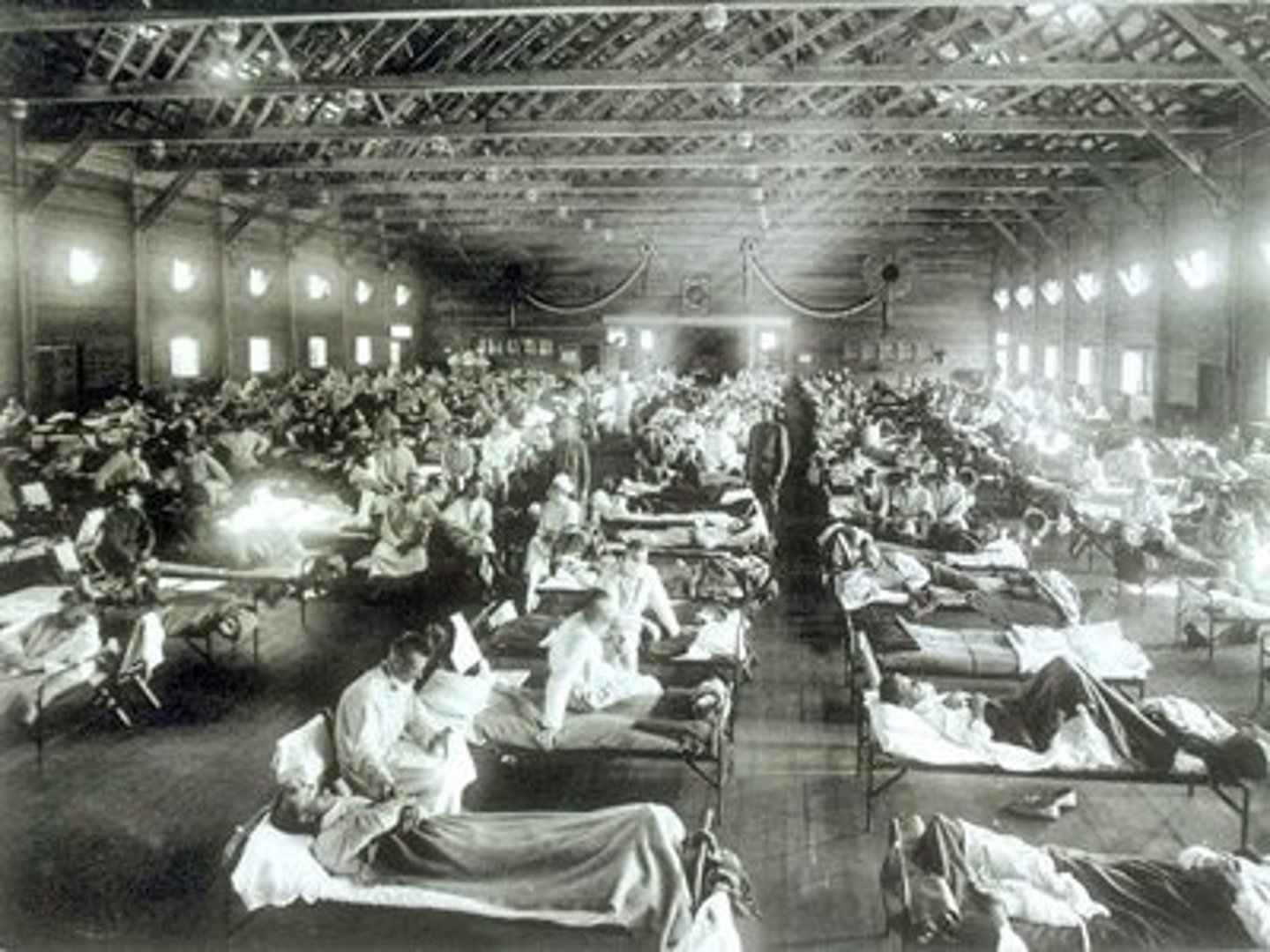
Pandemic that spread around the world in 1918, killing more than 50 million people. More Americans died from the pandemic than American soldiers died in World War I.
United States Population
340 Million
Vertical Farming
Vertical farming is the practice of producing food in vertically stacked layers. This is often done in urban areas where less farming space is to accommodate a growing population and the anticipation of climate change.
World Population Trends
World population has increased steadily since the First Agricultural Revolution and then rapidly in the last 200 years since the Industrial Revolution. The only time the world saw a decline in population over a century is in the 1300s due to the Black Death.
Berlin Conference
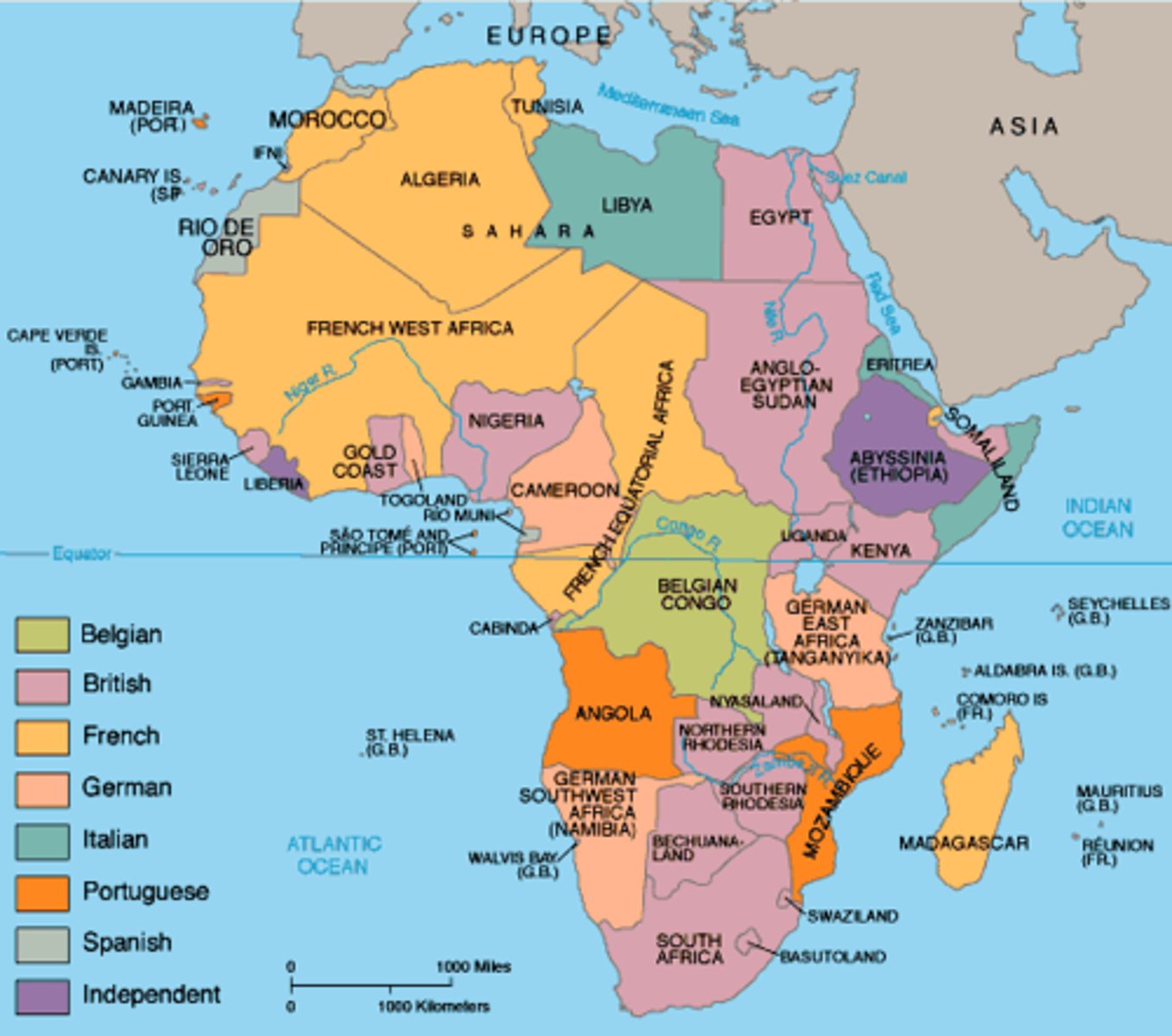
A meeting from 1884-1885 at which representatives of European nations agreed on rules colonization of Africa (Scramble for Africa) and created a map of Africa very similar to the map today. No Africans were present at this meeting.
Cecil Rhodes
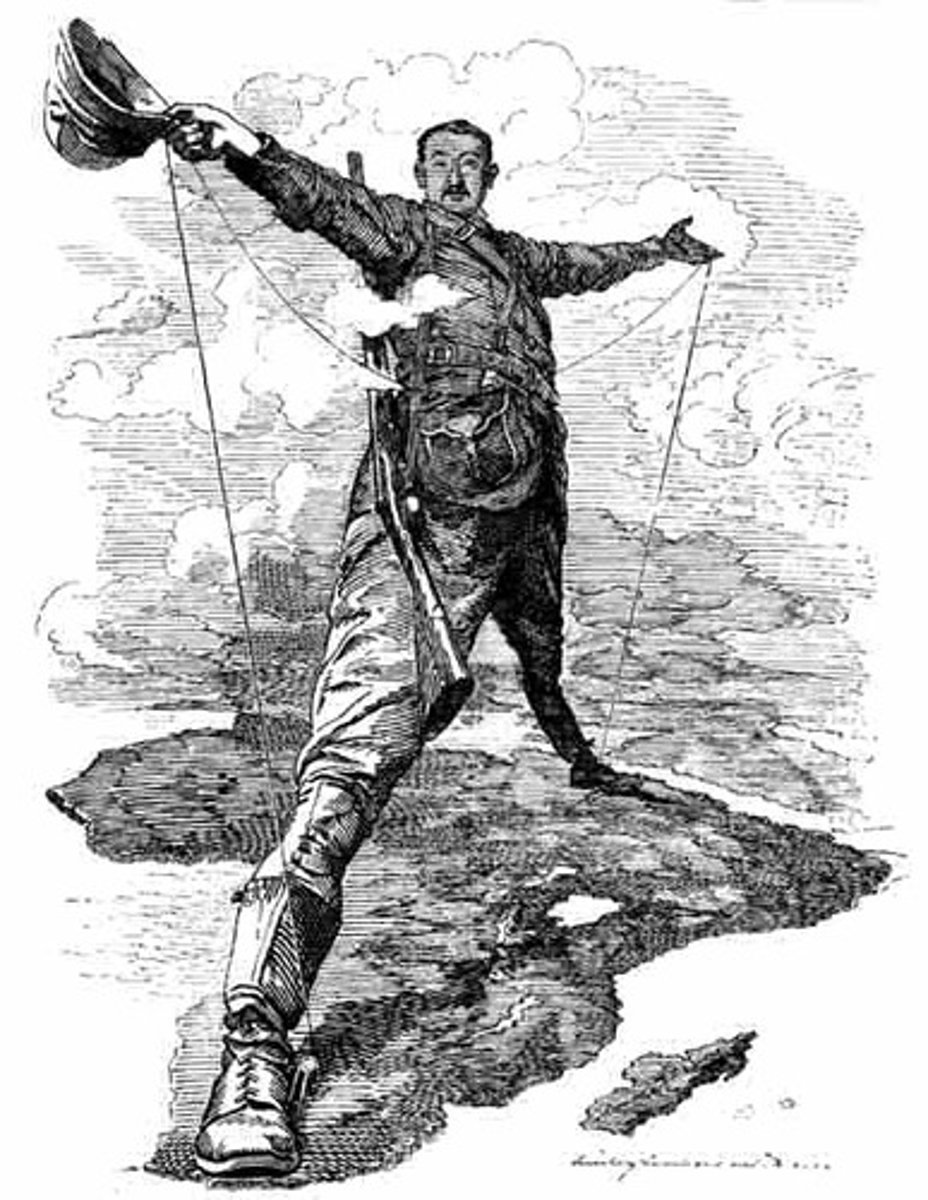
Played a major role in colonial South Africa. He founded DeBeers Diamond Company, which had a monopoly on diamonds, and he worked to improve infrastructure throughout Africa.
Communism
a form of socialism that abolishes private ownership and attempts economic equality
Gross National Income (GNI)
the income of a nation calculated based on goods and services produced, plus income earned by citizens and corporations headquartered in that country
Human Development Index (HDI)
An indicator constructed by the U.N. to measure the level of development for a country through a combination of income, education, and life expectancy.
Imperialism
A policy of extending a country's power and influence through diplomacy or military force.
King Leopold II
King of Belgium who set off a Scramble for Africa among European powers for African colonies in the late 1800s and is known for severe abuses against people of the Congo while forcing them to harvest rubber.
Scramble for Africa
Term given for the rapid invasion of Africa by the various European powers. This began imperialism in Africa.
Archduke Franz Ferdinand
heir to the Austria-Hungarian throne, was assassinated in Sarajevo by a Serbian, started World War I.
Allied Powers (WWI)
Britain, France, Russia (until 1917), Italy (from 1915) and the United States (from 1917)
Central Powers
Austria-Hungary, Germany, Ottoman Empire
World War I (1914-1918)
Machine Guns, Trench Warfare / U-Boats --
Causes: Alliance system, Militarism, Imperialism, Nationalism, and the assassination of Archduke Franz Ferdinand --
CENTRAL POWER VS. ALLIED POWERS
Causes of World War I
Militarism, Alliances, Imperialism, Nationalism (MAIN)
Eastern Front
a stretch of battlefield along the German and Russian border
Western Front
a stretch of battlefield between France / Belgium and German, trench warfare
League of Nations
An organization of nations formed after World War I to promote cooperation and peace. A part of the Treaty of Versailles.
Militarism
A policy of glorifying military power and keeping a standing army always prepared for war
Propaganda
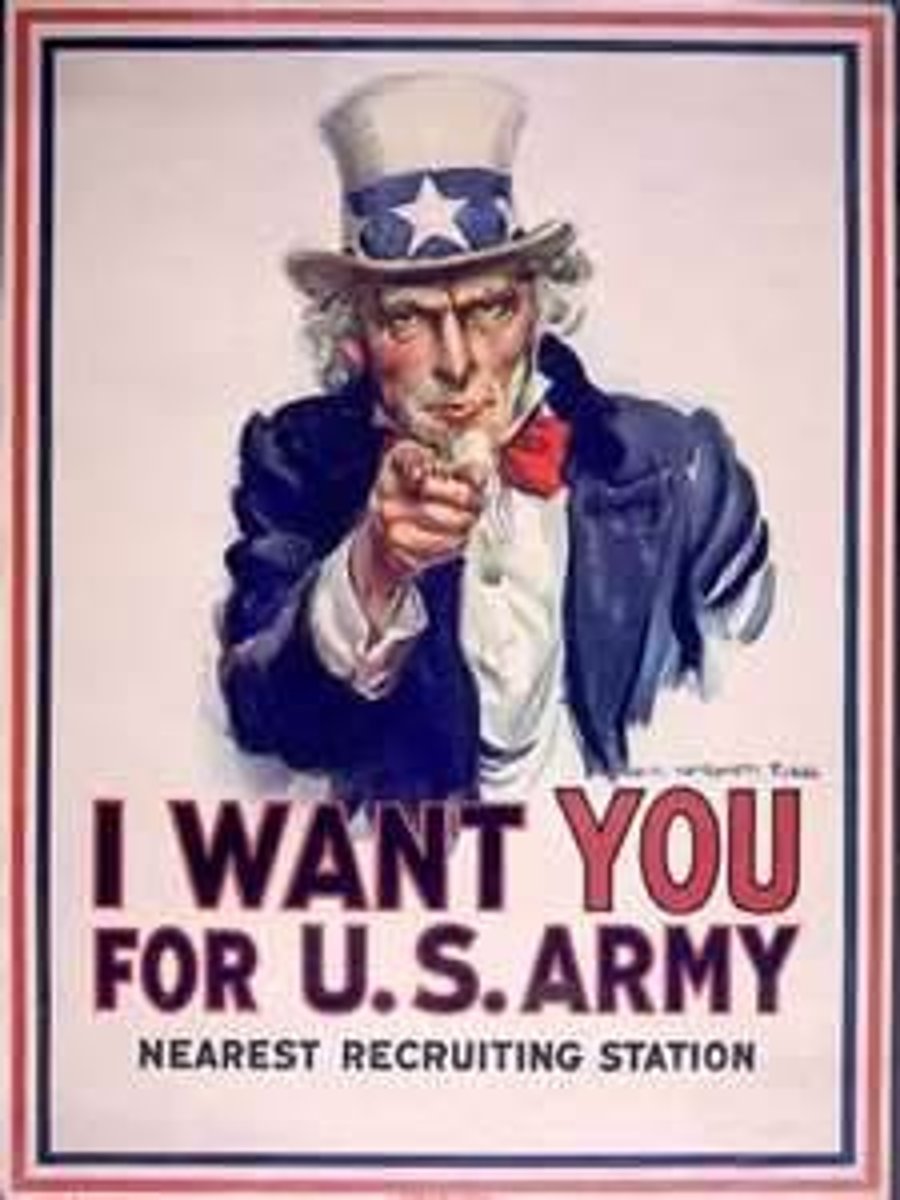
Information from the government to sway the public's opinion. A method to try to encourage people to go to war and step up and help. Posters, signs, banners, and TV commercials were made to help this.
Russian Revolution of 1917
A rebellion that started towards the end of World War I and eliminated the Russian imperial government. The new government was a short-lived republic that was overthrown a few months later by the Bolsheviks, bringing rise to the Soviet Union.
Bolsheviks
A group of revolutionary Russian Communists who took control of Russia's government in November 1917
Total War
the channeling of a nation's entire resources into a war effort, including full support from civilians
Trench Warfare
Fighting with trenches, mines, and barbed wire as a way of getting out of machine gun fire. Horrible living conditions, great slaughter, no gains, stalemate, used in WWI.
Treaty of Versailles
Treaty that ended WWI. It blamed Germany for WWI and handed down harsh punishment. Laid the groundwork for Hitler's support and WWII.
War of Attrition
a prolonged war or period of conflict during which each side seeks to gradually wear out the other by a series of small-scale actions.
Appeasement
A policy of making concessions to an aggressor in the hopes of avoiding war. Associated with Neville Chamberlain's UK policy of making concessions to Adolf Hitler.
World War II (1939-1945)
Germany, Italy, Japan (Axis) against
Great Britain, France, Russia, and the U.S. (Allied)
Allied Powers (WWII)
Great Britain, France, Soviet Union, and the United States
Axis Powers (WWII)
Germany, Italy, Japan
Genocide
Attempted extermination of a racial or cultural group
Holocaust
A methodical plan orchestrated by Hitler to ensure German supremacy. It called for the elimination of Jews, non-conformists, homosexuals, non-Aryans, and mentally and physically disabled.
Hutu
The majority ethnic tribe in Rwanda who was responsible for the 1994 genocide
Tutsi
The minority ethnic tribe in Rwanda who were victims of the 1994 genocide
Rwandan Genocide
The killing of more than 500,000 ethnic Tutsis by rival Hutu militias in Rwanda in 1994. The conflict between the dominant Tutsis and the majority Hutus had gone on for centuries, but the suddenness and savagery of the massacres caught the United Nations off-guard. U.N. peacekeepers did not enter the country until after much of the damage had been done.
UN Declaration of Human Rights
a declaration adopted by the United Nations General Assembly and represents the first global expression of rights to which all human beings are inherently entitled
United Nations Human Rights Council
body responsible for strengthening the promotion and protection of human rights around the globe
Meiji Restoration
the modernization and industrialization of Japan in the 1800's
Fascism
A political system headed by a dictator that calls for extreme nationalism and racism and no tolerance of opposition. The Nazis were fascists.
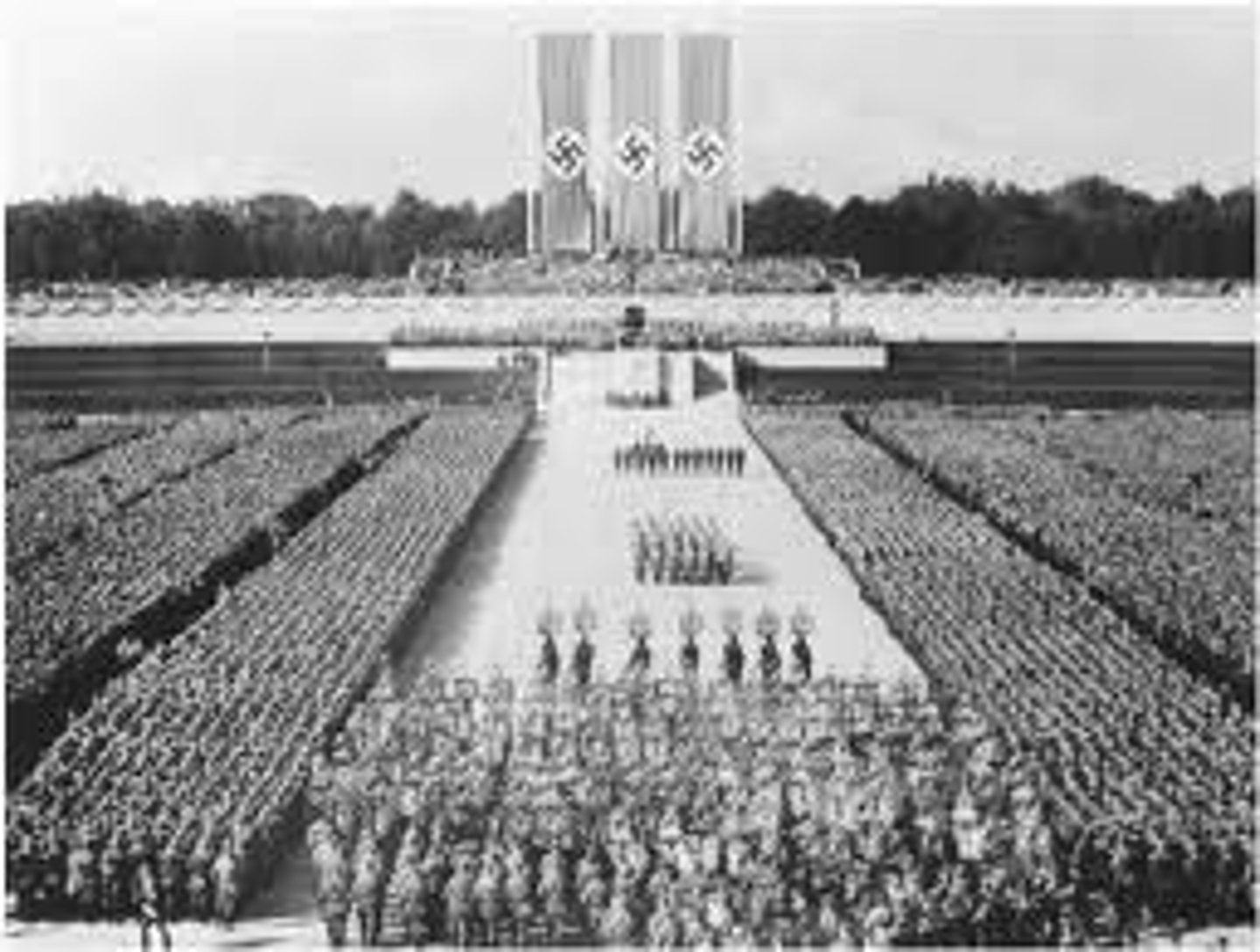
Causes of WWII
Europe: The failure of the Treaty of Versailles, economic depression, and the rise of fascism in Germany and Italy. The German invasion of Poland starts the war.
Pacific: The Meiji Restoration and the rapid modernization of Japan lead to a need for resources and the Japanese invasions of mainland Asia. The Japanese attack on Pearl Harbor starts the war.
Vaccination
An injection that produces a mild form of a disease in order to help build up an immunity to it. A form of immunization that started with inoculation, injection of the full blown disease.