stem cells
 Call Kai
 Learn
Learn Practice Test
 Spaced Repetition
 Match
Match Flashcards
 Knowt Play
1/11

There's no tags or description
Looks like no tags are added yet.
Name | Mastery | Learn | Test | Matching | Spaced | Call with Kai | Chat |
|---|
No analytics yet
Send a link to your students to track their progress
12 Terms
3 general properties of stem cells
stem cells are capable of dividing by mitosis and self-renew for long periods
they can go through numerous cycles of cell divisions to form more stem cells
each new cell has the potential to remain as a stem cell
stem cells are unspecialised
they do not have a specialised physiological function → unlike red blood cell or muscle cell
stem cells can differentiate to give rise to specialised cells
differentiation is a process which is controlled by differential switching on and off of genes → involving transcription factors [internal cues]
differentiation is also controlled by external signals [external cues]
stem cells destined for differentiation exit the cell cycle at G0 phase
classification of stem cells
there are two ways that stem cells can be classified, based on:
potential to give rise to certain types of cells → potency
location in the body
potency
stem cells can be classified based on their potential to give rise to different cells
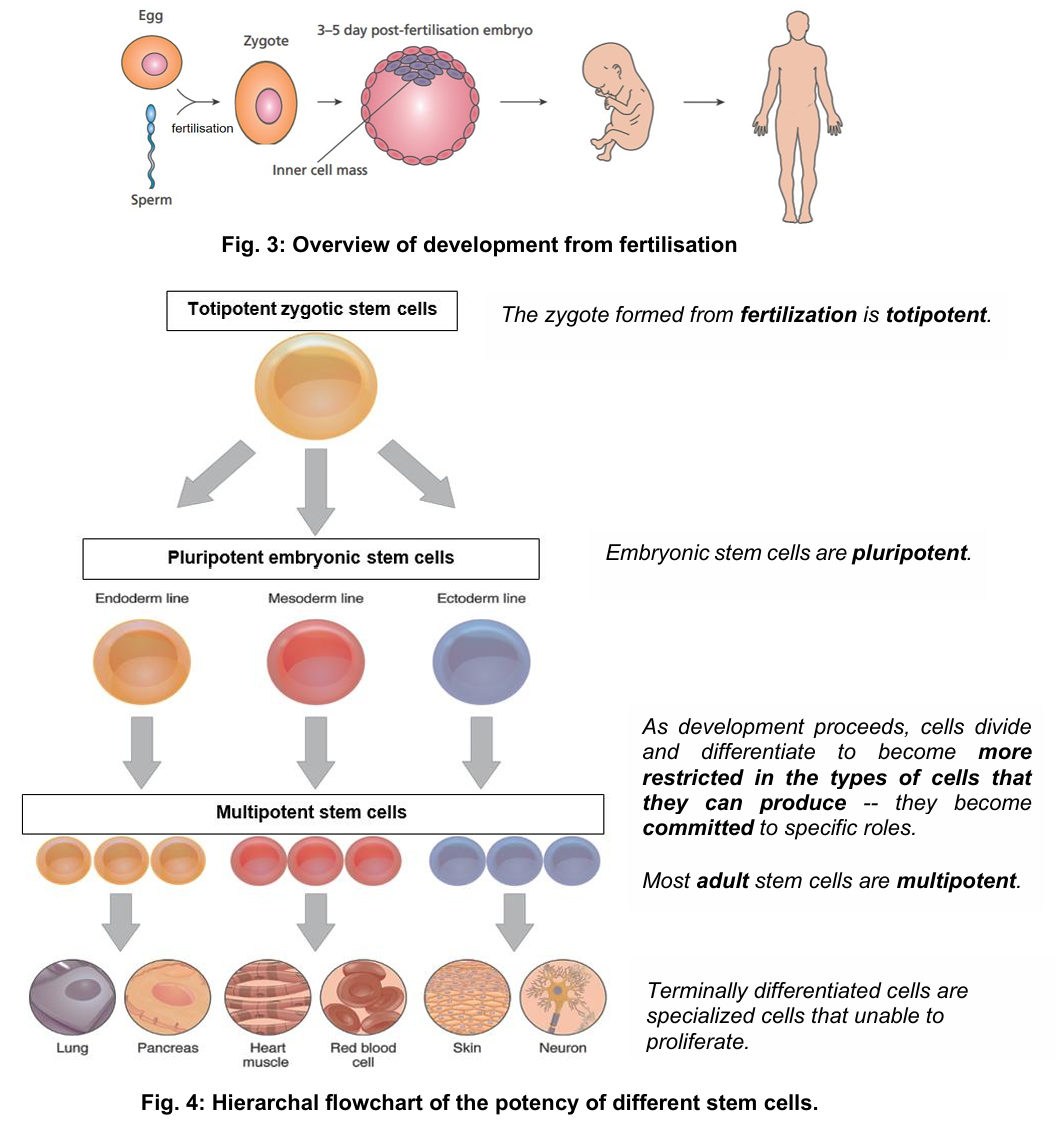
all cells in the body arise from the single-cell zygote formed after fertilisation
potency: totipotent, pluripotent and multipotent
totipotent stem cells
having the potential to differentiate into any cell type form whole organisms
totipotent stem cells are also pluripotent and multipotent
zygotic stem cells are totipotent
include the zygote (single-cell stage) and early embryo cells up to the 8-cell stage (morula) of development in humans
function: cells differentiate to form all cell types in the body of the organism and the placenta
pluripotent stem cells
having the potential to differentiate into almost any cell type except the placenta
pluripotent stem cells are also multipotent
embryonic stem cells (ESC) are pluripotent
found in the inner cell mass of a blastocyst
function: cells differentiate to form almost any cell type in the body of the organism except the placenta
multipotent stem cells
having the potential to differentiate into a limited range of cell type
lymphoid stem cells and myeloid stem cells are multipotent → classified adult stem cells
they can differentiate into a limited range of blood cells
function: multipotent stem cells give rise to cells to replace dead and worn-out cells in the tissue where are found
location
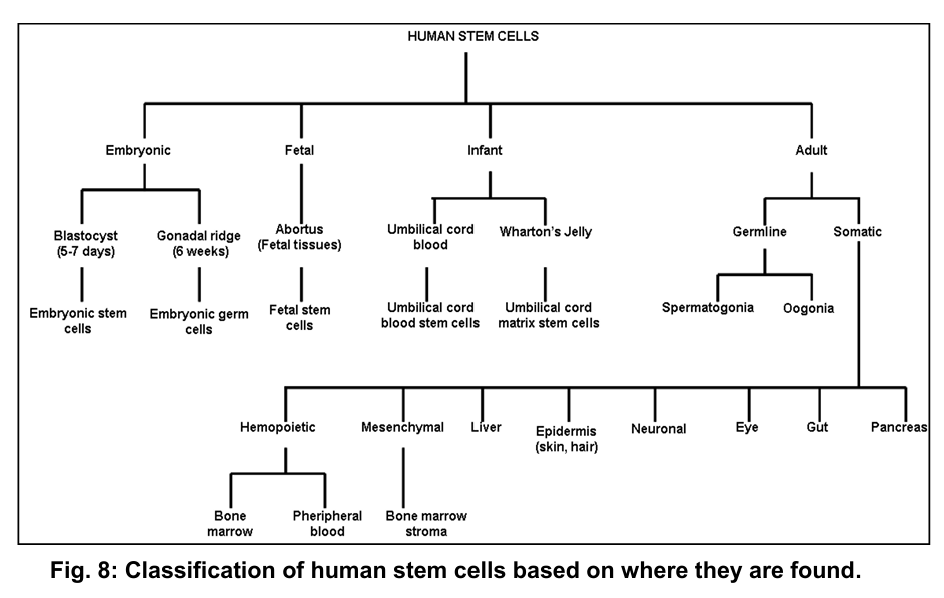
stem cells can also be classified based on their location in the body
e.g. some adult stem cells, umbilical cord stem cells
adult stem cells
adult stem cells are undifferentiated cells present in differentiated tissue or organ
functions: they replace dead and worn-out cells in the tissue that they are found → due to wear and tear or old age
found in both children and adult
blood stem cells → lymphoid and myeloid stem cells
found in the blood and bone marrow
are multipotent
functions
blood cells have limited life spans, ranging from less than a day to a few months, and are continually replaced by the division and differentiation of blood stem cells
lymphoid and myeloid stem cells ensure constant renewal of blood cells
lymphoid stem cells differentiate to form white blood cells like T lymphocyte and B lymphocytes, natural killer cells (for immune response)
myeloid stem cells differentiate to form red blood cells and other types of white blood cells like neutrophils
other examples of adult stem cells
gut epithelial stem cells
found in the lining of the digestive tract
are multipotent
skin stem cells
found in the basal layer of the epidermis and at the base of hair follicles
are multipotent
bone marrow stromal (mesenchymal) cells
found in bone marrow
also known as mesenchymal stromal cells (MSC)
are multipotent
neural stem cells
found in the brain
are multipotent
umbilical cord blood stem cells
cord blood contains blood stem cells
are multipotent
function: cord blood stem cells ensure constant renewal of foetal blood
comparison between totipotent, pluripotent and multipotent
totipotent | pluripotent | multipotent | |
|---|---|---|---|
examples | zygotic stem cells | embryonic stem cells → cells derived from the ICM of the blastocyst | • lymphoid stem cells |
self-renewal capability | limited self-renewal capability, because they no longer exist | limited self-renewal | undergo continuous |
cell specialisation ability and function | can differentiate into any cell type, including the placenta, to form whole organisms | can differentiate into almost any cell type in the body of the organism except the placenta | can differentiate into a limited range of cell type |