Digestion - Part 1 (Mouth -> Stomach)
 Call Kai
 Learn
Learn Practice Test
 Spaced Repetition
 Match
Match Flashcards
 Knowt Play
1/8

Name | Mastery | Learn | Test | Matching | Spaced | Call with Kai | Chat |
|---|
No analytics yet
Send a link to your students to track their progress
9 Terms
4 main processes in the digestive system
ingestion: take food in
digestion: break polymers into monomers
absorption: incorporate nutrients into the body
elimination: waste (undigested food) passed out of the body
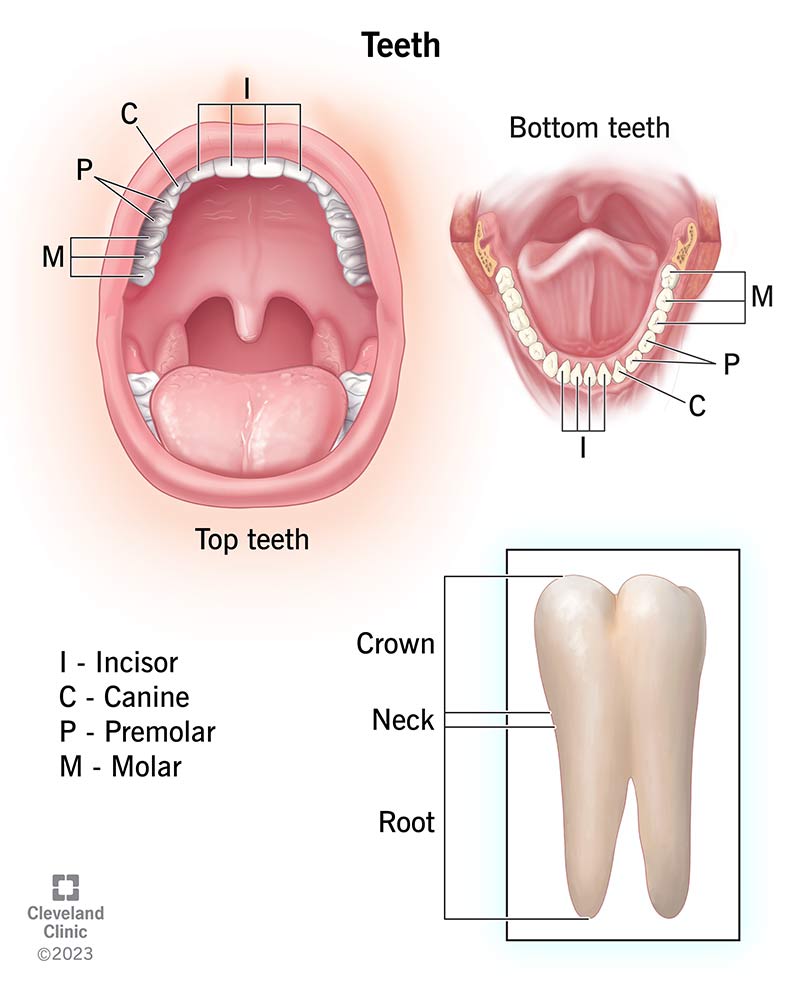
Mouth - Teeth - Tongue - Lips
Mouth: performs both mechanical and chemical digestion.
Teeth: different shapes have different functions.
Incisors: biting
Canines: stabbing & tearing
Premolars & molars: grinding & crushing
Tongue: pushes food through the mouth, especially toward the back of the mouth and against the hard & soft palate.
Responsible for tasting, manipulating food, and swallowing.
Lips: keep food in
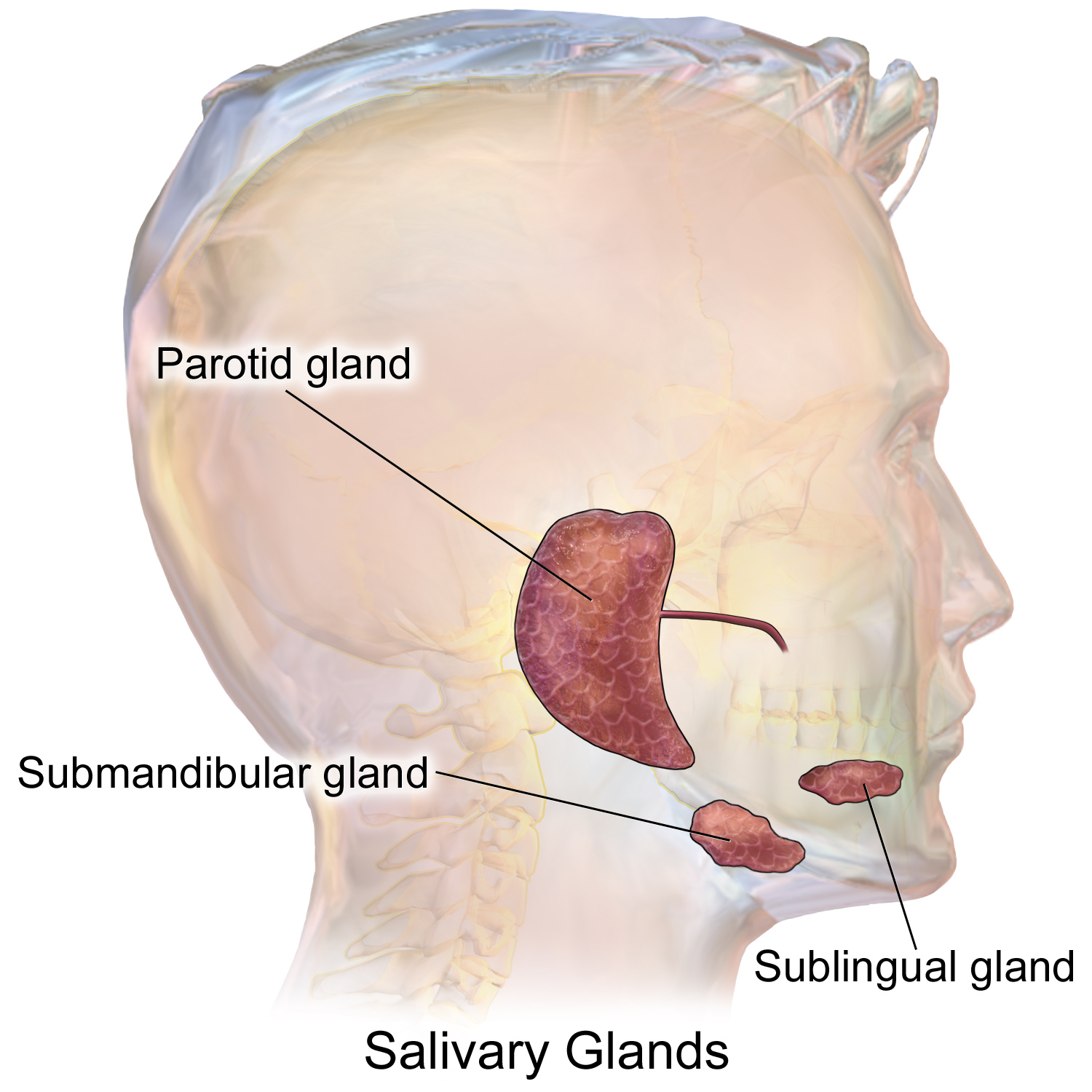
Salivary glands (3 pairs)
Secrete ~1 L of saliva per day
Allow molecules to dissolve so that you can taste your food
Contain antibacterial agents
Moisten the food
Allow the tongue to form a bolus of food that can be swallowed
Contains the enzyme amylase that works best at pH 7
breaks down starch into maltose (glucose + glucose)
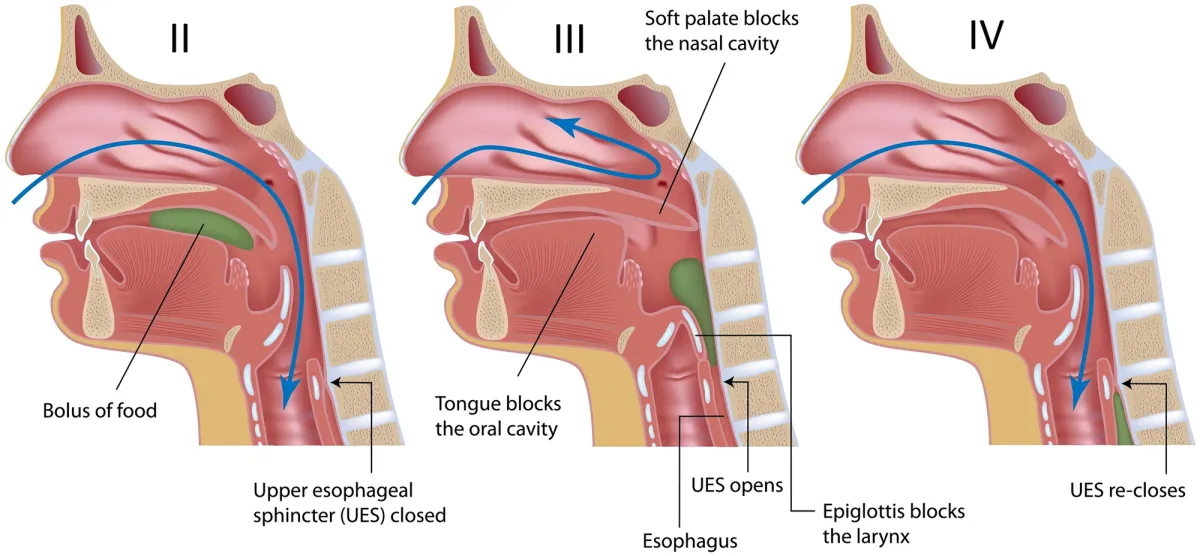
4 steps of swallowing (deglutition)
The tongue pushes the bolus back, initiating the swallowing reflex.
The soft palate moves upward, blocking off the nasal passage.
Glottis (opening to the larynx) closes as the bolus pushes the epiglottis down over the glottis → Prevent the food from entering the airways.
The esophageal sphincter (a circular band of muscles that surrounds tubes and acts as a valve) relaxes, and the bolus enters the esophagus.
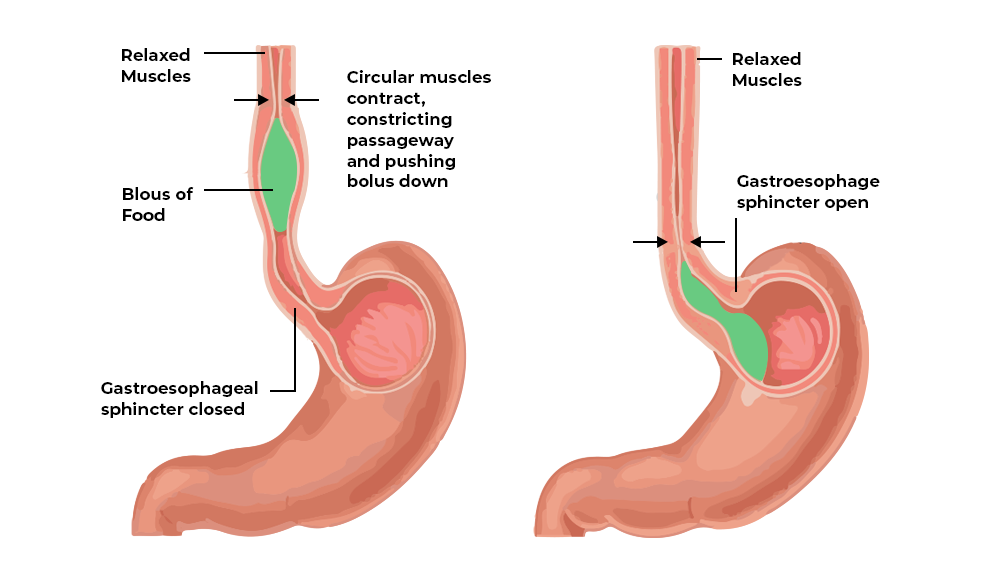
Esophagus
A tube of muscle and epithelial tissue.
Peristalsis: a wave of muscle contractions that moves food along the digestive tract.
Circular muscle fibres contract on top of the bolus, pushing food forward.
Food movement is not gravity-dependent (though some gas movement is density-dependent).
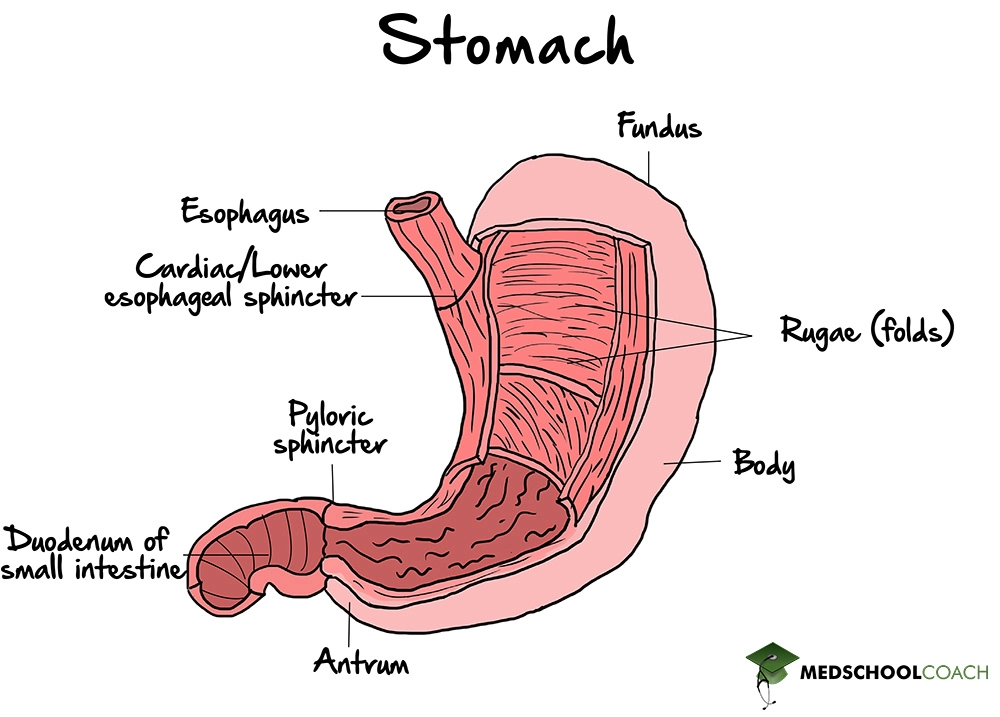
Cardiac sphincter
Located between the esophagus and stomach, which opens reflexively when food pushes against it from the esophageal side.
Protects the esophagus from stomach acid.
If this “seal” fails, you experience “heartburn”.
If it fails permanently or over a prolonged period, you may develop acid reflux.
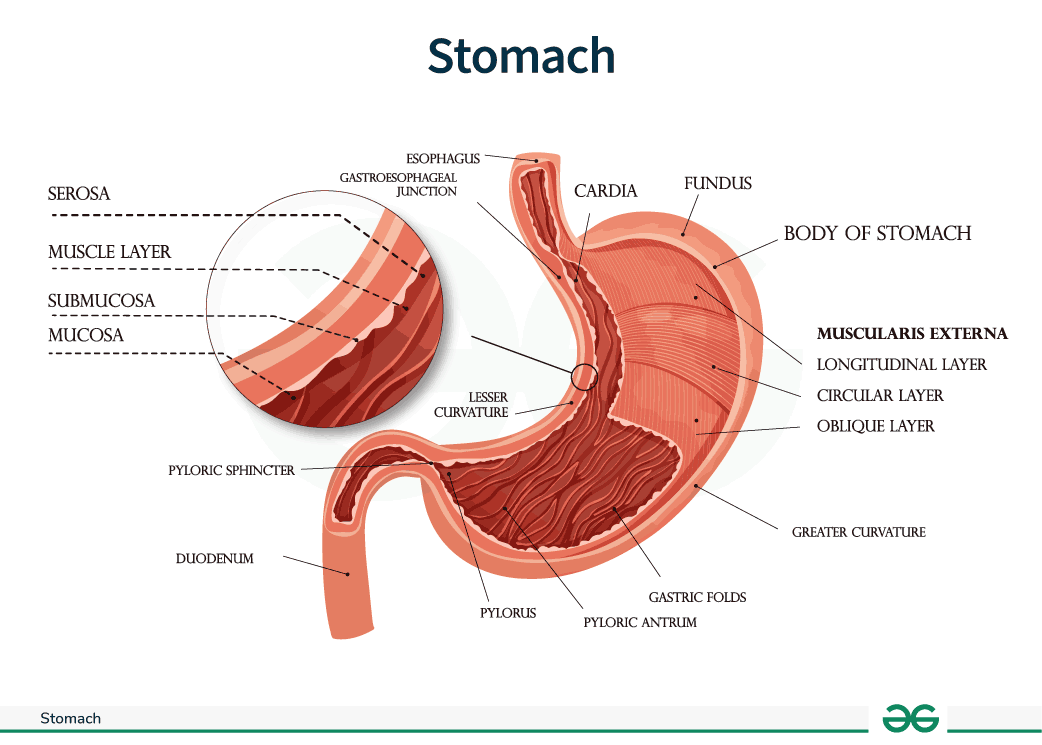
Stomach
A muscular, large (~1.5 L capacity) organ lined with epithelial and secretory tissue.
Has many inner folds called rugae that allow the stomach to stretch.
Does both mechanical and chemical digestion.
Epithelial cells secrete lots of mucus, which prevents auto-digestion.
Insufficient mucus or a hole in the mucus coat (caused by H. pylori bacteria) results in an ulcer in the stomach wall.
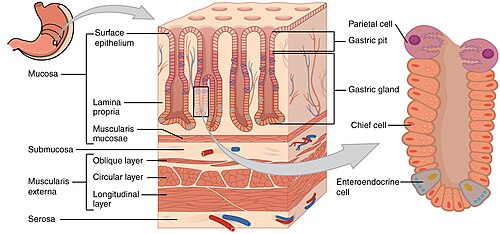
Gastric glands
Located deep in the stomach wall.
Secrete gastric juice into the stomach in response to a hormone called gastrin.
2 components of gastric juice:
Hydrochloric acid (HCl) has a pH of about 2-3.
Pepsinogen (at low pH) converts into the enzyme called pepsin.
Digest proteins into polypeptides & di/tri-peptides by hydrolysis.
Digest other enzymes, including salivary amylase, and many pathogens.
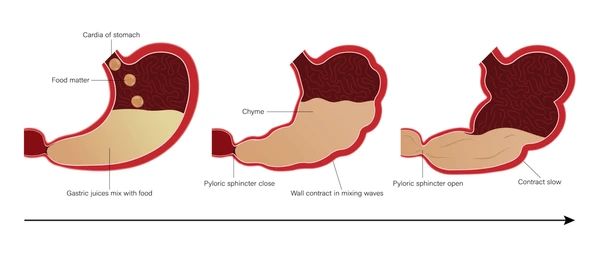
Absorption in stomach
Water, alcohol, salt, and simple sugars can be absorbed in the stomach.
Chyme (digested food): a milky, thick, nutrient-rich slurry that forms from food (undigested) through hydrolysis and muscle contraction.
Absorption may last for about 3-4 hours on average, depending on the size and makeup of the food.
Pyloric sphincter: located at the end of the stomach, which opens to let a few mL of chyme enter the small intestine.