Wildlife Ecology & ID (Charts and Pictures)
 Call Kai
 Learn
Learn Practice Test
 Spaced Repetition
 Match
Match Flashcards
 Knowt Play
1/13

There's no tags or description
Looks like no tags are added yet.
Name | Mastery | Learn | Test | Matching | Spaced | Call with Kai | Chat |
|---|
No analytics yet
Send a link to your students to track their progress
14 Terms
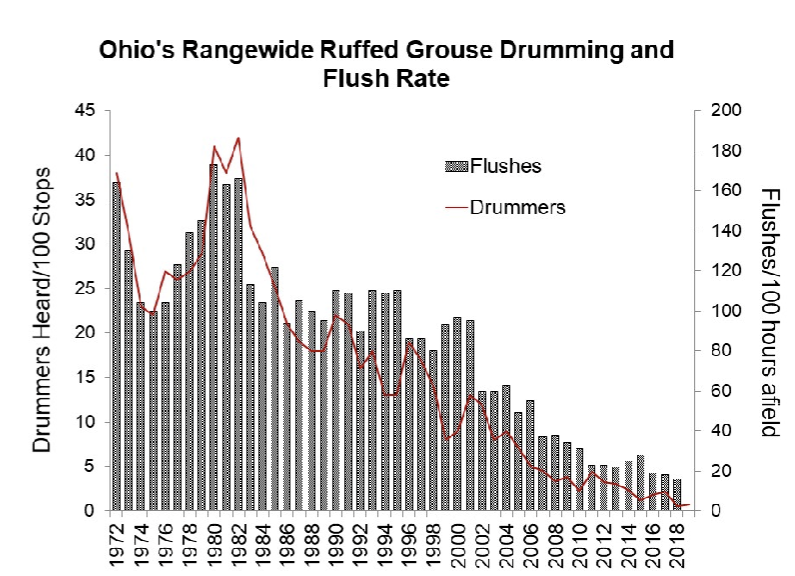
Why have Ruffed Grouse declined in Ohio?
Ruffed Grouse require “young” forests (<20-40 years old) that provide thick cover and berries (Ohio’s forests have aged past good Ruffed Grouse habitat)
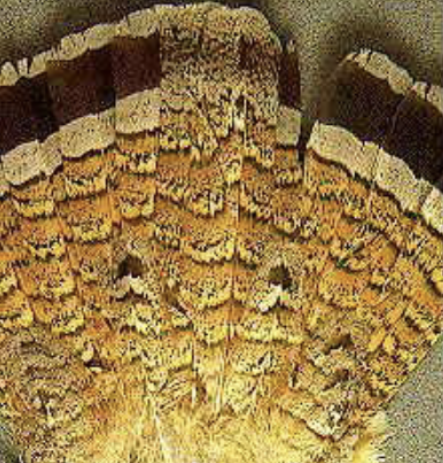
How can you sex Ruffed Grouse?
Looking at their tail feathers: if the “band” is solid, then it is a male, if the “band” is broken up, then it is a female. (However, some males can have broken “bands” so it’s best to use other methods of sexing). Measuring the central tail feather: If it is greater than or equal to 5.75-6,” then it is a male, if it is less than or equal to 5.5,” then it is a female- if it is between the two then you cannot tell just based off of the central tail feather. Rump feathers: if there are two or more spots, then it is a male, if there is only one spot, then it is a female.
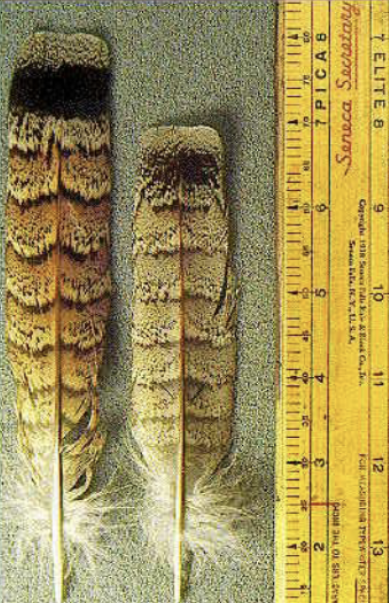
How can you age Ruffed Grouse?
9th and/or 10th primary wing: Adults have rounded tips and the upper trailing edges of the feathers are smooth and “fresh,” meaning the feather is new after a summer molt. Juveniles have sharper tips and the upper trailing edges are straight, coming to a point, frayed, and worn.
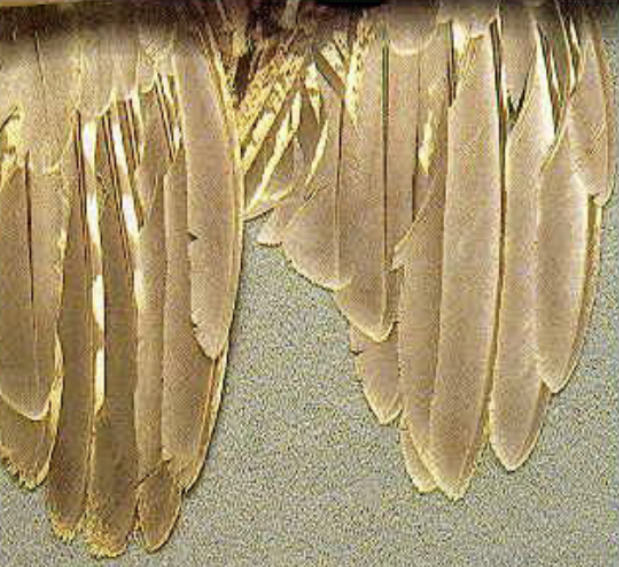
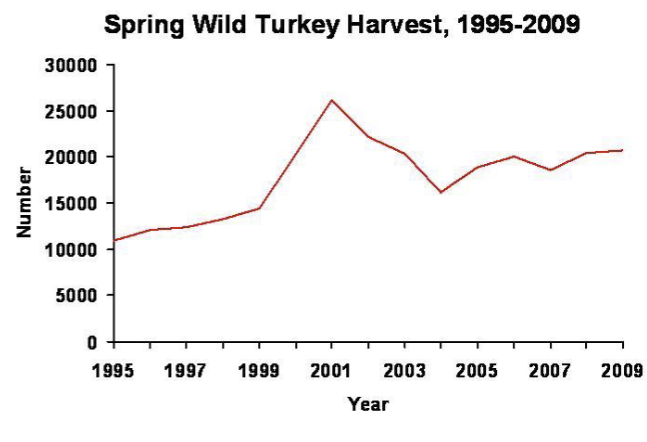
What happened in 1999 that led to such a large increase in Spring harvest from 2000-2005?
The 17 year locust hatch provided so much food that poult survival more than doubled to greater than 6 poults per hen in 1999 (Populations and harvest doubled the next year too)
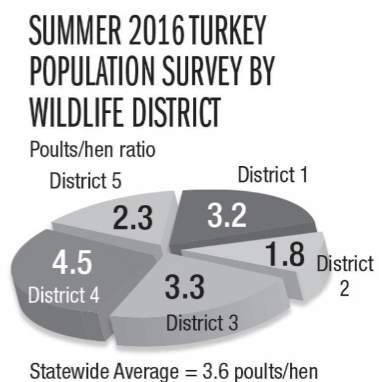
How did the recent hatch of cicadas affect Ohio’s upland game birds?
It increased the state average number of poults/hens and increased the numbers in each specific district of Ohio
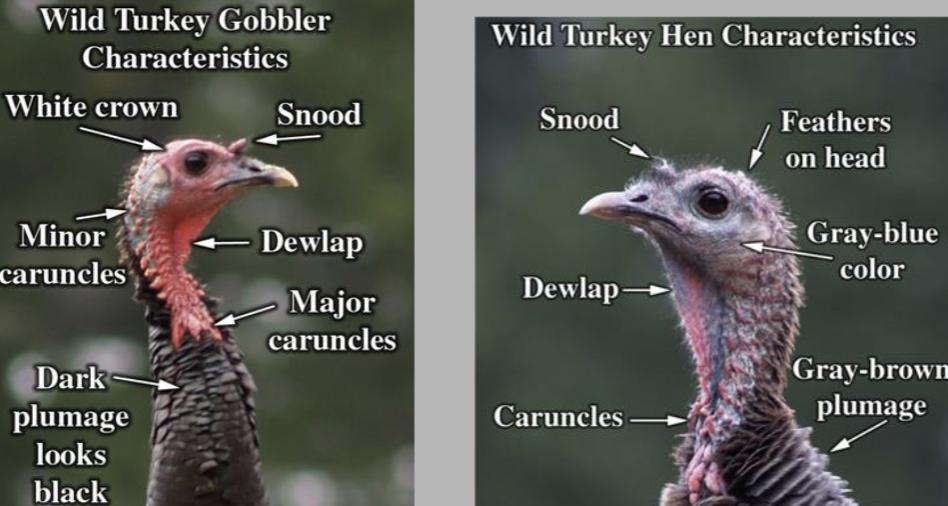
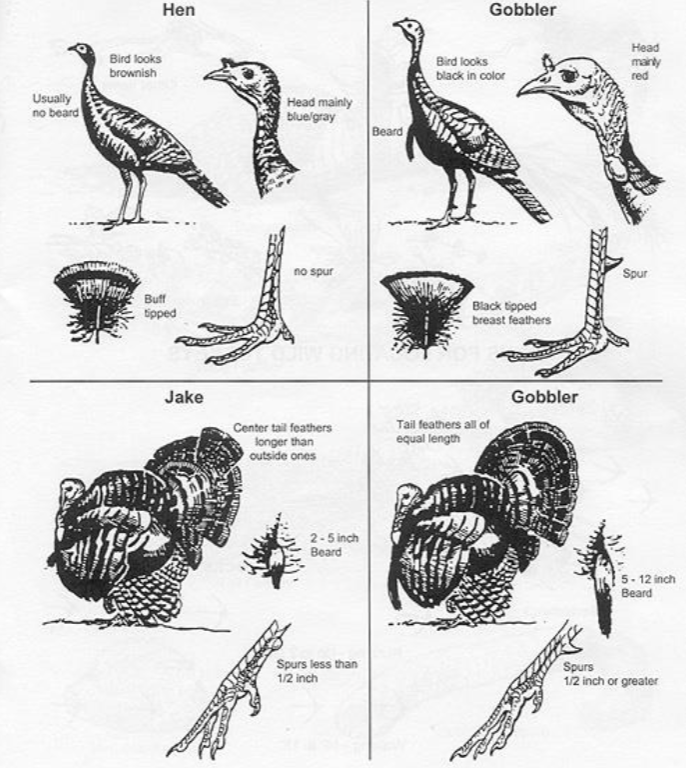
How can you sex Wild Turkey in the field? (Out in the wild)
By their snoods, dewlaps, plumage, caruncles, and feathers/crown on their heads
How can you age a Wild Turkey in the field? (Out in the wild)
Based on the length of its beard, if it has a spur on its legs, how long the tail feathers are, etc.
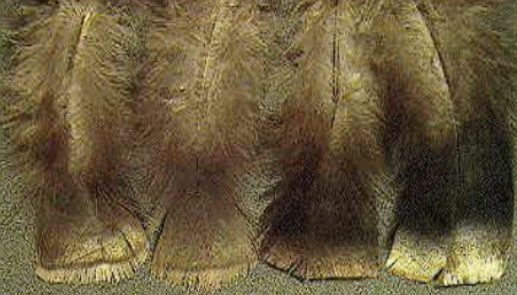
How can you sex a Wild Turkey if you have a breast feather?
Male breast feathers are black tipped and iridescent white females are tan or have a buffed tip
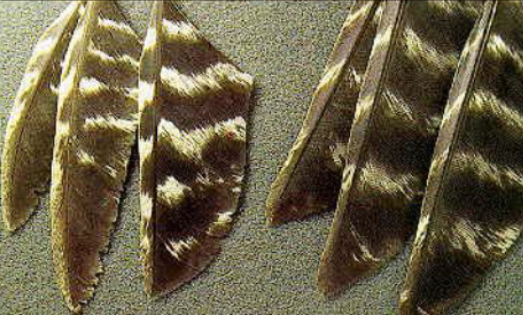
How can you age a Wild Turkey if you have a 9th and/or 10th primary wing, or see its tail fan.
9th and/or 10th primary wing: Adults have light colored banding that ends at the tip of the feather, and is smooth and more rounded. Juveniles have light colored banding that does not end at the tip of the feather (about midway) and has frayed ends. Tail Fan: Adults have an even length fan all the way around, while Juveniles have a 2” difference (less) and their tail feathers vary.
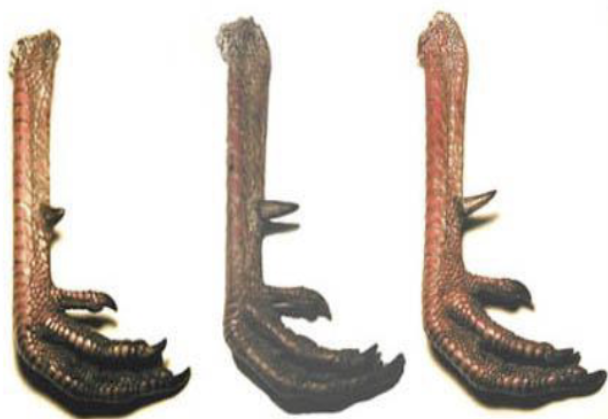
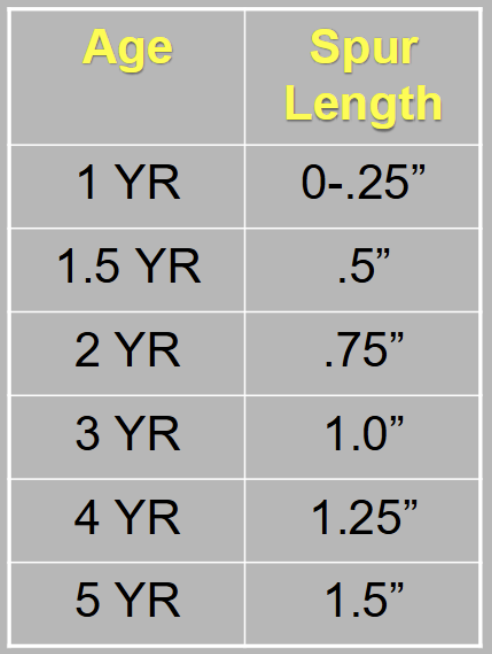
How can you age a male Wild Turkey based off of their spur?
Based off of the length of the spur (measure on inside from cuticle line, measure curve of spur, put into closest age class)
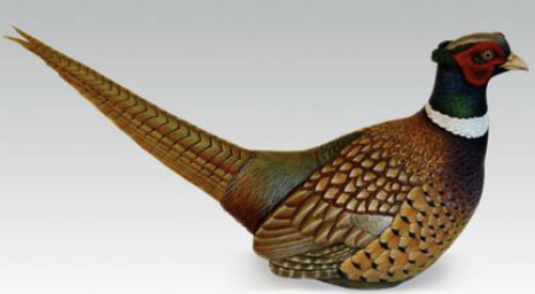
How can you sex a Ring-Necked Pheasant?
Males: “Rainbow” color, brightly adorned with iridescent green head, white collar around neck, iridescent golden plumage with powder blue wing patch, maroon breast and green/blue belly, spur on leg, long black banded tail feathers, and un-feathered red facial eye patch. Females: Cryptic color, “dead” grass patterned body, no spur, shorter tail, resembles a Grouse but no ruff around neck, and barring on primaries differs. (Juveniles are similar to females, but males will begin patterning within 2 months).
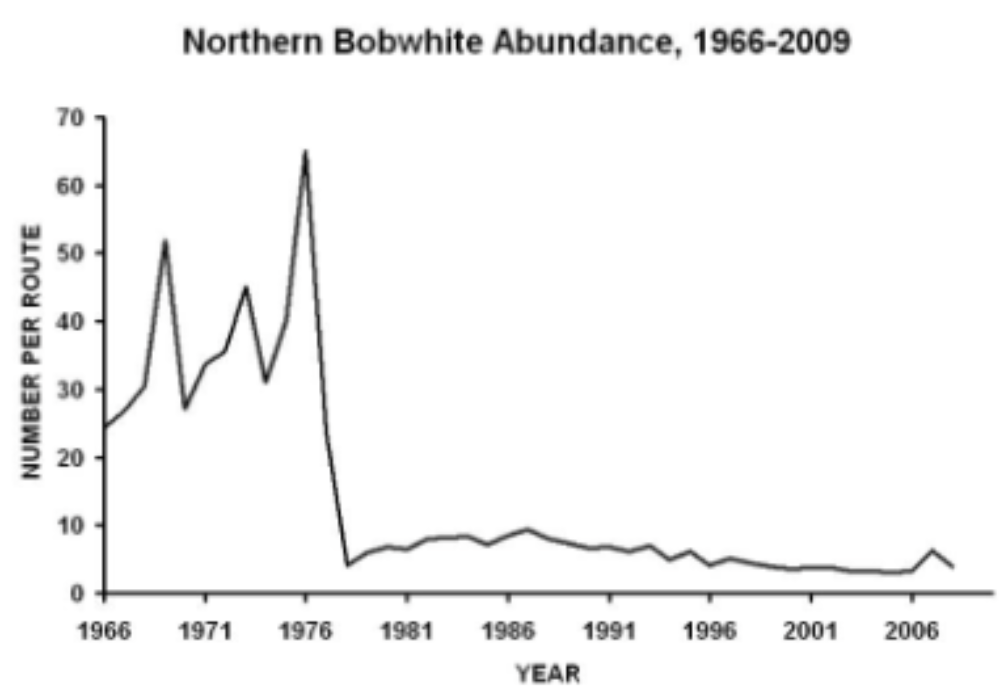
What happened from 1976-1978 that led to such a big decline in Northern Bobwhite Quail populations?
All three years had abnormally hard Winters which led to a 90% reduction in Quail numbers; populations were eliminated completely from some areas. Along with the aging of the forest, changes in farmland habitats, and urbanization.
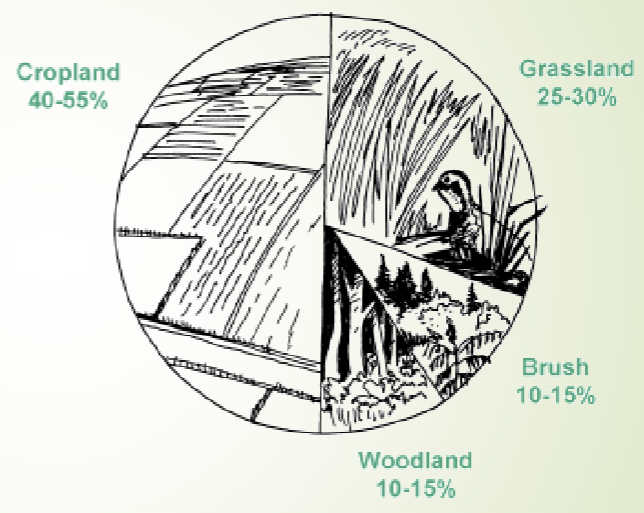
Quail Habitat (Percentages)
(Just Study Chart)
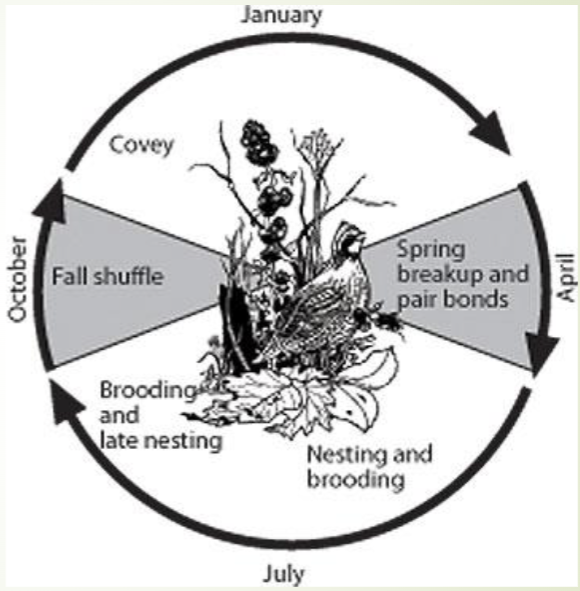
The Northern Bobwhite Quail Annual Cycle
(Just Study)