Physiology Final Exam
 Call Kai
 Learn
Learn Practice Test
 Spaced Repetition
 Match
Match Flashcards
 Knowt Play
1/133

Earn XP
Description and Tags
Study guide answered with slides and exams. (E: is an exam question)
Name | Mastery | Learn | Test | Matching | Spaced | Call with Kai | Chat |
|---|
No analytics yet
Send a link to your students to track their progress
134 Terms
E: Physiology definition
study of normal organismal functioning and its component parts
E: Process explains the __
“how”
mechanistic approach
examines the process
E: function explains the __
“why”
Teleological approach
starts from end product and reasons backwards to explain things based on end purpose
E: Steps of response loop:
stimulus, receptor, input signal, integrating center, output signal, target, response, feedback loop
E: Most enzymes take to what protein structure?
Tertiary structure
4 levels of protein structures
Primary, secondary, tertiary, and quaternary
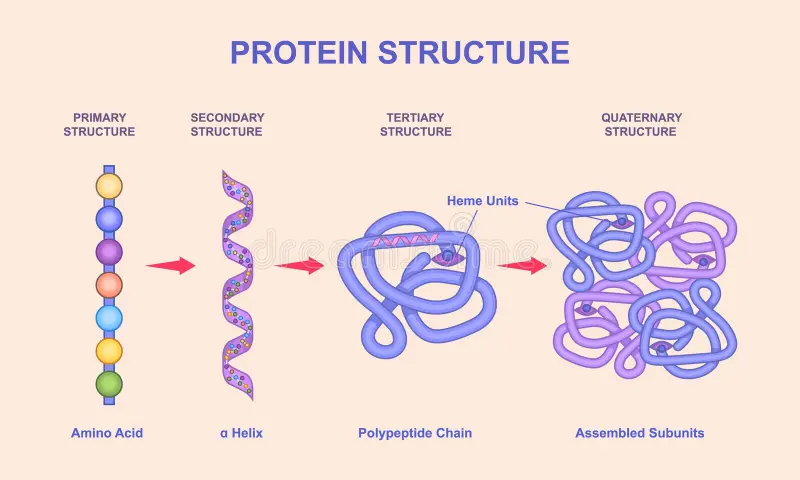
Primary structure
linear sequence of amino acids linked together by peptide bonds
secondary structure
local folding patterns formed by hydrogen bonds (alpha helices and beta-pleated sheets)
Tertiary structure
overall three-dimensional shape of single protein chain
Quaternary structure
arrangement of multiple polypeptide chains into single functional protein
E: The pH of a solution is 9.5 and you want the solution to be at pH 8.0, you should add what to the solution?
more acid
E: Four major biomolecule groups
lipids, carbohydrates, proteins, nucleotides
lipids are __ and therefore not very water soluble
nonpolar
glycerol
simple 3-carbon molecules that makes up backbone of most lipids
E: Which monosaccharide is part of every disaccharide?
glucose
E: Biomolecules can store potential energy in the form of free energy. Where is this energy stored?
in their covalent bonds
E: which is more likely to cross a cell membrane by simple diffusion: fatty acid molecule or glucose molecule?
fatty acid
General structure of carbohydrates
for each carbon there are two hydrogens and one oxygen
Proteins are made of __ and linked together by __
amino acids; peptide bonds
T/F: Chemicals tend to move from area of high concentration to low concentration
True
chemicals direction of movement is based on
energy
High concentration → low concentration
no energy required
Low concentration → high concentration
energy required
Osmosis is …
movement of water from area with low solute concentration to an area with high solute concentration
Osmosis rule
“water goes where the party(solute) goes”
lumen
hollow space or cavity inside a tubular organ or structure in body
Organelles
carry out cellular functions
Inclusions
store materials or cellular byproducts
E: amount of energy needed to raise the temperature of 1 L of water by 1° C ?
one Kilocalorie and one Calorie
one Calorie = one
kilocalorie
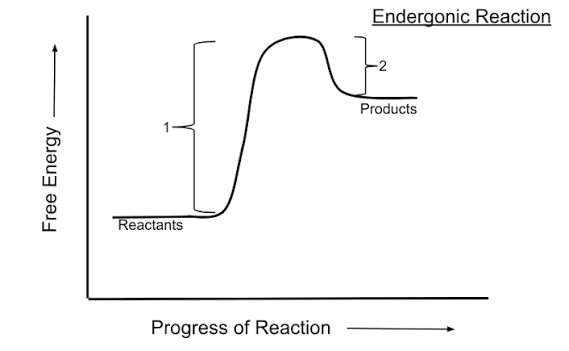
endergonic reactions
require an input of energy and products contact more energy than reactants
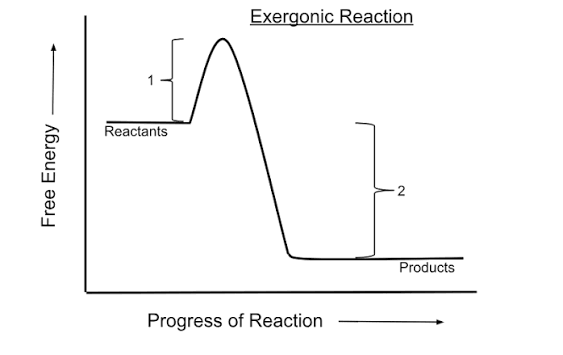
exergonic reaction
releases energy and products contain less energy than reactants
enzymes play a role in the __ part of a chemical reaction
activation energy
E: enzymes reduce what part of a chemical reaction?
activation energy
Molecules that can freely pass through cell memebrane:
oxygen
carbon dioxide
nitrogen
nonpolar molecules
Molecules that require transporters to pass through cell membrane:
ions: Na+, K+, Ca2+
glucose
amino acids
water
large polar molecules
E: the sodium-potassium-pump works by pumping _ out of the cell and _ into the cell for every _
3 Na+, 2 K+, ATP
E: is the sodium-potassium-pump a symporter, antiporter, or uniporter?
antiporter
How does sodium-potassium-pump work?
3 Na+ out, 2 K+ in, and 1 ATP used
Transducer
converts a stimulus into an electrical signal that nervous system can interpret (aka. translator)
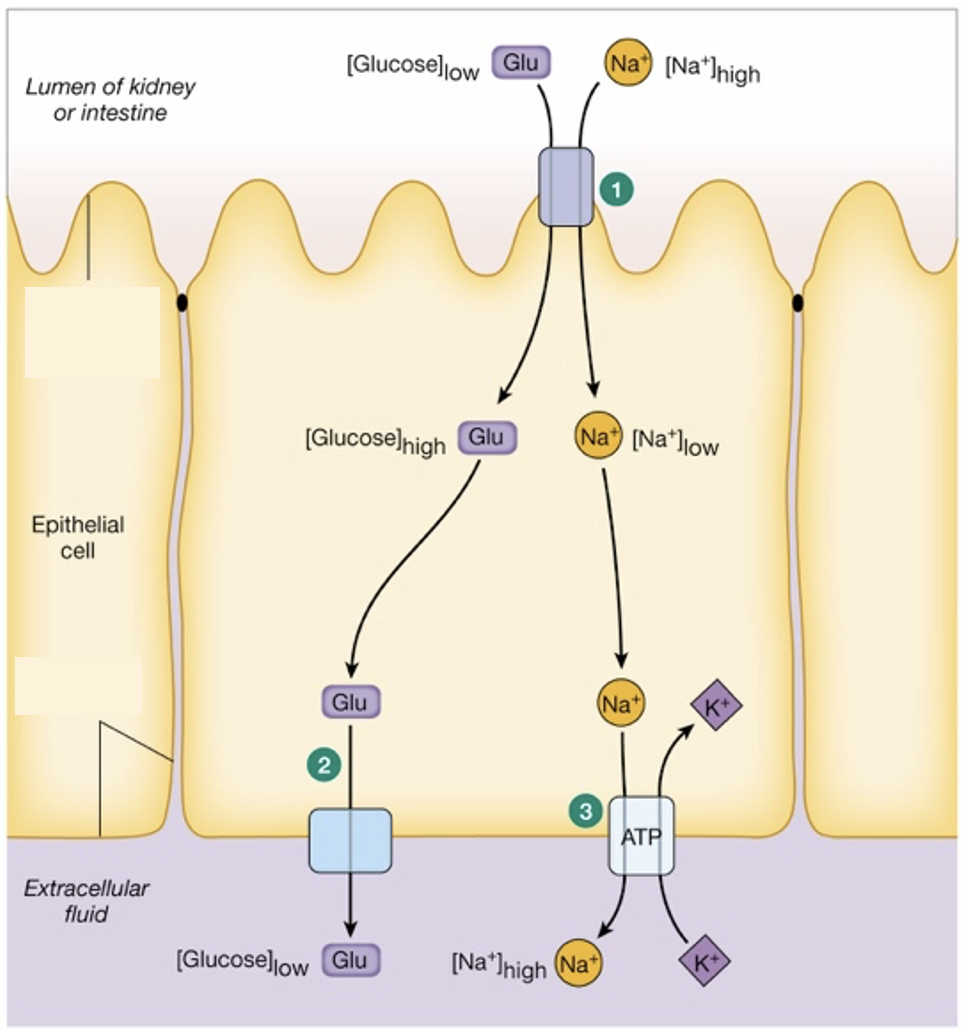
E: what form of transport is illustrated at apical membrane of cell in image?
secondary active transport
Primary active transport
uses ATP directly
Primary transport example
Na+/K+ pump
Secondary active transport
borrows energy from stored ion (Na+) made by primary transport
Tertiary active transport
uses gradient from secondary transport
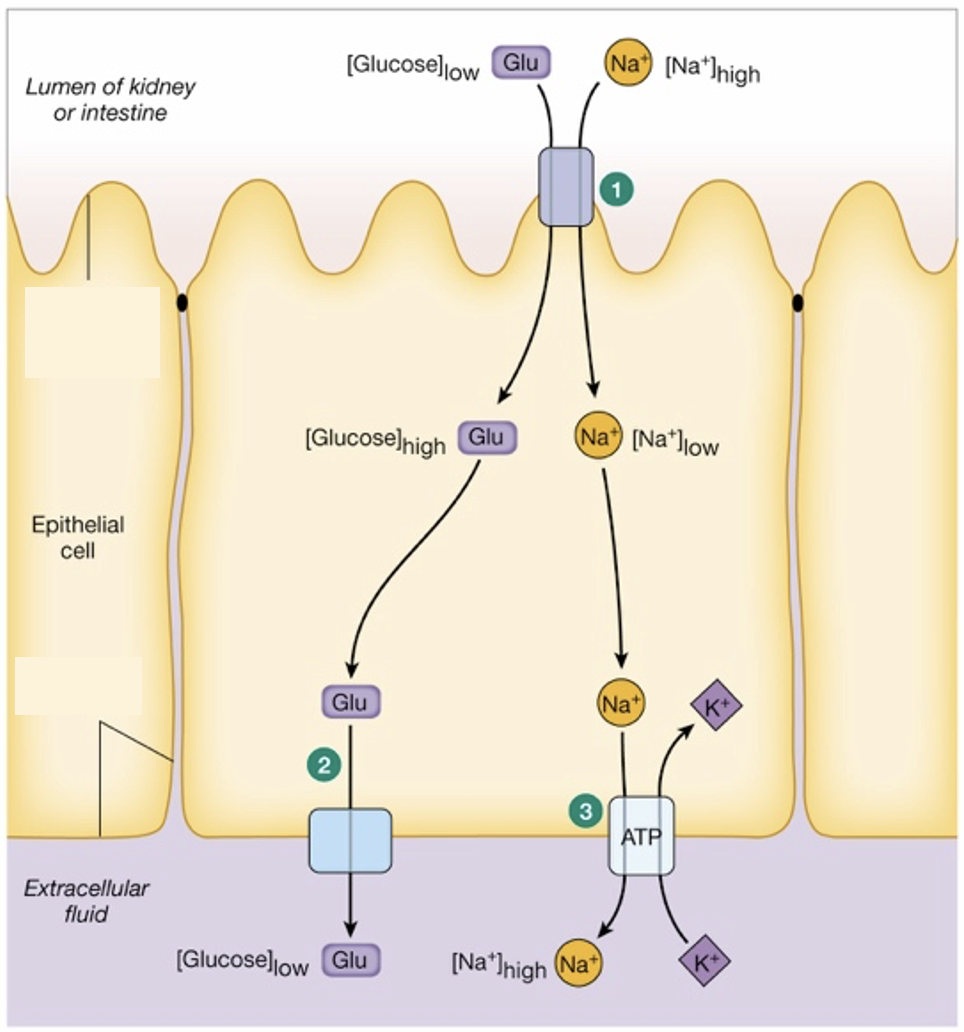
E: Is the transporter on apical membrane in figure a symporter, antiporter, or uniporter?
Symporter
Uniporter moves__ type of molecule in__ direction
one; one
symporter moves__ substances in __ direction
two or more; same direction
antiporter moves __ substances in __ direction
two or more; opposite directions
__ are neurons that connect sensory neurons to motor neurons
Interneurons
where is the trigger zone located?
axon hillock
grey matter
contains cell bodies, dendrites, and interneurons
responsible for processing info
little myelin
white matter
contains myelinated axons
responsible for sending signals
pineal gland
small endocrine gland that produces melatonin to regulate circadian rhythm
cerebrum
integrating center for voluntary movement
proprioception
body’s ability to sense the position
How does proprioception work?
proprioceptors detect changes in muscle length, tension, and joint position
send signals through sensory neurons (afferent neurons)
cerebellum process information
brain sends signals through motor neurons (efferent neurons)
main proprioceptors
muscle spindles, golgi tendon organs, and joint receptors
small receptive field
higher sensitivity / better ability to tell where stimulus occurred
where are small receptive fields
fingertips and lips
Large receptive field
lower sensitivity / less precise localization
where are large receptive fields
back and legs
what does somatic motor branch of the PNS control?
voluntary movements of skeletal muscle
What neurotransmitter does the somatic motor branch of PNS release?
acetylcholine
sympathetic nervous system
short preganglionic neurons
long postganglionic neurons
fight or flight
parasympathetic nervous system
long preganglionic neurons
short postganglionic neurons
rest and digest
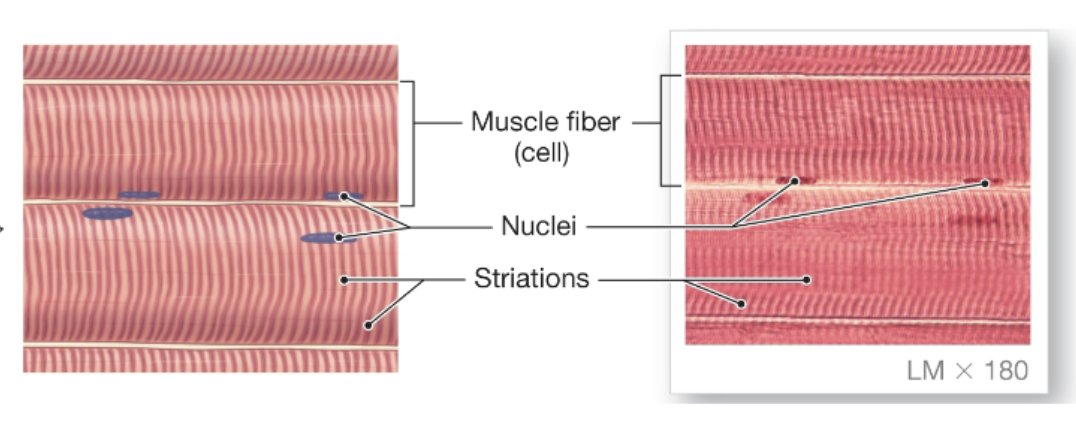
skeletal muscle
attach to bones, control movement, and are striated
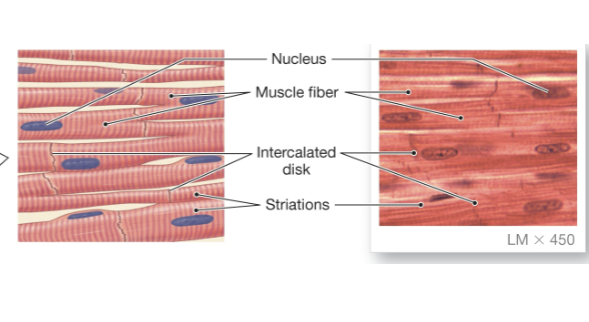
cardiac muscle
only in heart, involuntary control, and is striated
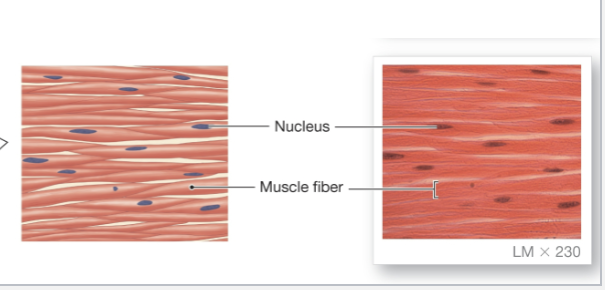
smooth muscle
primary muscle of internal organs and tubes and lacks striation
Sliding filament theory steps
ACh is released from somatic motor neuron and initiates action potential
Calcium release from sarcoplasmic reticulum and binds to troponin
Troponin moves tropomyosin to allow myosin to bind to actin
cross-bridge is formed to allow for power stroke movement
why is there a latent period between muscle AP and muscle twitch?
time needed for excitation-contraction coupling to occur
Monosynaptic reflex
fastest type of reflex that has one synapse between sensory and motor neurons
polysynaptic reflex
reflex that has two or more interneurons between sensory and motor neurons
Monosynaptic reflex example
patellar (knee-jerk) reflex
polysynaptic reflex example
Withdrawal (flexor) reflex
How do muscles relax?
ACh stops releasing
Ca2+ is pumped back into SR
Tropomyosin blocks actin
Cross bridge fails
muscle returns to resting state
where is the heart located?
thoracic cavity
Three layers of the heart:
pericardium - outside, double-layer
myocardium - thick contracting muscle
endocardium - inner lining
Atrioventricular valves location
between atria and ventricles
Semilunar valves location
between ventricles and arteries
What prevents blood from flowing backwards?
AV and semilunar valves
Blood flow through heart
S/I vena cava → right atrium → tricuspid valve → right ventricle → pulmonary valve → pulmonary arteries → lungs → pulmonary veins → left atrium → bicuspid valve → left ventricle → aortic valve → aorta
baroreceptors
sense changes in blood pressure based off stretching
where are baroreceptors located?
carotid sinus and aortic arch
Arteries are
PRESSURE reservoirs
Veins are
VOLUME reservoirs
angiogenesis
process of forming new blood vessels from existing blood vessels
How is angiogenesis initiated?
tissue experience low oxygen levels → cells respond by activating hypoxia-inducible factors that release vascular endothelial growth factor → blood vessels grow
what are erythrocytes?
red blood cells
what are thrombocytes?
platelets
five white blood cells
neutrophils
eosinophils
basophils
lymphocytes
monocytes
where are the lungs located?
thoracic cavity
what surrounds the lungs?
pleura (visceral and parietal layer)
Visceral pleura
inner layer that directly covers the surface of lung
parietal pleura
outer layer that lines the inside of the thoracic cavity and rib cage
E: During gas exchange, cellular Pco2 at tissues is higher or lower than Pco2 in systemic capillaries?
higher
E: Two classes of chemoreceptors we learned about are peripheral chemoreceptors and central chemoreceptors. What does each detect?
PC detects Pco2 in arteries and CC detects Pco2 in cerebrospinal fluid
E: Hypoxia denotes too little oxygen in your _ while hypercapnia denotes too much carbon dioxide in _
tissue ; blood