IAL edexcel Waves (progressive and standing, superposition, nodes antinodes)
 Call Kai
 Learn
Learn Practice Test
 Spaced Repetition
 Match
Match Flashcards
 Knowt Play
1/14

There's no tags or description
Looks like no tags are added yet.
Name | Mastery | Learn | Test | Matching | Spaced | Call with Kai | Chat |
|---|
No analytics yet
Send a link to your students to track their progress
15 Terms
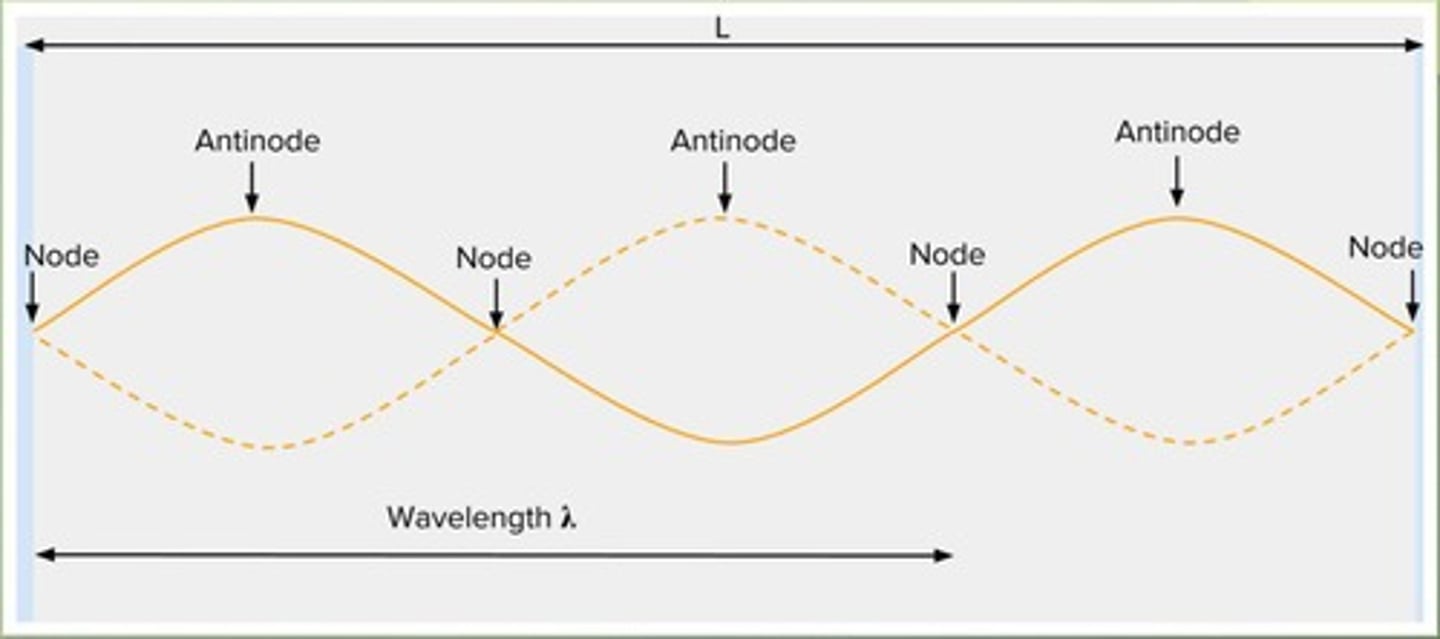
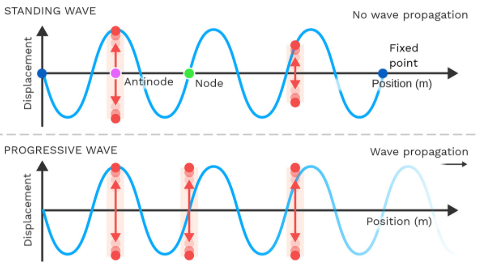
what are nodes?
- nodes are points of minimum amplitude
- where destructive interference occurs
(or destructive superposition)
[The nodes and antinodes do not move along the string Nodes are fixed and antinodes only move in the vertical direction ]
![<p>- nodes are points of <strong><u>minimum amplitude</u></strong></p><p>- where destructive interference occurs</p><p>(or destructive superposition)<br></p><p>[The nodes and antinodes do not move along the string Nodes are fixed and antinodes only move in the vertical direction ]</p>](https://knowt-user-attachments.s3.amazonaws.com/e28c14aa-e533-463f-8b1d-15117dd04652.png)
What are antinodes?
- antinodes are points of maximum amplitude
- where constructive interference occurs
(or constructive superposition)
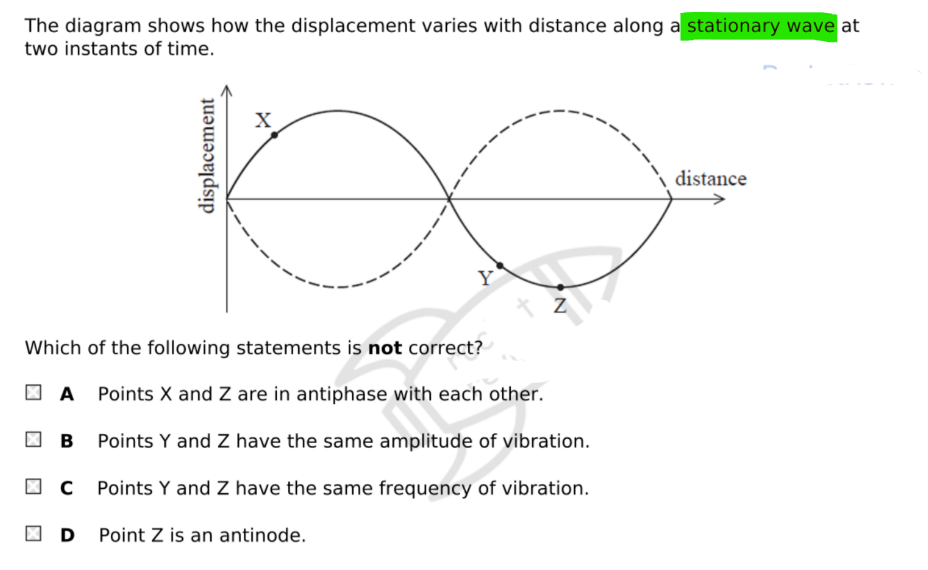
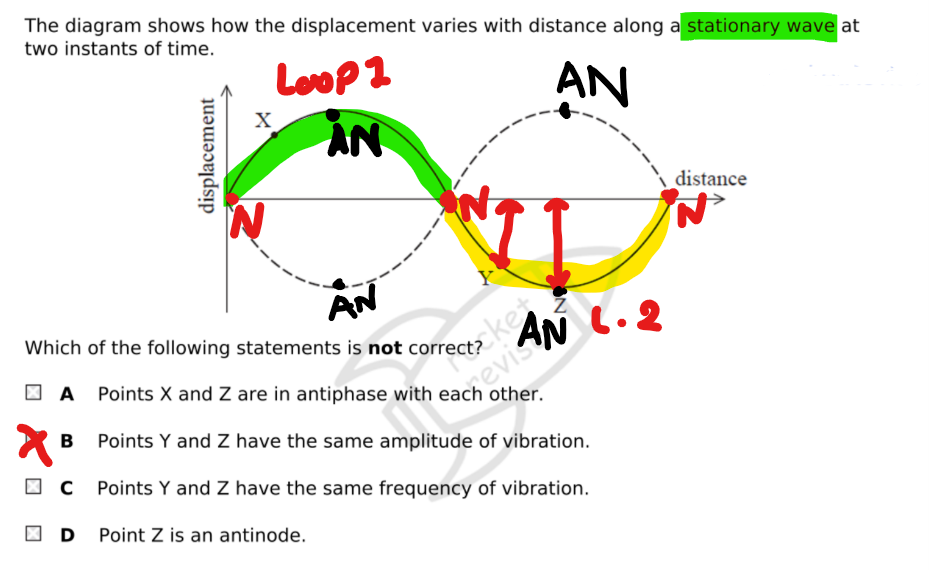
A is correct because → Particles in adjacent loops are always in antiphase for stationary waves
(X is in loop 1 & z in loop 2)
C correct → frequency of all particles/at points are same for both stationary and progressive waves
D correct as Z is an antinode
for stationary waves amplitude varies with positon (max at Antinode and min at Node)
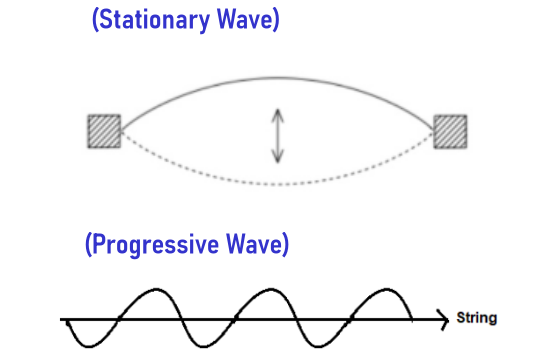
Explain whether each of these examples are standing or progressive waves (4 marks)
'‘A wave travels along a string'‘
“A string is stretched between two fixed points and set to oscillate”
A wave travels along a string = Progressive wave as it is moving and transferring energy
A string is stretched between 2 fixed points & set to oscillate = Stationary wave as it reflects back and forth forming superposition
Explain whether each of these examples are standing or progressive waves (4 marks)
“Points along the string vibrate with different amplitudes”
“Energy is transferred from one point to another”
“Points along string vibrate with different amplitudes” = Stationary Wave, because S.waves have different amplitudes at different points
NOTE: P. waves have same amplitudes in all points
“Energy is transferred from one point to another” = Progressive waves, because P.waves transfer energy but S.waves DO NOT transfer net energy
Explain the similarities & differences between stationary and progressive waves (5marks)
both waves have same frequency
progressive waves have same amplitude in all points but stationary does not
progressive waves transfer energy but stationary does not
stationary waves have nodes but progressive do not
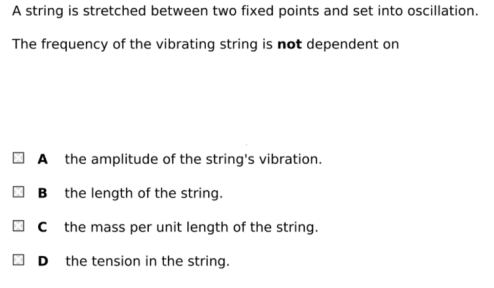
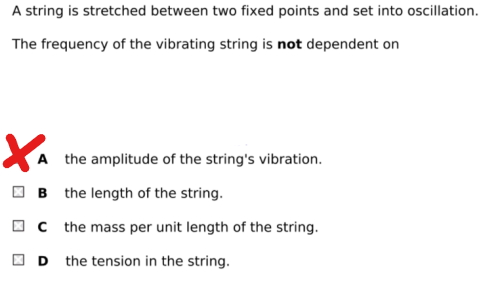
FREQUENCY IS NOT DEPENDENT ON AMPLITUDE
(this is C.P 5 → Investigate the effects of length, tension and mass per unit length on the frequency of a vibrating string or wire)
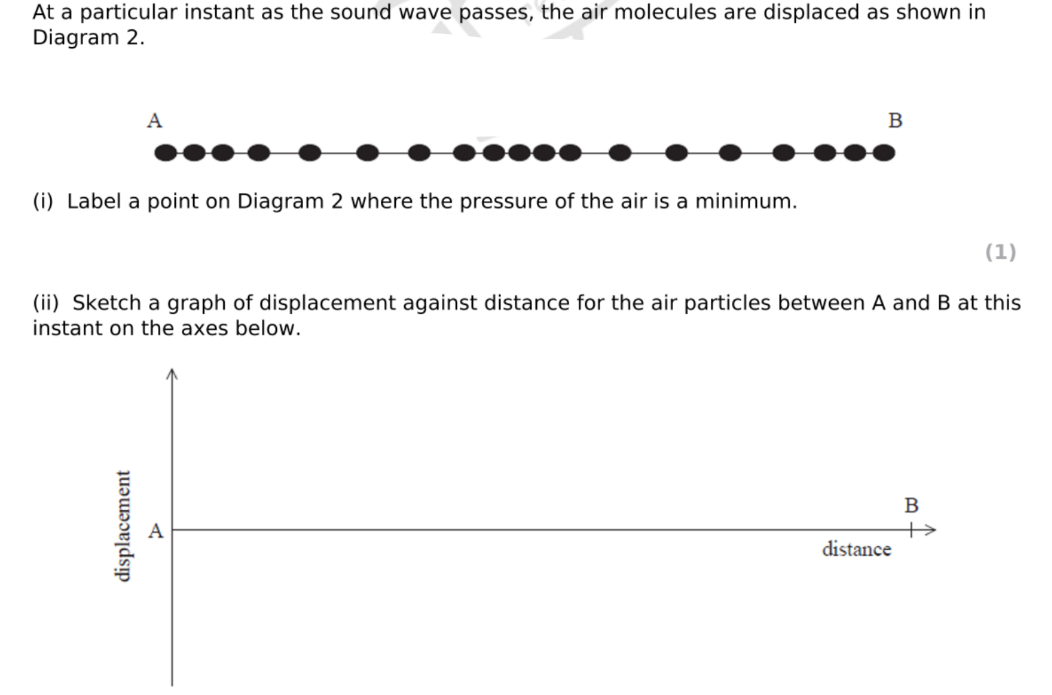
At the centre of a compression or a rarefaction, the displacement of particle is 0
[the green highlighted parts are centres of rarefractions and compressions]
![<p> <strong><u><mark data-color="yellow" style="background-color: yellow; color: inherit;">At the centre of a compression or a rarefaction, the displacement of particle is 0</mark></u></strong><br><br><br><br>[the <mark data-color="green" style="background-color: green; color: inherit;">green highlighted parts</mark> are centres of rarefractions and compressions]</p>](https://assets.knowt.com/user-attachments/06c9bf15-c4ff-4688-800f-99c527d2875d.png)
NOTE:
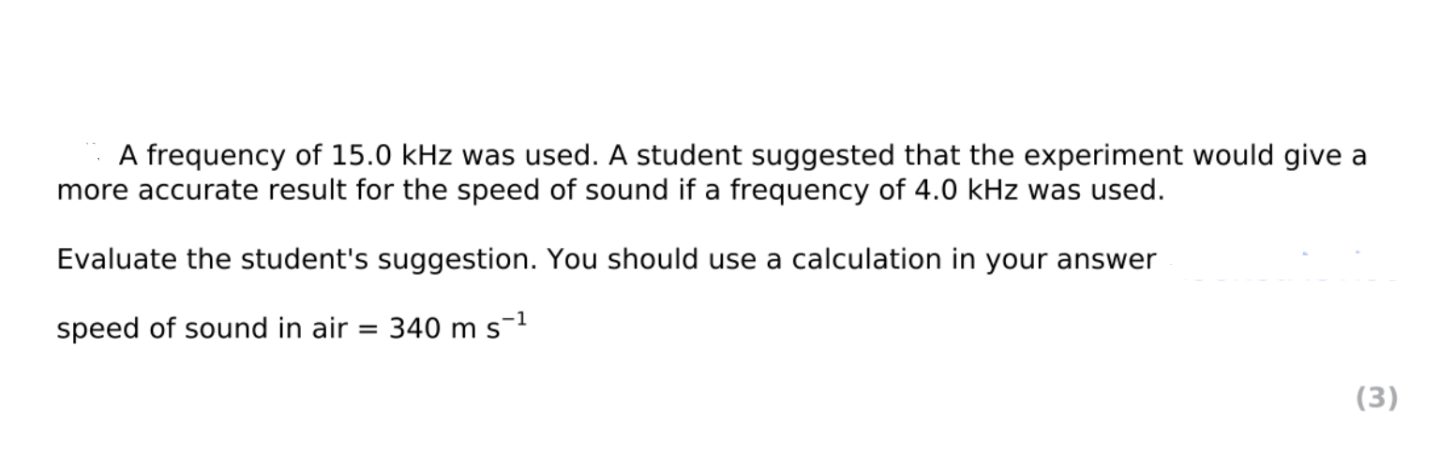
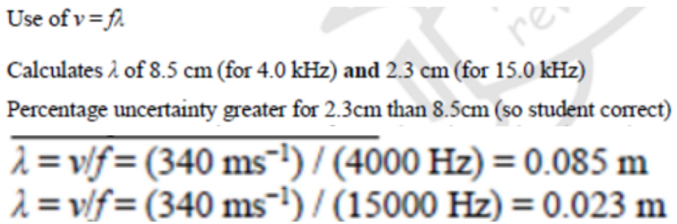
Percentage Uncertainty concept →
(it’s like if you bought 500g of apples even ±10 g would change percentage but if it was 500kg then
±10 g would be nothing, so percentage uncertainty would be lower)
Explain how a standing/stationary wave is formed?
(4 marks)
- by the superpositionof two progressive waves of the same amplitude , speed and frequency
- but they are travelling in opposite direction
- with a constant phase relationship
for strings just add → "the incident wave is reflected at the end of string"
speed of the 7 EM waves =
speed of sound =
speed of the 7 EM waves = (c, speed of light) 3×10⁸ m/s
(so speed of microwave, radiowave, X-ray, gamma ray, IR, UV and visible light waves all have speed of 3×10⁸ m/s)
speed of sound = 340 m/s
state the formula for finding speed of light in a given medium
V = c/ n

define critical angle
the angle of incidence in a denser medium where angle of refraction is 90degrees

state the formula for critical angle
