Bovine Postpartum Uterine Conditions
 Call Kai
 Learn
Learn Practice Test
 Spaced Repetition
 Match
Match Flashcards
 Knowt Play
1/8

Earn XP
Description and Tags
Vocabulary flashcards covering clinical signs, etiologies, rectal palpation findings, treatment, and prevention for retained fetal membranes, metritis, and pyometra.
Name | Mastery | Learn | Test | Matching | Spaced | Call with Kai | Chat |
|---|
No analytics yet
Send a link to your students to track their progress
9 Terms

Retained fetal membranes (RFM)
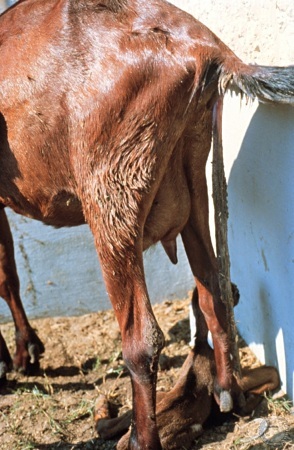
A condition diagnosed when fetal membranes are not passed by 24 h post-partum, characterized by a decomposing placenta hanging from the vulva with a foul smell and delayed return to estrus.

Metritis
A condition occurring 3 d to 2 wks post-partum characterized by a large, fluid-filled uterus palpable per rectum, red-brown, purulent, malodorous discharge from the vulva and matted on the tail, and shortened estrous cycles.

Pyometra
A uterine condition presenting with purulent or mucopurulent exudate with no odor and the presence of a retained corpus luteum (CL) on the ovary.

Metritis Etiologies
Infections usually caused by nonspecific pathogens, as well as
Brucellosis, Leptospirosis, Campylobacter spp., and Trichomoniasis.
Palpation per rectum for Metritis and Pyometra
Diagnostic method revealing an enlarged, fluid-filled uterus, along with a retained corpus luteum (CL) specifically in cases of pyometra.
Retained placenta management
Trimming excess tissue for hygiene while avoiding manual removal (which is potentially harmful); cows typically expel membranes in 2-11 d without treatment, and intrauterine antimicrobials are not usually beneficial.
Metritis treatment
Administration of prostaglandins, combined with systemic antibiotics, NSAIDs, and IV fluids if the cow is septic.
Pyometra treatment
Administration of prostaglandins.
RFM and Metritis Prevention
Good dry cow management, which is essential to prevent both conditions.