4 Gas exchange
 Studied by 0 people
 Call Kai
 Learn
Learn Practice Test
 Spaced Repetition
 Match
Match Flashcards
 Knowt Play
1/18

There's no tags or description
Looks like no tags are added yet.
Name | Mastery | Learn | Test | Matching | Spaced | Call with Kai |
|---|
No study sessions yet.
19 Terms
The structure of fish gills ensure rapid gas exchange - how?
· A large surface area - each gill consists of many filaments each covered in many lamellae.
· A short diffusion pathway - many capillaries, with a single layer of thin endothelium, close to the thin-walled lamellae
· A concentration gradient - continuous flow of blood through capillaries ensures that freshly oxygenated blood is quickly removed from the gills and replaced with deoxygenated blood.
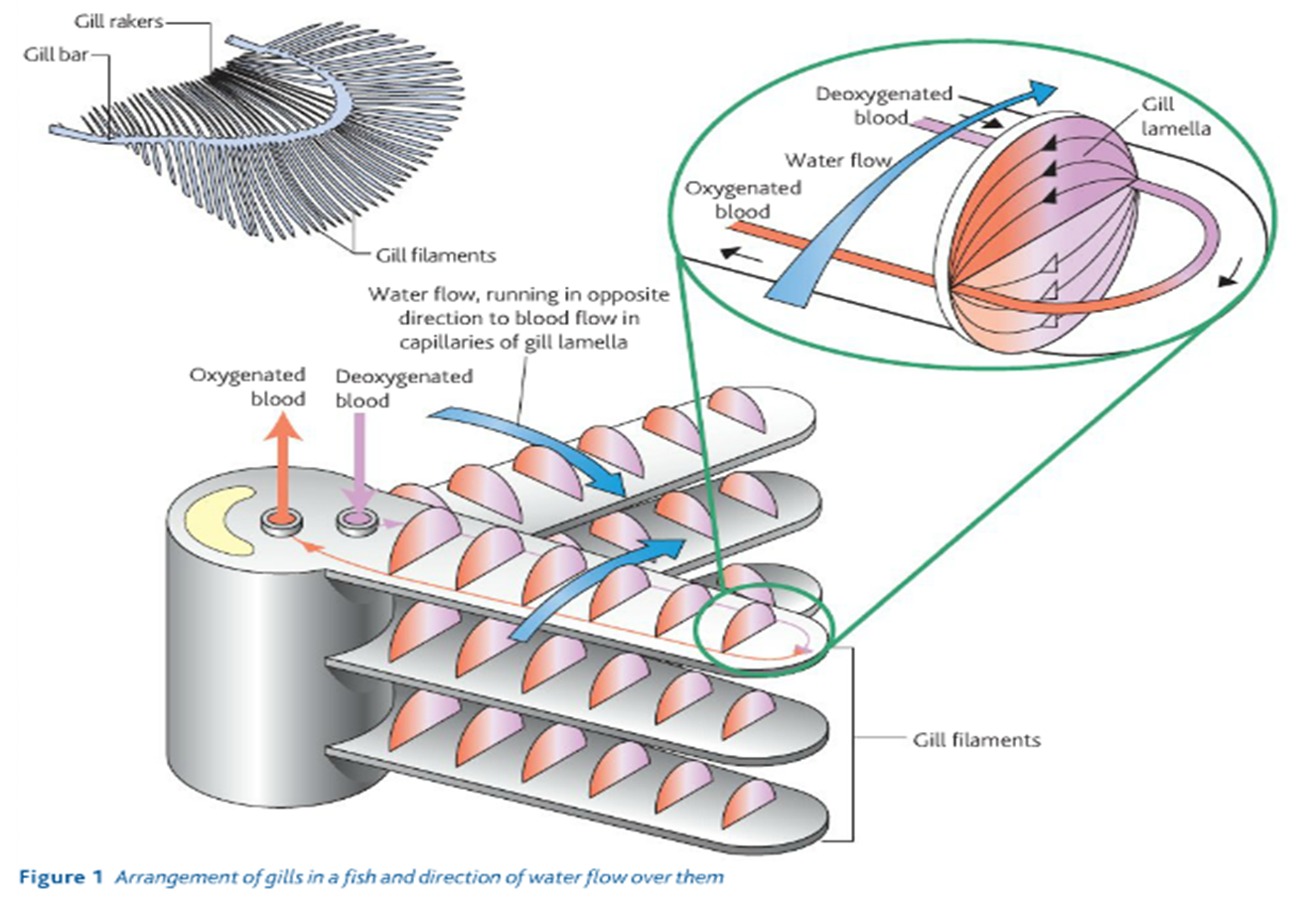
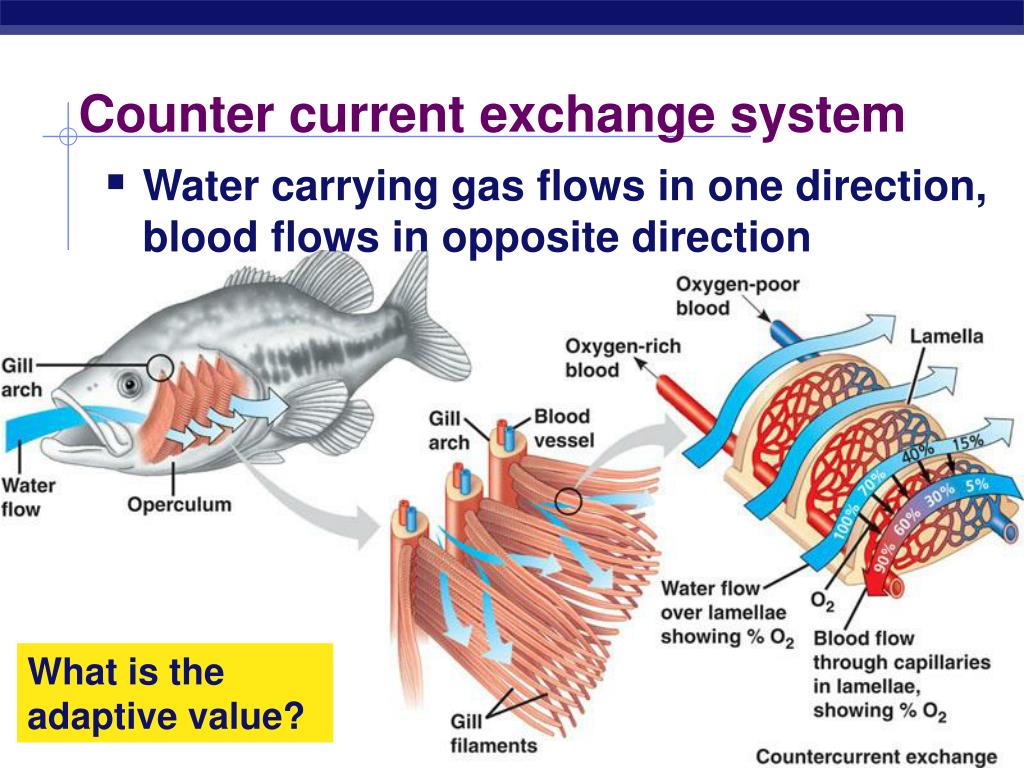
The counter-current flow
Water flows over the gill plates/lamellae in the opposite direction to the flow of blood in the capillaries.
Blood always meets water with a higher concentration of oxygen.
The concentration gradient is maintained so diffusion occurs across the entire surface of the gill/lamellae.
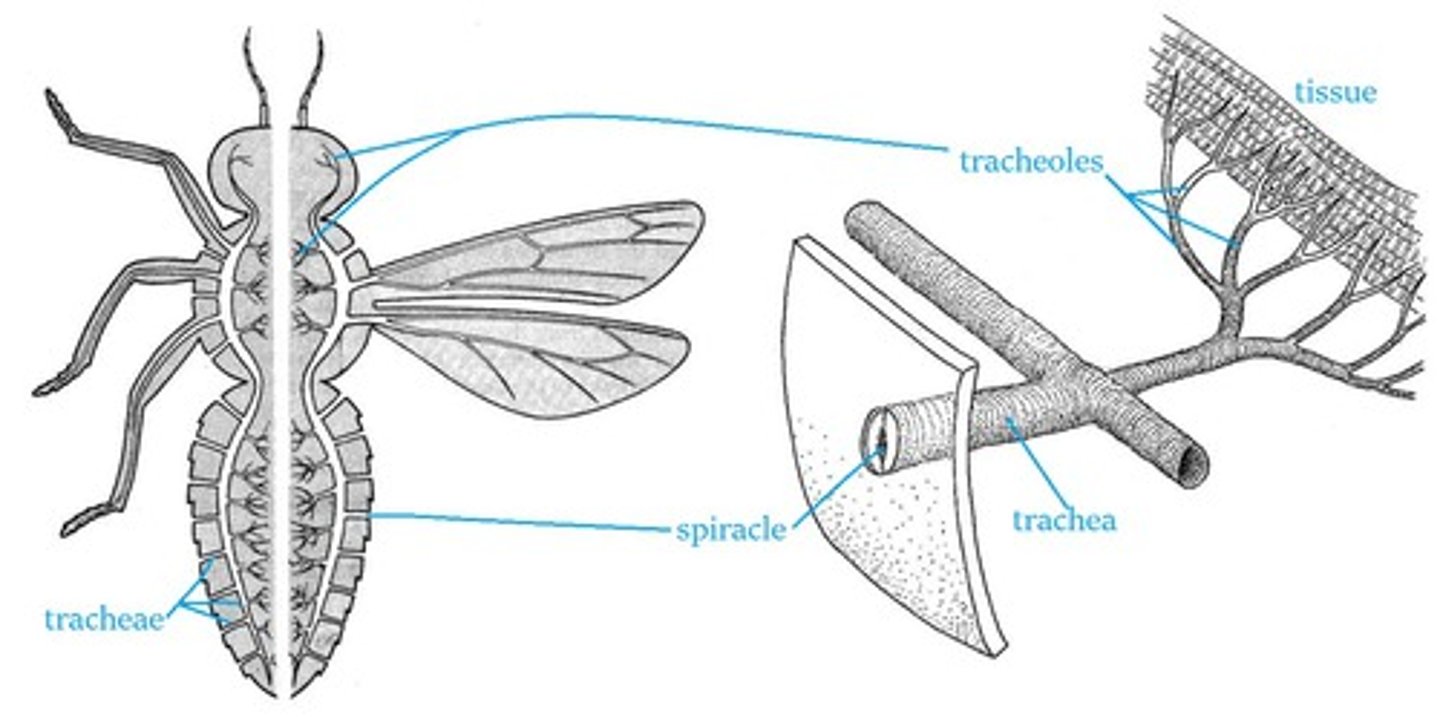
The structure of insects gas exchange system ensures rapid gas exchange - how?
· O2 diffuses directly into the cells from the tracheoles and CO2 diffuses out
· The tracheal system consists of many tracheae that open to the outside through small holes in the exoskeleton called spiracles.
· These finer tubes tracheoles are the sites of gas exchange.
· The large number of small tracheoles give a large surface area for diffusion, while their thin walls, extensive branching and close proximity to the cells provide a short diffusion pathway.
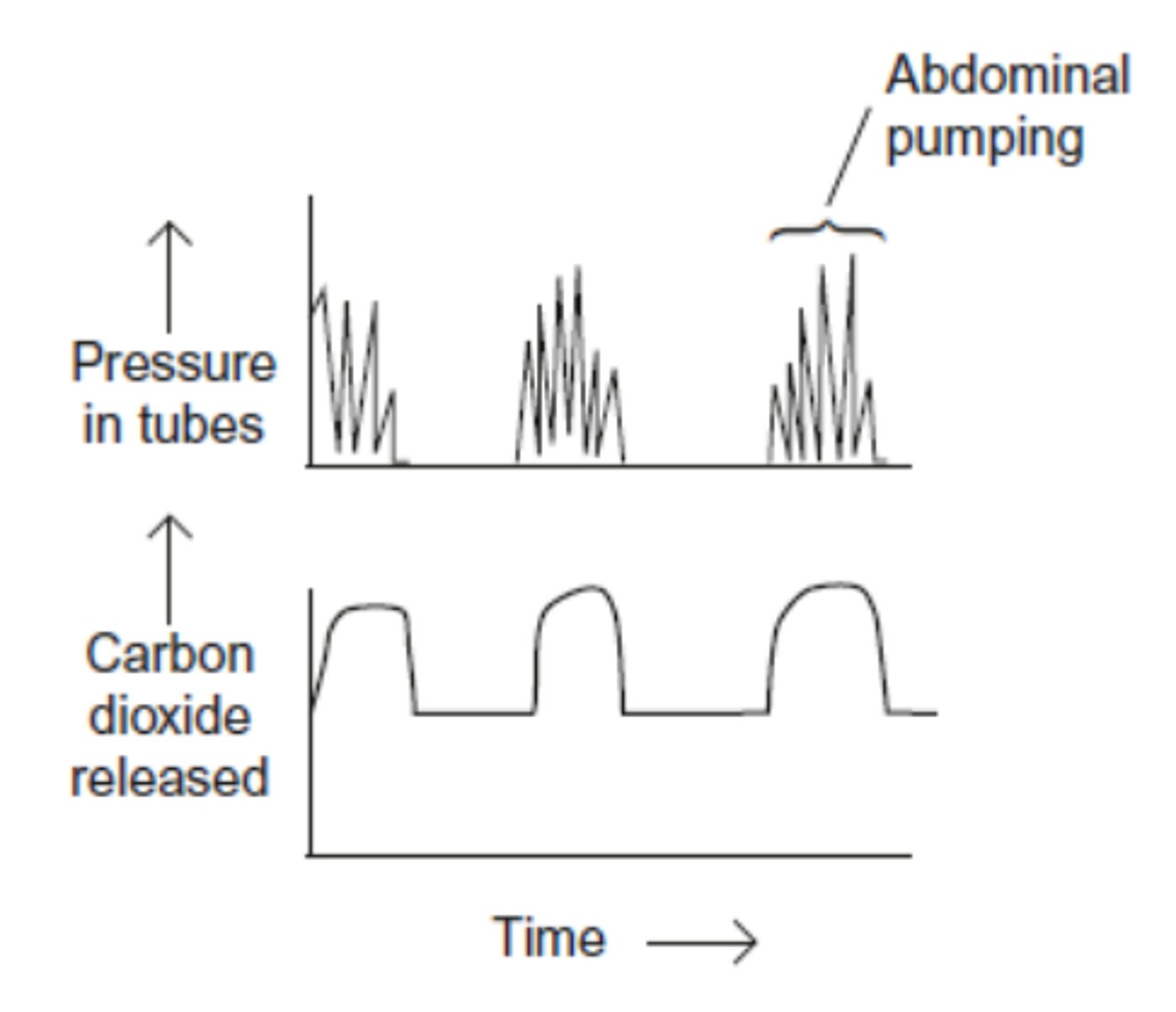
Abdominal pumping in insects
· Ventilation by contraction of the muscles of the abdomen can force air in and out of the spiracles and tracheae to maintain a greater air flow and maintain a steep concentration gradients for fast diffusion.
· The insects can also remove the fluid from the ends of the tracheoles to increase diffusion rates (gases diffuse quicker in air than in a liquid).
· Small/inactive insects have a short diffusion pathway, so rely on diffusion down a concentration gradient that is maintained due to respiration
What happens when organisms get bigger?
The surface area:volume ratio decreases
Why is having a large SA:Vol a problem for mammal?
Smaller mammals have a larger SA:Vol so lose heat faster.
They need a higher metabolic rate so they respire faster, releasing heat, and so replace the lost heat.
The demand for oxygen is high
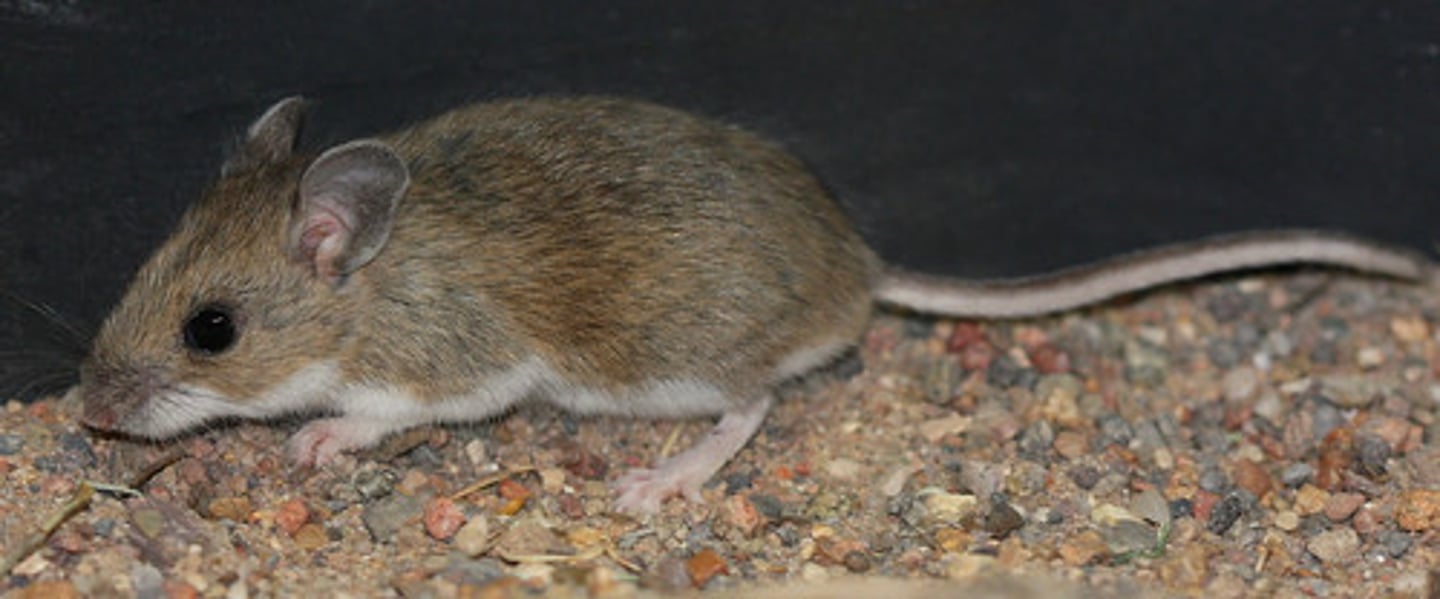
Gas exchange in single-celled organisms
· Rely simple diffusion of gases across their outer surface membrane and this satisfies their respiratory needs.
· They have a large surface area:volume ratio and a short diffusion pathway, so fast rates of diffusion can be achieved.
· Continuous aerobic respiration will maintain concentration gradients for O2 and CO2.

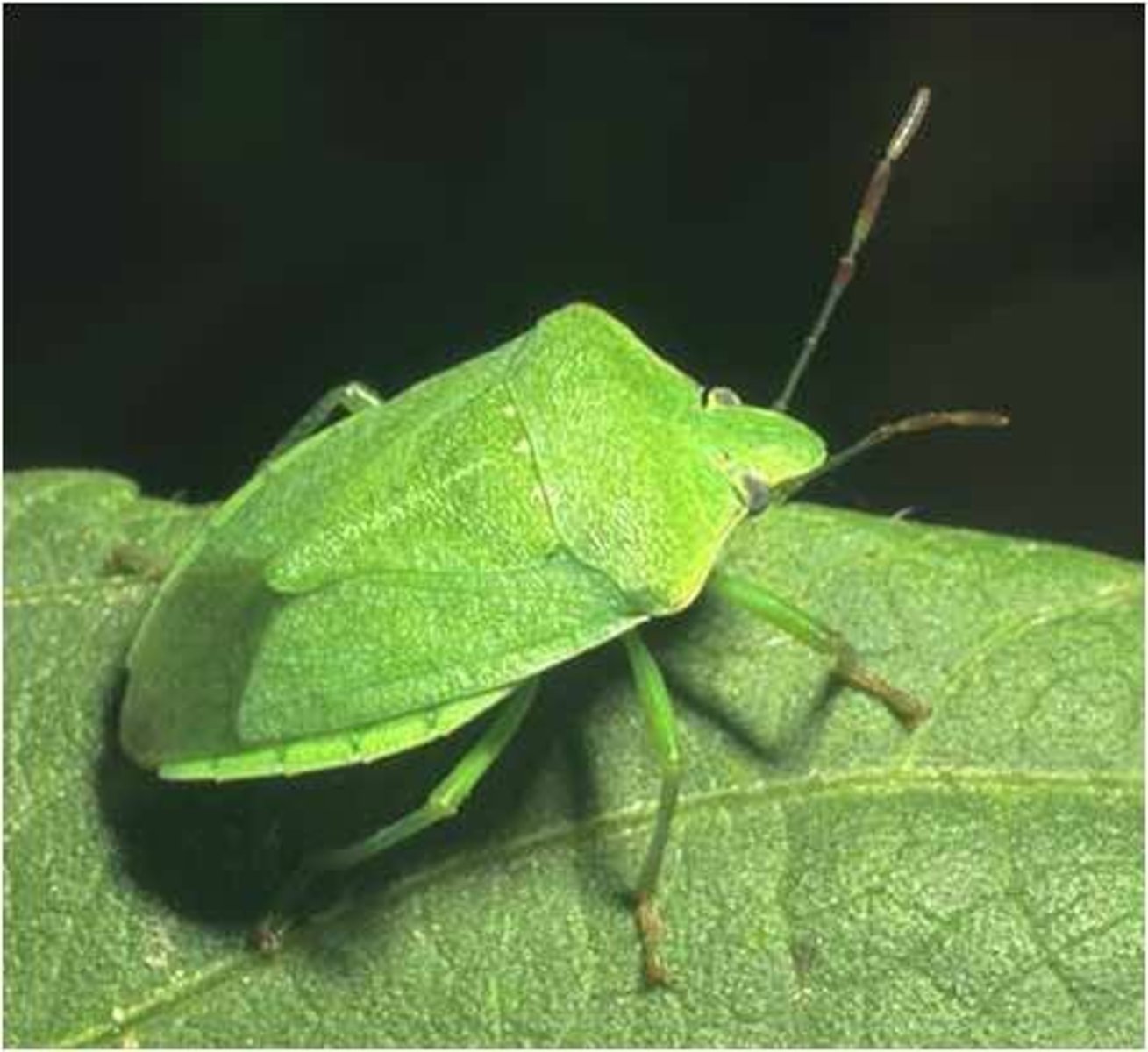
How do insects prevent water loss?
· Waterproof, waxy cuticle all over their body.
· Spiracles may be guarded by valves which can close spiracles
· Spiracles surrounded by hairs which trap a layer of moist air around the spiracle to minimise water loss.
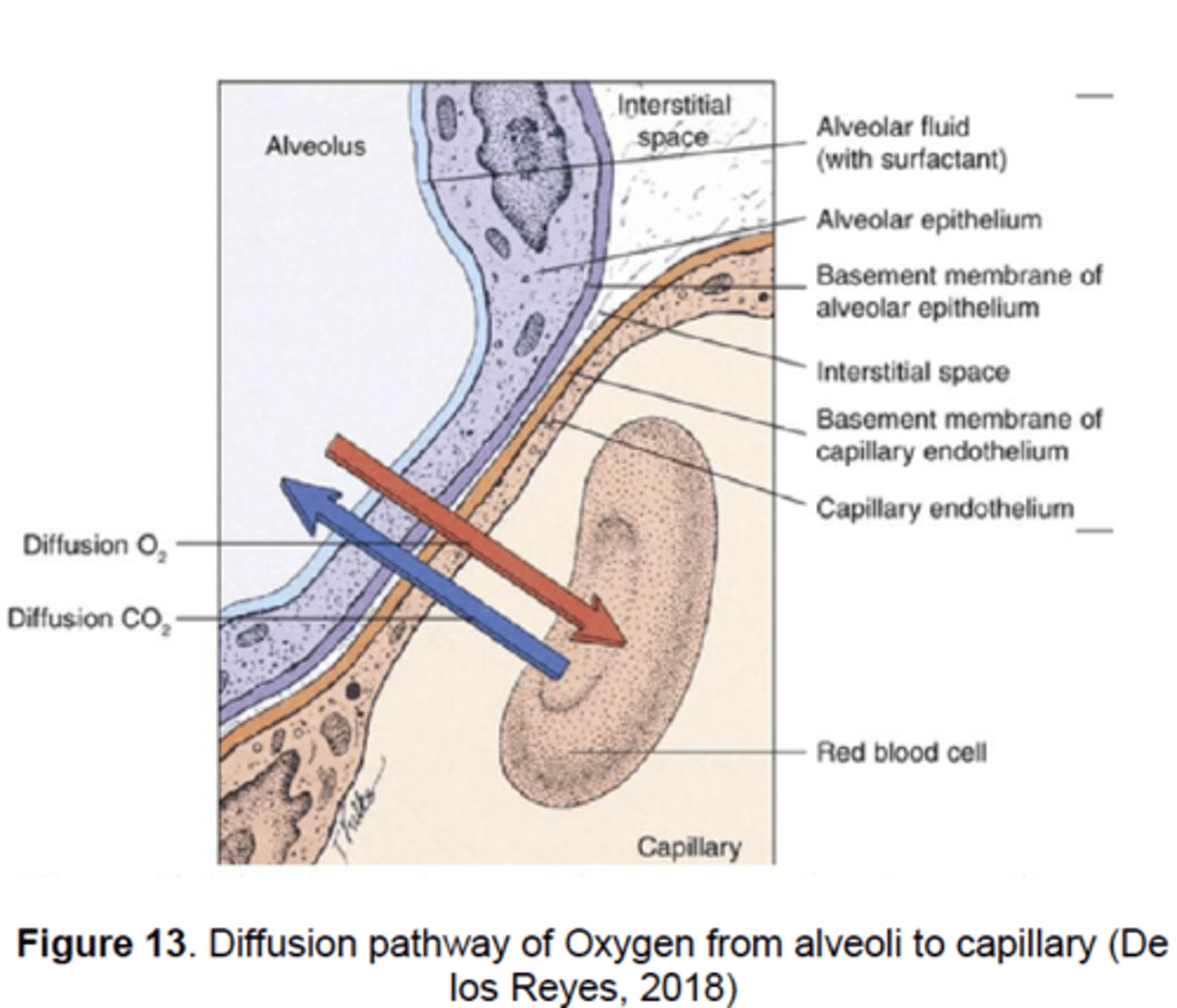
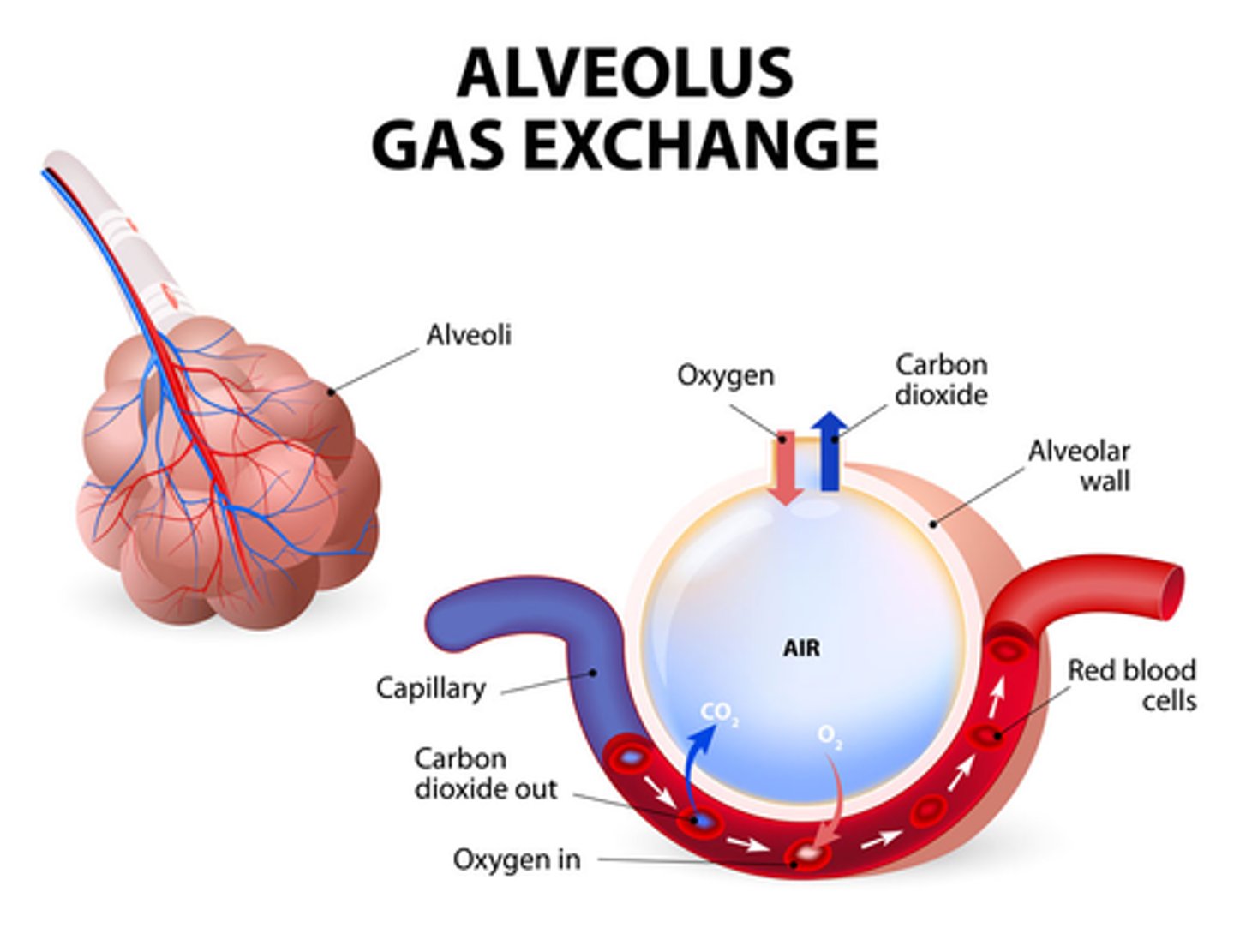
Pathway of oxygen through an alveoli
Oxygen diffuses through the epithelium of the alveoli and the endothelium of the blood capillaries into the blood.
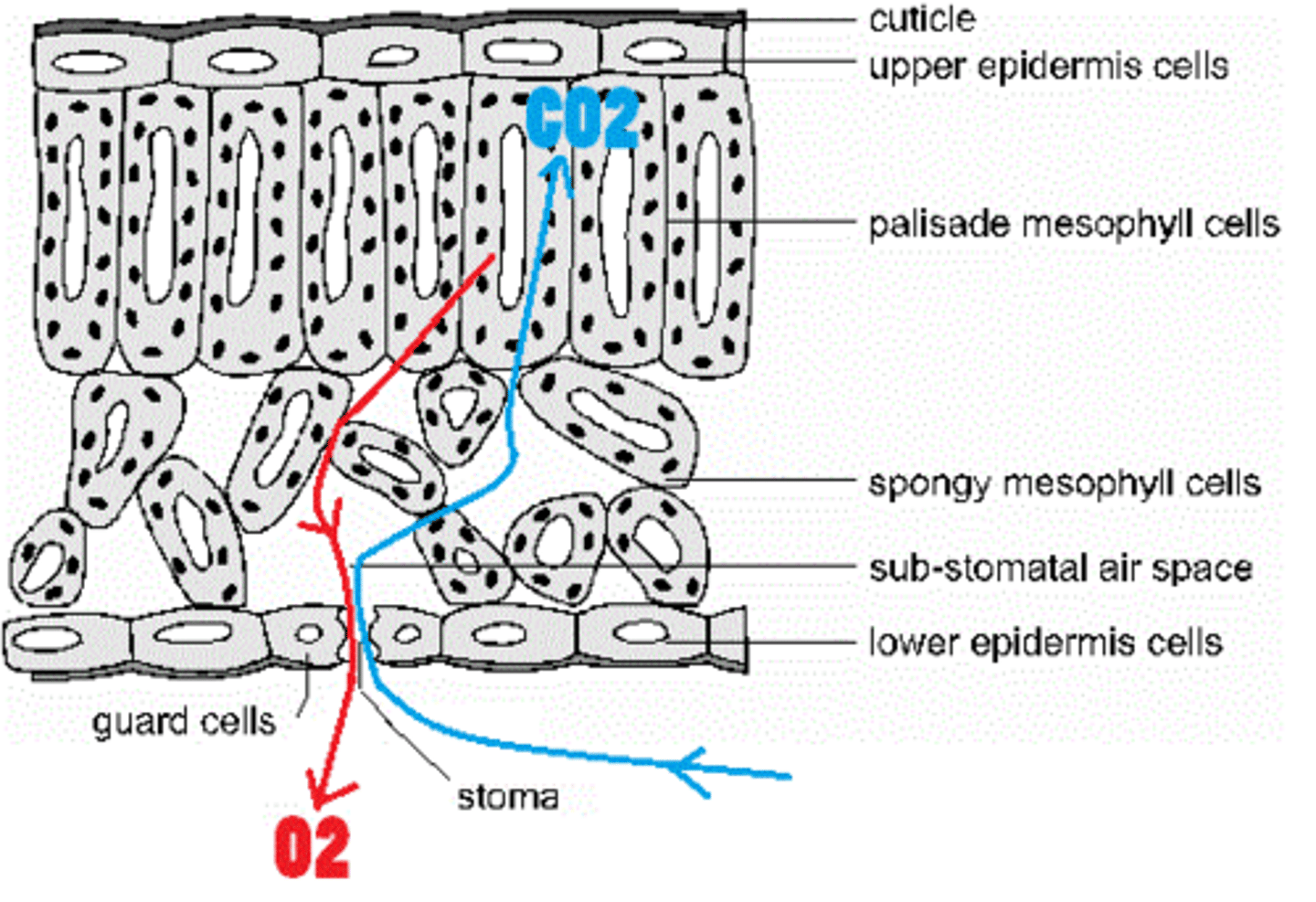
Gas exchange in plants
· Cells of the spongy mesophyll layer are loosely packed, creating a large surface area for gas exchange
· A short diffusion pathway - the spongy cells having thin cell walls and in direct contact with the air,
· Large concentration gradient- by day photosynthesis is faster then respiration so CO2 used + O2 produced, by night only respiration so O2 used in cells and CO2 produced
How is the gas exchange in humans adapted?
· Large surface area:
· millions of alveoli and large surface area of blood capillaries
• Large concentration gradients:
• Blood circulates through capillaries, removing blood with a high O2 conc and delivering blood with a low O2 conc.
• Ventilation ensures air with a high conc of O2 is taken in and air with a low conc of O2/ high conc of CO2 is removed.
• Thin exchange surface:
• The squamous epithelium of the alveolar wall, consisting of thin flattened cells
• The squamous epithelium of the capillary wall one cell thick
The steps of inspiration
· Air moves from an area of higher pressure (atmosphere) to a lower pressure (thorax)
· external intercostal muscles contract and
· ribcage moves up and out
· diaphragm muscles contract and diaphragm
flattens
· Elastic tissue stretches (see overleaf)
· volume increases in thorax
· pressure decreases below that of atmosphere
· air enters down a pressure gradient
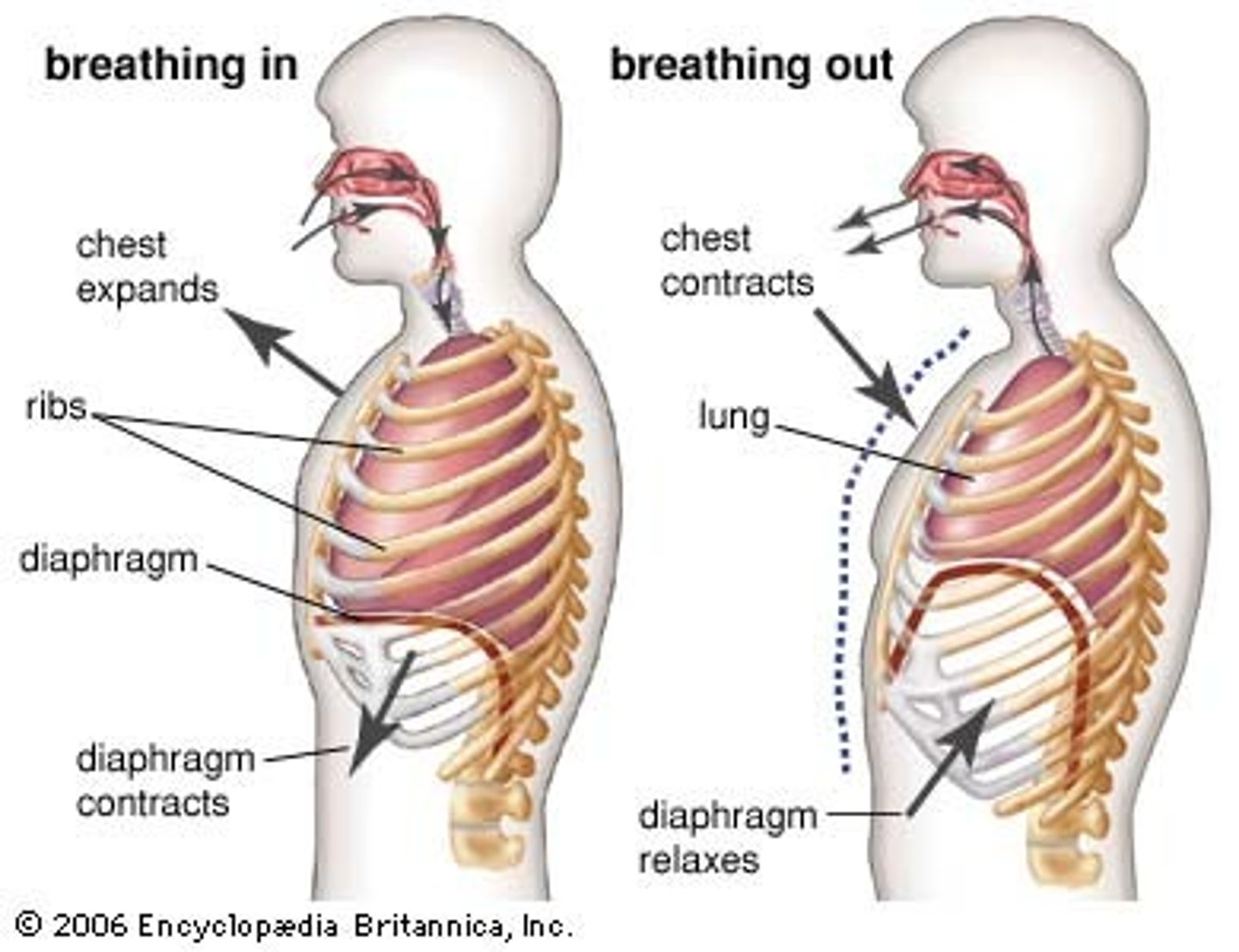
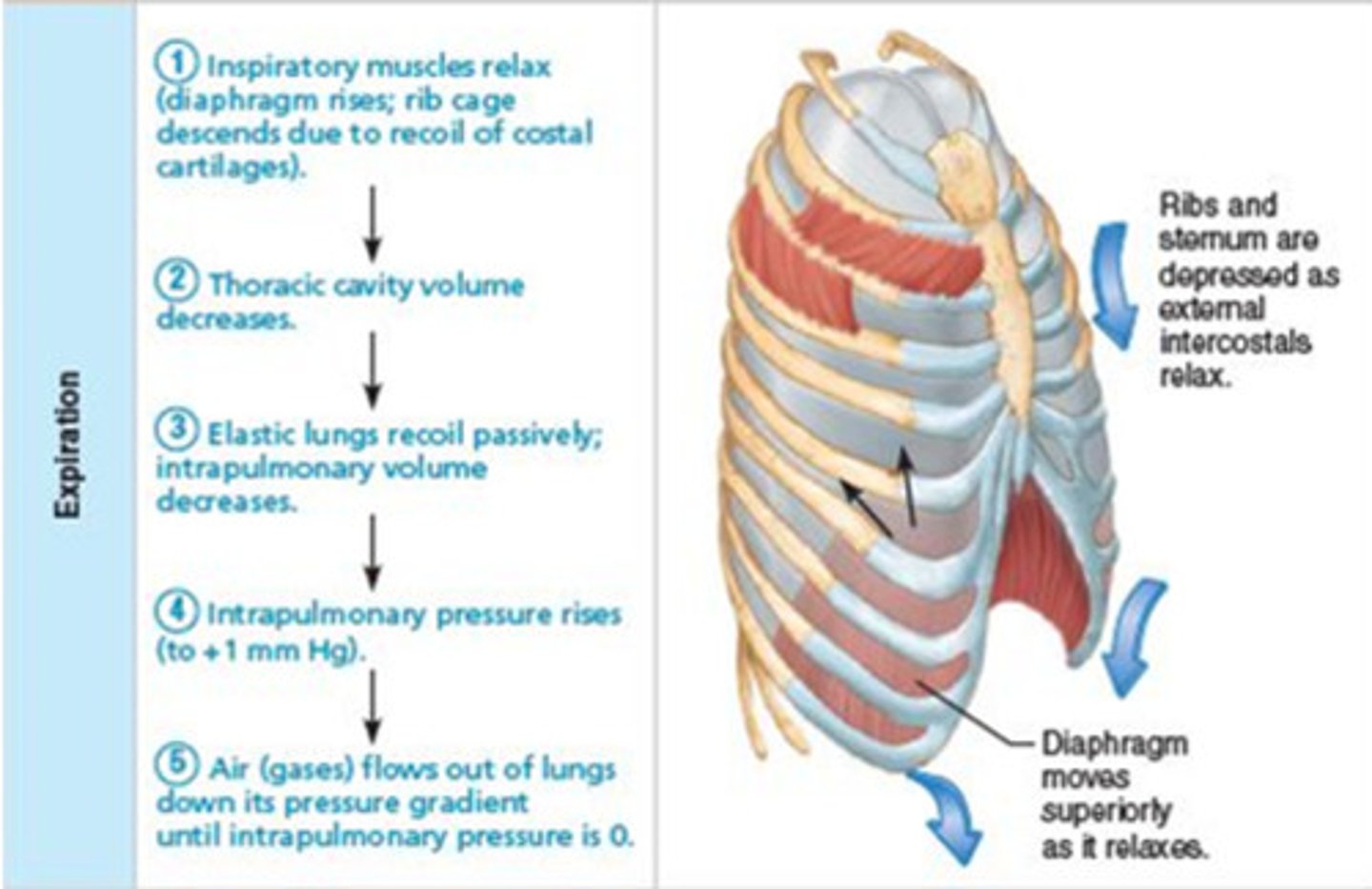
The steps of expiration
· Air moves from an area of high pressure (thorax) to a lower pressure (atmosphere)
External intercostal muscles relax and
· ribcage moves down and in
· diaphragm muscles relax
· diaphragm returns to dome shaped
· Elastic tissue recoils (see below)
· volume of thorax/lungs decreases
· pressure increases above atmospheric
· air is forced out down a pressure gradient
Role of elastic tissue in breathing
During inspiration the elastic tissue in the lungs stretches to allow the lungs to inflate.
During expiration the elastic tissue recoils.
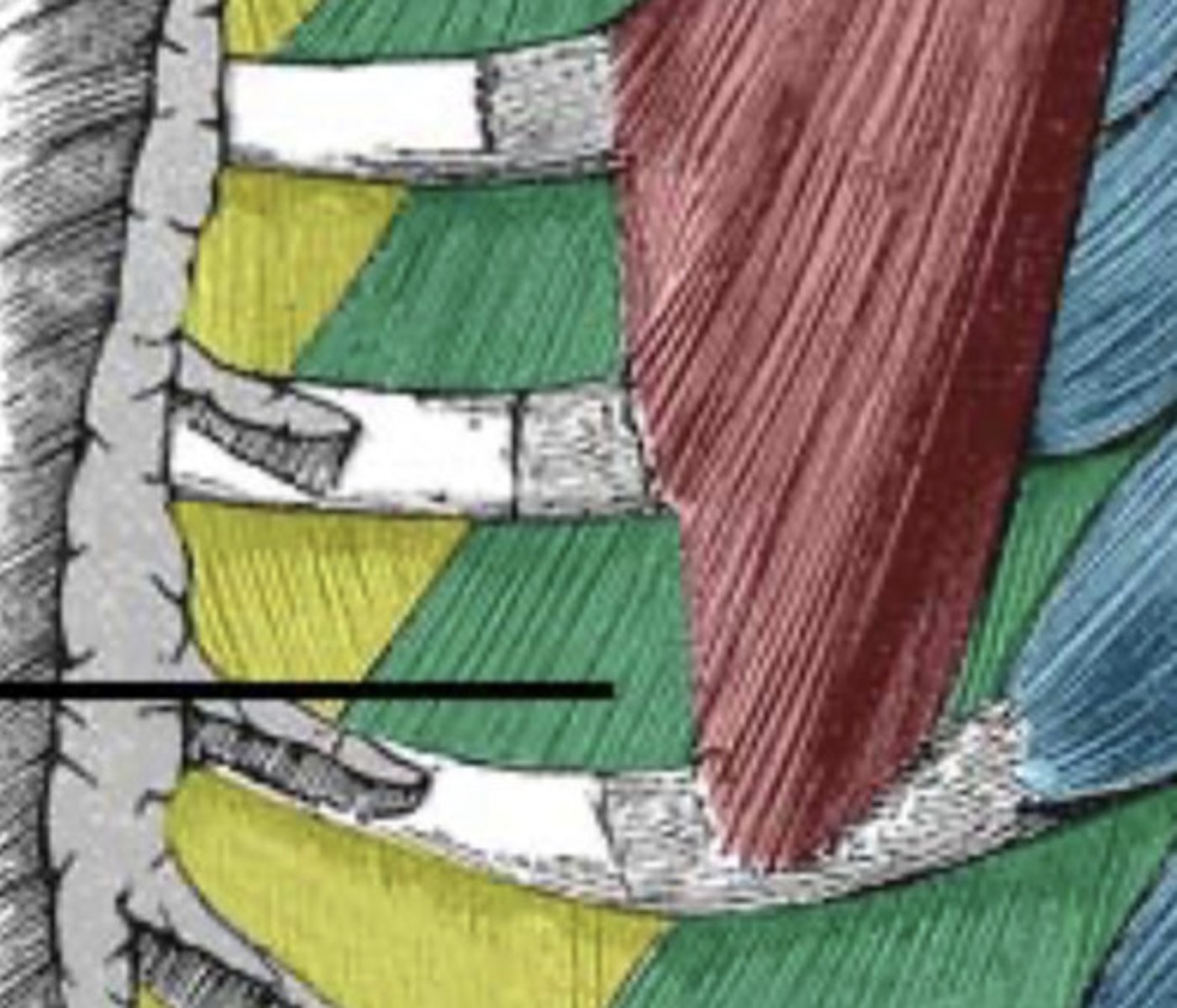
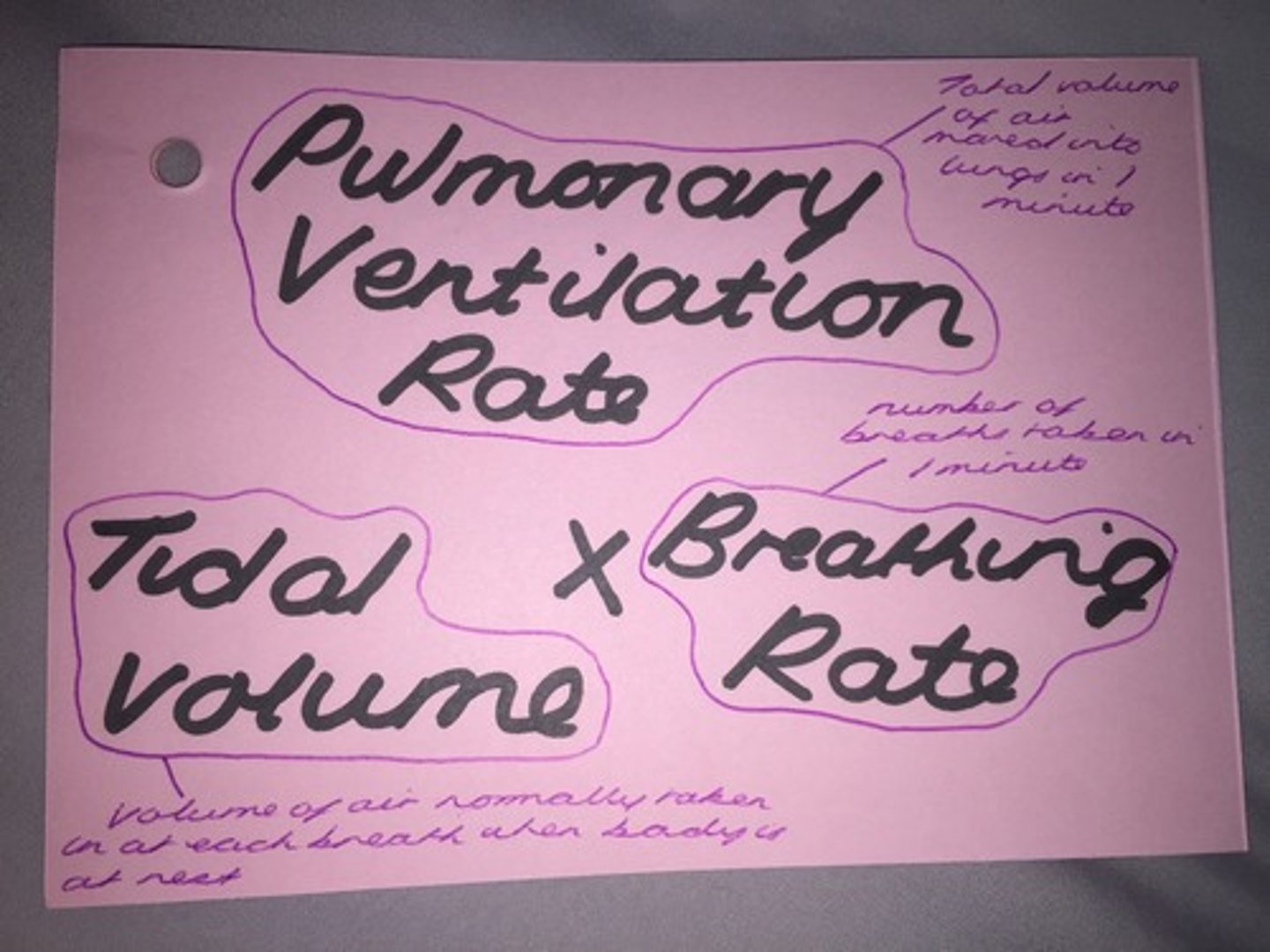
Pulmonary Ventilation
Pulmonary ventilation = tidal volume x ventilation rate
dm3min-1 dm3. min-1
How do leaves minimise water loss?
Stomata on the underside only
Guard cells can close stomata
Thick waxy cuticle on upper epidermis
What does ventilation consist of?
Both inspiration and expiration (the two sets of muscles- external and internal- are antagonistic)
What is the tidal volume and ventilation rate?
Tidal volume: the volume of air breathed in or out of the lungs in a normal resting breath
Ventilation rate: the number of breaths in and out per minute
Pulmonary ventilation is the total volume of air moved into the lungs in one minute
Role of mucus in humans?
Traps microorganisms and debris- lines the airway
Cilla- hairs which beat to move microorganisms