mammalian characteristics etc
 Call Kai
 Learn
Learn Practice Test
 Spaced Repetition
 Match
Match Flashcards
 Knowt Play
1/39

There's no tags or description
Looks like no tags are added yet.
Name | Mastery | Learn | Test | Matching | Spaced | Call with Kai | Chat |
|---|
No analytics yet
Send a link to your students to track their progress
40 Terms
mammalogy definition
study of mammals, or the animals in the class Mammalia, which is a taxonomic group of vertebrates
mammals in phylogenetic context
defined as all descendants from the most recent common ancestor of monotremes, marsupials, and placental mammals
reasons to study mammals
food and other sources
recreation (pets)/hunting
disease (as reservoirs or vectors), or medical science (models for human diseases)
conservation, which relates to human survival
the oldest known animal painting is approximately how old?
40,000 years old

first animals to be domesticated
goats and sheep for food; dogs for companionship
what accomplishment did galen have?
recorded dissections of various organisms; description of the musculoskeletal system of Barbary macaques was treated as definitive for human anatomy at its time; studied anatomy of circulatory system
what accomplishment did hippocrates have?
considered the father of medicine
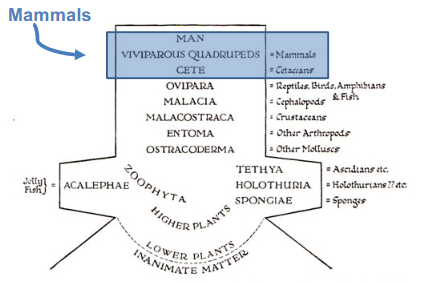
aristotle and the scale of nature
early classification scheme that had man at the top, followed by mammals and cetaceans
mark catessby
one of the European explorers who began intensive collection of specimens and brought back to hoem country for further study
systema nature
published in 1735 by carolus linnaeus; used hierarchical classification; linnaeus came up with binomial nomenclature, using Genus followed by species
why was linnaeus’ systema naturae such an important contribution?
it was the basis for modern taxonomy and nomenclature
alexander von humboldt
foundation for the field of biogeography; first person to describe the phenomenon and cause of human induced climate change
lewis & clark
sent by thomas jefferson to explore territory of louisiana purchase; first to describe grizzly bear and black-tailed prairie dog
number of species of mammals that have been described?
about 6,500
where are undescribed species still likely found?
equatorial africa; indonesia/papua new guinea; south america
how we have come to mammals?
fur trappers and traders
whaling
zoos: first for entertainment, then for conservation and research
museums
spermaceti
waxy substance used in cosmetics, leather-working, and lubricants; obtained from head of whale
ambergris
used in perfume; a solid waxy substance from the digestive tract
domain
highest taxonomic rank of organisms; broken down into bacteria, archaea, and eukarya (which mammals are in)
kingdom
whittaker’s system: monera (prokaryotes); animalia; plantae; fungi; protista
kingdom animalia
heterotrophic
move
big (many cells)
no cell walls
eukaryotes
over 1,500,000 described species (most are invertebrates; about 1,000,000 are insects)

what is the lowest taxonomic level these organisms share with mammals?
kingdom
characteristics that unite phylum chordata
notochord: develops into vertebral column/vertebra
hollow dorsal nerve chord (DNC): develops into the central nervous system
pharyngeal slits: develops into jaw and inner ear in terrestrial animals
post anal tail: absent in humans and apes, although present during embryonic development (all mammals have this)

what animal is this?
lancelet, a primitive chordate
characteristics of subphylum vertebrata (craniata)
well-defined cranium
vertebrata
bilaterally symmetrical
closed circulatory system
breakdown of vertebrate species
60,000 total species
about 15,000 amphibians and reptiles
about 30,000 fish
about 10,000 birds
about 6,500 mammals
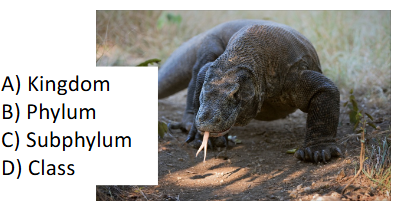
What is the lowest taxonomic level this organism shares with mammals?
subphylum vertebrata (craniata)
synapomorphy
an apomorphy (derived trait) shared by two or more taxa and is therefore hypothesized to have evolved in their most recent common ancestor
mammalian synapomorphies
three ear bones: malleus, incus, and stapes (from outermost organ to innermost)
presence of hair, which is dead keratin
mammary glands for milk production
what is a synapomorphy?
a trait shared exclusively by the descendants and their common ancestor
mammalian synapomorphies
ear ossicles
presence of hair
mammary glands
name domain, kingdom, phylum, sub-phylum, and class for mammals
eukarya, animalia, chordata, craniata (or vertebrata), mammalia (respectively)
crown group
the smallest clade that inclues all living members of a group and any fossils nested within it

stem group
set of extinct taxa that are not in the crown group but are more closely related to the crown group than to any other
mammalian characteristics of hard anatomy
lower jaw made up of a single dentary on each side (the dentary is made of two bones) (reduction of bones leads to increased strength)
three middle ear ossicles (bones); derived from the jaw bones of ancestors; include malleus, incus, and stapes
dentary-squamosal articulation
temporal opening of the skull
double occipital condyles
hard secondary palate
heterodont dentition (not in all)

hard secondary palate
keeps nasal cavity from collapsing when mouth is full of food
allows for eating and breathing at the same time
characteristics of mammals in post-cranial skeleton
thoracic ribs only (no lumbar or cervical ribs)
diversified skeleton that is ossified, lighter, simplified, with limbs under body
reduced shoulder girdle (only 1-2 bones)
epiphyseal lines on long bones allows joint to remain stable while bone is growing
calcaneous (heel bone) present: functions as lever for muscles in calf
reduced number of phalanges
phalanges
bones that make up the fingers and toes; 2-3-3-3-3 found in most mammals

characteristics in mammals in soft anatomy
complex integumentary structures: hair; sweat glands; sebaceous glands; true horns
lactogenic (milk producing) via nipples, mammary slits (cetaceans), or mammary pores (monotremes)
complex facial-dermal muscles: control over vibissae; allows babies to purse lips to nurse
ear pinna: the ear flap
enucleated red blood cells
muscular diaphragm: aids in ventilation of the lungs
no renal portal system
four-chambered heart
endothermic, homeothermic
examples of hair (dead keratin)
unique to mammals
scutes/scales in pangolin, true horn in rhinos; carapace in armadillo