IB Psychology - Criminology Review Dec. 5-8th Review Topics 1-4
 Studied by 3 people
 Call Kai
 Learn
Learn Practice Test
 Spaced Repetition
 Match
Match Flashcards
 Knowt Play
 Podcast
1/66

There's no tags or description
Looks like no tags are added yet.
Name | Mastery | Learn | Test | Matching | Spaced |
|---|
No study sessions yet.
67 Terms
Brain and Behavior (Bio)
How can damage to the brain affect our thinking and behavior?
A traumatic brain injury interferes with the way the brain normally works. When nerve cells in the brain are damaged, they can no longer send information to each other in the normal way. This causes changes in the person's behavior and abilities.
Thinking and Decision Making (Cog)
How does the dual processing model explain decision-making?
Dual processing theory suggests that reasoning and decision-making can be described as a function of both an intuitive, observational, affective system (system I) and/or an analytical, deliberative (system II) processing system.
Localization of Brain Function (Bio)
How can the function of the amygdala in emotion be demonstrated in research?
The main job of the amygdala is to regulate emotions, such as fear and aggression. Studies like Feinstein et al.'s (2011) case study show how crucial the role of the amygdala is on regulating certain emotions.
Amygdala
A limbic system structure involved in memory and emotion, particularly fear and aggression.
Decision making
The cognitive process of choosing between two or more alternatives
FMRI
A form of magnetic resonance imaging of the brain that registers blood flow to functioning areas of the brain
MRI
Magnetic resonance imaging. A technique that uses magnetic fields and radio waves to produce computer-generated images that allows us to see structures within the brain.
Prefrontal Cortex
Found within the Frontal Lobe, specifically associated with concentration and emotional processing/rationalizing
Stress response
The physiological changes associated with stress
System one processing
Our system 1 processing makes the quick and unconscious decisions
System two processing
Our system 2 processing makes our intentional and longer thought inducing decisions.
vmPFC
(ventromedial prefrontal cortex)- The part of the brain involved in emotion regulation, reasoning and decision- making with emotions
Grafman et al. (1996) Report
Methodology: tested the behavior of soldiers who received head injuries from the war, specifically, injuries to the vmPFC. Used self and family reports.
Results: showed those veterans with damage to the PFC had higher levels of reported violence and aggression than controls or veterans with damage to other parts of their brains.
Applications: this shows that damage to the prefrontal cortex (vmPFC) is more likely to lead to aggressive behaviors than no damage to other parts of the brain.
Bechara et al.'s Study (2000) on the vmPFC and Decision Making
Methodology: studied people with vmPFC lesions. There were 8 people with vmPFC damage and 17 healthy controls. The participants then played cards, however the card decks gave off certain rewards and consequences.
Results: the participants with vmPFC damage were much more likely to make risky decisions and less likely to identify the patterns in the decks, while to control group were more likely to identify the higher risk cards
Applications: This shows that lesions in the vmPFC are more likely to lead to risky and impulsive decisions than a brain with no lesions.
Feinstein et al.'s (2011) case study on SM
S.M had a rare genetic condition - highly localized damage to both of her amygdale
Methodology: researchers put her through 3 tests. 1 involved going to the pet store, previously, SM said she was afraid of snakes, but at the pet store she held one right by her head. In another test, she said she was afraid of Haunted houses, but then freely went in and laughed at its attempt to scare her. Finally, she watched scary movie clips claiming to be afraid, but displayed no signs of physiological fear.
Results: It was seen that with damage to her amygdala, she processes fear but has no judgement or reactions.
Applications: This shows that damage to the amygdala impairs the processing of certain emotion expressions.
the two sections of the cortex on the left and right sides of the brain
cerebral hemispheres
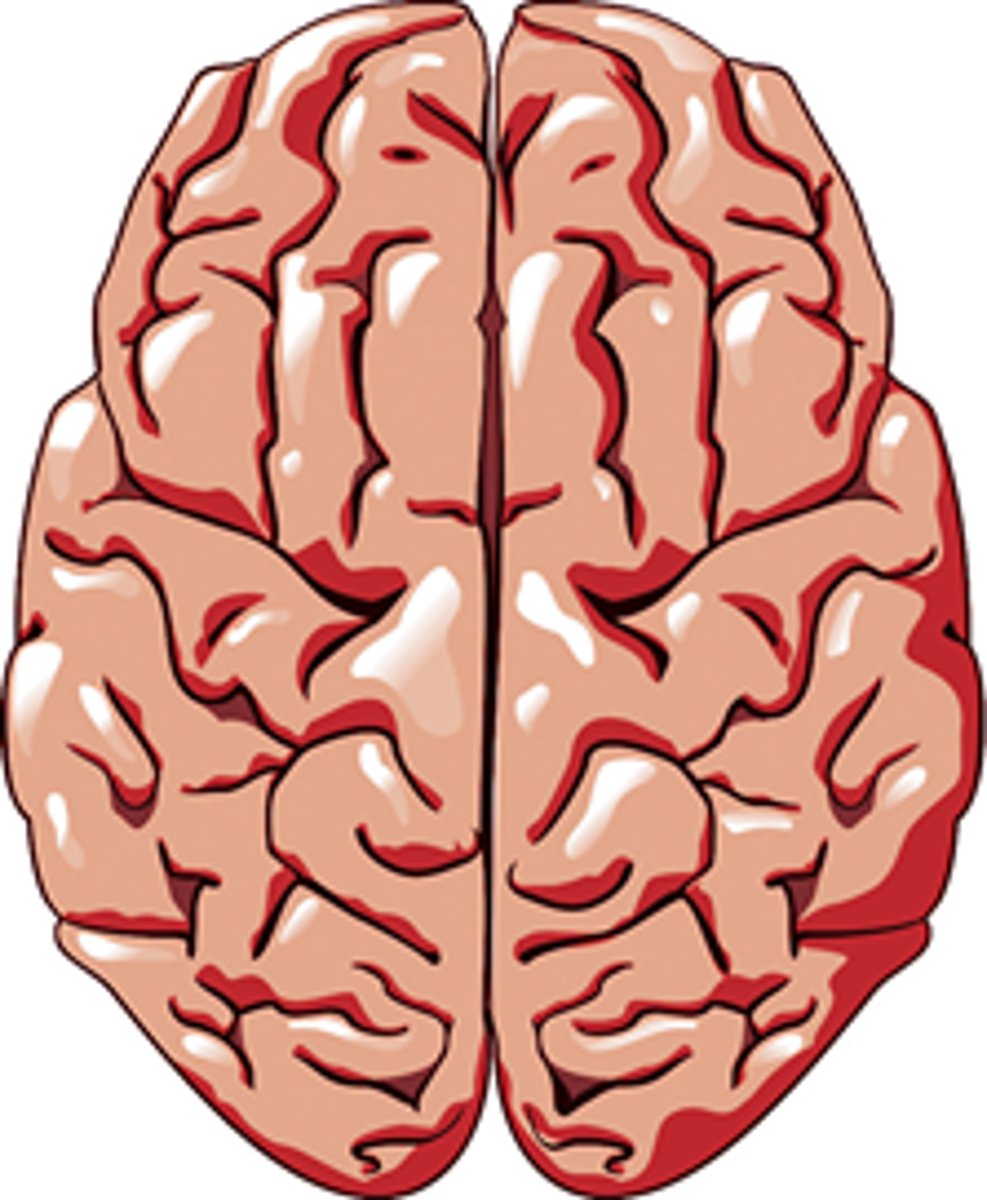
outer region of the brain
cortex
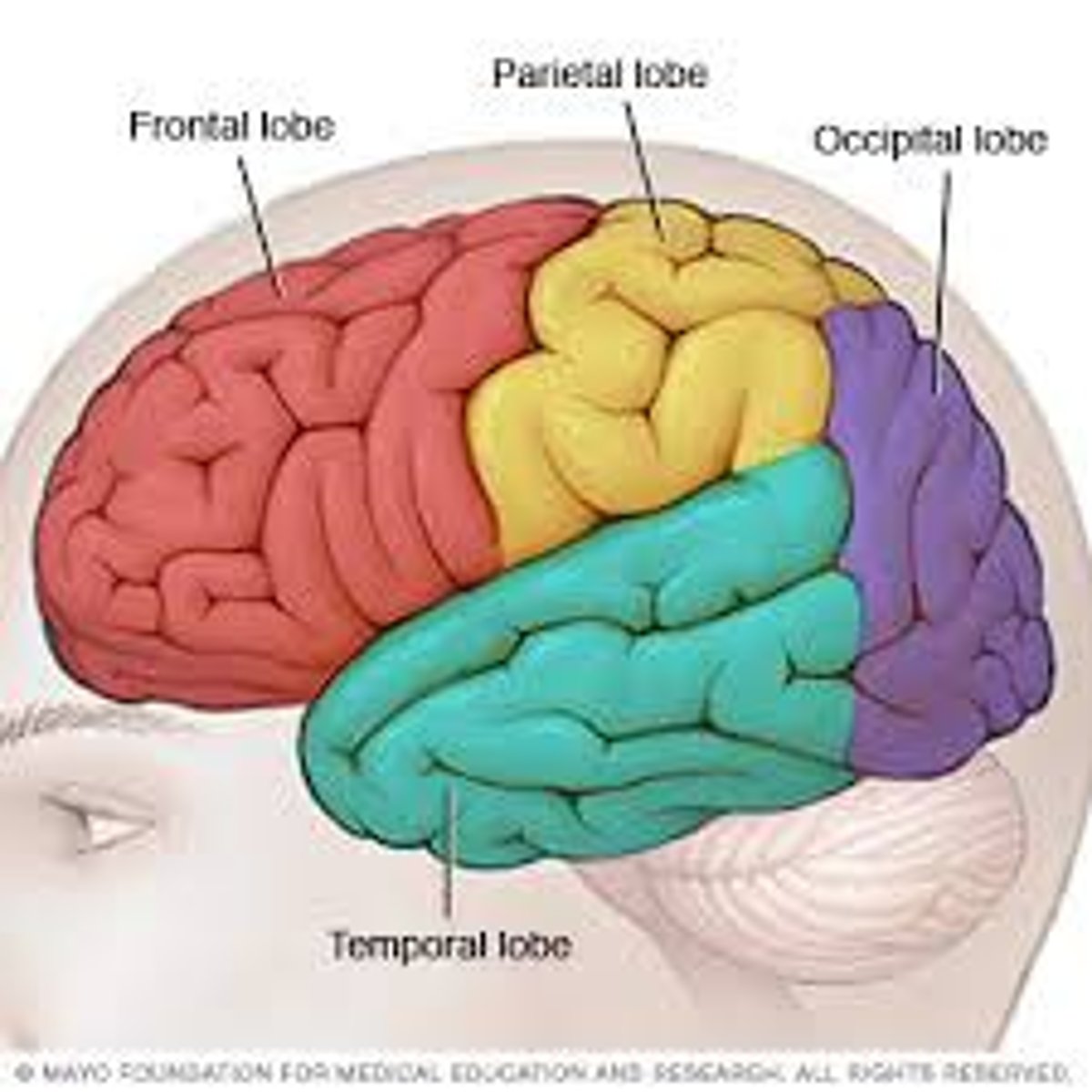
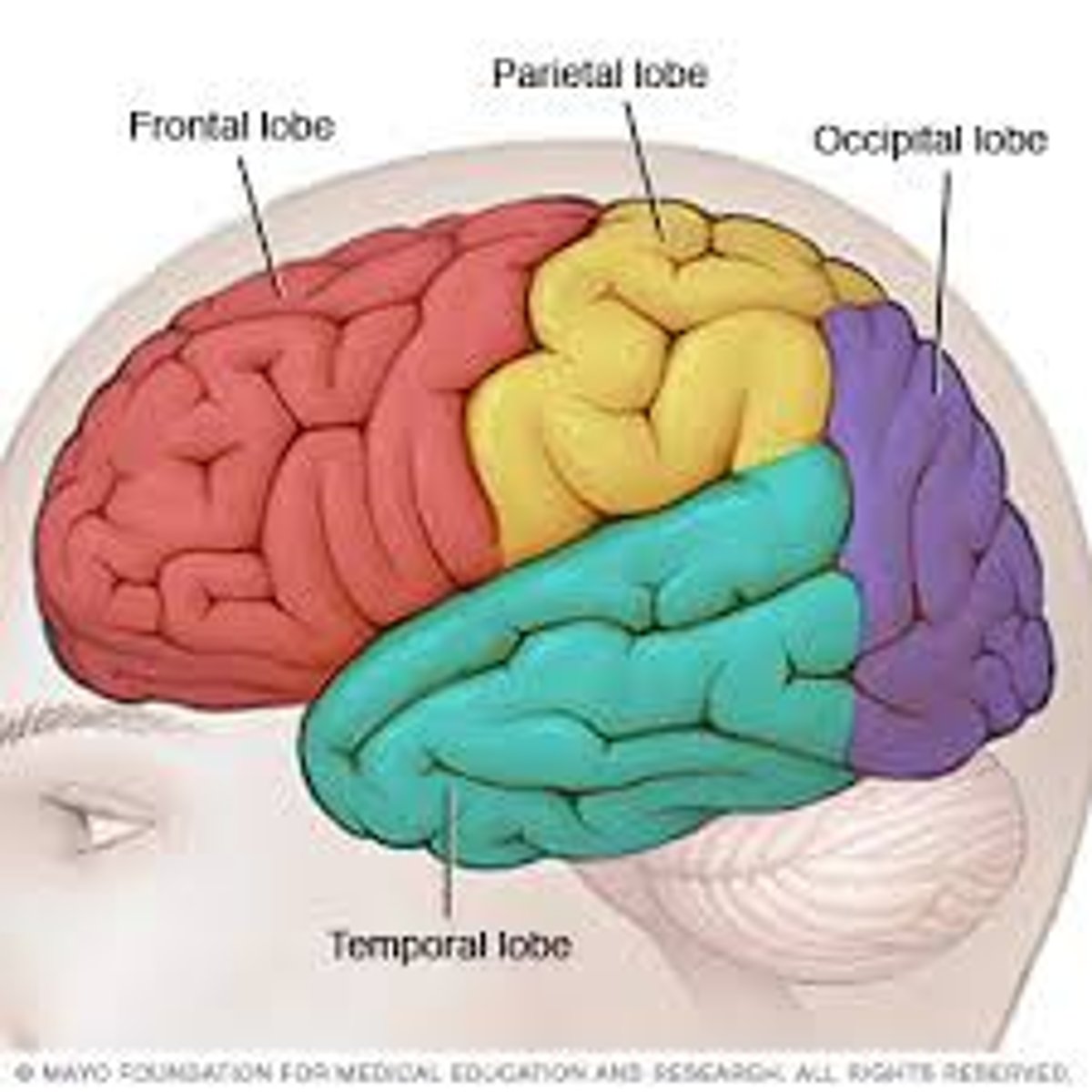
reasoning, planning, decision-making, speech production
- regulates impulsive behaviour
- enables us to process complex thoughts
frontal lobe
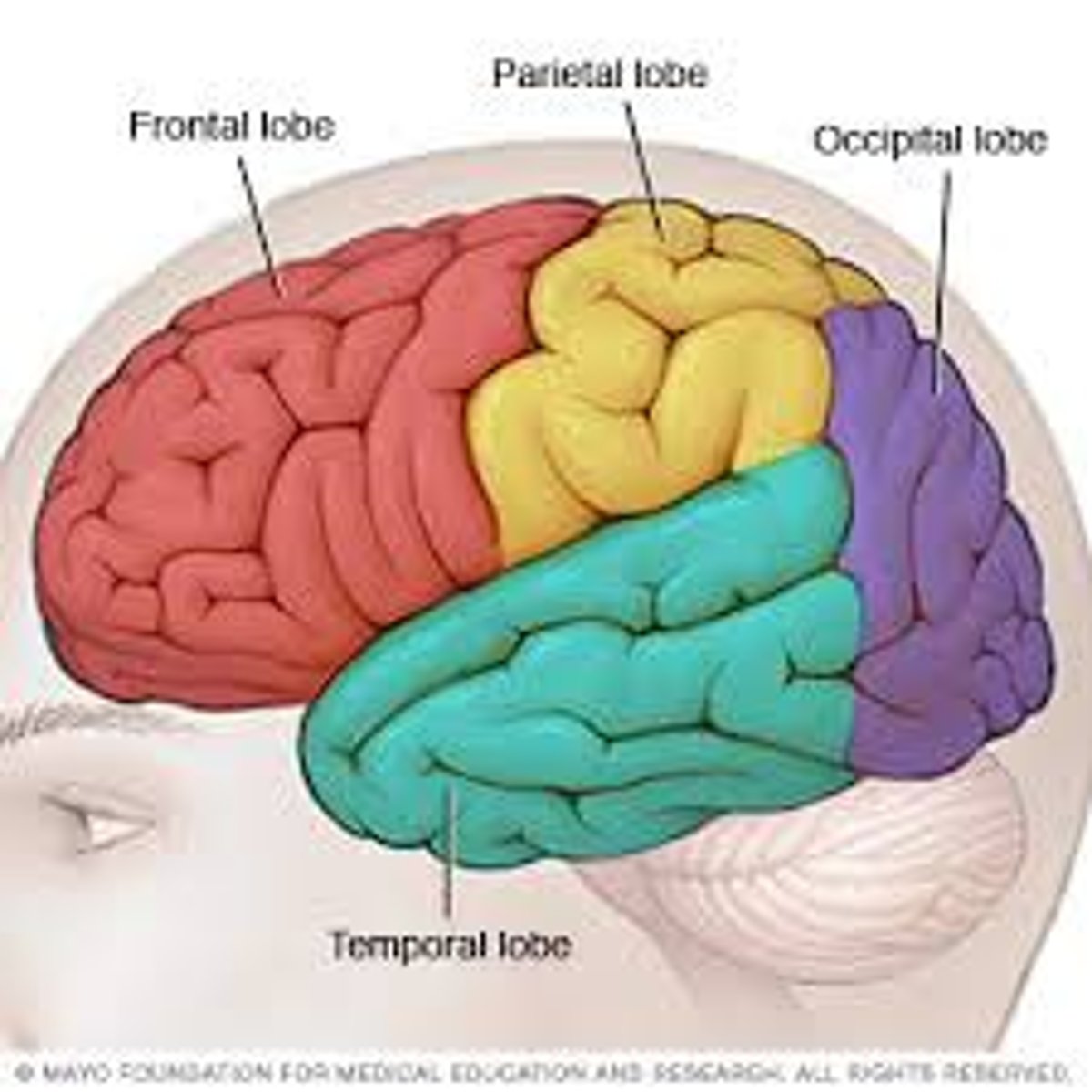
A region of the cerebral cortex whose functions include processing information about touch, and spatial information
parietal lobe
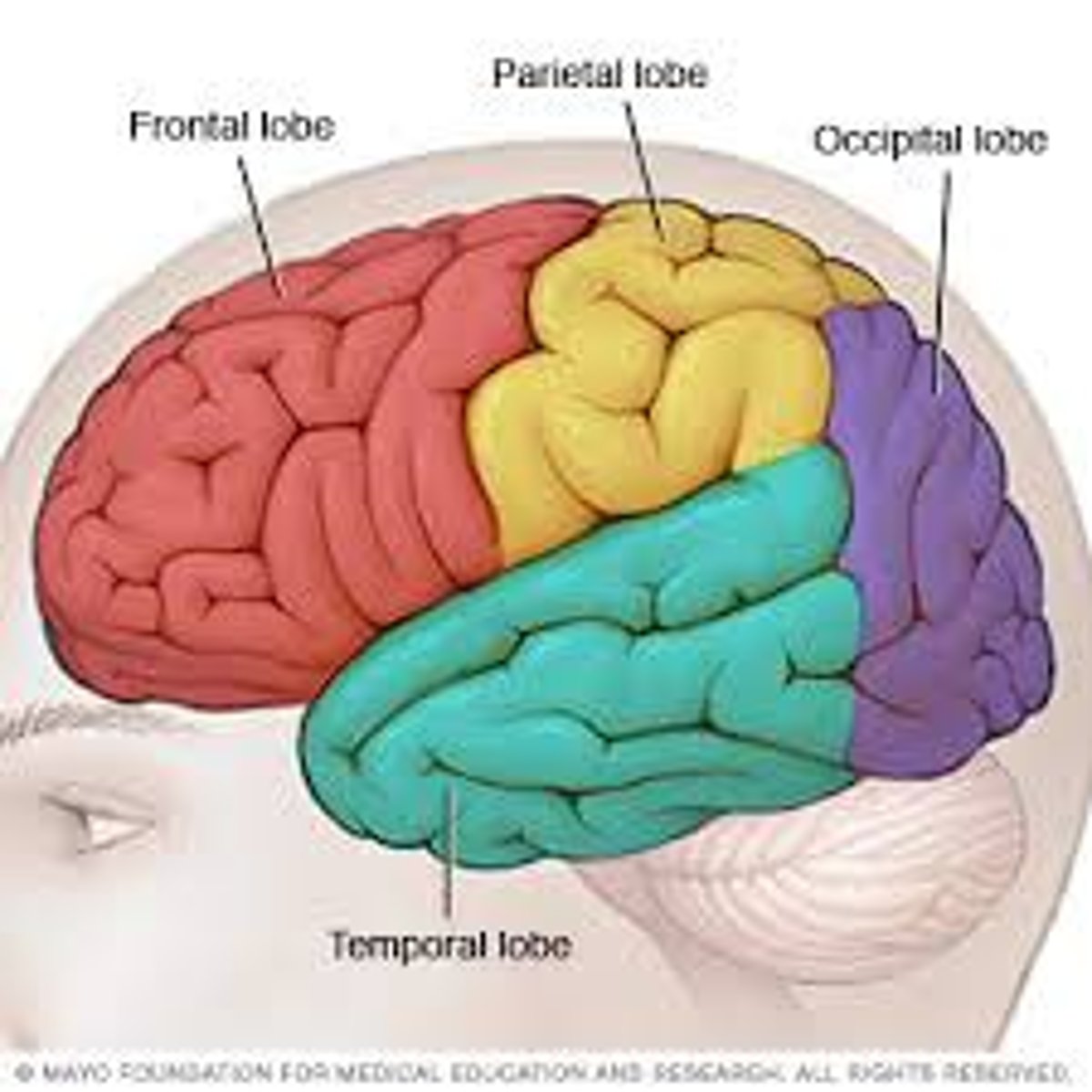
A region of the cerebral cortex that processes visual information
occipital lobe
perception & recognition of auditory stimuli, memory, language comprehension & emotion
temporal lobe
uses magnetic fields and radio waves to produce computer-generated images that distinguish among different types of soft tissue (structure)
MRI scan
reveals blood flow and brain activity by comparing successive MRI scans (shows the function)
fMRI scan
part of the frontal lobe behind forehead; inhibits impulsive behavior & controls executive functions
prefrontal cortex (PFC)
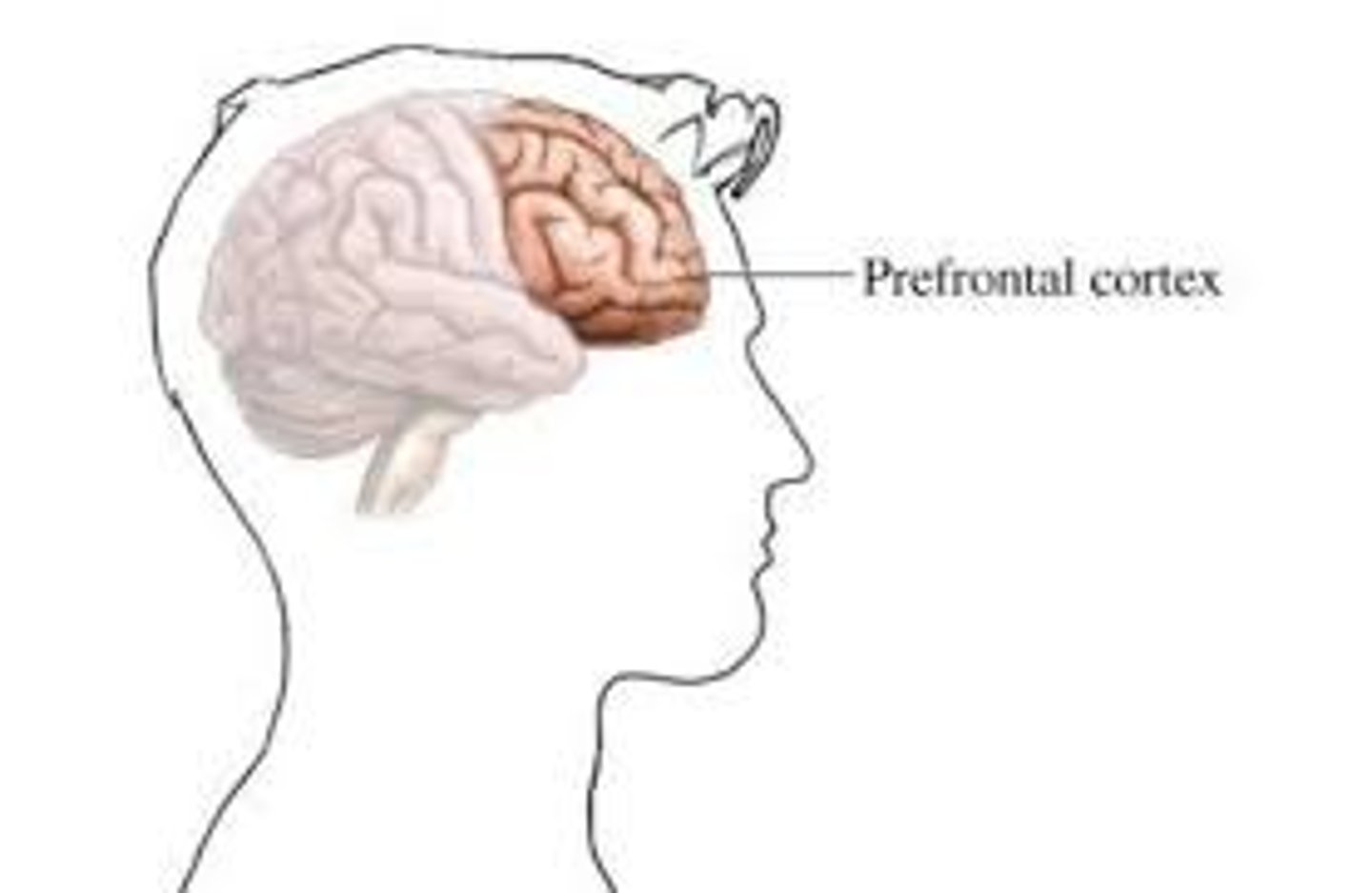
might affect behaviors such as impulsive-reactive aggression (impaired reasoning)
PFC damage
at the base of the PFC; involved in decision-making and risk-taking
ventromedial prefrontal cortex (vmPFC)
series of studies on delayed gratification that tested how long children could be alone in a room with one marshmallow & not eat it until the researcher came back & gave them another marshmallow as a reward for waiting
stanford marshmallow tests
analysing and considering available information
processing
making an assessment based on the analysis of information
judgement
drawing a conclusion and deciding how to act based on the judgement made
decision-making
processes that involve changes in an individual's thought, intelligence, and language
cognitive processes
- proposed by Daniel Kahneman
- two systems involved in decision making
dual process model of thinking & decision making
- fast
- automatic
- based on experience
- prone to error
- context-dependent
system 1 thinking
- slow
- deliberate
- requires time, effort & concentration
- uses logic & reason
- based on consequences
system 2 thinking
located in the temporal lobe; our brain's "emotional center". activates stress response & is responsible for fear & threat perception
amygdala
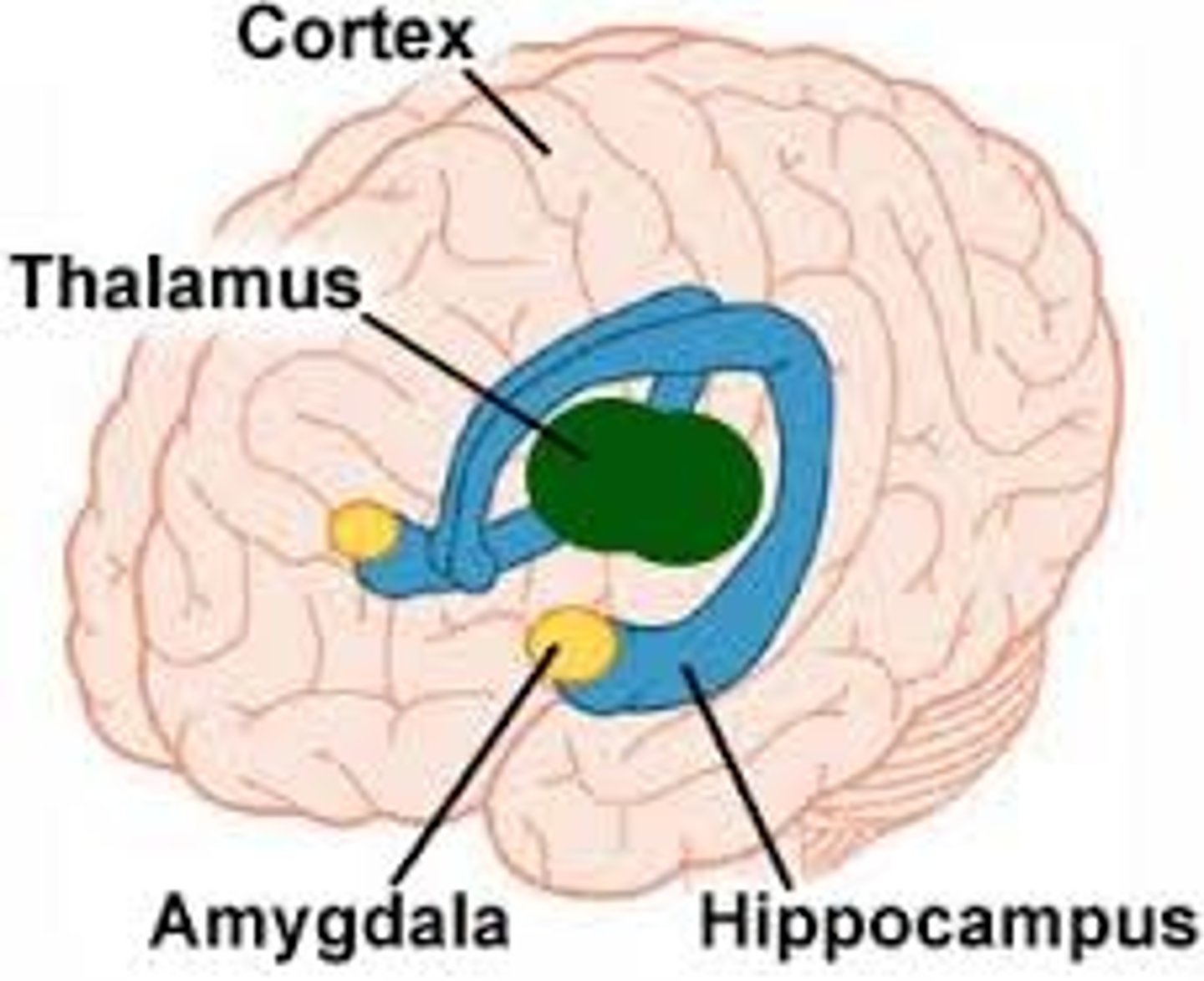
can influence our ability to experience emotions such as fear & recognise them in other people
amygdala damage
1. threatening visual stimuli perceived by eyes
2. message sent to visual cortex
3. visual cortex messages amygdala
4. amygdala recognizes threat; signals hypothalamus
5. hypothalamus signals pituitary gland
6. pituitary gland signals adrenal gland
7. adrenal gland releases stress hormones to prepare the body
8. stress hormones spark chain reaction in the body
9. adrenaline and cortisol released in bloodstream
10. heart rate, breathing & skin temperature all increase
11. stress response activated
stress response
chemical messengers released by glands in the endocrine system & transported around the body in our blood
hormone
sex hormone produced in testes (in males) & to a lesser extent in the ovaries (in females), so males naturally have a higher level of testosterone than females
testosterone
acting in a threatening or hostile manner towards another person
aggression
acting on instinct without considering outcomes or consequences
impulsive behavior
(1) Healthy participants were able to slowly move away from the disadvantageous decks and choose more from the advantageous decks that had low initial reward but higher long-term gains; (2) The vmPFC lesion participants, however, did not show the same shift in behavior--they continued to choose from the disadvantageous decks, regardless of the negative consequences; (3) Suggests that the vmPFC plays a role in our abilities to use system two processing. If this part of out brain is damaged, we may not be able to think past initial impulses, way up more factors, and base our decisions on consequences, which are all fundamental characteristics of system two processing. This might lead to decisions being made based on system one, which is impulsive and automatic.
Bechara et al (1995)
the monkeys who has their amygdalae lesioned were quite tame and had apparently lost their fearful reactions to humans. They would even approach the researchers. The control group, on the other hand, continued to display the same pre-surgery levels of fear towards the humans.
It appears that the amygdala, located in the temporal lobe, might be associated with fear.
Weiskrantz (1956)
Results: (vmPFC) lesions reported highest scores on aggression/violence scale; generally associated with verbal confrontations rather than physical assaults. Conclusion: vmPFC damage can increase the risk for aggressive behaviour; not necessarily the size of the lesion that leads to more aggressive or violent behaviours. triggering factors included disruption of family activities
Grafman et al. (1996)
Results: SM showed no fear response to horror movies, to dangerous animals or to the haunted house, reported not feeling any fear. Instead she felt excited and intrigued. Conclusion is that the amygdala has an important role in the fear response, recognition and experiencing fear. Damage to the amygdala results in being unable to experience fear.
Feinstein et al (2011)
Results: Castrated rats with no access to testosterone had reduced signs of aggression (biting & attacking) and rats without operations (or no change in testosterone) did not change significantly. those with decreased testosterone lost their social position. Conclusion is that testosterone is an evolutionary adaptation increasing chances of survival. testosterone is responsible for aggression and social dominance. Higher testosterone increases aggression and dominance of other rats. By experimenting on rats, researchers are able to determine correlations between biological factors and behavior. Reduced testosterone decreases aggressive behavior and also plays a role in social dominance.
Albert et a. (1986)
Results: The researchers found there was a strong correlation between the activation of the amygdala in the right hemisphere of the brain and the participants feelings of distress when viewing spiders and snakes.
It was concluded from this that the amygdala in the right area of the brain is responsible for the anxiety response in specific phobias.
Ahs et al (2009)
Treatment Group
The group in an experiment that receives a treatment that is hypothesized to have an effect.
Control Group
The group in an experiment that receives a treatment (or no treatment at all) that is hypothesized to not have an effect.
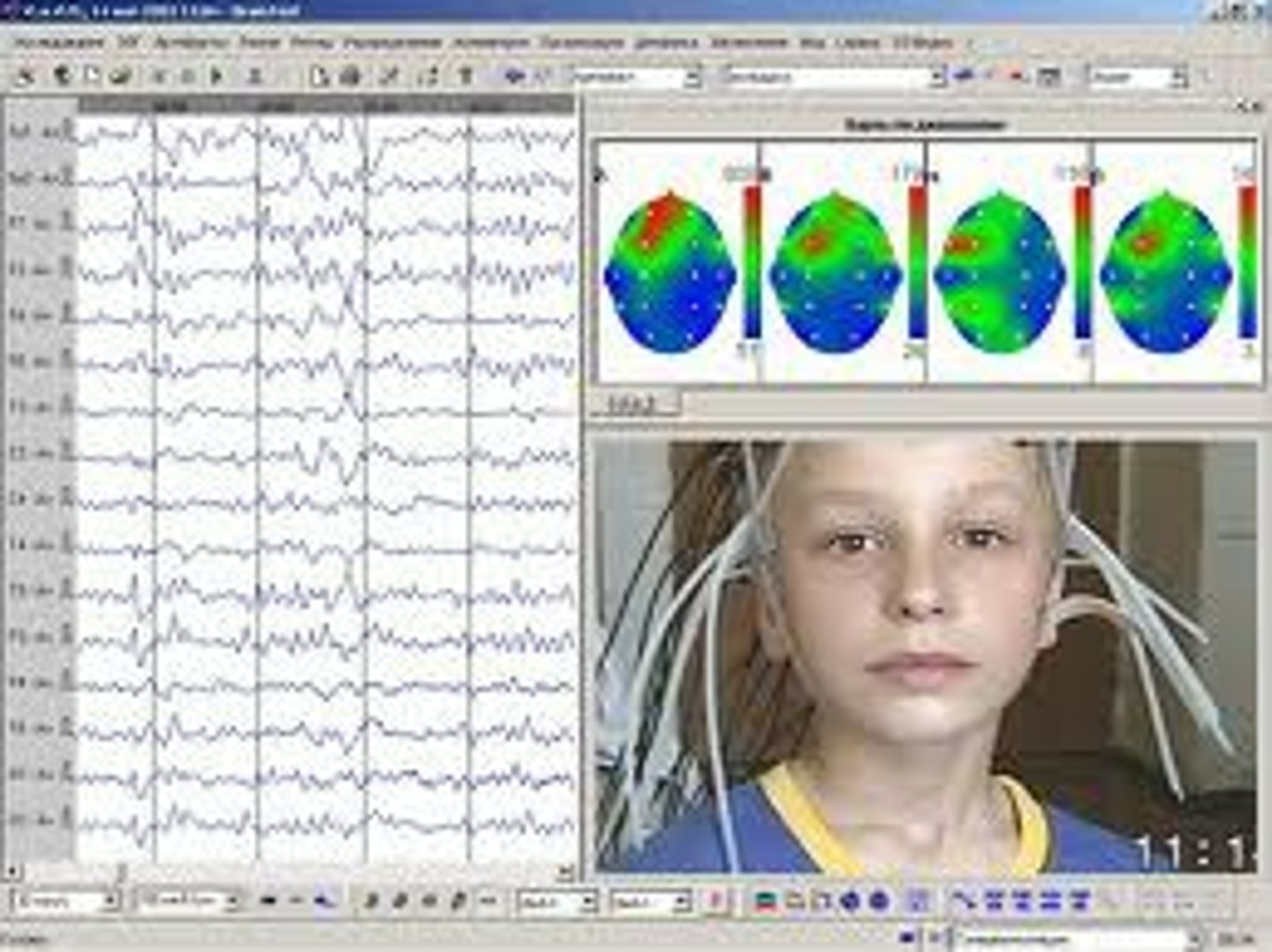
electroencephalogram (EEG)
an amplified recording of the waves of electrical activity that sweep across the brain's surface. These waves are measured by electrodes placed on the scalp.
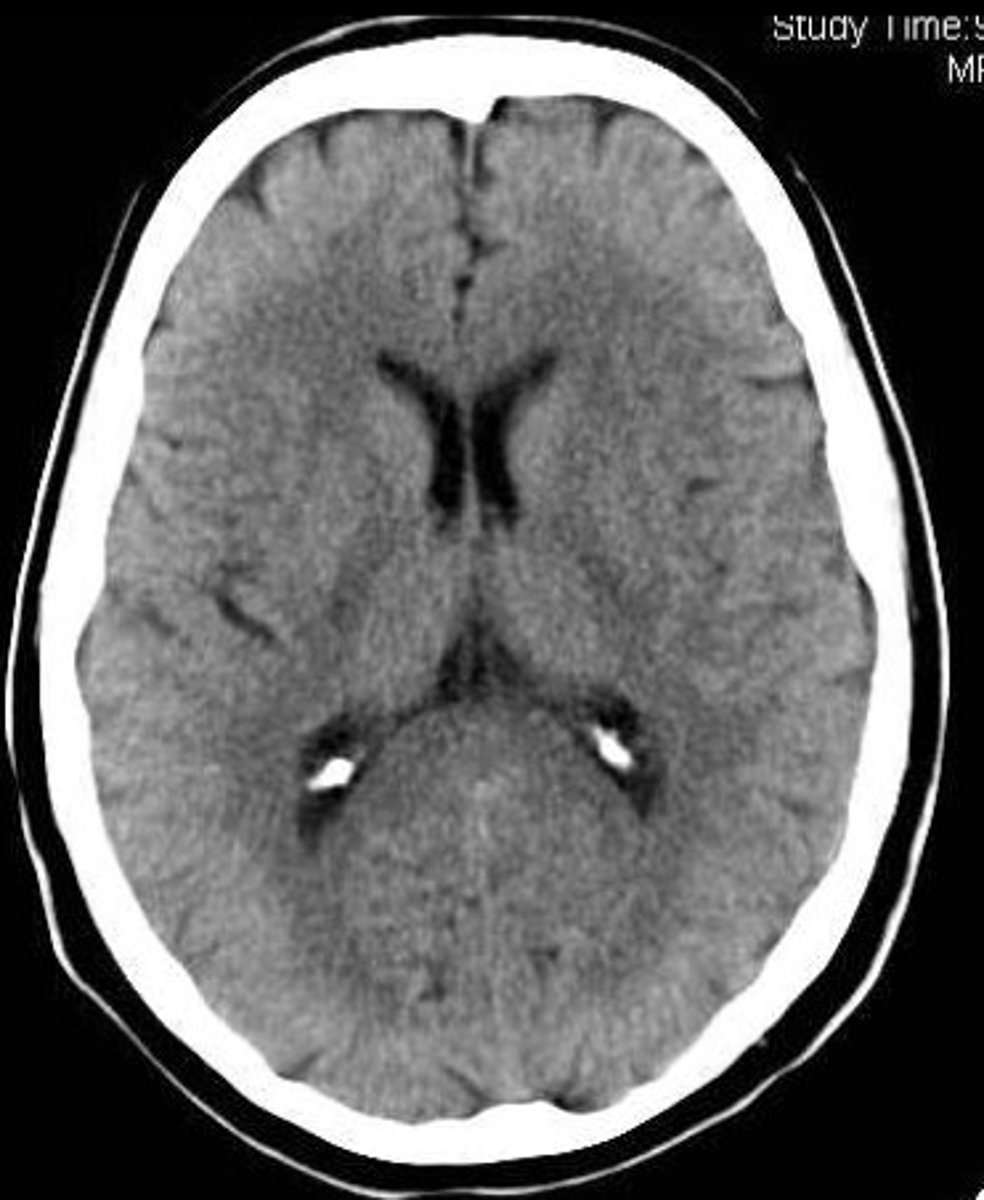
CT scan
a series of x-ray photographs taken from different angles and combined by computer into a composite representation of a slice through the body.
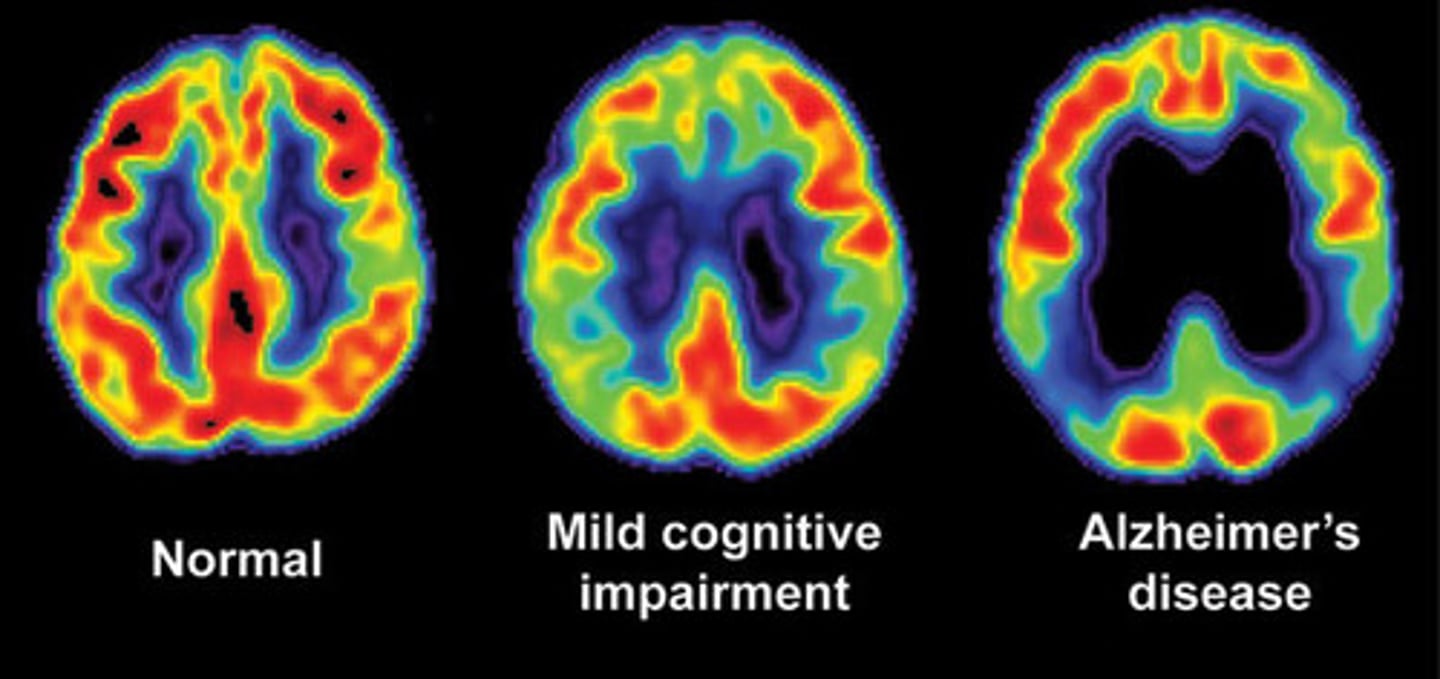
PET
using a computerized radiographic technique to examine the metabolic activity in various tissues (especially in the brain)
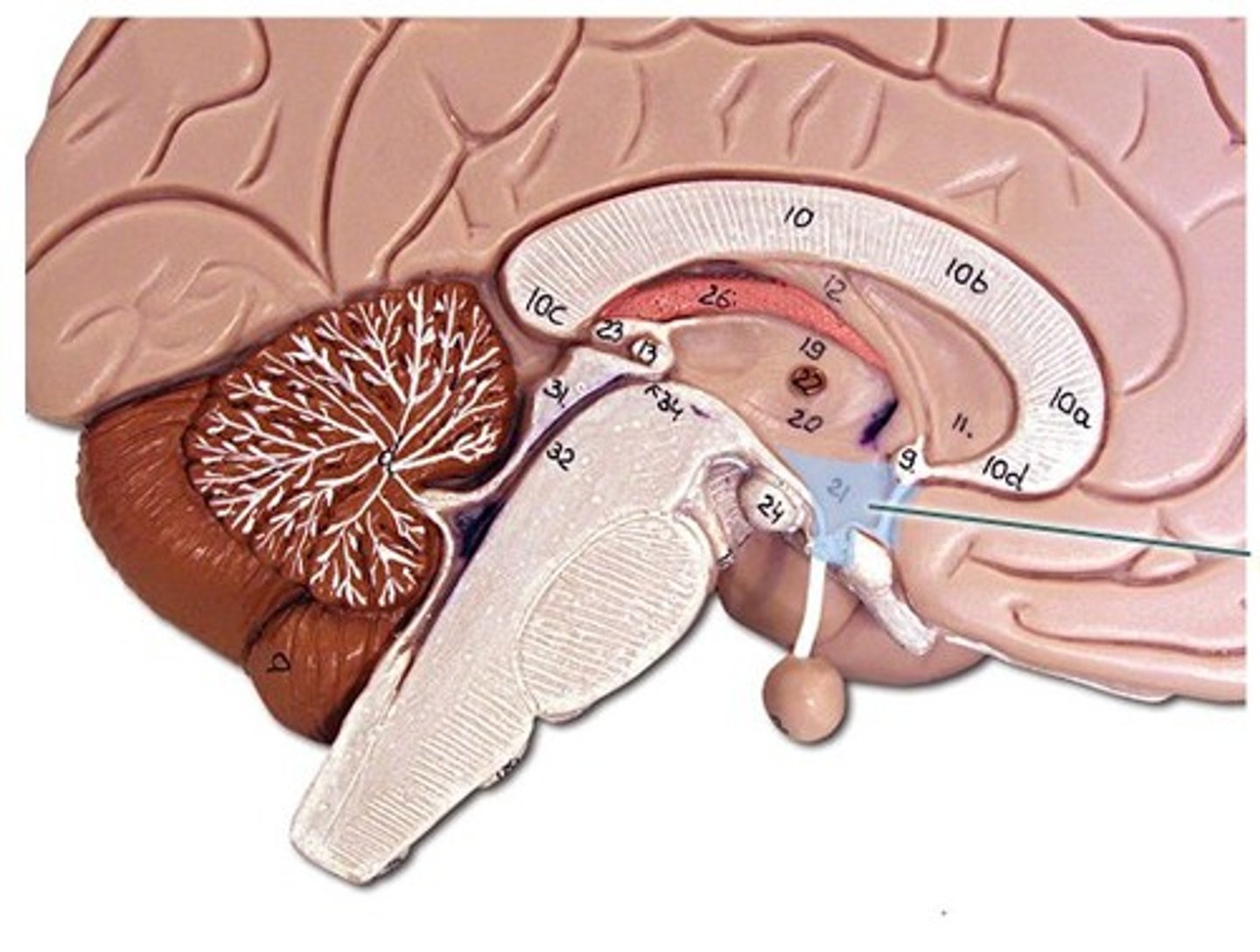
limbic system
a doughnut-shaped system of neural structures at the border of the brainstem and cerebral hemispheres; associated with emotions such as fear and aggression and drives such as those for food and sex. Includes the hippocampus, amygdala, and hypothalamus.
amygdala
two almond-shaped neural clusters that are components of the limbic system and are linked to emotion- anger, aggression, & fear
hypothalamus
a neural structure lying below the thalamus; directs eating, drinking, body temperature; helps govern the endocrine system via the pituitary gland, and is linked to emotion. Pleasure center and Reward center of the brain
cerebral cortex
the intricate fabric of interconnected neural cells that covers the cerebral hemispheres; the body's ultimate control and information-processing center
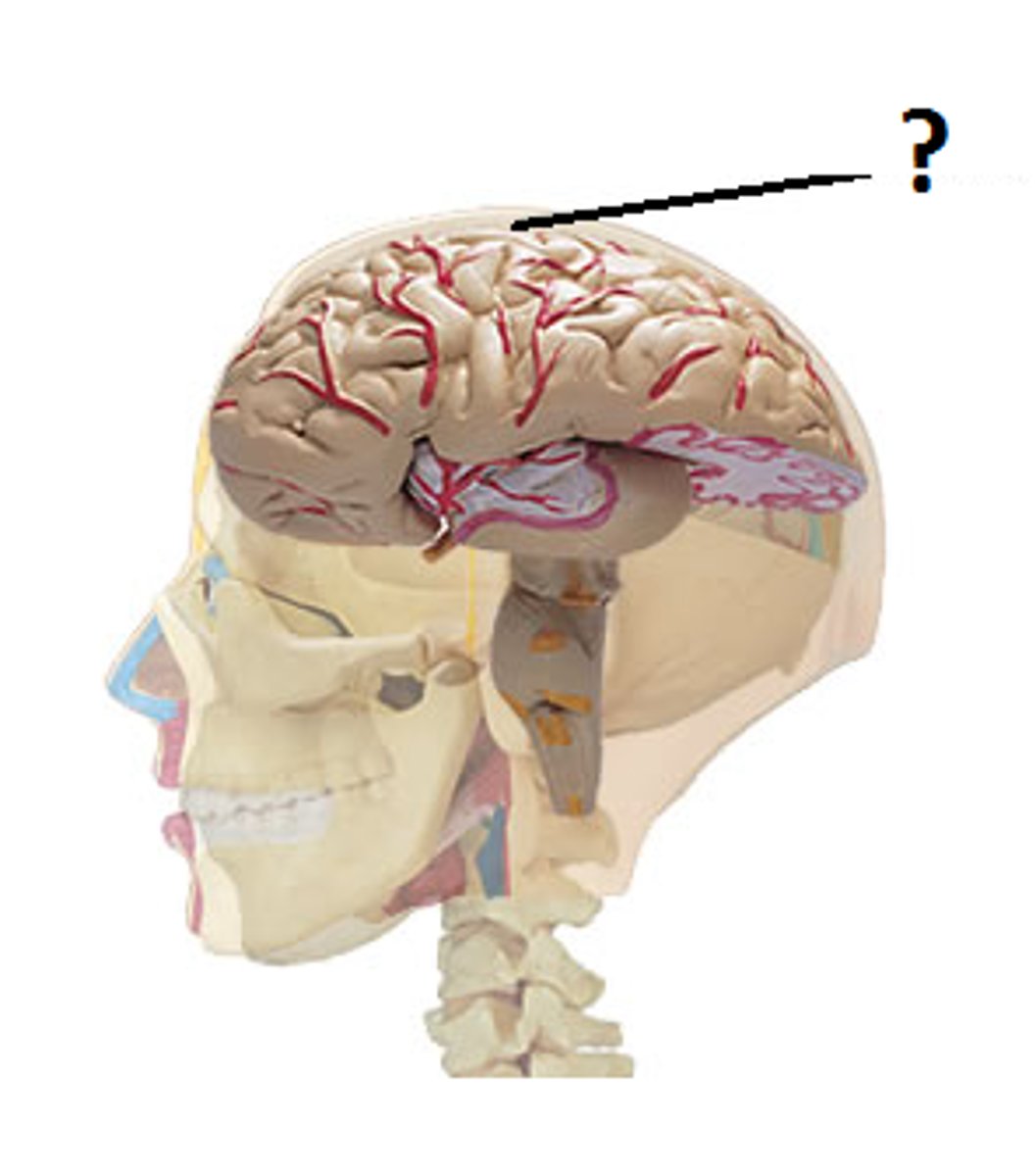
frontal lobes
the portion of the cerebral cortex lying just behind the forehead; involved in speaking and muscle movements and in making plans and judgments
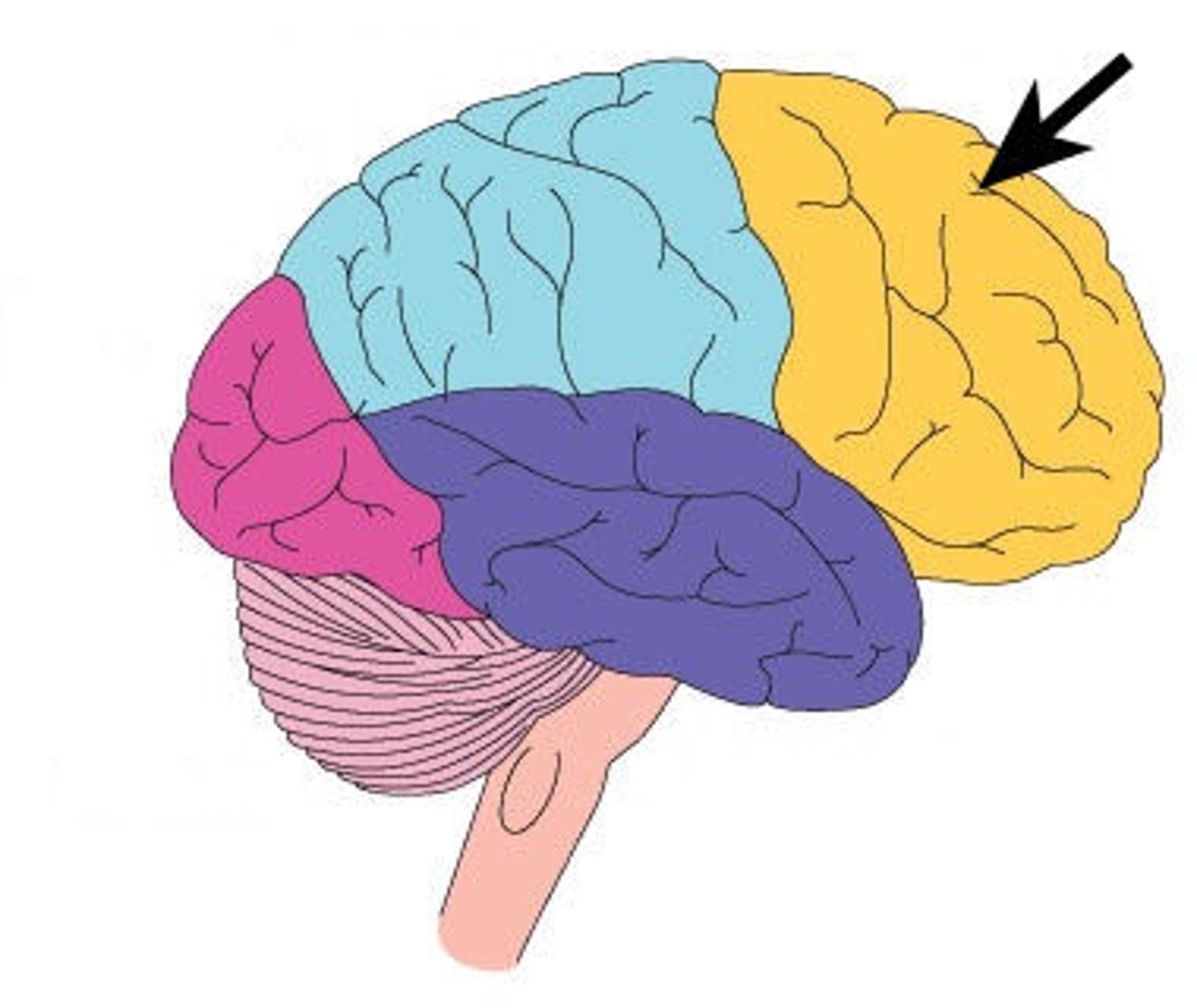
Prefrontal cortex (PFC)
The part of the brain at the front that is associated with regulating behaviour, executive functions and decision making.
Localization
This describes the concept of different parts of the brain having different functions.
Goetz et al (2016)
investigated how testosterone affects brain responses to social threat. Healthy male participants were given either testosterone or a placebo and shown images of faces displaying different emotions while undergoing fMRI scans. The results showed that testosterone increased activation in the amygdala and hypothalamus specifically when participants viewed angry faces, but not neutral or sad faces. This suggests that testosterone heightens sensitivity to social threat and prepares the brain for a fight-or-flight response rather than directly causing aggressive behavior.
Radke et al (2015)
examined how testosterone and motivation interact to influence brain responses to social threat. In the study, healthy female participants were given either testosterone or a placebo and viewed angry and happy faces while undergoing fMRI scans. Participants were instructed to approach or avoid the faces using a joystick. The results showed increased amygdala activation in the testosterone group specifically when participants were instructed to approach angry faces. This suggests that testosterone heightens brain responses to threat when individuals are motivated to confront it, helping explain how testosterone can contribute to aggression in certain contexts rather than automatically causing aggressive behavior.
Why Are the Differences Between Radke et al. and Goetz et al. Significant?
Goetz et al. showed that testosterone increases attention to social threat, while Radke et al. demonstrated that motivation to respond is critical for linking testosterone to aggression. Together, these studies show that testosterone does not automatically cause aggression; rather, aggression results from an interaction between hormones, threat perception, motivation, and cognitive control. This explains why aggression is context-dependent and not inevitable
How Might Testosterone Influence Our "Fight" (Stress) Response?
Testosterone increases amygdala activation when social threats are perceived, which stimulates the hypothalamus and adrenal glands to release adrenaline. This prepares the body for confrontation by increasing heart rate, energy, and emotional arousal. Testosterone therefore primes the stress response, making aggressive reactions more likely in threatening situations
How Might Aggressive Tendencies Be an Evolutionary Adaptation?
Aggression may be an evolutionary adaptation because it helps individuals defend themselves, compete for resources, and maintain social status. Displays of aggression can deter threats without physical violence and help preserve dominance within a group. Maintaining status increases access to food, mates, and protection, improving survival odds. Testosterone may support this adaptation by increasing readiness to respond to threat
How Does Evolution Explain Behavior?
Evolution explains behavior by suggesting that behaviors that increase survival and reproduction are more likely to be passed down through natural selection. Traits—including behavioral tendencies—are inherited if they help individuals survive threats, obtain resources, or reproduce successfully. Over many generations, these traits become more common in a population
Animal Ethics (in psychology)
Animal ethics in psychology include:
Justification of research (animals should only be used if no alternatives exist)
Minimization of harm and stress
Humane treatment and housing
Use of the fewest animals necessary
Ethical review and approval by committees
Researchers must ensure that the potential scientific value outweighs the harm caused to animals
How does incomplete prefrontal cortex development affect emotional regulation?
The prefrontal cortex (PFC)—responsible for impulse control, planning, and evaluating long-term consequences—is not fully developed during adolescence. As a result, the PFC is less effective at regulating emotional responses generated by the amygdala. This imbalance means adolescents may experience strong emotions without equally strong regulatory control, leading to impulsive decisions, difficulty managing anger, and increased likelihood of aggressive reactions. Stress or peer pressure can further weaken PFC regulation, making emotional outbursts more likely.