C12.4 Separation and purification
 Call Kai
 Learn
Learn Practice Test
 Spaced Repetition
 Match
Match Flashcards
 Knowt Play
1/5

There's no tags or description
Looks like no tags are added yet.
Name | Mastery | Learn | Test | Matching | Spaced | Call with Kai | Chat |
|---|
No analytics yet
Send a link to your students to track their progress
6 Terms
Describe and explain methods of separation and purification using a suitable solvent
Solvent must be chosen carefully depending on the type of solute that needs to be separated to ensure:
Only the desired substance should dissolve in the solvent
Other substances or impurities in the mixture should not dissolve in the solvent
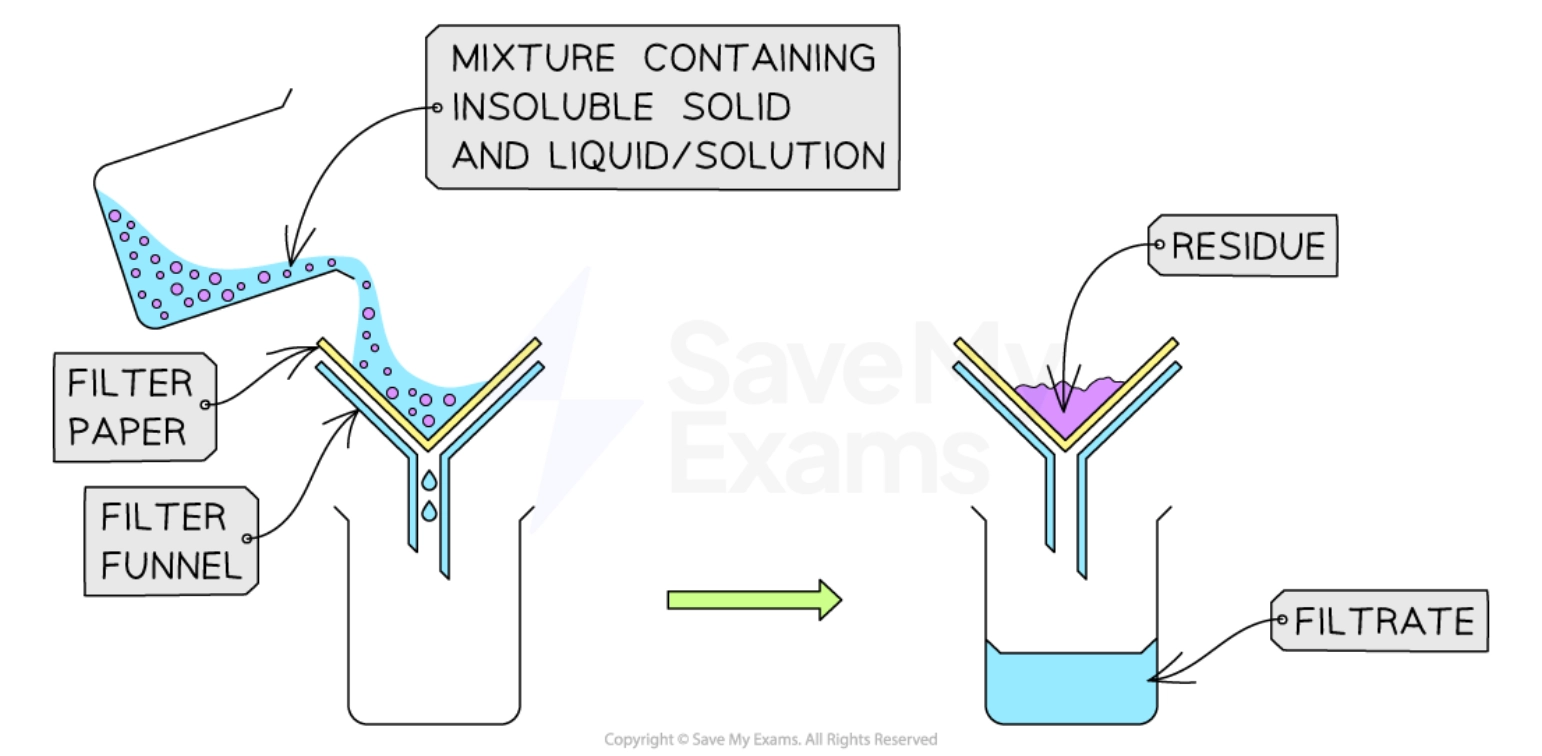
Describe and explain methods of separation and purification using filtration
Method used to separate insoluble solid, such as a precipitate, from a solution
A filter paper is placed in a filter funnel above another beaker, small pores only allow liquids to pass through
Mixture is poured into a beaker through a funnel, leaving insoluble solid behind as residue
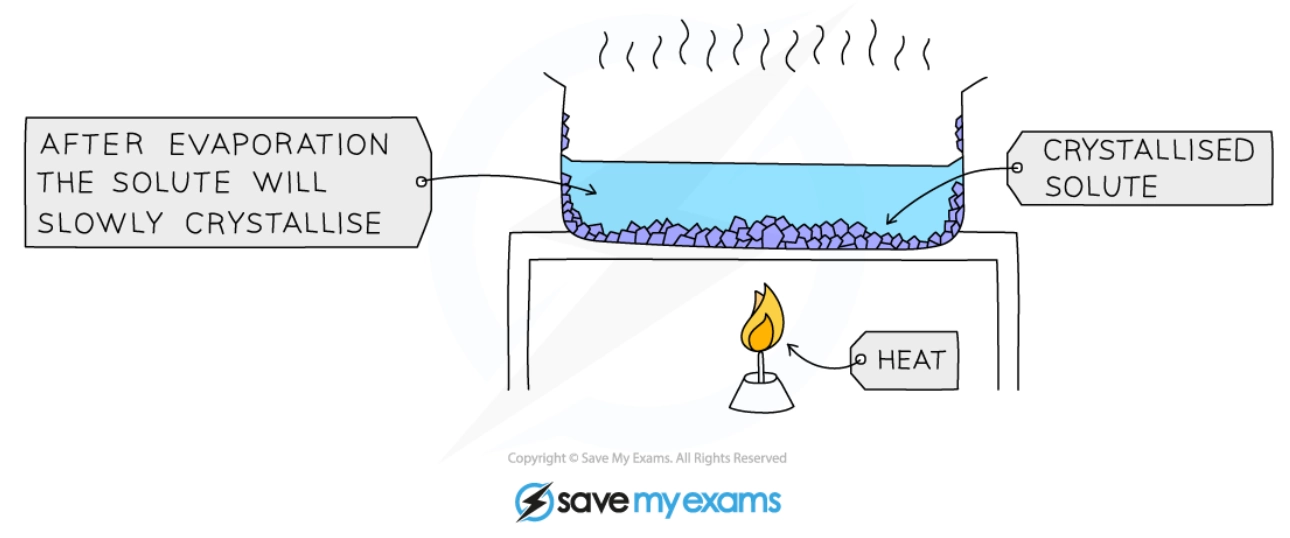
Describe and explain methods of separation and purification using crystallisation
Method used to separate dissolved solid from a solution
Heat solution in evaporating dish over bunsen burner until its boiling
Remove from heat and allow solution to cool and evaporate
Saturated solution will leave behind crystals as it cools
Crystals will grow and can be collected and allowed to dry
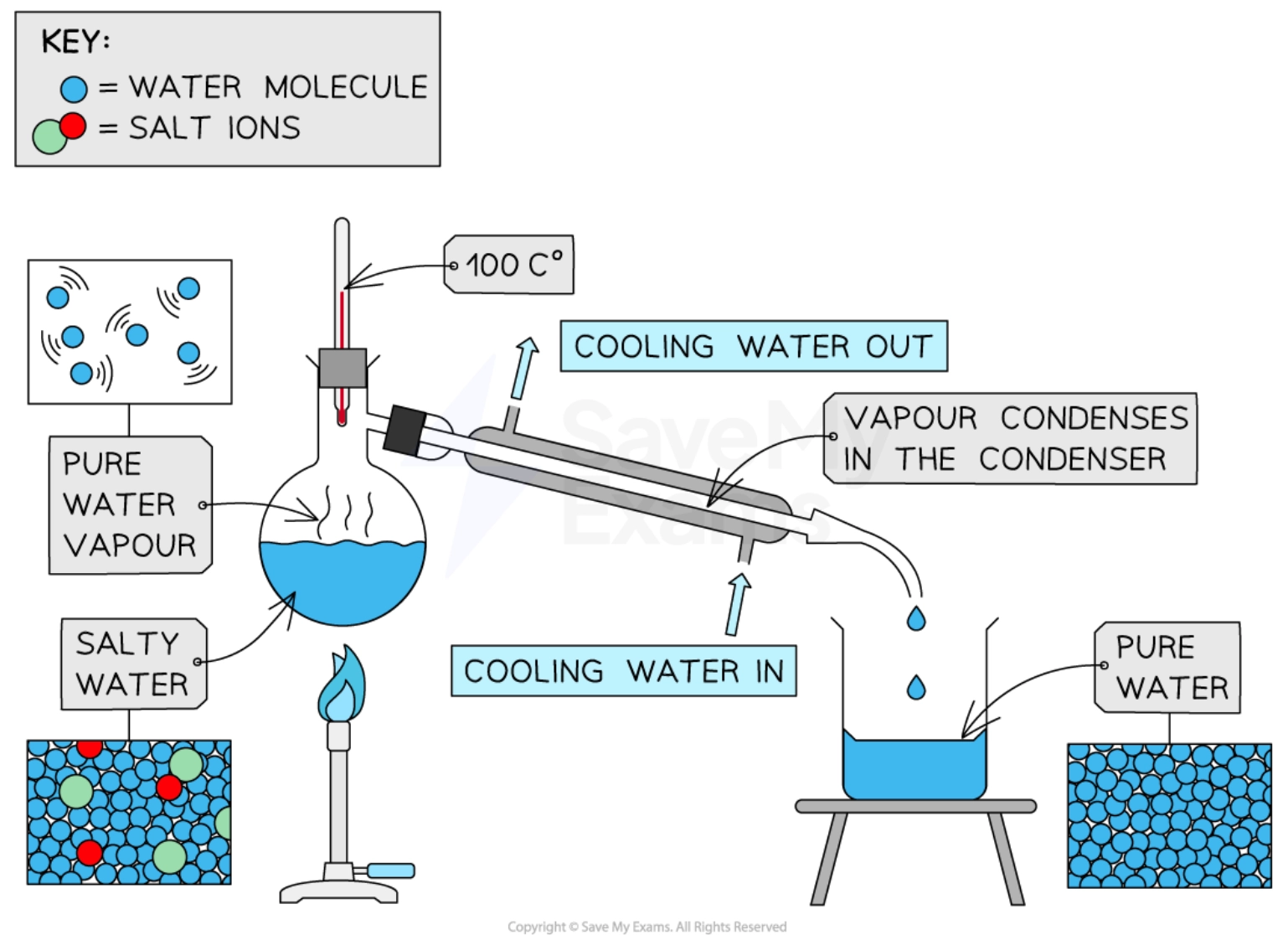
Describe and explain methods of separation and purification using simple distillation
Simple distillation separates a solvent from a solution
Works because the dissolved solute has a much higher melting point than the solvent, so solvent boils first and evaporates
The solution is heated and solvent evaporates producing a vapour which rises through the neck of the round-bottomed flask
The vapour passes through the condenser, where it cools and condenses, turning into pure water which is collected in a beaker
After all the solvent is evaporated from the solution, only the solid solute will be left behind
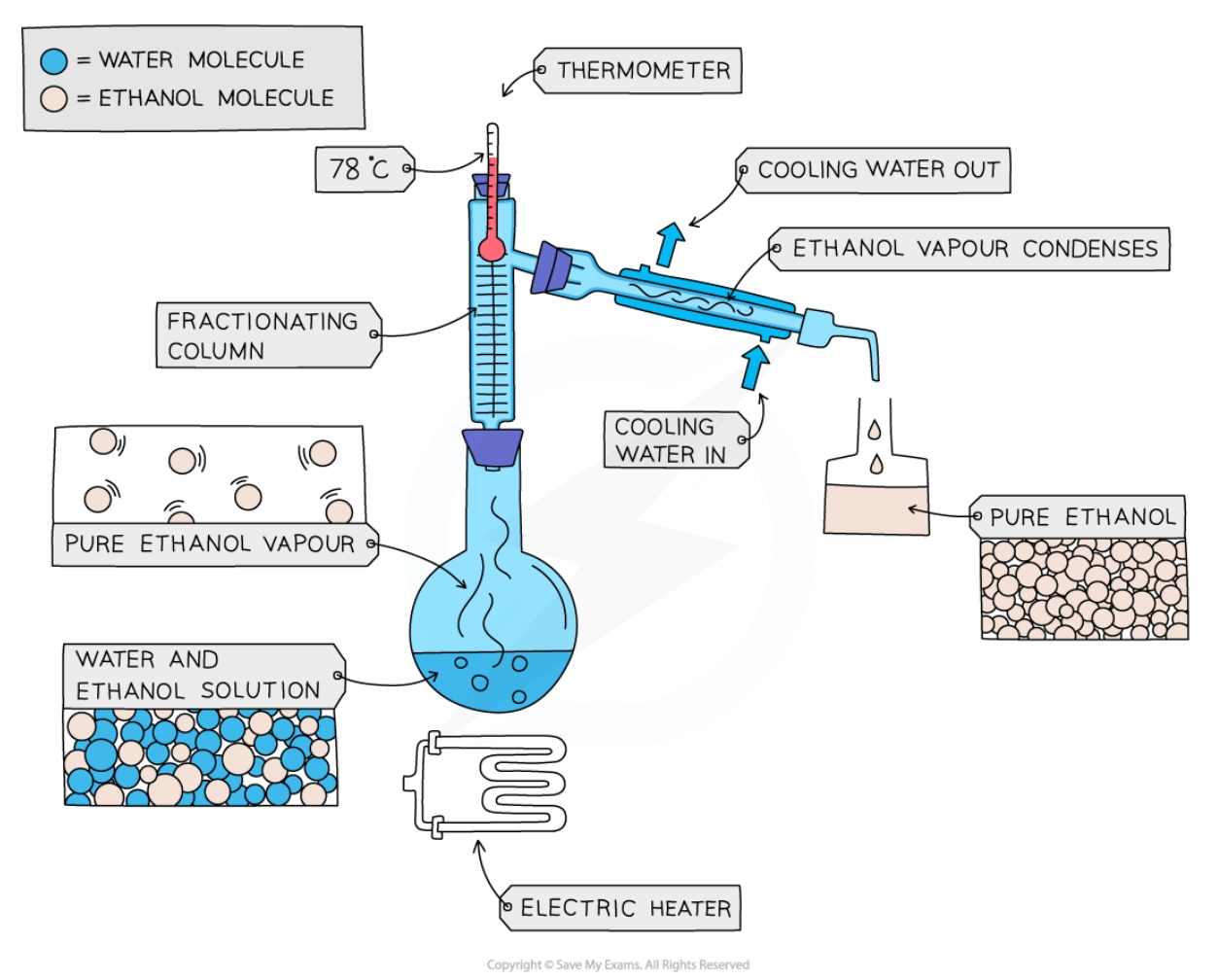
Describe and explain methods of separation and purification using fractional distillation
Fractional distillation separates a pure liquid from a mixture of liquids with different boiling points
The solution is heated to the temperature of the substance with the lowest boiling point
This substance will rise and evaporate first
The vapours will pass through a condenser, where they cool and condense
The condensed liquid is then collected in a beaker
All of the substance is evaporated and collected, leaving behind the other component(s) of the mixture
How can you assess purity with melting and boiling point information?
Pure substances melt and boil at specific and sharp temperatures
Mixtures have a range of melting and boiling points as they consist of different substances that melt or boil at different temperatures
Therefore, melting and boiling point data can be used to distinguish pure substances from mixtures