traffic lights & pavement markings
 Call Kai
 Learn
Learn Practice Test
 Spaced Repetition
 Match
Match Flashcards
 Knowt Play
1/21

There's no tags or description
Looks like no tags are added yet.
Name | Mastery | Learn | Test | Matching | Spaced | Call with Kai | Chat |
|---|
No analytics yet
Send a link to your students to track their progress
22 Terms
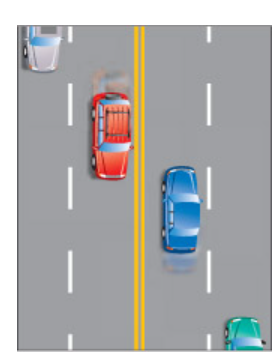
the yellow & white lines
Yellow lines separate traffic travelling in opposite directions.
White lines separate traffic travelling in the same direction.
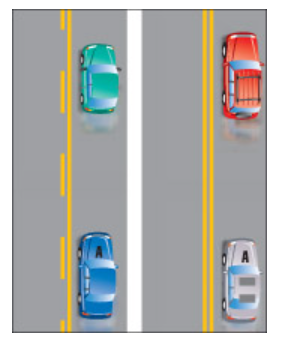
the solid line at the left of ur lane line (so two solid lines)
means it is unsafe to pass (A should not pass)
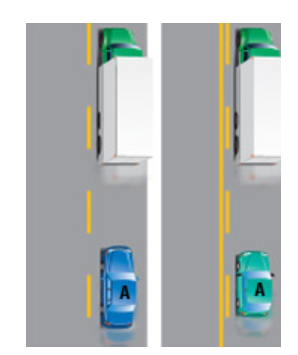
the dotted line at the left of ur lane line (so one solid line & another dotted line)
A broken line at the left of your lane means you may pass if the way is clear.
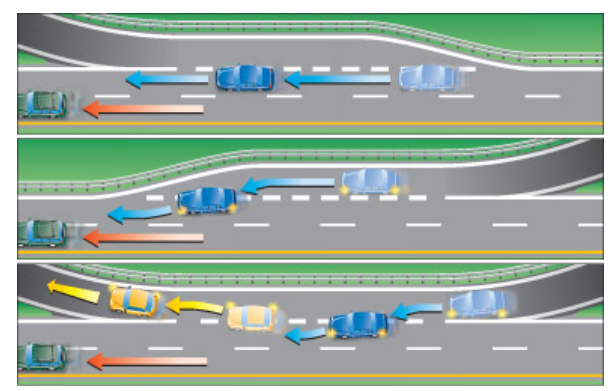
when broken lines get wider or closer tgt
called continuity lines
when u see them on ur left, it means the lane u are in is ending or exiting and thatu must hcange lanes if u want to continue in your current direction
when u see the mon ur right, it means ur lane will continue unaffected
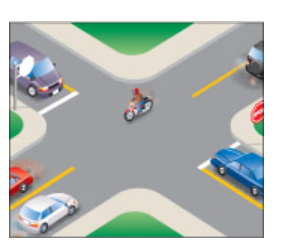
the white line
called a stop line
shows u where u must stop at an intersection
If there is no stop line marked on the road, stop at the crosswalk, marked or not. If there is no crosswalk, stop at the edge of the sidewalk. If there is no sidewalk, stop at the edge of the intersection.
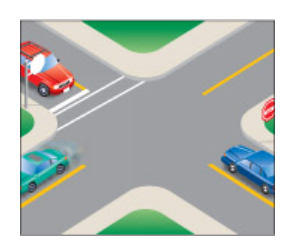
the two parallel white lines
a crosswalk
If there is no stop line, stop at the crosswalk.
If there is no crosswalk, stop at the edge of the sidewalk. If there is no sidewalk, stop at the edge of the intersection.
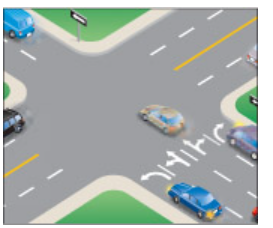
the white arrow
only move in the direction of the arrow
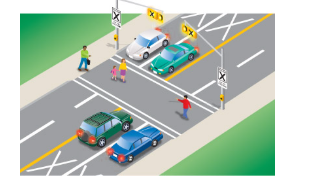
is a pedestrian crossover
marked by two white double prallel lines across the road with an X in each lane approaching it & overhead yellow lights
Drivers and cyclists must stop before the line and yield to pedestrians until pedestrians have completely crossed the road and cleared the roadway.
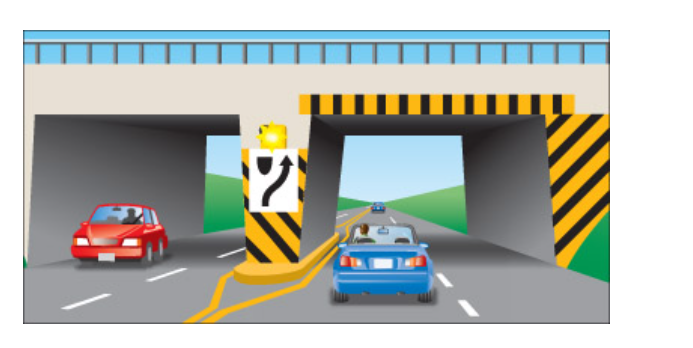
the two solid lines/the yellow and black markings
serve as warnings & guide traffic away from fixed objects
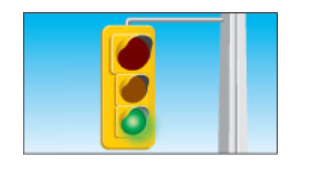
you may turn left, go straight or turn right AFTER YIELDING to vehicles and pedestrians already in the intersection.
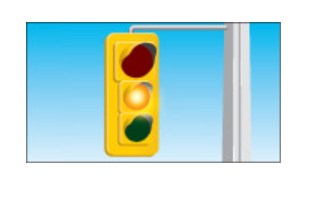
yellow/amber light
must stop if you can do so safely
if already in the intersection, continue in desired direction with caution
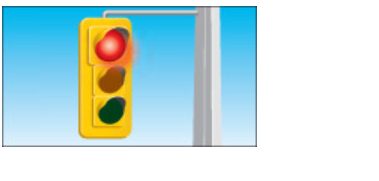
red light
bring vehicle ot complete stop at stop line if mared on pavement (if no stop line —> crosswalk… if no crosswalk, edge of sidewlak… if no sidewalk, edge of intersection)
you CAN turn right if wya is clear
you CAN turn left from ONE WYA ROAD —> ONE WAY ROAD if way is clear
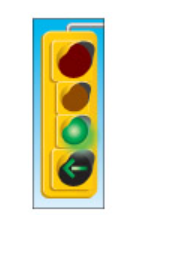
flashing gren light OR a left-pointing green arrow and a green light
called an advanced green light
directs turners —> drivers can turn left, go straigth ahead or turn right from the appropriate lane
pedestrians MAY NOT cross unless directed by a pedestrian signal
(note: u can still turn left when the light is just plain green, but only when way is clear)
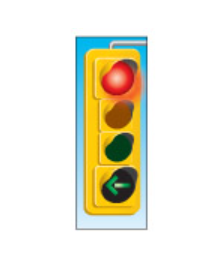
may turn left from the left turn lane
cannnot go straight
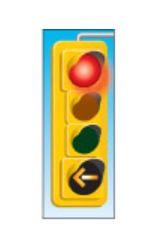
Do not start your left turn. Stop if you can do so safely; otherwise, complete your turn with caution.
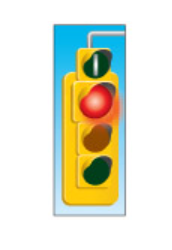
transit priority signals
Traffic and pedestrians must yield to public transit vehicles at a transit priority signal.
allows transit vehicles to go through, turn right or left, while all conflicting traffic faces a red light.
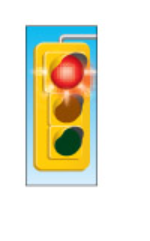
flashing red light
You must come to a complete stop at a flashing red light. Move through the intersection only when it is safe.
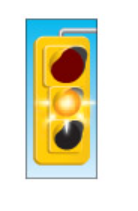
flashing yellow light
A flashing yellow light means you should drive with caution when approaching and moving through the intersection.
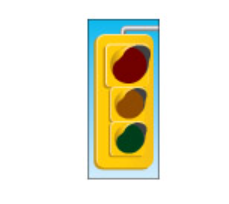
blank traffic lights (power loss)
at the intersection, yield right of way to vehicles entering from your RIGHT
use the intersection the same way you would use an intersection with all-way stop signs.
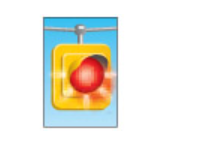
flashing red beacon at a stop sign
you must come to a complete stop. Move through the intersection only when it is safe to do so.
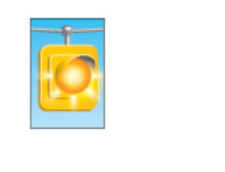
flashing yellow beacon
above an intersection, above a warning sign or on an obstruction in the road,
warns you to drive with caution.
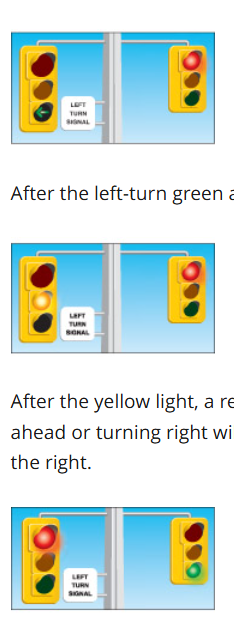
Some intersections have separate traffic lights for left-turning traffic and for traffic going through the intersection or turning right.
follow the directions for the traffic light directing wtv lane ur in