Reading Flashcards TEAS
 Call Kai
 Learn
Learn Practice Test
 Spaced Repetition
 Match
Match Flashcards
 Knowt Play
1/58

There's no tags or description
Looks like no tags are added yet.
Name | Mastery | Learn | Test | Matching | Spaced | Call with Kai | Chat |
|---|
No analytics yet
Send a link to your students to track their progress
59 Terms
What is the main idea of a passage?
The main idea is the central point or message the author wants to convey. It's what the whole passage is mostly about.
How can you identify the topic sentence of a paragraph?
The topic sentence states the main idea and is often the first sentence in the paragraph.
Ask yourself, "What is this paragraph about?" The sentence that answers that is likely the topic sentence.
What are supporting details, and how do you find them?
Supporting details explain, prove, or reinforce the main idea. They are specific facts, examples, or reasons found in the body of the text.
Supporting details answer "why" or "how" the main idea is true.
How do you create a strong summary of a passage?
Include only the main idea and key supporting points in your own words.
Don't include: minor details, examples, or opinions.
How do you determine the author's purpose?
Ask yourself: Why did the author write this?
To inform? (give facts)
To persuade? (argue a point)
To entertain? (tell a story)
To explain? (how-to/process)
Look at tone and word choice.
Emotional tone or biased language = persuasion
Neutral tone = inform.
What clues reveal the author's point of view?
Look at pronouns, tone, and how the subject is presented.
1st person pov: I, me, we (personal story or opinion)
2nd person pov: you (instructions or advice)
3rd person pov: he, she, they (objective or narrative)
How can you distinguish fact vs. opinion on the TEAS?
Fact: Can be proven true or false (stats, dates, research).
Opinion: Based on beliefs or feelings (words like best, worst, should).
Look for signal words like think, believe, always, never to spot opinions.
What does it mean to evaluate an argument in a passage?
To assess whether the author's claim is supported by logical reasoning and solid evidence.
Red flags to look for in weak arguments:
- Emotional appeals without facts
- Generalizations ("Everyone agrees...")
- Lack of evidence or faulty logic
What is inference?
An inference is a conclusion you draw based on implied information. It's not stated directly, but it's a logical next step. Read between the lines. Ask, "What is the author suggesting here?"
How do you interpret graphics like charts and tables on the TEAS?
Carefully read titles, labels, and units. Look at trends, comparisons, and key numbers. Never guess!! graphics questions often ask you to find specific data. Focus on what's directly shown.
What is Chronological order vs Sequential order?
Chronological order arranges events in the order they occurred in time, from earliest to latest. (dates)
Sequential order focuses on the steps of a process or procedure, often used for instructions or directions. (steps)
What is cause and effect?
When one event leads to another (because, as a result). Something happens (cause) and there is an outcome to it (effect)
What is compare and contrast?
When you find the similarities and differences between two things. (however, similarly).
What is genre, and why does it matter on the TEAS?
Genre is the category or type of text:.
Narrative: Tells a story (fiction, memoirs)
Expository: Explains facts
Technical: Gives instructions
Persuasive: Tries to change your opinion
Recognizing genre helps you understand the purpose and tone.
What is the theme?
The theme is the deeper message or universal truth in a passage. Ask: "What is the big lesson or takeaway from this?"
How do transition words help identify text structure?
They signal how ideas are connected.
Chronological: first, next, finally
Cause/effect: because, therefore
Compare/contrast: similarly, however
Addition: also, moreover
What is tone in a passage?
Tone is the author's attitude toward the subject.
Formal: The study reveals...
Informal: You won't believe what happened!
Sarcastic: Oh sure, that'll work.
Look for emotion and vocabulary choice.
What is a credible source, and how do you identify one?
A credible source is trustworthy, current, unbiased, and written by an expert or reliable publisher.
Examples: peer-reviewed journals, government sites (.gov), educational (.edu)
Not credible: anonymous blogs, biased opinion sites.
What does it mean to synthesize information across sources?
You combine ideas from multiple texts or formats
(like a passage + a graph) to form a conclusion or comparison.
How do you follow written instructions accurately on the TEAS?
Break down the steps in order and pay attention to keywords like first, next, only if, do not.
What are context clues, and how do they help with vocabulary questions?
Context clues help you figure out the meaning of unknown words by using the surrounding text.
What's a summary question testing you on?
Your ability to identify the main idea and major supporting points without including extra details.
If an answer choice includes too much info or new details, eliminate it.
What is bias?
Bias is when an author unfairly favors one side, using emotion or lack of evidence. words: always, clearly, everyone knows, obviously.
Ask, "Does the author present both sides fairly?"
What's a logical fallacy you might see in an argument?
A flaw in reasoning. Examples include:
Hasty generalization: "All doctors are rich."
Appeal to emotion: "If you care about children, you'll donate now
How can you tell the difference between a main idea and a supporting detail?
The main idea tells what the passage is mostly about, while supporting details explain or prove it.
What reading skill is being tested when the question says, "According to the passage..."?
It's asking you to locate explicit information,something stated directly in the text.
How does figurative language show up on the exam?
You may be asked to interpret similes, metaphors, hyperbole, or personification.
How can you recognize text structure in nonfiction passages?
Look for transition words:
Cause/Effect: "because," "therefore"
Compare/Contrast: "similarly," "however"
Chronological: "first," "later," "next"
What's the best way to handle multiple source questions?
Skim both texts or the text + graphic for key ideas. Then compare or combine the info to answer the question.
What are details in a passage?
Facts, descriptions, or other information that support key points or the main idea.
What is figurative language?
Language that creates imagery or comparisons (similes, metaphors, personification).
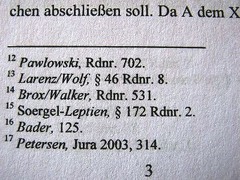
What is a footnote?
A small note at the bottom of a page that gives extra information or sources about something in the text.
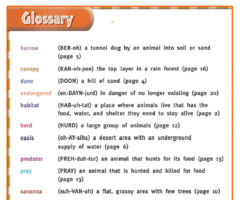
What is a glossary?
A list of terms and definitions, usually in the back of a book.
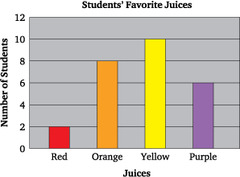
What is a graph?
A diagram that shows numerical data using lines, bars, or dots.
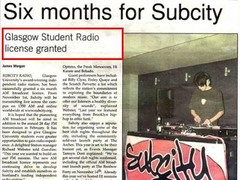
What is a heading?
A big title that introduces a section of text, helping to organize ideas.
What does implicit mean?
Information that is suggested but not directly stated in the text. You have to make an inference to understand it.
What is an index?
An alphabetical list of topics in the back of a book with page numbers.
What is an anecdote?
A short personal story used to illustrate a point or connect with the reader.
What is an argument in reading?
A claim on a debatable issue supported by evidence, reasoning, and counterclaims.
What is an assumption?
An idea that the author doesn't state directly but expects the reader to accept as true.
What is connotation?
The emotional or implied meaning of a word beyond its dictionary definition.
Example: "Home" = warmth and comfort (vs. just a house).
What is denotation?
The literal dictionary definition of a word.
What does irrelevant mean?
Not connected to the main idea or topic.
What is mood in a text?
The feeling or atmosphere the author creates for the reader.
What does objective mean?
Based on facts, not emotions or opinions.
What is an opinion?
A belief or judgment that cannot be proven true.
What does it mean to paraphrase?
To restate information in your own words.
What is a peer-reviewed journal?
A publication checked by experts before being published to ensure quality and accuracy.
What is a primary source?
An original document or first-hand account from the time being studied.
What is a secondary source?
A secondary source is information gathered by someone who did not take part in or witness an event.
What is a tertiary source?
Summarizes and explains secondary research, like an encyclopedia
What is qualitative data?
Descriptive information based on qualities, not numbers (ex: colors, textures).
What is quantitative data?
Numerical information that can be measured or counted.
What are rhetorical devices?
Tools used in writing to persuade (like emotional appeals, repetition, or logic).
What is a root word?
The base of a word that other words are built from.
What is a stereotype?
An oversimplified idea about a person or group that isn't based on fact.
What is a subheading?
A smaller title under a main heading that introduces a specific section.
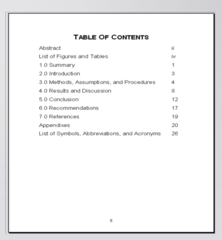
What is the table of contents?
A list at the front of a book showing chapters and page numbers.
What is a theme?
The underlying message or main idea the author wants to communicate.