DNA Mutations
 Call Kai
 Learn
Learn Practice Test
 Spaced Repetition
 Match
Match Flashcards
 Knowt Play
1/27

There's no tags or description
Looks like no tags are added yet.
Name | Mastery | Learn | Test | Matching | Spaced | Call with Kai | Chat |
|---|
No analytics yet
Send a link to your students to track their progress
28 Terms
Methylated/Oxidated
Base modification on C8 of purines
Alkylated
Base modification on heterocyclic N
Loss of NH2 —> carbonyl
Base modification on amine of adenine and cytosine
Broken, leads to base loss
Base modification of glycosidic bonds
Tautomers
Molecular states that are in equilibrium
Stability
Associated with base tautomerization

Imino
Amino tautomer

Lactim
Lactam tautomer
Incorrect base pairing and mutations
Tautomers can lead to…
Deamination
Conversion of cytosine into uracil
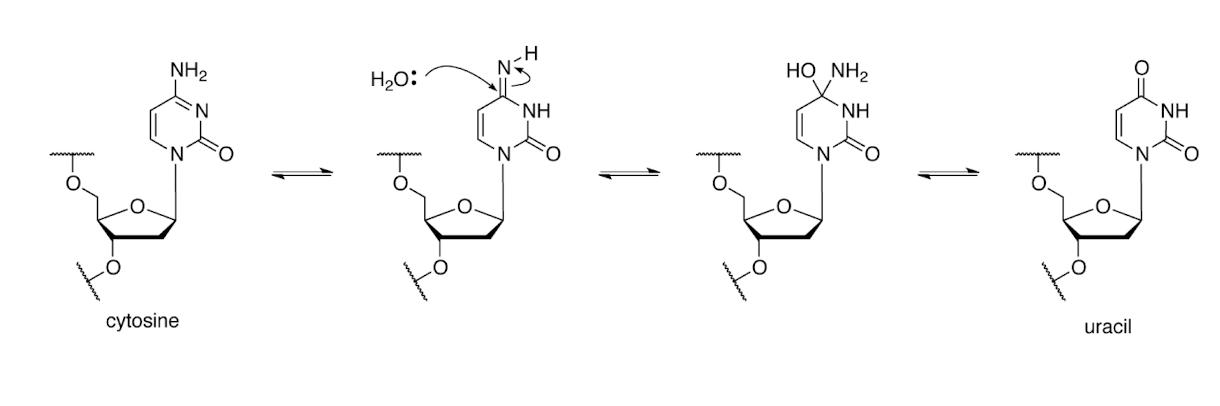
Deamination frequency
500/day/cell
DNA uracil glycosylase
Fixes deamination

Transition mutations
Results from tautomerization and deamination
B-Glycosidic bond hydrolysis
Mutation that results from nitrogenous base loss
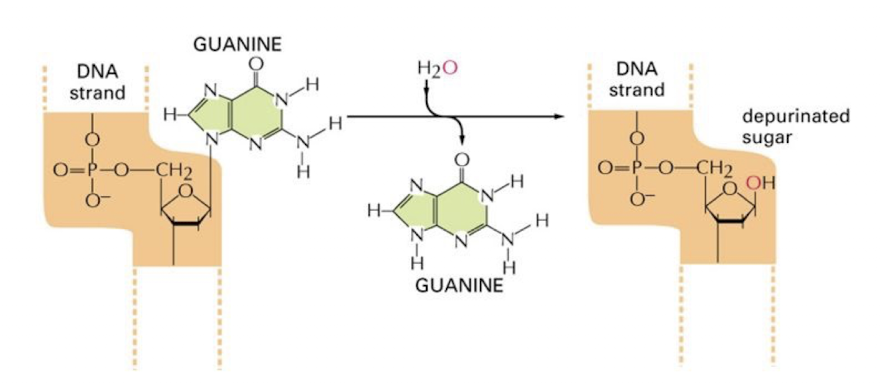
B-Glycosidic bond hydrolysis frequency
200,000/day/cell
Abasic sites
Result in strand breakage
Deaminating Agents
Other chemicals in DNA stability (nitrites, NO2-)
Oxidizing agents
Other chemicals in DNA stability (superoxide, hydroxyl (radical))
Transversion mutation
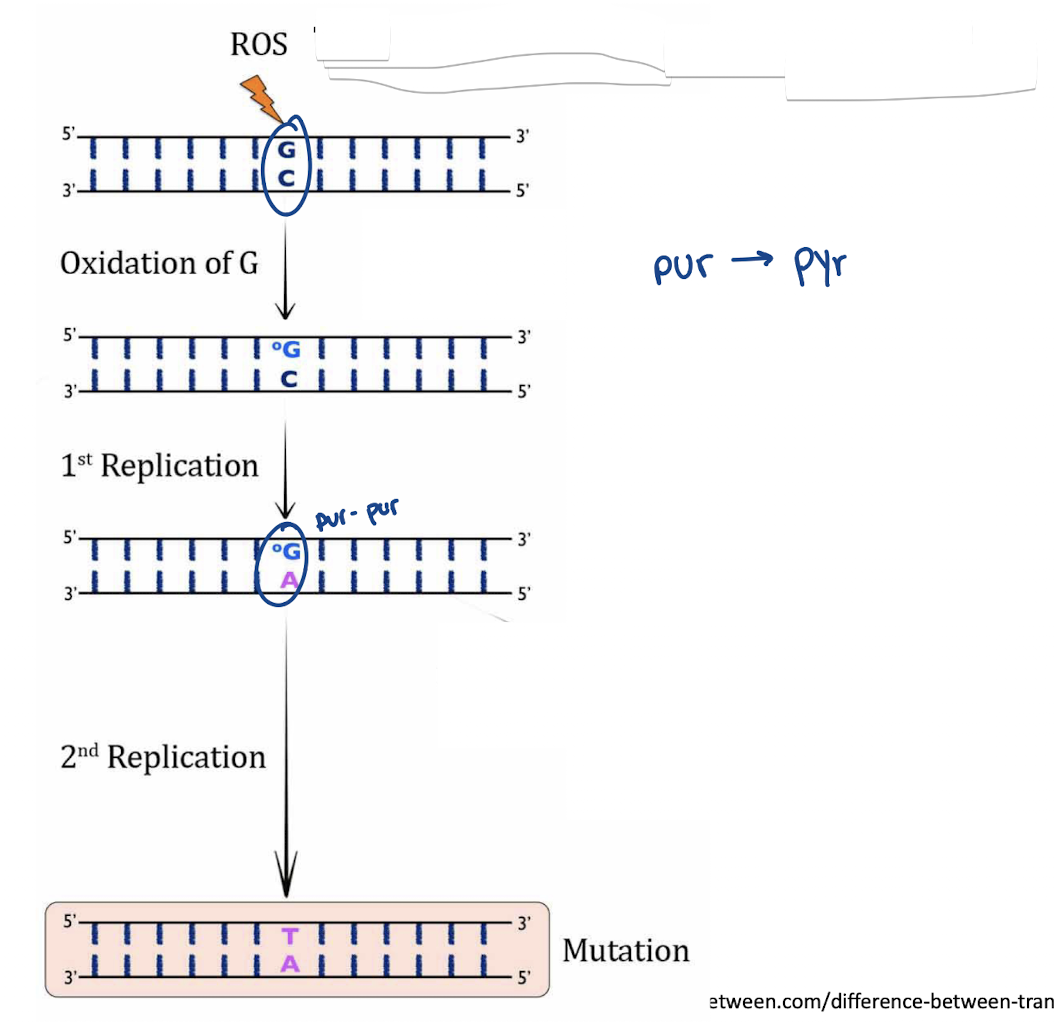
Transition and transversion mutations

Regulation
Function of “good” alkylating agents
“Good” alkylating agent

Methylation of cytosine silencing genes
Good alkylating agent epigenetics
Carcinogen
Function of “bad” alkylating agents
“Bad” alkylating agent
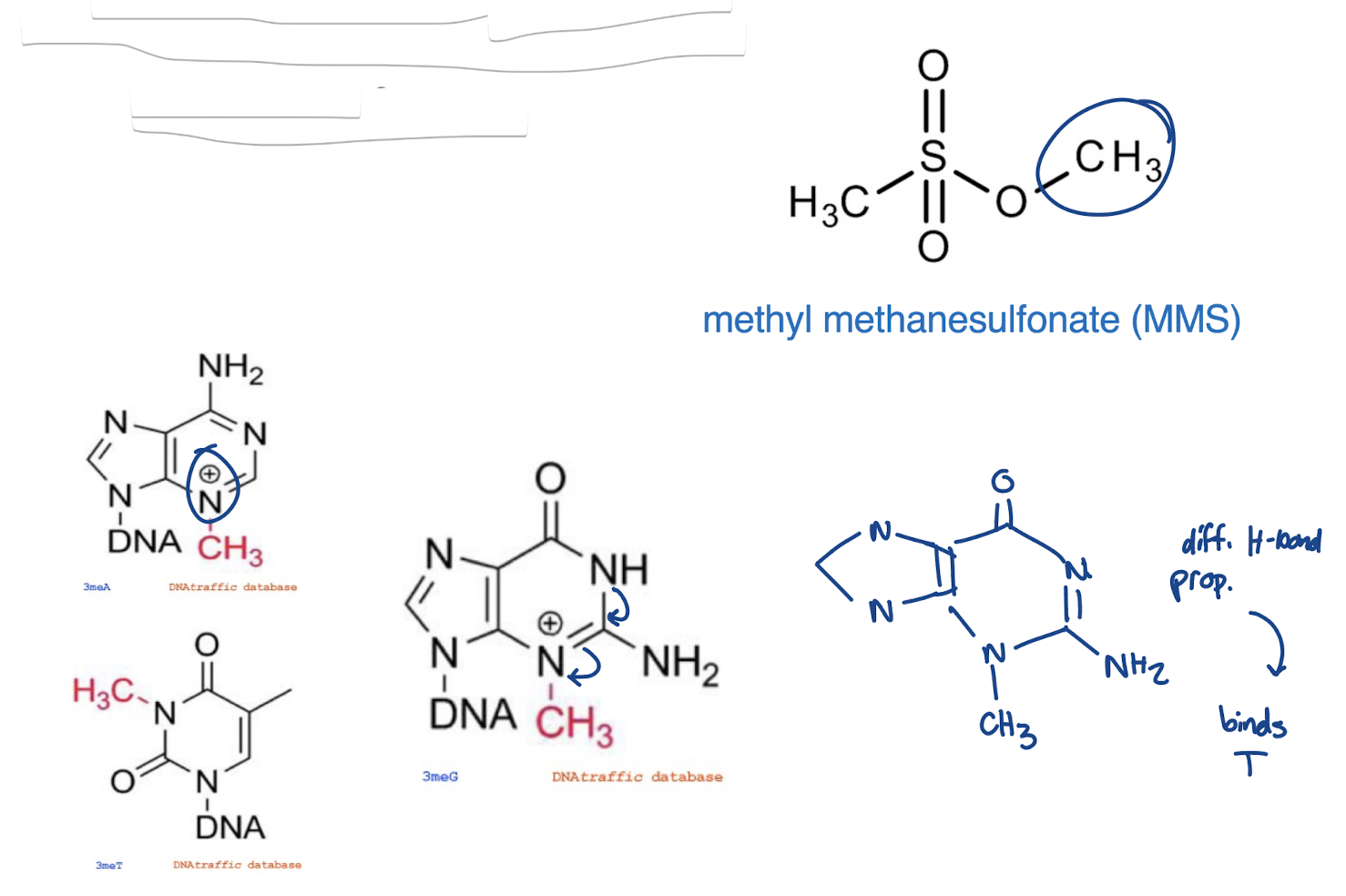
O6 Methylguanine
Causes G-C —> A-T mutations
N7 Methylation
Leads to B-Glycosidic bond hydrolysis and strand breaks
UV light
causes thiamine dimers