14.1: specific immune response - antibody mediated immunity (humoral)
 Studied by 0 people
 Call Kai
 Learn
Learn Practice Test
 Spaced Repetition
 Match
Match Flashcards
 Knowt Play
1/37

There's no tags or description
Looks like no tags are added yet.
Name | Mastery | Learn | Test | Matching | Spaced |
|---|
No study sessions yet.
38 Terms
key players in adaptive immune response
- antigens
- immunoglobulins (antibodies and receptors)
- lymphocytes
antibody mediated immunity (humoral)
plasma cells (derived from B cells) secrete antibodies that circulate in the blood, bind to antigens, and clear them from the body
cell mediated immunity - CMI
specific T cells are activated that attack and kill foreign pathogens and infected cells
antigen
molecule/molecular structure that is present at the outside of a pathogen --> can be bound to by an antigen-specific antibody or antigen receptor
is capable of triggering immune responses
lymphocytes
develop into B or T cells
B cells stay in the bone marrow
T cells migrate to the thymus to undergo further maturation
epitope
precise molecular group of an antigen that defines its specificity and triggers the immune response
why does the immune system usually not react to self-antigens
under normal homeostatic conditions, negative selection of T cells in the thymus prevents the attack on self-antigens (this is not true for individuals with autoimmune diseases)
gene segment rearrangement
our bodies have specificity to antigens bc gene segments are rearranged extensively to encode for a huge assortment of receptors on the surface of T and B cells --> each T/B cell has a protein receptor w a unique configuration that reacts to a specific antigen
V(D)J recombination
unique mechanism of genetic recombination that occurs only in developing lymphocytes during the early stages of T and B cell maturation
results in a highly diverse amt of antibodies and T cell receptors
steps to VDJ recombination
1. a light chain gene containing multiple V and J elements
2. segments are recombined randomly --> 1 random V and 1 random J join with the C element to create a functional light chain gene
3. differential splicing (removing introns)
4. gene is transcribed to mRNA and then mRNA is translated into a polypeptide that codes for the variable region on an antibody molecule
light chain gene
specific region in the human genome that codes for a protein called the "light chain" which is an important component of an antibody molecule
clonal selection theory
1. each genetically unique line of lymphocytes arises from gene segment rearrangement of a hematopoietic stem cell
2. each one responds to 1 specific antigen (if it binds to antigens from the body's own tissue, it is destroyed)
3. mature to inactive lymphocytes till they encounter a matching foreign antigen
4. when activated --> produces clones of itself to fight off the infection
hematopoietic stem cell
gives rises to all the other blood cells thru the process of haematopoiesis
found in the red bone marrow
thymus
specialized organ of the immune system where T lymphocites mature
each T cell also has a unique receptor that only responds to a specific antigen
*helper T cells and killer T cells will be differentiated in 14.2
B cell development
1. bone marrow releases immature lymphocytes
2. differentiation/maturation occurs in the bone marrow stromal cells
3. addition of B-cell receptors
4. migration to specific compartments of lymphoid organs
physiology of B-cell receptors (equivalent to antibodies)
- "Y-shaped"
- 2 heavy chains connected with a disulfide bond
- 2 light chains, 1 connected to each heavy chain w a disulfide bond
- variable regions from both chains are lined up together and form the antigen binding sites
- complement binding site located towards the end of the heavy chains
immunoglobulins (Ig)
large glycoprotein molecules that serve as both antibodies and specific receptors of B cells
antibodies
secreted by plasma cells and reside in the blood plasma
plasma cells
WBCs that are derived from B cells and secrete large volumes of antibodies
list the 5 classes of antibodies (Ig)
1. IgM
2. IgG
3. IgA
4. IgE
5. IgD
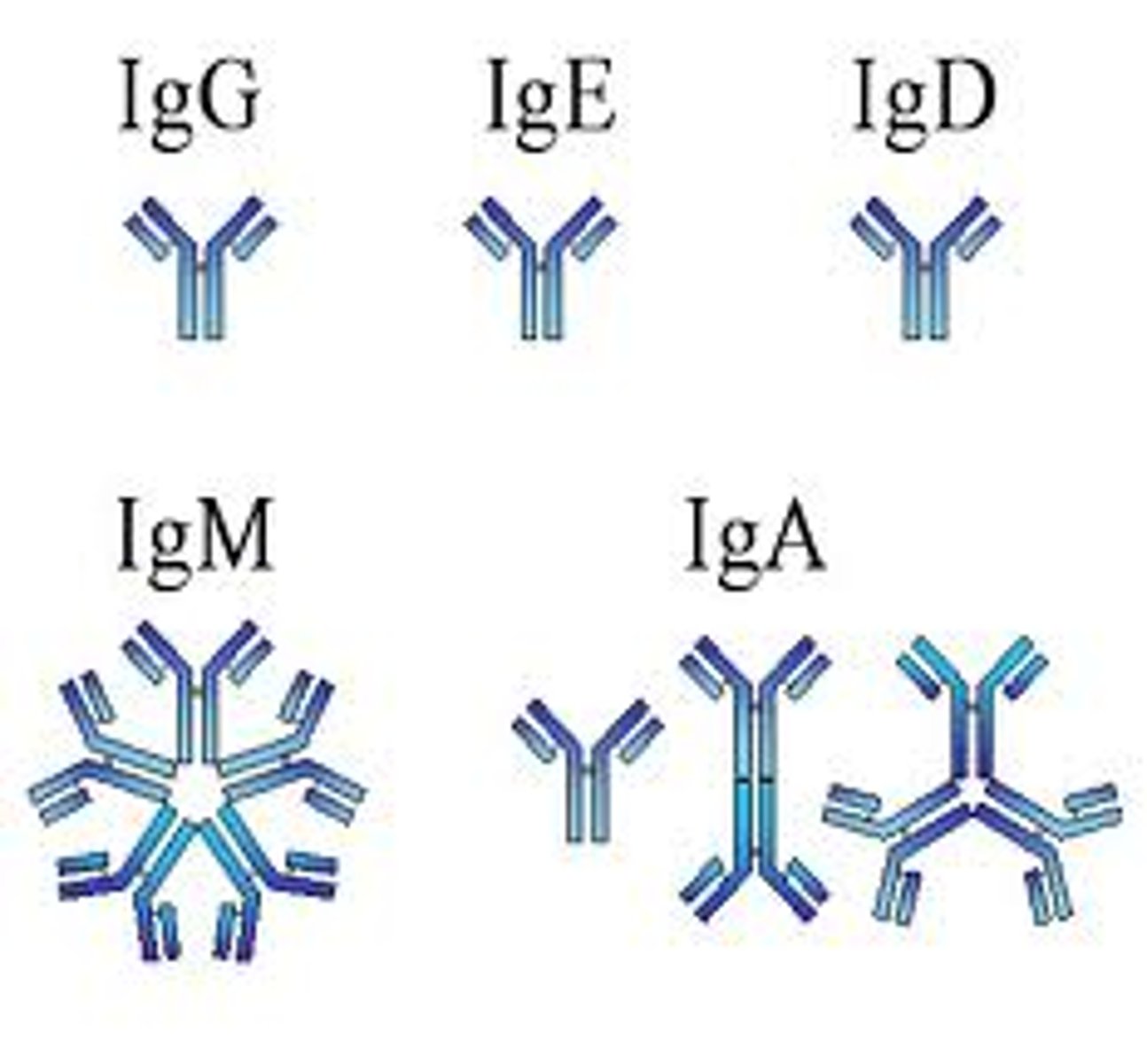
immunoglobulin M
structure: pentameric
location: on surfaces of unstimulated B cells, or free in circulation as a pentamer
function: first antibody to be secreted by B cells in primary response
- promotes agglutination (clumping together) of pathogens/antibodies
- activates complement system
- stimulates phagocytic activity of macrophages
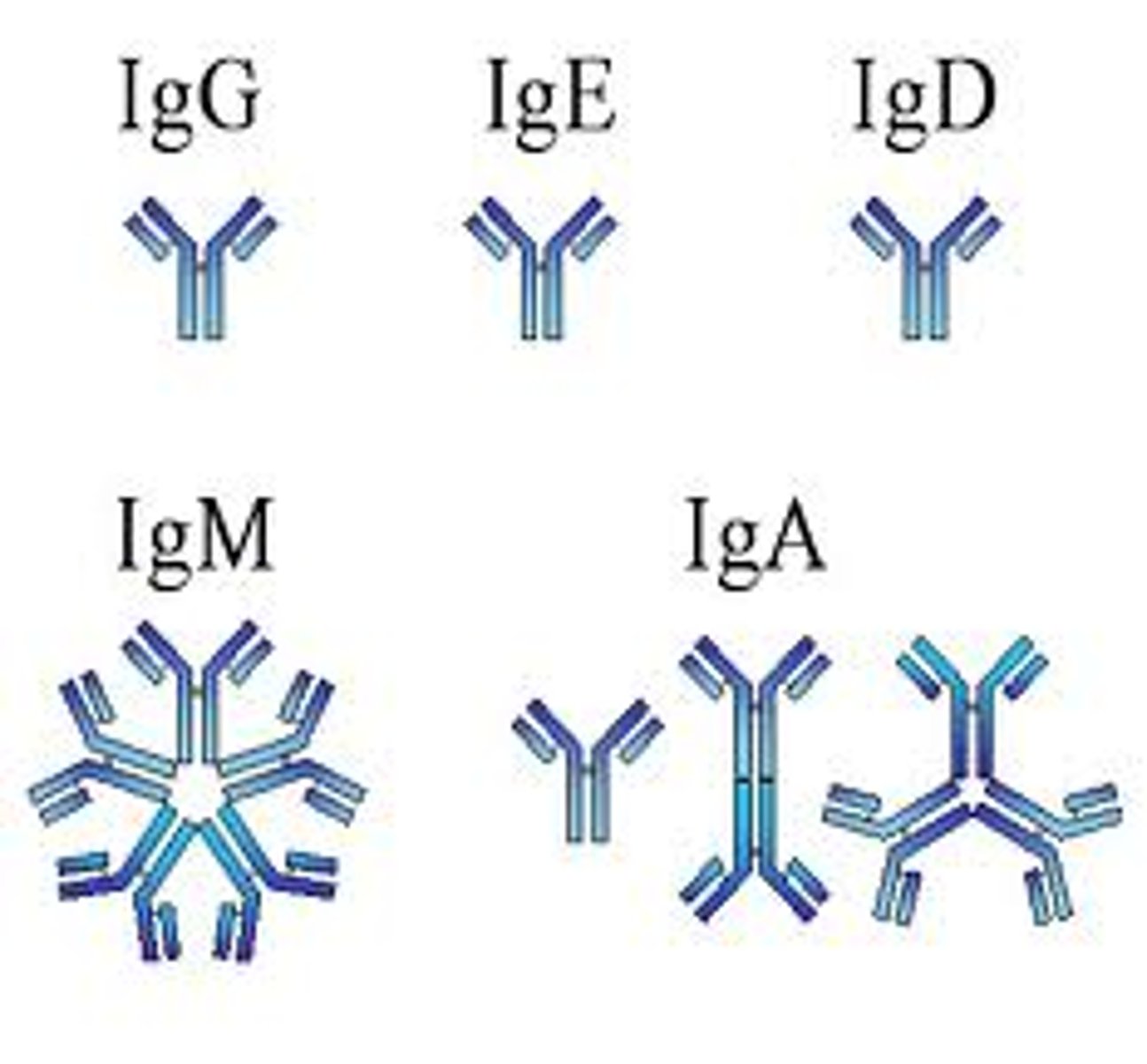
immunoglobulin G
structure: basic Y shape
location: blood and lymphatic circulation
function: most abundant antibody in primary and secondary responses
- crosses the placenta to confer passive immunity to fetus
- stimulates phagocytosis
- activates complement system
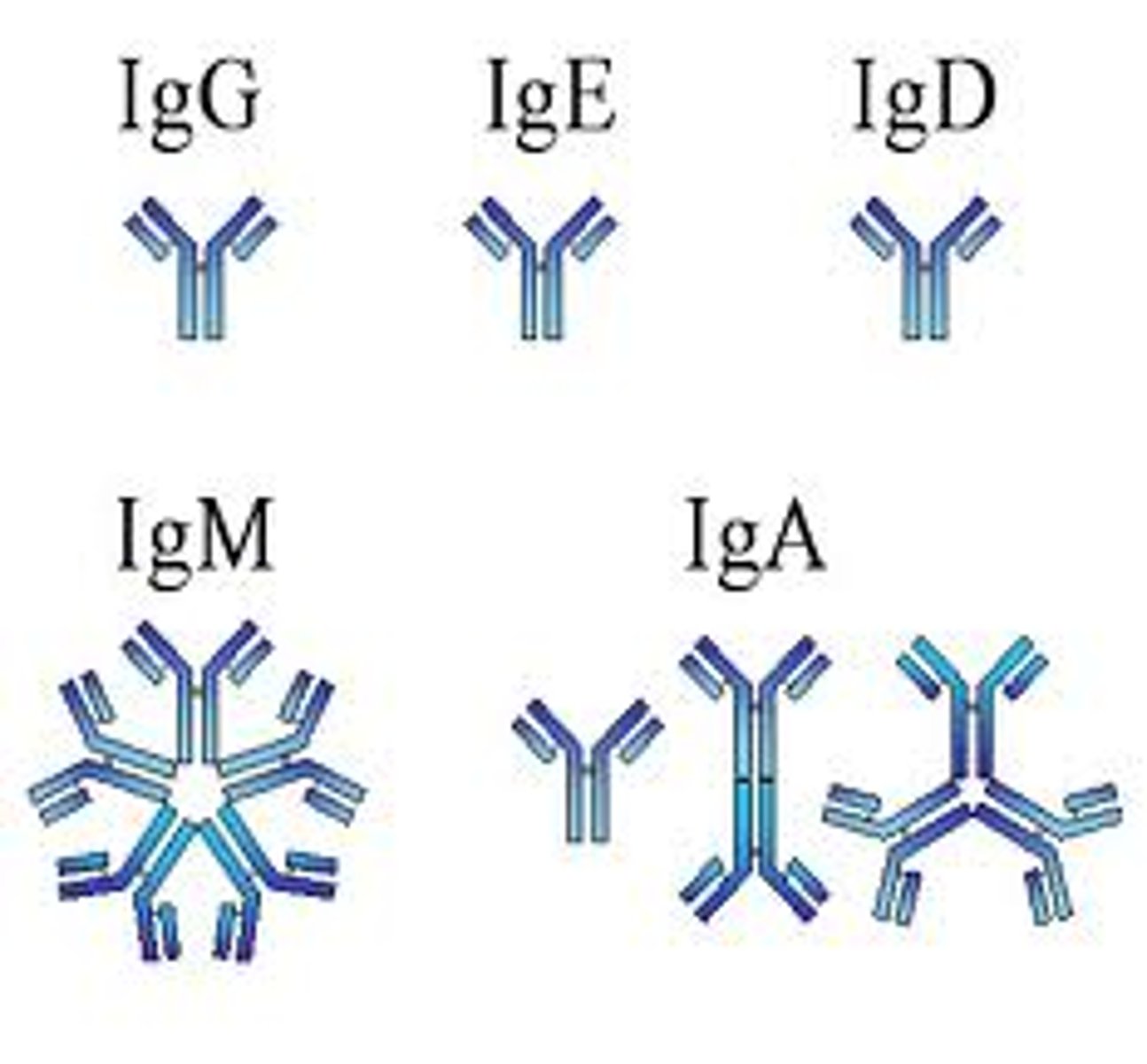
immunoglobulin A
structure: usually the double Y shape
location: body secretions (tears, breast milk, saliva, mucus)
function: blocks attachment of pathogens to mucous membranes & provides passive immunity for breastfed infants

immunoglobulin E
structure: basic Y shape
location: skin and tissues lining GI and respiratory tracts --> secreted by plasma cells
function: stimulates mast cells and basophils to release histamine
triggers allergic responses
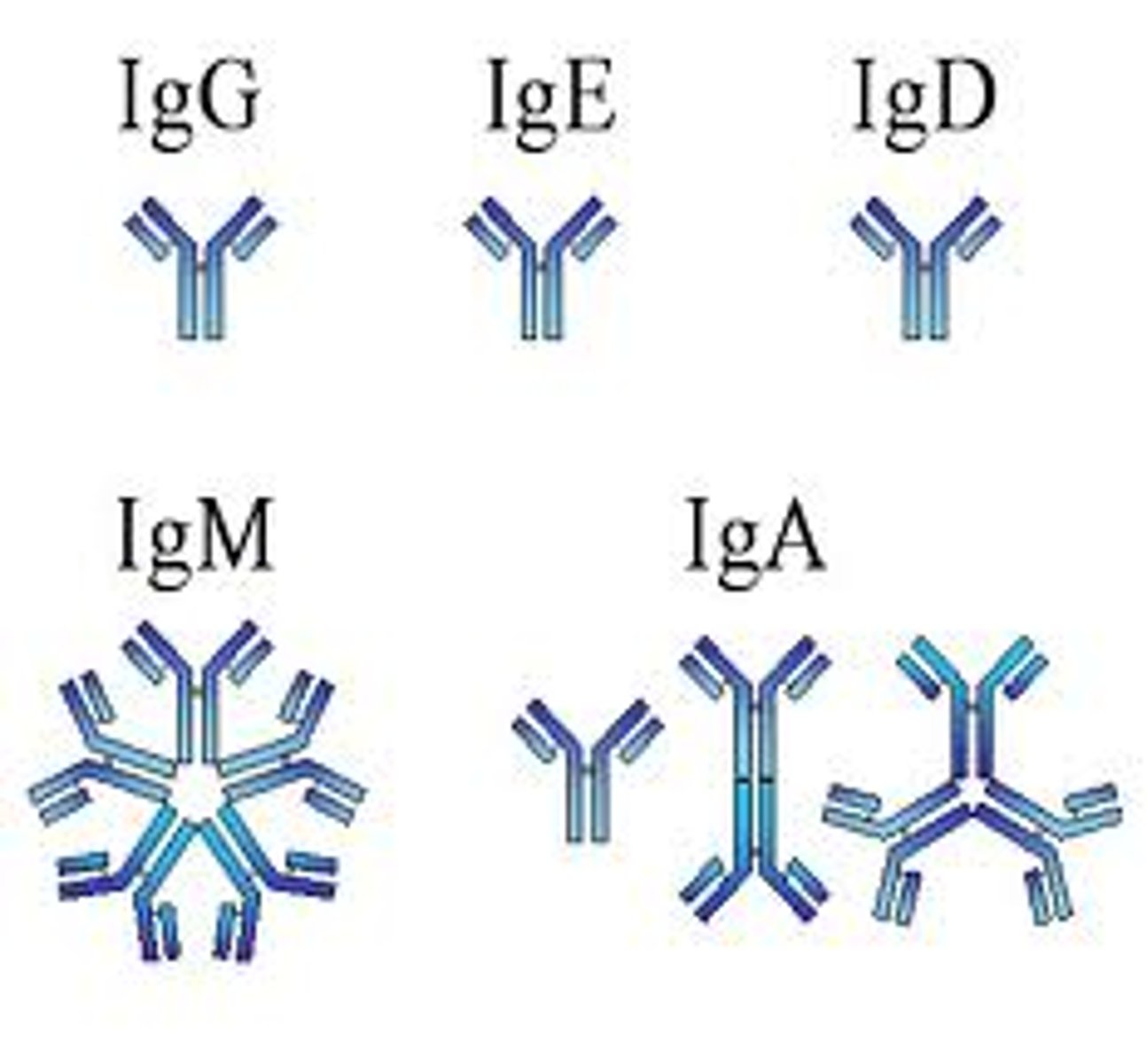
immunoglobulin D
structure: basic Y shape
location: surface of unstimulated B cells
function: membrane receptor for mature B cells --> important in B-cell activation (aka: clonal selection theory)
what is an allergy
a hypersensitivity disorder of the immune system --> occurs when a person's immune system reacts to a normally harmless substance in the environment
symptoms: red eyes, itchiness, runny nose, hives, etc
excessive activation of mast cells and basophils (which produce IgE) and results in an inflammatory response due to the release of histamine
why is the body able to produce millions of different antibodies
because combinations of different segments of the same genes in addition to removing different introns for different antibodies creates a wide selection of variable regions (each unique variable region produces a unique antibody)
dendritic cells
type of antigen presenting cell (APC) found in tissues that are in contact with the external environment (eg skin, nose, lungs, stomach, intestines)
how do dendritic cells activate immune responses
they capture pathogens and travel to the lymph nodes where they present pieces of the pathogen to T/B cells --> these cells are then activated to initiate adaptive immune response (B cells start making antibodies specific to the pathogen)
helper T cell
1 of the 2 types of T cells that triggers both a humoral and CMI response
cytokines in the humoral immune response
initiate antibody production
2 requirements for a helper T cell to activate adaptive immune response
1. antigen fragment must be displaced in an APC
2. the antigen must bind to the T cell receptor (the receptor must be specific to the antigen)
antigen-presenting cells (APCs)
immune cells that process pathogens and present them in a way to activate an immune response
*APCs must have MHC class II proteins (this distinguishes it from other body cells bc most body cells have MHC class I proteins)
- dendritic cells
- macrophages
- B cells
helper T cells --> humoral response
1. APC presents antigen fragment with the MHC class II molecule
2. specific T cell helper binds to that complex along with an accessory protein called CD4
3. binding of helper T cell causes both the APC and the T cell to secrete cytokines
4. stimulates proliferation
5. all the clones of the helper T cell can secrete other cytokines --> which can activate B cells
activation of a B cell
1. since the helper T cell has been previously activated, a B cell with receptors for the same epitope will display the antigen fragment with an MHC class II molecule (bc B cells are a type of APC)
2. the activated helper T cell will bind to the displayed fragment and activate the B cell
3. the activated B cell can differentiate into memory B cells (used for secondary encounters) or plasma cells (go on to secrete antibodies)
how do antibodies affect antigen activity
- opsonization (coats the virus/pathogen)
- agglutinate (cross links of antibodies immobilize the pathogen)
- antibody binding enhances phagocytic recognition
- fills receptor sites on the virus and prevents attachment to the host cell
- interaction w complement site ruptures some viruses
differentiate btwn B and T cells
T cells only bind to antigens that are displayed
B cells bind to epitopes of intact antigens on pathogens or circulating free in body fluids
immunological memory
the primary immune response may take weeks and amount of antibody in the blood is relatively low since this is the first encounter with the pathogen
secondary immune response is much shorter and has a large amount of specific antibody stored in the form of memory B cells