Week 3: Enzymes and Nucleic Acids (Lectures 6-7)
 Call Kai
 Learn
Learn Practice Test
 Spaced Repetition
 Match
Match Flashcards
 Knowt Play
1/108

There's no tags or description
Looks like no tags are added yet.
Name | Mastery | Learn | Test | Matching | Spaced | Call with Kai | Chat |
|---|
No analytics yet
Send a link to your students to track their progress
109 Terms
Name a protease that cleaves polypeptides on the C-terminal side of the Phe, Tyr, and Trp residues
Chymotrypsin
What do proteases do?
hydrolyze the peptide bonds so that proteins/polypeptides are broken down into smaller peptides and eventually amino acids
Where is chymotrypsin produced?
-Produced by the pancreas and secreted into the intestinal lumen
Why does chymotrypsin target the aromatic amino acids phe, tyr, and trp?
-Chymotrypsin contains a hydrophobic pocket and the aromatic amino acids have hydrophobic side chains that fit into the substrate
What does hydrolysis mean?
the breaking of a bond using water
The peptide bond contains a carbonyl group. What characteristic of the carbonyl carbon makes it susceptible to being attacked by a nucleophile?
the carbonyl carbon is electron-poor
aka: electrophile
In chymotrypsin, what is the electrophile?
carbonyl carbon

R’ can be anything but which amino acid?
-Proline

R not R’ could represent which amino acids?
Phe, Tyr, Trp
When water is deprontonated what is the product?
OH-
Which amino acids are in the Catalytic Triad?
Aspartate- Histidine- Serine
What is the role of the hydrophobic pocket in chymotrypsin?
The hydrophobic pocket of chymotrypsin provides substrate specificity by binding the hydrophobic/aromatic side chains of Phe, Tyr, and Trp and positioning the adjacent peptide bond for cleavage
Why is Histidine useful in enzyme active sites?
Histidine can accept a proton or donate a proton
In chymotrypsin, what is the role of Histidine in the active site?
Histidine interacts with serine
-Histidine removes the proton from serine
-The electrons remain on the Oxygen
-The oxygen of serine becomes a nucleophile (Ser O-)
When is the proximity effect seen in chymotrypsin?
-When the enzyme has positioned the activated serine nucleophile and the substrate’s carbonyl electrophile extremely close together
What is the Oxyanion Hole in chymotrypsin?
-A region of the active site that stabilizes a negatively charged oxygen during the reaction
Why is the oxyanion hole important in chymotrypsin?
-When the nucleophile attacks the carbonyl, the carbonyl oxygen temporarily becomes negatively charged, which creates a high-energy intermediate/transition state.
-The oxyanion hole stabilizes the O-, which stabilizes the transition state, thus lowering the activation energy and increasing the reaction rate
What is the role of the catalytic triad in chymotrypsin?
Its job is to work together to activate serine so it can break the substrate's peptide bond.
What is the role of Asp in the catalytic triad?
Helps position and stabilize histidine to increase histidine’s ability to donate.accept electrons
What is the role of histidine in the catalytic triad?
-Remove a proton (H+) from serine to turn serine into
Ser-O- , which is a strong nucleophile
-Later, histidine can donate protons (H+) to help reactions proceed
What is the role of serine in the catalytic triad?
-Is the nucleophile that attacks the electrophilic carbonyl carbon of the substrate, ultimately leads to the cleavage of the peptide bond
What is the acyl-enzyme intermediate in chymotrypsin?
-A temporary state in the chymotrypsin reaction where part of the substrate is covalently attached to the enzyme’s serine
How does the substrate detach from serine so chymotrypsin can be reused?
1) water enters the active site and is near the acyl-enzyme
2) histidine removes H+ from water, creating a strong nucleophile OH-
3) OH- attacks the carbonyl carbon of the acyl enzyme
4) A tetrahedral intermediate is formed but stabilized by the oxyanion hole
5) Intermediate collapses, and the electrons reform the carbonyl
6) the bond between serine’s oxygen and the substrate breaks
7) serine gets its protein back from histidine
😎 product is released, leaving the enzyme as it started
In chymotrypsin, where is covalent catalysis seen?
Serine forms a temporary covalent bond with the substrate that must be broken with water so that chymotrypsin returns to its original form
In chymotrypsin, where is transition-state stabilization seen?
Seen when the oxyanion hole stabilizes the negatively charged transition state/intermediate
What is General Base Catalysis?
An amino acid side chain REMOVES/TAKES a proton
What is General Acid Catalysis?
An amino acid side DONATES/GIVES a proton
What is the cofactor of enolse?
inorganic molecule that is 2 Mg+2
What is enolase?
An enzyme that converts 2-phosphoglycerate (substrate)→ phosphoenolpyruvate (PEP (product)).
Why is enolase part of a dehydration reaction?
It removes water from 2-phospholycerate (substrate)
In the Enolase Mechanism, which two amino acids are involved?
Lysine and Glutamate
In the Enolase Mechanism, what is the role of lysine
Lysine removes a proton (H+) from the substrate, creating an enolase intermediate
In the Enolase Mechanism, what is the role of Glutamate?
Glutamate donates a proton (H+) to eliminate the OH- group that ultimately leaves as H2O
In the Enolase Mechanism, what is the role Mg+2 ions?
-ions help stabilize negative charges and position the substrate
What are lysozymes?
An enzyme involved in breaking down peptidoglycan
In cleavage of peptidoglycan by lysozyme, which amino acids are key residues?
Aspartate and Glutamate
True/False: Lysozyme uses water to break a bond between sugar components of peptidoglycan
TRUE; involves hydrolysis (breaking a bond using water)
Although the mechanism of Lysozyme has been debated, does SN1 or SN2 provided better evidence?
SN2
List functions of nucleotides
–Energy for metabolism (ATP)
–Enzyme cofactors (NAD+)
–Signal transduction (cAMP)
–Storage of genetic info (DNA)
–Transmission of genetic info (mRNA)
–Protein synthesis (tRNAand rRNA)–Catalysis (ribozyme
What does a nucleotide consist of?
-Nitrogenous base
-Pentose
-Phosphate
What does a nucleoside consist of?
-Nitrogenous base
-Pentose
When do we assign Beta to the 1’ carbon of a pentose?
When the phosphate group and the nitrogenous base are both above or below the plane of the sugar
When do we assign alpha to the 1’ carbon of a pentose?
When the phosphate group and nitrogenous base are trans (up/down) the plane of the sugar
In a nucleotide, where is the phosphate group attached?
It is attached to the 5’ carbon of the pentose
In a nucleotide, where is the nitrogenous base attached?
It is attached to the 1’ carbon of the pentose
In a nucleotide, which prime determines if it is deoxyribose or ribose?
the 2’ carbon on the pentose
In a nucleotide, what is the N-glycosidic bond?
the bond that connects the 1’ carbon on the pentose sugar to a nitrogen atom in the nitrogenous base
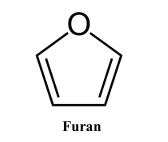
What does furan represent?
Describes the ring shape of a sugar: a 5-membered ring (4 carbons + 1 oxygen)
At physiological pH, what is the charge of the phosphate group?
negatively charged
Which bond links nucleotides together to form the back of DNA and RNA?
phosphodiester bonds (covalent)
What exactly do phosphodiester bonds connect?
a phosphodiester bond connects the 3’ OH of one sugar to the phosphate group attached to the 5’ carbon of the next sugar
What do the following abbreviations spell out:
NMP
NDP
NTP
nucleotide monophosphate
nucleotide diphosphate
nucleotide triphosphate
What does β-D-ribofuranose represent in RNA?
β → orientation of the base
D → stereochemical configuration
ribose → the sugar
furanose → its 5-membered ring form
What does β-2′-deoxy-D-ribofuranose represent in DNA?
β → describes the orientation of the nitrogenous base relative to the sugar.
D → describes the stereochemical configuration of the sugar.
ribose → tells you the original 5-carbon sugar.
furanose → means the sugar is in a 5-membered ring form.
2′-deoxy → 2′ carbon has an H instead of an –OH
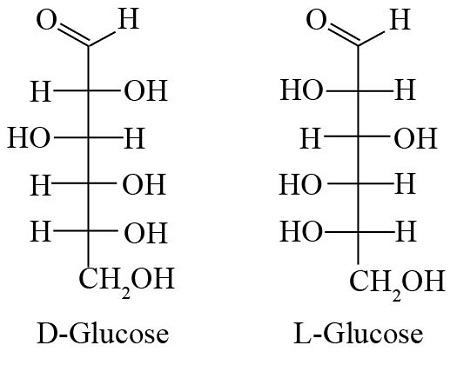
In a fisher projection, how do you determine if the stereochemistry is D or L?
Reference the most distant chiral carbon from the carbonyl

In a fisher projection, if the most distant chiral carbon has their hydroxyl (OH) on the left side, is that a D or L stereo configuration?
L

In a fisher projection, if the most distant chiral carbon has their hydroxyl (OH) on the right side, is that a D or L stereo configuration?
D
In a Hayworth projection, how do you determine D vs.L?
-Observe the CH2OH group at the 5’ carbon
In a Hayworth projection, when would it have a D configuration?
-When the CH2OH group at the 5’ is pointing up

In a Hayworth projection, when would it have a L configuration?
-When the CH2OH group at the 5’ is pointing down

Name the pyrimidine bases
Cytosine (BOTH)
Thymine(DNA only)
Uracil (RNA only)
Name the purine bases
Adenine (BOTH)
Guanine(BOTH)
True/False: Purines and pyrimidines are good H-bond donors and acceptors and are neutral molecules at pH 7
true
Are purines or pyrimidines a double ring structure?
Purines
Are purines or pyrimidines a single ring structure?
Pyrimidines
Where is the N-glycosidic bond formed in pyrimidines?
N1 position
Where is the N-glycosidic bond formed in purines ?
N9 position
What does the term ‘anomeric’ refer to?
the 1’ carbon of the pentose sugar, also determines whether the sugar is alpha or beta
When would syn conformation occur around N-glycosidic bond?
When the nitrogenous base is towards the left and hovering above the pentose
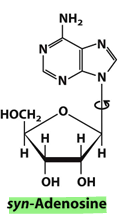
When would anti conformation occur around N-glycosidic bond?
When the nitrogenous base is towards the right and away from the pentose

In duplex DNA is it arranged in syn or anti conformation?
Anti
The following are all:
-Adenylate/Deoxyadenylate
-Guanylate/Deoxyguanylate
-Cytidylate/Deoxycytidylate
-Thymidylate/Deoxythymidylate
-Uridylate
Nucleotides (base, sugar, phosphate)
The following are all:
-Adenosine/Deoxyadenosine
-Guanosine/Deoxyguanosine
-Cytidine/Deoxycytidine
-Thymidine/Deoxythymidine
-Uridine
Nucleosides (sugar + base)
The following are all:
-Adenine
-Guanine
-Cytosine
-Thymine
-Uracil
Bases
For deoxyadenylate, what is the 2-letter and 4-letter codes?
dA (deoxyadenosine) (nucleoside)
dAMP (deoxyadenosine monophosphate = deoxyribonucleotide)
For deoxyguanylate, what is the 2-letter and 4-letter codes?
dG (deoxyguanosine = nucleoside)
dGMP (deoxyguanoine monophosphate = deoxyribonucleotide)
For deoxythymidylate, what is the 2-letter and 4-letter codes?
dT (deoxythymidine = nucleoside)
dTMP (deoxythymidine monophosphate = deoxyribonucleotide)
For deoxycytidylate, what is the 2-letter and 4-letter codes?
dC (deoxycytidine = nucleoside)
dCMP (deoxycytidine monophosphate = deoxyribonucleotide)
For adenylate, what is the 1-letter and 3-letter codes?
A (adenosine = nucleoside)
AMP (adenosine monophosphate = ribonucleotide)
For guanylate, what is the 1-letter and 3-letter codes?
G (Guanosine = nucleoside)
GMP (Guanosine monophosphate = ribonucleotide)
For Uridylate, what is the 1-letter and 3-letter codes?
U (uridine = nuceloside)
UMP (uridine monophosphate = ribonucleotide)
For cytidylate, what is the 1-letter and 3-letter codes?
C (cytidine = nucleoside)
CMP (cytidine monophosphate = ribonucleotide)
Why is RNA unstable in basic conditions?
-the 2′-OH can lose its H, becoming 2′-O⁻. That oxygen can then attack the neighboring phosphate, causing the RNA backbone to break.
-more susceptible to hydrolysis in basic conditions
Which bond hold the complementary bases together?
hydrogen bonds
3-H bonds for GC
2-H bonds for AT
Which interactions help stabilize duplex DNA and how?
π–π stacking because the nitrogenous bases are aromatic and have π-electron systems. When the bases stack on top of one another inside the DNA helix, their π systems interact, stabilize neighboring bases stacked along the DNA helix
The major groove of a DNA strand is where an alpha helix fits perfectly, what does this allow the protein to do?
-The α-helix and exposes chemical information from the edges of the base pairs.
-Side chains of amino acids on the α-helix can interact with atoms in the major groove through non-covalent interactions, which allow the protein to recognize a particular DNA nucleotide sequence.
-If the protein is highly compatible with a particular DNA sequence, it binds with high affinity, meaning the Kd is low
Can mRNA code for more than protein?
Yes. Can be monocistronic or polycistronic (common in prokaryotes)
How is mRNA synthesized?
Uses DNA template, more specifically the 3’-5’ strand so that mRNA is synthesized in 5’-3’
In which direction does RNA polymerase read the DNA template strand?
RNA polymerase reads the template strand 3’-5’ and builds the mRNA 5’-3’
What’s the role of tRNA?
-to bring the correct amino acid to the ribosome during protein synthesis (translation)
How does tRNA bring the correct amino acid to the ribosome during protein synthesis?
1. Each tRNA carries a specific amino acid.
2. tRNA has an anticodon (3’-5’), which is a 3-base sequence.
3. The anticodon base-pairs with the complementary codon on mRNA.
4. This ensures the correct amino acid is added to the growing protein.
-amino acid is attached to the 3′ end of the tRNA
Is dominance defined by the F1 or F2 phenotype?
F1
What do alleles differ in?
DNA base sequences
Alleles dictate the _____ ?
protein sequence
The protein sequence dictates the ___?
function
What is the central dogma?
DNA —> RNA —> Protein
-DNA —> RNA = transcription
-RNA —> Protein = translation
How can viruses make RNA and DNA?
-viruses use RNA as a template in reverse transcription
Which DNA strand is the template strand for mRNA?
3’-5’ DNA strand because RNA polymerase synthesizes in the 5’-3’ direction
What is the endosymbiotic theory?
It explains the origin of mitochondria and chloroplasts in eukaryotic cells from formerly free-living bacteria.
-mitochondria and chloroplasts have their own DNA
When are introns removed and why?
-introns are removed after transcription but before translation because they do not encode a polypeptide sequence